
At a glance
The useful distinction is owner versus carrier. Your friend can carry your closed pouch without using its contents. Start with one familiar land-photo look, record the tools it needs, and keep optional activities on a separate calendar.
Build a dry-land beauty kit around one land-photo look
Choose the finish before choosing the pouch
Start with the photograph you actually want: a relaxed café portrait, a promenade snapshot or a casual honeymoon album. Choose one finish that feels comfortable in familiar clothes. A lightly evened base and your usual lip colour may be enough. Add eye makeup only if it belongs in your normal routine. Your friend can prefer a different finish. Sharing a day out does not require matching makeup or identical product lists.
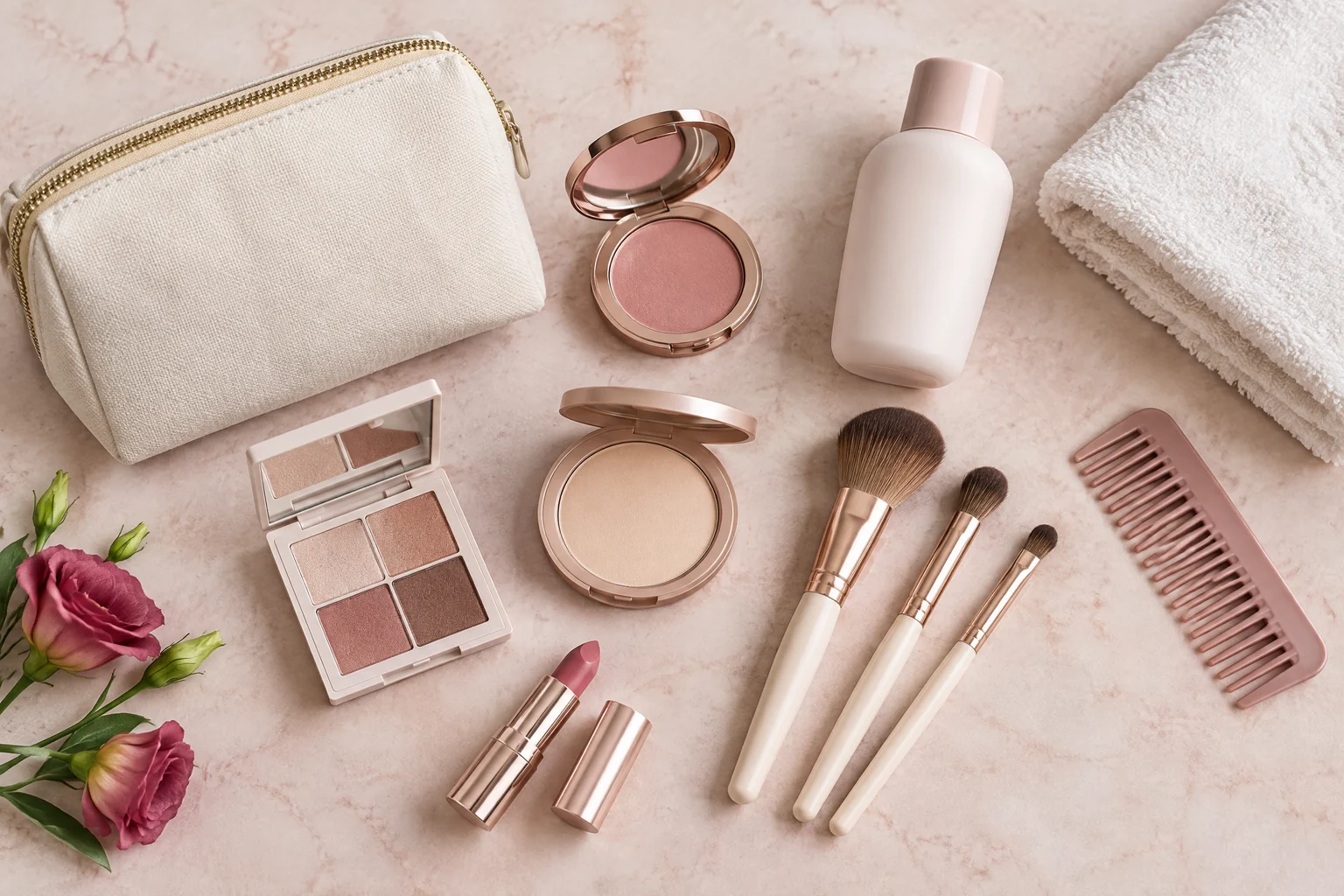
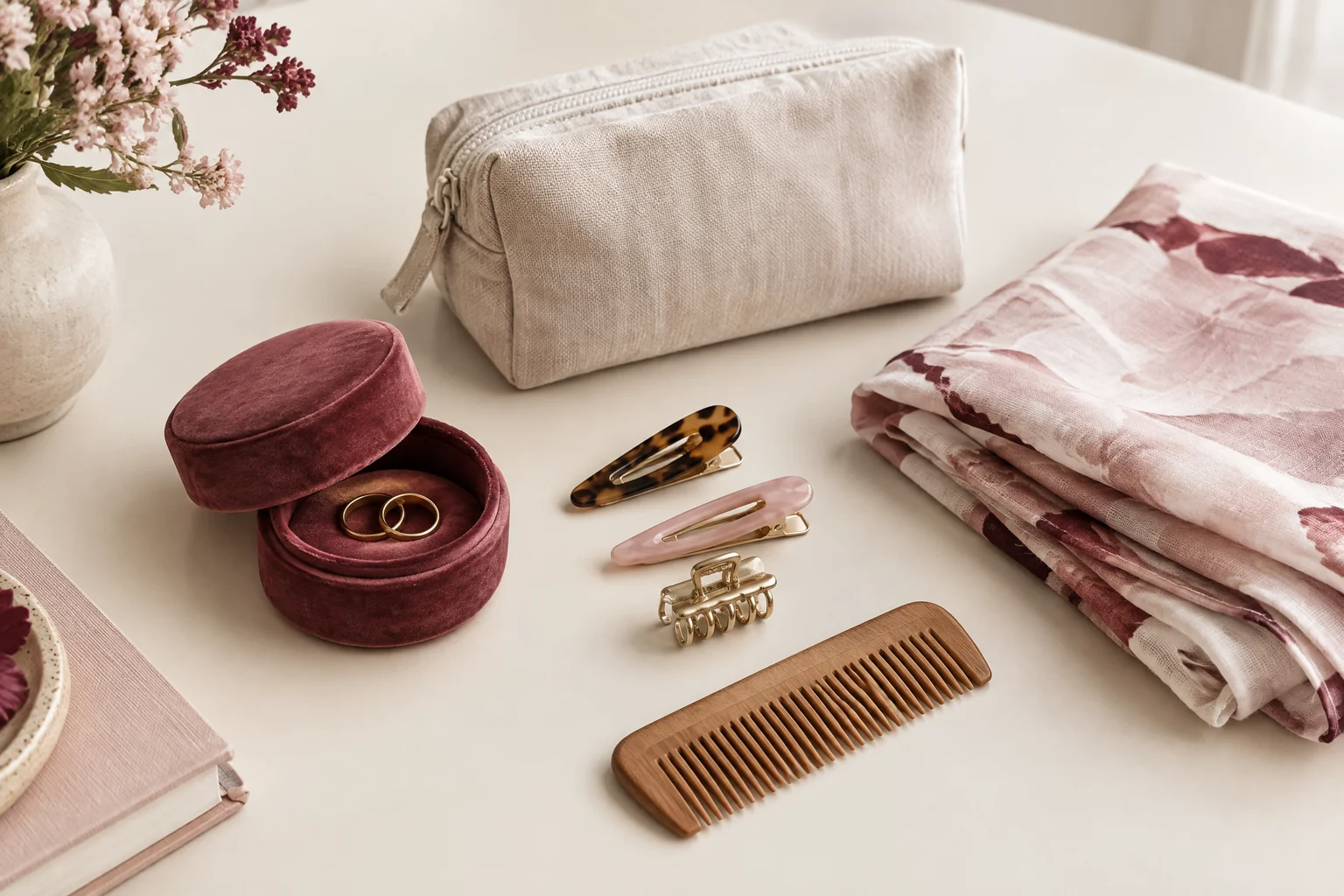
Lay out only the products used for that look, then place their applicators beside them. A product without its necessary tool is not a complete plan. Remove duplicate shades unless you genuinely use both. Keep your own removal products for the end of the day. Do not turn the pouch into a general travel bag. Tickets, chargers and snacks belong elsewhere, so finding a brush does not become a full unpacking exercise.
If you cannot finish the look without copying someone else, treat that as your practice goal. A self makeup lesson can focus your enquiry on a routine you want to repeat independently. Bring the products you already understand and note the step that stops you. Perhaps your base looks uneven, or you cannot balance your brow shape. The aim is a manageable personal routine, not another bag of products to carry.
- One intended land-photo look per person.
- One personal tool set for that look.
- One simpler version if an item stays home.
Share carrying duties, not personal cosmetics
Write a carry-responsibility card
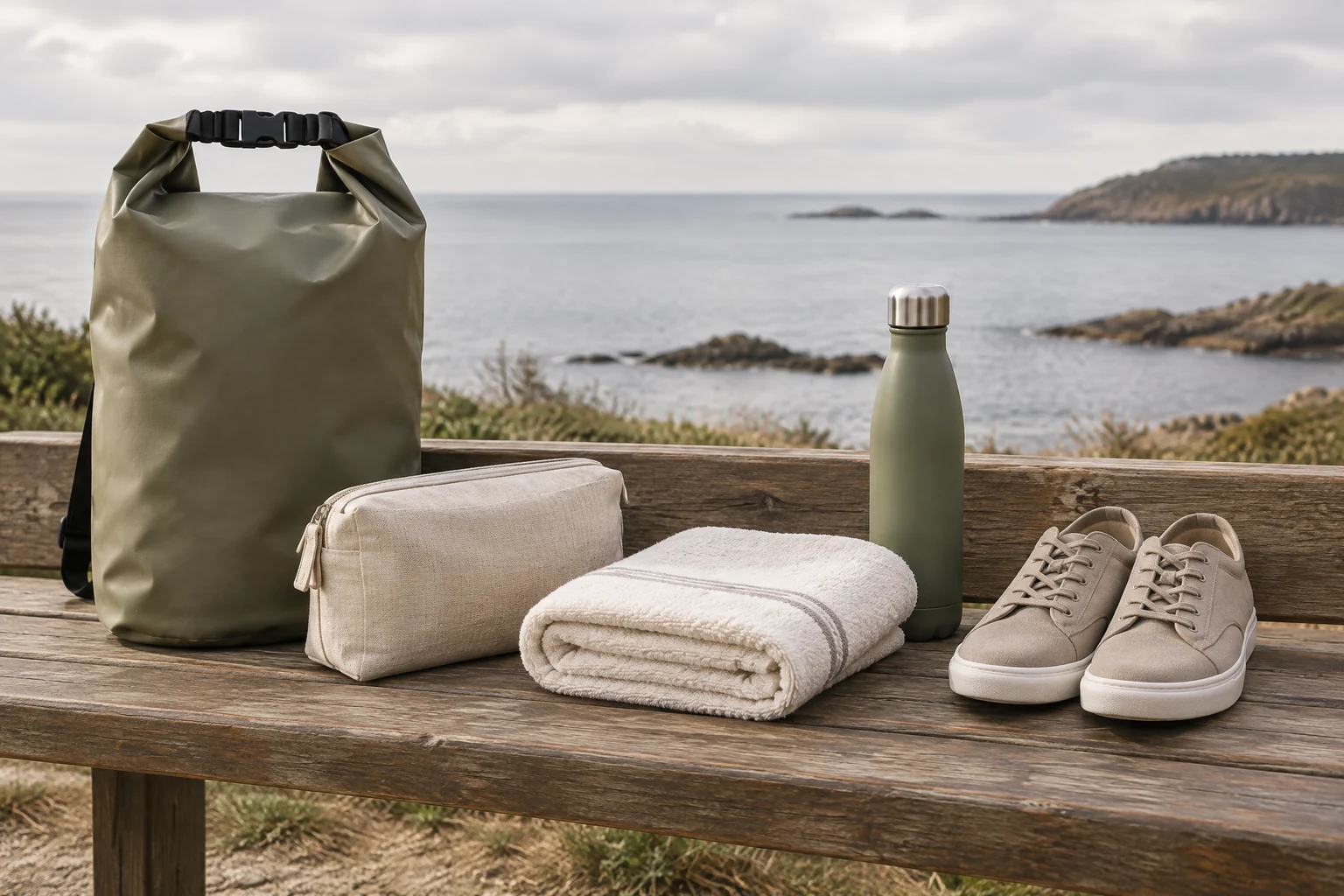
Write the product owner and bag carrier as separate entries. Friend A might carry both closed cosmetic pouches in one dry day bag. Friend B could carry the umbrella and other non-cosmetic essentials. Each person still opens and uses only their own pouch. Put a visible initial on the outside, rather than relying on different zipper colours. Decide where the pouches return after a touch-up, before setting out from home.
The FDA's Eye Cosmetic Safety guidance says not to share eye cosmetics, even with a best friend. It also advises washing hands and keeping eye-area instruments clean. Never apply or remove eye makeup in a moving vehicle. This makes the practical rule straightforward: carrying a friend's closed mascara pouch is different from borrowing their mascara. If your own eye product is missing, change the look rather than swapping products during the journey. [2]
Use the card below as a starting arrangement, then replace the friend labels with your own initials. Carrying assignments can change after lunch without changing ownership. Tell each other when a pouch moves to another bag. Keep the closed personal pouches separate from damp belongings, and reserve a different bag for used tools. The card is useful only if both friends can retrieve their own things without searching through loose cosmetics.
| Closed bag or item | Contents owner | Assigned carrier | Use and return rule |
|---|---|---|---|
| Personal pouch A | Friend A | Friend B | A opens and uses it; return closed to the dry bag |
| Personal pouch B | Friend B | Friend B | B opens and uses it; keep eye products personal |
| Clean tool sleeve A | Friend A | Inside pouch A | A uses these tools; separate them after use |
| Clean tool sleeve B | Friend B | Inside pouch B | B uses these tools; keep away from damp belongings |
| Umbrella and non-cosmetic bag | As agreed | Friend A | Shared carrying; no loose cosmetics inside |
Read what is already inside your containers
A dry-land beauty kit needs recognisable contents
Read each product's directions and storage information before deciding it belongs in your pouch. Check that the closure works and the label remains readable. Keep unfamiliar, damaged or unidentifiable items outside the practice inventory until you can resolve their details. A plain container marked only with a colour gives you little help later. Keeping the original packaging is often more practical than creating several tiny pots that look the same.
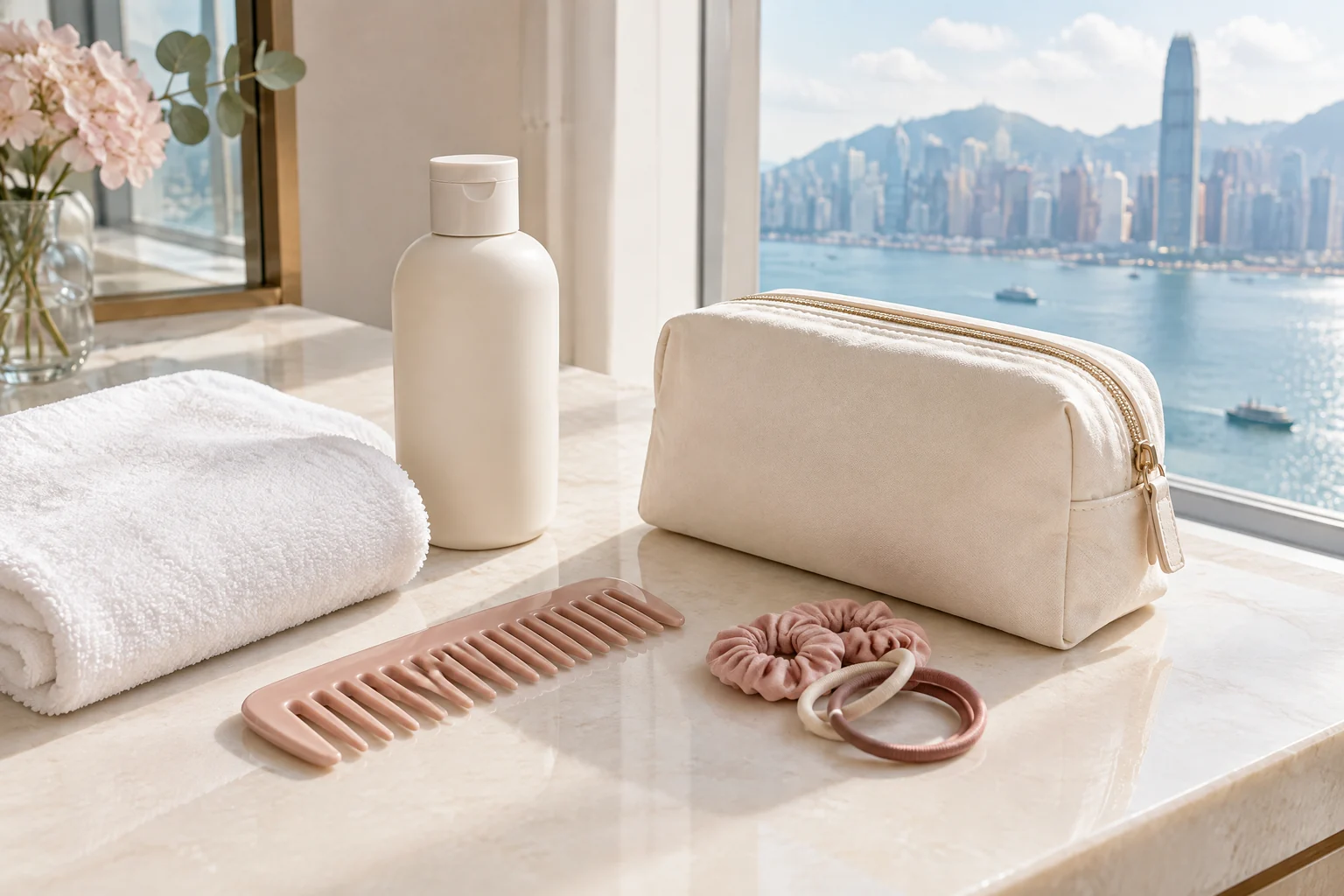
Separate clean tools from those you have already used. Choose an arrangement that prevents brush heads touching damp towels or the bag floor. A personal tool sleeve can sit inside your closed pouch. After use, put tools in their designated separate holder for cleaning at home. A cover is organisation, not a substitute for cleaning. Follow the tool's care instructions and let it dry properly before returning it to clean storage.
For a specific eye-and-base difficulty, a 1:1 makeup lesson may be the more focused enquiry. Describe the problem using your actual routine: where you apply product and what becomes hard to manage. Bring your own labelled items instead of assuming your friend's products will suit your routine. Keep the discussion about application on land. A compact practice kit should make your next attempt easier to understand, not merely make the pouch smaller.
Practise one repeatable look before the weekend
Turn the inventory into a small rehearsal
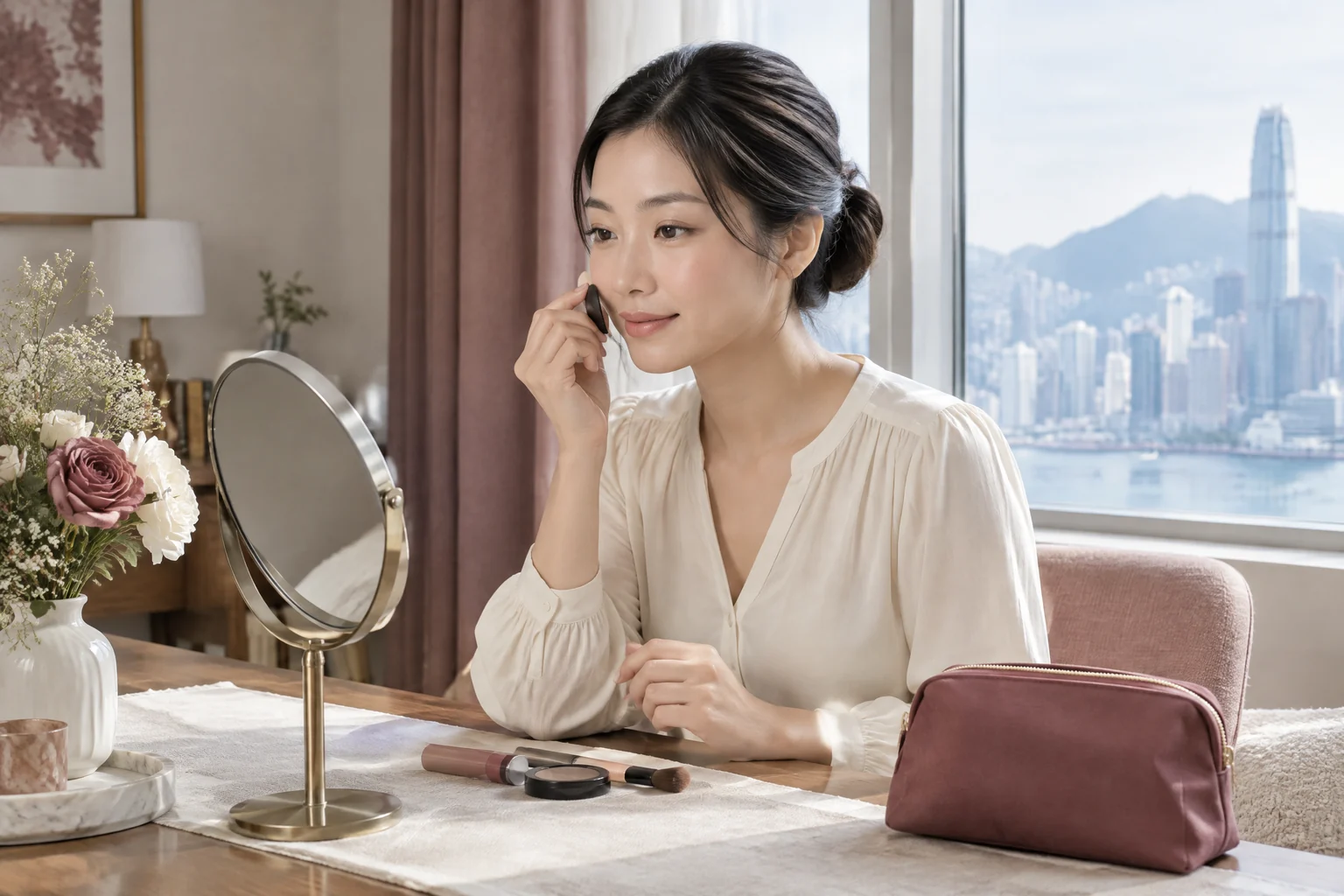
Rehearse at a stable table in a dry room, using only the products selected for your pouch. Follow the order you would use on the day. Note where you stop to search for something, change tools or restart a step. Those pauses reveal missing items more clearly than a long shopping list. Keep a mirror positioned so you can see comfortably. Your friend can watch the sequence without handling your personal applicators.
If you are starting from scratch, a beginner makeup class Hong Kong enquiry can begin with a very small goal. Ask about learning a simple base and one familiar finishing step. You do not need a polished occasion look before explaining what you find difficult. Write down the products you own and which steps you have attempted. This gives the conversation a practical starting point, rather than a vague request to learn everything immediately.
Take one practice photograph in ordinary light and review it at a normal viewing size. Compare whether the finish matches your chosen mood, not whether it resembles someone else's face. Record one adjustment for the next attempt. You might use less of a product or leave out a step that feels distracting. Repeat the revised routine with the same inventory. A successful rehearsal ends with a look you can reproduce and a pouch you can repack.
Make space for comfortable outdoor land portraits
Keep protection and appearance as separate decisions
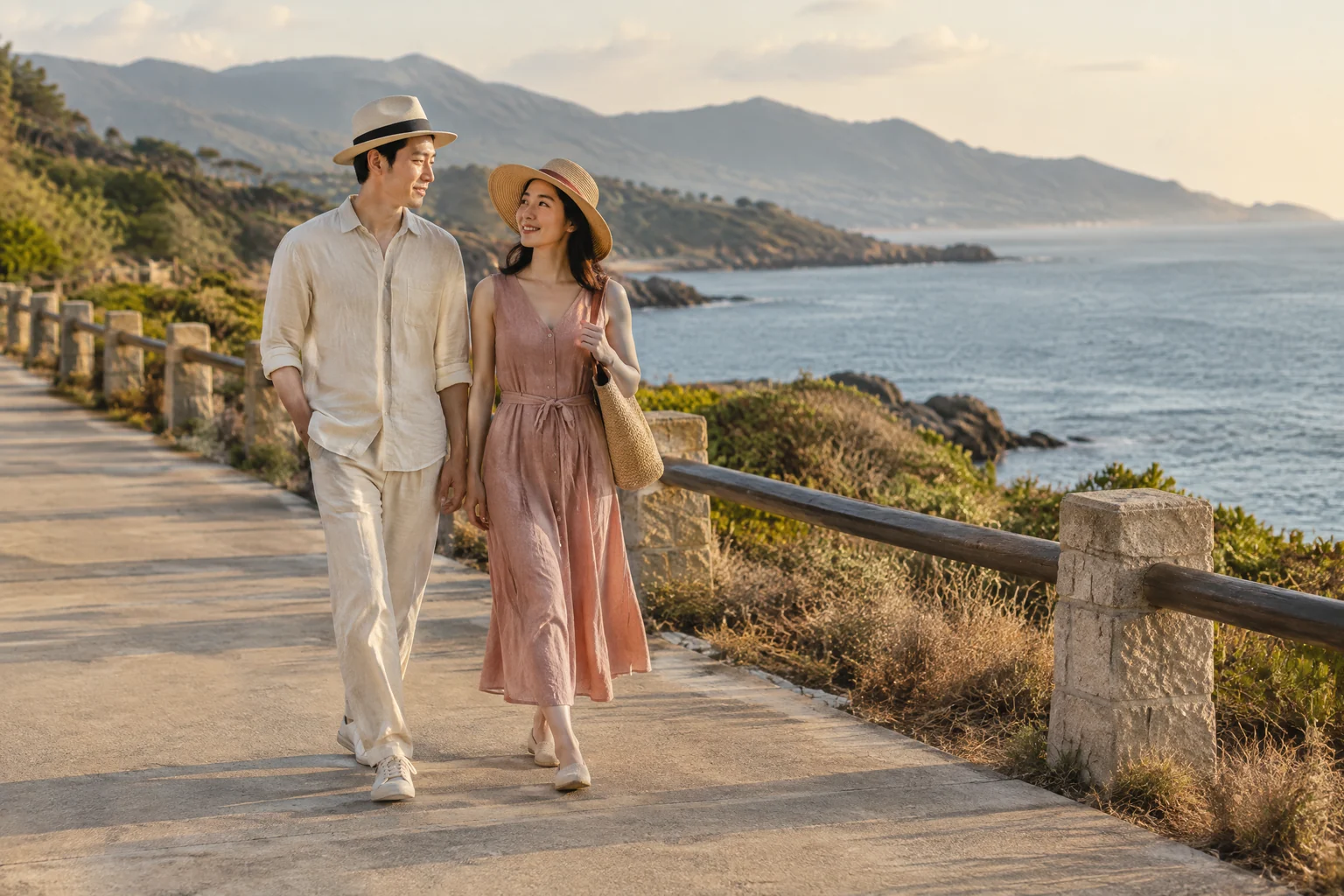
For outdoor photographs, the Hong Kong Observatory advises checking the latest UV Index reading and forecast. Its guidance includes seeking shade and using appropriate sun protection. Use that information when choosing an outdoor stop, rather than judging conditions from how bright a photograph looks. Makeup appearance is not a substitute for sun protection. Keep your own familiar sunscreen accessible and follow its directions. A shaded portrait location also gives both friends an easier place to pause. [1]
Agree on a dry, stationary place for any makeup adjustments. A café washroom visit or an indoor pause can fit better than rushing between transport connections. If no suitable space is available, take the photograph with the look you already have. A weekend album can include hats, sunglasses and bare-faced moments. Put the portrait plan around your comfort and protection choices. There is no need to remove useful protection simply to maintain the original styling idea.
Your friend may also be curious about a new interest while you prefer a land-only afternoon. They can browse a Hong Kong diving school independently if that genuinely interests them. Your own plan might be a café, a gallery and a short portrait stop. Neither choice needs the other's participation. Agree on a convenient meeting point afterwards. Keep your beauty pouch with whoever needs it during that part of the day.
Keep new interests outside the beauty shopping list
Use separate calendar notes for separate choices
A friend who wants introductory information can read Hong Kong scuba lessons for beginners as a separate learning choice. They can note questions about the course format without changing your land-photo plans. Reading a page does not commit either person to joining. Meanwhile, your own practice inventory remains the same few personal cosmetics. Leave course equipment questions with the activity provider. Avoid adding unfamiliar items to the shared beauty shopping list.
Keep a short calendar note for each person, with proposed activities clearly distinguished from confirmed appointments. Include a land-only plan that stands on its own if the other friend's plans change. Choose a meeting window that does not depend on an unconfirmed finishing time. A message such as 'meet after my gallery visit' is clearer than assuming both itineraries will end together. This also prevents your personal pouch travelling away just before your planned portrait stop.
For a different, longer-term enquiry, weekend scuba diving course Hong Kong leads to a page discussing weekend and advanced-course planning. It is not a confirmed date or an automatic beginner option. A reader considering that route should check the relevant requirements and arrangements separately. Keep its enquiry status outside your beauty card. Your makeup plan can be complete while a friend's course question remains unresolved. Both friends can still enjoy independent weekend choices.
Choose a lighter look and review what you used
Let the next inventory reflect your real routine
If an item is missing, remove the step that depends on it. Without your own mascara, keep the eyes simple. Without a particular brush, avoid an unfamiliar improvised application just to finish the original plan. Use only products intended for the area where you apply them. Keep any remaining steps within your usual routine. Your friend can help find a stable mirror or carry the closed pouch. They need not lend the cosmetic you forgot.
At home, unpack both personal pouches before either friend starts rearranging the next day's bags. Clean tools according to their instructions and keep used tools apart until that task is complete. Compare the inventory with what each person actually used. An unused second lip colour might leave the next kit. A frequently searched-for tool might need a clearer place. Review your own pouch separately, because your friend's useful items may not be useful for your routine.
Update the responsibility card while the practical details are fresh. Note whether the carrier arrangement worked at your separate stops and whether either pouch became difficult to retrieve. Keep the solution specific, such as moving your personal pouch before you split up. Save one useful practice photograph privately if it helps you compare your next attempt. Ask your friend before sharing photographs showing them. The best kit supports your day without creating extra obligations for either person.
Key takeaway
Start with the products you already use, then rehearse one look with that exact inventory. Write who owns each pouch and who carries it. Keep eye cosmetics personal, and simplify the look when something is missing. After the weekend, remove unused extras and fix the one storage problem that actually interrupted your day.
Practical checklist
- Choose one familiar land-photo look and a simpler version for each person.
- Check personal products, readable directions and the clean tools each step needs.
- Label every closed pouch with its owner and write down its carrier.
- Reserve separate storage for used tools and keep damp belongings outside clean kits.
- Move personal pouches before splitting up and leave independent enquiries on separate calendar notes.
Frequently asked questions
Can we use one outer day bag for both kits?
Yes, if each personal kit remains closed, labelled and easy to retrieve. Check that both pouches fit without crushing closures. Before you split up, move each pouch to its owner's bag. One shared carrier works best while you are together.
Does using a fresh applicator make borrowing mascara a good fallback?
Keep the mascara personal rather than trying to create an exception. The practical fallback is to omit that eye step. A spare applicator does not change who owns the product. Put your own mascara on the next packing check if you missed it.
Should we buy matching miniature products to save space?
Start by measuring the space your existing essentials need. Matching containers are not the goal, and unreadable labels complicate the routine. Remove unused steps first. If you later choose smaller products, keep their directions identifiable and practise with your own selection before packing.
What should I bring to discuss a makeup lesson?
Prepare your current product inventory and the one step you want to improve. A photograph of your own practice attempt can help describe it. Note whether you want an everyday finish or a casual portrait look. Confirm lesson arrangements directly with BigDeal.
How can we record the kit without sharing personal photographs?
Photograph the closed labelled pouches and your own inventory card instead. Keep your friend's information out of any public post. A private note can record what you used just as effectively as a portrait. Agree separately before sharing any photograph featuring your friend.
Sources
| Source | What it supports |
|---|---|
| Ultraviolet (UV) radiation information | For outdoor land portraits, check the latest UV Index reading and forecast, seek shade and follow sun-protection guidance. Treat makeup appearance separately from protection. |
| Eye Cosmetic Safety | Do not share or swap eye cosmetics, including with a friend. Wash hands and keep eye-area instruments clean. Do not apply or remove eye cosmetics in a moving vehicle. |
Discuss your own makeup plans
Want help building a repeatable personal makeup routine? Tell BigDeal Make Up which land-photo look or application step you want to practise. BigDeal makeup enquiries only: +852 6918 3153.
Ask on WhatsApp +852 6918 3153