
BigDeal Make Up · Hong Kong
Basic Makeup Artist Course And Makeup Artist Course Beginners
Professional makeup study asks you to look beyond your own routine: skin condition, colour, facial proportion, hygiene, communication and practice for different settings. BigDeal Make Up’s Professional make‑up artist foundational practical course is a 25‑hour skills course focused on observation, day and evening looks, basic camera technique, tool hygiene and client communication. It does not promise employment, a licence or a government‑recognised qualification.
At a glance
basic makeup artist course
This Professional Makeup Artist Foundation overview explains what a basic makeup artist course covers for beginners and how the 25‑hour Professional make‑up artist foundational practical course fits a practical learning plan. You’ll get clear expectations about tuition scope, fees, what is typically included or not, and the practical steps to confirm before you enrol. The emphasis is hands‑on techniques that translate to client work, not guaranteed career outcomes.
01
Understanding basic makeup artist course for your learning goal
A useful starting point for basic makeup artist course
A professional foundation differs from a personal routine because it trains observation and repeatable technique rather than one finish tailored to a single face. In the Professional make‑up artist foundational practical course you’ll practise assessing skin condition, undertone and facial proportion to choose techniques that suit different clients, not just your own preferences.
Where a personal lesson often focuses on quick daily application, a basic makeup artist course teaches hygiene, tool selection and how to adapt looks for day, evening and camera. The 25 hours of the Professional make‑up artist foundational practical course are designed to give repeated hands‑on practice so you can replicate looks reliably on others under supervision.
Expect attention to communication and client comfort as much as brushwork. A professional approach includes consultation skills, sanitation routines and simple troubleshooting for common concerns such as sensitivity around the eye area or uneven skin texture — practical habits you’ll apply every time you work with a model or client.
For a closer comparison, consider foundation makeup course Hong Kong
02
How makeup artist course beginners fits a practical makeup plan: Observe skin, undertone and facial proportion before selecting techniques
Practical questions about makeup artist course beginners
Observation underpins good results: skin types and undertones determine product choices and application methods. In beginner classes you’ll learn to identify dehydration versus oiliness, surface texture issues and how to test undertone with veins, jewellery and neutral fabrics so foundation and colour selections sit naturally on camera and in daylight.
Facial proportion study helps you place highlights, shadow and brow shaping to balance features temporarily. The Professional make-up artist foundational practical course scope includes facial‑proportion observation so you can design day and evening looks that flatter, using non‑permanent contouring and removable eyelid techniques where appropriate — always described as cosmetic and temporary.
Practical makeup artist course modules show how different skin conditions affect adhesion and longevity. Rather than a single template, you’ll practice modifying primer, powder and setting approaches; these are transferable skills for a makeup artist training Hong Kong clients with a variety of needs and skin responses.
Match your plans with makeup artist course no experience
03
What to confirm before you choose basic makeup artist course and makeup artist course beginners: Build day, evening and basic camera-ready looks through practice
Planning basic makeup artist course and makeup artist course beginners with confidence
Before you enrol, check how much hands‑on time is included and the balance between demonstration and practice. The Professional make‑up artist foundational practical course is listed as 25 hours and explicitly covers day make‑up, evening make‑up and basic camera make‑up — ask how many models or peer practice hours you’ll get within that time.
Camera makeup introduces considerations such as flash reflection and colour fidelity; simple camera checks are practiced in the course so you can see how textures, powders and highlighters read on a sensor versus the eye. That experience is essential for anyone planning to offer makeup for photos, events or social media content.
Confirm whether practice models or manikins are provided, and whether tuition includes consumables. The published fees show group tuition at HK$6,880 and private tuition at HK$8,910 per person for the Professional make‑up artist foundational practical course; arrangements for brushes, disposables and replacement products should be clarified before paying so you understand any additional outlays.
You may also find it useful to compare bridal makeup artist course
04
Understanding basic makeup artist course for your learning goal: Treat tool hygiene and client communication as working habits
A useful starting point for basic makeup artist course
Tool hygiene is taught as a practical habit rather than a one‑off checklist. Techniques include brush cleaning routines, best practices for cream product sanitation, and how to manage shared palettes safely during classes or multi‑client days. We reference consumer‑facing guidance such as the FDA’s advice on using cosmetics safely for context; this is independent general guidance, not an industry certification.
Client communication covers intake questions, allergy and sensitivity checks, and how to document product names if a client reports a reaction later. These steps protect clients and help build professional credibility; the Professional make‑up artist foundational practical course curriculum includes client communication as an essential component of practical work.
You’ll also practise setting expectations before each service: timing, desired finish and any temporary techniques such as removable eyelid tape. Clear communication reduces misunderstandings and supports efficient kit and consumable planning for each client session.
For another approach, explore how to become a freelance makeup artist
05
How makeup artist course beginners fits a practical makeup plan: Read Professional make-up artist foundational practical course’s 25-hour published course scope and tuition carefully
Practical questions about makeup artist course beginners
Professional make‑up artist foundational practical course is explicit about scope: 25 hours of foundational subjects including colour, skin condition and facial proportion observation, day, evening and basic camera makeup, tool hygiene, client communication and hands‑on practice. Approach that content as a concentrated starter — it provides a structure, not a licence or guaranteed outcome.
The current tuition is HK$6,880 per person for group sessions and HK$8,910 per person for one‑to‑one private tuition. Those prices reflect course delivery and supervised practice time; they do not automatically include brushes, replacement consumables or practice models, so confirm arrangements when you enquire.
Ask for a session timetable so you can see how practical work is distributed across the 25 hours. Confirm the language of instruction, maximum group sizes and whether there are assessment tasks or informal feedback sessions to support improvement during the course.
Before deciding, take a look at Makeup Courses
06
What to confirm before you choose basic makeup artist course and makeup artist course beginners: Clarify consumables, practice models and experience level before enrolling
Planning basic makeup artist course and makeup artist course beginners with confidence
Consumables are frequently omitted from headline tuition. Confirm whether items such as single‑use applicators, cleansing wipes, foundation samples and replacement mascara are included, or whether you must provide them. This avoids unexpected costs and lets you budget a realistic kit‑building plan if you want a professional makeup kit building course segment.
Practice model arrangements can shape your learning. Some learners prefer peer models so they experience both giving and receiving services; others ask the school to supply models. If you need models supplied or have specific skin types you want to practise on, raise that during registration — it’s not automatic with Professional make‑up artist foundational practical course tuition.
Finally, be honest about your starting point. The Professional make‑up artist foundational practical course is a foundation‑level class suitable for beginners seeking professional makeup basics. If you already have regular client experience or formal training, ask whether there is scope for advanced practice or a tailored one‑to‑one session to stretch your skills further rather than repeating basics.
07
Choosing the right professional makeup artist course for your goals in Hong Kong
Compare format, supervision and product use before you book
If you’re searching for a professional makeup artist course Hong Kong offers a range of options — from short workshops to multi‑day foundation programmes — but the core decision is about format and supervision. The Professional make‑up artist foundational practical course delivers 25 hours of hands‑on practice covering day, evening and basic camera makeup; decide whether you want group dynamics (HK$6,880 per person) or the focused pacing of private tuition (HK$8,910 per person). Ask for a session timetable so you can see how demonstration time is balanced with peer or model practice within those 25 hours.
Another important consideration is whether the course uses salon‑grade cosmetics during demonstrations and practice. If your priority is a makeup course with professional products, request a list of brands and whether those products are provided for student use or only shown by the tutor. BigDeal’s teaching kit choices draw on lines frequently used in professional kit work — such as NARS, Dior Beauty, Giorgio Armani Beauty, Estée Lauder, Laura Mercier, Clé de Peau Beauté, Bobbi Brown and M·A·C — but confirm which specific items will be supplied in your session so you can plan any top‑ups or personal purchases.
Finally, clarify practical logistics at enquiry: whether consumables and single‑use applicators are included, whether the school supplies practice models or expects peer partners, and the language of instruction. These details determine how much of the 25 hours you’ll spend actually applying products versus observing, and are essential to match the course to your learning preferences and professional ambitions in Hong Kong.
08
How this foundation course supports early professional pathways
From observation skills to client communication for entry‑level practice
The course focuses on habits that make freelance and salon work more reliable: structured observation of skin and proportion, repeatable application routines, sanitation and clear client briefings. If you’re aiming to build practical confidence quickly, practising the same looks on different faces within a supervised setting is more valuable than a purely theoretical certificate. The Professional make‑up artist foundational practical course is explicitly skills‑based and does not promise a licence or government recognition, so treat it as a concentrated step in a broader learning plan.
For those concerned about product choices and skin reactions, this course includes training on how to identify skin issues and select appropriate products in context. The section on skin condition covers how to interpret diverse responses so you can adapt primer, foundation and setting techniques; if you want a dedicated skin analysis strand look for follow‑up modules or bespoke one‑to‑one coaching to deepen that work. Students who plan client work should also practise documenting products used for each client to manage sensitivities and build professional trust.
Completing this foundation helps you prepare for further specialisation. If your ambition is to move into editorial or bridal makeup you’ll combine these 25 hours with focused photographic or airbrush workshops later. For people intent on building a visible portfolio, plan additional sessions that increase model diversity and photographic practice; this incremental approach turns the foundational competencies into real‑world makeup artist experience and training Hong Kong employers or clients recognise.
Style references
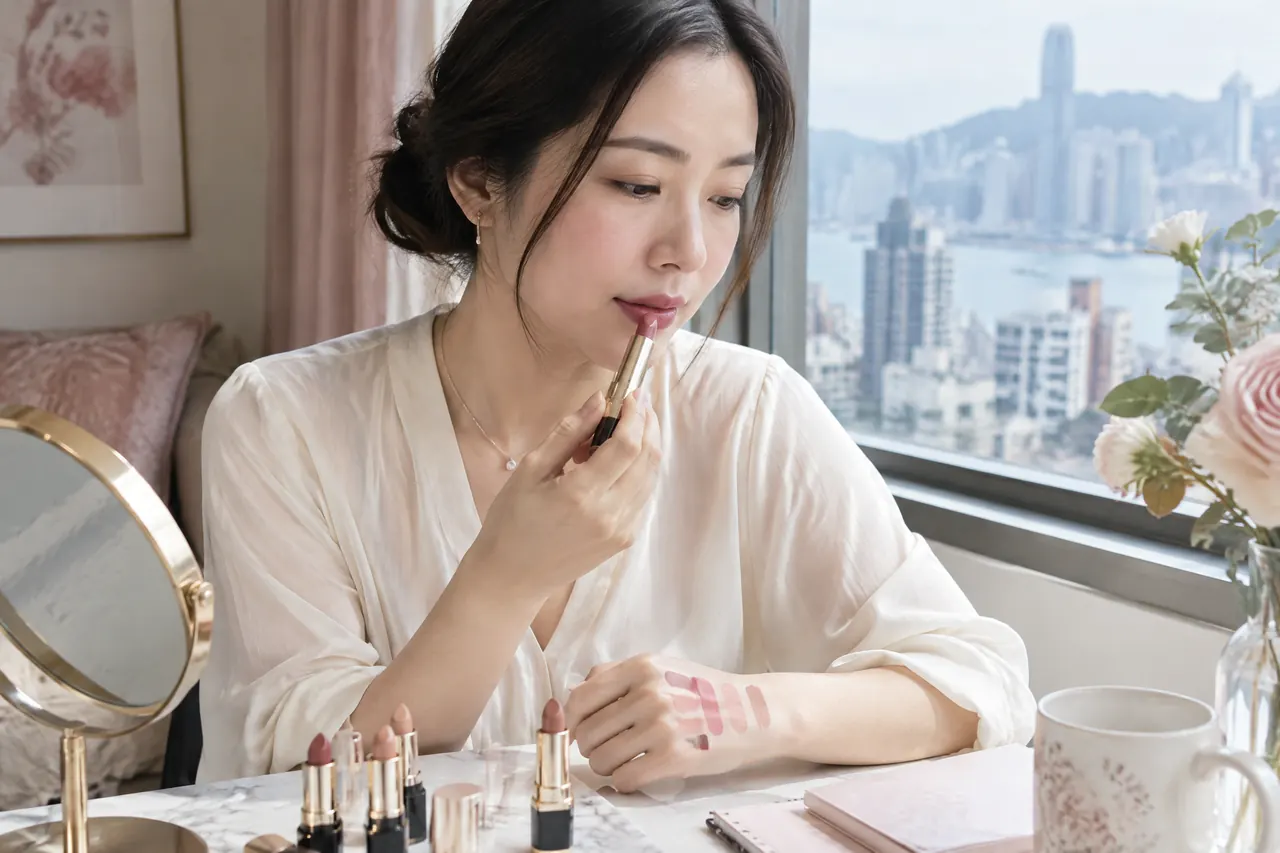
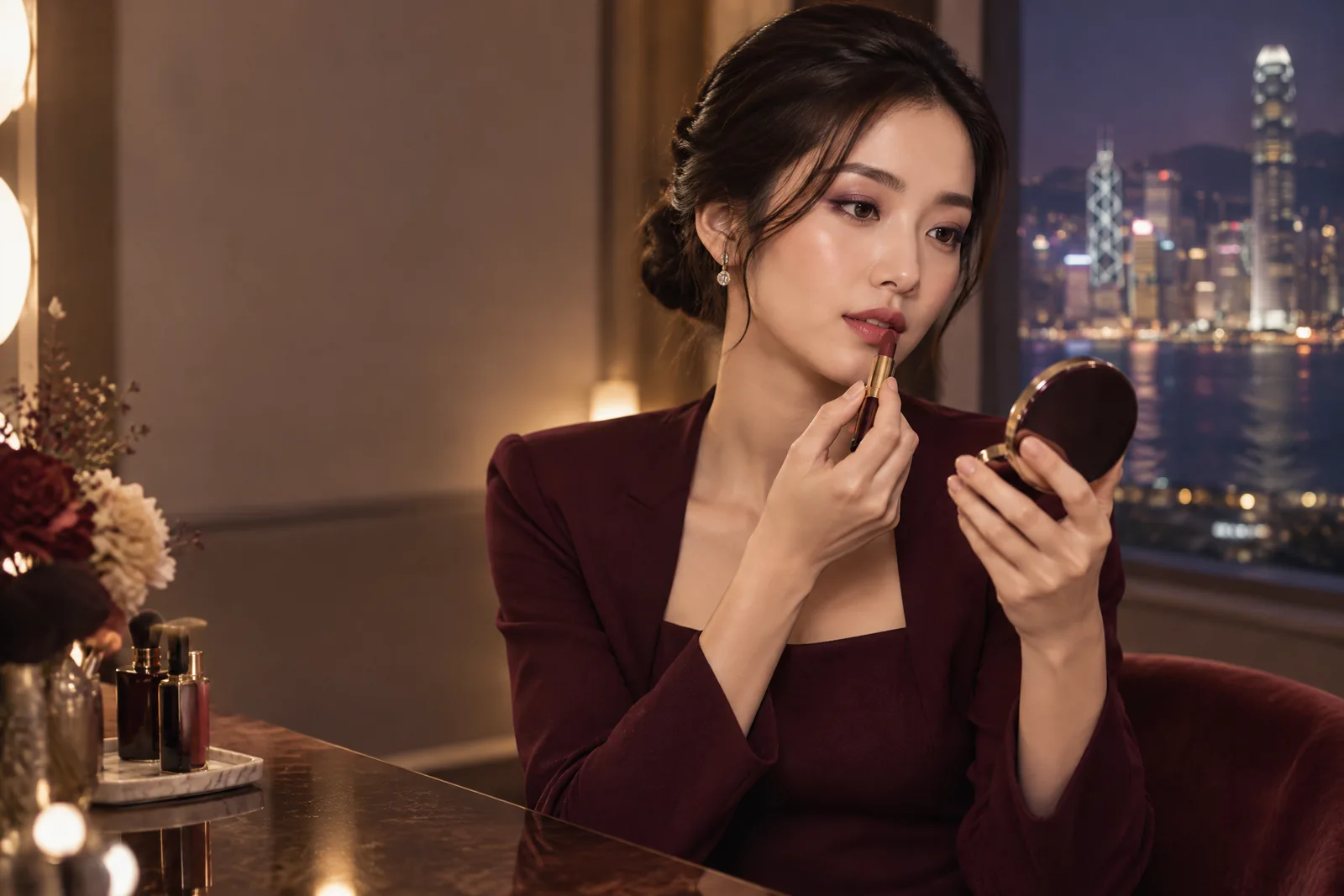
Related makeup style illustrations




Service & lesson fees
Relevant prices and inclusions
Prices and arrangements shown below apply to the listed scope. Confirm timing, location and the final arrangement directly before booking.
All group and private fees are per learner for the entire course.
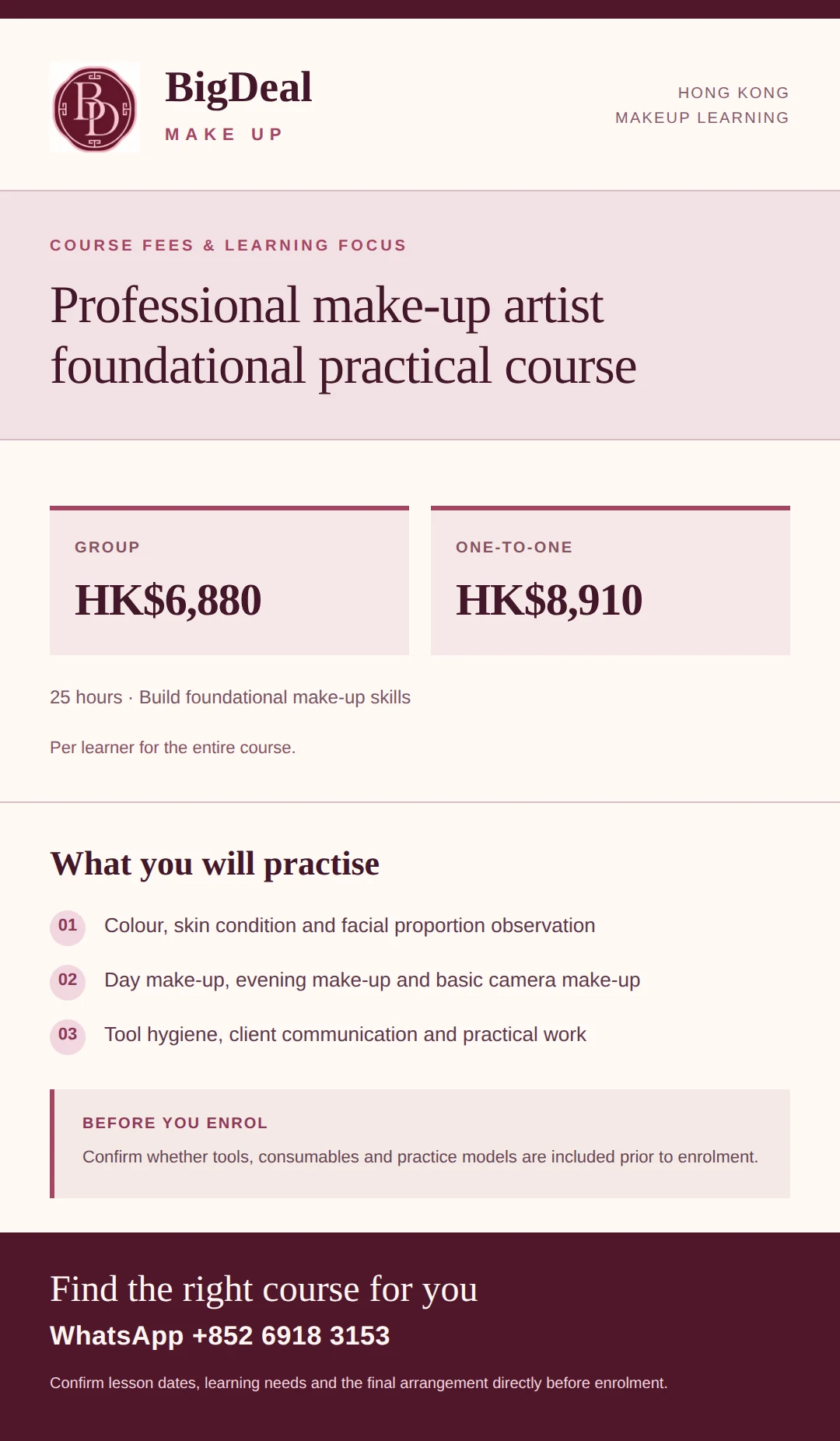
Professional make-up artist foundational practical course
- Group
- HK$6,880
- Private
- HK$8,910
25 hours · Build foundational make-up skills
Lesson focus
- Colour, skin condition and facial proportion observation
- Day make-up, evening make-up and basic camera make-up
- Tool hygiene, client communication and practical work
Arrangement: Confirm whether tools, consumables and practice models are included prior to enrolment.
Professional make‑up artist foundational practical course — essentials at a glance
| Item | Details | Notes |
|---|---|---|
| Course ID | Professional make‑up artist foundational practical course | Professional make‑up artist foundational practical course |
| Duration | 25 hours | Structured practical sessions and demonstrations |
| Published tuition (group) | HK$6,880 per person | Confirm consumables and model arrangements separately |
| Published tuition (private) | HK$8,910 per person | One‑to‑one focused practice; enquire about scheduling |
| Core topics | Colour, skin condition and facial‑proportion observation; day, evening and basic camera make‑up; tool hygiene and client communication | Skills rather than a licence or guaranteed career outcome |
Helpful answers
Frequently asked questions
Is the basic makeup artist course suitable for complete beginners?
Yes. Professional make-up artist foundational practical course is a foundation practical class designed for beginners who want professional makeup basics rather than a personal routine. Over 25 hours you’ll practise observation of skin types and undertones, day and evening make‑up techniques, simple camera checks and tool hygiene. If you’re unsure about whether the pace suits you, ask about group size or choose the private option at HK$8,910 per person for more personalised attention.
Does the makeup artist course include a professional kit or consumables?
Tuition fees do not automatically guarantee a full kit or all consumables. The published fees show group and private tuition levels, but tools, consumables and practice models must be confirmed prior to enrolment. Some sessions provide shared supplies while others expect students to bring basic items. Clarify what’s included when you enquire so you can budget for brushes, disposables or personal products if needed.
Will Professional make-up artist foundational practical course give me a recognised qualification or job placement?
No. Professional make-up artist foundational practical course is a skills course and does not promise a government‑recognised qualification, licensing, job placement or guaranteed portfolio outcomes. It builds practical technique, observation and client‑facing habits that are useful for a makeup course career change Hong Kong or hobbyists moving into part‑time client work, but any career progression depends on experience, further training and individual effort.
How much hands‑on practice will I get in the professional makeup basics course?
The course totals 25 hours and includes hands‑on practical work within that time, but the exact split between demonstration and practice can vary by session. If you prioritise practical application, the private option at HK$8,910 per person typically increases supervised practice time. Ask for a session plan showing model or peer practice hours so you know how many looks you’ll execute under supervision.
Does the course teach camera‑ready makeup and photographic testing?
Yes. Professional make-up artist foundational practical course includes basic camera make‑up to teach how products and finishes read on camera compared with the eye. You’ll practise simple checks for flash reflection, colour rendition and texture visibility. This is practical experience rather than specialist photographic makeup certification, suitable for students preparing to work for social media, events or simple portrait shoots.
What hygiene guidance does the course follow for shared brushes and eye products?
The course teaches practical sanitation routines such as brush cleaning, product hygiene and single‑use applicators for sensitive areas. For consumer‑facing context we reference independent guidance such as the FDA’s advice on using cosmetics safely; this material is general safety information and not an endorsement of any product or a professional standard. Expect practical demonstrations and protocols to reduce cross‑contamination risks.
Is this a makeup class Hong Kong professional students take to start a career?
The Professional make‑up artist foundational practical course is a 25‑hour foundation class designed to build professional technique — it’s an appropriate starting point for people wanting to learn structured application, hygiene and client communication. It establishes practical skills useful for entry‑level work, but it does not guarantee employment or a recognised qualification; treat it as an essential practical block within a longer route to a career.
Will I learn about matching products to different skin types during the course (skin types and undertones makeup class)?
Yes. The syllabus includes hands‑on practice in observing skin conditions and undertones so you can select appropriate foundations, corrections and finishes. If your priority is deeper colour theory or advanced dermatological contexts, ask about supplementary modules; the 25‑hour format delivers solid practical grounding but specialised depth requires further focused training.
Does the school supply a professional kit or show how to use brand products (professional makeup training Hong Kong / makeup course with professional products)?
Tuition details list group and private prices, but consumables and specific product supply must be confirmed when you enquire. If you want to work with particular lines during class, request confirmation in writing: some sessions provide shared professional products while others require students to bring or purchase items. This ensures the practical time is spent learning technique with the products you’ll actually use.
How can I build actual industry connections from this course (makeup artist experience and training Hong Kong)?
The foundation course gives hands‑on practice and client communication skills that help you start taking unpaid or low‑fee assignments to build a portfolio. To convert training into industry opportunities, ask the school about local networking events, recommended photographer contacts or advanced modules that include photoshoots — these deliberate next steps are how students move from classroom practice to recognisable makeup artist experience and training Hong Kong clients expect.
Ready to discuss it?
Book a call to confirm kit and model arrangements
Tell us what you are planning, and we will help clarify the service or lesson details that matter for your enquiry.
From the makeup blog