

At a glance
Build your practice around dependable foundations, not a growing folder of unrelated hairstyle images. Repeat sectioning and pinning until the base stays balanced from every angle. Then add consultations, accessory placement and timed support tasks. The trade-off is clear: faster variation can feel exciting, but careful repetition reveals weak structure early. Keep notes, seek specific feedback and confirm actual training arrangements separately. Progress is most useful when it improves both technique and practical communication.
Start with a bridal hair career practice plan
Set a bridal hair career practice plan baseline
A bridal hair career practice plan works best when it repeats a small set of useful actions. Start with clean sectioning, secure pinning, reference reading and a calm final check. Add one new variable only after the base shape stays stable. Learners who also want camera-aware styling can compare fashion makeup artist training with their current hair focus. That comparison helps separate editorial presentation skills from wedding-day hair responsibilities.
Choose one head shape, one hair texture and one finished direction for the first practice block. Photograph the front, sides and back under ordinary room light. Then record where the structure loosened, where pins showed and which sections felt uncertain. Repeat the same direction before changing accessories or curl size. This creates useful evidence about technique rather than a collection of unrelated attractive images. It also makes feedback easier to act upon.
Set a modest weekly rhythm around preparation, building and review. One session can focus on partings and grip. Another can focus on braids, twists or a low structure. A one-to-one hairstyling class Hong Kong option may suit learners who need concentrated feedback on one persistent difficulty. Confirm the format, tools and practice arrangement with customer service before making plans. Do not assume a private format automatically covers every bridal scenario.

Practise foundations before elaborate shapes
Treat sectioning as a decision about direction and control, rather than a quick preliminary task. Use clean, repeatable partings and clip each area away from the next. Practise releasing one section without disturbing finished work beside it. Then check whether the direction supports the intended silhouette from both sides. A complicated shape cannot compensate for uncertain groundwork. Strong foundations also make it easier to explain your choices during a consultation or supervised review.
Pinning practice should test tension, placement and concealment at the same time. Build a small anchor, then add hair without pulling against the scalp. Pause after each stage and view the shape from several angles. If a pin is visible, do not simply cover it with more hair. Reopen that area and identify the cause. Slow correction develops judgement. It is more valuable than rushing towards a photograph that hides weak structure.
Keep tools and hands organised throughout every practice session. The United Kingdom Health and Safety Executive notes that frequent wet work and hair products can irritate skin. It recommends thorough hand drying, regular moisturising and suitable gloves for relevant chemical tasks. [1] For hair-only practice, use the same thoughtful approach. Keep the station clear, follow product directions and stop if materials cause discomfort. Careful preparation supports concentration and more consistent repetition. [1]

Turn consultations into repeatable notes
Ask questions before choosing the hairstyle
Consultation practice begins with listening, not selecting a saved hairstyle. Ask about the outfit neckline, veil or headpiece, event sequence, hair condition and comfort preferences. A bridal hair practical course can help learners examine hands-on time, feedback and consultation practice together. Keep notes short enough to use at the mirror. They should show the client’s priorities, likely pressure points and any accessory decisions requiring a later check.
Use a simple reference comparison instead of promising an identical result. Separate the reference into silhouette, texture, parting, accessory position and finish. Then ask which feature matters most. A client may value a neat neckline more than every loose strand. Another may care most about a visible hair ornament. This distinction guides your practice. It also prevents a vague request from becoming a misleading promise about how another person’s hair will behave.
After each consultation exercise, turn the notes into one workable plan. Write the proposed order, the accessory moment and one contingency. For example, keep a low structure until a comb position is checked. Alternatively, complete face-framing pieces after a collar has been tried. This is not a guarantee that every detail will remain unchanged. It is a way to notice decisions early. Good notes reduce avoidable surprises when the sequence becomes busy.
| Practice focus | What to repeat | Useful review question |
|---|---|---|
| Sectioning and anchors | Partings, grip and base direction | Does the base support both sides? |
| Structure and finish | Pin placement and surface control | Where does tension show or loosen? |
| Consultation notes | Priorities, accessory point and sequence | Which detail matters most to the wearer? |
| Real-day rehearsal | Ordered stages and one change request | What changed when the sequence moved? |

Sequence accessories and real-day styling
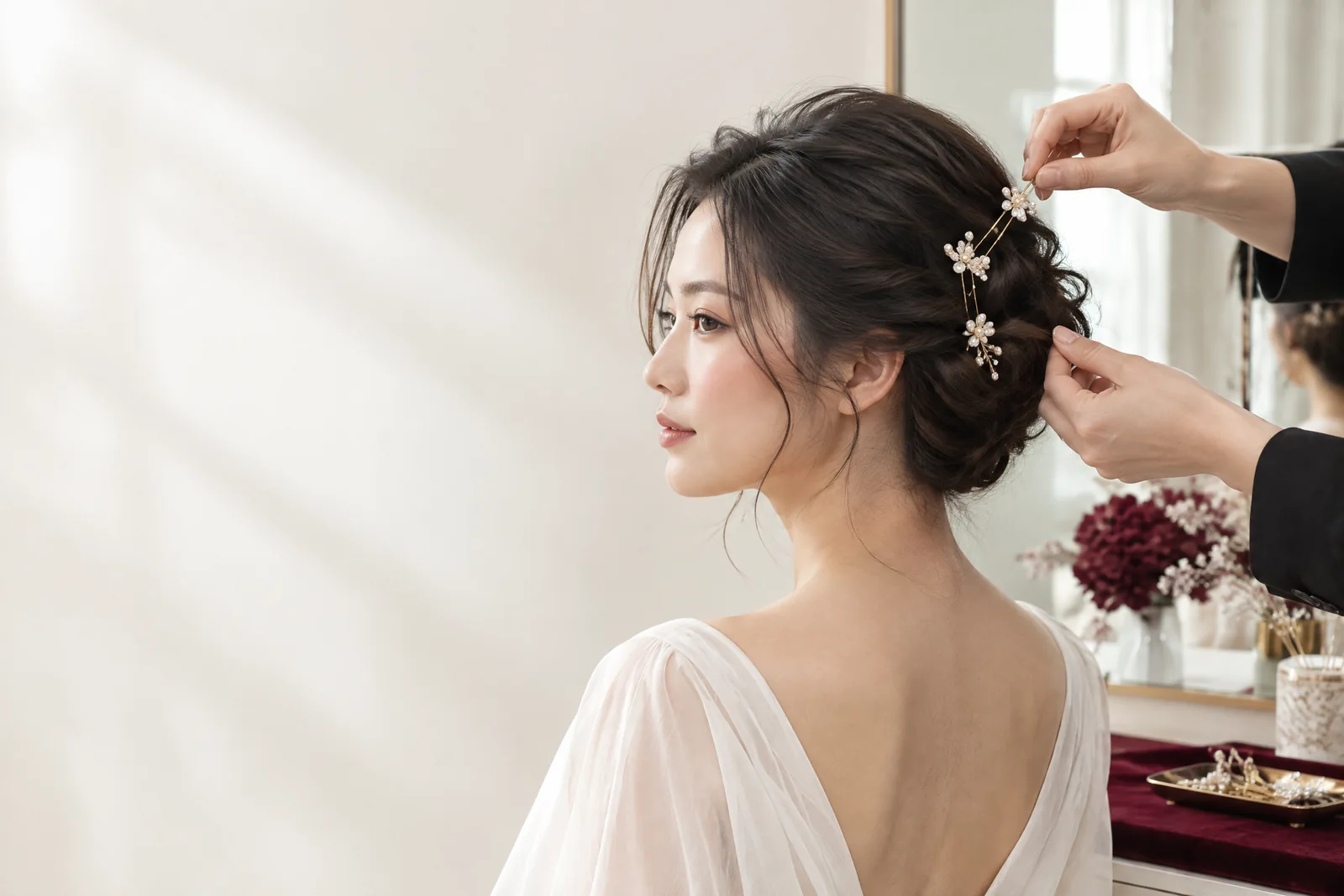
Accessories change both the appearance and the order of a bridal hairstyle. A learner exploring bridal hair for tea ceremony should consider traditional proportion, outfit changes and the security of each piece. Begin by marking where the accessory must sit. Build the supporting structure before placing it. Then check comfort, balance and visibility from the likely photograph angles. Avoid treating a comb, veil or ornament as a final decoration added without structural planning.
Practise a realistic sequence with a clear start and finish point. Begin with preparation and sectioning. Build the main shape, then secure the accessory and inspect the neckline. Leave face-framing details until the larger structure is stable. This order helps you see which changes affect everything else. It also teaches restraint. A late adjustment might improve one side while weakening the finished silhouette. Record that consequence during review rather than guessing later.
Create a short rehearsal for a hypothetical morning event and a later change. Mark when hair must be stable, when an accessory might move and when photographs are likely. Do not present this rehearsal as a prediction of a real booking. Its value is practice under ordered constraints. Ask a supervisor or peer to interrupt with a reasonable change, such as a shifted parting. Then rebuild only the affected area and note what helped.
Rehearse the assistant role under time limits
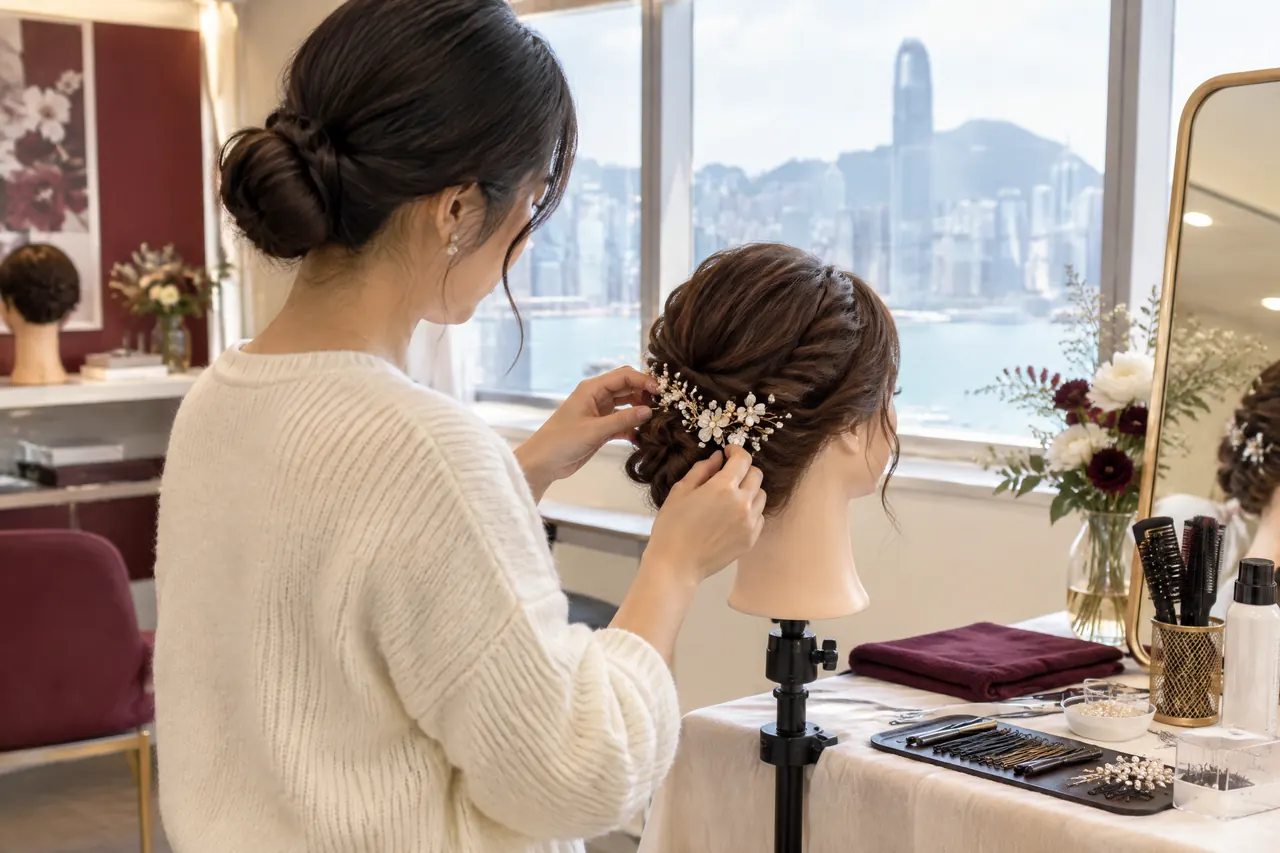
An assistant practice session should make support tasks visible. Set out the tools, review the reference, prepare the next accessory and keep notes on changes. bridal hair assistant training can be a useful page to compare concentrated hair technique with integrated hair-and-makeup practice. Neither path promises work, placements or introductions. Ask which practical tasks are covered and how feedback is given. Career progress should be judged by developing dependable skills, not by assumed employment outcomes.
Use time limits carefully. First practise without a clock, so the sequence remains safe and understandable. Next, set a gentle limit for one defined stage, such as clean sectioning or accessory preparation. Do not shorten every step at once. Speed without control produces hidden problems. Write down the stage that absorbed time and the reason. Was it unclear instructions, missing tools or an unstable base? Target that cause in the next session.
Tool care belongs in the rehearsal, especially when items move between people. A public-health salon guideline says tools should be cleaned before disinfection, then dried and stored separately from used items. [2] Follow manufacturer directions for the products and tools you use. In ordinary practice, keep clean and used items clearly apart. If an implement becomes contaminated, remove it from the working area. Good habits protect the session and support professional judgement. [2]
Review feedback and build career questions
Review one finished style against the original brief before starting another. Look at silhouette, pin visibility, accessory placement, comfort and the sequence used. Ask for feedback that identifies a single next action. “Use fewer pins near the crown” is more useful than “make it neater”. Record the feedback beside photographs taken from consistent angles. Across several sessions, the record shows recurring patterns. It may show improvement, or styles merely hiding the same issue.
When comparing formal study choices, verify descriptions rather than relying on course labels. The Hong Kong Qualifications Register search includes filters for level, registration status, operator and granting body. [3] Use those fields if a provider makes a registration claim that matters to your decision. Separately ask about the actual practice setting, model arrangement, tools and assessment details. A register entry and a useful practice plan answer different questions, so consider both carefully. [3]
Frame career questions around responsibilities you can demonstrate. Can you read a brief, prepare a station, maintain a clean sequence and accept correction? Can you explain why an accessory was placed at a particular stage? These questions are more useful than asking when work will arrive. Build a modest image record with consent where needed. Show varied practice goals, not only highly edited final pictures. A thoughtful record supports clearer conversations about your next learning step.

Prepare for the next supervised practice
Choose the next practice goal from your review, not from social media pressure. You might repeat a low structure with improved sectioning. You might test one accessory on a stable base. Alternatively, you might rehearse the consultation notes before touching the hair. Bring your previous images and notes to a supervised session. Explain one improvement you want to make. This gives the tutor or peer a clear point for feedback and makes progress easier to recognise.
Before the session, prepare a compact kit list and a decision list. Check clips, pins, combs, heat tools and accessory fastenings. Note what must be confirmed with the person wearing the style. Keep a separate area for items already used. Do not add unfamiliar products during the final rehearsal. A predictable set-up leaves more attention for technique, communication and the order of events. It also makes packing down less likely to become a rushed afterthought.
Use this final checklist to keep the plan realistic. It does not replace written confirmation for any course or booking. Confirm session details with customer service, including the current arrangement and practical requirements. Keep career aims open-ended and review them after each block of practice. A well-kept plan is useful because it adapts to feedback. It should never become a promise that a particular style, job or result will follow automatically.
- Choose one base technique and one visible review point for the next session.
- Bring a concise reference, previous notes and any agreed accessory information.
- Separate clean tools from used items throughout practice and packing down.
- Ask for feedback on one specific technique, sequence or communication decision.
- Record the next action before choosing a more complicated hairstyle.
Key takeaway
The practical trade-off is variety versus control. New braids, accessories and styling directions can broaden your visual range. However, repeating a smaller set of foundations exposes weak anchors, unclear sequences and incomplete consultation notes. Choose controlled repetition when you need reliable technique. Choose variation only after you can explain the structure and adapt it calmly. This balance builds better judgement without suggesting a guaranteed career result.
Practical checklist
- Choose one base technique and one visible review point for the next session.
- Bring a concise reference, previous notes and any agreed accessory information.
- Separate clean tools from used items throughout practice and packing down.
- Ask for feedback on one specific technique, sequence or communication decision.
- Record the next action before choosing a more complicated hairstyle.
Frequently asked questions
How often should I repeat one bridal hairstyle?
Repeat it until you can explain the sectioning, anchor points and order of construction. Photograph the same angles each time and note one improvement. Change only one variable after the base feels stable. This makes feedback clear and prevents several new techniques masking the original difficulty.
Should I practise with accessories from the start?
Start with the basic structure, then introduce one accessory once the shape holds. Mark its intended position and check comfort from different angles. Accessories influence balance and sequence, so treat them as structural decisions. Avoid attaching several unfamiliar pieces during one early practice session.
What should consultation practice include?
Ask about the outfit, event order, hair preferences, accessories and comfort limits. Separate essential priorities from optional details. Turn the answers into a short plan that you can follow at the mirror. Consultation practice becomes more useful when you review whether your final sequence reflected those notes.
Does bridal hair practice guarantee assistant work?
No. Practice can strengthen technique, preparation and communication, but it cannot guarantee employment, placements or client introductions. Review course descriptions carefully and ask about the actual practice format. Focus on the responsibilities you can demonstrate, such as organisation, feedback response and controlled styling decisions.
How should I keep practice tools organised?
Set up separate clean and used areas before beginning. Remove contaminated items from the working area and follow manufacturer directions for cleaning products. A clear station makes the next tool easy to find and supports safer habits. It also reduces interruption when you are concentrating on sectioning or accessory placement. [2]
Sources
| Source | What it supports |
|---|---|
| COSHH and hairdressers - key messages | The Health and Safety Executive notes skin risks from wet work and hair products, and recommends hand drying, moisturising and appropriate gloves for relevant chemical work. |
| Salon Infection Control Guidelines | Connecticut Department of Public Health guidance states that tools are cleaned before disinfection, then dried and stored separately from used items. |
| Qualifications Search | Hong Kong Qualifications Register | The official Qualifications Register search provides filters for level, registration status, operator and granting body. |
Discuss your own makeup plans
For Hong Kong training enquiries, WhatsApp BigDeal Make Up at +852 6918 3153 with your current skills and practice goal.
Ask on WhatsApp +852 6918 3153