

At a glance
Build from reliable decisions rather than a fashionable collection of images. First strengthen adaptable makeup, secure hair foundations and a concise consultation method. Next collect permission-based portfolio evidence that states your role honestly. Finally, accept only an appropriate scope while you review each practice result. The trade-off is simple. Slower, structured repetition can feel less exciting. Yet it is more useful than presenting skills before they are dependable.
Start with the bridal artist career roadmap question
How a bridal artist career roadmap should begin
A bridal artist career roadmap starts with one honest question: which wedding tasks can you repeat calmly? Experienced learners should separate a polished personal look from dependable client-facing work. Bridal work combines face analysis, proportion, hair control, timing, communication and careful preparation. Begin with the smallest useful service scenario. Then identify the decisions that still slow you down. That approach creates a practice plan rather than an attractive but vague ambition.
Write down three looks you can complete, three hair shapes you can secure, and three areas needing correction. Use different faces, hair densities and reference styles where possible. A [bridal makeup artist course](/makeup/en/bridal-hair-courses/bridal-makeup-course-study/) can help structure specialist practice after core skills feel stable. Its value is clearer when you arrive with precise questions. Keep the early goal modest: make sound choices, explain them clearly, and record what you would change next time.
Treat feedback as information, not a verdict on talent. Ask a practice partner whether the chosen style feels comfortable, recognisable and suited to the stated brief. Compare that answer with the images and your own notes. If the finish looks good but feels uncomfortable, investigate the cause. If it looks different from the reference, identify the decision that shifted it. This simple review develops judgement as well as dexterity.
- One complexion finish you can adapt without heavy layers.
- One eye direction that respects individual eye proportions.
- One secure hair base before adding decorative detail.
- One calm consultation method for narrowing references.
- One written reset plan when timing changes.
| What you notice | Best next practice | Evidence to keep |
|---|---|---|
| Base looks heavy in close images | Practise lighter layers and targeted correction | Before-and-after notes in similar light |
| Hair loses balance during movement | Repeat sectioning and pin placement | Side and back photographs |
| References create confusion | Practise a short consultation summary | One confirmed direction in writing |
| Portfolio feels repetitive | Plan one contrasting, honest test brief | Images with role and usage permission |

Refresh the techniques that carry every bridal look
Practise choices, not just familiar patterns
Bridal capability is not a collection of copied pictures. It is the ability to explain why a soft base, defined brow, lifted eye, or quieter lip suits a brief. Practise skin preparation, thin application, blending edges and proportion adjustments until your hands stay deliberate. Work in ordinary indoor light and photographic light. Review close images for texture, symmetry and colour balance. Adjust one variable at a time, so the result teaches you something useful.
A [career change makeup course Hong Kong](/makeup/en/professional-makeup-courses/career-change-into-makeup/) may help learners reconnect technique with professional expectations. Do not rush to every advanced look. Instead, choose recurring bridal decisions: coverage level, lash weight, brow strength, cheek placement and lip durability. Make a short face chart after each practice. Note the products, order and changes. Those notes become a more reliable teacher than memory alone.
Keep a controlled practice rotation. One session can test complexion placement on a different skin tone. Another can compare an eyeliner shape under glasses or lashes. A third can refine a softer version of an evening reference. Repeating the same exact face teaches speed, but varied practice teaches adaptation. Do not change every product at once. A single deliberate adjustment makes the result easier to evaluate and repeat.

Build hair capability alongside makeup confidence
Choose repeatable hair foundations first
Hair should develop beside makeup, not after it. A beautiful face loses coherence if the hairstyle slips, feels uncomfortable, or ignores the neckline. Start with sectioning, clean partings, curl direction, pin tension and balanced volume. Then practise adapting one foundation into two finishes, such as a low textured shape and a softer half-up arrangement. This shows whether you understand structure. Accessories should support the silhouette, rather than hide an unstable base.
Learners moving towards combined styling can compare a [professional bridal hair course](/makeup/en/professional-makeup-courses/bridal-hair-career-training/) with their current gaps. A focused hair route may be sensible when makeup timing is secure but styling confidence is uneven. Consider the styling tasks you still avoid, such as clean sectioning, balanced volume or comfortable accessory placement. Then set a practice aim that makes the outcome visible. Ask about current content and arrangements before choosing any learning route.
A [professional Set頭 course](/makeup/en/professional-makeup-courses/set-hair-evening-hairstyling/) may suit a learner needing repeated work in fastening and shape. Use that practice to understand why a form holds, rather than simply copying its outline. Check the result from several angles and after ordinary movement. Notice whether the visual weight still suits the face and neckline. Record the base method, pin direction and corrective changes. Those notes make later practice more deliberate and repeatable.
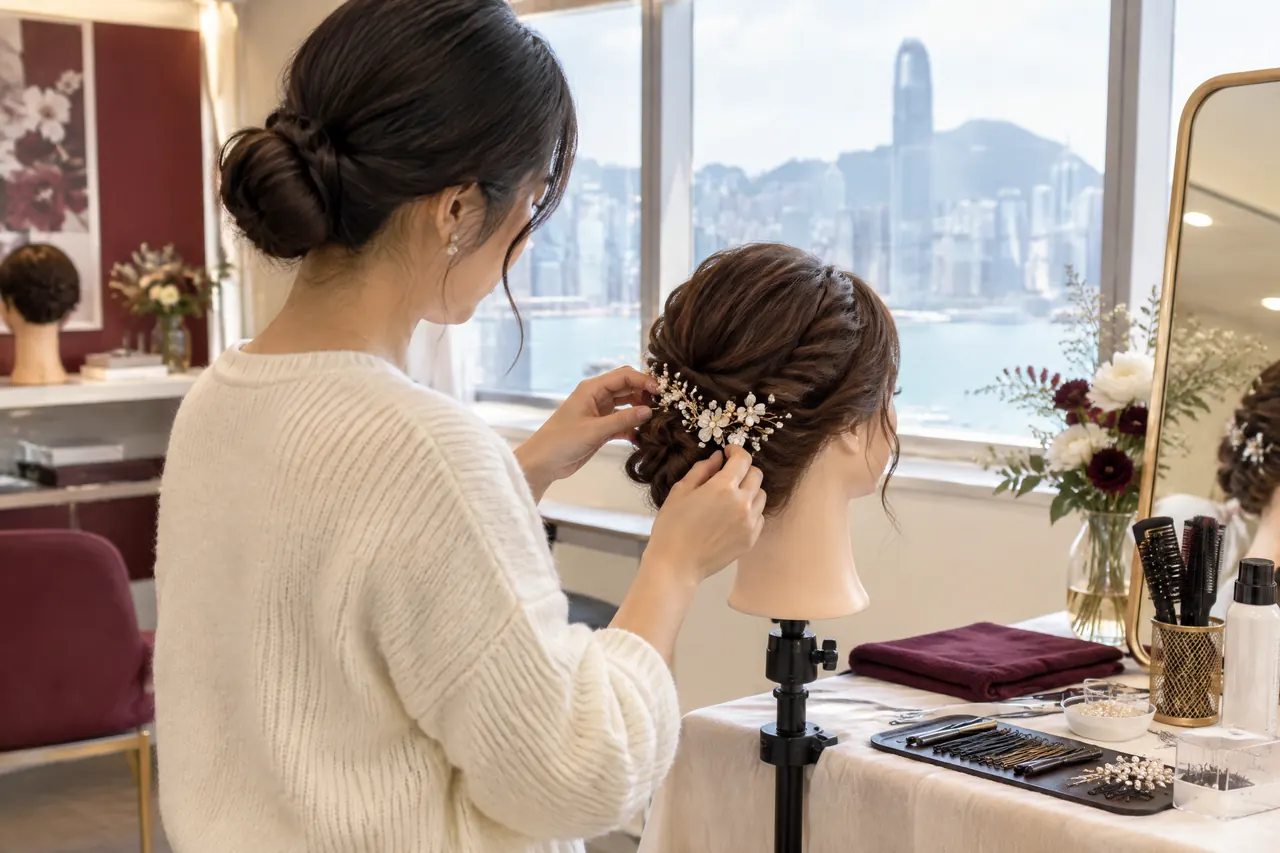
Practise hair at the pace needed for a realistic appointment, but do not sacrifice control for speed. Begin with a visible plan for the parting, anchor points and accessory position. Check the shape from the front, sides and back before calling it complete. Then ask the model to move naturally. This reveals weak pins and uneven balance. Record the corrected version, because the correction is often the most useful learning outcome.

Test service readiness before accepting bridal enquiries
Use a simple rehearsal, then assess it honestly
Service readiness means more than finishing a look. It includes listening, confirming the brief, protecting enough preparation time, keeping tools orderly and responding when preferences change. Rehearse a consultation with a friend acting as a bride. Ask for outfit information, hair length, references, event sequence and comfort concerns. Summarise the chosen direction aloud. This tests whether your questions lead to a usable plan, rather than a long and confusing conversation.
For qualification claims, check the source and exact wording before relying on them. The official Qualifications Register provides searches for qualifications and operators. The Hong Kong Qualifications Framework describes standards, quality assurance and industry relevance among its objectives [1] [2]. That verification can clarify a learning claim. It does not replace a varied portfolio, reliable hygiene habits, or respectful communication with a prospective client. [1] [2]
Create portfolio evidence with clear boundaries
Show range without pretending every look is a booking
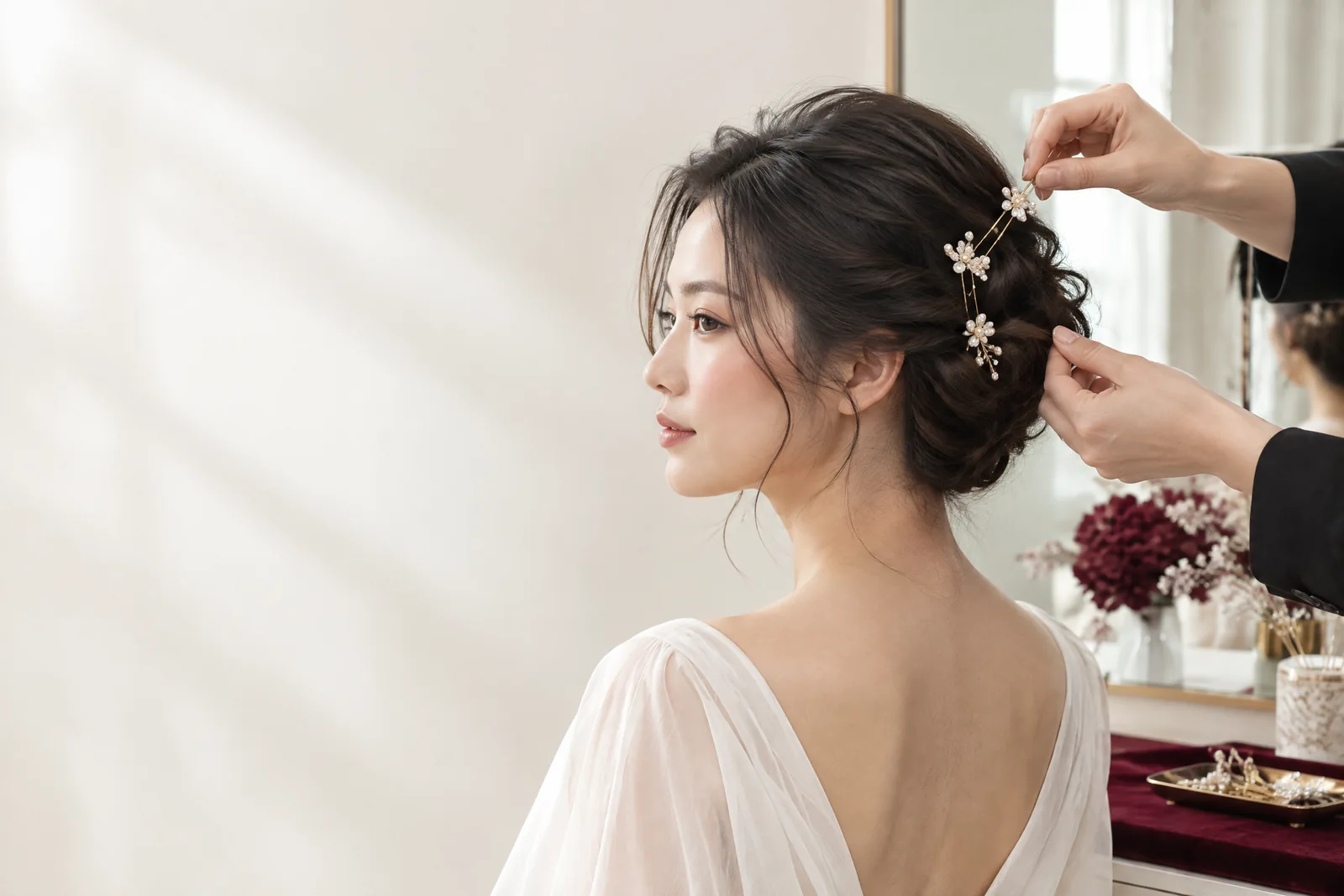
A useful bridal portfolio demonstrates decisions, not only dramatic results. Plan a few small projects with distinct briefs: soft daylight, formal evening, traditional elements, or an accessory-led hairstyle. Obtain permission before sharing images. Keep the credit and usage arrangement clear with everyone involved. Photograph front, three-quarter and close detail views in consistent light. Then select images that show face shape, texture, hair structure and the whole styling relationship.
A [bridal makeup career course](/makeup/en/professional-makeup-courses/bridal-makeup-career-path/) supports focused career planning. Avoid presenting practice images as paid wedding work. Label test projects honestly and avoid excessive editing. Include a short description of the brief, your role, and the visual priority. That context shows potential clients your taste while keeping the presentation straightforward. It also gives you a clear basis for comparing later work and improving the next brief.
Plan each portfolio session as a small collaboration. Agree the date, look, styling responsibility, image use and credit before the work begins. Keep references concise enough for everyone to understand. On the day, photograph the finished result before changing the look. Afterwards, select only images that represent your actual contribution. A clear record protects trust and makes later portfolio descriptions more accurate. It also discourages rushed, misleading presentation.
Turn practice into a careful freelance launch
Set boundaries before building momentum
A freelance start benefits from clear limits. Decide which looks you can offer. Identify the information needed before considering an enquiry. Also decide when further practice is needed. The guide on [how to become a freelance makeup artist](/makeup/en/professional-makeup-courses/freelance-makeup-artist-path/) supports wider planning for independent work. For bridal work, a concise written brief reduces assumptions. It should cover timing, desired finish, hair direction, references and confirmed practical arrangements.
Do not mistake an enthusiastic enquiry for proof that you are ready for every request. Consider assisting, supervised practice, or smaller arrangements while your portfolio grows. Build a repeatable kit preparation routine and a simple cleaning record. Keep client preferences separate from your own style preferences. The aim is dependable preparation, not a promise of a particular result. If a request exceeds your current skills, explain the limit early and politely.
Review progress and choose the next focused step
Use evidence from practice rather than urgency
Review every practice project using the same questions. Did the base remain appropriate in the final images? Did the hairstyle keep its intended balance? Did your notes explain the choices? Did the consultation uncover a clear direction? A weekly review makes gaps visible before they become habits. It also prevents an expensive collection of products becoming a substitute for deliberate repetition. Choose one improvement for makeup and one for hair each cycle.
The best next step depends on evidence. If your makeup is sound but hair lacks structure, focus on hair. If your images look polished but consultation notes remain unclear, practise client communication. If both techniques need pressure testing, arrange varied practice rather than chasing a new trend. BigDeal Make Up provides Hong Kong makeup services and makeup lessons. Enquire about current arrangements if you want to discuss a practical learning focus.
Set a review date before starting the next round of practice. Compare your new images with the chosen brief rather than with unrelated social media trends. Look for improvements in judgement, structure and clarity. If one gap persists, narrow the practice further. A useful roadmap changes with the evidence you collect. It should not lock you into a path that no longer matches your skills, interests, or intended client scope.
Key takeaway
Prioritise repeatable makeup, stable hair and clear communication before expanding your service scope. A smaller, honest portfolio is more useful than a larger collection that hides uneven foundations.
Practical checklist
- List the bridal tasks you can repeat calmly.
- Choose one makeup and one hair gap for practice.
- Write a short consultation question list.
- Photograph work in more than one useful view.
- Obtain clear permission before sharing portfolio images.
- Confirm current learning arrangements before enrolling.
Frequently asked questions
Do I need to master both makeup and hair immediately?
No. You need an honest view of your current scope. Combined bridal styling is useful, but early practice can still focus on one strong area. Develop the second area steadily, rather than presenting incomplete capability as a finished service. Clear limits protect both your confidence and the client conversation.
How many looks should a first bridal portfolio include?
There is no universal number. Start with a small, edited group that shows distinct decisions. Include varied complexion finishes, eye emphasis and hair direction. Each image should have a clear brief and permission for its use. A smaller portfolio with consistent evidence is easier to discuss than a crowded collection.
Should I buy a large kit before taking bridal enquiries?
Buy according to the practice you can explain and repeat. Begin with reliable essentials across preparation, complexion, colour and hygiene. Record what each item solves during practice. Expand only when a recurring gap is clear. Product quantity does not replace technique, colour judgement, cleaning, or careful consultation.
What should I ask when comparing advanced learning options?
Ask what practical tasks are covered, how much supervised repetition is included, and what you should already know. Confirm current dates, materials, teaching arrangements and any assessment language directly. Also ask whether the content addresses makeup, hair, consultation, or portfolio practice. Choose the option that addresses your demonstrated gap.
How can I tell whether I am ready for a client-facing bridal role?
Use repeated practice as evidence. You should be able to explain your choices, work methodically, receive feedback calmly and state your limits. Readiness also includes organised tools and clear written communication. It does not require claiming perfection. Begin with appropriate scope and review each experience honestly afterwards.
Sources
| Source | What it supports |
|---|---|
| Qualifications Register | The official Qualifications Register provides searches for qualifications and operators. |
| Hong Kong Qualifications Framework | The HKQF describes standards, quality assurance and industry relevance among its objectives. |
Discuss your own makeup plans
For Hong Kong makeup lessons or services, WhatsApp BigDeal Make Up at +852 6918 3153. Share your current skills and intended practice focus.
Ask on WhatsApp +852 6918 3153