
At a glance
Compare a familiar parting, a temporary styling adjustment and a haircut before choosing. Glasses, the final crop and your daily routine can change the decision. Keep salon questions separate from makeup arrangements, and leave room for a no-change option when the current outline already suits your brief.
Begin your portrait parting consultation with familiar hair
What should your portrait parting consultation preserve?
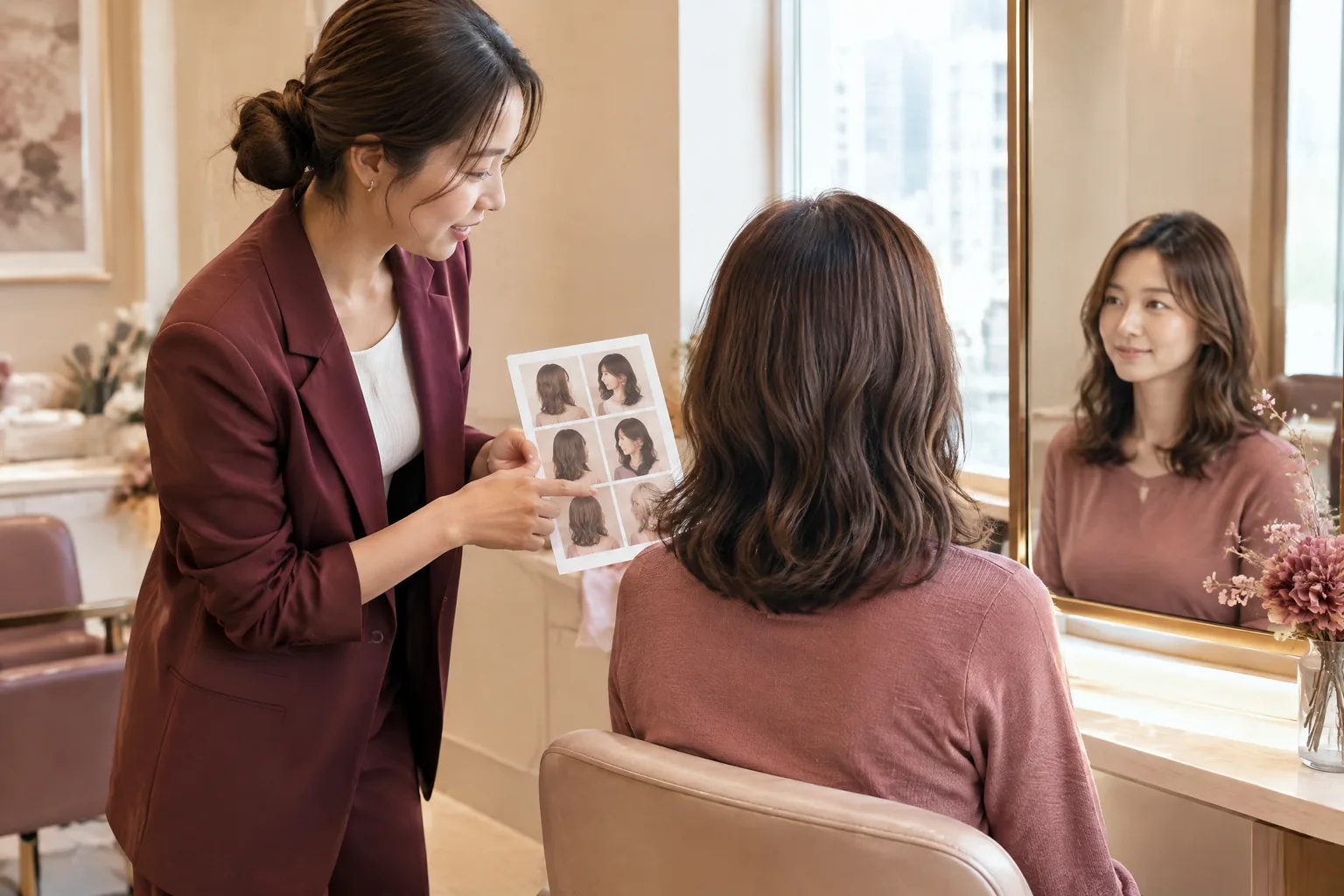
Bring a recent photograph showing how your hair falls on an ordinary working day. Add a reference you like, but explain the difference between the two. Perhaps you want the same parting with less hair across one eye. Perhaps you prefer more visible forehead without shortening the front. These are specific portrait requests, not instructions to copy another person's whole haircut. Start with what colleagues would recognise before discussing a new silhouette.
Write down where the portrait will appear and how tightly it may be cropped. A small staff-directory circle can exclude most of your shoulders and hair ends. A wider website portrait may show the outline against a jacket. Ask your photographer which versions are planned rather than guessing from the booking name. That information helps you decide whether the concern is a visible front piece or a length outside the eventual frame.
For a corporate or personal-branding brief, BigDeal's business headshot makeup page is a relevant starting point for makeup enquiries. Describe whether you normally wear glasses and how much finish feels comfortable. Include the planned background and clothing if known. Ask which makeup or styling arrangements can be discussed for your session. Reading a service page does not confirm a booking, and a portrait enquiry does not automatically include a haircut.
Choose one feature to protect before experimenting: your usual side, forehead coverage or the length tucked behind your ear. Test a modest change at home without cutting. Take front and slightly turned photographs while wearing your work clothes. Judge whether you feel like yourself, not whether the new side looks fashionable. If both options feel comfortable, bring both to the consultation. Explain which you prefer for daily wear after the shoot.
- Keep: the front length needed for your usual ear tuck.
- Try: a temporary parting shift before discussing scissors.
- Confirm: the final crop with the photographer.
Use a location haircut phrase as a reading label
What can the women's Sheung Wan page help you ask?
A location-based phrase helps you find relevant information; it is not a salon name or evidence of several branches. For this portrait, the useful question is what would actually be cut. Separate the longest end line from the layers and the pieces near your face. A request to tidy the back does not clearly describe the front. Point to the dry endpoint you would accept before asking for a general refresh.
Vitso Hair's women's haircut sheung wan page discusses length, shape and the way hair is worn between visits. Use it to prepare questions about keeping front pieces or retaining tieable length. It belongs to the same owner as BigDeal, so treat it as related salon information, not independent advice. Confirm the proposed cutting scope and appointment arrangements directly with the salon. A small trimming request does not establish a separate trim-only booking.
Explain your shortest comfortable front length using a visible landmark, such as the cheekbone or chin. Show where it sits dry, especially if the hair bends. Then demonstrate your usual ear tuck or tied style. This gives the salon more useful boundaries than saying you need professional-looking hair. If a reference exposes both brows, ask whether temporary positioning could achieve your portrait goal. Consider that before shortening front pieces for daily wear.
Keep the decision reversible when you are unsure. Trying the familiar parting with one side tucked may answer the photography concern without altering length. A trim becomes worth discussing when you also want that change outside the photograph. Compare the benefit in the frame with the inconvenience of a shorter piece afterwards. Do not arrange an unfamiliar haircut immediately before a session merely because a reference picture has a cleaner outline.
| Option | Useful when | Trade-off to discuss |
|---|---|---|
| Keep the parting | The familiar outline suits the brief | A front piece may need repositioning |
| Try a temporary shift | You want more forehead visible | Check comfort with your actual glasses |
| Discuss a front trim | You want shorter pieces beyond the shoot | Ear tucking may become harder |
| Refresh the end line | You also want a daily haircut change | The difference may sit outside the crop |
Give a stylist more than a flattering reference
Which habits and hair-history details change the discussion?
Describe the routine you actually follow, not the one you might adopt for an important photograph. Say whether you air-dry, use a brush or reset the fringe each morning. Mention any parting that returns after washing, and show where the hair resists your preferred direction. A polished reference may depend on styling you do not want to repeat. Asking about ordinary wear keeps the conversation connected to life after the portrait session.
The hair stylist hong kong page introduces Vitso Hair's enquiry approach around current hair, retained features and everyday habits. The phrase is a resource label, not a claim that one stylist suits every portrait brief. As a same-owner resource, it can help you organise a salon enquiry. Ask directly about the relevant service, consultation language and visit arrangements. Do not assume a city-wide phrase means multiple locations or guaranteed availability before your shoot.
Give a concise history of colouring, bleaching, perming or straightening when relevant to the proposed work. Include recent dates if you know them, and identify sections that behave differently. Bring product names rather than broad descriptions such as strong treatment. You are supplying context for an individual discussion, not diagnosing the hair yourself. A photograph shows shape and colour, but it cannot settle whether another chemical process is suitable for your present hair.
A helpful reference note names the feature and its limit. You might like the visible eyebrow but reject the shorter fringe. You might like the side volume but prefer your existing parting. Ask what can be borrowed through styling and what would require cutting. If the answer involves more change than you wanted, return to your original priority. The aim is a clear choice you understand, not agreement with every feature in an attractive image.
Put glasses and parting in the same makeup brief
Which eye and brow details need coordinating?
Wear the frames you expect to use in the photograph when discussing the parting. Show whether the front hair touches the upper rim or slips behind the arm. Decide if both brows should remain visible or if your usual partial coverage matters more. Tell the makeup artist how you normally wear your glasses. The goal is to coordinate visible features. An uncovered face in a reference is not a reason to remove your familiar glasses.
Westcott's portrait-lighting tutorial explains that unwanted lens reflections can be addressed through light angle, subject position or camera position. Ask your photographer to check reflections in a test image with your actual frames. Change one thing at a time so the cause remains clear. Makeup cannot redirect a light reflection on a spectacle lens. A glasses test therefore belongs alongside the hair check. Review it before choosing stronger eye definition or deciding to remove the frames. [1]
For an acting portfolio, the actor headshot makeup Hong Kong page is the relevant BigDeal enquiry route. Tell the team about your current casting presentation and whether glasses are part of it. For a corporate portrait, retain the business brief rather than choosing an acting service by appearance alone. Confirm the proposed makeup scope for the actual photograph. Different portrait purposes deserve separate conversations, even when the same person needs both images.
For the makeup discussion, distinguish visibility from intensity. You may want a brow edge readable above the frame without changing its familiar shape. You may prefer restrained eye makeup when the frames already feel prominent. Bring a photograph wearing your normal makeup so the artist understands that baseline. After the photographer's initial test, review the hair position and makeup together. Avoid repeatedly switching the parting while individual eye or brow adjustments are being assessed.
Keep conditioning requests within cosmetic care
What needs confirming beyond a softer-looking finish?
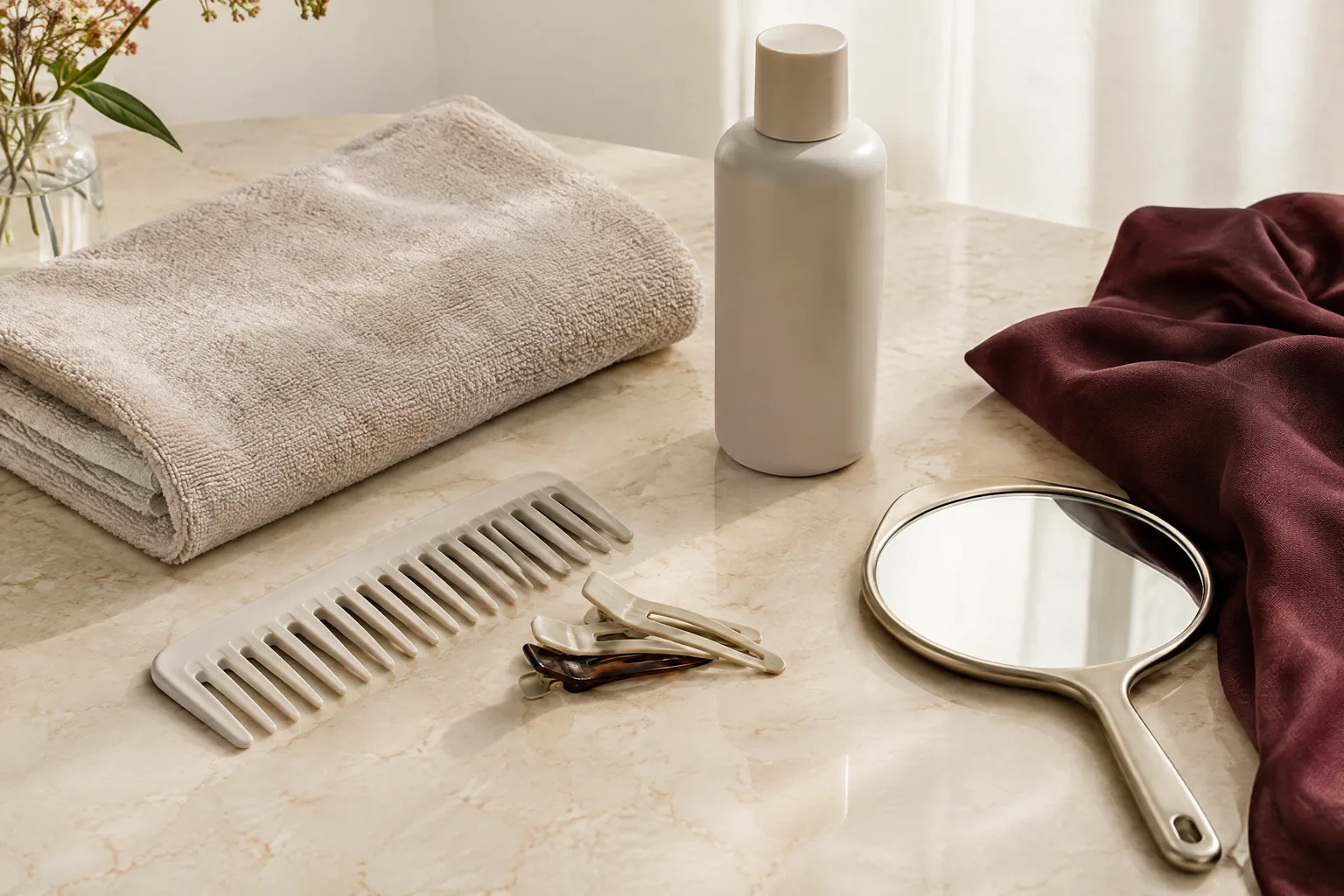
Describe the section that feels rough or catches during normal handling, rather than asking for perfect hair on camera. Explain whether you want easier combing, a lighter root area or more comfortable ends. These goals are different from changing the parting or straightening the outline. If you like your existing movement, say so before discussing care. An attractive finish in one photograph does not tell you how the hair will feel after your next wash.
The American Academy of Dermatology recommends conditioner after washing and distinguishes application areas by hair type. Its guidance places conditioner on the ends for fine or straight hair. For dry or curly hair, it recommends application throughout the lengths. Use that distinction to describe your own routine and ask where proposed care would be applied. It supports a practical conversation about manageability, not a claim that a particular salon treatment will permanently repair damaged strands. [2]
Vitso Hair's conditioning treatment page describes cosmetic care for lengths and ends, including questions about softness and everyday handling. It is another same-owner reading resource, not an independent product recommendation. Ask the salon which products, application areas and steps would be proposed for your hair. Confirm the visit contents before agreeing. Conditioning is not a promise of hair growth. A care label alone does not establish suitability alongside colour or perming.
Keep a familiar care routine if your only concern is the portrait's appearance and you are uncertain about changing products. If care is discussed, tell the salon what has previously left the roots coated or the ends uncomfortable. Let the makeup team know about relevant product sensitivities too. Scalp pain, irritation or new shedding needs appropriate healthcare advice rather than a cosmetic portrait solution. There is no need to add an unfamiliar process just to complete the preparation list.
Confirm the photograph brief using current hair information
Who confirms trimming, makeup and the no-change option?
Send current front and side photographs with your preferred parting clearly stated. Note any haircut already arranged, but distinguish a discussion from a confirmed appointment. If the length changes, update the makeup and photography brief instead of relying on older reference images. Keep the explanation short enough to act on. The person arranging makeup needs to know the hair you will arrive with. Several unlabelled pictures of possible changes can obscure that information.
Build the day's sequence around the actual session location and confirmed preparation times. In Hong Kong, allow for your journey between the preparation venue and the photographer. Ask whether the final hair check can happen after that journey and who would handle it. Do not presume that a separate salon appointment and a makeup booking share staff or timing. If there is no confirmed window for cutting, keep the existing length as the working plan.
BigDeal's professional makeup for photoshoot Hong Kong page can help you start the makeup discussion for your planned shoot. Share the portrait purpose, glasses, chosen parting and any confirmed hair changes. Ask what makeup or styling preparation can be arranged and what information the team needs beforehand. BigDeal's enquiry does not confirm Vitso's hair services. Keep any cutting or conditioning questions with the salon so each provider can confirm its own scope without ambiguity.
Finish with one agreed version and one simple fallback. The preferred version might be your normal parting with the front tucked away from the glasses. The fallback might retain the same parting without the tuck if it feels uncomfortable in the test image. Ask the photographer to review both before committing to the final pose. Keeping the original cut is a valid outcome when the consultation resolves the concern through positioning rather than permanent change.
| Decision | Who to ask | Information to supply |
|---|---|---|
| Cutting or care scope | The salon | Dry length limits and hair history |
| Makeup arrangements | BigDeal Make Up | Portrait purpose, frames and current photographs |
| Crop and lens reflections | The photographer | Intended uses and actual glasses |
| Fallback with no haircut | Makeup team and photographer | One familiar parting and acceptable positioning |
Key takeaway
A useful portrait consultation separates what the camera needs from what you want to change permanently. When a tuck or positioning adjustment resolves the concern, keeping your familiar parting and cut can be the most considered choice.
Practical checklist
- Save current front and side photographs wearing your usual parting.
- Mark the shortest comfortable front length and the length to retain.
- Bring the glasses and clothing planned for the portrait.
- Label preferred features in references instead of requesting the whole look.
- Confirm makeup, salon work and photography arrangements with each provider.
Frequently asked questions
Do I need to change my parting for a professional portrait?
No. Begin with the side you normally wear. Consider a temporary adjustment only for a specific concern, such as hair crossing your glasses. Judge it against your portrait purpose and comfort.
Should I trim my fringe before booking makeup?
First decide whether you want the shorter length in daily life. Discuss cutting with the salon separately. Tell the makeup team about confirmed changes, and send updated photographs after any cut.
Are glasses a reason to choose stronger eye makeup?
Not automatically. Discuss the visible brow and eye areas with your makeup artist. Ask the photographer to assess lens reflections separately, since changing makeup does not solve the lighting angle.
Can conditioning replace a trim for the portrait?
They address different decisions. Conditioning concerns cosmetic feel and handling; trimming changes length and outline. Describe the concern first, then ask the salon whether either service is relevant to your goals.
Can BigDeal confirm the salon visit with my makeup enquiry?
No salon visit is confirmed by the makeup enquiry. Ask BigDeal about makeup arrangements, and contact Vitso directly for hair service scope and availability. Shared ownership does not combine those confirmations.
Sources
| Source | What it supports |
|---|---|
| Portrait Lighting Tips to Avoiding Glare in Glasses | Unwanted glasses reflections can be addressed by adjusting light angle, subject position or camera position; assess them with the photographer rather than treating glare as a makeup issue. |
| Tips for healthy hair | Conditioner is recommended after washing, on the ends for fine or straight hair and throughout the lengths for dry or curly hair. This informs application-area questions, not promises about a specific salon treatment. |
Discuss your own makeup plans
For BigDeal Make Up makeup arrangements, WhatsApp +852 6918 3153 with your portrait date, intended use and current photographs. Ask about the makeup scope for your session. Please confirm any haircut or conditioning service directly with Vitso Hair.
Ask on WhatsApp +852 6918 3153