
At a glance
For bridal photographs, hairline planning is mostly about exposure, fit, and a repeatable routine. Front lace describes lace at the hairline. Full lace describes lace across the cap. Neither label confirms the edge finish, attachment, or styling range of a particular piece. Bring the veil, reference photos, and planned parting to the trial. Judge the complete face, neckline, and hair arrangement together. Confirm product-specific instructions with the provider before the event.
A lace front bridal hairline starts with exposure
Plan the lace front bridal hairline before makeup
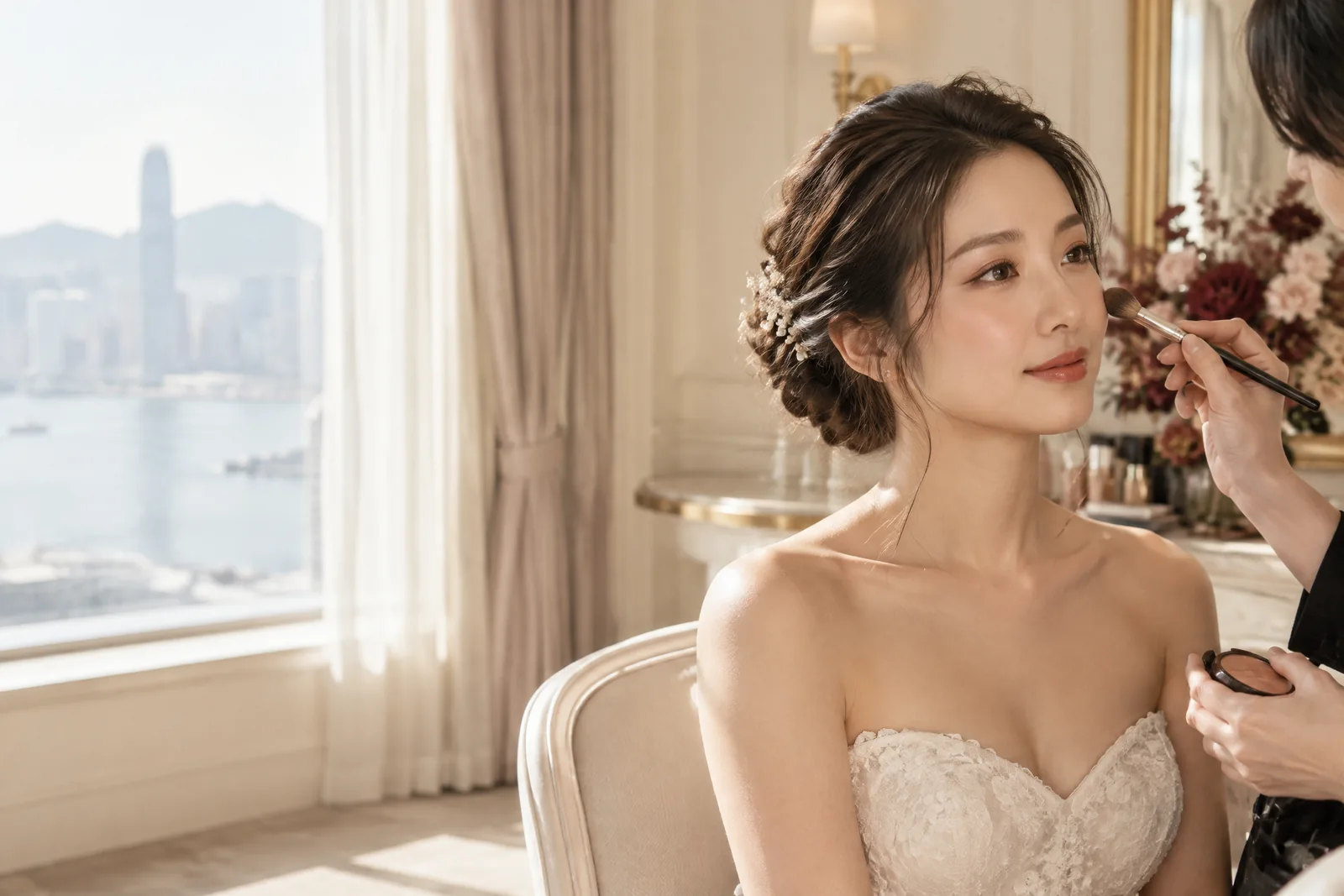
Begin by naming the moments when the forehead will be visible. Think of walking shots, greetings, veil placement, and head-and-shoulders portraits. A fringe, side sweep, or centre part changes that exposure. So does a low camera angle. Tell the hair stylist which side you turn toward most often. This helps the team assess the hairline as part of the whole bridal shape. It is more useful than chasing a generic idea of an invisible edge.
A camera does not see a hairline in isolation. Foundation finish, brow shape, contour placement, and flyaways all sit nearby. Heavy sculpting can make the forehead look flatter. An overly pale base can make any edge look more distinct. During the trial, photograph the face from the intended distance. Take one image in soft window light and another under the venue-like light. Review both before deciding whether the part and veil position feel balanced.
The term lace front wig describes lace at the front hairline, not one universal cap specification. The exact lace width, remaining cap construction, fibre, fit, and attachment still need checking. That distinction matters when a bride expects the front to be uncovered. Ask for guidance on the actual style you are considering. Treat catalogue photographs as references for discussion. They do not prove that an edge will look the same on every wearer or in every photograph.
Map the hairline to the portrait plan
Use framing to set the trial priorities
Ask the photographer which frames are likely to be close. A headshot, a first-look image, and a seated portrait often invite different scrutiny from a distant group photograph. Bring three reference images that show the crop you want, not only the makeup colour. Include one image with the veil visible. The hair team can then see how combs, pins, or volume could change the line. Check the forehead, temples, and crown.
At the mirror, use a calm sequence. First check the hairline without the veil. Next, place the veil and turn both directions. Finally, tilt the chin as you would for portraits. Watch whether the hair falls forward or pulls backward. A style that looks settled while standing still may shift when you greet people or change outfits. Planning for those movements is kinder than making a last-minute adjustment beside the camera.
If a pre-wedding session is planned, a bridal makeup pre-wedding shoot can rehearse the full look. Use it to test whether the brow, lashes, neckline, and hair direction still read well together. Keep the question practical: where should the veil sit after the portrait sequence? A rehearsal gives useful visual feedback. The final hairstyle should follow instructions for the exact cap, accessories, and securing method.
Choose construction language carefully
Compare lace front and full lace without assumptions
Construction terms should guide questions, not settle them. The American Cancer Society lists lace front and full lace among common full-wig types. It also notes that size charts can vary by brand. That supports a simple bridal habit: check the maker’s size and fitting directions for the individual piece. Do not use another model’s measurements as a promise. A cap that is comfortable during a quick try-on may behave differently through a long ceremony and portrait schedule. [1]
Front lace concerns the hairline area. Full lace refers to lace extending across the cap. Those labels describe coverage, rather than a fixed level of realism or security. Wider coverage may be relevant when you want to explore parting or arrangement across more areas. It does not establish every possible updo. Front lace may be enough when your decision centres on the forehead and an established part. The actual design and its wear guidance remain decisive.
Use lace front vs full lace wig as a construction comparison, then make the bridal question specific. Where is the lace on this item? What forms the rest of the cap? Which parting positions are supported? How should it be secured? Clear answers reduce guesswork when you add a veil. They also prevent a common mix-up. A lace term does not prove a material, attachment approach, or unrestricted styling freedom.
Make the veil a fit test, not a final accessory
Place the comb after confirming the hair direction
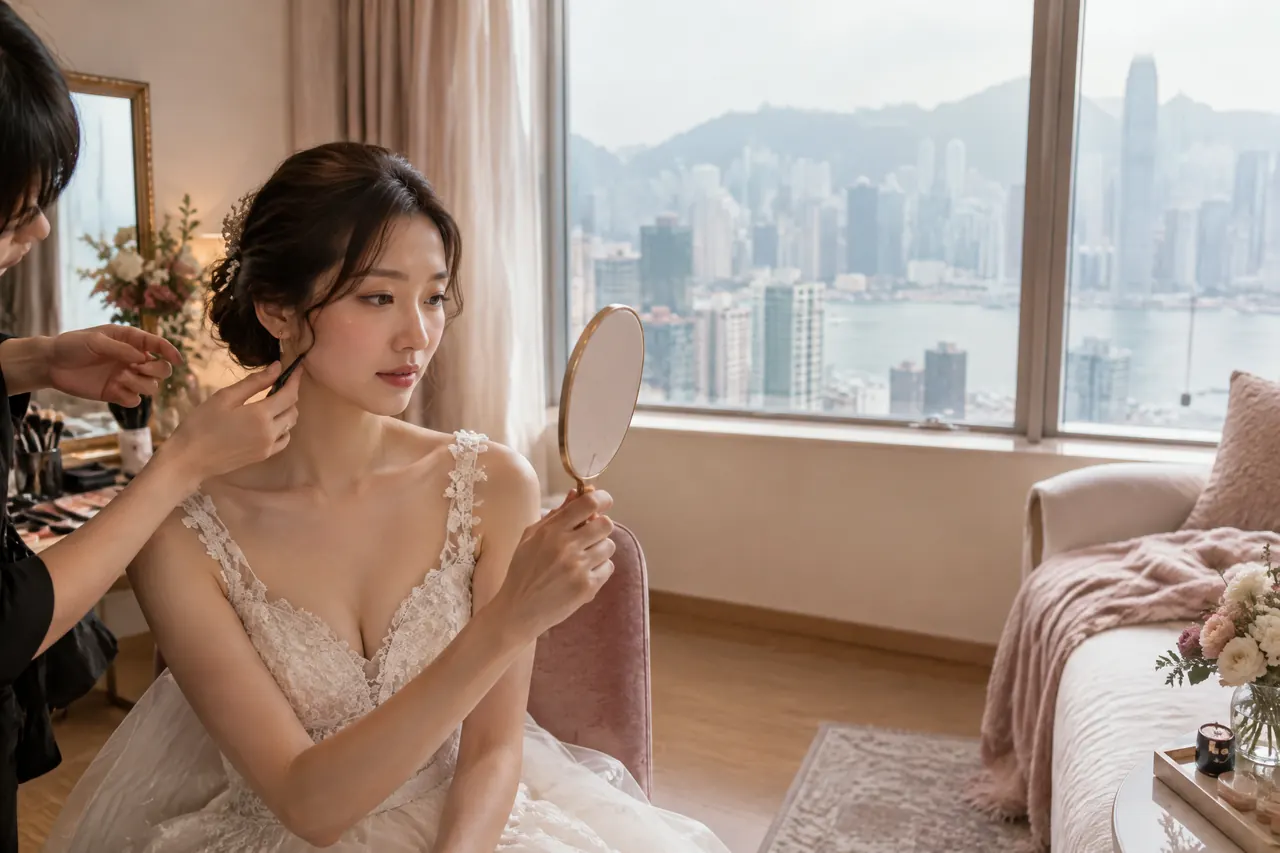
Bring the actual veil to the trial whenever possible. Its weight, comb width, and the angle of insertion can affect the hair arrangement near the crown. Start with the veil held in place before adding pins. Then decide whether the desired volume is still visible from the front. Ask someone to take a side view. It may show a raised area or a gap that the mirror does not reveal. Small placement changes can improve the overall silhouette.
Heat, humidity, and travel can change how a finished look feels over several hours. Build the makeup routine around gentle touch-ups near the hairline. Blot rather than rub. Keep a clean puff away from any attachment area. For guidance on base choices through warm, damp conditions, see long-lasting makeup Hong Kong. The aim is not to promise an unchanged face. It is to agree on a sensible touch-up order that respects the chosen hair arrangement and veil.
Use this editorial decision table during a trial. It is a planning aid, not a product-rating system. The strongest choice is the one whose documented construction matches the hairstyle, veil placement, and care routine you can follow. If a detail is not written down, ask before the event. Leaving a feature unknown is safer. Do not fill the gap with assumptions from a close-up image or broad construction name.
| Trial question | Why it matters | What to confirm |
|---|---|---|
| Where will the hairline show? | A close crop and a swept-back style show different areas. | Portrait order and hair direction. |
| Where will the veil comb sit? | The crown shape can change after insertion. | Comb angle, pin plan, and removal order. |
| What does the cap label mean? | Coverage terms do not define fit or attachment. | Exact construction and maker instructions. |
| Who may adjust the look? | Too many hands can disturb the arrangement. | One agreed touch-up role. |
Let light and distance guide the finish
Check close portraits before committing to details
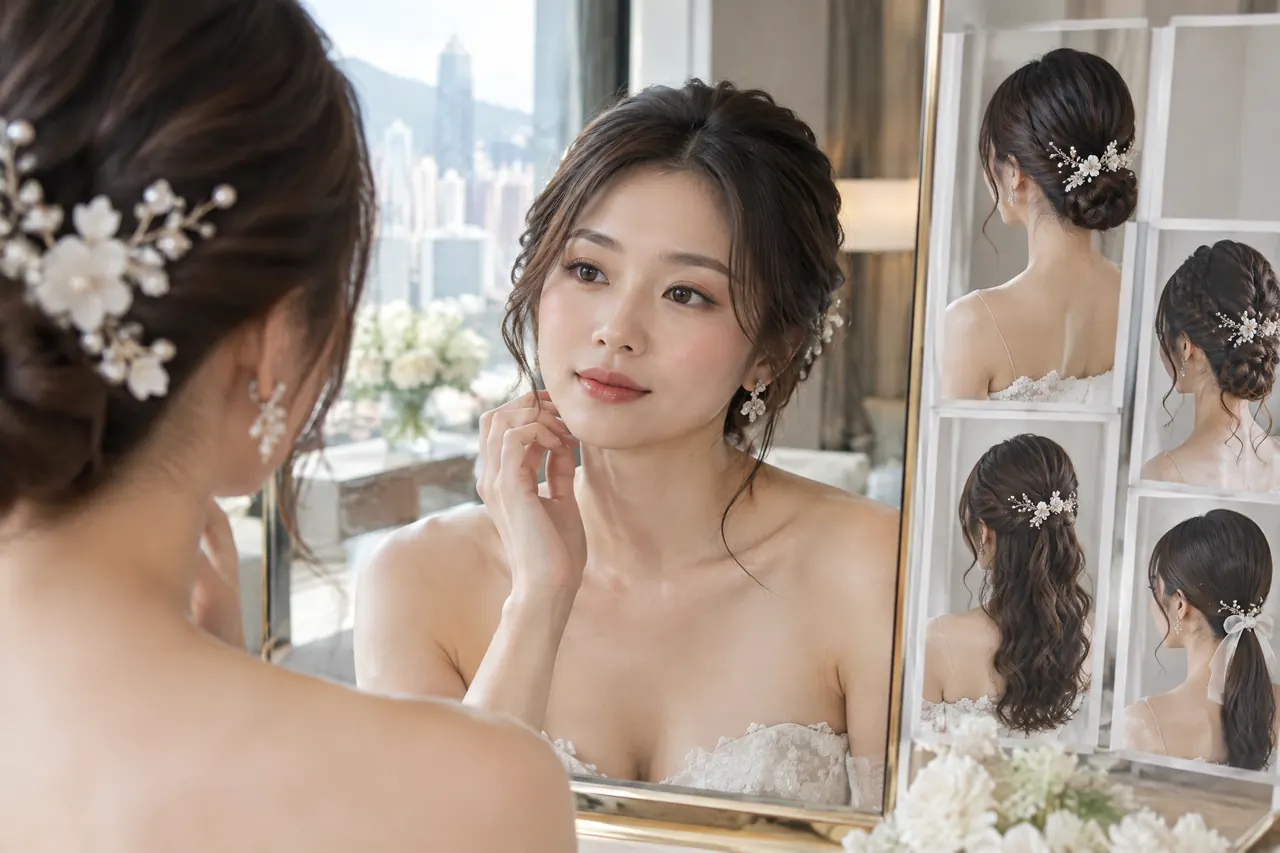
Portrait light changes what the camera emphasises. Professional Photographers of America explains that lighting patterns describe where shadows fall on a subject. A hairline can read differently as the face turns toward a window, soft key light, or darker background. Take trial photographs from the expected camera height. Review them at normal screen size first. Zooming in can help spot a detail, but it should not replace judging the complete portrait. [2]
When hair is brushed away from the forehead, the front edge becomes a larger part of the composition. When hair falls forward, the eye may move instead to the part, brow, or cheekbone. Consider a full lace wig if broader lace coverage is central to the styling discussion. It still does not tell you the approved attachment, the exact parting range, or the best veil placement. Confirm those details for the specific style.
Use lighting tests to make a makeup choice, not to diagnose a flaw. A soft front light may reduce visible contrast. A strong side light can show more texture and shadow. Ask for one neutral, close portrait before the veil is fitted and one after. Compare the images beside each other. If the hairline feels too prominent, adjust one element at a time. A calmer brow, a different part, or a shifted veil may solve more than extra makeup.
Build a routine that survives the schedule
Confirm care, attachment, and touch-up roles
A wedding morning becomes easier when each person knows their role. The wearer should know the instructions supplied for the exact hair piece. The hair stylist should know the intended part, veil timing, and approved handling. The makeup artist should know which areas require a light touch. The photographer should know if an early close portrait matters. These simple handovers avoid several people adjusting the same area differently. They also protect time for the ceremony rather than repeated guesswork.
Use a written decision table for the final confirmation. It turns vague concerns into questions that can be answered before the wedding. Note the cap description, the wearer’s preferred part, and what happens when the veil is removed. Add the exact care guidance to the same note. Do not improvise trimming, tinting, adhesive use, heat, or removal methods because a photograph looks tempting. The correct action depends on the item and its documented instructions.
Pack only the items the team has agreed to use. A small mirror, blotting sheets, a clean puff, and the veil can be enough for a tidy check. Avoid handing unfamiliar products to friends during portraits. If a product causes unexpected scalp discomfort or a skin reaction, stop using it and seek suitable professional advice. A bridal timetable should leave room for a calm reset. Comfort and clear communication matter more than forcing a photographic result.
| Moment | Check | Decision |
|---|---|---|
| Before makeup finishes | Part and front exposure. | Keep or refine the hair direction. |
| After veil placement | Crown volume and side profile. | Secure only as planned. |
| Before close portraits | Hairline, complexion, and flyaways. | Use the agreed light touch-up. |
| Before leaving | Comfort and movement. | Stop changes when the look is balanced. |
Finish with a shared rehearsal checklist
Keep the morning calm and the hairline intentional
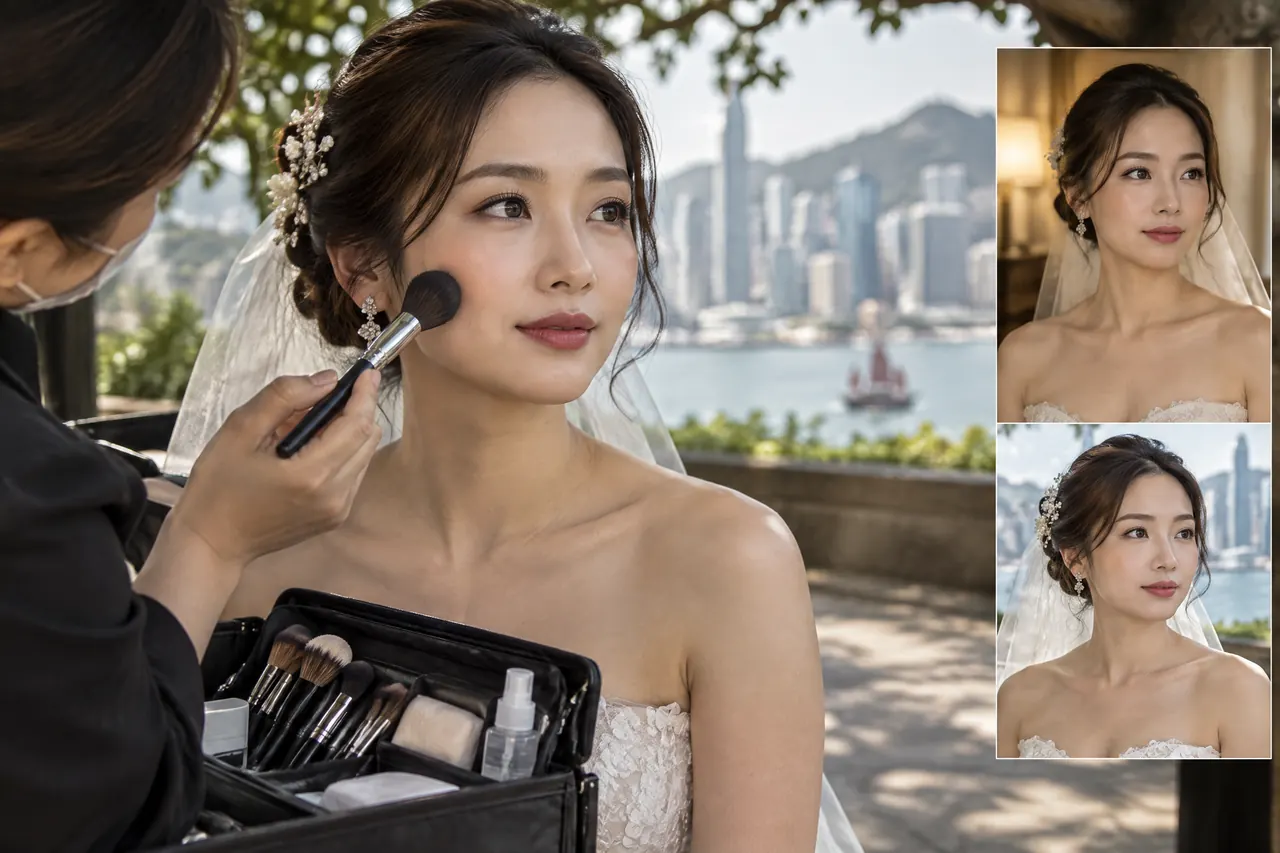
Use the following reminders at the final trial. They are designed for a makeup-and-hair conversation, not as instructions for altering a cap. Confirm the planned part before the base makeup is complete. Check the front view, side view, and a close portrait. Place the veil only after that first check. Keep one reference image for the intended finished look. This makes it easier to communicate if several people are preparing in a busy Hong Kong hotel room or venue.
Set aside a short check before portraits begin. Look for hair shifted around the temples. Check veil placement at the crown and makeup needing blotting. Do not keep chasing tiny details once the overall line feels balanced. Photographs record expression, posture, fabric, and light as well as hair. Agree on the final look while there is time. Then leave it alone unless comfort, fit, or a visible shift requires attention.
Outside a salon, discuss the working surface, mirror, and timing with a home makeup artist Hong Kong. Share the veil, hair reference, and expected portrait order before the appointment. That creates a practical setup without assuming any particular wig service or product supply. The goal is a prepared makeup environment. The team can then check the hairline, protect the veil, and reduce surprises.
- Bring the veil and one close-portrait reference to the trial.
- Confirm the exact cap description, size guidance, and care instructions.
- Photograph the front, both sides, and the finished look with the veil.
- Assign one person to make agreed touch-ups near the hairline.
- Keep unapproved tools and products away from the cap area.
Key takeaway
A photo-ready bridal hairline is not a contest between cap labels. It is a coordinated decision about exposure, fit, styling, light, and handling. Ask what the individual cap actually covers. Rehearse the planned part with the real veil. Take a close portrait before the wedding morning. When the hairline, brows, complexion, and neckline feel balanced together, stop adjusting and let the photographs capture the occasion.
Practical checklist
- Bring the actual veil, comb, and a close-portrait reference to the trial.
- Confirm the exact cap construction, size guidance, attachment, and care instructions.
- Test the chosen part and hair direction before inserting the veil.
- Photograph the finished look in soft light and portrait-style lighting.
- Name one person for calm, approved hairline and veil checks.
Frequently asked questions
Does a lace-front label guarantee an invisible bridal hairline?
No. A lace-front label identifies lace at the front hairline. It does not confirm the lace dimensions, edge finish, cap fit, attachment method, or the final look in your lighting. Test the planned part, makeup, and veil together. Ask for guidance on the exact item rather than relying on a category name or a single close-up image.
Should I choose full lace just because I want a veil?
Not automatically. A veil does not itself require full-lace coverage. Start with where the comb will sit, how you want to part the hair, and how much hairline exposure the style creates. Full lace describes broader lace coverage. Confirm the specific cap layout, styling guidance, fit, and attachment before deciding whether it serves your planned bridal arrangement.
What photographs should I take at the hair and makeup trial?
Take a front view, both side views, and one close portrait before and after the veil is placed. Use the likely camera height and more than one light condition. Review the images at normal size before zooming in. These frames help the team discuss the whole face and hairstyle, instead of reacting to an isolated detail seen only in a magnified image.
Who should touch up the hairline during portraits?
Agree on one person before the event. That person should know the approved handling routine for the exact item and coordinate with the makeup artist. Avoid casual adjustments by several friends. A single agreed role reduces accidental shifts around the front edge, keeps the veil safer, and gives the photographer a clearer point of contact when a short adjustment is needed.
Sources
| Source | What it supports |
|---|---|
| American Cancer Society — Choosing and Wearing a Wig | Lists lace front and full lace as common full-wig types and advises checking the relevant brand size chart and directions. |
| Professional Photographers of America — 9 Types of Portrait Lighting | Explains that portrait-lighting patterns describe where shadows fall on a subject and should be selected with the subject and desired image in mind. |
Discuss your own makeup plans
Planning a bridal makeup trial? Bring your veil, reference portraits, and hair plan so the complete look can be discussed calmly.
Ask on WhatsApp +852 6918 3153