
At a glance
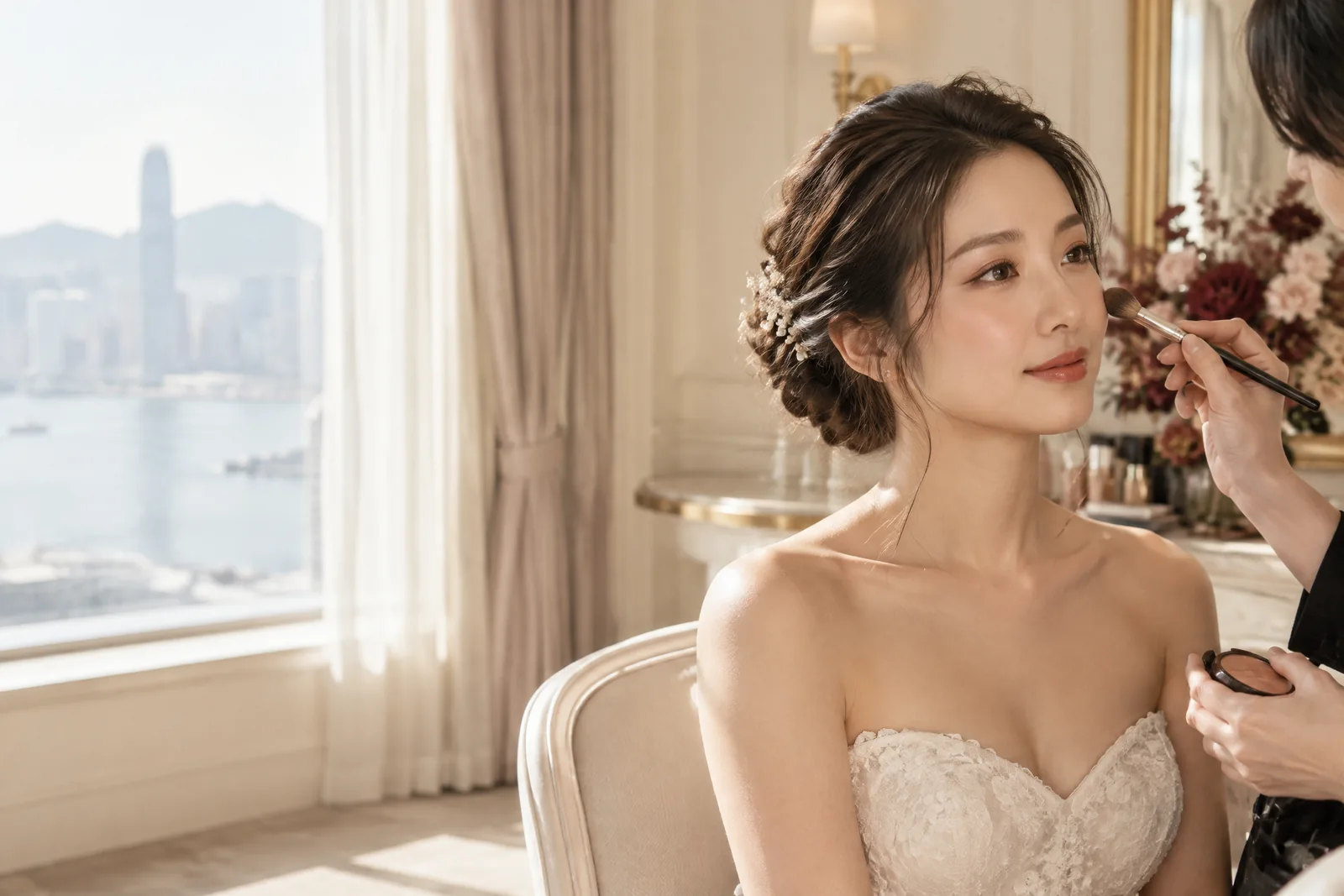
Begin with the crop, then compare where the ends sit against the neckline and where earrings need clear space. Rehearse the chosen outline with makeup, veil or hair accessory, and one indoor and outdoor photograph. Use the final table as a conversation tool, not a product specification.
Wig length and neckline: start with the planned photograph crop
Wig length and neckline before the trial
Ask the photographer which frames matter most before deciding on hair length. A close head-and-shoulders portrait makes the hairline, earrings, and ends near the jaw highly visible. A three-quarter frame gives the neckline more influence. A full-length image lets the dress silhouette and train carry more of the visual story. One hairstyle can work across all of them, but it should be chosen with the dominant crop in mind.
Bring two or three reference images that show the desired crop and neckline. Use them while planning bridal makeup pre-wedding shoot details, rather than calling hair simply short or long. A square neckline, bateau line, V shape, and off-shoulder dress leave different spaces around the face. First, decide where the eye should pause. It may be the face, earrings, collarbone, or hair movement.
Canon’s composition guidance explains that framing guides attention and suggests placing portrait eyes around the upper third line. That does not prescribe a wedding pose. It does support planning from the intended frame outward. If a close crop is likely, check the parting, hairline, and earring clearance first. If the photographer expects wider pictures, inspect the relationship between ends, neckline, sleeves, and bouquet too. [1]
- Save one close portrait, one three-quarter image, and one full-length reference.
- Mark which earring, veil, or hair accessory must remain visible.
- Ask whether the gallery will favour vertical, horizontal, or mixed crops.
Fit the outline before you style it
The neckline creates the lower edge of the portrait
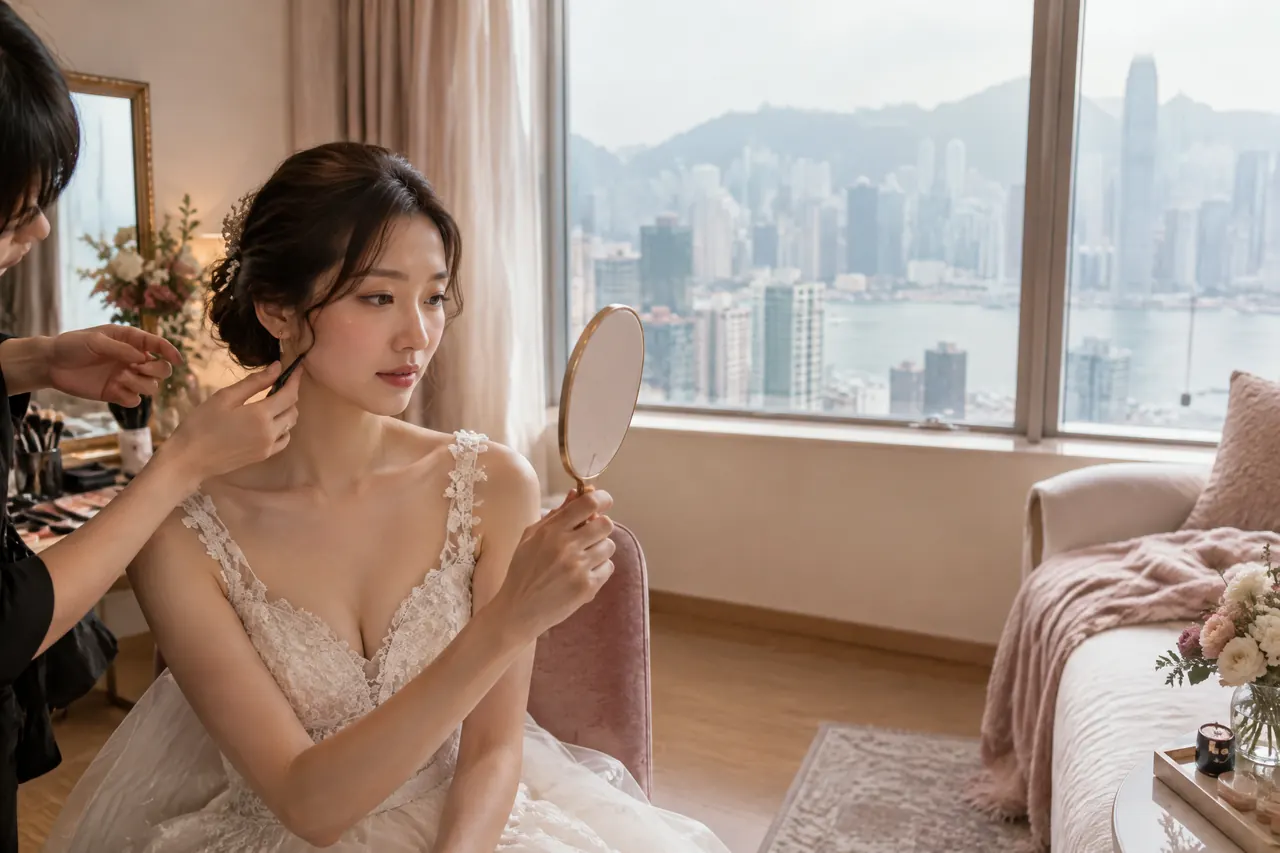
Think of the neckline as the lower border of a face-and-shoulders image. Hair ending at the same level can create a clean, deliberate line. Hair stopping just above or below it can create separation. Neither approach is automatically better. Check whether the outline stays calm during a turn or lifted shoulder. Also check it with a hand near the collarbone.
Try the wig with the actual neckline or a similar top. Stand upright, then sit and look down as you would during a shoot. Notice whether ends catch under straps, bunch at a collar, or hide a shoulder detail. A cape, blazer, or higher evening neckline may change the answer later. Plan the ceremony and reception looks separately if the clothing changes the available space around the neck.
A secure, comfortable fit matters before any visual adjustment. The American Cancer Society notes that wig size charts can vary by brand and recommends checking the specific chart. Use this as a practical reminder to verify measurements and follow item instructions. Do not tighten a cap simply to force a silhouette. A stable fit makes it easier to assess movement, parting, and the way the length settles against fabric. [2]
- Photograph the front, each profile, and the back against the intended neckline.
- Test sitting, walking, and a gentle head turn before approving the outline.
- Keep supplier instructions separate from the makeup and styling brief.
Use a short bob when the face needs a clear frame
A short perimeter can make earrings part of the look
A cropped shape or bob can make the jaw, neck, and earrings feel intentionally exposed. That can suit a clean bateau neckline, a halter, or a structured square neck. It also asks more from the hairline and the line around the cheeks. Test whether the ends land at the jaw, below it, or above the neckline. Small changes in that stopping point can alter the balance of the whole portrait.
For a short direction, use the OwnStrand guide to short wigs to compare a bob’s perimeter. It explains where hair falls and how smooth or wavy finishes change the frame. Treat the category as research, not confirmation of a particular item. Check the exact description, measurements, care directions, and availability directly with the supplier. A style name or category photograph cannot settle those details for your trial.
Choose earrings after checking the width of the hair around the ears. A visible drop earring can add a vertical line beneath a tidy bob. A broad stud can work when the hair is tucked behind one ear. Avoid selecting by mirror view alone. Take a camera-height photograph from both sides. The same earring can disappear when a soft wave moves forward or when the profile is turned away.
- Choose the intended ear exposure before selecting a dramatic earring.
- Check a bob’s side profile with the chin lifted and lowered.
- Keep one less ornate earring option for a fuller or wavier finish.
Keep medium lengths adaptable around the shoulders
Medium length wigs can bridge face framing and dress detail
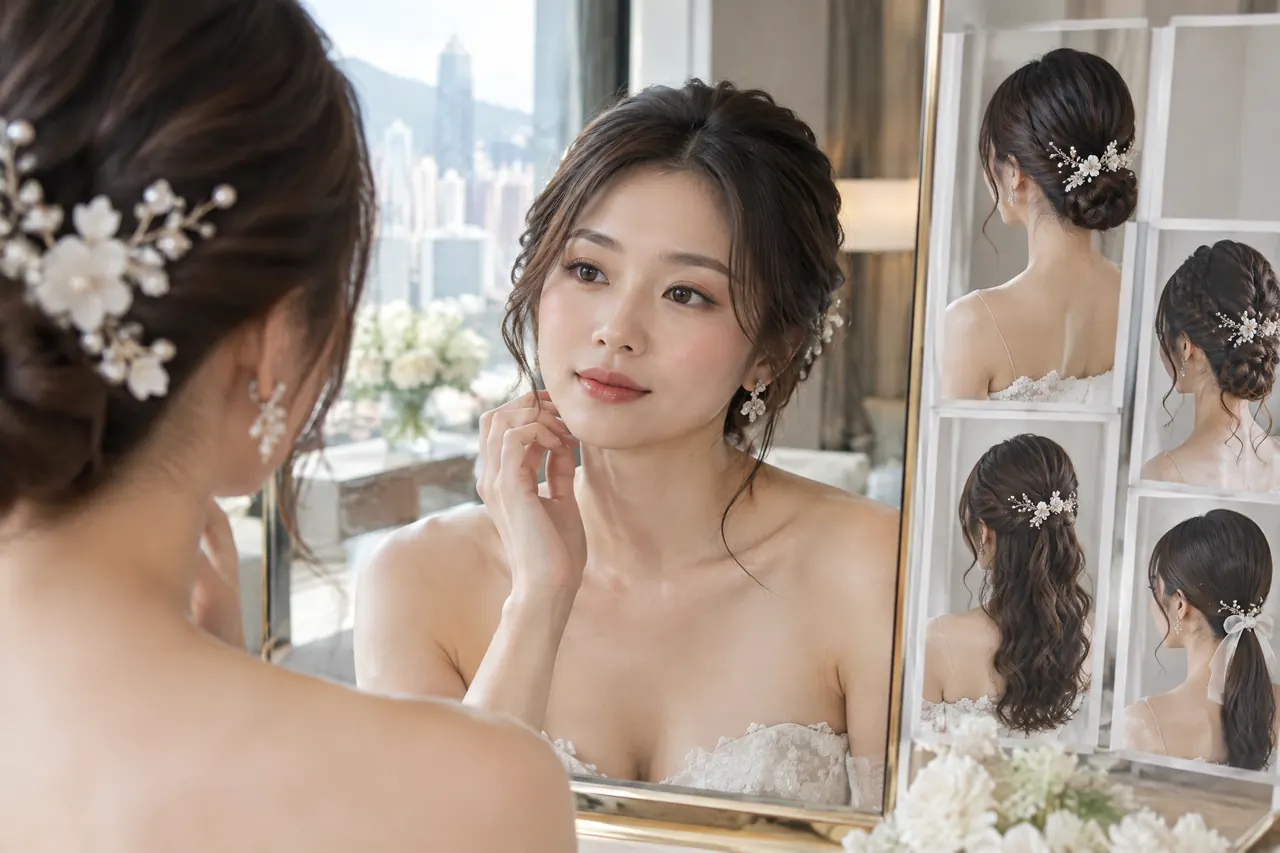
Shoulder-adjacent hair often gives the most room for small changes during a pre-wedding day. It can be worn sleek, brought forward on one side, or moved behind the shoulders for a clearer neckline. The trade-off is that its apparent length changes with waves, layers, posture, and camera angle. Do not call it a compromise length. Decide what it must reveal and what it may soften in the finished photographs.
The OwnStrand page on medium length wigs explains that there is no universal measurement for the category. It advises comparing the finished outline, where the ends fall on you, and how texture affects the visible length. That is a sensible trial method. Photograph the same look with hair forward, one side tucked, and both sides behind the shoulders. Compare those images against the neckline before committing to accessories.
Medium hair can preserve an open collarbone while giving softness beside the cheeks. With a V neckline, consider whether ends point into the V or stop above it. With a high neck, check that hair does not form a heavy band at the shoulders. For strapless clothing, decide whether even hair on both sides feels formal. A one-side-back placement can give earrings and neckline more air.
- Use identical makeup and earrings in all three medium-length trial photographs.
- Look for ends that compete with a neckline seam or pendant.
- Choose one repeatable placement for the ceremony and one for portraits.
| Length direction | Neckline and earring effect | Best camera check |
|---|---|---|
| Short bob or cropped | Leaves the neck clearer and can spotlight earrings; the perimeter becomes prominent. | Check jawline, both profiles, and a close head-and-shoulders crop. |
| Medium or shoulder-adjacent | Can soften the cheeks while allowing a neckline to appear after placement changes. | Photograph hair forward, one side tucked, and both sides behind shoulders. |
| Long or below shoulders | Adds movement but may cover straps, back detail, or jewellery without a chosen placement. | Test walking, turning, seated posture, and a full-length rear view. |
Choose long length for movement, not only drama
Long hair should leave room for the dress and the camera
Longer hair can create movement in walking shots and add contrast beside a simple gown. It can also cover straps, catch on embellished shoulders, or sit over a detailed back. Begin by deciding which dress detail must stay visible. Then test the hair over each shoulder and down the back. A long outline looks most considered when its placement is repeated deliberately instead of changing accidentally from photograph to photograph.
The OwnStrand guide to long wigs asks you to check where ends rest. It also considers hair movement against clothing and exact-style care guidance. Use those questions in a bridal trial. Look at the hair after a turn, walk, and seated pose. Confirm product-specific fibre and styling instructions with the supplier. Do not assume heat tolerance, construction, colour options, or availability from a category page or image.
For earrings, longer hair often means choosing visibility through placement rather than size. A side sweep can reveal one statement piece. Both sides forward can make smaller studs a quiet detail. If you want a necklace and earrings to read in close portraits, practise the pose that clears one side. Ask the photographer to take a test frame before fixing the final parting or adding a veil.
- Check the back view with the veil, hair accessory, or open-back dress.
- Practise the side sweep before the day, not between portrait setups.
- Brush and arrange only as the exact product directions allow.
Let earrings and makeup share the same frame
Balance visible jewellery with hairline and complexion
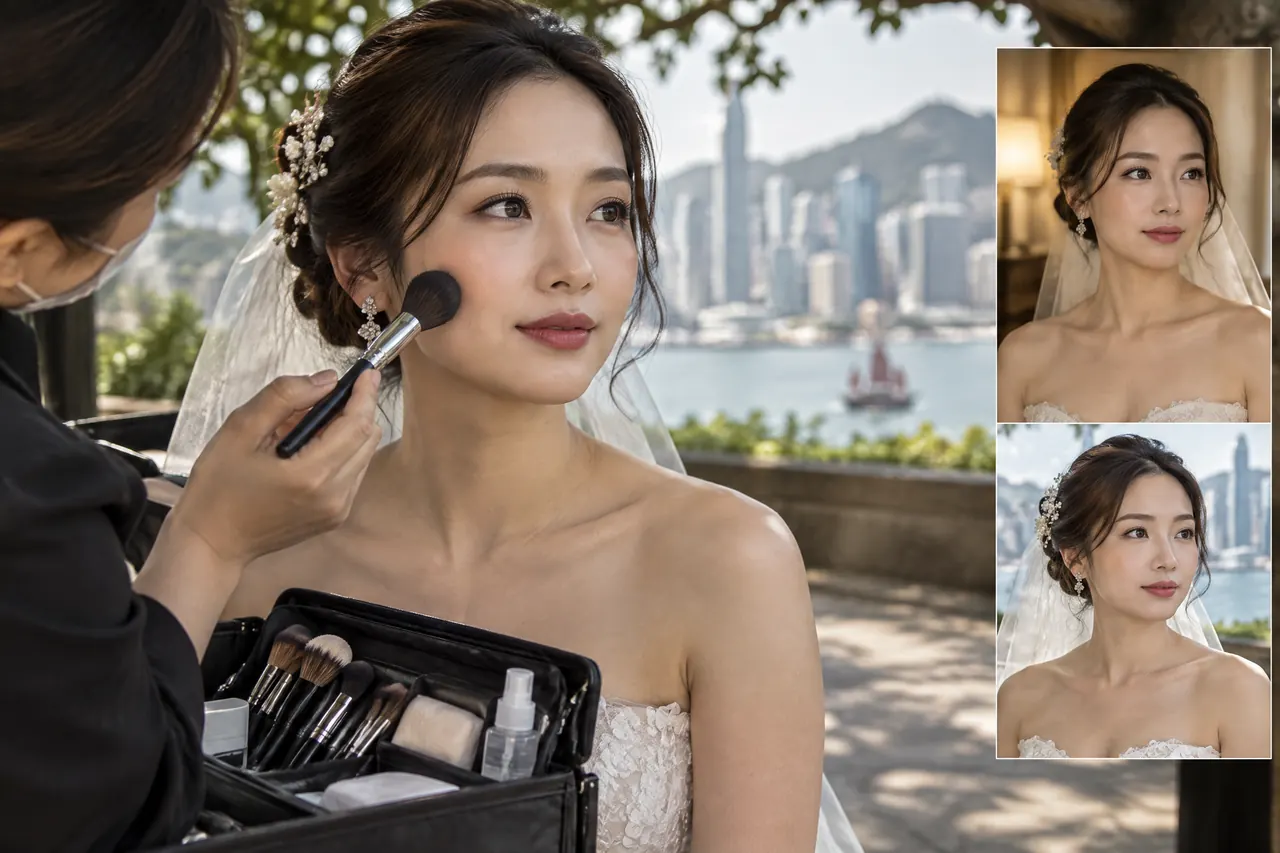
Earrings do more than fill empty space. They can echo a V neckline or widen a face beside a sleek bob. They can also catch light near an exposed ear. Put them on before finalising the parting. Then view the look at camera distance. If an earring competes with a bright hair accessory, choose which element should lead. Clear decisions tend to look stronger than adding every detail at once.
Makeup can support the chosen outline without trying to redraw the face. A neat brow, even complexion, and considered lip colour give the camera stable landmarks when hair is moving. Keep the visible hairline clean and avoid placing loose powder or luminous product into it during touch-ups. Share the intended parting and ear exposure with the artist early. That makes the makeup plan responsive to the actual frame, not a separate idea.
For warm outdoor portraits or a long shooting schedule, use long-lasting makeup Hong Kong guidance for the touch-up plan. Bring blotting papers and the agreed lip colour. Add a clean small comb only if it suits the wig’s instructions. Keep any adjustment simple. Repeatedly moving hair to fix makeup can disturb the parting. A brief camera check is often more useful than another product layer.
- Photograph earrings with hair fully down, one side back, and both sides back.
- Tell the artist which side is expected to face the camera most often.
- Keep a clean cloth between hair and makeup products during touch-ups.
Run a final camera test before the wedding day
Approve a repeatable look, not only a flattering mirror view
Set aside a short, low-pressure rehearsal in the completed outfit or a close substitute. Use daylight near a window and an indoor light that resembles the venue. Take close, three-quarter, and full-length images. Review them on a larger screen if possible. Look for the outline first, then the earring visibility, collarbone space, and any hair that drifts into the face. Make one change at a time and retake the same frame.
Write a compact styling brief after the rehearsal. Include the desired parting, how much hair stays in front, which ear remains visible, and where the ends should sit. Add the neckline photo and a profile image. This gives the photographer and makeup artist a shared reference without treating them as responsible for wig construction. Confirm all product, fit, and care questions with the relevant supplier before the event.
If you prefer a hotel or venue, discuss timing with a home makeup artist Hong Kong. Also discuss a clean setup before the day. Leave enough time to fit the wig according to its instructions before final makeup details and jewellery. Keep the portrait reference nearby. A calm sequence protects the planned outline better than last-minute experimentation. This matters when a dress change or outdoor weather alters styling conditions.
- Pack the dress, earrings, accessory, reference shots, and permitted care items together.
- Agree which person may make a small hair adjustment during portraits.
- Keep a simpler backup placement if wind, heat, or timing changes the plan.
Key takeaway
The best bridal length makes the planned crop easy to read. Start with neckline, earrings, and camera distance. Test the wig with makeup and outfit. A precise bob gives the face a clear border. Medium length adapts around shoulders. Long hair creates movement when placement is rehearsed. Choose a look your photographs need and can be calmly repeated.
Practical checklist
- Save close, three-quarter, and full-length crop references before the trial.
- Try the wig with the neckline, earrings, and hair accessory together.
- Photograph front, profiles, back, a seated pose, and a gentle turn.
- Record the final parting, visible ear, and hair placement in a styling brief.
- Confirm fit, care, heat use, and item details with the supplier.
- Pack a backup placement for wind, humidity, a dress change, or timing pressure.
Frequently asked questions
Should I choose wig length before buying bridal earrings?
Choose a likely hair direction first, then try earrings with that outline. Short or tucked hair can make earrings central. Medium or long hair may reveal them only with a chosen placement. Bring the earrings to the wig and makeup trial. Take a front and profile photograph at camera distance. This shows whether the jewellery reads as a feature or becomes hidden by movement.
Can a bob work with an off-shoulder wedding dress?
Yes, if the perimeter and shoulder line feel balanced in the intended crop. An off-shoulder neckline leaves more skin visible, so a chin or jaw-adjacent bob may look crisp and deliberate. Test the cut with the actual dress shape. Check whether ends catch on the neckline and whether both shoulders still look considered when you turn. Choose the result you prefer rather than following a fixed rule.
Why does my medium-length wig look shorter in photographs?
Waves, layers, posture, and camera angle can change the apparent endpoint. Hair resting on the shoulders may also turn inward or outward during movement. Compare a still mirror view with photographs from the planned height and distance. Record the preferred parting and placement after the test. The category name alone cannot predict where the finished ends will appear on your body or in a specific crop.
How do I keep long hair from hiding my earrings in portraits?
Decide whether one or both earrings must be visible, then rehearse the matching placement. A side sweep, tuck, or chosen profile can reveal one earring without forcing the hair behind both ears. Ask for a test frame before the main portraits begin. Keep any combing or product use within the exact wig instructions. The aim is a repeatable pose, not constant rearranging between shots.
What should I show a makeup artist before a wig-and-neckline trial?
Share the neckline, earrings, desired crop, likely lighting, and a clear reference for the intended parting. Say which ear, hairline area, and shoulder should stay visually open. Bring the wig only after confirming its product-specific fitting and care directions. This helps the makeup plan support the visible frame while avoiding assumptions about the wig’s materials, construction, styling limits, or availability.
Sources
| Source | What it supports |
|---|---|
| Canon Europe — Improve the composition of your photos | Canon explains that composition and framing guide attention, recommends positioning portrait eyes around the upper third line, and advises experimenting with crops. It supports identifying the intended crop before finalising the hairstyle. |
| American Cancer Society — Wigs for Hair Loss | The American Cancer Society notes that wig size charts may vary by brand and advises checking the specific chart and fitting directions. It supports verifying fit and item instructions rather than inferring them from a category label. |
Discuss your own makeup plans
Bring your crop references, neckline image, and earrings to a BigDeal Make Up pre-wedding consultation so the makeup plan can support the frame you want to photograph.
Ask on WhatsApp +852 6918 3153