
BigDeal Make Up · Hong Kong
Groom Natural Wedding Makeup And Groom Makeup For Photos
A camera-ready finish can still look like you. Use this guide to turn a natural wedding look into practical choices for complexion balancing, reduced shine, brow tidying and hair texture so your photographs look intentional without appearing heavily made-up. Bring clear reference images, notes on your suit and ceremony context, and tell BigDeal Make Up about your personal comfort to get a precise brief.
At a glance
groom natural wedding makeup
Start by naming the moments that need different levels of polish — tea ceremony, portraits or the evening banquet — and decide whether you prefer a barely-there natural makeup look or something softly defined for the camera. Tell us about your skin tone, facial hair and collar shape so we can propose discreet mattifying, subtle contouring and brow shaping that work with your suit and the day’s lighting.
01
Choosing a Direction for groom natural wedding makeup and groom makeup for photos
Decide your look: groom natural wedding makeup
Begin by defining the single most important image you need: close-up portraits, group shots at the tea ceremony, or wide banquet coverage. Groom natural wedding makeup can favour a barely-there complexion correction for daytime events, while groom makeup for photos may ask for slightly more definition to survive flash and distance. Be explicit: do you want to look exactly like your everyday self or a gently polished version?
A clear direction lets the artist choose products and textures that respect facial hair and skin type. For men with visible stubble or a beard, a lightweight, blendable tinted balm can even out tone without eliminating natural texture. For clean-shaven grooms a thin-build foundation or skin tint will reduce highlight and create an even base for photography without appearing mask-like.
Communicate three things before booking: the precise moments you want photographed, a one-sentence description of the finish you like (for example, natural-matte or softly dewy), and whether you’ll be wearing glasses. These quick notes dramatically narrow the choices and let us prepare colour matches and application strategies that keep you comfortable all day.
For a closer comparison, consider bridesmaid natural wedding makeup
02
Outfit, Photography and Event Format
Personalising groom makeup for photos
Suit colour, shirt or collar shape and tie texture all influence how a complexion reads on camera. Dark navy or black suits reflect less light into the face, so a slightly brighter correction around the under-eye can help portraits; cream or gold banquet lighting will warm skin tones, so cool-toned correction should be avoided. Tell the team your suit swatch or phone photo to help choose the right corrective shade.
The type of photography matters: on-camera flash can highlight shine and texture, while continuous daylight softens contrasts. Groom camera ready wedding makeup focuses on controlled shine with fine-motor application—localised mattifiers on the T-zone and a light, hydrating finish on cheeks—to give a natural depth that translates in both flash and natural light. For formal banquet shots, small increases in definition around brows and under the cheekbones create more presence on long-range images.
Plan outfit and timing together. If you change into different suits during the day, schedule short touch-ups between outfit changes. For banquet entrances or staged photos, a quick pass at the powder and temple areas preserves the intended finish. Provide us with the day’s timeline so touch-up windows are included and your look stays consistent across ceremonies and formal portraits.
Match your plans with mother-in-law banquet makeup
03
Features, Comfort and Hair Texture
Natural, softly defined or formal grooming choices
Comfort is central. Groom natural makeup choices are guided by how you feel wearing product on your skin and around facial hair. If you’re sensitive to product near the eyes, we’ll minimise creams in that area and instead rely on grooming—cleaning and shaping brows, reducing stray hairs and using subtle colour correction to open the eye without eyeliner. Removable eye-area techniques are temporary and purely cosmetic.
Hair texture and hairstyle determine how much definition the face needs. A close-cropped haircut can make the face appear more open, so a touch of soft contouring beneath the jaw and temples adds structure. Longer or swept-back hairstyles create shadow near the cheeks; in those cases, keep complexion corrections lighter so the hair doesn’t compete with skin tone in photographs. Groom makeup for mature skin wedding looks often focus on gentle colour correction rather than heavy coverage.
Facial hair placement is an asset when planning the finish. Where a moustache or beard frames the lower face, we balance tones so the skin around the beard does not appear patchy in flash. For a neat, camera-ready edge, tidy stray hairs and define the cheek line; for a softer, natural look, blend the foundation lightly into the beard area rather than attempting full concealment.
You may also find it useful to compare wedding guest banquet makeup
04
Using Reference Images Well
Plan looks that work for photos and the occasion
Reference images should show finish, not perfect replication. Send three images: one close-up that shows the skin finish you like, one full-length capturing the suit or robe colour and one hair silhouette you want to emulate. Label each image with what you like about it—‘matte forehead’, ‘open under-eye’ or ‘soft jawline’—so the artist understands which elements to replicate and which to ignore.
Avoid asking for an exact duplicate. Lighting, camera lens, skin tone and facial structure change how a look translates. Instead, describe the desired feelings—natural, formal, understated—and the photo contexts where the result must work. This helps the stylist select products that approximate the look while remaining faithful to your features and comfort levels.
If you’re sending a social-media reference, include a brief note of what you don’t like as well as what you do. Saying ‘I like the polished skin but not the heavy brows’ is more helpful than a single image. The team will then adapt brow tidying or tonal corrections accordingly and confirm a short trial or consult to align expectations before the wedding day.
For another approach, explore groom makeup artist booking
05
Translate natural wedding makeup into complexion balancing, reduced shine, brow tidying and a comfortable skin finish
How to achieve the look direction for groom natural wedding makeup
Complexion balancing begins with a small patch test of colour correction. A neutralising touch for redness, faint acne scarring or uneven tone is applied in thin, buildable layers so the finish stays believable in close-ups. We favour products that allow the skin to breathe and that photograph well—light tints or water-based textures rather than heavy creams—for a natural makeup look that’s comfortable for long days.
Shine control is usually localised. Rather than heavy, all-over powder that can look flat in photos, the artist uses absorbent tissue and a micro-powder only where necessary on the T-zone and temples. Groom long lasting wedding makeup is about clever reapplication; a small powder compact or blotting sheets in your pocket are a discreet way to maintain the finish between formal shots and the evening banquet.
Brow tidying is pivotal to the finished frame of the face. Even small adjustments—trimming long hairs, aligning the tail, and softening harsh angles—change how brows register on camera without creating an ‘overdone’ look. For mature skin, subtle hair colour touch-ups or a feathering technique with a pencil can restore definition lost with age while remaining indistinguishable from natural hair in photographs.
Before deciding, take a look at Party and Occasion Makeup
06
Use suit colour, collar shape, hairstyle and facial hair as practical inputs to groom makeup for photos
Personalising groom makeup for photos
Collar shape affects perceived jawline and neck shadows; high, stiff collars often make the jaw appear more prominent, so we soften the shadow with blending slightly below the jaw and at the neck edge. For open-collar or mandarin-collar styles typically seen at tea ceremonies, ensure the neck colour is matched to avoid a visible line under strong stage lighting.
The suit fabric finish—matte wool or satin lapel—alters light reflection near the face. Satin lapels can send highlights near the face that compete with skin; a slightly more matte complexion helps balance that. For banquet entrances under warm stage lights, we might warm the base tone slightly so you appear healthy and natural in group photos without overt bronzing.
When guests and photographers will move you between spaces, map look changes to those moments. A hair fix and a quick brush through the beard at transition points are often all you need. Communicate hair product choices ahead of time—strong hold gel may create unwanted shine while a texturising paste can control flyaways without reflective residue.
07
Selecting the right finish: practical choices for different events
From tea ceremony to evening entrance
Begin by matching finish to the event moment. For a daytime ritual choose a groom natural makeup look: lightweight tints, minimal powder and careful colour correction that keeps skin breathable and true to life. This approach is ideal for close-up tea ceremony photos where intimacy and small gestures matter; the goal is even tone without an obvious makeup appearance. Bring a phone photo of your outfit so the artist can ensure neck and collar matches remain invisible under bright daylight.
For an evening entrance or staged banquet photographs, the team will suggest groom banquet makeup: slightly more definition around the under-eye and jaw, a controlled mattifying strategy and discreet brow shaping so features read at distance and under warm stage lights. These techniques remain subtle — nothing like theatrical stage makeup — but they give presence in group photos and on-camera flashes. Pack a small blotting kit and micro-powder for quick touch-ups between events.
If you want a look that sits between day and night, ask about groom soft glam wedding makeup. This is a polished, modern finish that keeps skin natural but introduces soft contouring and a little structure around brows and cheekbones. It works well when you expect both intimate portraits and broader banquet coverage without a full change of styling. Confirm preferred intensity during consultation so the artist tailors application to your comfort level.
08
Addressing age, hair and personal style choices
Practical adaptations for groom wedding makeup for mature skin and style direction
For older grooms, request the groom wedding makeup for mature skin approach: hydrating, skin-friendly textures that avoid heavy mattes and thick concealers. The focus is on subtle brightening of under-eyes, light evening of tone and tidy brow work to restore a defined frame without masking natural texture. Because fine lines react to dense products, we use cream-to-powder formulas sparingly and blend carefully to retain a natural finish in close-up portraits.
Facial hair and hairstyle feed into the final direction. If you wear a beard or mustache, blending product into the hair area keeps tone consistent and prevents patchiness under flash. For a sharper image, choose a groom elegant makeup look: neatened brows, sculpted jawline shading and gently warmed base tones to pair with formal suits or tuxedos. For relaxed or traditional ceremonies, a restrained groom makeup for tea ceremony application prioritises barely-there correction and neat grooming over sculpted definition.
If you are undecided, bring three reference images labeled with what you like and dislike; say whether you prefer a groom wedding makeup style ideas that lean natural, refined or softly glamorous. The artist will map those preferences to your skin type, hair texture and the day’s lighting to recommend the precise product textures and touch-up plan needed to keep you looking like yourself — only better — across both tea ceremony and wedding banquet moments.
Style references
Related makeup style illustrations
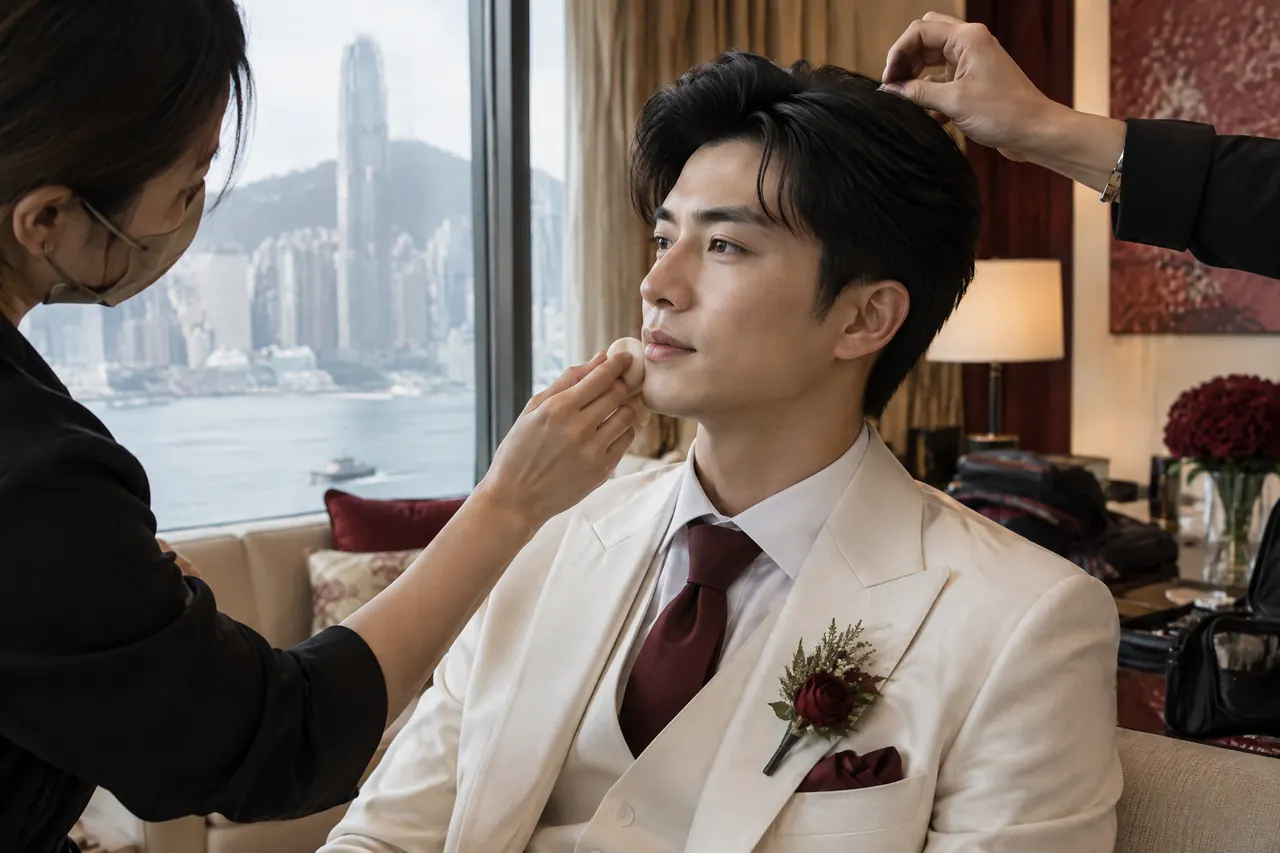
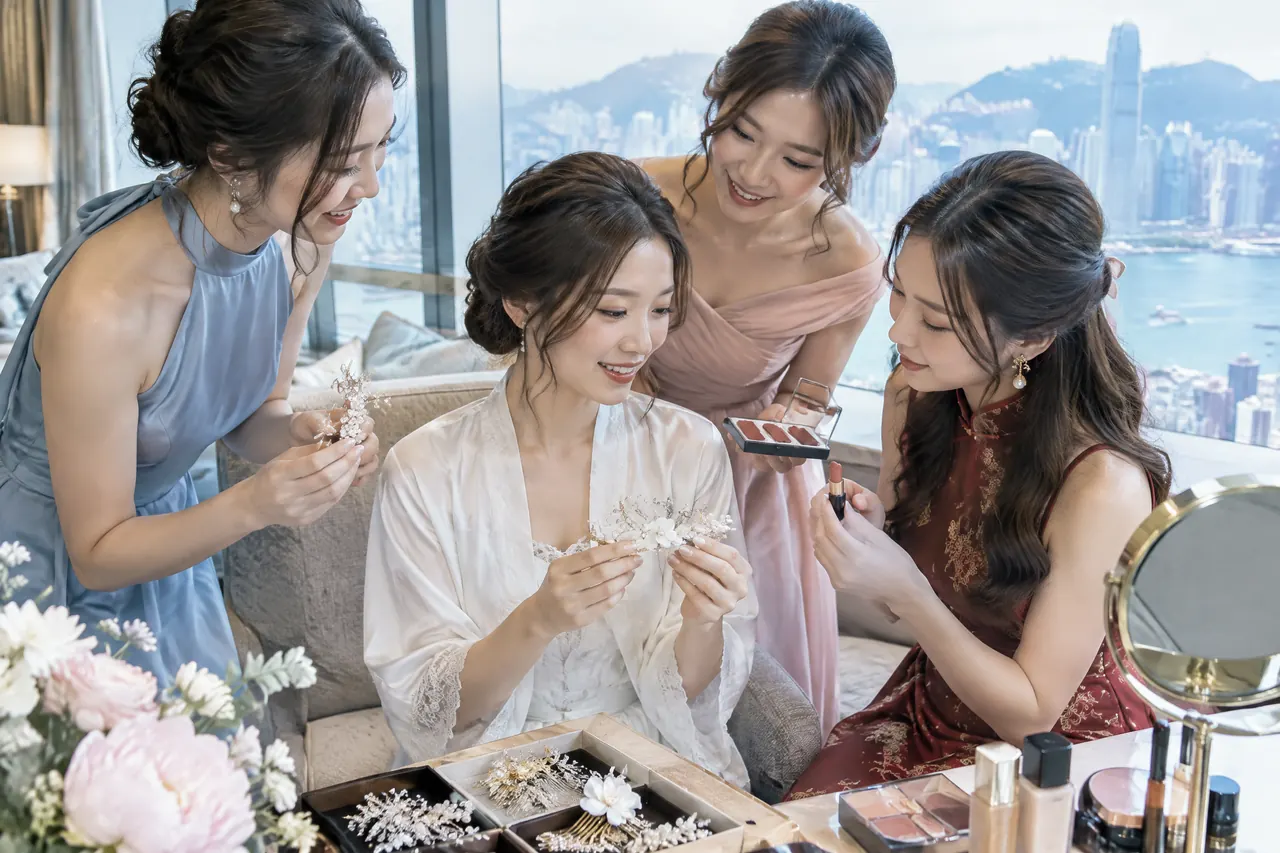

Quick visual brief: what to send before a groom styling consultation
| Item to send | Why it helps | How to prepare |
|---|---|---|
| Three reference photos | Shows finish, suit silhouette and hair direction so we can match mood and degree of polish | Label each with a one-line note: ‘finish I like’, ‘suit colour’, ‘hair shape’ |
| Phone photo of suit/collar | Helps select correct tone and decide on mattifying versus warmth | Flatten fabric on neutral background and include close-up of lapel |
| Schedule/timeline | Identifies touch-up opportunities—between ceremony, portraits and banquet | List start times and any outfit changes with estimated durations |
| Skin sensitivities or product dislikes | Avoids reactions and ensures comfort during eye-area or grooming steps | Name any ingredients that cause issues and list recent skin treatments |
| Facial-hair notes | Guides blending approach so beard and complexion read consistently in photos | Describe beard length, whether it will be trimmed on the day, and preferred edge style |
Helpful answers
Frequently asked questions
What is the difference between groom natural wedding makeup and groom camera ready wedding makeup?
Groom natural wedding makeup emphasises minimal, breathable correction so you look like yourself; think light tints, reduced shine and subtle brow tidying. Groom camera ready wedding makeup adds slightly more definition—careful under-eye correction, localised contour or a touch of taming on brows—to translate effectively under flash and at a distance while still appearing natural.
Can makeup hide oily skin without looking cakey in photos?
Yes. The approach is targeted: blotting or oil-absorbing strips during the day, a thin mattifying primer, and micro-powder only where needed. Heavy overall powder creates a flat or cakey look; instead we control shine in zones and use thin, buildable products so texture reads naturally in both close-up and wide photos.
Do I need a trial for groom makeup for Chinese wedding tea ceremonies and banquet events?
Trials are recommended when a groom needs different finishes for a morning tea ceremony and an evening banquet because lighting and attire differ. A short consult or trial lets us confirm colour matches, beard-blending strategy and timing for touch-ups between events. If you have limited time, photos and a clear timeline help the artist plan the application efficiently.
How do you handle mature skin for a groom wedding makeup look?
For mature skin we prioritise hydration and subtle correction rather than thick coverage. Lightweight, luminous tints and cream-to-powder products minimize settling into fine lines. Shade selection avoids overly cool or heavy tones; instead we rebalance and brighten localised areas, tidy brows and use soft definition to preserve natural structure without masking skin texture.
Will grooming treatments remove or change my facial hair permanently?
No. Cosmetic grooming provided for the wedding—trimming, defining edges and lightly blending product into the beard—is temporary and purely cosmetic. Any hairline shaping is done with scissors or clippers, and products wash out. If you want permanent changes, discuss professional barbering services separately before the event.
Do you offer a different plan for groom makeup for tea ceremony compared with the evening?
Yes. The tea ceremony usually benefits from a lightweight, breathable groom makeup for tea ceremony application that focuses on close-range detail and natural finish; evening plans switch to groom makeup for wedding banquet adjustments — slightly more definition, controlled mattifying and touch-ups timed for entrance photos. Tell us your timeline so we can schedule touch-up windows between events.
Can I have a groom soft glam wedding makeup look without appearing overdone?
Absolutely. Groom soft glam wedding makeup is about subtle enhancement: soft contouring, tidy brows and a natural base that adds presence without obvious product. We adjust intensity to your comfort and the photographed contexts — more structure for banquet photos, less for intimate portraits — so the result reads polished rather than theatrical.
What choices help achieve a groom elegant makeup look for formal portraits?
An elegant finish relies on precise grooming and minimal, targeted product: under-eye brightening, refined brow shaping, light jawline shading and controlled shine reduction. Choose matte or low-lustre fabrics for suits if you want less competing reflection. Bring a suit photo and describe the portrait moments so we can balance warmth and definition for an understated, formal presence.
Ready to discuss it?
Enquire now to confirm availability and discuss touch-up windows for your wedding day
Tell us what you are planning, and we will help clarify the service or lesson details that matter for your enquiry.
From the makeup blog