
At a glance
A standing mirror check cannot show everything the signing camera will see. Use a table rehearsal to separate a photographic shadow from a makeup mark or hairpiece concern. Keep your chosen hairstyle stable during the comparison. Review the signing view and the upright view together, then approve the result yourself. This approach gives your makeup artist and photographer a specific request rather than a vague instruction to hide everything.
What a bridal signing chin down makeup review should show
Start with the writing position, not a standing portrait
Looking down at a document changes what the camera sees around your eyelids, forehead and crown. That view is not a failed version of your upright portrait. It records a different action. Begin by identifying the exact concern in a test photograph. Is it a bright patch on the forehead, a visible makeup edge, or more crown exposure than you expected? Each calls for a different response.
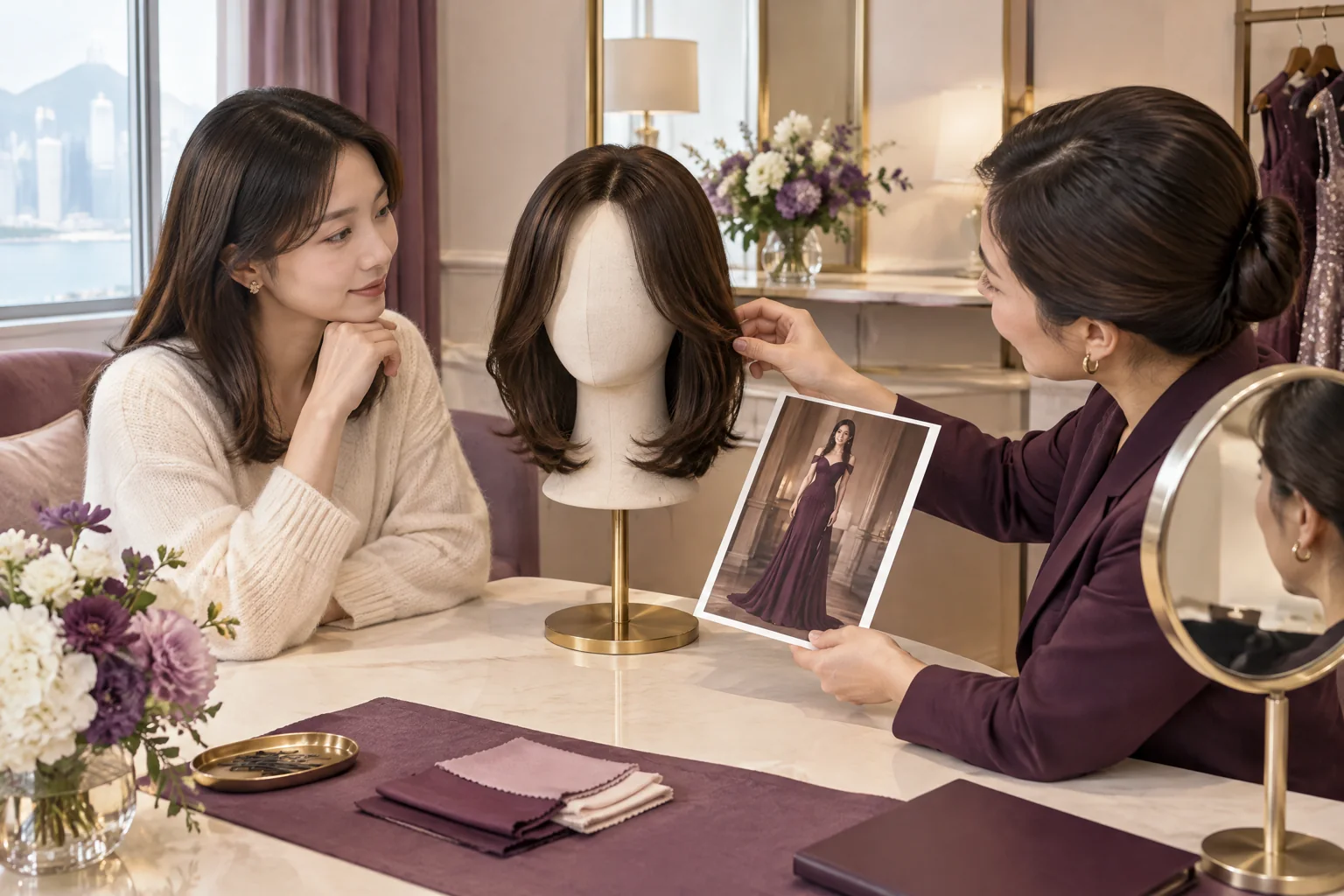
Tell your makeup artist that the seated signing moment matters when discussing bridal makeup Hong Kong. Bring a reference showing the framing you prefer, rather than asking for stronger makeup everywhere. Explain whether you want a close photograph or a wider scene with your partner. The intended frame helps define the review. It also prevents an unnecessary change that improves one close crop but alters your preferred overall look.
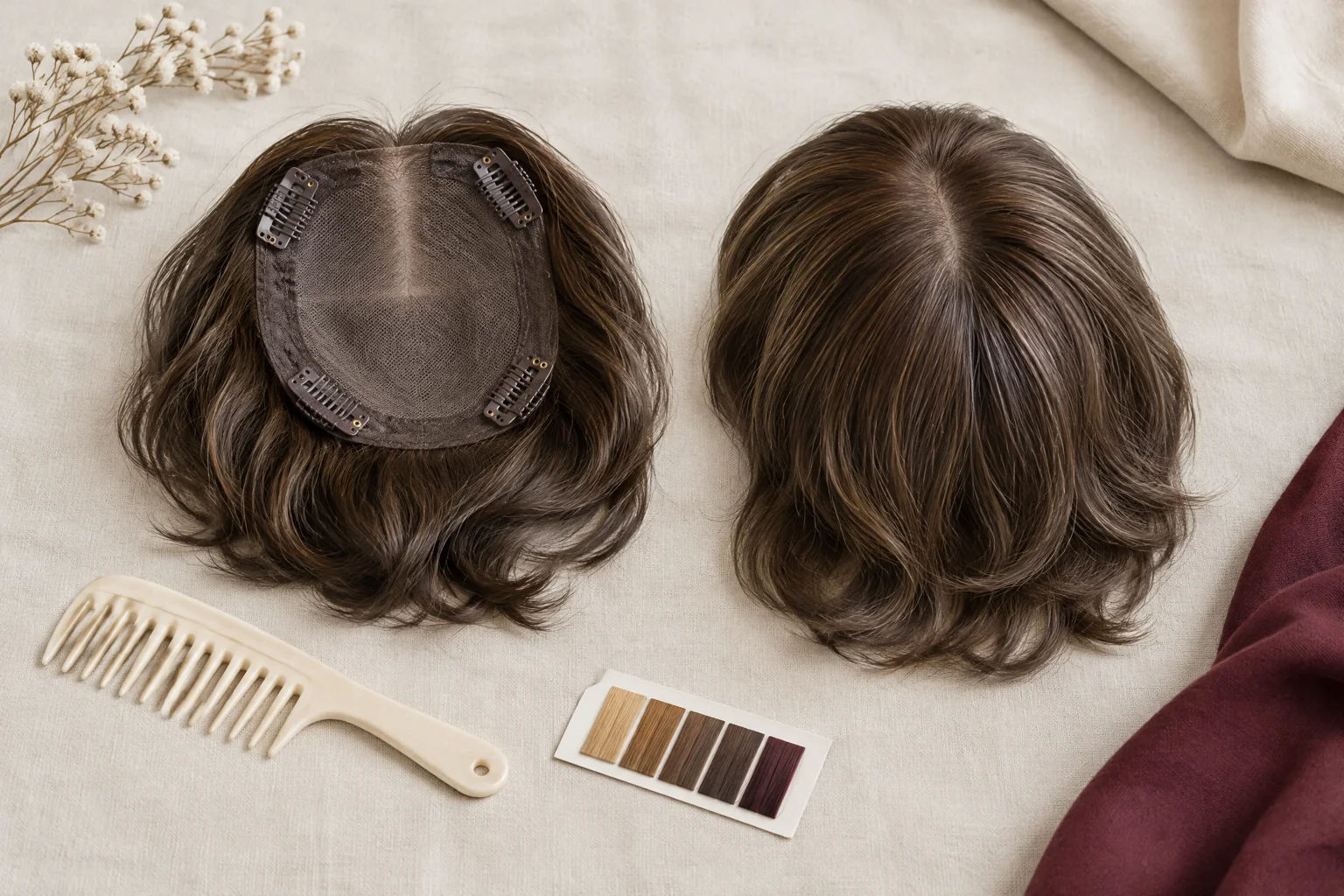
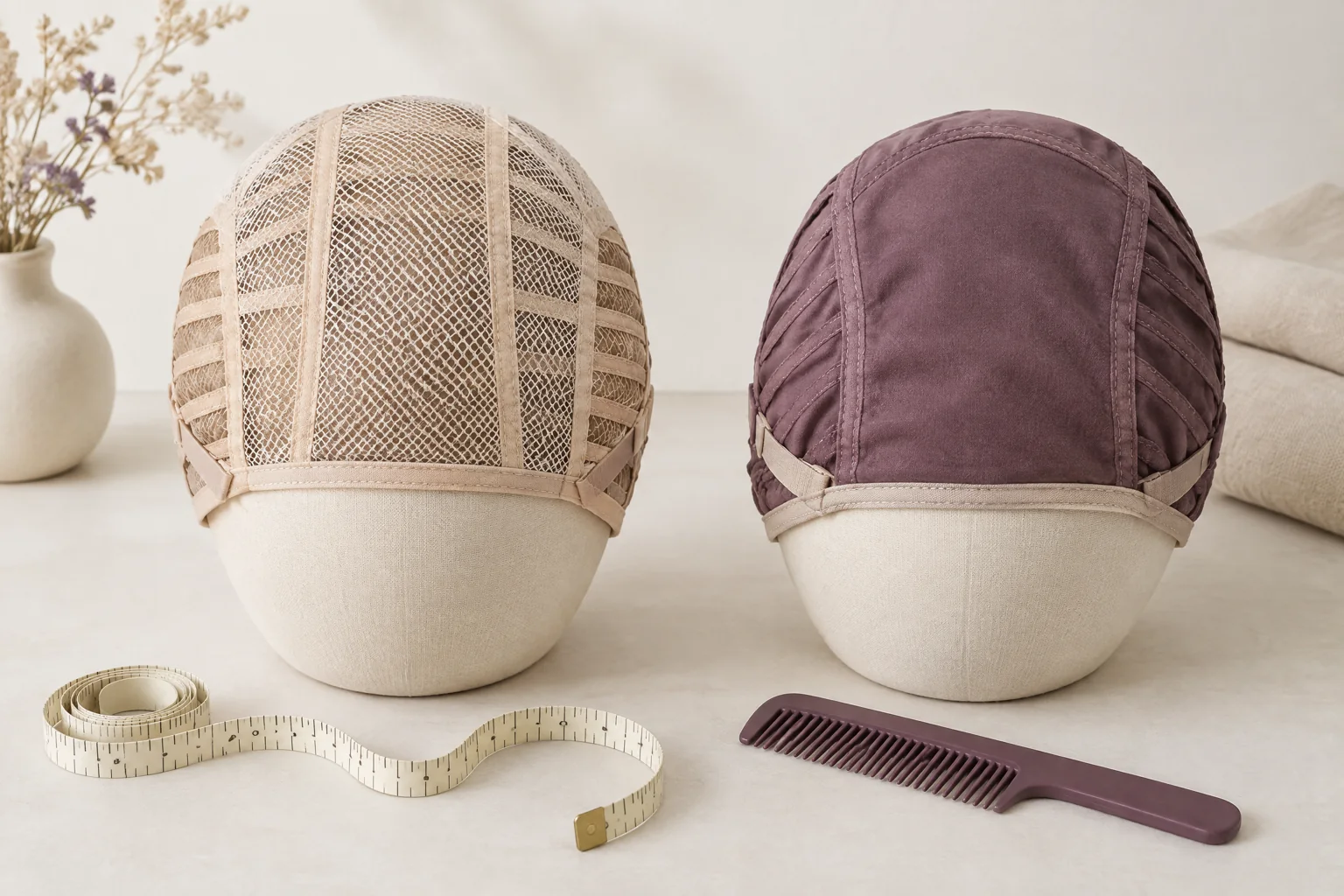
OwnStrand shares BigDeal's owner and offers relevant selection reading. Its monofilament wigs guide explains why construction labels need closer inspection. The fine mesh may cover a defined part, crown or broader top. Those areas are not interchangeable. For this rehearsal, identify the crown section of your own item and check its stated boundaries. The label alone cannot establish how that area will appear from above during signing.
Agree what you actually want to see before anyone starts adjusting the look. You may welcome visible hair texture and a natural crown swirl. Alternatively, you may prefer less emphasis on that area in the photograph. Both are valid preferences. Makeup on the face cannot change a hairpiece's coverage footprint. A successful review answers your chosen concern while leaving you able to read, write and move normally.
Build a signing rehearsal around your real belongings
Match the seat, document position and accessories
Use a chair and table that resemble the signing arrangement as closely as practical. Place blank paper where the document is likely to sit. Sit with your feet comfortable and your writing hand supported. Notice how far you naturally lean forward to read. A very low table may create a different head position from your trial desk. Record that difference for the venue discussion rather than forcing your neck upright.
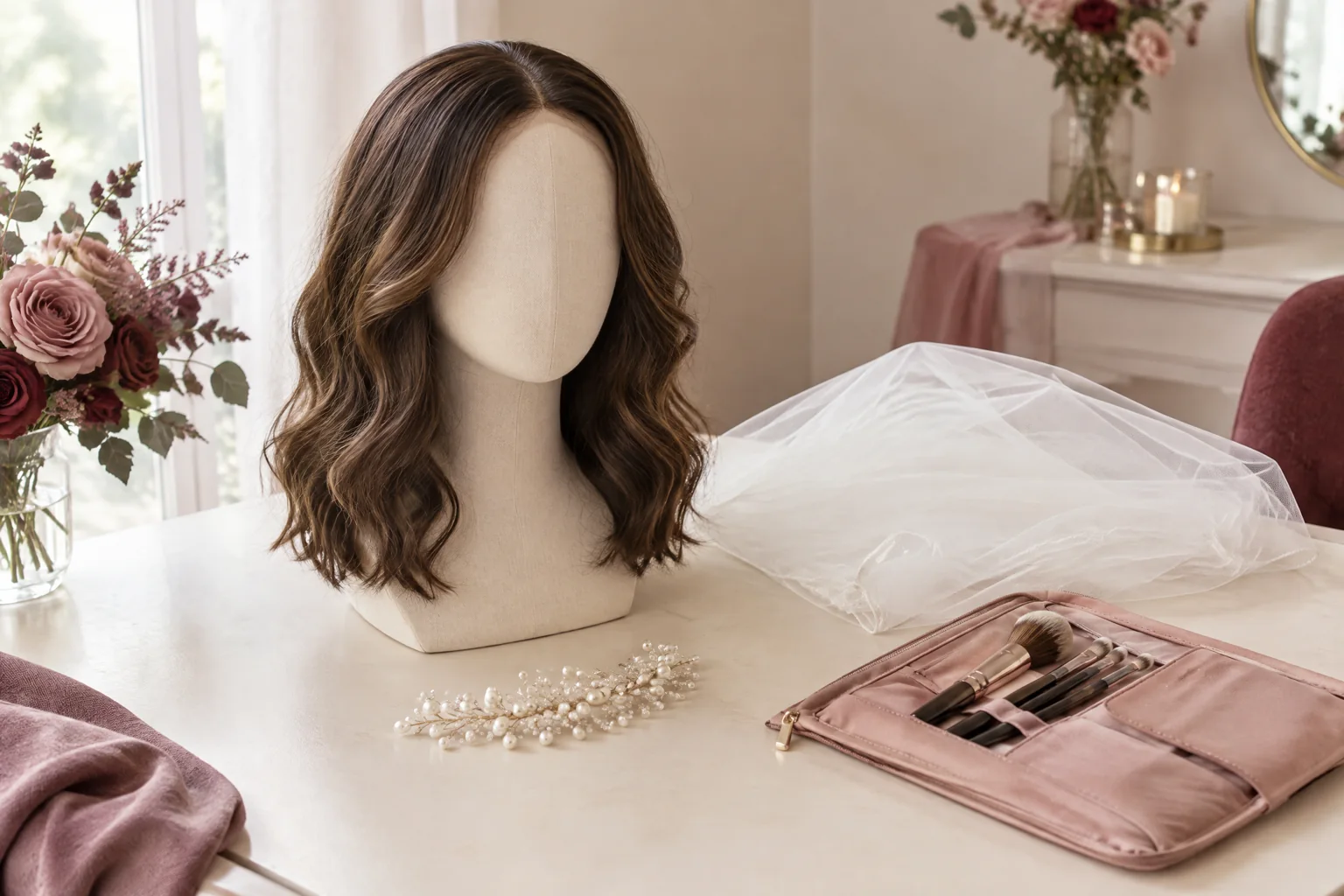
For a bridal trial Hong Kong, bring the earrings, glasses and hair accessory you intend to use. Bring your chosen hairpiece too, if you already have it. Photos can explain its shape when transport is impractical, but they cannot replace a movement check. Include the veil if its position affects the signing view. The rehearsal should test your actual combination, not a simplified look you will not wear.
Rehearse the sequence rather than freezing in one downward pose. Look at the paper, write a few words, then turn towards your partner. Finish by looking up for a photograph. Ask someone to capture these stages from the expected photographer's side. Keep the writing movement ordinary. This reveals whether a concern appears throughout the sequence or only during a brief turn that a single still exaggerates.
Check what enters the frame beside your face. An earring may sit differently when you lean forward. A veil fold or nearby floral arrangement may overlap the crown from one position. Ask for one wider photograph before judging a tight crop. Move a rehearsal prop if it blocks the intended view. At the venue, discuss changes with the coordinator so the signing space remains usable for everyone involved.
- Use blank rehearsal paper, not an official document.
- Include the moment you look up after writing.
Find out whether the camera or makeup needs changing
Compare one variable while your gaze stays natural
Digital Photography School describes camera angle through its height, distance and position relative to the face. Its practice exercise changes camera height while keeping distance and focal length unchanged. Adapt that comparison to your seated rehearsal. Ask for views from different available heights without changing your writing posture. Review them together. The aim is to find your preferred view, not apply a supposedly flattering angle to every bride. [1]
For partial crown coverage, the hair toppers reading separates base footprint from attachment and blending details. Compare those details with the item you plan to wear. A camera change can alter how much crown enters the frame. It cannot secure a piece that feels loose. If movement exposes an edge or shifts the piece, pause the photographic comparison. Discuss that specific item with its supplier.
Now compare the same makeup area across the photographs. A dark area that changes with lighting or viewpoint deserves a camera discussion first. A visible product mark that remains in the same facial location deserves a closer makeup inspection. Check it in person as well. Your artist can then assess a local adjustment. Avoid adding coverage across the whole face simply because one photograph makes an area look darker.
Keep the hairstyle and parting unchanged during this test. Otherwise, you cannot tell whether the new camera position answered the original concern. Treat any hairpiece placement change as a separate decision with its own instructions and comfort check. The same applies to moving a veil attachment. Several simultaneous changes can produce a pleasing photograph. However, you may struggle to identify which adjustment to repeat on the wedding day.
Choose between keeping the look, touching up or reframing
Protect the signing moment while solving one concern
Keep the look when the signing view meets your preference and feels comfortable in movement. There is no need to improve a detail merely because a close crop makes it noticeable. If the concern is framing, ask the photographer about a modest position change. Check whether that position is available at the venue. A beautiful trial angle is less useful when a witness, wall or ceremony arrangement occupies it.
A local makeup adjustment makes sense when the artist identifies a specific product issue. Discuss the smallest area to revisit, such as the forehead or one makeup edge. Review the altered area both upright and looking down. Extra powder or colour should not become an automatic answer to every shadow. Your preferred finish still matters. Stop the adjustment once the named concern is resolved to your satisfaction.
Changing the photographic sequence may be easier than changing the face. Let the genuine signing image show you reading and writing. Then arrange an upright portrait after the required signing is complete, where permitted. This preserves the action and offers a clearer facial view separately. Ask the photographer and coordinator whether that sequence fits the ceremony. Never rely on pausing official proceedings solely for a makeup photograph.
Keep the comparison images together and label the change in plain language. For example, note that the camera moved while the makeup remained unchanged. Record which photograph you prefer and why. A short explanation such as less crown emphasis is more useful than better. Include an upright image too. It helps the artist protect the look you originally approved when discussing any final adjustment before the ceremony.
| What the rehearsal shows | First response to compare | What to preserve |
|---|---|---|
| Crown dominates only from one camera position | Try another available viewpoint | Your natural writing posture |
| A product mark remains across views | Ask the artist about a local correction | Your approved overall finish |
| The piece shifts during movement | Discuss its fit and attachment with the supplier | Your comfort before photography |
| Writing hides the facial view you want | Plan a separate upright portrait afterwards | The genuine signing sequence |
Approve the crown view on your own terms
Make the decision yours, including what remains visible
View the images yourself before collecting comments from relatives or the wedding party. Say which detail matters to you and which details can remain visible. Someone else's wish for completely hidden crown texture need not become your instruction. Ask the artist to explain any proposed change before touching the area. You can approve a camera adjustment while declining more makeup. Agreement on one does not imply agreement on both.
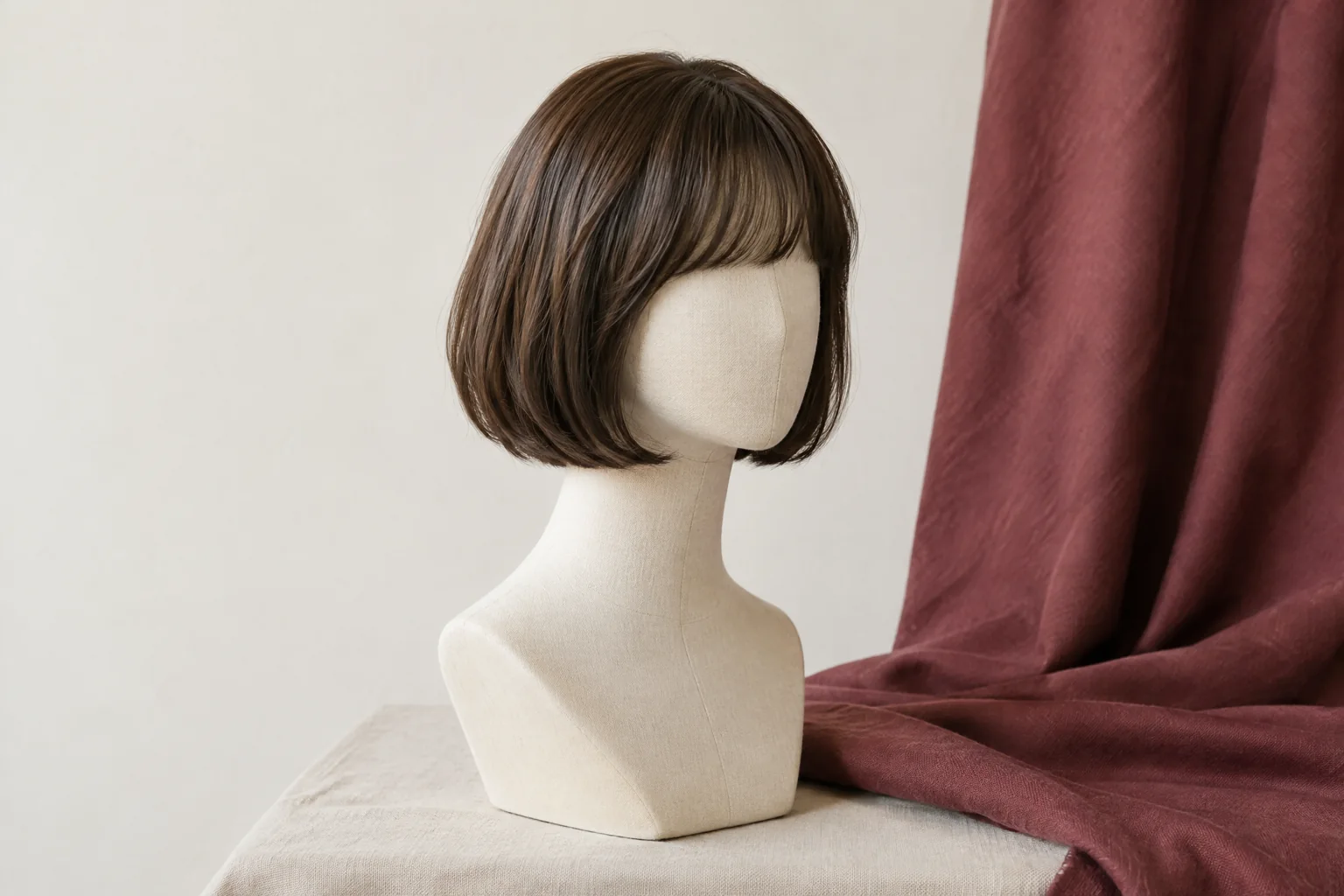
If the rehearsal raises a broader coverage question, hair topper vs wig compares two different starting points. A topper covers a selected area and generally blends with surrounding hair. A full wig covers the head and needs a different overall fit review. That comparison belongs before final styling, not as a rushed signing-table substitution. Choose according to your coverage preference and practical routine, rather than one difficult photograph.
A crown photograph can feel personal, particularly when you usually avoid seeing that angle. Agree who receives the trial images and which ones may be kept for preparation. Share only the views needed for the decision. A private comparison need not become a group discussion. You may also choose a wider reference instead of a close crown image. Explain that preference so everyone uses the same approved material.
Ask for a pause if the review starts making you more uncomfortable than informed. Return to the concern you named at the beginning. You do not need to justify choosing visible texture, fuller coverage or no hairpiece at all. Equally, choosing a piece does not give anyone permission to alter it freely. Confirm who will handle your belongings and which movements or adjustments you are happy to allow.
Carry the approved plan into the wedding day
Finish your bridal signing chin down makeup review with clear cues
Eye discomfort is not something to correct with another layer of product. FDA guidance says to stop using an eye cosmetic immediately if it causes irritation. Persistent irritation needs a doctor's advice. It also calls for clean instruments near the eyes and no eye-makeup application in moving vehicles. Build that into your plan. A signing photograph is never a reason to continue an uncomfortable eye adjustment. [2]
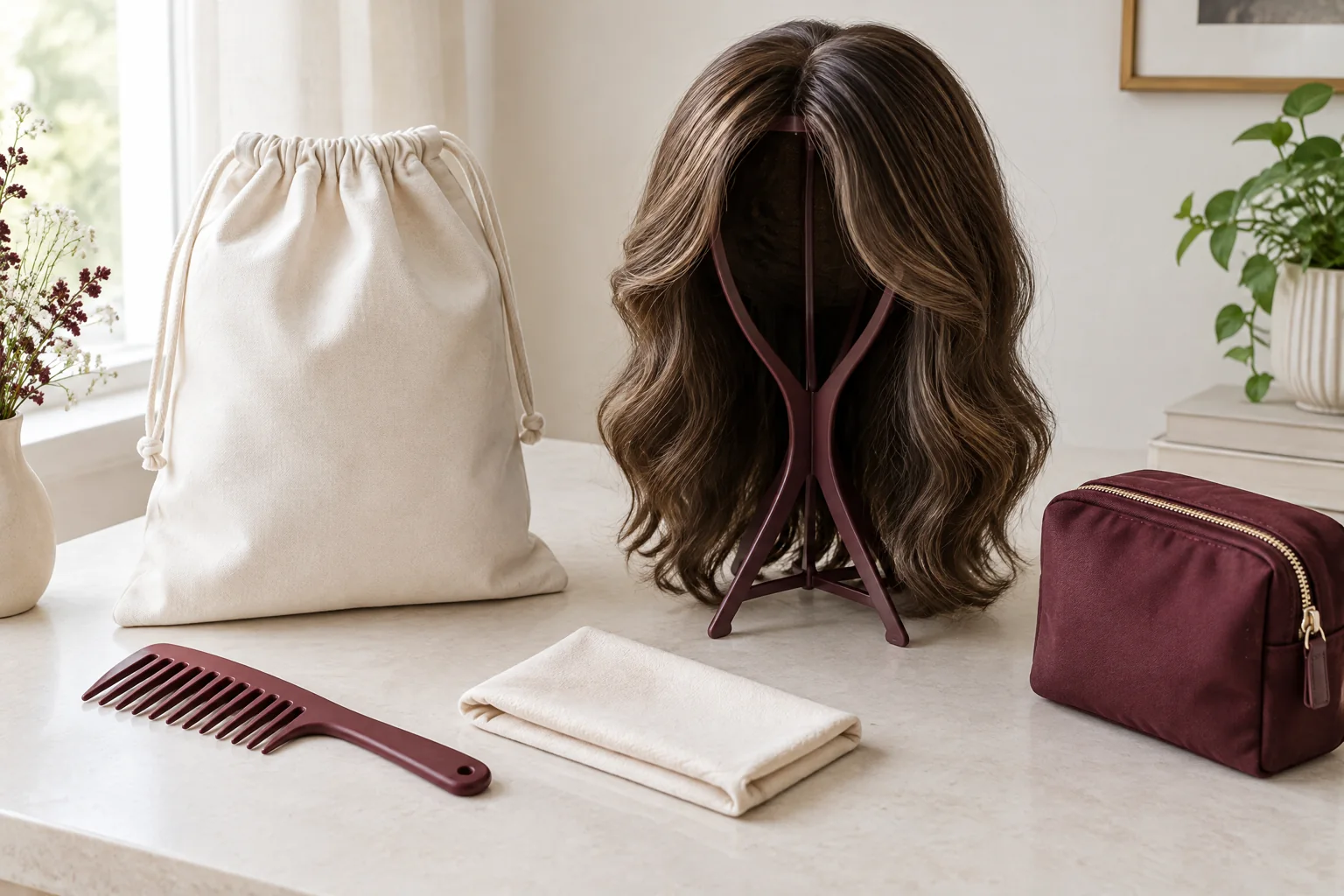
When arranging big day bridal makeup, share the approved signing photograph and the specific adjustment you accepted. Explain whether the final cue concerns makeup or the photographer's position. Confirm when a brief seated check could fit before the ceremony. Also explain who holds your accessories during a touch-up. A simple plan keeps the makeup enquiry focused without assuming that your artist controls the venue layout or photographic schedule.
On arrival, compare the actual chair and document position with your rehearsal. Check that you can read comfortably without stretching towards the paper. If the setting differs, tell the photographer before sitting down to sign. Keep the approved makeup as your starting point. A changed table or camera access may call for reframing rather than another application. Discuss any seat movement with the person coordinating the ceremony.
End the review when you have an acceptable natural signing view and an agreed upright portrait plan. Reopen it only for a meaningful change, such as a different veil position or uncomfortable movement. Name that change before choosing a response. If camera access is limited, accept a wider documentary frame where appropriate. The goal is an enjoyable signing moment with informed choices, not endless corrections while everyone waits.
Key takeaway
The best signing-table decision is the smallest change that answers your concern without making writing uncomfortable. A camera adjustment may be enough when the issue appears only from one viewpoint. A local touch-up belongs to an identified makeup issue. Hairpiece coverage needs its own assessment. Approve the crown view yourself, then let the signing happen naturally. Save the held facial portrait for a suitable moment afterwards.
Practical checklist
- Rehearse reading and writing at a comparable table with your actual accessories.
- Compare camera heights while keeping your posture and hairstyle unchanged.
- Separate facial product marks from crown coverage or attachment concerns.
- Choose your preferred signing view and retain an upright comparison image.
- Tell the team which adjustment you approved and when the review should stop.
Frequently asked questions
Should I lift my chin while signing?
Use the position that lets you read and write comfortably. Holding your chin up for the camera can make signing feel awkward. Rehearse your ordinary movement first and ask the photographer to compare available viewpoints. If you want an upright facial image, plan it separately after signing where the ceremony allows. You do not need to turn the whole action into a held portrait pose.
Does visible crown detail mean my makeup needs changing?
Not necessarily. Makeup, hair coverage and camera framing affect different things. Identify whether your concern sits on the face or within the visible hair area. Compare the camera view before changing your chosen makeup. If you wear a piece, inspect its coverage and movement separately. Facial touch-ups cannot enlarge a base or settle an attachment issue that requires advice about the specific item.
Can phone photographs replace a photographer's signing rehearsal?
Phone photographs can help you notice movement and explain what concerns you. They cannot establish the final camera position, lens choice or venue lighting. Use them as preparation references rather than a prediction of every wedding image. Ask the photographer to assess the planned signing view. Keep one wider image alongside any close crop so the conversation includes the scene, not just a small detail.
Should I buy another hairpiece after one disappointing trial image?
A single photograph is a reason to investigate, not an automatic reason to replace your piece. Check whether the concern changes with camera position and whether the piece feels comfortable during movement. A coverage issue deserves an item-specific discussion before purchase. Compare the area you want covered with the actual base or cap details. Allow another rehearsal if you choose a different item for the ceremony.
What should I send BigDeal before the makeup discussion?
Send an approved signing-view reference, an upright reference and a short description of the detail you want reviewed. Mention your planned veil, glasses or hair accessory when these affect the view. If you wear a hairpiece, share its photo or bring your own item by arrangement. BigDeal's enquiry concerns makeup preparation. Product dimensions, attachment instructions and purchasing questions belong with the supplier of your piece.
Sources
| Source | What it supports |
|---|---|
| How to Use Facial View and Camera Angle to take Flattering Portraits | Camera angle includes height, distance and position relative to the face. The tutorial compares camera heights while keeping distance and focal length unchanged, providing a basis for a controlled seated-view rehearsal. |
| Eye Cosmetic Safety | Stop an eye cosmetic immediately if it causes irritation; seek medical advice if irritation persists. Keep instruments near the eyes clean and never apply eye makeup in a moving vehicle. |
Discuss your own makeup plans
Planning your signing-table makeup check? WhatsApp BigDeal Make Up at +852 6918 3153 for makeup enquiries. Share your preferred signing view and your own hairpiece photo, if relevant, to discuss makeup preparation.
Ask on WhatsApp +852 6918 3153