

At a glance
A narrower outline can mean removing hair or changing how retained hair sits. Compare both sides, decide what should remain covered, and confirm the actual salon visit. This guide suits grooms planning a considered change, not anyone seeking a guaranteed style from one reference photograph.
Groom side profile haircut choice starts with clothing
Your groom side profile haircut choice: ears and collar
Begin with the clothes you will actually wear, rather than a hairstyle photographed with an open neckline. Put on your shirt, jacket and usual glasses. Look at the gap between the collar and the hairline behind each ear. Decide whether you prefer a softer edge or a more exposed outline. That preference gives the salon something concrete to discuss without ranking one look as more suitable for every groom.
Take a front view, both side views and a rear view in the same position. Keep your chin level and avoid pushing the top upwards just for the photograph. Note whether the glasses arms disturb the hair immediately above the ear. A favourite side alone can hide a different growth direction on the other side. Bring the wedding glasses if they differ from your everyday pair, so the outline is considered with both.
Use BigDeal's groom makeup page to discuss the makeup or styling support relevant to your ceremony plans. Explain your preferred sideburn boundary and whether you expect to wear glasses during portraits. Ask what the proposed appointment covers rather than assuming a haircut is included. Salon cutting remains a separate enquiry. Sharing your intended outline helps both conversations stay consistent, while each provider confirms its own arrangements and availability with you.
Write down one feature you want to preserve and one you want to change. You might keep dark coverage at the temple but tidy hair catching against the collar. Alternatively, you may want the whole lower side more exposed while leaving the top familiar. These are different briefs. With a high jacket collar, check the rear outline while standing naturally. Avoid tilting your head forward towards a mirror.
- Preserve: the coverage or top shape you still recognise as yours.
- Change: the specific edge, projection or length that bothers you.

Ask what a fade reference would actually remove
How much shorter would the sides become?
A reference photograph is useful only when you identify the parts you like. Point to the shortest area, the height of the transition and the fuller hair beneath the top. Do not assume the label settles all three. Ask the stylist to compare those boundaries with your current cut. If you dislike visible scalp near the temple, say so. Do this before agreeing to a general request for a cleaner wedding outline.
Vitso Hair's fade haircut guide separates wider side transitions from tapering concentrated around the sideburns and neckline. The two brands share ownership, so treat this as relevant salon reading rather than an independent recommendation. Use the guide to decide where shortening should begin and how much coverage should remain. Then ask the salon how that description applies to your hair. BigDeal's makeup enquiry does not confirm the cut or its execution.
Compare the ear area with the band above it instead of judging only the overall narrowness. A tidy perimeter may be enough when you like the existing fullness higher up. A broader graduated side changes more of that coverage. Neither choice automatically determines the fringe or crown. Ask how the remaining top will connect to the side. This matters particularly if you sweep it backwards and expose the temple during formal photographs.
Consider whether you would still like the outline when styled without the reference photograph's dramatic top height. A cut should make sense with the amount of preparation you intend to do. Show the stylist how your hair sits after your normal wash and drying routine. If the proposed change feels too unfamiliar, discuss a smaller edge adjustment first. A wedding deadline is a reason to clarify the brief, not to approve an uncertain cut.
| Your priority | Option to discuss | Trade-off to clarify |
|---|---|---|
| Keep fullness above the ear | Local taper or perimeter adjustment | How much of the upper side stays unchanged? |
| Reduce coverage across the side | A wider fade transition | Where does shortening start, and what remains visible? |
| Keep length but reduce projection | Individual side-control assessment | Is chemical work suitable, and what care follows? |
| Avoid an unfamiliar wedding look | Retain the current cut with agreed styling | Which untidy areas will remain rather than be removed? |

Compare the side-control goal before choosing a method
Do you want less length or less outward projection?
Separate the hair you want removed from the hair you want to keep closer to the head. A shorter side panel and a covered panel lying flatter can both look compact. They do not leave the same length around the ears. Point to the exact projecting area on your own photograph. If only one small section bothers you, avoid describing the entire side as something that needs flattening or cutting away.
The Vitso Hair down perm vs fade comparison helps organise this distinction between shortening and controlling retained hair. Read it with your preferred coverage in mind, not as a promise that either method suits you. Note the side length you want to preserve, then ask about growth direction and earlier chemical work. This is a salon consultation topic. Adding a chemical service is not a necessary step simply because your wedding reference has narrow sides.
The American Academy of Dermatology warns that appearance-enhancing hair treatments can leave hair dry and brittle. Its perming advice calls for caution to avoid lasting damage. That makes hair condition part of the decision, not an afterthought. Tell the salon about previous bleaching, straightening or perms before discussing chemical side control. This general safety guidance cannot assess your suitability. Persistent scalp symptoms belong with a healthcare professional, not a wedding styling plan. [1]
Ask what a non-chemical alternative would leave unchanged. Keeping the current length, adjusting the cut or discussing everyday styling may involve different compromises. A retained panel might still project outward; a shorter panel might expose more skin than you want. Write down which compromise you accept rather than asking for everything at once. Ask about treatment care requirements before setting the date. This matters especially when travel or other preparations limit your flexibility.
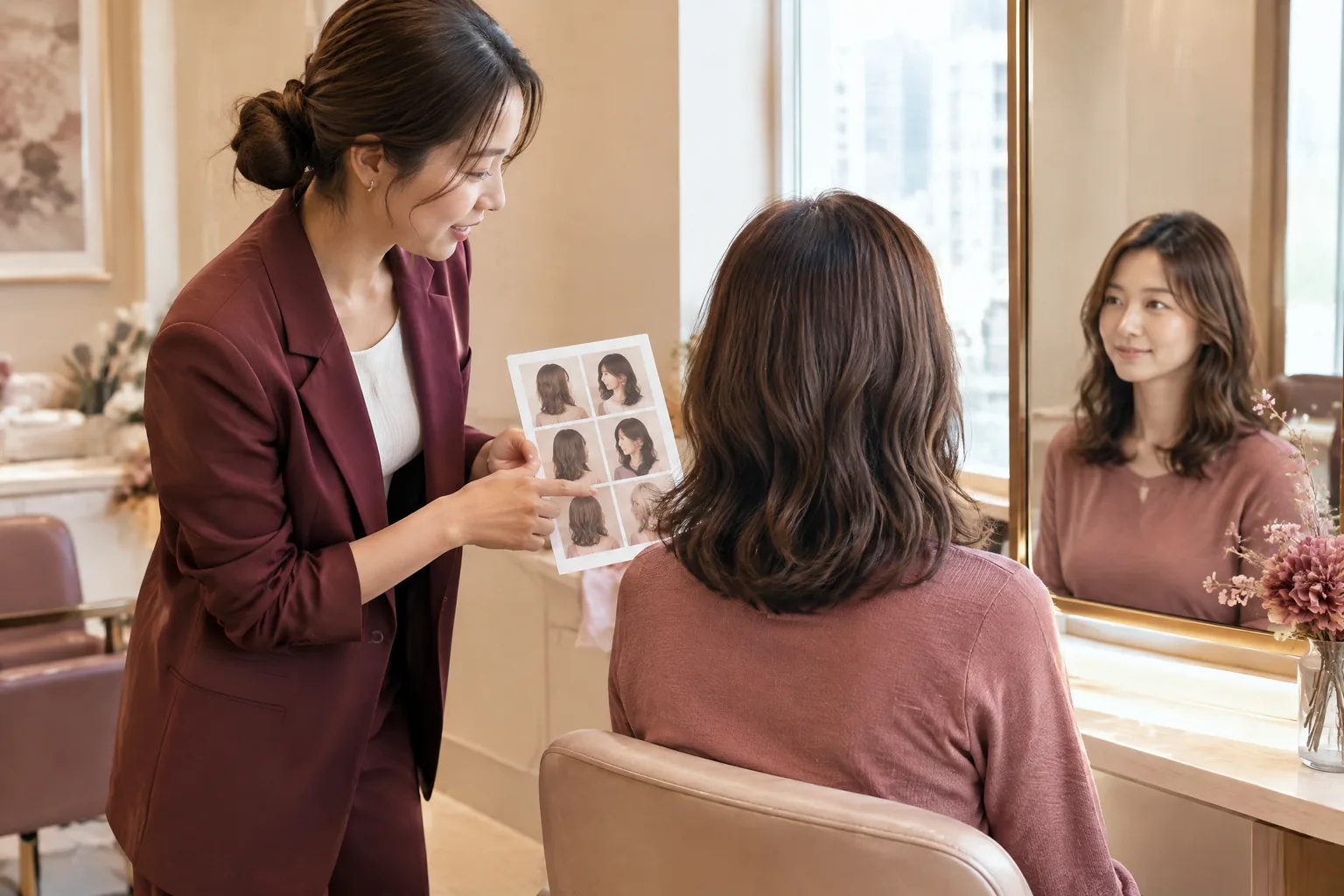
Coordinate the groom and the guests who need help
Who actually needs separate makeup and hair enquiries?
Start with the people who have requested help, rather than assigning every relative an appointment. The groom's outline decision does not create a styling requirement for his parents or siblings. Ask each participant whether they need makeup, hair styling or neither. Record where they will get ready and when they must leave. For a Hong Kong wedding with several locations, individual plans are useful. Not everyone can follow the groom's preparation schedule.
BigDeal's wedding guest makeup and hair page is relevant for participating relatives who want to discuss their own arrangements. It is not a compulsory addition to the groom's preparation. Share the guest names, requested support and getting-ready location when enquiring. Ask whether separate appointment times are needed and what each arrangement covers. Do not assume one person's confirmation includes another person's styling. A salon visit also needs its own confirmation, rather than being folded into the same booking.
Let each relative approve their own reference photographs and comfort preferences. One person may want their usual fringe; another may wear glasses throughout the ceremony. Those decisions should not be overwritten to make the group look identical. If someone is considering a haircut, encourage them to discuss it with their salon separately. The shared wedding timetable can record the confirmed outcome without making the groom responsible for choosing everyone else's side profile.
Choose one person to keep the preparation timetable current, but keep the provider contacts clearly separated. Record a salon appointment under the salon's confirmation and makeup arrangements under the makeup provider's confirmation. Include departure times for tea ceremonies or registration only when those events apply. If a relative changes their request, update the affected slot instead of moving the entire group automatically. This protects the groom's preparation time without treating guests as an afterthought.
Turn the Sheung Wan resource into a clear enquiry
Which location and service details need confirmation?
Use the down perm sheung wan resource label to open Vitso Hair's relevant side-control service information. The page presents a Sheung Wan service enquiry; it does not establish a network of branches. Ask the salon to confirm the current address and your proposed service scope before planning the journey. Describe the retained length and projecting area you discussed earlier. Reading the page is useful preparation, but it does not confirm suitability or reserve an appointment.
Once an appointment is agreed, ask for the arrival instructions you actually need. Confirm the building entrance, floor and any access details directly rather than guessing from the district name. Plan your route from where you will be that day, which may differ from your home. If you will carry wedding clothing, consider travelling without it and collecting it later. Avoid placing a time-sensitive fitting immediately after a consultation whose scope has not been settled.
Hong Kong Observatory's MyObservatory provides location-based rainfall and lightning forecasts for the coming one or two hours, alongside weather warnings. Check those shortly before leaving for the salon, rather than treating a distant forecast as final. Keep your route flexible if walking conditions look unsuitable. This is a travel-planning check, not a prediction of your wedding's weather. A forecast also cannot confirm road conditions, appointment duration or the time needed to reach the building. [2]
Ask how the salon will notify you if the agreed arrangements change, and save the contact details from its confirmation. Keep your appointment date distinct from the ceremony's getting-ready address. A Sheung Wan enquiry should not become an assumed wedding-morning transfer plan. If you need to revisit the cut, discuss that possibility with the salon before finalising a crowded week. Do not build another commitment around a finish time that nobody has confirmed.
Keep ceremony readiness separate from salon attendance
What must the couple confirm for the wedding morning?
Once the salon plan is settled, build the wedding morning around the ceremony rather than around another haircut decision. List the time you must be dressed and ready for the first required photographs or departure. Work backwards with the makeup provider from that point. Include dressing and checking the collar, not just time in a chair. If the final haircut is still undecided, resolve that with the salon rather than expecting morning styling to settle it.
BigDeal's wedding morning makeup Hong Kong page helps the couple discuss their ceremony makeup arrangements. Share the getting-ready location, the required readiness time and any events before registration. Ask what can be confirmed for your particular date. This enquiry does not provide salon transport or book a Vitso service. Keep the morning confirmation focused on the couple's preparation. Then place separately confirmed guest arrangements and travel requirements into the wider timetable where they belong.
Agree what hair preparation is expected on arrival rather than choosing a last-minute routine yourself. Explain any salon care instructions and ask how they fit the planned styling. Bring the glasses you will wear and a photograph of the agreed side outline. Check the collar once dressed, with the top in its intended position. If the outline needs a small styling adjustment, describe the area clearly. Do not ask for a new haircut on the morning.
Keep a simple fallback that does not depend on an unconfirmed extra service. That might mean wearing the familiar parting and retaining the coverage you already like. Decide who carries the glasses case and who keeps the readiness timetable available. Your aim is a groom who feels comfortable from the side as well as the front. Check whether the agreed shape works with your clothes. Matching a trend exactly matters less than feeling comfortable with that outline.

Key takeaway
A useful side-profile brief says what must stay, not only what should disappear. Keeping temple coverage while tidying the ear edge is different from narrowing the whole side. Make that choice first, then confirm the salon visit and wedding-morning makeup as separate arrangements.
Practical checklist
- Photograph both sides with the wedding glasses and a collar close to your ceremony outfit.
- Name the coverage to retain before naming the area you want shorter or flatter.
- Tell the salon about previous chemical work and ask about suitability and care requirements.
- Confirm the salon address, appointment and arrival details before planning the Sheung Wan journey.
- Keep the couple's makeup readiness time separate from salon and participating guest confirmations.
Frequently asked questions
Should every groom choose a fade for side photographs?
No. First decide whether you want less coverage or simply tidier edges. A photograph cannot establish your preferred exposure around the temple. Compare the outline with your collar and glasses, then ask the salon what would change.
Can I ask for exposed ears without exposed skin above them?
Yes, as a consultation preference. Point to the ear boundary and the coverage you want higher up. Ask how the proposed cut separates those areas. Whether the shape can be achieved as intended still requires the stylist's assessment.
How many days before the wedding should I book the cut?
There is no single interval supplied here. Discuss the size of the change, your usual preferences and any proposed treatment care. Allow room for questions before ceremony preparations become fixed. Confirm timing directly with the salon rather than relying on a generic countdown.
Does the Sheung Wan page reserve a down-perm appointment?
No. It is information for preparing an enquiry. The salon must confirm suitability, scope, location and appointment arrangements. Do not treat the page label as proof of additional branches, immediate availability or a transfer service to your wedding venue.
Can BigDeal confirm the salon service when I enquire about makeup?
Keep the enquiries separate. BigDeal can discuss its makeup arrangements, while Vitso Hair confirms its own hair service. Shared ownership does not turn a makeup confirmation into a salon booking. Put both confirmations into your timetable only after each is agreed.
Sources
| Source | What it supports |
|---|---|
| Coloring and perming tips for healthier-looking hair | The American Academy of Dermatology warns that appearance-enhancing treatments can leave hair dry and brittle and advises caution with perming to prevent lasting damage. Individual suitability is not established by this guidance. |
| MyObservatory — Hong Kong Observatory | MyObservatory provides location-based rainfall and lightning forecasts for the coming one or two hours, alongside weather warnings. Checking before a salon journey is a planning suggestion, not a prediction or travel-time guarantee. |
Discuss your own makeup plans
Discuss your ceremony makeup arrangements with BigDeal Make Up on WhatsApp +852 6918 3153. Share your getting-ready location and required readiness time. For haircut or down-perm suitability, service scope and appointments, contact Vitso Hair separately.
Ask on WhatsApp +852 6918 3153