
BigDeal Make Up · Hong Kong
Eye Makeup Techniques Workshop And Brow Shaping Workshop
When one facial feature matters most, focused practice beats a general class. An eye makeup techniques workshop or brow shaping workshop with BigDeal Make Up concentrates on the specific area you want to refine—eye shape, brow balance and a wearable finish—using your products where possible. Please tell us about eye sensitivity, contact lenses or any ingredients you prefer to avoid when you enquire.
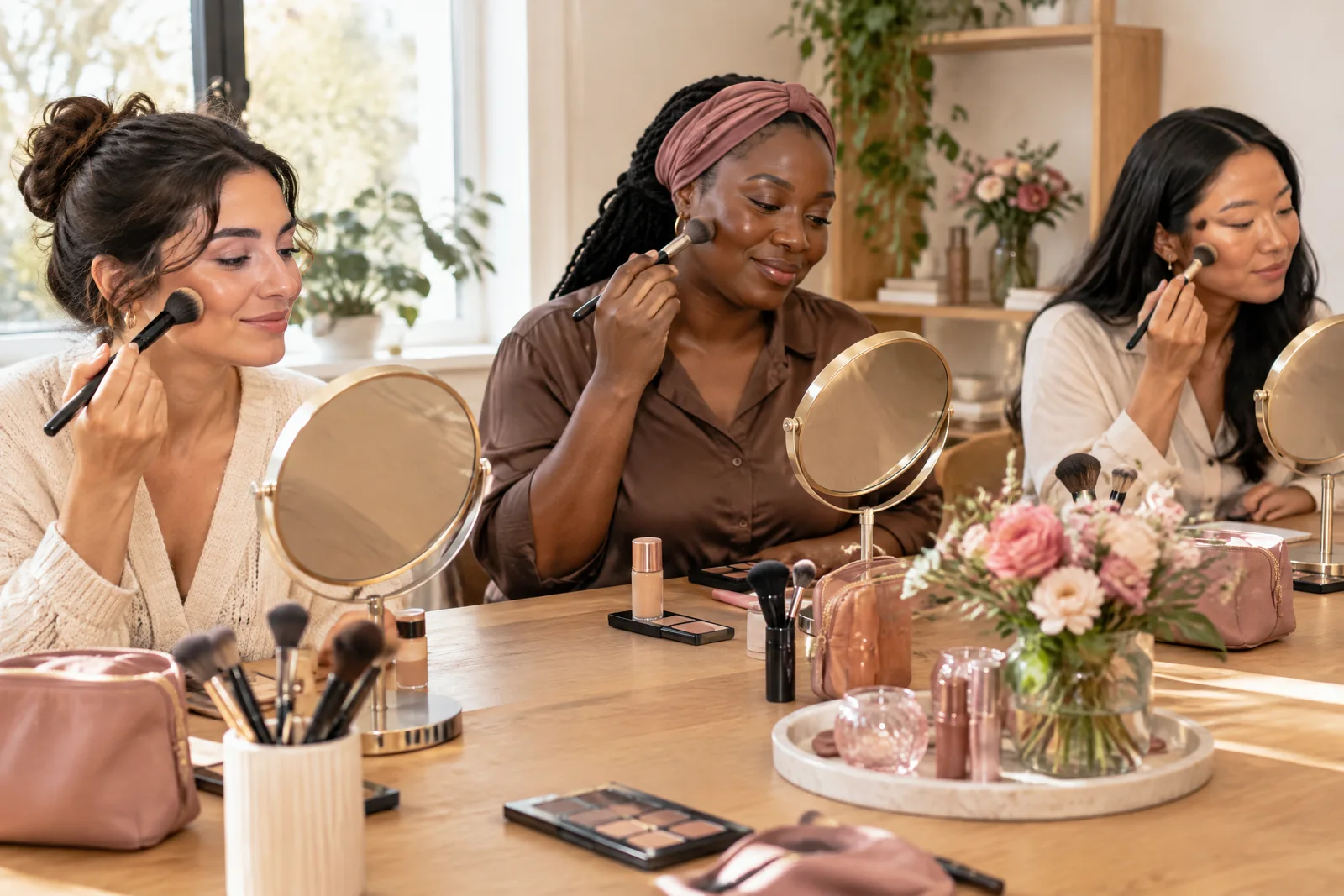
At a glance
eye makeup techniques workshop
Choose a single feature—eyes, brows, lips or a particular technique—and the session becomes a compact, practical rehearsal rather than an information overload. These focused workshops cover placement, product selection for your skin and feature type, simple symmetry tricks and hands-on brush or fingertip methods. Course length, tools and exact content are confirmed with customer service so the session meets your priorities.
01
eye makeup techniques workshop — pick a practical focus
Who benefits from an eye makeup techniques workshop
An eye makeup techniques workshop suits anyone who wants to make one part of their routine noticeably better: defining hooded lids, learning removable eyelid crease techniques, or refining eyeliner flicks. People with contact lenses or mild sensitivities will still gain useful technique practice but should tell us up front so we can adjust product selection and hygiene. Sessions focus on repeatable steps you can reproduce at home rather than temporary theatrical applications.
Discussing your daily routine helps us sharpen the session focus: do you want a quicker daytime eye, a smudged evening look or better lash application? We balance the look with your natural proportions and lifestyle—busy mornings often need a different approach to weekend evenings. Practical takeaways include step-by-step placement, what to practise first, and how to adapt one technique across different eye shapes.
We emphasise techniques that improve consistency and speed. That might be mastering a stable eyeliner grip, mapping a wearable shadow placement for deep-set eyes, or using removable eyelid tape safely for a lifted crease. Instruction covers temporary cosmetic balancing—such as softening an asymmetry—clearly as a makeup technique, not a medical procedure, and we show multiple, non-invasive options so you can choose what feels most comfortable.
For a closer comparison, consider makeup practice workshop
02
brow shaping workshop — shape the session around your brows
What to discuss before a brow shaping workshop
A brow shaping workshop starts with your natural brow growth, face proportions and the look you want—soft natural lift, structured arch or fuller, straighter brows. We’ll cover mapping methods that visually balance the brows with your nose and eye spacing, and teach gentle shaping choices you can maintain at home, including trimming, tweezing and product application techniques for sparse areas.
Bring recent photos of styles you like and a current, unaltered photo so we can compare expectation and reality; this makes the session far more efficient. If you’re part of a small group, we tailor demonstrations to the collective needs—one person may need mapping while another wants to practice hair-like strokes. We avoid making permanent claims: any cosmetic fill or camouflage techniques are temporary and removable.
Brows interact with eye makeup; in a combined workshop we look at proportion and how brow thickness or arch height affects shadow placement and eyeliner choices. We teach realistic maintenance routines based on your hair growth cycle and how to choose brow products—pencils, powders, gels—suitably matched to your hair colour and skin tone, and we offer product advice in line with your ingredient sensitivities.
Match your plans with beauty skills workshop
03
How we arrange an eye makeup techniques workshop or brow shaping workshop before booking
Materials, timing and scope for your session
Before you book, we confirm the scope: whether you want a single technique focus such as false lashes workshop practice, or a cluster—base makeup skills workshop plus eyeliner skills workshop, for example. Because feature sessions are compact, we agree a duration that gives enough practice time rather than a rushed demonstration. Customer service will confirm group size, which tools are used and whether you bring products or use our demonstrator kit.
We recommend bringing your usual face and eye products so tutors can adjust instructions to what you already own. If you prefer, we supply a curated selection from brands we use—NARS, Dior Beauty, Estée Lauder, Laura Mercier, Bobbi Brown, Clé de Peau Beauté, Giorgio Armani Beauty and M·A·C—for demonstration only. Product availability in a session does not imply endorsement; tutors give independent, personalised product advice rather than promoting a fixed brand list.
Hygiene and sensitivity checks happen before hands-on work. If you have a known allergy or skin condition, tell us in advance so we can reduce risk and choose suitable alternatives. We do not give medical advice; check ingredient lists and consult a healthcare professional where appropriate.
You may also find it useful to compare avant garde makeup workshop
04
Questions to resolve when booking an eye makeup techniques workshop or brow shaping workshop
The next steps for confirming your brow shaping workshop
Practical questions to answer early include: do you want product advice for sensitive skin, are you bringing your own brushes, and is symmetry the main goal or a different finish? We’ll outline how the session time is used—demonstration, guided hands-on practice and a final review with corrections—and whether you prefer tutor-applied demonstrations on a model or mirror-based practice on yourself.
We set realistic expectations around symmetry: makeup can visually balance uneven eyes and brows, but results are temporary and depend on anatomy, hair growth and practice. Tutors show techniques such as soft contouring to reduce perceived asymmetry and step-by-step brow mapping to help you recreate the balance at home. For permanent changes, we recommend consulting a specialist outside the workshop.
Before confirmation, we ask about your preferred language so we can accommodate requests; English can be requested at enquiry. We also confirm start time, venue logistics and any accessibility needs. BigDeal Make Up’s sessions are practical and run as private one-to-one or compact group workshops depending on your preference—tell us whether you want an intensive one-to-one or a small group so we can reserve the right amount of tutor time. Customer service will provide a bespoke quote for your requested combination of topics and duration.
For another approach, explore face painting workshop Hong Kong
05
Choose a single feature to practise closely
Compare brush handling with fingertip or sponge techniques
Selecting one feature—say eyeliner or brows—lets you drill the motor skills and placement rules that transform inconsistent results into reliable ones. For eyeliner skills workshop practice we break down hand position, inner-eye anchoring points and small stabilising grips. For false lashes workshop practice we focus on trimming, glue cadence and lash placement relative to your natural lash line so the set feels comfortable and natural.
Brush handling is foundational: small shifts in angle or pressure change pigment placement entirely. We demonstrate multiple methods—brush, fingertip blending, sponge tap-and-blend—and explain why a fingertip might be preferable for creamy products around the eye while a synthetic brush often suits precise eyeliner or stencil work. Practise exercises are short, repetitive drills to build muscle memory faster than watching a long demo.
We emphasise tool choice according to the technique: a smudger brush for soft smoked eyeliner, a tapered blender for crease blending, spoolies for brow hair direction and stiff-angle brushes for product placement on hooded lids. Tutors coach each person briefly while you practise, offering immediate adjustments that accelerate learning; the result is better placement with the same products you use every day.
Before deciding, take a look at Makeup Courses
06
Observe natural eye and brow proportions before placement
Bring current products and any ingredient concerns
Observing proportions begins with simple mapping: where the brow should start relative to the nose, where the arch should ideally sit and how the eye’s inner, centre and outer thirds inform liner and shadow placement. This helps you place colour so it flatters your bone structure rather than blindly copying trends. We show proportion checks that work in seconds, using a mirror and a pencil or cotton bud for visual guides.
Bringing your own products is invaluable. It allows tutors to suggest small swaps—different textures, pigments or formulas—that will perform better for your eye shape or skin type; for example, a waterproof gel liner for watery eyes or a cream shadow that won’t migrate on oily lids. If you have sensitivity concerns, name the ingredients you prefer to avoid and we’ll propose alternatives; we don’t offer medical advice, but we’ll work around known irritants and contact-lens considerations.
Colour matching is not just about shade but also finish. A matte shadow reads differently on Asian features and deeper skin tones than a satin or shimmer, so we practise choosing finishes that keep looks wearable for day or evening. Tutors demonstrate how subtle shifts in placement and tone can open the eye or soften a harsh arch, and we use side-by-side comparisons so you see immediate, practical differences rather than theoretical rules.
07
Set realistic goals for symmetry and wearable refinement
What realistic, wearable improvement looks like
Makeup can give the appearance of greater symmetry, but it’s important to set achievable goals. We teach camouflage and enhancement techniques—soft light-reflecting powders, subtle contour near the brow bone and eyebrow fill that mimics hair—that offer noticeable improvements without promising permanent structural change. Practice turns these techniques into repeatable outcomes; one focused session gives a framework to continue refining at home.
Wearability is central: a technique that looks dramatic on camera or in a tutorial may be impractical for everyday life. Tutors prioritise versions of looks you can reproduce in your normal routine. For example, we may trade a complex multi-shade gradient for a two-shade placement that delivers the same perceived depth with far less time, or we teach a quicker lash application method that saves minutes without sacrificing lift.
We also cover how features interact—brow height influences perceived eyelid space and heavy lower liner can make small eyes look smaller—so your refinements are cohesive. Tutors explain how to scale a technique from day to night, what to avoid when you have sensitive eyes, and how to use removal and correction techniques safely if a look needs quick adjustment while you’re wearing it.
08
Practical workshops that complete a focused feature session
Choosing linked sessions and product-aware preparation
When you book a feature workshop it’s often helpful to combine one tightly related mini-topic so you leave with a coherent routine rather than a single trick. For example, pairing a foundation matching workshop with an eyeliner skills workshop helps you set a stable base for crease work and removable eyelid tape. Likewise, a makeup class eye makeup plus a makeup class brow shaping pairing clarifies how shadow placement and brow proportion work together. We confirm group or private format, preferred language upon request, and exact duration at enquiry, because those logistics determine whether we cover one or two linked topics.
Product selection matters for technique transfer. During a product selection makeup workshop or when giving makeup workshop product recommendations, tutors compare textures and finishes—matte versus satin, cream versus powder—and explain why a specific formulation performs better for your skin, eye shape and daily routine. We teach practical swaps you can make with your existing kit and offer product advice tailored to sensitivity, lenses and natural skin behaviour. If you prefer to bring your own items, bring your regular foundation, brow products and eyeliners so we can work directly with them.
Skin preconditioning changes how makeup sits. A short skincare prep makeup workshop segment can be included to demonstrate simple, repeatable prep: moisturiser choices for eyelids, targeted primers for oily lids, and quick hydrating steps that don’t add time to your morning routine. These small rituals improve longevity and reduce creasing, particularly when working on techniques such as removable eyelid crease methods or layered eye looks. Tell us about any sensitivity issues in advance so we can replace potentially irritating products during the session.
09
Which focused classes clients commonly request and what you’ll practise
Practical outcomes from single-feature and combined workshops
Clients often ask for a makeup brush techniques workshop component to accompany the core technique, because tool handling is where most mistakes occur. In a combined session we spend time on hand position, brush angles and pressure for specific tasks—blending a diffused crease, precise brow hair-like strokes, or building lip pigment without feathering. A dedicated makeup brush techniques workshop segment converts slow, uncertain application into a few reliable motions you can repeat each morning.
Other frequent combinations include a makeup class foundation matching with a makeup class contour blush highlight segment so cheek placements complement brow and eye balance. Hands-on practice covers shade selection, how much product to deposit and blending that keeps looks natural under different lighting. For lip-focused sessions we offer a lip makeup techniques workshop and a makeup class lip colour portion: trimming, lining, colour layering and transfer-resistant finishing methods suited to your lifestyle and materials.
We also run sessions tailored to anatomy and skin concerns, such as makeup techniques for Asian features and makeup workshop for sensitive skin. These focus on placement and product choice—what to avoid, which finishes open the eye and how to create soft, hair-like brows—while using makeup workshop colour matching principles so tones look harmonious with your natural skin. If you have particular sensitivity or ingredient concerns, we include makeup workshop product advice so you leave with a workable shortlist of safer options.
Style references
Related makeup style illustrations
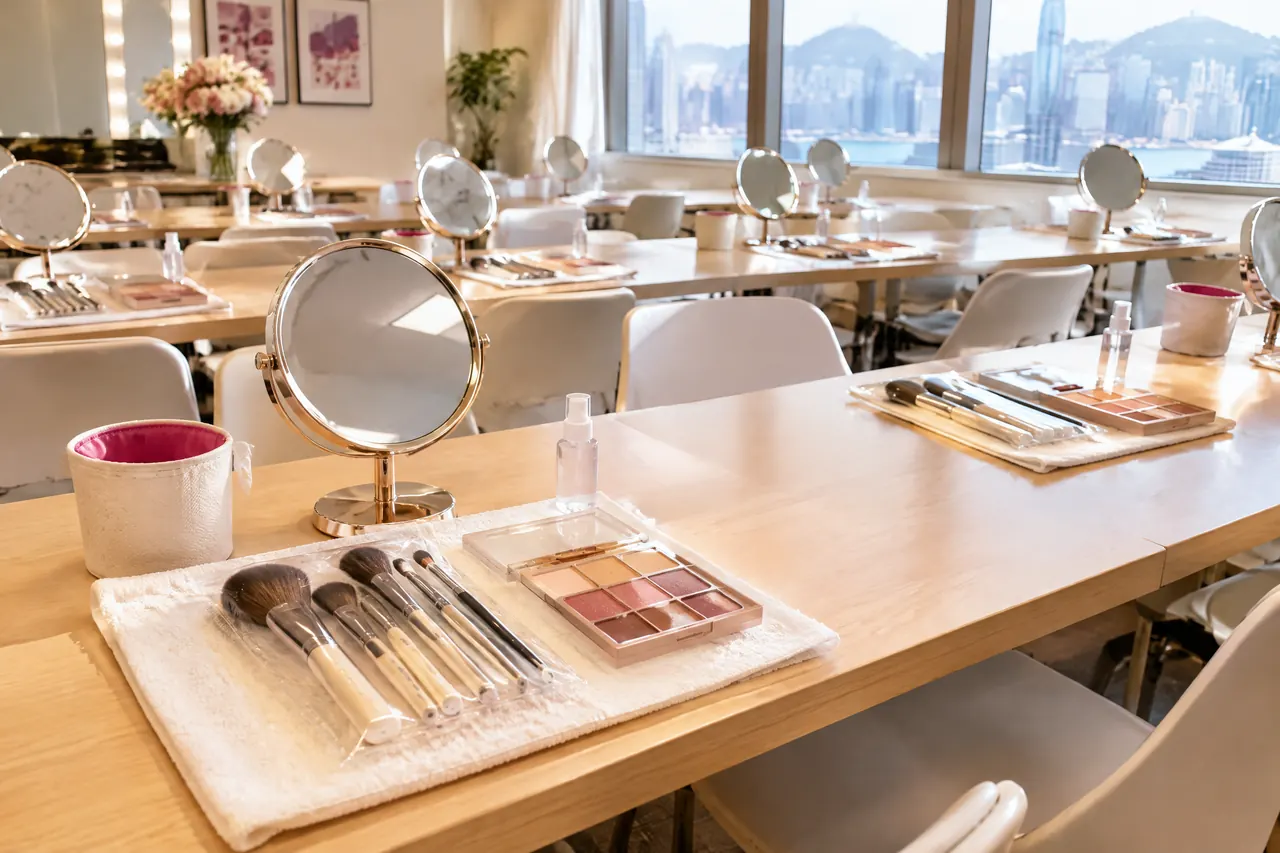




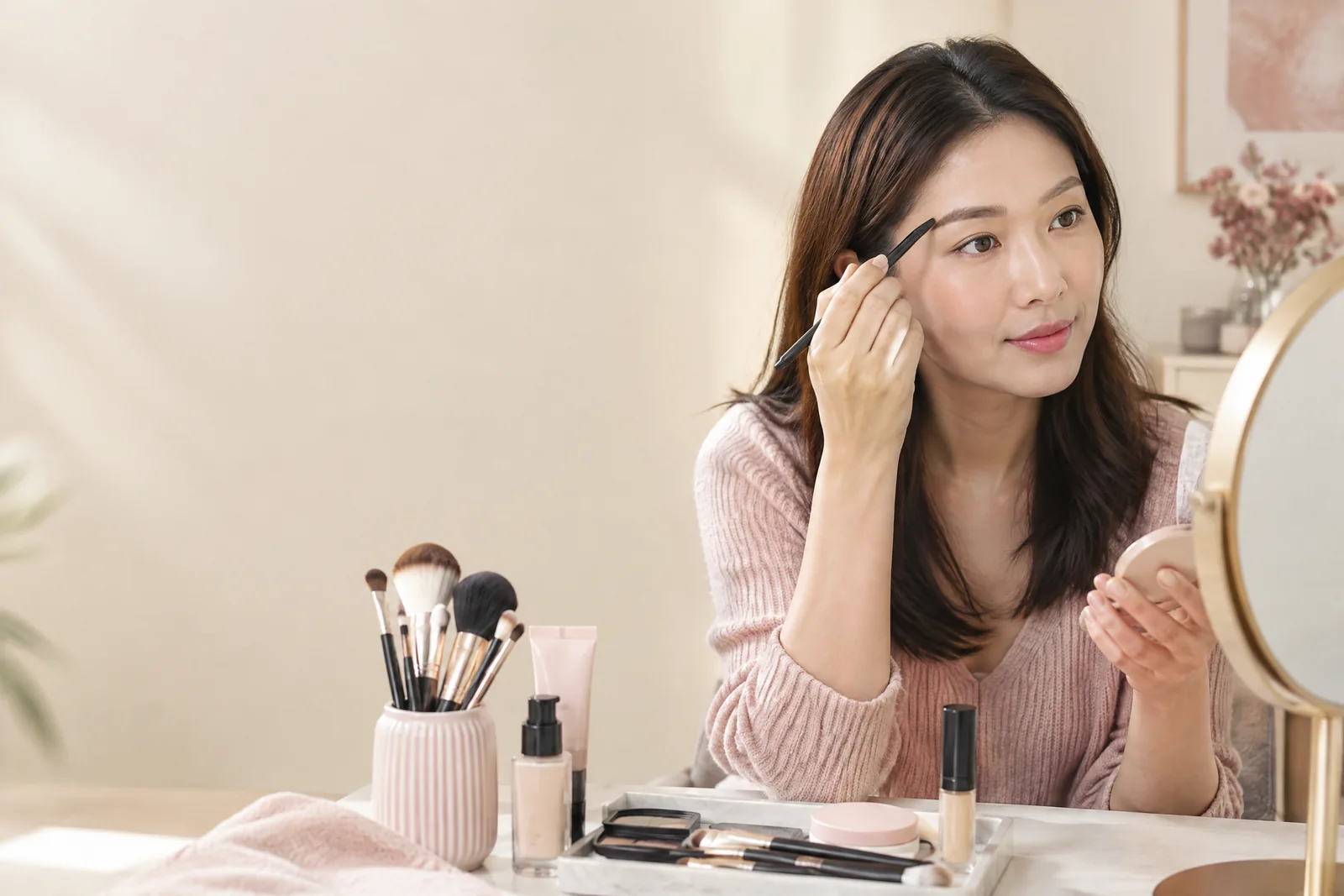
Typical focused workshop topics and practical exercises you’ll practise
| Feature focus | Hands-on practice | Timeframe per person (estimate) |
|---|---|---|
| Eyeliner skills workshop | Steady hand grips, wing placement and removable eyelid tape practice | 45–60 minutes |
| Brow shaping workshop | Mapping, hair-like filling, and small-shape maintenance | 45–60 minutes |
| False lashes workshop | Trimming, adhesive control and lash placement near the natural line | 30–45 minutes |
| Base makeup skills workshop (feature-focused) | Foundation matching for the eye/brow area and minimal concealing | 30–45 minutes |
| Blush contour highlight workshop (feature tie-in) | Subtle cheek placement to complement brow and eye balance | 30 minutes |
Helpful answers
Frequently asked questions
Do I need to bring my own makeup for an eye makeup techniques workshop?
Bringing your usual products is strongly recommended because tutors adapt techniques to what you already own. If you don’t bring items we’ll provide demonstrator products from brands we use, but product availability does not equal endorsement. Tell us about any ingredient concerns so we can choose suitable alternatives during the session.
Can a brow shaping workshop permanently change my eyebrow shape?
No. A brow shaping workshop teaches temporary cosmetic techniques—mapping, trimming and product application—to create the appearance of a different shape. These changes are removable and short-term. For permanent modification you should consult an appropriate specialist outside the workshop environment.
Will you address sensitive eyes or contact lenses in the workshop?
Yes. Please notify us about contact lenses, known sensitivities or allergies before booking so tutors can avoid specific products and emphasise safer application methods. We’ll suggest gentle alternatives and hygienic routines; however, this is general makeup advice and not a medical assessment, so consult your healthcare professional for medical concerns.
How do you help with asymmetrical eyes during the session?
We teach visual balancing techniques—placement, shading and lash choices—that reduce the appearance of asymmetry. Tutors give side-by-side demonstrations and practise drills to help you replicate corrections at home. Results are cosmetic and temporary; anatomy and hair growth limit how closely makeup can equalise asymmetry.
Do you include makeup workshop colour matching in a focused feature session?
Yes. We practise colour matching as part of applied technique so you see how a shade sits on your skin rather than in a swatch. That can be a short makeup workshop colour matching exercise during an eye or brow session or a deeper makeup class foundation matching when base and feature work are combined. We recommend bringing your usual foundations, concealers and lip shades so tutors can compare and advise on subtle swaps that improve harmony and wear time.
Is there practical makeup class skincare prep guidance for sensitive skin?
We include concise skincare prep as needed: cleansing, targeted moisturising and primer choices that reduce migration on oily lids or minimise irritation for reactive skin. If you flag sensitivities in advance we’ll adjust products and suggest gentle alternatives; this is makeup workshop for sensitive skin guidance and not medical advice, so consult a clinician for diagnosed conditions.
Can you give makeup workshop product recommendations for my kit?
Yes—tutors provide personalised makeup workshop product recommendations and makeup class product advice during hands-on practice. Recommendations focus on texture and ingredient considerations suited to your concerns (long-wear liners for watery eyes, non-greasy primers for oily lids, hair-like brow pencils for sparse arches). We adapt suggestions to your budget and existing items rather than promoting specific brand bundles, and we always prioritise techniques that work with what you already own.
Ready to discuss it?
Book your focused session with Maggie Yeung
Tell us what you are planning, and we will help clarify the service or lesson details that matter for your enquiry.
From the makeup blog