
At a glance
The useful result is a simple map of skin that can receive makeup and edges that must stay untouched. Check both temples in your chosen pose, then agree who handles each adjustment. A softer camera angle may solve a contact problem more comfortably than extra coverage. Hair fullness can influence the picture, but it cannot establish whether an attachment area accepts cosmetics.
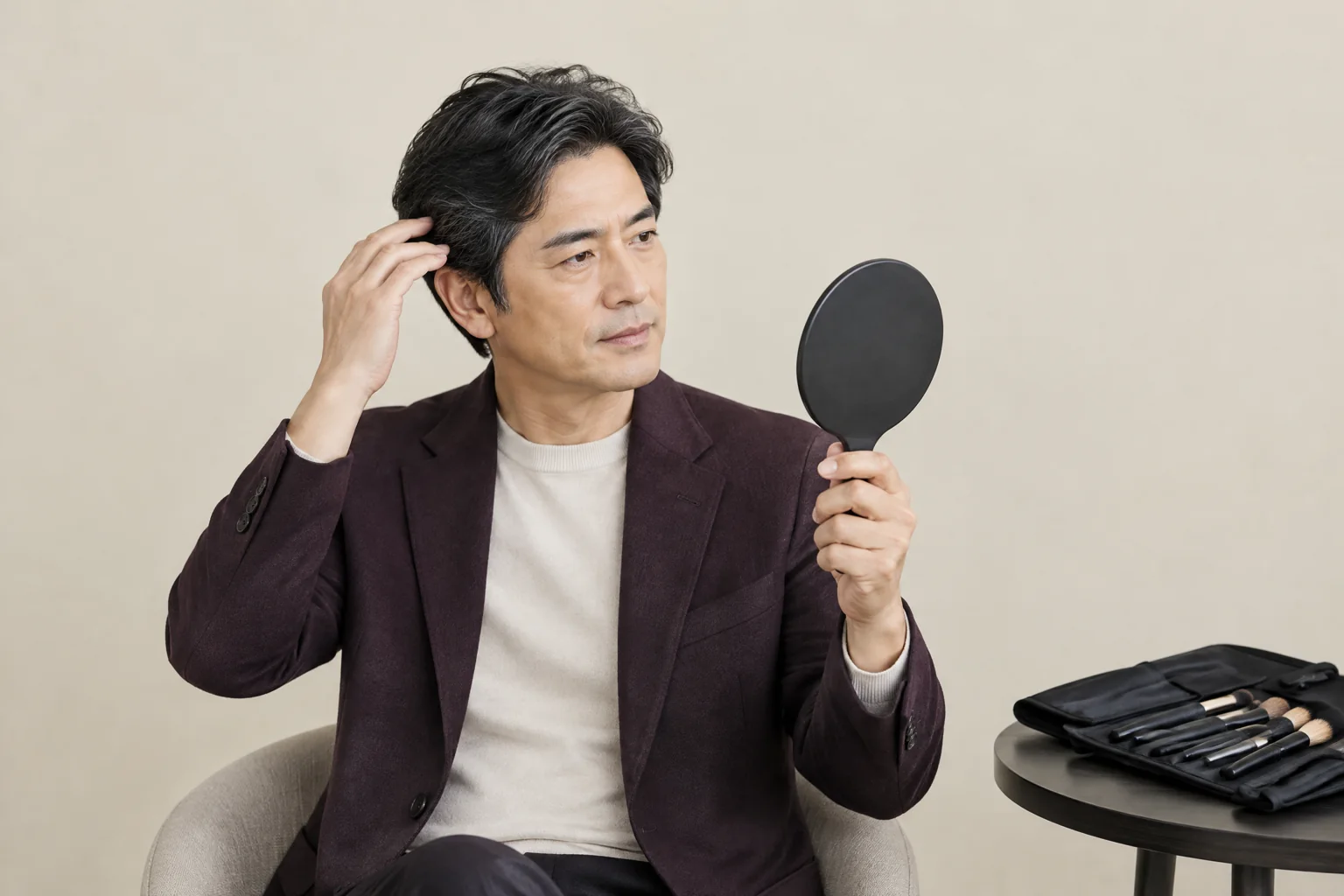
Plan groom close portrait temple makeup around contact
Why leaning together changes the check
Start with the photograph you actually want: a relaxed lean, a forehead touch or a cheek beside your partner's hair. These positions place different surfaces near the temple. Show the artist a pose reference, then try it without pressing your heads together. Ask your partner where contact feels natural. The aim is a comfortable expression with a workable makeup area, not a pose held through discomfort.
If you are considering partial coverage, OwnStrand's toupee guide explains why the footprint matters more than the category name. OwnStrand shares BigDeal Make Up's owner and provides related selection reading. A partial piece may end somewhere different from a full wig. Ask where your exact piece's edge sits when worn. That position helps identify which temple skin remains available for your preferred portrait finish.
Walker Tape explains that oils and residue can affect tape adhesion, including residue transferred from hands. This makes the attachment area a poor place for casual cosmetic experiments. Its guidance concerns its own bonding products, not every hairpiece. Use your item's instructions to establish handling restrictions. The makeup discussion should then work around those restrictions, rather than borrow a preparation routine from another manufacturer's system. [1]
A temple concern can be colour, shine, a visible edge or discomfort; each needs a different response. Ask the artist to identify the concern before reaching for a brush. Colour on accessible skin may be a makeup question. A lifted edge is an item question. Contact caused by the pose may be a framing question. Naming the problem prevents several people changing the same area at once.
- Describe the contact point, not just the hairstyle.
- Check left and right temples separately.
- Keep item handling separate from cosmetic touch-ups.
Try the couple pose with your wedding items
Bring the pieces that will share the frame
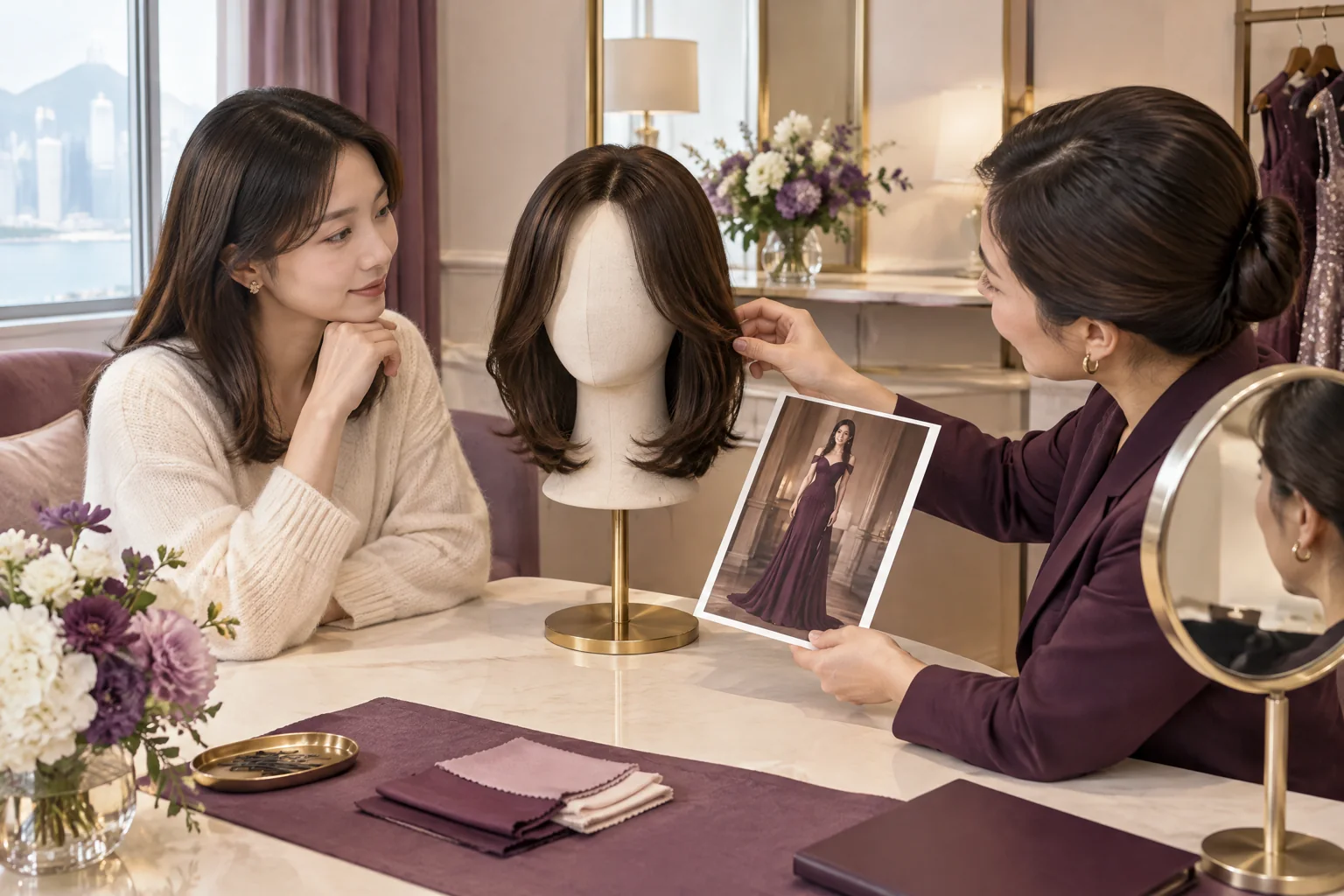
Wear the actual piece in its intended arrangement for the rehearsal, following its fitting and handling instructions. Bring the glasses you will wear and show your collar or jacket shape. Your partner should include any head accessory that could approach your temple. A large decorative comb can change where a forehead rests. A rehearsal with different accessories may miss precisely the contact you need to assess.
Begin facing the camera, then turn towards your partner as you normally would. Pause before contact and notice the nearest skin, hair and accessory surfaces. Try the movement on both sides because parting and edge position may differ. Agree on a verbal cue for stopping. Nobody needs to hold your head in place or press an edge to prove that the pose is possible today.
Take a front photograph and a side photograph in the light planned for the portraits, where practical. Use the same position when comparing any change. Turn off beauty smoothing if it hides the detail you are checking. A phone image helps share the concern, but it cannot establish attachment strength. Also ask how the area feels; a photograph cannot tell the artist whether contact is uncomfortable.
When asking about groom makeup, describe the actual movement instead of requesting an invisible hairline in every possible photograph. Send a close temple reference and a wider couple reference, with your permission. Explain whether you want understated skin coverage or a more polished finish. This gives the artist a useful starting point for discussing the look. Keep fitting questions for the person responsible for your hairpiece.
Map bare skin, the edge and the photograph
Make each temple's permitted area easy to recognise
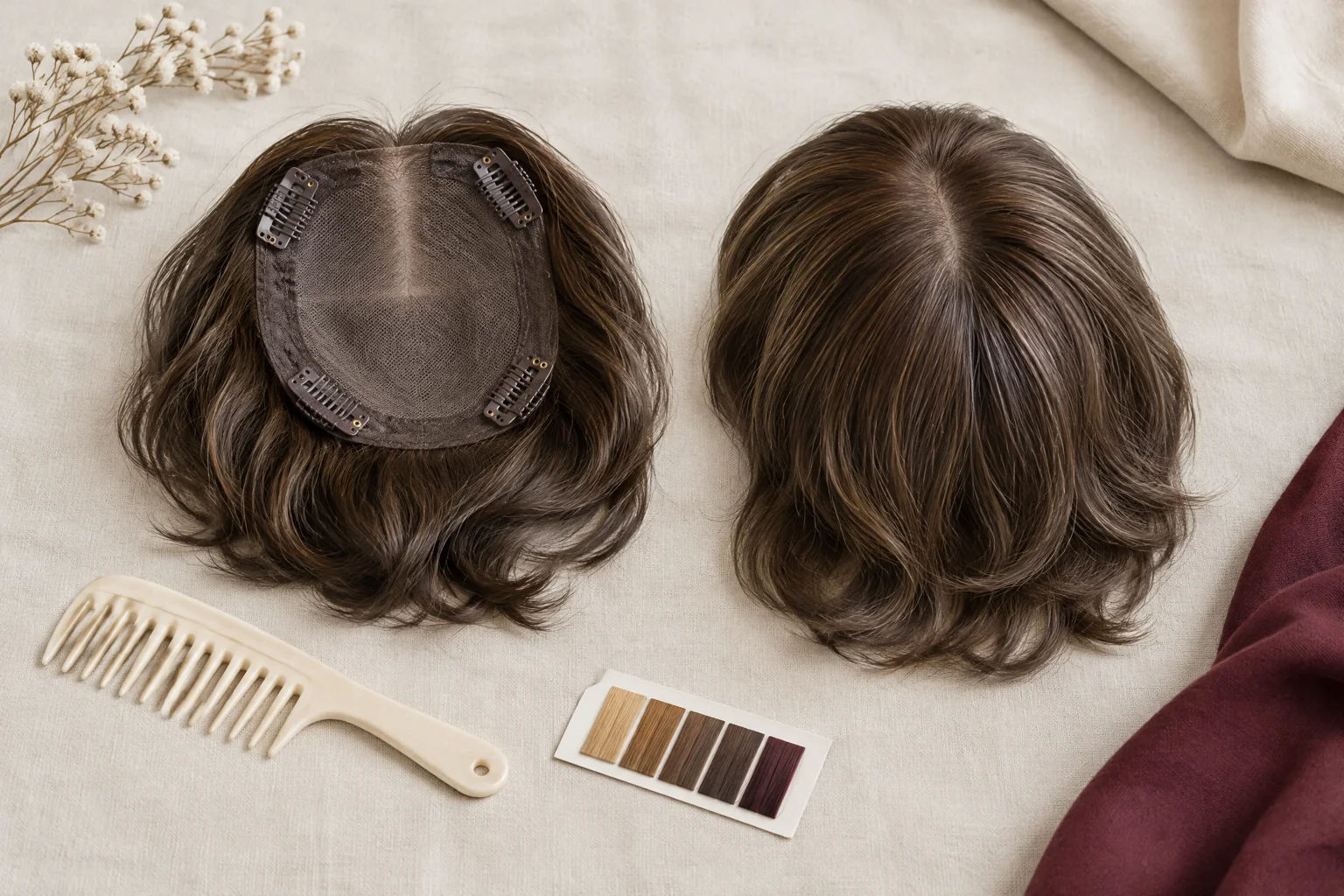
On a photo or sketch, label accessible bare skin, the piece's edge and the attachment area described in its instructions. Keep left and right views separate. Use a recognisable landmark, such as the brow tail, rather than guessing a universal clearance distance. The sketch records your particular arrangement. If the edge position changes after fitting, the artist needs a new view before using that map again.
For silhouette comparisons, OwnStrand's low density wigs reading separates visual fullness from fit. A less-full outline may suit your taste, but density does not identify an allowed makeup zone. It also cannot confirm attachment security during a lean. Compare the shape in your couple photograph, then check the base and placement separately. This keeps a style preference from becoming an unsupported promise about how the item behaves.
For accessible skin, discuss light, targeted coverage rather than automatically extending foundation into the hairline. The artist can assess the colour difference under the portrait lighting and propose a finish. Keep every stroke inside the agreed area. A brush should not cross an edge simply because blending usually follows that direction. If the boundary leaves a visible transition, review the angle before adding another product there.
Ask the photographer to separate a lighting problem from an item problem. A temple highlight may change when the light or face direction changes. An edge that moves during contact needs the item handler's attention, not darker makeup. Compare one change at a time so you know what helped. A slightly different lean can preserve closeness without requiring your partner's forehead to rest on that exact point.
| What you notice | First person to involve | Decision to test |
|---|---|---|
| Colour difference on accessible skin | Makeup artist | Assess a small permitted-area correction in the same light. |
| Highlight changes with head direction | Photographer | Compare light or angle before adding coverage. |
| Partner's accessory reaches the edge | Partner and photographer | Try another accessory position or a near-touch pose. |
| Edge movement or uncomfortable contact | Designated item handler | Stop contact and assess the item before repeating the pose. |
Choose a touch-up or a different leaning angle
The smallest change is often the easiest to repeat
Keep the existing finish when both temples feel comfortable and the photograph already suits you. More coverage is not automatically an improvement in a close portrait. Ask to see the wider frame before concentrating on a tiny detail. Your expression and your partner's position belong in the decision too. A finish you can maintain comfortably is more useful than one requiring constant checks between every photograph.
Consider a local makeup touch-up when the concern stays on accessible skin and the agreed products are suitable there. Ask the artist to reassess that small area rather than layer products across the entire temple. Compare the result from the same camera position. Avoid repeatedly rubbing the area during your own checks. Keep hands away from the piece's edge, and leave attachment corrections to the designated handler.
Change the portrait workflow when the preferred lean keeps bringing skin or an accessory against the edge. Try a near-touch pose, a different turning direction or another head position with the photographer. These are options to assess, not guaranteed fixes. If the item moves or feels uncomfortable, stop the contact test. A separate item assessment may be needed before deciding whether to repeat that particular pose.
For Hong Kong bridal party makeup arrangements, share the couple portrait plan with the people organising the preparation schedule. Your partner may need an accessory check before the close photographs. Agree who will be nearby for each person's touch-up, rather than assuming one artist handles everything. Put the paired check after both looks are ready. This avoids testing the groom's temple against a hairstyle that later changes.
Share instructions without giving up personal choice
Decide what the artist may touch before the day
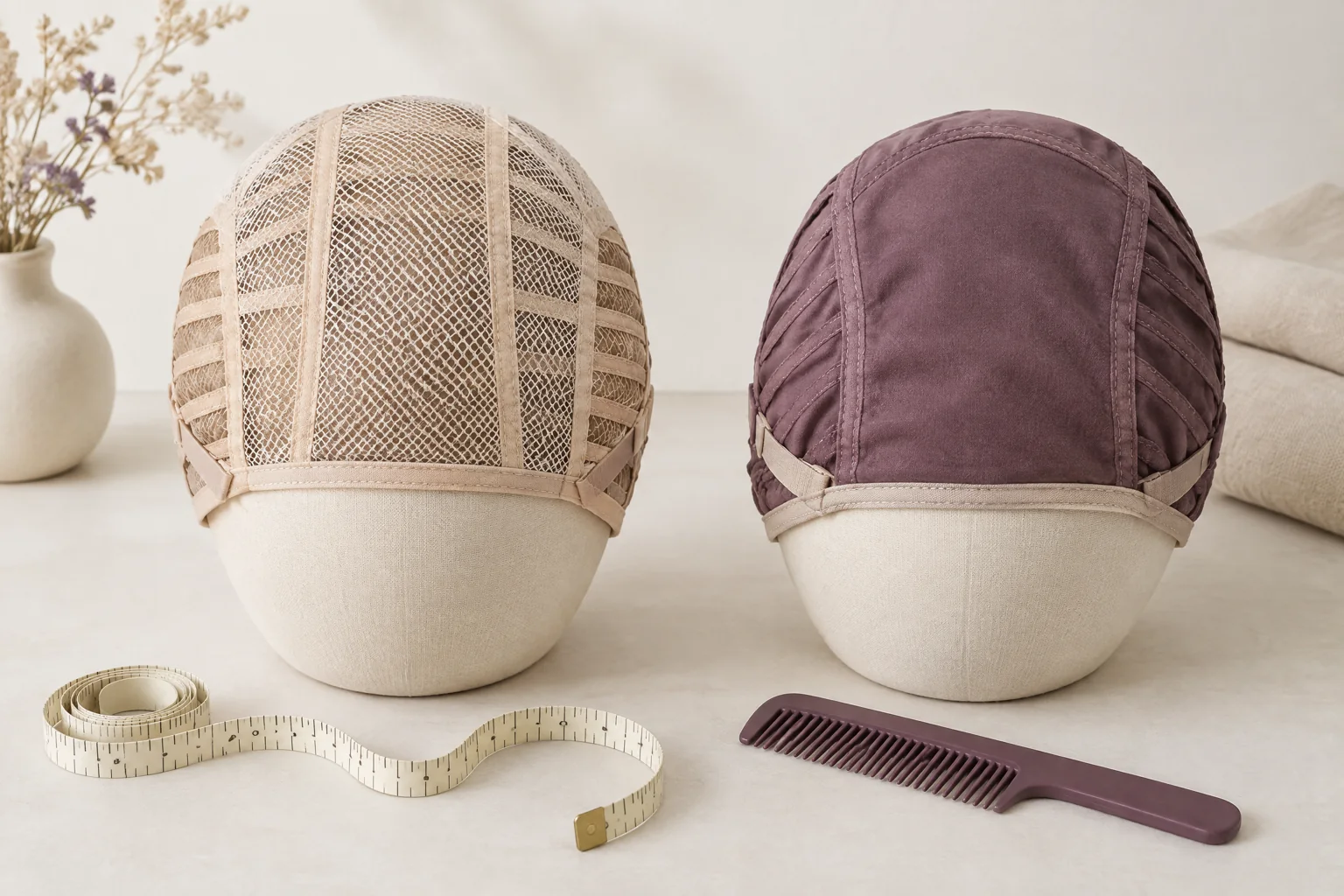
Bring the item's care sheet and any relevant attachment instructions, not just a photograph of its hairstyle. Ask the supplier about cosmetic contact near the exact base and attachment method. Useful questions include which surfaces must remain product-free and who may handle an adjustment. If an answer is missing, plan makeup on clearly accessible skin instead. A wedding deadline does not turn an unknown product combination into permission.
OwnStrand's human hair wigs guide explains that fibre wording does not establish every styling permission. Human hair is not blanket approval for heat, chemical changes or your usual styling products. For this portrait, the relevant details are the base, edge placement and permitted handling. Browse online or discuss sample viewing in Kwun Tong if you are still selecting. Confirm the exact item's instructions before planning your temple finish.
The American Academy of Dermatology recommends testing new cosmetics on a small skin area before routine use. Its suggested test runs twice daily for seven to ten days, following normal use directions. This is skin-product guidance, not an adhesive test or guaranteed tolerance. Allow time before the wedding when considering a new cosmetic. If a reaction develops, stop using it and seek medical advice when symptoms require attention. [2]
You can decline a close temple inspection, a photograph or any proposed touch-up. Tell the artist whether discussing the hairpiece in front of others feels comfortable. A private conversation can cover the practical details without making them part of the room's chatter. Share reference photographs only with the people who need them. The preparation plan should respect your choice of appearance and how much personal information you disclose.
Keep the wedding-day check short and practical
A final groom close portrait temple makeup check
Before the close portraits, compare the current arrangement with the rehearsal map. Check whether the piece, parting, glasses or partner's accessory has changed. Then try the agreed lean once, without added pressure. Look at both temples and ask about comfort. If the arrangement matches, continue with the planned skin touch-up areas. If it differs, reassess the affected side rather than treating yesterday's photograph as today's permission.
Stop when an edge lifts, the piece shifts, or contact causes pain or skin irritation. Extra concealer cannot solve those concerns. Leave the affected attachment area untouched while the appropriate item handler assesses it. For a cosmetic skin reaction, stop that product rather than covering the reaction with another layer. Medical symptoms belong with a qualified healthcare professional, not a wedding makeup decision made under time pressure.
Keep a small note with the approved makeup zones and the name of the person handling item questions. Record the pose you preferred and any accessory position that mattered. After a local correction, repeat only the affected angle and the couple lean. You do not need to restart the whole preparation. Share a revised photograph if the edge position changes, so everyone works from the same current arrangement.
For a Hong Kong mobile wedding makeup artist enquiry, send your temple references. Include your portrait location and preparation timing. Describe whether the couple check happens before travel or at the photo location. Ask which makeup arrangements can be discussed for your schedule. Keep hairpiece fitting and attachment requests separate. Once your item is selected, the practical makeup enquiry can focus on accessible skin and your preferred couple photographs.
Key takeaway
A close couple portrait needs a contact check, not simply more temple coverage. Keep the silhouette you enjoy when it works comfortably. Adjust accessible skin only within the item's permitted limits. If the pose challenges the edge, consider a different lean before changing the piece or extending makeup into an attachment area.
Practical checklist
- Bring the actual item and relevant handling instructions.
- Rehearse both turning directions with your partner's final accessories.
- Mark permitted skin separately from the attachment area.
- Assign makeup, item and camera questions to different roles.
- Keep a comfortable alternative to direct temple contact.
Frequently asked questions
Can foundation cover the hairpiece edge for a close portrait?
Only consider cosmetic contact where the exact item's instructions permit it. An edge is not automatically a makeup surface. If the concern is movement or lifting, stop and involve the item handler. For a colour transition on accessible skin, ask the makeup artist about targeted coverage and compare the photograph before changing anything else.
Do I need a less-full piece for forehead-touch photographs?
Choose fullness for the silhouette you like, not as a substitute for checking contact. A lighter-looking style does not establish edge placement or attachment behaviour. Rehearse the pose with the actual piece, then assess both temples. You may prefer the existing style with a different leaning angle instead of changing your hair selection.
What if the solo portrait looks fine but the couple pose does not?
Identify what changes when your partner comes closer. Their hair or accessory may contact the temple, or your turning angle may reveal another surface. Compare the solo and paired frames under the same light. Then change one factor, such as head direction, before deciding whether an accessible skin area needs a touch-up.
Can I use a new primer on the wedding morning?
A wedding morning leaves little time to assess a new cosmetic. Discuss it ahead of the day and allow for the recommended skin-product testing period. Skin tolerance also does not establish compatibility with an attachment surface. Keep the primer within the agreed skin area and follow the item's separate restrictions near the edge.
What should I send BigDeal before discussing the makeup?
Send your preferred couple pose, a temple reference and the relevant item instructions, with your consent. Include preparation timing and the portrait location. Explain the skin finish you want and who handles the hairpiece. BigDeal's enquiry concerns makeup arrangements; a reference photograph does not book fitting work or confirm an item's suitability.
Sources
| Source | What it supports |
|---|---|
| How to Ensure Hair System Tape Sticks | Walker Tape identifies oils and residue, including residue from hands, as factors affecting tape adhesion. Its preparation guidance does not establish compatibility for an OwnStrand item. |
| How to test skin care products | The American Academy of Dermatology recommends twice-daily small-area testing of new skin care products for seven to ten days and stopping a product after a skin reaction. This is not an adhesive testing method. |
Discuss your own makeup plans
Selected your hairpiece? WhatsApp BigDeal Make Up on +852 6918 3153 with your temple references, couple pose and schedule to enquire about makeup arrangements. This number is for BigDeal makeup enquiries, not OwnStrand fitting or sales bookings.
Ask on WhatsApp +852 6918 3153