
At a glance
A salon visit can inform your next lesson without becoming a placement or a portfolio claim. Separate access, practical permission and evidence of competence. Match your enquiry to bridal styling, haircutting or barbering rather than treating them as interchangeable. Keep client privacy and appointment timing central to every proposed activity.
A hairstyling salon observation boundary starts with permission
Define the hairstyling salon observation boundary before visiting
An observation request is a proposal, not an approved visit. A friendly conversation with a stylist does not establish a school placement. Name the host and the person authorised to approve access. Explain whether you want to watch a consultation, a demonstration or a service sequence. Treat silence as an unanswered request rather than agreement. Arrange travel only after the date, location and permitted activity are confirmed.
Give the host a narrow learning objective that can fit a real appointment. For example, you might request to watch how a stylist plans sections before an updo. Specify your current learning stage without claiming abilities you have not demonstrated. Ask where you should stand and when questions are welcome. A shorter, clearly bounded visit can be more useful than watching everything without understanding the decisions.
Host approval and client agreement address different concerns. The host controls access to the workplace, while the client has expectations about their appointment. Ask how the host will explain your presence and respond to a refusal. Be prepared to leave before the service begins. A bride or event guest should not have to justify wanting privacy. Your learning objective can wait for another suitable opportunity.
DT Hub's hairdressing course hong kong page offers a separate entry point for comparing course categories. Use that overview to identify the subject you actually want to study. A course information page is not an invitation to observe a salon. It also does not establish arrangements between schools or businesses. Ask about the relevant learning format through that provider rather than inferring access from shared branding.

Watching, assisting and practising are different activities
Choose an activity with a clear stopping point
An observer can learn from the order of decisions without touching anyone's hair. Note when the stylist asks about the occasion and when they assess the requested shape. Keep your attention on the method rather than the client's personal story. Questions should wait for the agreed pause. If the host becomes busy, stop asking and follow their direction. Watching quietly remains a valid activity within limited access.
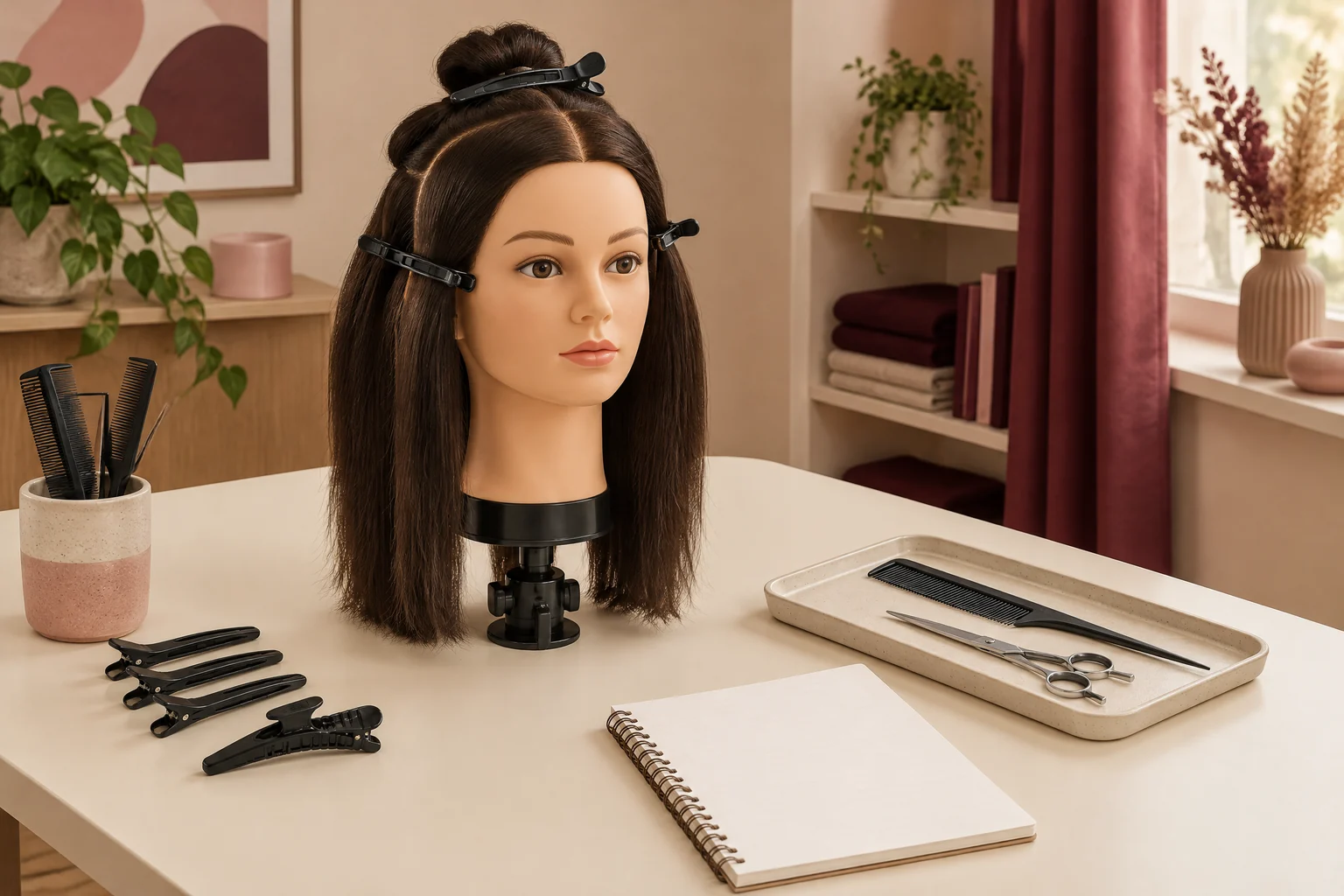
Practical permission should name the task, materials and supervisor. Practising sectioning on a mannequin is different from holding a client's hair during a service. Even passing tools should follow the host's instructions rather than your assumptions. Ask what happens if the supervisor needs to step away. Stop the task until supervision resumes. A permitted exercise should have an agreed end point and a way to receive correction.
For learners interested in cutting foundations, the basic haircut course hong kong page is the relevant separate information route. Ask about the actual exercises and how feedback is provided before comparing them with styling lessons. Cutting changes the hair itself, while an updo arranges existing length. Watching either process does not authorise you to attempt it on a client. Keep these permissions distinct in your enquiry.
A learner researching men's cutting can consult the barber course hong kong page for that subject area. Frame your questions around the techniques you wish to learn rather than a general wish to enter salons. Clipper work and beard grooming are not automatic extensions of bridal styling practice. An observation invitation does not include permission to use cutting tools. Discuss practical training separately with the provider responsible for it.
| Activity | Permission to discuss | Useful learning evidence | What it cannot imply |
|---|---|---|---|
| Watching a service | Host access and client agreement | Anonymous notes about decisions | Approved practical training |
| Mannequin practice | Task, tools and supervision | Your work and tutor feedback | Competence on paying clients |
| Client assistance | Specific task and client agreement | Accurate record of your role | Independent service delivery |
| Portfolio publication | Recording, use and attribution | Authorised image with truthful caption | Ownership of observed work |

Match bridal and occasion learning to the right outcome
Describe the finished style and the decisions behind it
For a wedding styling goal, BigDeal's bridal hair course Hong Kong page provides the appropriate service enquiry route. Describe the look you want to learn and the stage that currently challenges you. You might need help planning shape around a veil rather than cutting a new outline. Request details about the actual lesson content and practice format. The service page does not itself promise a salon observation arrangement.
If your difficulty is constructing a pinned shape, use the updo hairstyling course Hong Kong page to focus your enquiry. Explain whether you struggle with section planning, balance or placing pins. Bring reference images you are entitled to share, with notes about the feature you want to understand. Ask which tools the lesson requires before purchasing them. A focused practice goal is easier to discuss than copying an entire wedding photograph.
Planning a formal event look? The evening hairstyling course Hong Kong page provides a more specific starting point. Describe the clothing neckline and the intended hairstyle without presenting those details as a confirmed curriculum. Ask whether your chosen learning objective fits the service offered. Bridal preparation and evening styling can share techniques while requiring different decisions. Course suitability should follow the provider's actual explanation, not the occasion's label alone.
Observation should never consume time reserved for the paying client. In a Hong Kong wedding schedule, a hairstyle may need coordination with dressing and the next appointment. An observer should not move accessories or reorganise the work area to improve their view. Ask for a position that leaves the stylist's route clear. If the appointment runs late, accept a shorter visit without requesting an extra demonstration.

Keep recording permission separate from permission to watch
Protect client identity in notes, images and captions
The Community Legal Information Centre explains that not every photograph is automatically personal data. Identification matters, including whether someone collects information about an identified person. Captions containing personal data can also affect the legal position. A salon portfolio may connect a face with an appointment or a name. Treat permission to photograph and publish as separate questions. This practical boundary avoids assuming that attendance gives unrestricted recording rights. [1]
Ask about photography before the appointment, not when the finished style looks especially attractive. Describe what the image will show and who will receive it. Private tutor feedback and public promotion are different proposed uses. Ask the host how the client's wishes will be recorded. Permission for one image does not automatically cover continuous video. Keep your phone away until the agreed recording conditions are clear.
Useful observation notes can avoid identifying clients altogether. Record the stage of the service and the general question it raised for you. Leave out names, contact details and the client's private conversation. Do not photograph booking screens or worksheets to save time. If you need a diagram, draw a general section pattern after the visit. Store only material the host has allowed you to retain for learning.
A portfolio caption must distinguish work you watched from work you performed. If an image is authorised, identify your actual role without implying you designed the style. A supervisor's presence does not turn every task into independent work. Cropping out a face also does not create publication permission. Agree on attribution and sharing conditions before posting. If permission is uncertain, use your own approved practice material instead.

Turn observation into a task that can receive feedback
Use performance evidence rather than attendance alone
Hong Kong's Qualifications Framework unit on photographic hairstyle design describes more than recognising an attractive finished look. It includes lighting knowledge, communication with the customer and assessing the hairstyle against the photograph's theme. Its outcome requires applying knowledge and techniques. Watching a photoshoot cannot demonstrate all those requirements. Use this official example to ask for concrete feedback criteria. It does not establish accreditation for any course mentioned here. [2]
After observing, choose one limited styling decision to explore during an authorised lesson. For example, compare two section plans on a mannequin using the same intended shape. Explain why you chose each plan before asking your tutor for feedback. Keep the exercise within the lesson's permitted tools and techniques. The purpose is to make your reasoning visible. A finished image alone may not explain how you reached the result.
For photography learning, ask what the tutor wants you to evaluate in the finished image. You might discuss whether the hairstyle communicates the intended theme or suits the chosen framing. Keep these questions separate from a claim that you understand every lighting technique. Record the correction you received and the next practice objective. This creates a specific learning record without borrowing the photographer's work or claiming the stylist's judgement.
Keep three labels in your learning log: observed, practised and assessed. Under observed, describe the decision you watched and the question it created. Under practised, record your own authorised exercise and the help provided. Under assessed, record the actual feedback or result without expanding its meaning. Attendance is evidence of being present, not a universal qualification. These labels help you discuss your current skills honestly with a future tutor.
Send a precise request and accept a different learning route
Document the arrangement before describing it publicly
A useful request can be short and specific. Introduce yourself as a learner and state the styling question you want to understand. Propose observation only, unless you have a separate reason to request supervised practice. Offer a possible date without suggesting the host has already agreed. Ask whether client appointments are suitable or whether a demonstration would be preferable. This respects the host's ability to choose an appropriate format.
If someone proposes a formal placement, request documentation from the parties responsible for that arrangement. Confirm who supervises you, which activities are included and how learning will be reviewed. Ask who handles access changes and any incident during attendance. Check the applicable course or workplace conditions rather than calling an informal visit an internship. Written confirmation is a practical safeguard, not a claim that every arrangement follows one identical legal model.
A host may decline because appointments are private or supervision is unavailable. That decision does not mean you should arrive and ask again in person. Discuss a suitable lesson, demonstration or mannequin exercise with the relevant provider instead. Availability and format still require confirmation. Keep your learning objective when changing the route. You can develop questions about styling without needing access to a particular client or a particular salon.
When someone later asks about your experience, describe the exact activity and its limits. You can say you observed a styling demonstration if that is what occurred. Do not describe yourself as employed, placed or qualified by the host without supporting documentation. For client work, explain your actual learning stage honestly. Responsible boundaries protect the client's choice and preserve the usefulness of your own learning record.
- Include the proposed activity and the person who will approve it in your written request.
- Record any limits on client contact, tools, images and public descriptions before attending.

Key takeaway
The most useful salon visit has a modest, explicit purpose. Leave with a clearer styling question and an honest account of what you watched. Take that question into an authorised lesson where your own work can receive feedback. Access to a workplace is not evidence of every skill used there. Your next learning step should follow the task you need to perform, not the title you hope to claim.
Practical checklist
- State whether you are requesting observation, a demonstration or a defined supervised exercise.
- Confirm who approves access and how the host will respect each client's choice.
- Agree on where to stand, when to ask questions and when the visit ends.
- Separate recording permission from publication permission and agree on truthful attribution.
- Keep observed, practised and assessed work distinct in your learning record.
Frequently asked questions
Can I visit a salon because my course provider knows the owner?
A connection does not confirm access. Request approval from the person responsible for the visit. Confirm the date, permitted activity and client arrangements. Do not describe the visit as a placement unless the responsible parties have documented that arrangement.
May I practise after watching a stylist demonstrate?
Only a separate practical agreement can establish the permitted exercise. Ask about the model, tools and supervisor. Watching a method does not authorise touching a client or using cutting equipment. Keep practice within the task that was actually approved.
Does observing barbering count as bridal styling training?
It may raise useful questions, but it does not demonstrate bridal styling outcomes. Define the wedding hairstyle skill you need to practise. Ask the course provider how that objective will be taught and reviewed rather than treating different subjects as interchangeable.
Can I post a photograph if the client's face is hidden?
Hiding the face does not settle permission to publish or ownership of the work. Check the agreed use and attribution. Captions and other details may identify someone. Use only material whose recording and publication conditions have been clearly agreed.
What should I bring to a learning enquiry?
Bring a specific styling objective, an honest description of your learning stage and references you may share. Ask about required tools before buying them. Keep a request for salon observation separate from questions about lesson content and practical supervision.
Sources
| Source | What it supports |
|---|---|
| Community Legal Information Centre: Photographs and personal data under the Personal Data (Privacy) Ordinance | Not every photograph is automatically personal data; identification and captions matter. Observation, recording and publication permissions should be treated separately. |
| Hong Kong Qualifications Framework: Hairstyle Designs for Photographic Effects, Unit 105381L3 | Photographic hairstyling performance includes applying knowledge, client communication and assessing finished photographic effects. Watching alone cannot demonstrate those requirements or establish course accreditation. |
Discuss your own makeup plans
To discuss your BigDeal hairstyling learning goal or makeup arrangements, WhatsApp BigDeal Make Up on +852 6918 3153. Describe the occasion, your learning stage and the styling decision you want to understand.
Ask on WhatsApp +852 6918 3153