

At a glance
The useful decision is not whether a cap sounds convenient. It is whether you can repeat a comfortable routine, explain the desired hairline to the makeup artist, and keep one simple fallback for portraits or a long reception. Plan several days ahead, make changes one at a time, and stop forcing a fit that produces pressure or skin symptoms.
Start the glueless wig event plan before makeup timing is fixed
Set a glueless wig event plan rehearsal before the wedding
A glueless wig event plan works best when the wig is part of the look, not an accessory added last. Reserve a calm practice session before the makeup booking. Put on the outfit or a similar neckline. Test the chosen earrings, hair accessory, and camera angle. This reveals whether the hairline, parting, volume, and makeup balance make sense together. It also leaves time to change one element without rushing.
Begin by writing the real event sequence. Include travel, dressing, portraits, greetings, food, and any outdoor transfers. A style that feels fine for ten mirror minutes may need different planning for a long reception. Decide when the wig goes on, when makeup starts, and who can hold a clean brush, clips, or touch-up pouch. Keep the plan modest. The goal is a repeatable routine, not a flawless experiment.
Measure and compare the exact cap with the maker’s size guidance before the rehearsal. American Cancer Society guidance notes that size charts can vary by brand, and it advises checking the individual brand chart. That makes a practical event rule: record where the front, sides, and nape sit on your own head. If the fit changes during practice, solve that before committing to a hairstyle or portrait schedule. [1]
- Write down the first photo time and the final expected wear time.
- Pack only the tools you used successfully during the rehearsal.
- Tell the makeup artist where you prefer the parting and visible hairline.
| When | Decide | Pass condition | If it fails |
|---|---|---|---|
| Five to seven days ahead | Confirm cap details and the outfit neckline. | You can describe the front, crown, and nape needs clearly. | Ask about the exact cap or simplify the hairstyle. |
| Two to three days ahead | Rehearse the full adhesive-free routine. | You can repeat placement without rushing or adding unknown products. | Change one variable and repeat the test. |
| Event morning | Make a small nape adjustment only if needed. | The front, sides, and nape remain balanced and comfortable. | Return to the last comfortable setting. |
| Before portraits | Check movement and overall proportion. | The look feels stable during normal greetings and turns. | Use the pre-agreed fallback styling plan. |
Five to seven days ahead: clarify the cap before styling around it
Treat PU wording as a construction question, not a comfort promise
Use the early window to inspect the cap in good light and without makeup. Look at the front edge, crown, sides, and nape. Notice where the cap touches your skin after gentle movement. Take simple notes about pressure, gaps, heat, and where your natural hair may show. These notes are more useful than trying to remember a general feeling on the event morning. They also help a stylist understand the intended silhouette.
For a construction vocabulary check, read the OwnStrand PU wig cap guide before comparing descriptions. It explains that polyurethane may refer to an edge, perimeter, or particular base area, rather than the whole cap. Ask where the material sits on the exact wig and what forms the rest of the cap. Do not turn a broad term into a prediction about comfort, hairline appearance, or the wearing method.
If contact with a material causes itching, swelling, blistering, or a rash, stop the wear trial. Avoid using more products to cover it. DermNet explains that allergic contact dermatitis follows contact with an allergen and identifies avoidance as the principal management step. Persistent, severe, or recurring symptoms deserve professional medical advice. An event deadline is not a reason to force a cap, adhesive, liner, or cosmetic product that feels wrong. [2]

Two to three days ahead: rehearse adhesive-free wear
Check the glueless routine while you can still change the plan
Rehearse at the same time of day as the event if possible. Prepare your own hair in the intended way. Put the wig on as instructed. Then sit, stand, look down, turn your head, and smile for phone photos. Check the front, temples, and nape in a mirror. Make one adjustment at a time. A rehearsal is successful when you can repeat the steps calmly, not when you tighten everything.
The OwnStrand glueless wig guide is useful for separating the label from the fitting details. It says adhesive-free intent does not guarantee a no-slip fit or remove the need for adjustment. Check what actually positions the specific cap, such as its stated fit features and construction. Follow the instructions supplied for that style. Do not add glue or tape merely because a practice session exposes a sizing or placement question.
Take photographs in the lighting you expect to face: window light, lift lighting, restaurant lighting, or flash. Ask one trusted person to look at the overall balance rather than searching for tiny flaws. Compare the hairline with brows, cheek colour, and neckline. A soft hairstyle may need less dramatic makeup; a stronger hair shape may call for a quieter eye. Make the change that improves the whole frame, not only the cap.
The event morning: tune the nape without chasing tightness
Use adjustable wig straps in measured steps
Put the cap on before the most detailed face work, then confirm the front placement and the nape. If the event includes an updo, headpiece, or high collar, check those now. Avoid letting several people pull at different points. One person should make the fitting changes, while another checks the outline in the mirror. This prevents accidental over-tightening and gives the makeup artist a stable frame around the forehead and temples.
The OwnStrand adjustable wig straps guide sets a useful boundary. Nape straps can fine-tune some caps. They cannot change every aspect of cap size or shape. Identify the intended fastener. Make one small adjustment, then reassess the front, sides, and back. If the nape improves but pressure appears elsewhere, return to the last comfortable setting. A secure-feeling look should not depend on pain, pulling, or forcing a closure.
Build a short comfort pause into the timeline before guests or portraits begin. Walk around the room, drink water, and move your head as you would when greeting people. If something shifts, ask whether placement is uneven before changing the strap. Do not keep tightening because of nerves. If the cap remains uncomfortable, choose a workable setting. Adapt the hairstyle, accessory, or photo angle. Do not increase tension.

Coordinate hairline, complexion, and the formal-event schedule
Give the makeup artist decisions, not a last-minute surprise
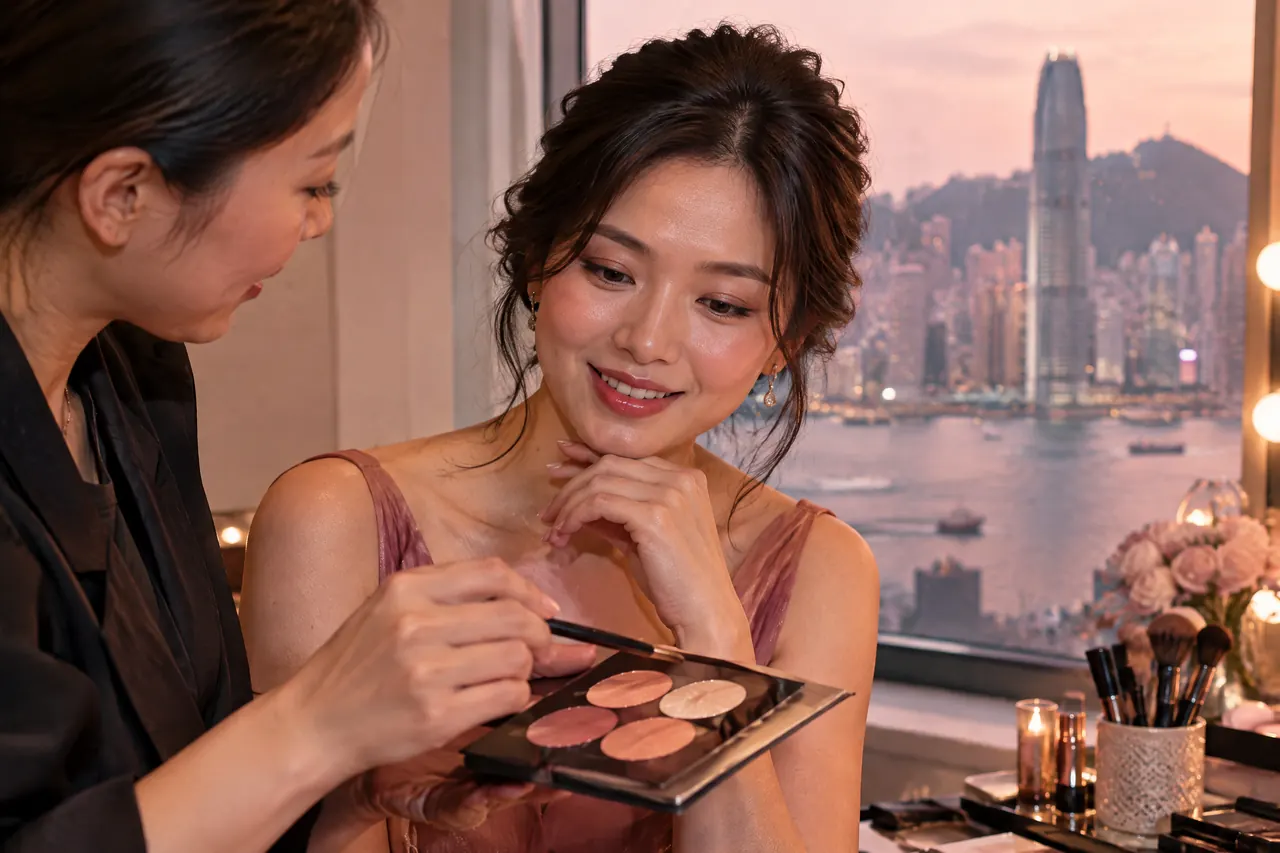
For banquet makeup Hong Kong appointments, share a clear reference photo that includes the wig’s intended parting and any accessory. Explain whether you want the front kept soft, the temples visible, or more volume near the crown. Ask for the makeup sequence to respect the cap placement. The aim is visual continuity. Brows, base makeup, blush placement, and hairline should read as one look in person and photographs.
If you are comparing banquet makeup cost Hong Kong options, include wig-rehearsal time in your own plan. Do not assume it belongs inside every service. A useful enquiry lists the event time, getting-ready location, dress neckline, makeup finish, and planned wig fitting. This keeps the conversation focused on makeup arrangements. That detail avoids an unplanned fitting delay before makeup begins. It does not imply that a makeup provider supplies, modifies, or guarantees a wig.
A birthday makeup Hong Kong look may allow more experimentation than a wedding morning. Use it as a lower-pressure test when events are close together. Try one element only: a brighter lip, a clip, a side part, or a different earring. Keep the fit routine unchanged. Comparing one style variable helps you learn what photographs well without confusing a makeup change with a cap-fit problem.
Know when to pause, simplify, or change the styling plan
A comfortable, consistent routine beats a complicated rescue
Use the final decision check after a full rehearsal, not during a rushed doorway moment. If the cap sits evenly, feels comfortable, and survives ordinary movement, keep the routine unchanged. If it shifts only after a certain accessory is added, change the accessory first. If pressure appears everywhere, do not frame the issue as a strap problem. The practical answer may be a different cap size, construction, hairstyle, or a shorter wear period.
Think of photographs as a record of proportion, not as a close inspection of cap terminology. Step back two metres and look at the outline beside the outfit. Then take a seated portrait and a standing portrait. A small change in parting, earring size, or face-framing hair can often improve the result more than another fit adjustment. Keep the event team focused on these visible choices after safety and comfort are settled.
Prepare a quiet fallback. It can mean a looser accessory arrangement. It may be a portrait angle you already liked. It can also mean removing the wig after key photos. A fallback is not a failure. It protects your ability to enjoy the ceremony, dinner, or celebration. Tell one trusted person the plan so you do not need to explain it repeatedly. Comfort is a valid styling decision throughout the event.
| What you notice | First response | Do not assume |
|---|---|---|
| Loose mainly at the nape | Check placement, then make one modest intended adjustment. | A tighter strap will solve every movement issue. |
| Pressure around the whole cap | Release tension and reconsider the overall fit. | A nape fastener can enlarge the full cap. |
| Hairline looks different in photos | Check lighting, parting, makeup balance, and distance. | More tension will improve the image. |
| Itching, swelling, or rash | Stop the trial and seek medical advice if symptoms persist or recur. | An event deadline makes irritation safe to ignore. |
Key takeaway
A polished event look does not require a perfect label or a painfully tight cap. It requires a calm rehearsal, a clearly placed hairline, makeup that suits the whole frame, and a fallback you can use without drama. Put comfort first, then let the styling decisions support it.
Practical checklist
- Rehearse the complete fit before locking the final makeup schedule.
- Photograph the look in daylight and the expected indoor light.
- Make one cap or strap change at a time, then reassess comfort.
- Bring the same small touch-up kit used in the successful rehearsal.
- Agree a simple fallback for portraits, heat, or discomfort.
Frequently asked questions
When should I test a glueless wig before a wedding?
Aim for a full rehearsal two to three days before the event, after an earlier cap check. Wear the intended neckline and accessories, then take photographs in more than one light. This leaves time to simplify the hairstyle or ask about the specific cap. Do not make the first full wear a wedding-morning experiment.
Does a PU or skin-top description tell me the whole cap will feel comfortable?
No. A material label needs context about its location, extent, surrounding construction, sizing, and the way the cap sits on you. Comfort is personal. Ask what the exact description refers to, then rehearse the actual wig. Treat the description as a question to clarify, rather than a promise about pressure, appearance, or wear duration.
Does glueless mean I never need to adjust the wig?
No. Adhesive-free wear describes an intended wearing approach. The actual cap may still need careful positioning and its stated adjustment features. Check the front, sides, and nape after normal head movement. If repeated tightening is the only way it feels stable, pause and reconsider the overall fit instead of adding unplanned products.
What should I do when adjustable straps make the cap feel tighter but not better?
Return to the last comfortable setting and identify where the problem occurs. A loose nape, broad pressure, uneven placement, and a shifting front are different problems. Straps may fine-tune a nape fit on some caps, but they do not change every cap dimension. Consider the whole fit and use a simpler hairstyle or a different option if needed.
How should I brief a makeup artist about a wig for formal photos?
Share a daylight reference photo with the desired parting, hairline, outfit neckline, and accessories. Say when the wig will be fitted and which areas should remain untouched. Ask for the makeup plan to balance the visible hairline, brows, complexion, and earrings. Keep wig supply and cap instructions separate from makeup arrangements unless a provider confirms otherwise.
Sources
| Source | What it supports |
|---|---|
| American Cancer Society — Wigs for Hair Loss | Wig size charts can vary by brand; check the individual brand chart and follow fitting directions rather than inferring fit from a category label. |
| DermNet — Allergic Contact Dermatitis | Suspected contact allergy calls for avoiding the suspected trigger; persistent or recurrent symptoms may warrant professional dermatology advice and patch testing. |
Discuss your own makeup plans
Bring your outfit reference, planned timing, and preferred hairline photo to an event makeup consultation. Confirm all wig construction and wear details directly with the relevant supplier before the event.
Ask on WhatsApp +852 6918 3153