
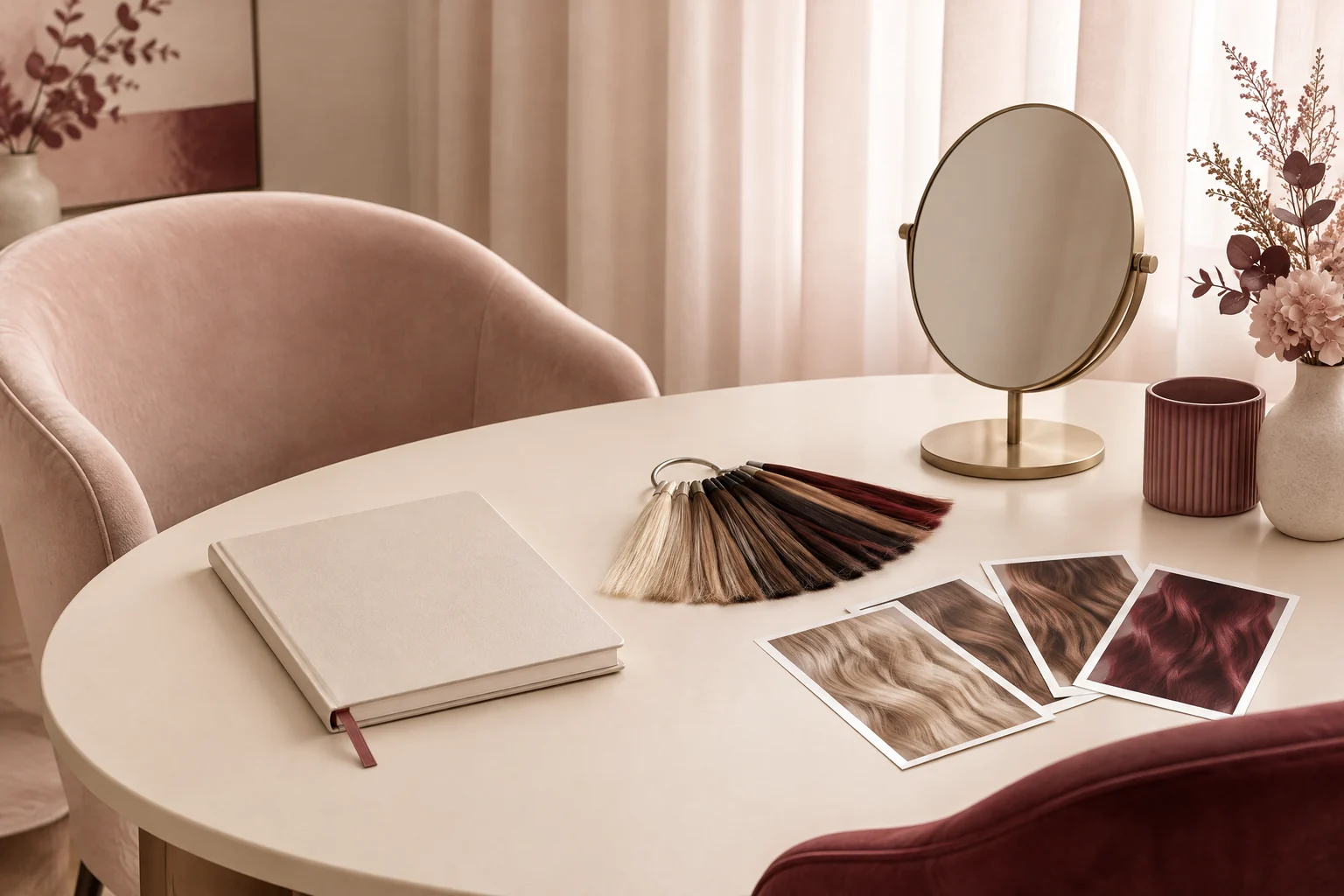
At a glance
A useful brief separates appearance choices from health questions. It identifies permitted styling, excluded products and the person who can approve changes. It also gives relatives constructive jobs, such as organising clothing and protecting preparation time. The aim is not to persuade anyone that grey or sparse hair is beautiful. Your mother does not need that argument before choosing her own appearance.
Write the mother wedding no hair covering brief positively
Begin with what she wants to keep
Ask your mother which parts of her usual appearance she wants to recognise in wedding photographs. Her answer might concern her visible parting, silver temples or familiar short haircut. Use those details when discussing Hong Kong mother of the bride makeup, alongside her clothing and preferred makeup strength. The brief should describe a finished appearance she actually wants. It should not start from a relative's list of features needing correction.
Make the meaning of covering specific, because different people may interpret that word differently. She might exclude wigs, toppers and scalp powder while accepting ordinary brushing. Another mother might also decline a hat, decorative comb or a rearranged parting. Record her own exclusions rather than choosing them for her. Ask separately about smoothing, curling and pins. Permission for one styling step is not permission for every product placed near her hair.
Write one usable instruction in her voice, then add the details needed to carry it out. For example: 'Keep my current hair colour and visible parting. I do not want added hair or colouring products.' Then record her makeup finish and accepted styling. Avoid replacing this with 'natural but youthful'. That phrase leaves room for changes she never requested, especially when several relatives are contributing reference pictures.
Share the agreed note with the person coordinating preparation, with your mother's permission. Ask that person to redirect appearance suggestions away from her chair. A simple reply can be: 'Her appearance is agreed. Please help us keep the timetable.' This gives relatives something clear to follow without debating her hair. She should not have to defend her choice while dressing, receiving visitors or preparing for the tea ceremony.
Keep health labels outside the wedding styling decision
Age and photographs cannot establish a cause
The American Academy of Dermatology explains that other causes of hair loss can resemble female pattern hair loss. It also says hormones may play a role because that condition is more common after menopause. Neither point identifies the cause for an individual mother. A wedding photograph and her age cannot replace assessment. If she wants advice about changing hair density, a dermatologist can investigate the cause separately from the appearance brief. [1]
If your mother independently wants information, DT Hub has a page labelled female hair loss treatment. Treat it as a related service information entrance, not a wedding requirement or an independent recommendation. A relative finding that label does not establish that she needs treatment. Keep any questions about symptoms, suitability or care for qualified healthcare professionals. The makeup plan can still preserve her visible hair exactly as she has requested.
The phrase menopausal hair loss names another information page, rather than explaining every midlife mother's hair. Do not insert it into her preparation notes as a presumed diagnosis. Her permission to share a portrait does not include permission to circulate health speculation. If she chooses to ask a clinician about hair changes, that conversation has its own purpose. It does not give relatives authority to order concealing products for the wedding.
Separate the small amount of information a stylist needs from private medical details. Relevant preparation notes can identify uncomfortable areas, products she avoids and handling she declines. They need not explain why she keeps her hair uncovered. Persistent, sudden or symptomatic scalp changes warrant professional healthcare assessment. Respecting that distinction means supporting care when needed without presenting makeup as treatment. It also keeps the family discussion focused on what happens during preparation.
Treat no colour change as a complete instruction
Include temporary colour and root products
The FDA notes that hair dye reactions can occur despite previous use without problems. It advises following instructions and doing the skin test before every use. A negative test still cannot rule out a reaction. This makes a last-minute colour suggestion more than a harmless finishing detail. When your mother has declined colour, keep dye outside the plan. Previous successful colouring is not a reason to override her present decision. [2]
A page called white hair treatment may interest someone who has chosen to investigate that subject. Its service label does not make silver hair a problem requiring correction before a family celebration. Reading the page also does not verify a promise to restore pigmentation. For this wedding brief, the relevant instruction is simply to retain her chosen colour. Any separate care enquiry belongs to her, without an imposed photographic deadline or family target.
Check reference pictures for colour assumptions before sharing them with the makeup team. A photograph may show attractive lipstick while also showing freshly darkened roots. Explain which element your mother likes, rather than submitting the entire image as a makeover request. Use a current photograph of her own hair when she agrees. That helps communicate her starting appearance without implying that another person's hair colour should become the desired result.
Discuss temporary root sprays, tinted powders and coloured fibres explicitly if relatives have mentioned them. These can still change the appearance she wants to retain, even without permanent dye. A no-colour instruction should cover their intended use rather than their marketing category. The same applies to editing grey strands out of photographs. Ask whether she wants that alteration instead of treating a family request as permission to erase her chosen colour.
Plan makeup around her existing appearance
Use the mother wedding no hair covering brief in preparation
Bring the outfit colour and a current appearance reference into the makeup discussion. Consider whether your mother prefers a defined lip, softer eye makeup or a lighter overall finish. Compare these choices beside her actual hair, not an imagined darker version. Ask what she wears comfortably during ordinary family occasions. Wedding makeup can feel more deliberate while preserving those familiar features. There is no need to make darker hair the condition for coordination.
Account for earrings, spectacles and the neckline before choosing any accepted hair arrangement. Your mother may want her ears visible for jewellery while keeping her usual parting. She may prefer glasses on throughout the ceremony and photographs. Record those requirements together so styling does not contradict them. If an accessory requires pins or extra handling she dislikes, explore another placement. Removing the accessory is also a valid option, not a failure to finish dressing.
If you arrange a preparation discussion or trial, define what you want to compare. Look at the agreed makeup strength with her current hair visible. Let her view it seated and standing, with glasses if she wears them. Ask specific questions about comfort and recognition rather than requesting approval from the whole family. Note any adjustment she requests herself. Agree the actual arrangements and timing with the service team rather than assuming a trial is included.
Discuss handling before touching or moving her hair during preparation. A request for a tidy outline can mean smoothing existing strands, not creating a fuller silhouette. Agree whether pins, heat or styling products are acceptable for that purpose. If she declines all hair styling, keep the appointment focused on makeup and dressing coordination. This is still a workable brief. The team needs clear permitted actions more than an explanation of why she chose them.
- Appearance reference: current hair visible, with the mother's permission.
- Makeup comparison: her preferred strength beside the actual outfit.
- Handling boundary: agreed tools and products, with exclusions recorded.
Give the wider wedding party separate instructions
Assign practical jobs instead of appearance judgements
Other relatives can choose different levels of styling without making the mother's brief inconsistent. When arranging wedding guest makeup and hair, give each person a separate appearance note and preparation slot. One guest may want curls while your mother wants no hair work. Avoid treating the most elaborate request as the family standard. Clear individual instructions reduce the chance of products or accessories being passed along as something everyone is expected to accept.
Keep bridesmaid makeup coordination separate from the mother's choices, even when the same family member organises both. Bridesmaids may discuss a shared visual direction, but that does not set the mother's hair colour or covering. Ask the coordinator to separate reference pictures and approval messages. Your mother can receive the information relevant to her own appointment. She need not follow a group conversation containing repeated suggestions about transformations she has already declined.
Build the preparation timetable around the events she must attend and the travel involved. Hong Kong weddings may involve a tea ceremony and later banquet preparation, depending on the family's plans. List the relevant locations and required departure times rather than assuming one continuous dressing session. Ask the team about the actual service duration. Preserve time for clothing and jewellery, instead of filling every available minute with additional beauty tasks someone else proposed.
Nominate a coordinator for practical questions, but keep appearance approval with your mother. That person can locate earrings, confirm transport or direct visitors to another room. They should not approve a wig, colour product or different parting on her behalf. Use the division below as a starting point, then adapt it to the real household. A useful helper reduces interruptions while protecting the mother's decisions, rather than becoming a substitute decision maker.
| Decision | Decision owner | Coordinator's useful action |
|---|---|---|
| Hair visible and colour retained | The mother | Share her agreed exclusions with permission |
| Makeup strength and accepted handling | The mother with the service team | Keep her current reference available |
| Departure time and transport | The family organiser | Confirm locations and protect dressing time |
| Hair changes in photograph editing | The mother with the photographer | Pass on her specific editing preference |
Protect the agreement on the wedding day
Allow changes only when she requests them
At the start of preparation, reconfirm the main instruction directly with your mother. Mention the agreed makeup finish and any permitted hair handling before proceeding. This is particularly useful when a different relative sent the booking message. Keep the written brief available without displaying private explanations. If someone produces an unrequested hairpiece or colouring product, return to the agreed exclusions. An item arriving in the room does not make it part of her appointment.
Your mother can change her mind, but distinguish her request from pressure around her. Ask what she wants to change and whether the available time allows a considered discussion. A new request might concern lipstick strength or an uncomfortable pin, not the whole appearance. Record the specific adjustment rather than treating it as unrestricted consent. If relatives disagree, redirect their questions to logistics while she speaks with the person carrying out the preparation.
Tell the photographer about any appearance editing preference your mother wants recorded. She may welcome ordinary exposure adjustments while declining changes to hair colour, density or visible scalp. Describe the distinction plainly and ask how it can be communicated through the photography workflow. Do not promise how every picture will look. The agreement concerns alterations she authorises. It cannot guarantee that lighting will hide features she has chosen to keep visible.
After the event, keep any notes or photographs only within the sharing arrangement your mother accepted. A helpful preparation record can support another family occasion without becoming a public account of her hair. If you are learning makeup, practise describing the requested finish without diagnosing or correcting the person wearing it. The lasting lesson is practical: a complete appointment can preserve everyday hair. Extra covering or colour is not evidence of greater care.
Key takeaway
The strongest brief does not argue that your mother's hair should be accepted. It records how she wants to appear and makes that choice workable. Give helpers practical responsibilities, separate health enquiries from styling, and reserve changes for her approval. A familiar appearance can be the finished wedding look.
Practical checklist
- Record the mother's chosen visible hair, retained colour and specific product exclusions.
- Identify accepted styling actions separately from makeup strength and clothing requirements.
- Give each wedding party member a separate preparation note and actual timing.
- Keep appearance approval with the mother while assigning logistics to a coordinator.
- Communicate her photography editing preference and agreed limits on sharing pictures.
Frequently asked questions
Can my mother book makeup without accepting hair covering?
Describe the makeup arrangement she wants and exclude added hair or concealing products explicitly. Ask the team about the actual booking scope. Her decision to keep her hair visible should be recorded as a preference, not treated as an unfinished makeover.
Does grey hair mean treatment belongs in the wedding plan?
No. A service label does not establish a personal diagnosis or a need to change colour. Your mother can ask healthcare questions separately if she wants. Retaining her chosen colour is enough direction for the appearance brief.
What if a relative is paying for the appointment?
Separate payment arrangements from permission to change appearance. The payer can discuss the agreed booking details and logistics. Your mother still approves products, hair handling and the finished look. Record this division before preparation day if family expectations differ.
Can she accept pins but refuse a topper?
Yes. Permission can be specific to one tool or action. Record where pins are acceptable and whether she wants her existing parting retained. Accepting ordinary styling does not authorise added hair, scalp concealment or colour products.
Should we tell everyone why she has less hair?
Only share information she chooses to disclose. The working brief can describe handling limits without offering a medical explanation. Relatives preparing clothing or transport usually need logistical details, not a discussion of possible causes or treatment choices.
Sources
| Source | What it supports |
|---|---|
| Thinning hair and hair loss: Could it be female pattern hair loss? | Similar-looking hair loss can have different causes. An association with menopause does not diagnose an individual mother; a dermatologist can assess the cause. |
| Hair Dyes | U.S. Food and Drug Administration | Hair dye reactions can occur despite previous uneventful use. FDA advises instructions and a skin test before every use, while noting a negative test cannot rule out a reaction. |
Discuss your own makeup plans
For your mother's BigDeal makeup arrangements, WhatsApp BigDeal Make Up on +852 6918 3153. Share her chosen appearance, product exclusions and wedding timing.
Ask on WhatsApp +852 6918 3153