
At a glance
For a Hong Kong beauty presenter, preparation starts with the demonstration you actually need to perform. Decide whether viewers must see application, packaging or the finished lip edge. Test those moments in the intended camera framing. Keep the first successful arrangement as your reference, and change only the part causing trouble. A simple reset may preserve your preferred appearance better than replacing the whole look.
beauty demo lipstick hair clearance: Keep the mouth visible
Find the obstruction during the action
Clearance means leaving enough working space for the lipstick and hand throughout the demonstration. It also means keeping the lip edge visible when viewers need to see it. Start with the intended action, not a hairstyle name. Apply towards one corner, return to the centre, then lower the product. Watch whether hair crosses that route or makes you interrupt the movement to sweep it aside.
Separate actual contact from a blocked camera view. A section of hair may never touch the lipstick but still hide the application from the lens. Your fingers can cause the same problem, especially when the product is held close to its tip. Replay the rehearsal without sound first. If the movement remains understandable, add the spoken explanation and check whether speaking changes the position of your chin.
For fringe comparisons, OwnStrand, which shares BigDeal Make Up's owner, provides a guide to wigs with bangs. It distinguishes full wigs with an integrated fringe from separate clip-in fringe pieces. That difference matters when planning how much adjustment you can discuss for your item. Compare the fringe direction and its connection to the sides. A category photograph cannot establish where it will sit during your demonstration.
Explain the intended video format before discussing the makeup appointment. A tutorial needs visible application, while a product introduction may prioritise the presenter and packaging. The makeup artist for corporate video service page is relevant when your demonstration sits within a company video. Bring a short description of the required actions. This gives the makeup discussion a clearer starting point than simply requesting a camera-ready look.
Rehearse with the lipstick you will actually hold
Match the product, seat and viewing direction
Use the actual lipstick casing or applicator for the movement test. A slim pencil and a broad tube ask your fingers to work differently. Put the cap where you intend to leave it during filming. Use the planned chair height and mirror position too. A dressing-table rehearsal may not transfer to the filming setup. The camera might occupy your usual line of sight.
Keep personal-product hygiene part of the preparation. FDA guidance advises washing hands before use, avoiding shared makeup, and keeping containers clean and closed. It also recommends following label directions. Reserve your own lip product for your own application rather than passing it between presenters. A rehearsal is still product use when it touches your lips. Packaging-only practice can happen with the product closed while you settle the movement. [1]
Check whether you can see well enough to apply without leaning into the lens. Place a mirror where it supports the demonstration rather than pulling your face away from viewers. If the presenter must look towards a screen, rehearse that glance as part of the action. Then look back to the camera. Hair clearance should survive the return movement, not only the application performed while looking straight ahead.
Wear the neckline and accessories that are likely to appear in the shot. Hair resting on a collar can sit differently after you raise an arm. An earring may also affect how comfortable a temporary tuck feels. Test these details before choosing a more involved hair arrangement. Keep the exercise practical: one application gesture, one spoken line and one product display will reveal more than repeated posing.
Give the applying hand its own route
Separate application from packaging display
Choose the hand you normally use for controlled application. Begin with a comfortable grip rather than a grip designed only to display the logo. Watch the route from the resting position to your mouth. A wide approach can pass through hair beside the cheek. Try a slightly different starting position before asking for a hair change. The aim is a movement you can repeat without concentrating on every finger.
Application and packaging display can be separate beats. Finish the lip movement, lower the hand, then bring the casing into its display position. Trying to show the label throughout application may twist your wrist or block the lip edge. Agree where the product pauses so the camera team can assess readability. Practise the transition as well as the two endpoints, because hair can catch the hand between them.
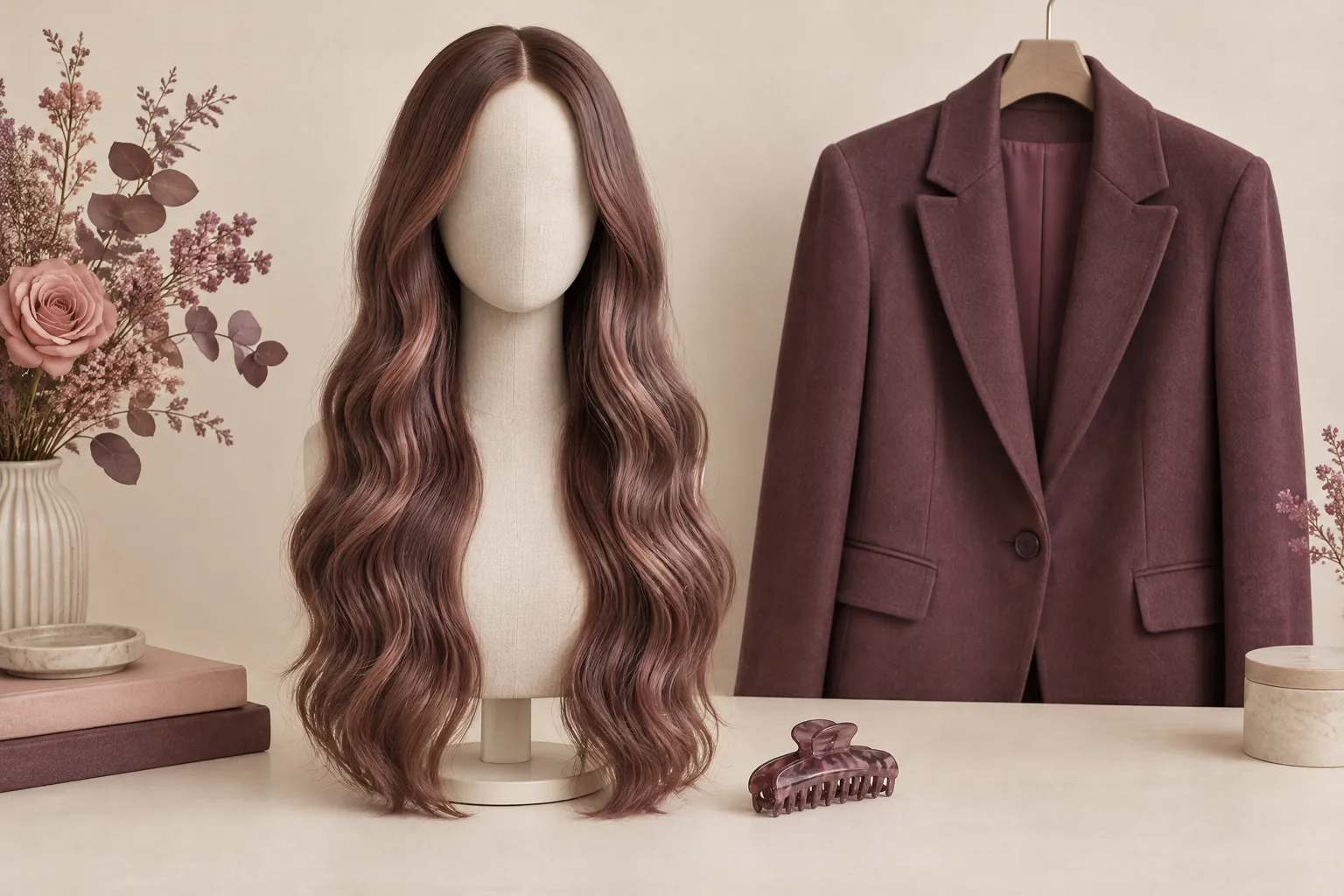
If texture is part of your shortlist, the OwnStrand guide to wavy wigs compares visible wave patterns. Body wave, loose wave and beach wave describe appearance rather than fibre or cap construction. For filming, look at where the actual bends sit beside your cheek and wrist. A wave label does not predict clearance. Compare similar lengths and rehearse your chosen item before deciding that a different texture is necessary.
Review a still frame only after watching the complete movement. It can help check the finished lip outline and face framing, but cannot show a blocked transition. The business headshot makeup service page offers relevant reading when you also need a portrait during the shoot. Treat that portrait as a separate setup. Hair that frames a still photograph neatly may need another placement for the applying hand.
Choose the smallest change that solves the problem
Keep the look, reset one section or split the shot
Keep the original arrangement if the entire rehearsal works comfortably. There is no need to clear every strand away from the face when only one route matters. Check both mouth corners and the lowering movement before accepting it. The successful arrangement may be asymmetric because the applying hand uses one side. That is a practical filming choice, provided the presenter likes how it looks in the intended frame.
A local reset suits a small section that repeatedly enters the working path. Discuss a gentle tuck or temporary placement that the wearer accepts and the item permits. Test it through the same turn and spoken line. If it only works while the presenter holds still, it has not solved the actual problem. Inspect the visible outline afterwards, especially when the camera shows the temple or ear closely.
Change the shot sequence when clearing hair would create an appearance the presenter dislikes. A separate application close-up can be followed by a wider explanation or packaging display. This asks production to manage an extra transition, but avoids forcing every action into one continuous take. Compare the options below against the actual obstruction. None requires changing campaign colours or assuming that heated tools are available for the hairpiece.
Replacing the item is a larger decision than moving one section. Consider it only when the required demonstration and the preferred outline remain incompatible after practical tests. A shorter front section might help one action yet change the look substantially. Compare that trade-off on the presenter, not only in catalogue images. Avoid cutting a fringe as a quick rehearsal fix; discuss any permanent alteration separately with the item's supplier.
- Accept a change only when the wearer can repeat the action comfortably.
- Judge the moving sequence before approving its final still frame.
| Option | When it fits | Trade-off | Check again |
|---|---|---|---|
| Keep the arrangement | The whole action remains clear | Preserves your preferred outline | Both corners and hand exit |
| Reset one section | A small section crosses the route | May reveal more temple or ear | Speaking and head return |
| Split the sequence | One take forces an awkward gesture | Adds an editing transition | Matching start and finish |
| Compare another item | Look and action remain incompatible | Changes more than clearance | Full rehearsal with that item |
Record a repeatable gesture and hair pairing
Make the reference useful without overdirecting
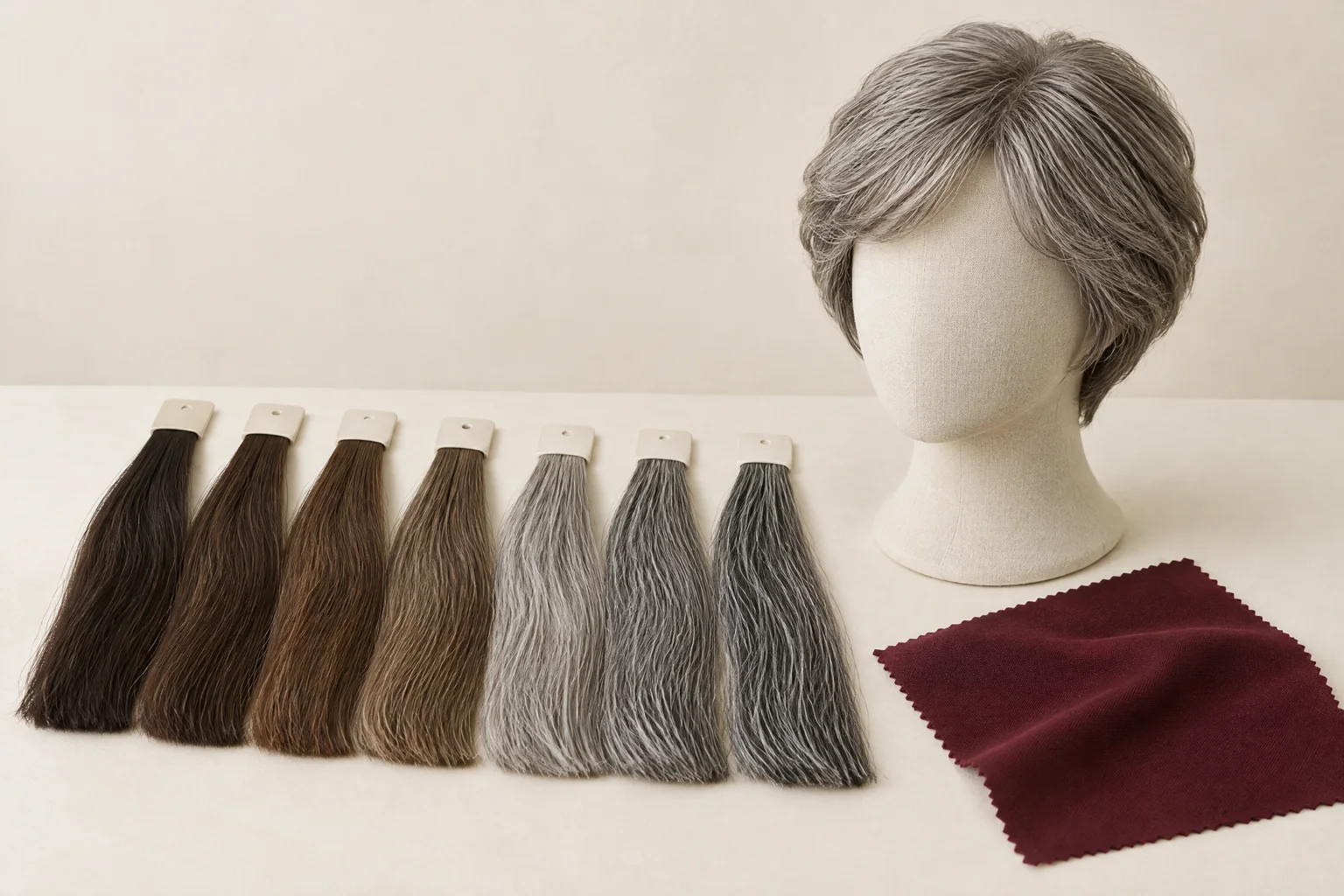
ScreenSkills describes checking matching actions and eye-lines, alongside written and photographic records, as part of film continuity work. Adapt that principle to your demonstration with a short rehearsal clip and clear stills. Record the starting pose, application pause and finished position. Add the applying hand and direction of the head turn. This helps connected shots match without expecting anyone to remember every detail of the successful take. [2]
Describe the arrangement in observable terms. Write which side the hair rests on and where the front section ends relative to the cheek. Note where the cap sits and which hand retrieves it. Avoid instructions such as 'make it natural' when recording a position. They describe an impression rather than an action. Keep the record short enough that the presenter and crew can use it between takes.
For material questions, OwnStrand's human hair wigs guide separates fibre description from construction, fit and care requirements. Use that distinction before agreeing to any change for filming. Ask whether the particular item permits your proposed handling and which care instructions apply. Human hair is not permission for unrestricted heat styling. A workable gesture record can be created around the item's existing shape, without promising a heated restyle.
Ask the wearer before touching or repositioning hair, including adjustments that seem minor to the crew. Agree whether the wearer prefers to make a tuck personally or have help between takes. Obtain permission for reference photographs and decide who needs access to them. Keep these images focused on the filming arrangement. Personal reasons for wearing a hairpiece do not need to become part of the production notes.
Use the rehearsal result on filming day
beauty demo lipstick hair clearance: Final action check
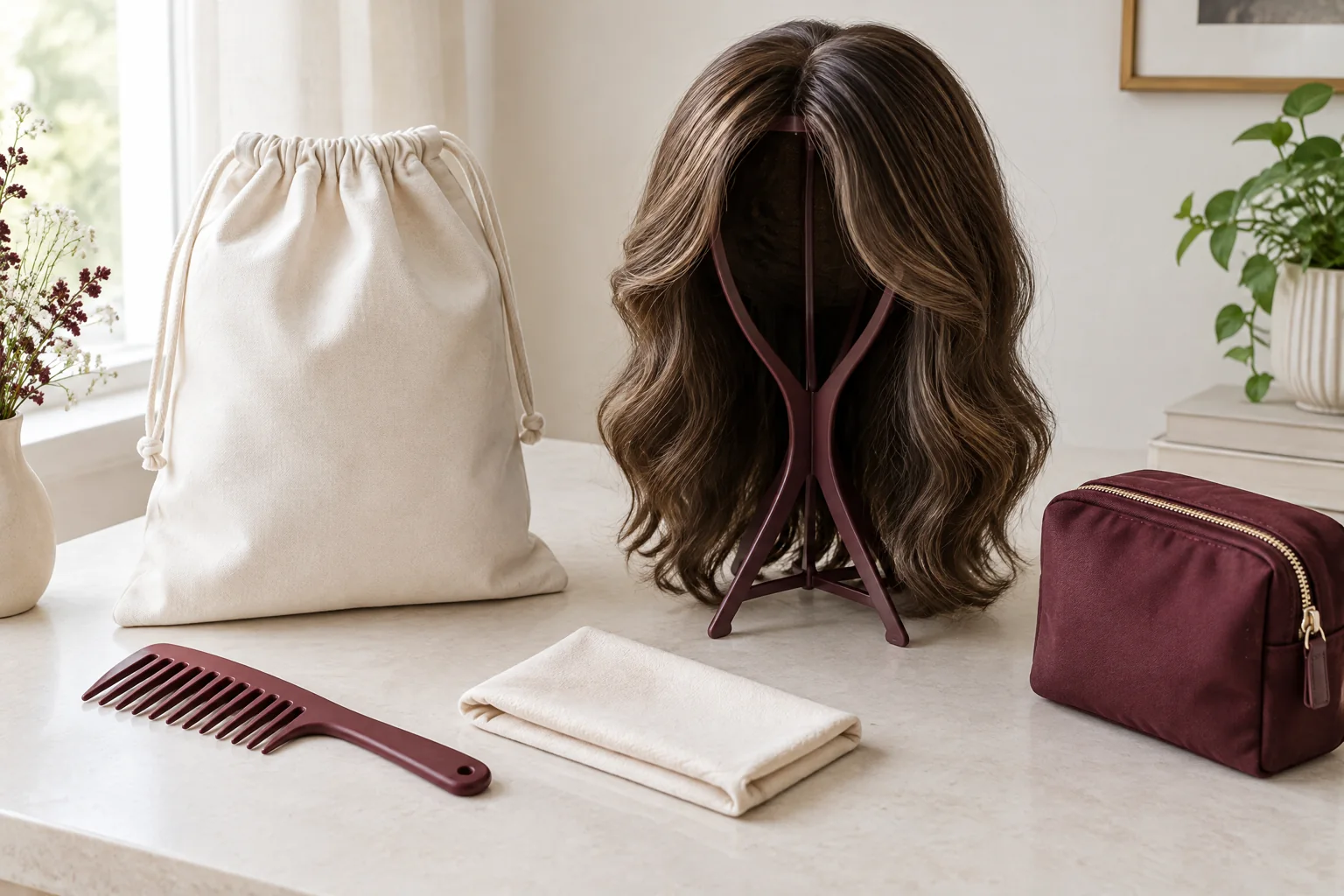
Run the agreed movement once after the final camera position is set. Check the mouth, hand and nearby hair together rather than inspecting each in isolation. Confirm that the product enters and leaves the frame as intended. If the camera angle changes, repeat this local check. A previously clear route may now be hidden from the lens even though the presenter performs exactly the same action.
Pause when hair touches the product, the grip feels awkward or the presenter needs repeated corrective movements. Identify what happened before changing anything. Reset a displaced section, revise the hand's starting point or return to the agreed shot sequence. Then rehearse that affected moment again. Repeated full applications are not the only way to test movement. Use a closed product when contact is unnecessary.
If the demonstration belongs to a larger campaign, share the agreed movement with the person coordinating the visual brief. The commercial advertising makeup service page is relevant to that broader makeup discussion. Send the required actions and hair reference alongside the campaign direction. Keep the operational decision clear: which gesture pairs with which hair position. Colour approval and product messaging can then remain separate decisions for the campaign team.
Bring the selected item or clear photographs to the makeup discussion, together with your lipstick and intended framing. Mention any adjustments you would not accept, such as exposing an ear or moving your usual parting. This lets preparation respect your appearance as well as the shot. Leave with one preferred movement and one practical alternative. The best choice is the arrangement you can perform comfortably and recognise as your own.
Key takeaway
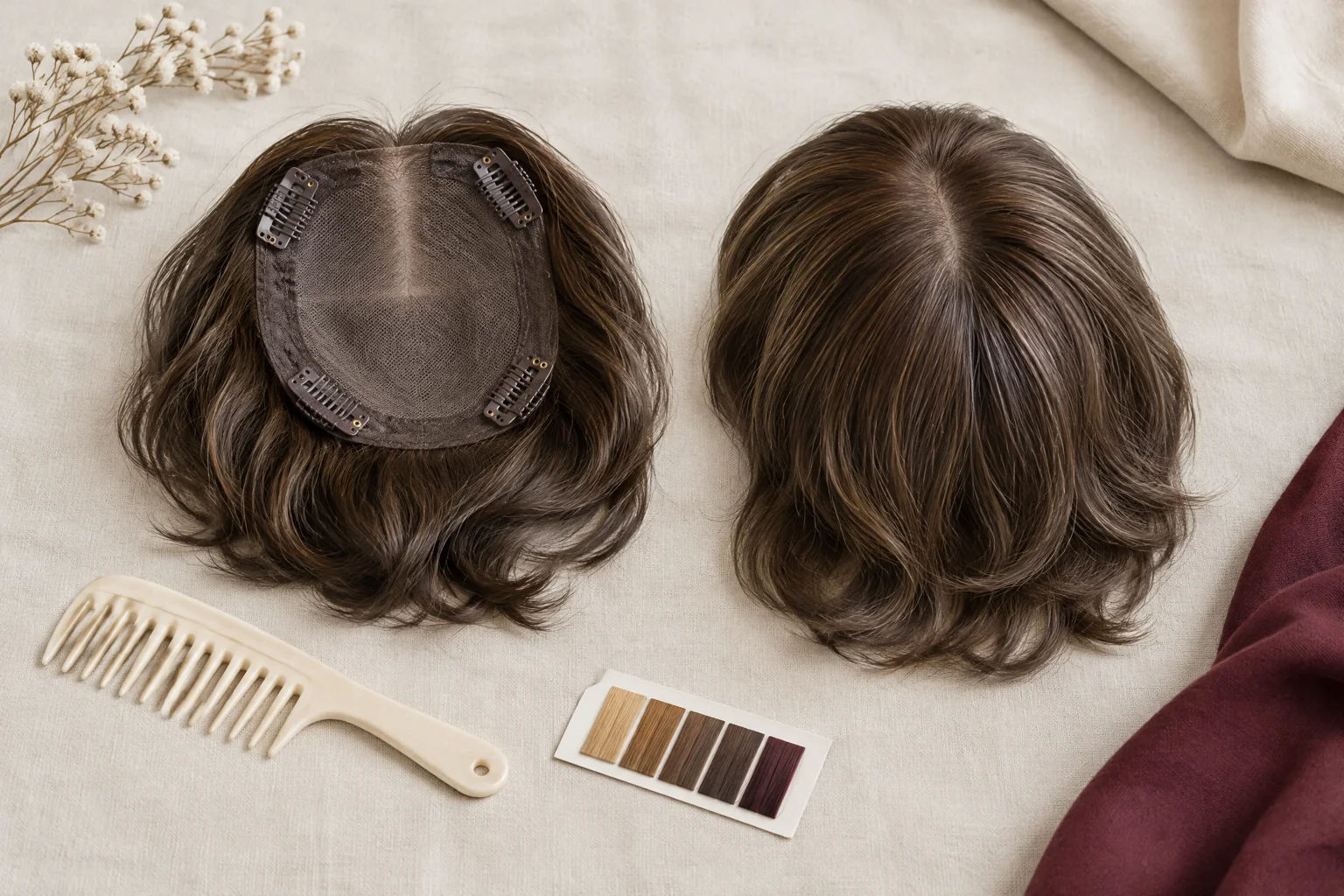
Preserve the look that matters to you, then solve the specific moving obstruction. A smaller hand adjustment or local hair reset may be enough. If that compromises your preferred appearance, consider separating application from the wider presentation shot. The useful preparation is a repeatable pairing of gesture and hair position. It is not a promise that one fringe, texture or fibre will suit every demonstration.
Practical checklist
- Bring your own lipstick, its cap and the intended hair item.
- Rehearse the approach, application, spoken line and hand exit.
- Check the camera view separately from actual hair contact.
- Agree which local adjustments the wearer accepts.
- Save the successful movement with a short position note.
Frequently asked questions
Does every lipstick demonstration need hair tucked behind the ears?
No. Clear only the area needed for the action and the camera view. A complete tuck may expose more of the side outline than you want. Rehearse the application, spoken explanation and hand exit with your preferred arrangement first. If one section interferes, test a smaller reset. Keep any change comfortable for the wearer and appropriate for the particular hairpiece.
Should I change hands to give the camera a clearer view?
Start with your usual applying hand, because the demonstration still needs a controlled movement. Try a different starting position or separate the packaging display before changing hands. An unfamiliar hand can create another problem even if the view improves. If production proposes a switch, test it with your actual product. Accept it only when the full action remains comfortable and understandable.
Can we rehearse without repeatedly applying lipstick?
Yes. Use the closed product to practise the approach, head turn and hand exit when lip contact is unnecessary. Then check actual application with your own product to assess the real grip and lip visibility. Keep those two exercises distinct so the movement test does not become repeated cosmetic use. The closed-product rehearsal cannot replace checking the applicator's working position during the actual demonstration.
What should I send before discussing the makeup arrangement?
Send the intended framing, required demonstration actions and clear photographs of your chosen hair arrangement. A short movement clip can show where the obstruction happens more clearly than a portrait. Include the lipstick format and any handling limits for your hairpiece. State which changes you would accept. Keep sensitive personal information out of the reference unless you genuinely want it included in the discussion.
Sources
| Source | What it supports |
|---|---|
| Cosmetics: Tips for Women — U.S. Food and Drug Administration | FDA guidance advises washing hands before cosmetic use, not sharing makeup, keeping containers clean and closed, and following label directions. |
| Script supervisor (Film and TV Drama) — ScreenSkills | Script supervisors check matching actions and eye-lines and keep written and photographic continuity records. The article adapts this principle to recording a lipstick demonstration's gesture and hair position. |
Discuss your own makeup plans
Discuss your filming makeup arrangement with BigDeal Make Up on WhatsApp +852 6918 3153. Share your lipstick format, required actions and chosen hair item or photographs. This number is for BigDeal makeup enquiries, not OwnStrand bookings or wig sales.
Ask on WhatsApp +852 6918 3153