
BigDeal Make Up · Hong Kong
Makeup Artist Course No Experience
Starting a makeup artist course with no experience can feel daunting, but it becomes manageable when you focus on readiness and a clear plan. Begin by describing what you already practise at home, the looks you want to create professionally and how many hours per week you can commit to practise. BigDeal Make Up will discuss course directions and confirm whether prior experience, an entry conversation or any preparatory steps are relevant for your chosen programme.
At a glance
makeup artist course no experience
If you have no experience, emphasise your goals and commitment rather than perceived gaps. A makeup artist course no experience pathway usually begins with a practical foundation that teaches core skills—colour, proportion, day and camera make-up—so you can build a structured practice plan. Ask for written confirmation of any English entry requirement, mature-applicant arrangements or assessment details before you enrol.
01
Understanding a makeup artist course no experience in relation to your goals
A clear starting point for makeup artist course no experience
Begin with the kind of makeup work you want to explore rather than an assumed job title. Are you curious about bridal, editorial, commercial advertising or everyday client work? Each direction emphasises different skills: bridal needs long-wear and colour-correction, editorial prioritises dramatic shaping and lighting awareness, while commercial work requires consistent reproducibility for photographic briefings.
A makeup artist course no experience learner benefits from defining short, medium and long-term goals. Short goals might be mastering a clean day look and basic camera technique; medium goals include consistent colour-balancing on different skin tones; long goals could be building a kit and practice portfolio. Clarity here helps BigDeal suggest the right practical foundation route and the amount of practice required.
Practical commitment is the deciding factor. A 25-hour foundation practical class like Professional make-up artist foundational practical course will introduce essential skills, but the learning continues with independent practice. Be honest about realistic weekly practice time and access to models—self-practice and friends are valid starting points. The course will give structure; your progress depends on regular, focused repetition.
For a closer comparison, consider how to choose bridal makeup artist Hong Kong
02
How the makeup course English entry requirement fits your practical plan
Practical questions about makeup course English entry requirement
English-language instruction and communication expectations vary between providers. Rather than assuming a rigid English requirement, ask what language support is available and whether teaching examples, demonstrations and written notes are provided in English. BigDeal confirms language arrangements on enquiry; do not presume a formal English test unless it is stated in writing for a specific programme.
Communication is a practical skill in client-facing work: describing looks, asking about allergies, and taking briefings all need clear language. If you are worried about English, discuss how demonstrations, step-by-step visual materials and close-up technique coaching will be provided. Many learners with limited English succeed when the tutor uses demonstration, hands-on correction and visual checklists.
If a course lists an English entry requirement on enrolment paperwork, request a written statement showing the level expected. For mature applicants, providers may ask for evidence of the ability to follow instructions and complete class work rather than formal language certification. Confirm these points before you commit to the schedule so you know whether you need to prepare translated notes or ask for extra support.
Match your plans with part-time makeup artist course
03
What to confirm before you choose a makeup artist course no experience and the English entry requirement
Plan your makeup artist course no experience and English entry checks with confidence
Confirm fees, the exact course structure and what the tuition covers. Professional make-up artist foundational practical course is published as a 25-hour professional foundation practical class; group tuition is HK$6,880 per learner and one-to-one tuition is HK$8,910 per learner for the full course. Ask whether tools, consumables and practice models are included, because the arrangement can vary: this information must be confirmed before enrolment.
Ask whether any entry discussion or informal interview is part of the acceptance process. Some providers offer an entry conversation to determine suitability and to recommend private or group formats; this is not the same as a pass/fail entrance assessment. If an entry discussion is offered, request the topics it will cover so you can prepare to describe your current practice and availability accurately.
Check the learning outcomes and the practical expectations for home practice. A foundation route should list core competencies—colour observation, skin condition assessment, day and evening make-up, basic camera make-up, tool hygiene and client communication. Compare these outcomes with your goals so you confirm the course will build the right base for your professional direction.
You may also find it useful to compare male grooming makeup course
04
Begin by naming the kinds of makeup work you want to explore, not a job title
A practical starter for makeup artist course no experience
Instead of telling yourself you need to be a ‘professional’ before you start, describe the looks you are excited to produce. Write a short brief: three signature looks, the skin types you want to work on and any photography styles you admire. This brief helps tutors recommend a course pathway that builds the exact skills you’ll use in practice.
A 25-hour foundation practical class like Professional make-up artist foundational practical course will cover essential observational skills—colour, skin condition, facial proportion—and core looks such as day, evening and basic camera make-up. That structure suits beginners because it concentrates on repeatable, safe techniques you can apply across different clients while you develop speed and consistency.
Practice tasks after each session make the learning stick. Set measurable practice goals: five full-face make-ups on different skin tones, three photographed before-and-afters under natural and studio lighting, and timed application drills to simulate client bookings. These exercises prepare you for real-world constraints without being dependent on prior employment experience.
For another approach, explore basic makeup artist course
05
Take stock of your current skills and the areas that need practice
Questions about makeup course English entry requirement and applicant background
Inventory what you can already do: skin prep, basic foundation matching, simple eyeliner, and blending. Then list weaknesses: colour-correction on uneven skin, working with mature skin, or producing even brows. This honest assessment helps a tutor personalise guidance and recommend whether group or private tuition will better match your learning speed.
Working experience requirements are not automatic. Many foundation routes accept learners with minimal or no commercial practice, and the emphasis is on demonstrated basic technique during class, not past client hours. If a course asks about prior experience, provide clear examples of what you have practised and what you want to improve so the tutor can advise appropriately.
If you’re a mature applicant, describe any transferable skills—visual arts, hairstyling, customer service—that support your learning. Providers sometimes tailor pacing for mature students who bring different life skills to the classroom. Enquire about flexibility in session scheduling and the potential for additional practice time or private coaching if you need it.
Before deciding, take a look at Makeup Courses
06
Know the difference between a foundation course and advanced study
Plan progression after a makeup artist course no experience foundation
A foundation practical course is designed to establish core technique, hygiene, client communication and basic camera awareness. Advanced courses move into specialised areas—prosthetics, high-fashion editorial, corrective camouflage—and frequently require a stronger technical base. Confirm that Professional make-up artist foundational practical course is a foundation-level offering and that advanced modules, if required, will be a separate enrolment.
Ask how the foundation course transitions into higher-level study. Some providers offer optional intermediate classes once a learner completes the foundational hours and demonstrates competency through supervised practicals. Others provide guidance on building a portfolio while you practise independently, a step that often matters more to prospective clients and employers than a simple course completion statement.
Clarify whether completion of the foundation course includes any documented record of attendance or a tutor-written summary of achieved skills. This is different from claiming recognised government accreditation. BigDeal can confirm what written evidence is issued upon finishing Professional make-up artist foundational practical course so you know what you will have for job or freelance enquiries.
07
Choosing the right beginner pathway
How a practical foundation suits a makeup artist course for beginners no experience
If you’re searching for a makeup artist course for beginners no experience, treat the foundation stage as skills bootstrapping rather than a certificate chase. The Professional make-up artist foundational practical course (25 hours) is structured to teach the observational and hands-on skills you need to start working: colour, skin condition, facial proportion, day and evening looks and basic camera make-up. Those core competencies are what freelance clients and salons expect first; the course timetable and tutor feedback focus on repeatable technique rather than hypothetical exam performance.
Decide between group or private tuition by considering feedback style and practice opportunities. Group classes (HK$6,880 per learner) usually expose you to a wider range of faces and peer learning; private one-to-one tuition (HK$8,910 per learner) accelerates correction and allows the tutor to target specific weaknesses more intensively. Before you enrol, confirm in writing whether tools, consumables and practice models are included so you can plan any additional kit purchases and practise outside class time.
Starting as a complete beginner also means planning post-course practice. The 25 hours will give you structure and demonstration, but competence grows with deliberate repetition: timed application drills, photographing results in natural and studio lighting, and doing make-ups on a variety of skin tones. Make a modest practice schedule you can maintain; bring that plan to your enrolment discussion so the tutor can advise whether group or private tuition better matches your learning speed.
08
Entry checks, language and special applicant queries in Hong Kong
Clarifying makeup course entrance assessment Hong Kong and mature-applicant requirements
Providers in Hong Kong sometimes use different entry conversations or checks; this is why you should ask whether a makeup course entrance assessment Hong Kong will apply to your chosen intake. An entry discussion can be a short chat to confirm availability, practice aims and scheduling rather than a formal pass/fail test. Request the precise nature of any entrance checking in writing so you know whether you should prepare short photographs of practice work or a brief skills description.
If you have concerns about language or life experience, present them in the enquiry stage. For example, mature students often ask about makeup course mature applicant requirements—these are typically about pace and support, not exclusion. Explain transferable skills (visual arts, customer service) and ask how class pacing or extra practice slots can be arranged. BigDeal will confirm any specific requirements or flexibility on request; do not assume an exact policy without asking.
Working experience thresholds vary by level: foundation courses are designed to accept learners without past commercial hours, which directly addresses questions about makeup course working experience requirement. The Professional make-up artist foundational practical course is a foundation-level offering intended for those with minimal professional practice. If a later module asks for documented commercial hours, it should be stated in writing for that advanced intake; clarify this before enrolment so you can map the steps from basic training to paid work.
Style references
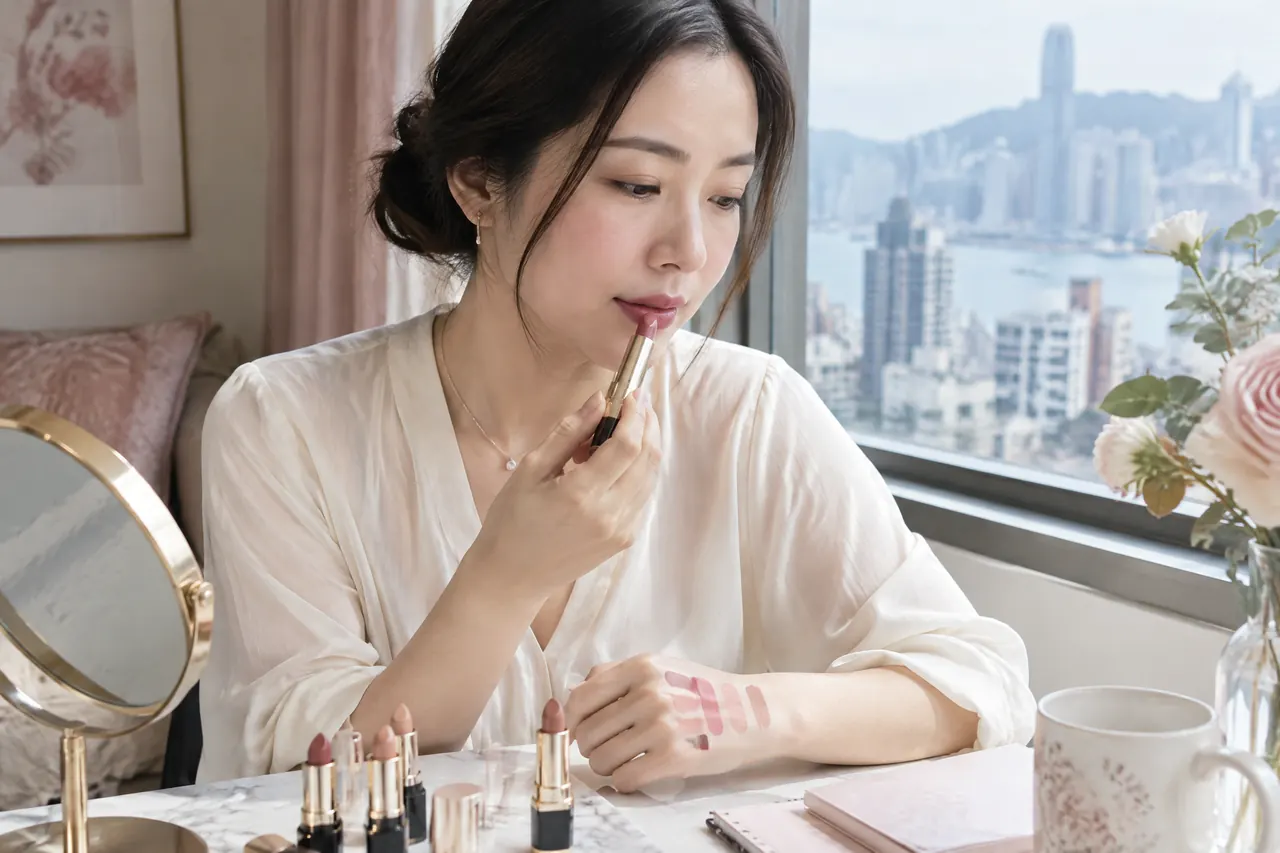
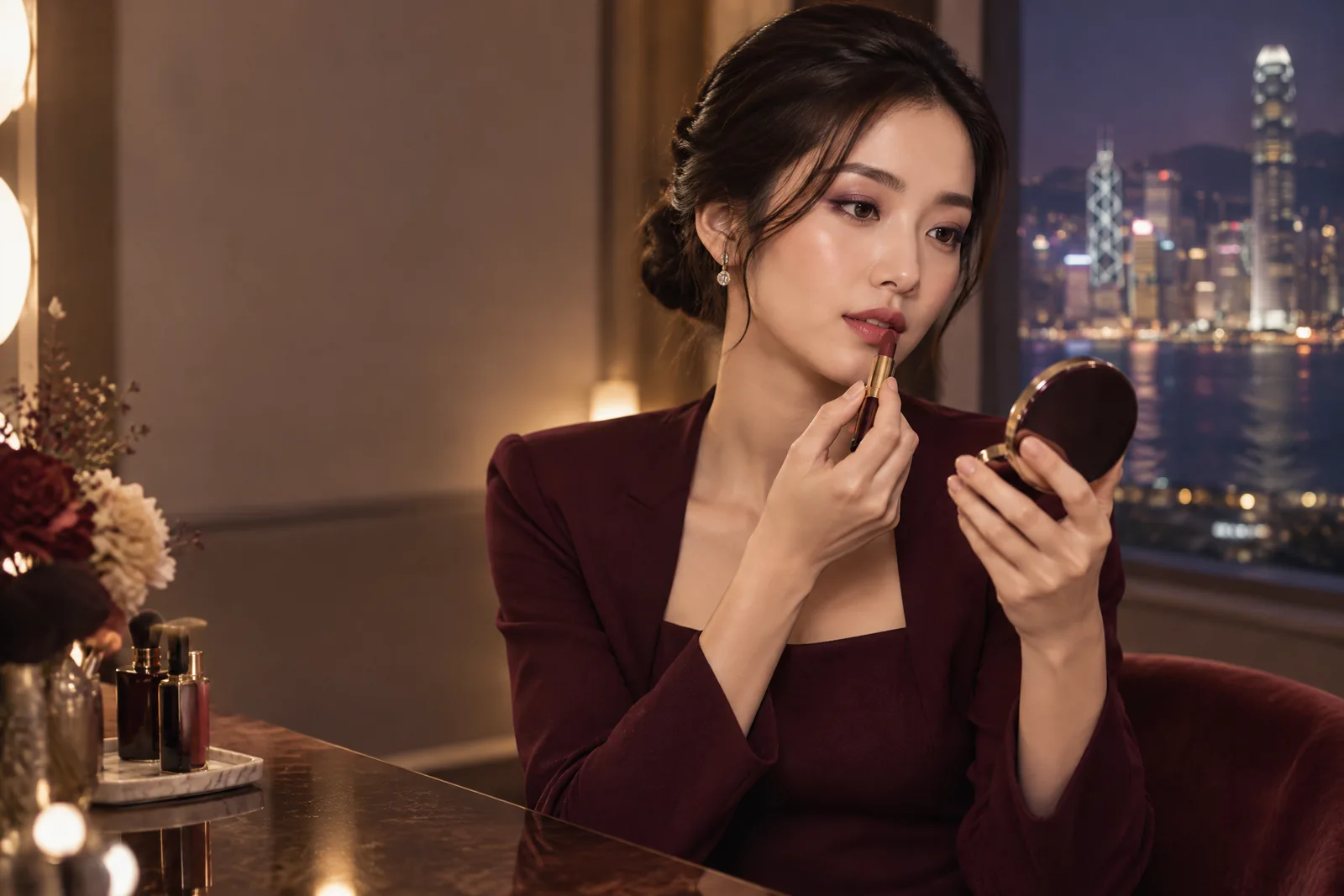
Related makeup style illustrations




Service & lesson fees
Relevant prices and inclusions
Prices and arrangements shown below apply to the listed scope. Confirm timing, location and the final arrangement directly before booking.
All group and private fees are per learner for the entire course.
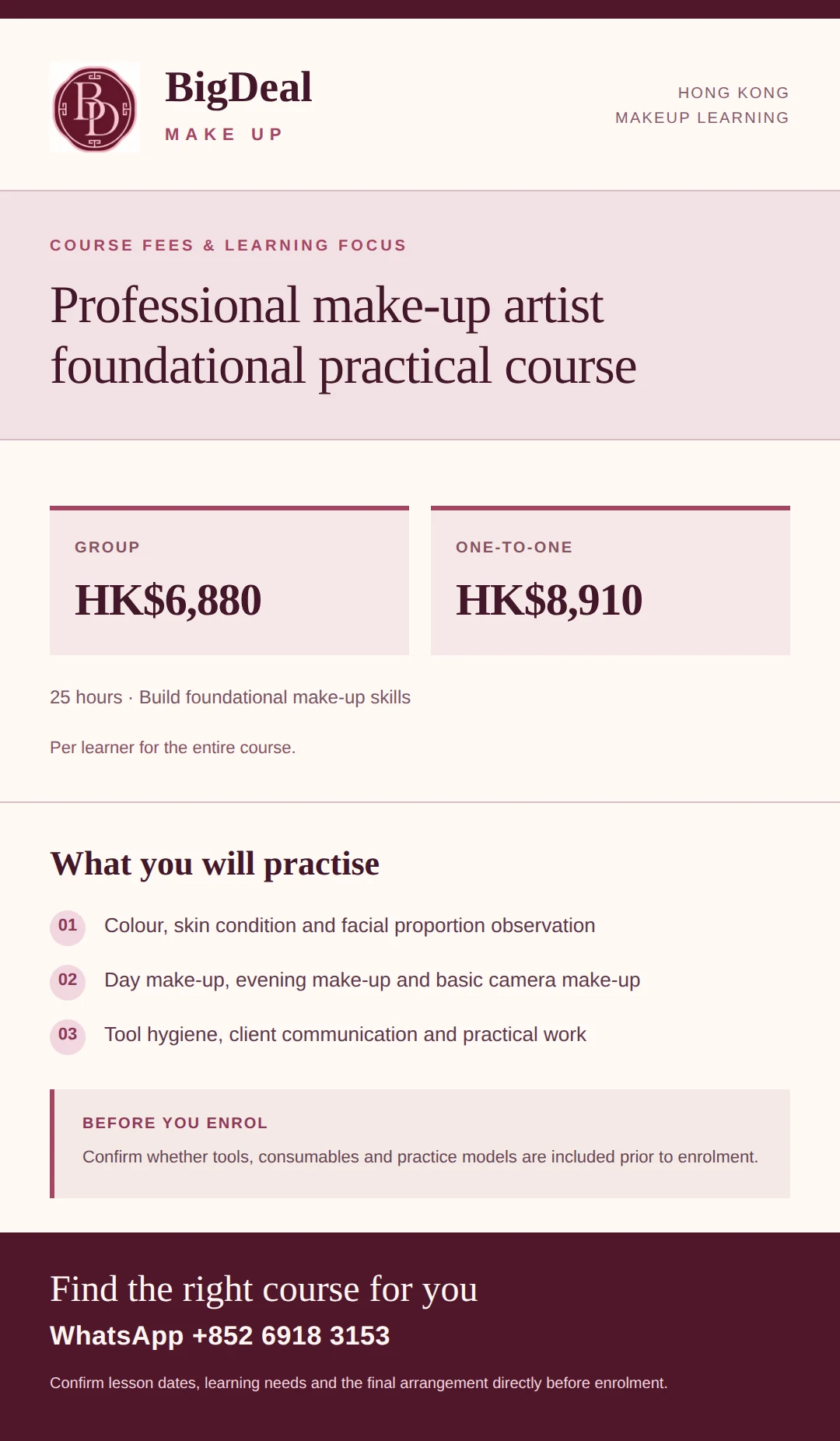
Professional make-up artist foundational practical course
- Group
- HK$6,880
- Private
- HK$8,910
25 hours · Build foundational make-up skills
Lesson focus
- Colour, skin condition and facial proportion observation
- Day make-up, evening make-up and basic camera make-up
- Tool hygiene, client communication and practical work
Arrangement: Confirm whether tools, consumables and practice models are included prior to enrolment.
Comparing foundation course Professional make-up artist foundational practical course arrangements
| Course element | Group class (per learner) | One-to-one private (per learner) |
|---|---|---|
| Course title & duration | Professional make-up artist foundational practical course – 25 hours | Professional make-up artist foundational practical course – 25 hours |
| Tuition fee (HK$) | HK$6,880 | HK$8,910 |
| Core syllabus highlights | Colour, skin condition, facial proportion, day & evening looks, basic camera make-up | Colour, skin condition, facial proportion, day & evening looks, basic camera make-up |
| Tools and consumables | Confirm whether included prior to enrolment | Confirm whether included prior to enrolment |
| Practice model arrangement | Check if group practice models are provided or if learners bring models | Private arrangement; discuss tutor support for sourcing models |
Helpful answers
Frequently asked questions
Can I join a makeup artist course no experience and still become competent?
Yes. A foundation practical route is built for beginners. With a clear practice plan and focused repetition after the 25-hour Professional make-up artist foundational practical course course, beginners develop competence in observation, colour correction and basic camera work. Success depends on structured practice, honest feedback, and gradually taking on varied skin tones and photographic situations.
Does BigDeal require a makeup course entrance assessment for beginners?
Not automatically. Some courses use an entry discussion to assess learning needs and recommend group or private tuition, but this is distinct from a formal entrance assessment. Always request written confirmation about any assessment requirement for the specific course you want to join.
Are there working experience requirement rules for joining foundation courses?
Foundation classes like Professional make-up artist foundational practical course do not require prior commercial experience. These courses accept learners who can show basic home practice and an eagerness to commit to post-course practice. If a particular intake asks about past work, present factual examples of your practice rather than manufactured hours.
What should I prepare if I worry about a makeup course English entry requirement?
Discuss communication needs with the provider before enrolment. Ask if demonstrations use visual checklists, whether notes will be provided in English and how close-up teaching will be managed. If formal language requirements are stated, request the specific level in writing and ask what support the tutor will provide during classes.
Will Professional make-up artist foundational practical course include all tools and consumables in the tuition fee?
Professional make-up artist foundational practical course tuition fees (HK$6,880 group; HK$8,910 private) are for the course hours and instruction. The published course notes state that you must confirm whether tools, consumables and practice models are included prior to enrolment. Always check this detail in writing so you can budget for any kit or consumables.
If I'm a mature applicant, are there extra requirements for entry?
Mature applicants are usually welcomed; providers often focus on demonstrated ability to follow instructions and complete practical work rather than age. Explain any transferable skills and ask about scheduling flexibility or additional practice sessions if you need them. Confirm any special arrangements in writing before booking.
Will the foundation course accept someone with absolutely no prior practice?
Yes. The Professional make-up artist foundational practical course is aimed at beginners and covers the essential observational and practical techniques beginners need. Success depends on committing to practice after the 25 hours and confirming any required kit or consumables ahead of time.
Do I need to provide proof for a makeup course entrance assessment Hong Kong?
Only if the specific intake asks for it. Some intakes use a short entry chat to understand your goals and availability rather than a formal test. Always request written details of any entrance check so you can prepare photographs or a short skills summary if required.
Are there extra hoops for older learners—what are makeup course mature applicant requirements?
Mature applicants are welcomed; requirements usually centre on ability to follow instructions and complete practical tasks rather than age. Explain relevant transferable skills and ask about scheduling flexibility or supplementary practice time; confirm any agreed arrangements in writing.
Does the foundation course include a makeup course working experience requirement to enrol?
No. Foundation-level training like the 25-hour Professional make-up artist foundational practical course does not impose a prior working experience requirement. If later or advanced modules require documented commercial hours, that will be specified for those particular courses and should be confirmed before applying.
Ready to discuss it?
Book a personal readiness conversation
Tell us what you are planning, and we will help clarify the service or lesson details that matter for your enquiry.
From the makeup blog