
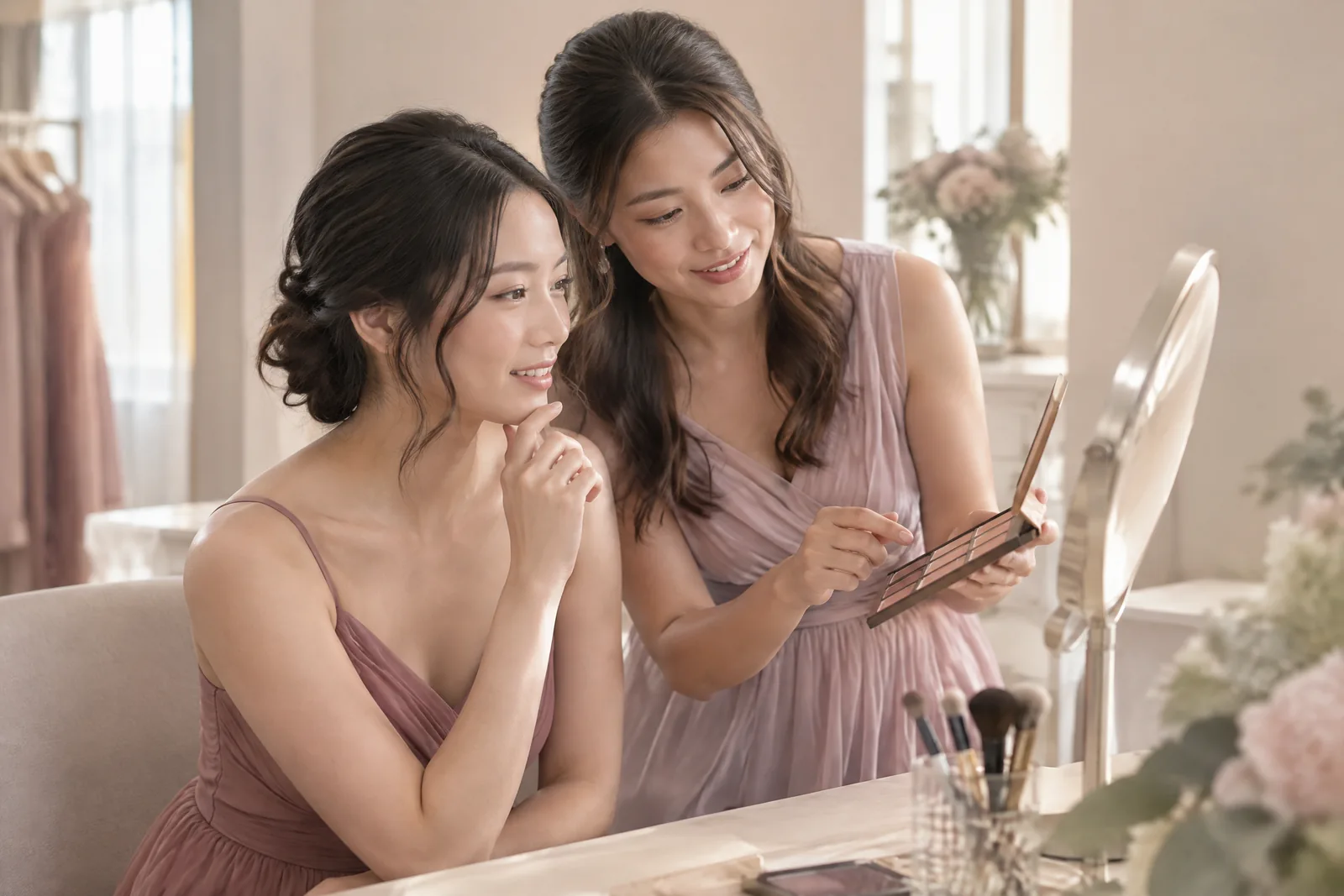
At a glance
Choose a colour direction first, then compare the exact wig description with your outfit swatch and reference makeup. A dark shade can define the face, while blonde and rooted patterns can add visible dimension. Neither replaces a fit check or a lighting test. Keep one visual brief for the wearer, makeup artist, and photographer so the final look remains coherent from ceremony to reception.
Build wig colour outfit coordination from the outfit outward
Make wig colour outfit coordination a whole-frame decision
Begin with the largest colour field in the photograph: the dress, suit, or bridesmaid gown. A wig should either repeat that field's temperature or create a deliberate, tidy contrast. Black beside a pale satin dress looks graphic. Blonde beside champagne can look tonal. A rooted pattern can bridge a darker neckline and lighter fabric. Decide which effect you want before choosing eye colour, lip colour, or jewellery. This prevents every element competing for attention.
Next, decide where the wearer sits in the party. The bride may need a stronger relationship between hair, veil, and bouquet. A sister or bridesmaid often benefits from a coordinated family of tones rather than a matching clone. Photograph the outfit beside the proposed hair colour. Include the neckline and earring scale. A close-up hair photo alone cannot show whether the shade overwhelms the outfit or leaves the face looking disconnected.
Use daylight as one comparison point when possible. American Cancer Society wig guidance advises comparing a hair reference and wig swatches outdoors or near a window. That is useful for seeing a colour relationship before event lighting alters it. It does not guarantee an exact match. Bring a small fabric swatch, a photo of your usual hair, and one makeup reference to the trial. Keep product, fibre, and cap questions separate from colour planning. [1]
- Bring one dress or suit swatch, not a collage of unrelated colours.
- Choose one reference image for the hairline and one for the makeup finish.
- Record whether ceremony photographs are outdoors, indoors, or mixed-light.
Read the wedding palette in the light you will actually face
Test colour temperature before deciding on a final makeup contrast
Hong Kong wedding days can move from window light to a hotel ballroom within hours. Treat those locations as separate viewing conditions. Hold the dress swatch near the face and take a simple phone photo by a window. Repeat under the venue's likely indoor light. Look for the overall balance, not a perfect screen match. If the hair suddenly reads warmer or cooler, adjust the makeup accent or accessory before replacing every colour choice.
Photography guidance from Adobe explains that white balance affects every colour in an image. It also notes that mixed light can make correction harder. For a wedding party, a warm ballroom can shift blonde hair, ivory fabric, and blush. Ask the photographer which spaces will be used for group portraits. Use that answer to choose a restrained eye and cheek palette that still works after the light changes. [2]
Makeup need not duplicate the wig shade. Instead, link them through depth or temperature. A warm blonde can sit well with a muted rose lip and soft bronze eye. A cool blonde can suit taupe and berry notes. Deep black can carry a clearer brow and lip outline. These are starting points, not complexion rules. Check the actual mirror view and photographs, then keep the version that lets the eyes remain visible.
| Starting shade direction | Dress and accessory cue | Makeup anchor | Trial question |
|---|---|---|---|
| Black or very dark | Pale satin, jewel tone, or tailored dark fabric | Keep brows and lips deliberate, then choose one stronger focus. | Does the face remain visible beside the neckline? |
| Warm blonde | Champagne, gold, peach, or warm floral accents | Use restrained bronze, rose, or soft brown notes. | Does warm indoor light make the look too yellow? |
| Cool or light blonde | Silver, cool pink, blue, or clean ivory details | Restore definition with taupe, soft berry, or shaped brows. | Do the eyes hold their shape in group portraits? |
| Rooted colour | A palette mixing dark suits and light dresses | Balance the dark root with one controlled facial outline. | Where does the root transition read in the chosen parting? |
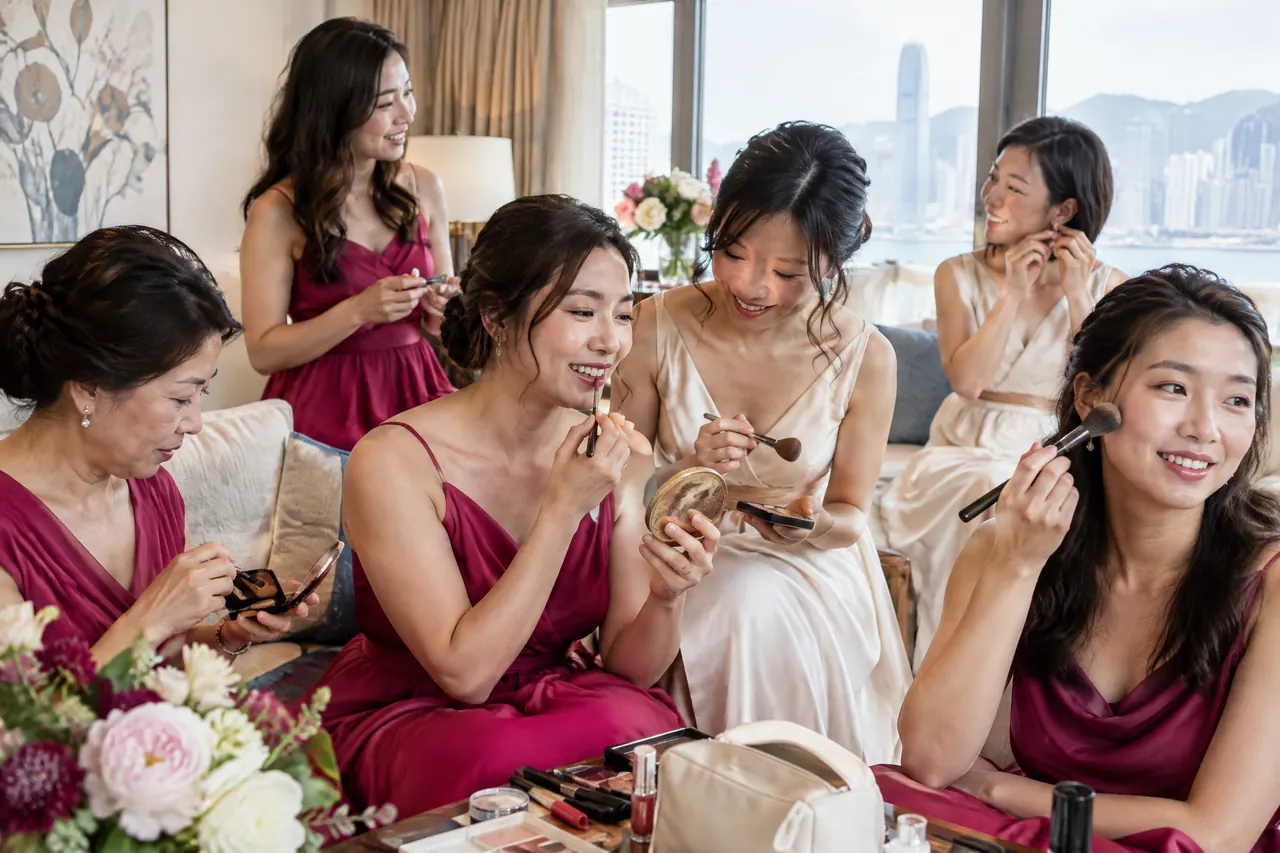
Use black as an outline, not an automatic default
Balance black hair with fabric depth and makeup definition
Black hair creates a strong perimeter around the face. It can look elegant with white, jewel tones, navy, or a sharply tailored suit. The important choice is contrast control. With a dark high neckline, add light near the face through earrings, skin finish, or a softer cheek. With a pale neckline, keep the brow and lip shape intentional. Otherwise the hair may appear separate from the rest of the styling in photographs.
For shade vocabulary and comparison checks, read the black wigs page before treating every dark option as identical. The page advises comparing stated shade, images, material details, and light. Do not rely on the word black alone. Do not assume a category confirms fibre, construction, availability, or an exact tone. Note the specific listing name when you need further confirmation for a wedding look.
A black shade can make a brighter lip feel more deliberate, yet the outfit should set the intensity. Pair a red or berry lip with a clean eye if the dress already has sparkle. For a soft pastel party palette, choose a stained lip and gentle definition instead. Test the front hairline beside the brow tail. If both look heavy, soften one of them. The goal is a readable face, not maximum drama from every feature.
Plan blonde by depth first and undertone second
Keep blonde hair from disappearing beside pale wedding fabrics
Blonde is a wide family, so separate depth from undertone. Dark blonde may provide enough outline beside champagne or beige dresses. A light ash shade may need more visible brow structure and a slightly deeper cheek tone. Honey can echo warm gold accessories without making every detail yellow. Put the fabric beside the proposed shade before deciding. A label such as ash or honey is a clue, not a universal colour standard.
The blonde wigs guide groups descriptions around warm, cool, and neutral directions. It warns that names vary across products and screens. Use it to prepare specific questions about depth and overall cast. Do not infer human hair, cap construction, care needs, supply, or a guaranteed personal match from a blonde category. The useful output is a shortlist, not a promise.
For makeup, choose one element that restores facial definition. It might be a softly shaped brow, a taupe lash line, or a rose-brown lip. Avoid adding all three at maximum strength. A pale dress needs enough contrast to retain the eyes in portraits. Heavy contour can fight an airy palette. A trial photo at normal conversation distance is more informative than a close screen crop. Keep the finish consistent across the party.
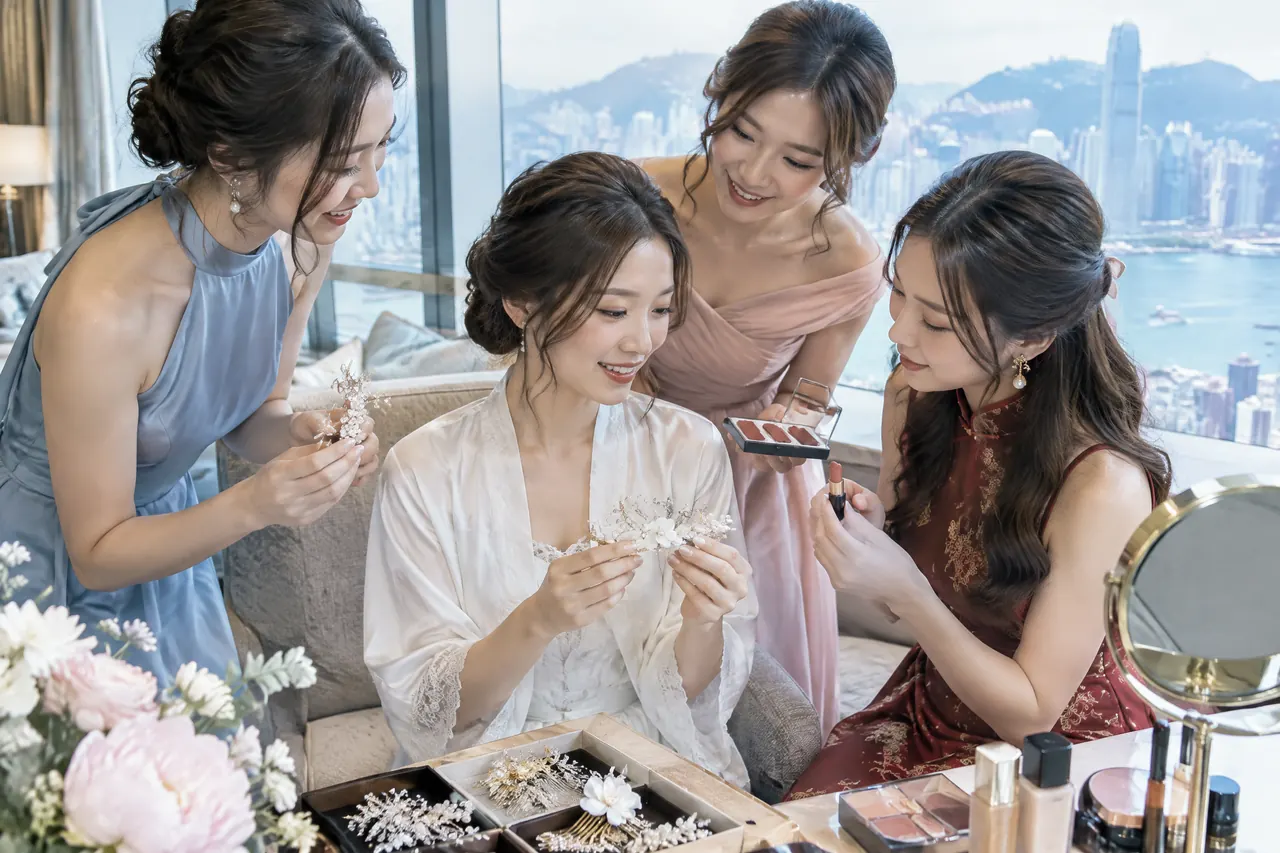
Use rooted colour to connect a darker base and lighter lengths
Read the root-to-length pattern before matching makeup
A rooted effect is about colour distribution. The root area appears darker, while the lengths carry another shade. That pattern can be useful when a party palette includes both dark suits and light dresses. It offers a visual bridge near the parting without forcing the ends to match the clothing. Compare how far the darker zone extends and how clear the transition looks. Rooted colour does not describe a cap, hairline, density, or fibre.
Read the rooted wigs guide as a description aid before deciding that a dark root will always look subtle. It explains that the root tone, length shade, and transition vary by style. Compare reference images beside the outfit, then ask about the exact description if the contrast matters. Do not assume rooted wording confirms scalp effect, parting, supply, or suitability. Keep construction questions separate.
For bridesmaid makeup, share the intended parting and root contrast before face work begins. A visible dark root can support a more defined brow. It can also make an already dark eye feel crowded. Choose the makeup focus after the hair placement is set. If several party members wear wigs, coordinate the overall depth range instead of demanding identical roots. Repeated structure photographs better than accidental uniformity.
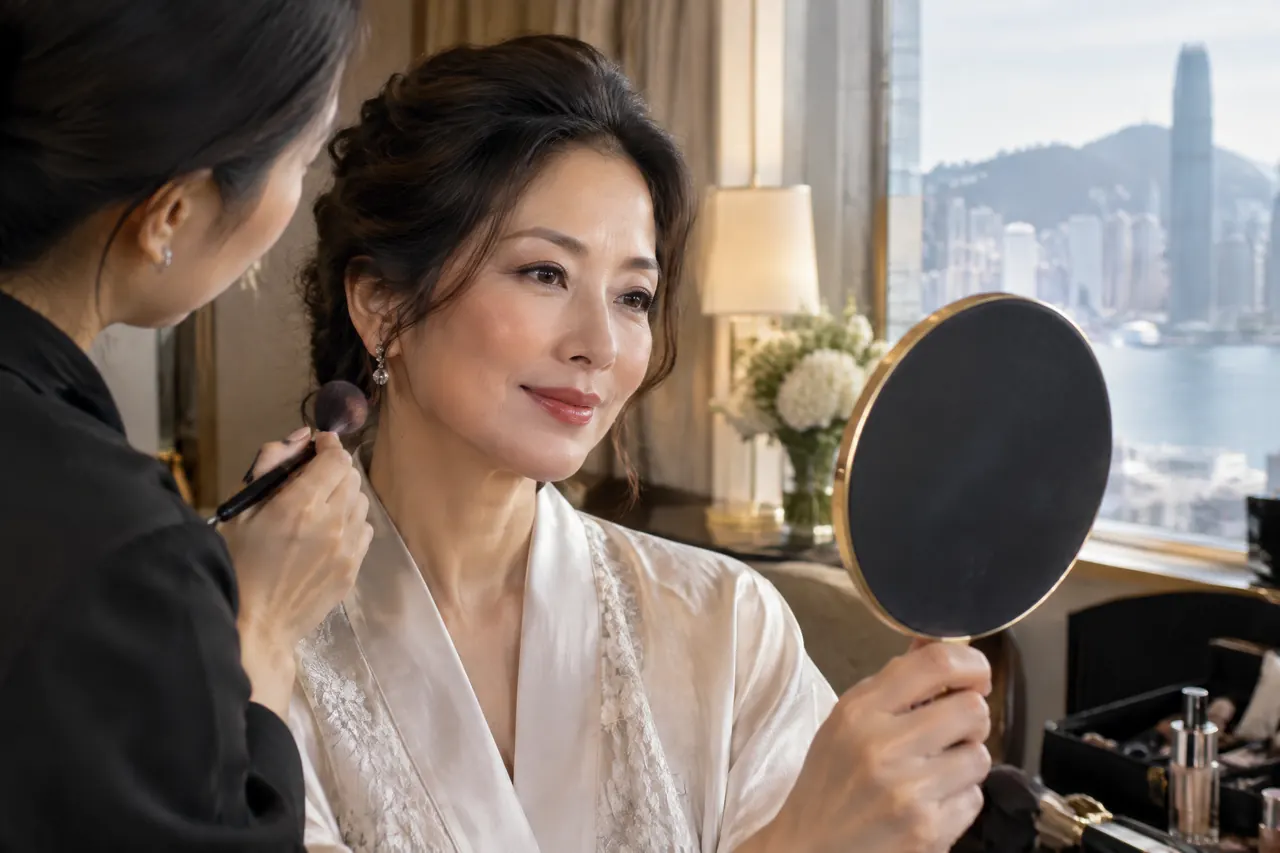
Turn the colour plan into a calm wedding-morning brief
Share decisions early and keep one practical fallback
When comparing sister makeup price Hong Kong options, add wig timing to your own planning notes. State the first photo time, outfit colour, wig shade direction, and whether the piece will be fitted before makeup. Ask what information the artist needs rather than assuming wig work is included. This protects the makeup schedule and avoids a rushed colour decision at the mirror. Keep supplier confirmation, fitting instructions, and product questions with the relevant provider.
For a sister makeup artist booking, send a concise visual brief several days ahead. Include the dress swatch, one daylight hair reference, the intended parting, accessories, and indoor portrait location. Mention if a hairstyle must leave the hairline untouched. A clear brief helps the artist plan brow depth, base finish, and touch-up colours around the completed look. It does not require the artist to supply, alter, or guarantee the wig.
Do one final rehearsal in the outfit or a close substitute. Photograph the wearer standing beside another party member, then check the image at normal size. If the hair reads too dark, too pale, or too warm, change one supporting element first. A lip tone, earring metal, or accessory may solve the balance. Prepare a fallback: a simpler clip, a softer lip, or an alternate portrait angle. Comfort and clear communication are valid styling priorities.
Key takeaway
Good wedding-party colour planning is a sequence, not a rulebook. Begin with the outfit, inspect the hair shade in useful light, and shape makeup around the completed frame. Black, blonde, and rooted patterns each offer different contrast choices. The best one is the option you can describe clearly, rehearse calmly, and wear comfortably through photographs and celebrations.
Practical checklist
- Photograph the proposed shade beside the actual dress or a close fabric swatch.
- Check the full look once by a window and once under expected indoor light.
- Share the parting, hairline, and accessory plan before the makeup trial begins.
- Keep wig shade, cap, fibre, and supply questions tied to the exact listing.
- Prepare one simpler makeup or accessory fallback for portraits and long wear.
Frequently asked questions
Should a wedding-party wig match the dress exactly?
No. Exact matching can make the look flat. Start by deciding whether the hair should repeat the dress temperature, add contrast, or bridge two colours in the party palette. Then test the full frame with makeup and accessories. A black, blonde, or rooted shade can work when it relates clearly to the outfit without copying it. Photographs under the event light provide the final practical check.
How do I choose makeup for black hair and a pale dress?
Use the pale dress as a light field and black hair as the face outline. Keep the brow shape intentional, then choose either a clearer lip or more emphasis around the eyes. Add light through skin finish or earrings if the neckline is dark. Test the balance at normal portrait distance. The aim is a visible face and a coherent outline, not heavy makeup in every area.
Will warm or cool blonde always suit the same makeup colours?
No. Blonde labels describe a general direction, while depth, fabric, lighting, and personal preference still change the result. A warm blonde may pair well with rose or bronze notes, but indoor lighting can shift its appearance. A cool blonde can still look good with a softened warm accent. Use one rehearsal photo to decide which version keeps the features visible and the outfit balanced.
Does a rooted colour mean the wig has a natural-looking hairline?
No. Rooted describes a darker-looking root area and a different shade through the lengths. It does not state cap construction, hairline design, fibre, density, or parting. Assess those details from the individual style information. For wedding colour planning, focus first on the visible root-to-length relationship. Then confirm any construction details separately with the relevant supplier before the event.
What should I send a makeup artist before the trial?
Send a daylight hair reference, dress or suit swatch, accessory photo, intended parting, ceremony setting, and likely portrait locations. Say whether the hairline needs to remain untouched. Include one makeup reference that shows finish rather than only colour. This lets the artist plan brows, cheeks, lips, and touch-ups around the overall frame. Confirm wig fitting instructions and product details directly with the relevant supplier.
Sources
| Source | What it supports |
|---|---|
| American Cancer Society — Choosing and Wearing a Wig | For people trying to match their current hair colour, the American Cancer Society advises using a hair reference and comparing wig swatches in natural light outdoors or near a window. |
| Adobe — Adjusting White Balance Settings to Improve Photos | Adobe explains that white balance affects all colours in a photograph and that mixed light sources can make colour correction more difficult. |
Discuss your own makeup plans
Bring your outfit swatch, one daylight hair reference, and the expected portrait locations to a makeup consultation. Confirm any wig shade, construction, care, and availability details directly with the relevant supplier before the event.
Ask on WhatsApp +852 6918 3153