
BigDeal Make Up · Hong Kong
Editorial Versus Commercial Makeup Course
This editorial versus commercial makeup course comparison helps you choose between concept-led image making and clean, brief-led camera work. The Editorial / commercial shoot basic unit is a focused 6–8 hour module covering camera, lighting and a clean commercial base; the Fashion magazine & commercial shoot specialist course is a 24-hour programme that develops studio-light technique, runway procedure and advertising-focused creative design. Read the practical differences, confirm practice arrangements with customer service and check the published fees for group or private Fashion magazine & commercial shoot specialist course enrolment.

At a glance
editorial versus commercial makeup course
Decide by learning focus: editorial training prioritises visual concept, texture and narrative; commercial training prioritises clarity, reproducibility and client briefing for camera. The Editorial / commercial shoot basic unit is a short, confirmed-duration module with arrangements and fees finalised when you enquire; the Fashion magazine & commercial shoot specialist course is a 24-hour specialist course listed at HK$10,800 (group) or HK$13,980 (private). Use this guide to match your foundation, plan practice access and ask the right questions before booking.
01
editorial versus commercial makeup course: techniques and learning focus
Who benefits from editorial versus commercial makeup course?
An effective editorial versus commercial makeup course comparison starts with the brief: editorial briefs invite exploratory, image-driven choices that push colour, texture and silhouette to tell a story. Editorial work asks you to think like a visual author — how a makeup direction reads across a fashion spread, where exaggerated colour or a deliberately imperfect finish becomes the central idea.
Commercial briefs prioritise legibility for the consumer and the camera: consistent skin tones, even finishes and a predictable mood that supports product messaging. The commercial approach values reproducibility, strong base technique and subtle contouring that translates clearly across different light setups and retouching workflows.
Both Editorial / commercial shoot basic unit and Fashion magazine & commercial shoot specialist course teach overlapping craftsmanship but differ in emphasis. Editorial / commercial shoot basic unit’s single 6–8-hour unit introduces camera, lighting and clean commercial base fundamentals; it suits a learner who wants a focused introduction to how makeup behaves under basic studio light. Fashion magazine & commercial shoot specialist course’s 24-hour syllabus builds studio-light control, runway procedures and creative design for learners ready to expand into editorial thinking and production communication.
For a closer comparison, consider advanced Korean makeup course price
02
fashion editorial makeup versus commercial makeup: choosing a practical next step
Compare concept-led design with clean commercial base work
Choosing between fashion editorial makeup versus commercial makeup depends on whether you prefer open-ended visual concept or disciplined, brief-driven craft. Editorial training spends time on mood boards and storytelling through texture, allowing deliberate breaks of ‘rules’ to create memorable images. Expect experimentation with bold colour, surface effects and dramatic finishes that photograph with intention.
Commercial learning focuses on clarity and consistency: neutralised undertones, controlled sheen, scaled contouring and photographic skin finishes used in advertising and catalogue work. These techniques enable a photographer or client to rely on repeatability across multiple models or shoots, which is why commercial briefs often require tests for camera white balance and minimal post-production correction.
If your priority is working on booked shoots quickly, start with commercial foundations and camera-aware application — this helps you be useful on set. If you want portfolio statements and creative direction, invest time in editorial practice to develop a distinctive visual signature. Both paths value communication, but the day-to-day decisions you make will differ.
Match your plans with advanced Korean makeup course
03
Editorial learning can prioritise a visual concept; commercial learning can prioritise clarity. Both require a practical scope discussion
Consider lighting, camera response and styling communication in an editorial versus commercial makeup course
Understanding lighting and camera response is crucial in any editorial versus commercial makeup course. Small shifts in studio light position, contrast or colour temperature change how pigment, sheen and skin texture read on camera — knowledge both Editorial / commercial shoot basic unit and Fashion magazine & commercial shoot specialist course cover at different depths. The basic unit introduces these ideas practically; the 24-hour course builds a systematic approach to studio-light setups and how to modify technique to suit them.
Styling and collaboration are central to editorial work: you will learn to coordinate makeup with hair, wardrobe and props so a single image communicates the intended narrative. Commercial shoots require similar collaboration but within clearer constraints — products must be visible and skin must photograph reliably. Successful makeup work always relies on concise, respectful communication with photographers and stylists.
Before you enrol, confirm what on-set or studio practice your chosen course includes. Photography packages and model arrangements are not automatically included in either Editorial / commercial shoot basic unit or Fashion magazine & commercial shoot specialist course; these elements are arranged separately. Ask whether practice models, production time and any external studio bookings are part of the schedule so you can plan travel, kit and portfolio photography.
You may also find it useful to compare makeup for fashion shoot class
04
Who can benefit from editorial versus commercial makeup course?
Match your current foundation to the Editorial / commercial shoot basic unit or the Fashion magazine & commercial shoot specialist course
Who benefits from this comparison depends on your skill level and professional aims. If you have a basic understanding of foundation matching and brush technique and want to learn how makeup behaves under camera, the Editorial / commercial shoot basic unit’s 6–8-hour module can be the right next step. It helps you see immediate cause-and-effect between application and photographed outcome.
If you already have basic experience — regular client work, some portfolio shots or attendance at shorter workshops — the Fashion magazine & commercial shoot specialist course’s 24-hour programme is designed to progress studio control, runway procedures and advertising-focused creative design. The 24-hour course expects you can work efficiently enough to benefit from sustained practice across multiple simulated production scenarios.
BigDeal Make Up helps frame your enrolment by discussing your current work samples, the time you can commit and the production access you need. This comparison does not guarantee employment or confer a formal qualification; it is a practical guide to help you choose which curriculum will develop the skills you intend to use on set or for portfolio work.
For another approach, explore fashion image styling certificate Hong Kong
05
How to plan fashion editorial makeup versus commercial makeup around your goals
Read the published Fashion magazine & commercial shoot specialist course fee and confirm the Editorial / commercial shoot basic unit fee
Practical planning involves matching fee, duration and delivery to your calendar. Fashion magazine & commercial shoot specialist course is published at HK$10,800 for group enrolment or HK$13,980 for private one-to-one tuition; it runs across 24 hours and lists studio lighting, runway and portfolio curation among its learning outcomes. Editorial / commercial shoot basic unit’s 6–8-hour module is confirmed based on learning needs, with fees and lesson hours finalised when you enquire.
Do not assume photography or production costs are covered. Both courses state that photography packages and practice models are arranged separately and confirmed at booking. If you need printed or digital portfolio images, ask about recommended photographers and whether BigDeal can help coordinate a session on completion of practical modules.
When budgeting, allow for kit refresh, replacement of consumables such as adhesives and practice model fees if required. Also consider travel time and potential studio hire costs if practical sessions are off-site. Confirming these logistics early prevents misunderstandings and ensures your chosen path — editorial or commercial — has the practical support you need to practise and consolidate new techniques.
Before deciding, take a look at Makeup Courses
06
What to confirm with BigDeal Make Up before you enrol
Ask about practice arrangements and Maggie Yeung’s role in teaching
Before you enrol in an editorial versus commercial makeup course, confirm specific practice arrangements: how many supervised hours you will have, whether models and photographers are scheduled and whether you will have access to studio lights outside class time. Production work is not automatically part of Editorial / commercial shoot basic unit or Fashion magazine & commercial shoot specialist course and must be confirmed separately.
Ask about Maggie Yeung’s involvement where relevant; Maggie is a BigDeal instructor and her long-running Red’s Beauty personal studio (established 2003) informs some teaching examples. Course delivery, scheduling and language of instruction are arranged by BigDeal Make Up customer service, so confirm these details directly.
Understand what the courses do and do not promise. Neither Editorial / commercial shoot basic unit nor Fashion magazine & commercial shoot specialist course leads to a formal governmental certification or guarantees industry employment. The courses focus on practical technique, communication on set and portfolio development. Confirm post-course practice options and any recommended additional mentoring or shoot opportunities so you can continue building experience after the scheduled hours.
Style references
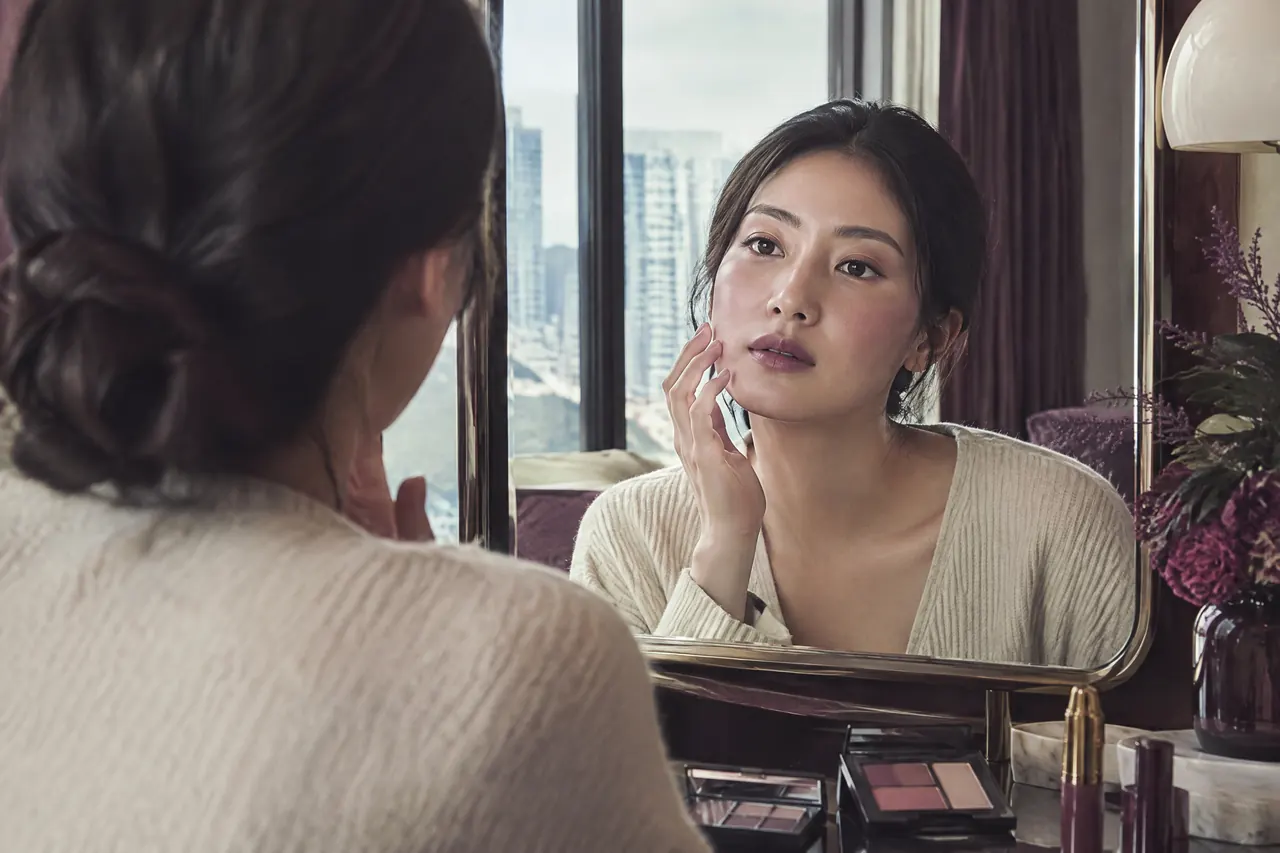
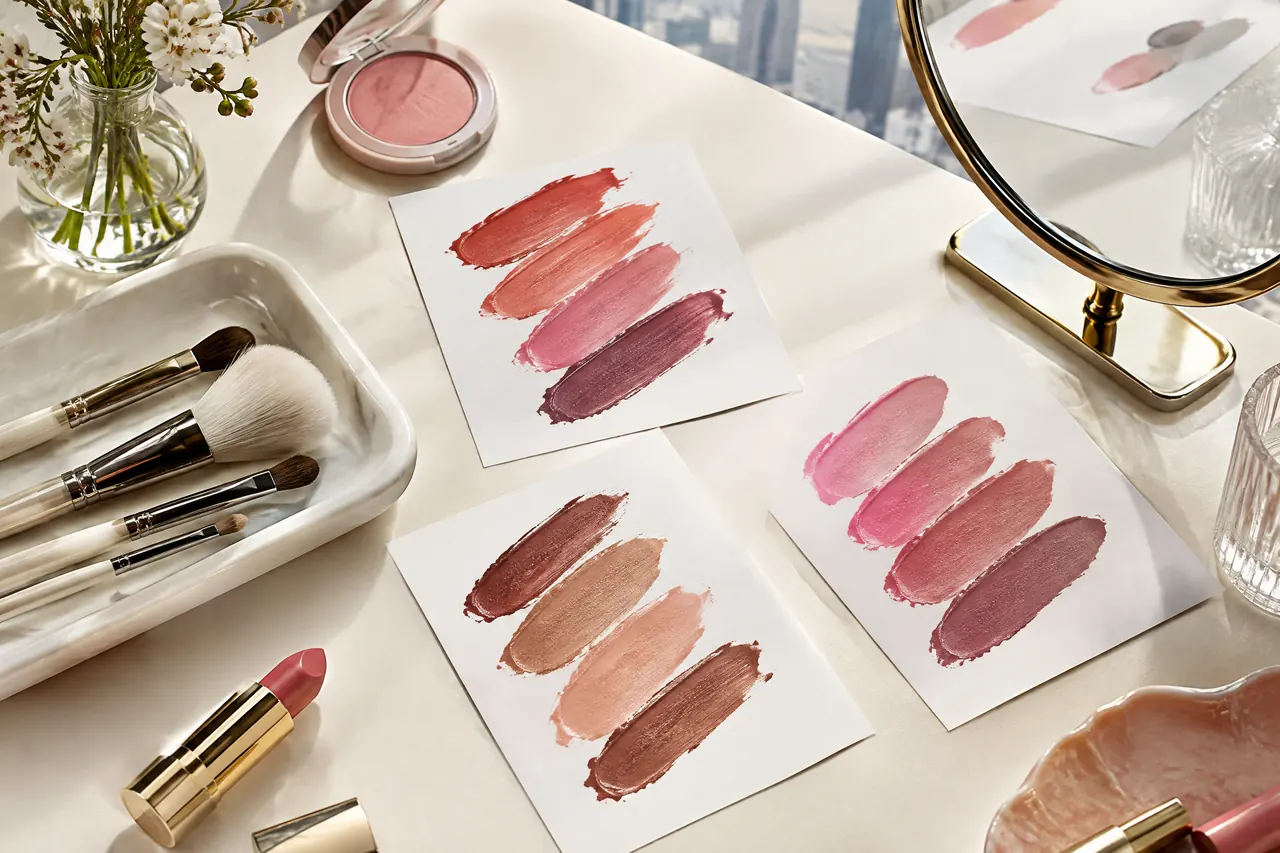
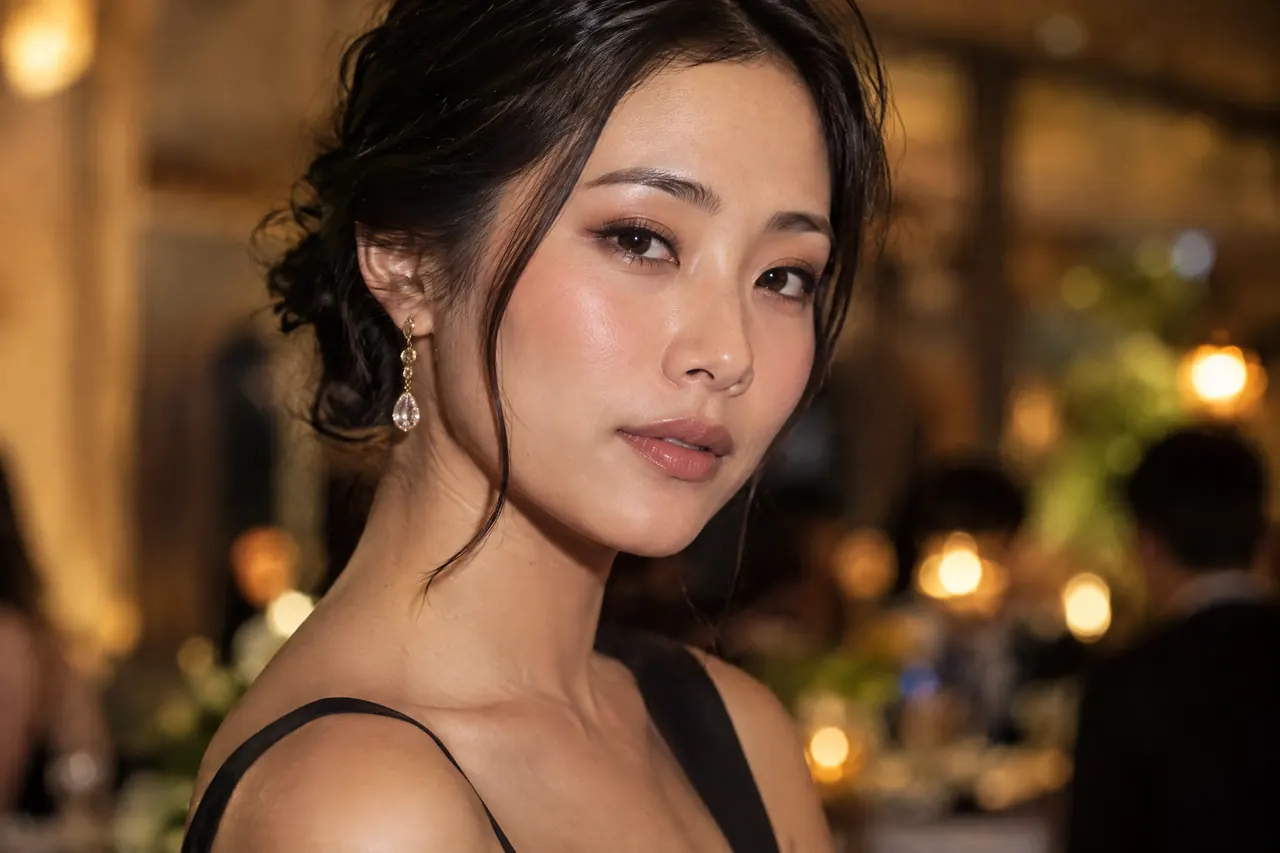
Related makeup style illustrations



Service & lesson fees
Relevant prices and inclusions
Prices and arrangements shown below apply to the listed scope. Confirm timing, location and the final arrangement directly before booking.
All group and private fees are per learner for the entire course.
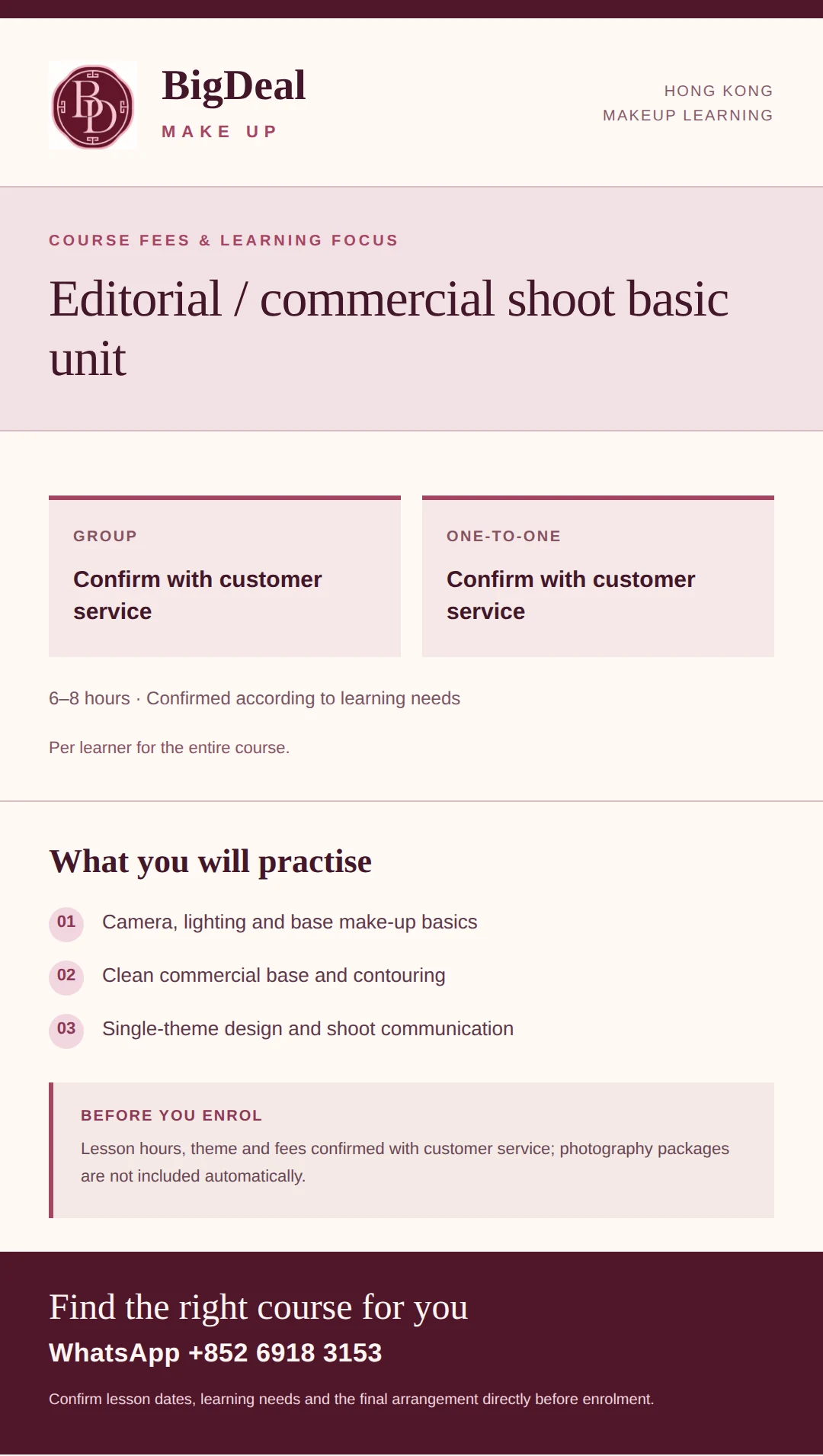
Editorial / commercial shoot basic unit
- Group
- Confirm with customer service
- Private
- Confirm with customer service
6–8 hours · Confirmed according to learning needs
Lesson focus
- Camera, lighting and base make-up basics
- Clean commercial base and contouring
- Single-theme design and shoot communication
Arrangement: Lesson hours, theme and fees confirmed with customer service; photography packages are not included automatically.
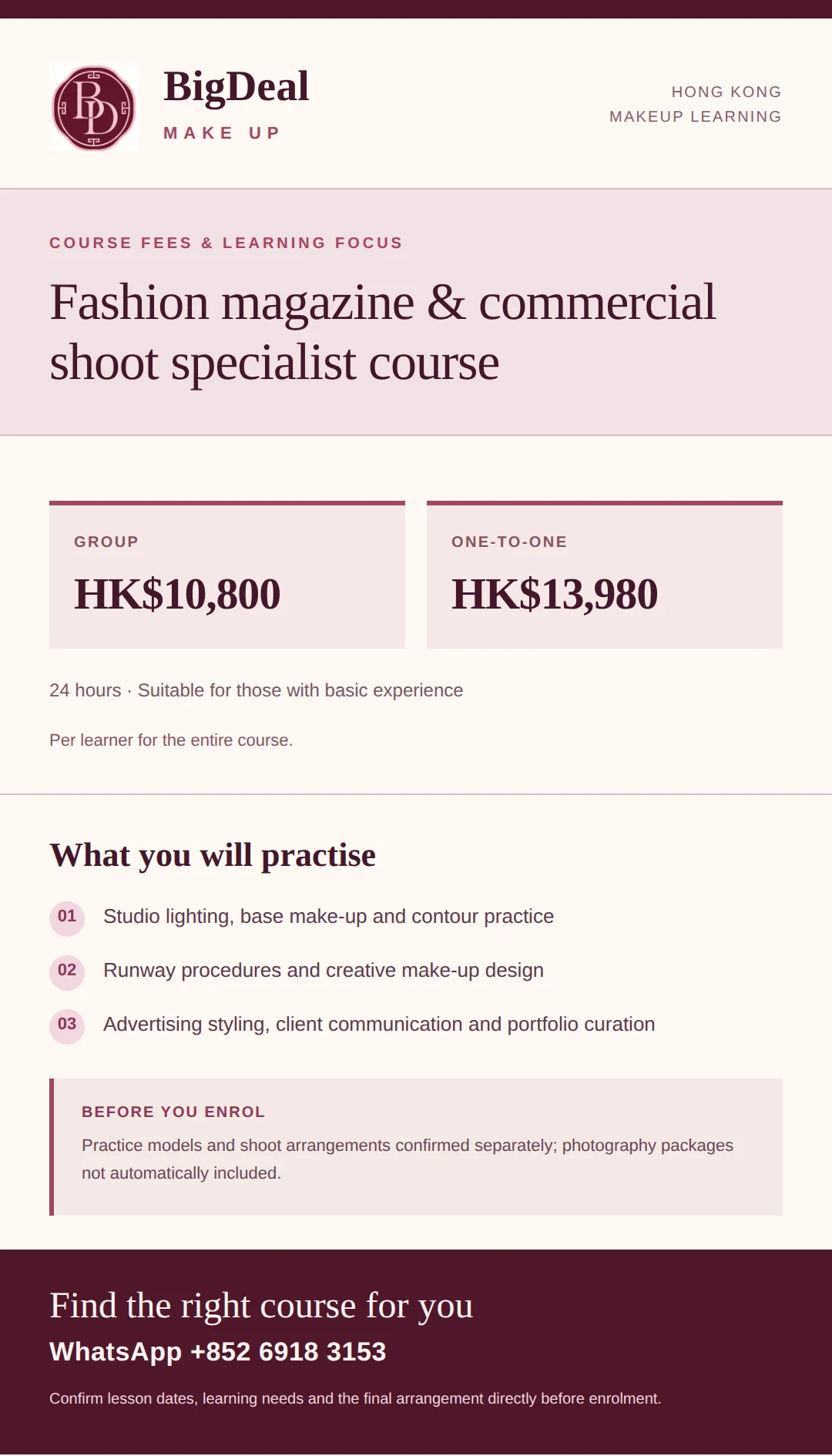
Fashion magazine & commercial shoot specialist course
- Group
- HK$10,800
- Private
- HK$13,980
24 hours · Suitable for those with basic experience
Lesson focus
- Studio lighting, base make-up and contour practice
- Runway procedures and creative make-up design
- Advertising styling, client communication and portfolio curation
Arrangement: Practice models and shoot arrangements confirmed separately; photography packages not automatically included.
Course comparison at a glance: editorial versus commercial makeup course units
| Course ID | Duration | Typical focus | Published fee (per student) |
|---|---|---|---|
| Editorial / commercial shoot basic unit | 6–8 hours | Camera and lighting basics; clean commercial base; single-theme design | Fee confirmed with customer service |
| Fashion magazine & commercial shoot specialist course | 24 hours | Studio lighting, runway process, creative design, advertising communication | HK$10,800 (group); HK$13,980 (one-to-one) |
| Practice photography | Variable | Model and photography arrangements confirmed separately; not automatically included | Costs arranged on enquiry |
| Level suitability | Varies | Editorial / commercial shoot basic unit suits learners seeking a focused introduction; Fashion magazine & commercial shoot specialist course suits those with basic experience | See course descriptions and confirm fit with BigDeal |
Helpful answers
Frequently asked questions
Which course should I choose first: Editorial / commercial shoot basic unit or Fashion magazine & commercial shoot specialist course?
If your foundation is limited to basic client work or you want to learn how makeup reacts to camera and simple studio light quickly, start with the Editorial / commercial shoot basic unit’s 6–8-hour module. If you already have basic experience and want sustained studio practice, runway procedures and portfolio curation, plan for the Fashion magazine & commercial shoot specialist course’s 24 hours. Confirm practice arrangements and access before booking.
Does Fashion magazine & commercial shoot specialist course include professional photography or models as standard?
No. Fashion magazine & commercial shoot specialist course lists studio lighting, runway and portfolio curation in its syllabus, but photography packages and practice models are not automatically included. BigDeal Make Up confirms model bookings and photographer coordination separately; enquire in advance if you need session time or finished images for your portfolio.
Are either course fees refundable or eligible for funding schemes?
Course refunds and any funding eligibility require direct confirmation with BigDeal Make Up customer service. Fashion magazine & commercial shoot specialist course fees are published at HK$10,800 (group) and HK$13,980 (private); Editorial / commercial shoot basic unit fees and lesson hours are finalised when you enquire. Ask about cancellation and refund terms before enrolment.
Will I receive a qualification or guaranteed industry work after completing Fashion magazine & commercial shoot specialist course?
Neither Editorial / commercial shoot basic unit nor Fashion magazine & commercial shoot specialist course confers a formal governmental qualification or guarantees industry employment. The courses focus on practical technique, lighting and communication. If a formal credential or guaranteed placement is essential, discuss alternative recognised programmes or work-placement options with the course adviser.
Ready to discuss it?
Book a consultation with BigDeal Make Up customer service to confirm fees, schedules and practice arrangements
Tell us what you are planning, and we will help clarify the service or lesson details that matter for your enquiry.
From the makeup blog