
BigDeal Make Up · Hong Kong
K-beauty Makeup And Korean Makeup
K-beauty makeup and Korean makeup blend dewy skin, a soft glowy complexion, natural brows and gentle eye colour without treating shine as the whole look. This guide explains controlled glow as a balance of sheer base, soft blush, natural brows and subtle eye definition. BigDeal Make Up uses the trend as a starting point, then adapts techniques to your features, comfort and event lighting so the finish feels considered rather than copied from a screen.

At a glance
K-beauty makeup
K-Beauty Glow focuses on a soft, skin-like radiance rather than an all-over sheen. Begin with a buildable, sheer base and place highlights deliberately; add softly blended blush, natural brows and restrained eye detail. BigDeal Make Up offers two hands-on Korean make-up courses to learn these techniques — check dates, class size and language with customer service before you enrol.
01
A practical guide to K-beauty makeup
K-beauty makeup
When you bring a reference image for K-beauty makeup, the first task is to translate what you like into realistic finish, colour and definition choices for your skin tone and texture. A photo on a screen can show intense highlights or filtered tones; we map that down to product types (serum primer, light-coverage cushion or tinted moisturiser) and specific placement — not a one-size-fits-all application. Think of the image as a moodboard, not a step-by-step prescription.
Start by assessing the desired sheen: do you want a central glow, a luminous cheek sweep or a soft overall radiance? We decide whether to use dewy skin makeup products or a hybrid of matte control and spot-lit highlights. For example, a dew-kissed cheek usually works best with a translucent luminising fluid blended sparingly, rather than applying a highlighter across every high point.
Colour choices must respond to your natural undertone and the reference lighting. A peach blush will warm neutral to warm skins while a cool rose can freshen cooler undertones. If the image’s brows are darker and more defined than your natural hair, a softer, feathered brow technique often suits everyday wear better than a heavy block fill, preserving that understated Korean aesthetic.
For a closer comparison, consider Asian bridal makeup
02
A practical guide to Korean makeup: Create glow without making every zone reflective
Korean makeup
Korean makeup prioritises controlled glow: concentrated luminosity where it catches, paired with areas of subtle texture to keep skin looking natural. To create glow without making every zone reflective, apply sheer base products first and use concealer only where needed for spot correction. This keeps depth in the skin rather than flattening it into a uniform shiny plane.
Layering is strategic. For example, use a mattifying primer on the T-zone if you tend to shine, and then apply a luminosity-boosting product on the cheeks and brow bone. This contrast keeps the face readable in photos and under different lighting without losing the soft radiant makeup effect that K-beauty makeup favours.
Finishers matter: a micro-fine, pearlescent powder dusted lightly only where needed will blur and reflect subtly. Avoid chunky glitter or heavy emollients in areas that move a lot (around the nose and mouth) as these can crease or highlight texture. The goal is a polished, soft finish rather than spotlight-strobe shimmer.
Match your plans with K-pop makeup class Hong Kong
03
How to adapt the technique to your features and occasion: Layer dewy skin makeup around areas that need more control
A realistic way to assess the finished look
Adapting K-beauty makeup to your features starts with two decisions: which areas need coverage versus luminosity, and what the occasion demands. For daytime or office settings, keep the base more sheer and prioritise natural Korean makeup elements — lightly defined brows, faintly shaded eyes and a gradient lip. For evening or camera work, increase depth in the crease and intensify lower-eye detail while keeping skin luminous in controlled zones.
Layering dewy skin makeup around control zones is practical: use a light-reflecting serum or liquid highlighter under the cheek blush to create depth, but apply a mattifying concealer at the nostrils and chin if these are prone to oil. This preserves long-wear and prevents the look from sliding under warm lights or during movement without losing the soft radiant makeup intent.
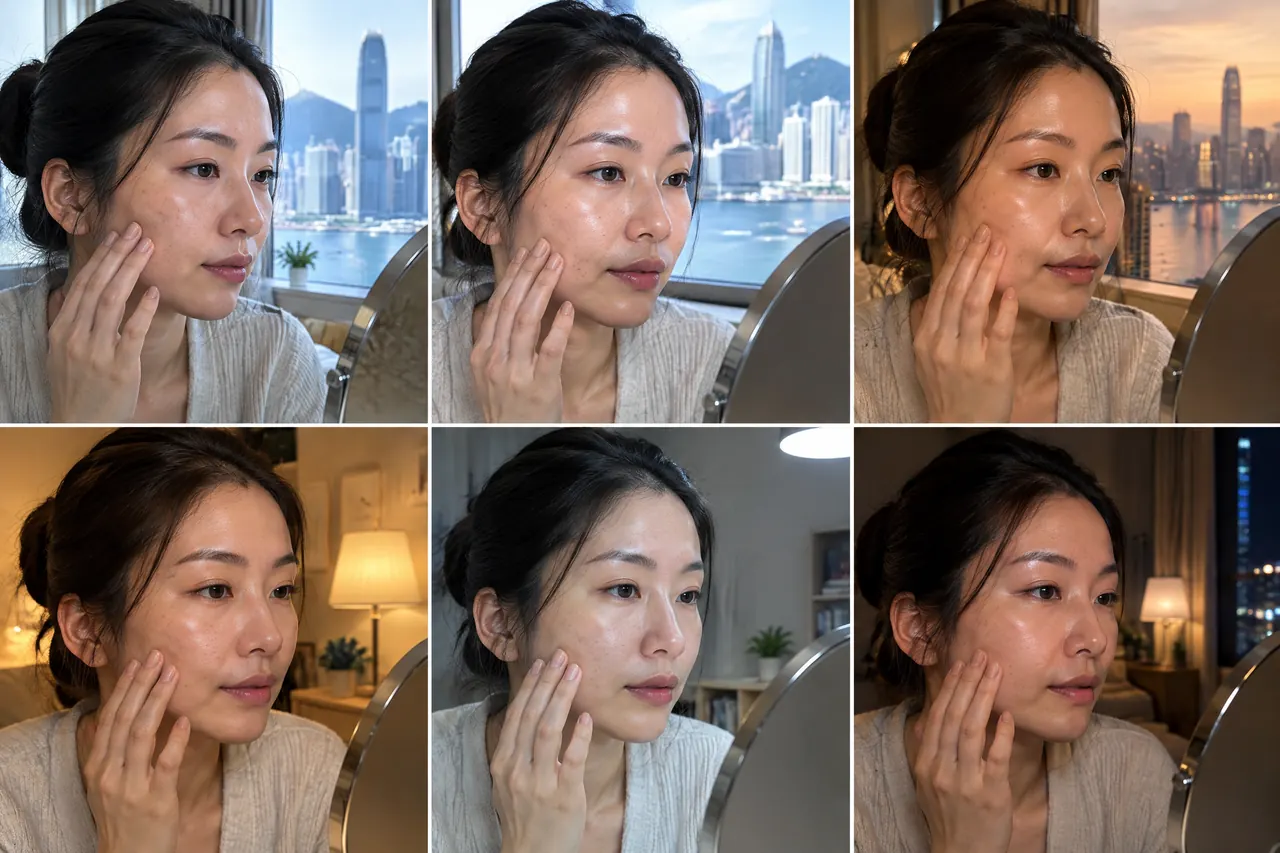
Assess the finished look in the lighting you expect at the event. Natural daylight shows texture and true colour, while indoor or stage lighting can amplify sheen. A quick in-situ check — step outside or view under photographic flash — helps you decide whether to soften a highlight, add a translucent powder or intensify brow definition for the camera.
You may also find it useful to compare clean beauty makeup artist Hong Kong
04
Translate a reference image: Use softly placed blush and natural brows to support the look
Practical considerations for Korean makeup
Blush in Korean makeup does more than add colour; it sculpts and places emphasis. Softly placed blush — blended upwards and slightly across the nose bridge for a youthful look — complements a glowy complexion without overpowering it. Cream blushes are excellent for that seamless, skin-like finish; tap and build rather than sweep to maintain a soft edge.
Natural brows are a backbone of the K-beauty makeup style. Instead of heavy arches, the preference is a straighter, feathery brow that lifts the eye subtly. Use a fine-tipped pencil or powder to mimic hair strokes, then groom with clear gel. This approach balances the luminous base and prevents eyebrows from appearing disconnected from the rest of the face.
If the reference shows more defined brows or dramatic eye detail, scale those elements down for everyday wear but keep them as an option for evening looks. That tug-of-war between soft and structured is central to translating a picture into a wearable finish: you choose which elements to keep, which to subdue and which to intensify.
For another approach, explore product campaign makeup artist
05
Create glow control: Scale K-pop-inspired details for a day event or evening setting
A realistic way to assess the finished look
K-pop Idol Glam often pushes contrast, sharper lines and stronger colour than casual K-beauty makeup. To scale those details for day or evening, reserve stronger lower-lash definition, sharper winged liner or more sheen on the cheekbones for evening. For daytime, soften the lower-lash work, use brown-toned liners instead of black and keep a translucent veil of powder in high-movement areas.
For evening or photographed work where bolder detail reads well, enhance depth in the outer crease, add a brighter inner-corner highlight and build a more saturated gradient lip. The camera needs slightly more contrast than the eye alone, so increasing intensity in controlled steps ensures the glow remains flattering and not overpowering.
Always test the scaled look against the event lighting and your outfit. A sequined dress or bright stage lights interacts differently with reflective makeup than soft daylight. Adapting K-pop-inspired elements is about choosing which accents—be it a sharper brow, a metallic shimmer or a deeper lip—support your appearance rather than masking it.
Before deciding, take a look at Makeup Techniques
06
Compare Korean learning levels before you enquire
A realistic way to assess the finished look
If you’re considering tuition, BigDeal Make Up runs two named courses: Korean make-up basic course (16 hours) and Korean make-up intermediate specialist course (15 hours). The Korean make-up basic course covers sheer base, concealing and natural brow techniques; the Korean make-up intermediate specialist course is for those with basics who want proportion work, party variations and camera practice. Confirm current schedule, class size and whether teaching will be in English when you enquire.
Course arrangements must be checked with customer service before enrolment because class size, tools, supplies and exact focus can change. Use independent guidance on transparent tuition arrangements to make sure you have written confirmation of course content, included supplies and cancellation terms before paying.
Decide which learning level matches your starting point: choose the Korean make-up basic course if you want structured basics and everyday looks; choose the Korean make-up intermediate specialist course if you already practise fundamentals and want to refine camera-ready techniques and more stylised K-pop-inspired details. Fees and availability are confirmed by customer service before booking.
07
Choosing the right intensity: when to opt for a glowy makeup look
Deciding how much luminosity to add for daily wear, events and photos
A glowy makeup look can refresh the complexion and make skin appear more youthful, but the key is matching the intensity to the situation. For everyday or office settings, prioritise a sheer base and place small touches of luminosity only on the cheekbones and inner eye corner; this keeps skin readable and avoids drawing attention to texture. For evenings or photographed work, increase the size and sheen of highlighted zones while balancing them with slightly more depth in the crease and jawline so the face still reads under stronger lighting.
Your skin’s behaviour through the day matters. If you have an oily T-zone, combine a mattifying primer in that area with luminosity on the cheeks and brow bone — this creates contrast and prevents the whole face from appearing shiny. For dry skin, choose hydrating base products with a cream highlighter and finish with a very light dusting of micro-fine translucent powder in movement zones to extend wear without flattening the glow.
Practical product choices depend on desired finish. A tinted moisturiser or light-coverage cushion gives the soft skin base often associated with Korean trends; layer a cream or liquid illuminator sparingly and use cream blush blended into that highlight for a skin-like transition. Keep a small brush or sponge handy to soften any edges, and always check the look in daylight or under the event lighting before leaving — small adjustments often make the difference between polished and overdone.
08
How learning choices affect your outcome: pick the course that matches your goals
Course level, hands-on practice and what to expect from tuition
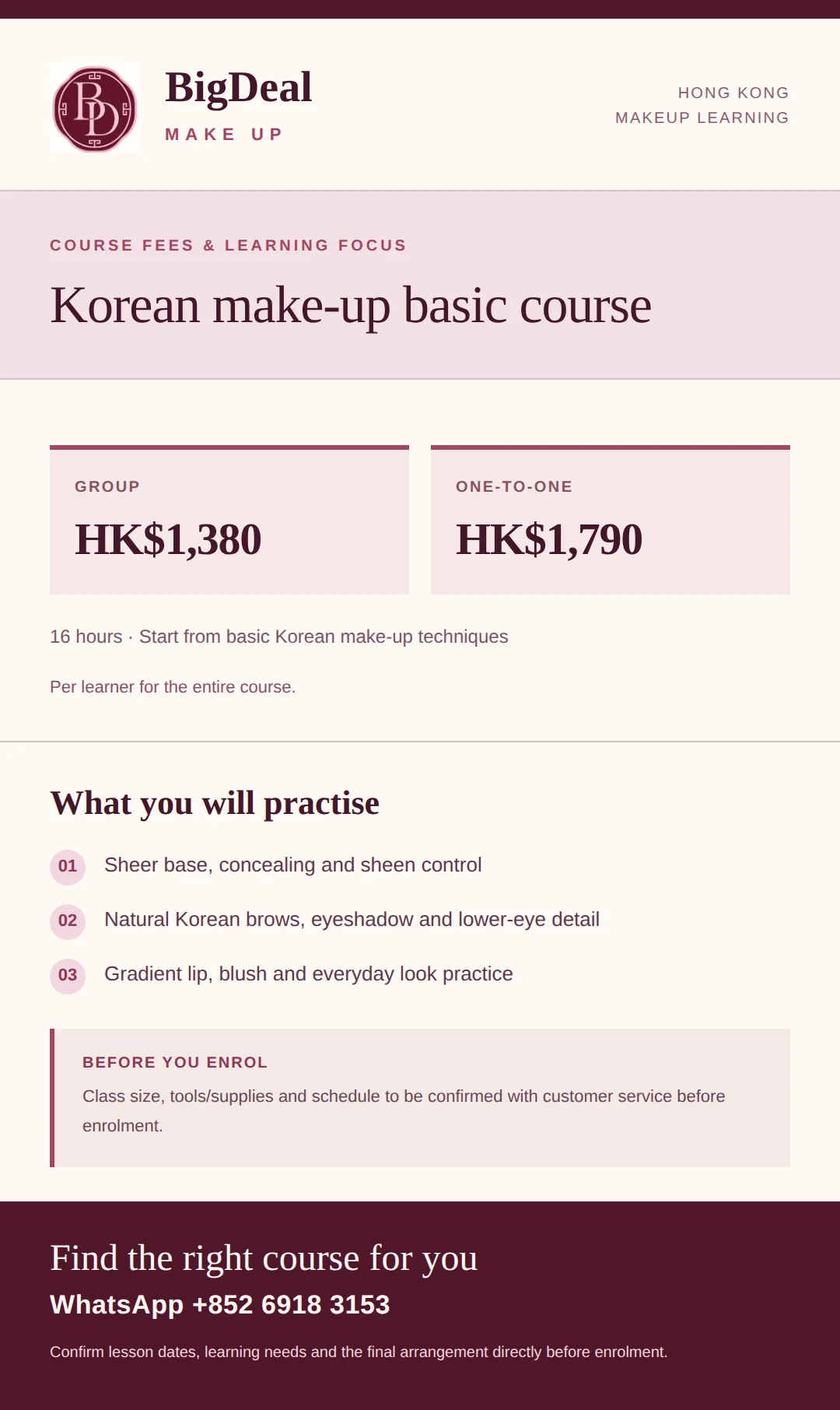
If your aim is to master daily wearable variations of Korean style, the 16-hour Korean make-up basic course is designed to teach the foundations: sheer base work, concealing and sheen control, natural Korean brows, lower-eye detail and gradient lips. The class structure focuses on repeated practice of those elements so you can consistently recreate a soft, luminous finish at home. Fees are per person: Group HKD 1,380 and Private HKD 1,790; confirm schedule, class size and language when you enquire.
For learners who already have the basics and want camera-ready or party work, the 15-hour Korean make-up intermediate specialist course concentrates on base texture, brow and eye layering, proportion adjustments and stylised variations such as party or retro looks. It includes make-up and hair pairing and practical camera work so you can see how intensity translates on screen. Fees are per person: Group HKD 8,800 and Private HKD 11,390; again, please ask customer service about dates and whether instruction will be in English.
Decide by outcome rather than duration alone: if you struggle to create a controlled sheen or a polished gradient lip, start with the basic course and practise those techniques until comfortable. If you already produce a reliable daily finish and want to scale up for stage, events or photography, the intermediate specialist course gives structured practice in proportion work and intensified detail. Confirm what tools and supplies are included, and request written confirmation of schedule and class size before booking.
Style references
Related makeup style illustrations



Service & lesson fees
Relevant prices and inclusions
Prices and arrangements shown below apply to the listed scope. Confirm timing, location and the final arrangement directly before booking.
All group and private fees are per learner for the entire course.
Korean make-up basic course
- Group
- HK$1,380
- Private
- HK$1,790
16 hours · Start from basic Korean make-up techniques
Lesson focus
- Sheer base, concealing and sheen control
- Natural Korean brows, eyeshadow and lower-eye detail
- Gradient lip, blush and everyday look practice
Arrangement: Class size, tools/supplies and schedule to be confirmed with customer service before enrolment.
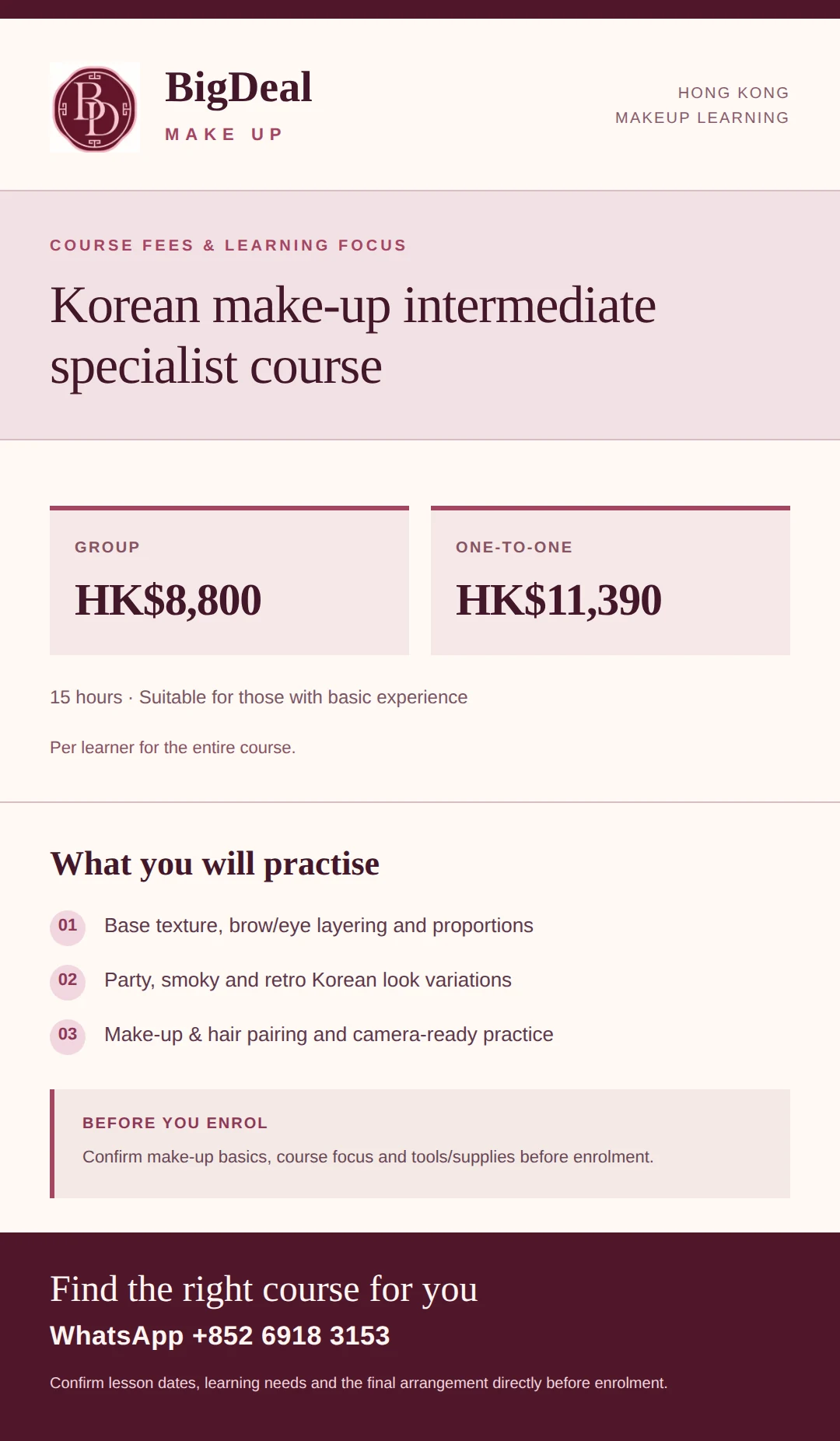
Korean make-up intermediate specialist course
- Group
- HK$8,800
- Private
- HK$11,390
15 hours · Suitable for those with basic experience
Lesson focus
- Base texture, brow/eye layering and proportions
- Party, smoky and retro Korean look variations
- Make-up & hair pairing and camera-ready practice
Arrangement: Confirm make-up basics, course focus and tools/supplies before enrolment.
Course comparison for Korean make-up: core facts you need before enquiry
| Course ID | Name & duration | Level & core content | Price per person (HKD) |
|---|---|---|---|
| Korean make-up basic course | Korean make-up basic course — 16 hours | Start from basic Korean make-up techniques; sheer base, concealing, natural brows, lower-eye detail, gradient lip | Group HKD 1,380 · Private HKD 1,790 |
| Korean make-up intermediate specialist course | Korean make-up intermediate specialist course — 15 hours | Suitable for those with basic experience; base texture, brow/eye layering, party and camera-ready looks | Group HKD 8,800 · Private HKD 11,390 |
| Arrangement note | Class size, tools/supplies and schedule | Confirm make-up basics, course focus and tools/supplies with customer service before enrolment | Fees above are per person; confirm current availability |
| Practical check | Language and technical focus | English language teaching and dates require enquiry; do not assume fixed product lists | Customer service will verify classroom and supply details |
Helpful answers
Frequently asked questions
How do I get a K-Beauty Glow without making my skin look oily?
Start with a light, buildable base such as a tinted moisturiser or cushion foundation, apply concealer only to specific areas, and use mattifying primer on the T-zone if you tend to shine. Concentrate luminosity with a small amount of liquid highlighter or a cream placed on the high points of the cheekbones and bridge of the nose. Finish with a micro-fine translucent powder in movement zones to control excess shine while keeping cheeks softly reflective.
Can K-pop Idol Glam be softened for daytime wear?
Yes. Soften K-pop-inspired details by switching black liners for brown, reducing the intensity of lower-lash shading and choosing a muted gradient lip instead of a saturated colour. Keep skin relatively sheer and reserve stronger highlights or metallics for evening. The key is to keep contrast subtle: deepen the crease slightly for depth but avoid heavy contouring that contradicts the natural Korean makeup aesthetic.
Which blush textures work best for a natural Korean makeup finish?
Cream and mousse blushes are ideal for a natural Korean makeup finish because they blend into the skin and mimic natural flush. Apply with a tapping motion and build gradually, spreading softly upwards toward the temples or lightly across the nose bridge for a youthful look. Powder blushes can work if you choose finely milled formulas and apply sparingly over a cream base to set and extend wear.
What should I check before enrolling in a Korean make-up course?
Confirm the course ID (Korean make-up basic course or Korean make-up intermediate specialist course), duration, class size and whether teaching will be in English for the dates you want. Verify what tools and supplies are included or expected to bring, and check the refund or reschedule policy. The Consumer Council’s Voluntary Code of Practice is useful independent guidance on transparent tuition arrangements; use it to ensure you have written confirmation of content and cancellation terms before paying.
What is a glowy makeup look and how is it different from looking oily?
A glowy makeup look emphasises fresh, skin-like luminosity on targeted areas rather than overall shine. Achieve it by using a sheer, buildable base and placing illuminator only on the high points — cheekbones, inner corners and a fine nose bridge highlight — while controlling excess with a mattifying primer in the T-zone and micro-fine translucent powder in movement areas. The result should appear hydrated and lit-from-within, not greasy or reflective across the entire face.
Which course should I take to learn how to create a glowy makeup look?
If you want dependable everyday technique—sheer bases, sheen control and natural brows—choose the Korean make-up basic course (16 hours). If you already master basics and want to make the look camera-ready or explore party variations, choose the Korean make-up intermediate specialist course (15 hours). Course fees are per person: basic course Group HKD 1,380 · Private HKD 1,790; intermediate course Group HKD 8,800 · Private HKD 11,390. Confirm dates, class size and language with customer service before enrolling.
Ready to discuss it?
Book a consultation to translate your reference into a wearable K-beauty Glow
Tell us what you are planning, and we will help clarify the service or lesson details that matter for your enquiry.
From the makeup blog