
BigDeal Make Up · Hong Kong
Self Makeup Lesson And Learn Self Makeup
A self makeup lesson is most useful when you can repeat the technique after class. Instead of watching someone else apply your make-up, you perform each movement yourself and notice how product placement, pressure and sequence change the result. BigDeal Make Up structures practice-focused sessions around the areas you find hardest — base, eyes, brows or a dependable finishing routine — so you leave with a clear, repeatable method for ordinary mornings.
At a glance
self makeup lesson
Learn self makeup in a hands-on setting where you perform every step, get live corrective feedback and practise until the movement feels familiar. Lessons emphasise repetition, simple sequencing and small adjustments you can replicate at home. Choose a short introduction or a fuller practical programme; confirm format, schedule and tools with customer service before booking.
01
Understanding a self makeup lesson for your learning goal
A useful starting point for your self makeup lesson
Begin by stating a precise, achievable goal: a reliable 10-minute daytime routine, a softer evening finish, or confident eyebrow shaping that frames your face. A self makeup lesson is most effective when the objective is specific — it gives the session structure and tells the tutor which movements and checkpoints you will repeat. Instructor Maggie Yeung and the BigDeal team focus practice on your own face so the movements become muscle memory, not just observation.
For absolute beginners, the Everyday personalised make-up beginner course (3 hours) provides a compact, practice-driven introduction to pre-makeup preparation, a light base and a single everyday look to repeat. If you need more time to master foundation selection, concealing and multiple looks, the Comprehensive personalised make-up practical course (10 hours) gives extended practice across base, eyes and contouring. Confirm whether you join a small group or book private tuition — the course listing shows per-person fees but class arrangements must be finalised when you enquire.
A useful starting point for planning is to note which hand you favour, whether you prefer a magnifying or a normal mirror, and what lighting you usually use at home. Bring the products you currently use so the tutor can show equivalent techniques or suggest small swaps. Expect real-time corrections to pressure and angle: these are precisely the changes that make a technique repeatable when you practise alone afterwards.
For a closer comparison, consider makeup practice workshop
02
How learn self makeup fits a practical makeup plan
Practical questions about learn self makeup
Think of a self makeup lesson as training rather than a finished service: you will practise, receive feedback and repeat steps until the motion feels comfortable. Lessons are intentionally hands-on so you practise each brush stroke, blending sweep and product placement on your own face. This is different from a demonstration or a passive tutorial — the aim is that you can replicate the same sequence under your morning time constraints.
If your aim is to learn to do your own makeup for everyday work or a single signature look, tell the tutor which situations matter most. In a 3-hour Everyday personalised make-up beginner course session the tutor will focus on a minimal, repeatable routine: quick base, natural brow shaping and a dependable eye-to-cheek-to-lip finish. The 10-hour Comprehensive personalised make-up practical course allows more repetition and covers workplace and date looks in separate practice blocks so you leave with several reliable sequences.
Practical questions include what to practise between lessons and which tools to invest in first. BigDeal tutors recommend beginning with a good daily brush set, a sponge for base blending and two neutral eye brushes for definition. You will be asked to keep a simple practice log after class so you can note what worked and what requires additional repetitions at home.
Match your plans with editorial makeup course Hong Kong
03
What to confirm before you choose a self makeup lesson or learn self makeup
Planning your self makeup lesson and learn self makeup with confidence
Before booking, confirm class format: Everyday personalised make-up beginner course and Comprehensive personalised make-up practical course are the approved personal practical programmes but schedule, class size and whether the session is private or group must be agreed with customer service. The course descriptions list included topics and per-person tuition: Everyday personalised make-up beginner course group price is HKD 780, private HKD 980; Comprehensive personalised make-up practical course group HKD 3,200, private HKD 4,150. These are course fees per person and per course unit — confirm whether materials or product trials are supplied or if you should bring your own favourites.
Ask about timing and how lessons are split for the Comprehensive personalised make-up practical course’s longer format. A 10-hour programme is usually arranged across multiple days or several shorter sessions so repetition is manageable and you can practise between classes. When you request enrolment, specify if you prefer English instruction; the language used during lessons is confirmed on enquiry. Also ask whether the tutor will provide annotated face charts or a written step sequence to take home.
Check practical details such as mirror type, magnification, chair height and lighting in the studio or the online setup if remote options are discussed. If you have specific skin sensitivities or use prescription eye treatments, mention that in advance so the tutor can adapt product suggestions and patch-test protocols. Confirm travel time and arrival instructions with customer service; each location’s setup can affect how comfortably you practise certain techniques.
You may also find it useful to compare Set頭 course Hong Kong
04
Turn a personal makeup goal into one repeatable practice sequence
A useful starting point for your self makeup lesson
Choose one goal per session. If your aim is to learn self makeup for everyday work, the tutor will break that routine into repeatable blocks: pre-makeup prep, base placement, single-eye technique and finishing steps. Each block becomes a short micro-routine — for instance, a three-step concealer sequence followed by a two-sweep powder routine — that you practise until you can do it without guidance.
During a session the tutor times and counts repetitions so you know how many times to practise at home. Practical drills might include applying concealer in a triangular shape under the eye, blending with light tapping motions, then matching powder placement to avoid creasing. For brows, a shaped mapping exercise teaches the exact pressure and short-stroke direction to recreate the look day after day.
BigDeal emphasises corrective feedback rather than fixed product lists; tutors will demonstrate with brands from the team kit — NARS, Dior Beauty, Giorgio Armani Beauty, Estée Lauder, Laura Mercier, Clé de Peau Beauté, Bobbi Brown and M·A·C may be used as appropriate — and adapt techniques to the products you bring. The objective is muscle memory for each micro-routine so that sequencing, not just outcome, becomes second nature.
For another approach, explore beginner to advanced makeup course
05
Set up the mirror, product order and clean workspace for self-application
Practical questions about learn self makeup
A consistent workspace speeds repetition. Sit at a flat surface with a clean mirror at eye level and neutral daylight-equivalent lighting. Lighting that’s too warm or too cool will change how colours read; tutors recommend a daylight lamp or positioning yourself near a window when practising. Keep commonly used tools within arm’s reach and lay products out in the order you will use them to create a physical sequence.
Hygiene is part of effective practice. Use clean brushes and a clean sponge each session and avoid sharing products that come into contact with the eye area. The FDA’s advice on clean hands and containers is useful guidance for a practice setup; it is independent general guidance, not an endorsement of any lesson content. Replace or wash tools regularly so product application is consistent between practices.
A short notation system helps you remember changes: record brush names, pressure (light/medium), angle and the number of blending passes. Tutors often provide a face chart with annotated strokes during the lesson so you can reproduce the same product order at home. Small adjustments in order — for example applying brow gel before eyeshadow on days with oily lids — can make the sequence more reliable for your skin type.
Before deciding, take a look at Makeup Courses
06
Use light base, brows and eye definition as practice checkpoints
Planning your self makeup lesson and learn self makeup with confidence
Break practice into three main checkpoints: a light, even base; repeatable brow shaping; and a simple eye-definition method you can recreate. For base practice, tutors focus on even product distribution with minimal coverage and blending outwards, then using concealer only where necessary. This reduces time and makes the sequence resilient to small morning variations like different lighting or hurried blending.
Brow practice emphasises mapping and short, hair-like strokes rather than heavy fills. A short mapping exercise identifies the tail, arch and head for your natural brow shape; then you practise the pressure and angle needed to make strokes look natural. Eye definition practice usually focuses on a single shading sweep and a quick liner technique that supports different eye shapes and can be repeated reliably.
These checkpoints form the backbone of most everyday looks and are ideal for repetition drills during Everyday personalised make-up beginner course and Comprehensive personalised make-up practical course. Tutors will guide you through incremental corrections — adjusting pressure, pivoting a brush angle, or changing sponge patting direction — until each checkpoint becomes an automatic habit. The goal is not a perfect outcome every time but a dependable method you trust on a typical morning.
07
Notice what changes when you work on your own face
A useful starting point for your self makeup lesson
Working on your own face changes your perspective: you must manage mirror reversal, dominant-hand ergonomics and the tactile feedback of your own skin. Tutors train you to cope with those differences by rehearsing mirror positioning and slowing down movements so that small tactile cues — pressure against the cheekbone, the drag of a brush — become consistent. Over time the brain learns to compensate for the mirror image and your movement becomes more symmetrical.
Expect to discover small asymmetries and learn cosmetic balancing techniques that are temporary and cosmetic in scope — for example altering liner angle or brow peak placement to create perceived balance. These are practical, reversible tricks taught in a firmly non-medical context. The tutor will show how subtle changes in stroke length or product quantity alter perceived symmetry, so you can practise those adjustments independently.
Finally, notice the psychological difference: practising on yourself encourages confidence because you own the process. Each repetition reinforces the motion and reduces the cognitive load of decision-making in a real-world rush. Tutors recommend short, daily five- to ten-minute practice slots after class so the sequence becomes second nature without taking over your routine.
08
Choose a short introduction or a fuller personal practice programme
Practical questions about learn self makeup
If you prefer a concise introduction, the three-hour Everyday personalised make-up beginner course suits a focused, practice-first approach. It concentrates on pre-makeup prep, a light base and one everyday look you can rehearse until it feels comfortable. This option is ideal if you want to learn to do your own makeup quickly with targeted repetition rather than a longer curriculum.
For more extensive practice, the ten-hour Comprehensive personalised make-up practical course offers hands-on training across base selection, concealing, eye make-up and contouring. The extended time allows multiple repetitions and practice for everyday, workplace and date looks. Because the comprehensive course is longer, tutors usually divide it into separate lessons to allow home practice between sessions, which aids retention and technique refinement.
Decide which structure matches your learning tempo: a single concentrated session for quick confidence, or a staged programme for deeper repetition and adjustments. If you are unsure, ask customer service to suggest a schedule based on your availability and whether you prefer group or private tuition. Remember that materials and supplies are confirmed on booking, and any product recommendations are optional, not included automatically.
09
Keep a simple post-lesson routine note for independent practice
Planning your self makeup lesson and learn self makeup with confidence
After class, write a concise practice note: three steps to start, one mistake to avoid and an exact product quantity or brush name. Tutors may give you an annotated face chart — use it as a daily checklist for the week after your lesson. A short routine note that fits in your phone’s notes app is more likely to be used than a long manual; focus on sequence and sensory cues like ‘tap concealer 6 times’ or ‘brush sweep from outer to inner corner, 3 strokes’.
Schedule short deliberate practice sessions, for example five minutes focusing on brows and ten minutes on base three times in the first week. Keep a quick log of what felt different each time and which adjustment (pressure, brush angle, or product amount) made the biggest improvement. These immediate micro-sessions build the motor patterns you rehearsed with the tutor.
Finally, plan a follow-up enquiry if you need further refinement. BigDeal offers both shorter refresher sessions and longer practice programmes; confirm availability and format when you contact customer service. The intention is to leave with a sustainable personal routine that you can perform independently and with growing confidence.
10
Choosing the right practical session for your goals
Compare the self-practice options before you book
If your priority is to leave confident doing a simple daily routine, a do your own makeup class that emphasises repetition will be most efficient. Everyday personalised make-up beginner course (3 hours) is designed for this: it teaches pre-makeup prep, a light base, natural brow shaping and one everyday look you will rehearse until the sequence becomes second nature. The class format — group or private — affects how much individual correction you receive, so confirm group HKD 780 or private HKD 980 per person when you enquire.
For someone who wants broader makeup skills for everyday and occasional events, choose a longer hands-on makeup class. Comprehensive personalised make-up practical course (10 hours) gives more time to master foundation matching, concealing, eye practice and contouring across several looks. The extra hours allow staged repetition: tutors break the programme into repeat blocks so you practise, review at home, then refine; group HKD 3,200 or private HKD 4,150 per person is quoted for the full course unit.
Decide whether you prefer an in-studio Hong Kong self makeup lesson or a session that focuses tightly on the motions you will repeat at home. A makeup application lesson framed as a makeup class with practice will concentrate on micro-routines (for example, a three-step concealer routine or a single sweep eye technique) and timed repetitions so you know exactly what to rehearse between lessons. Confirm language, schedule and tool arrangements with customer service before booking so the session matches your daily routines and mirror/lighting setup.
11
What you will practise and how to keep progress after class
Practical takeaways from a makeup lesson for your own face
A makeup lesson for your own face centres on doing every step yourself while the tutor gives live corrective feedback. Expect to perform base application, concealer placement, brow mapping and at least one eye technique multiple times, with the tutor counting or timing repetitions and noting small adjustments such as brush angle or pressure. This direct practise is why students often prefer a self makeup class Hong Kong sessions that use annotated face charts and short drills to build motor memory.
Tutors demonstrate with kit items from the team — NARS, Dior Beauty, Giorgio Armani Beauty, Estée Lauder, Laura Mercier, Clé de Peau Beauté, Bobbi Brown and M·A·C may be used as appropriate — while adapting the method to the products you bring. They will emphasise hygiene, mirror positioning and the small, repeatable checkpoints that define makeup skills for everyday use, such as a light, even base and a simple liner that suits your eye shape. Because cosmetic balancing techniques are temporary and non-medical, they’ll show reversible tricks you can practise to harmonise asymmetries.
After the lesson you should have a short, usable practice plan: one micro-routine to rehearse daily, a note on brush names and pressure, and a suggested cadence for 5–10 minute drills. If you want more guided practice later, ask about follow-up options when you contact customer service — they can recommend a refresher or the staged lessons that make up the longer practical course. Confirm whether annotated notes and any materials provided will be in English when you enquire.
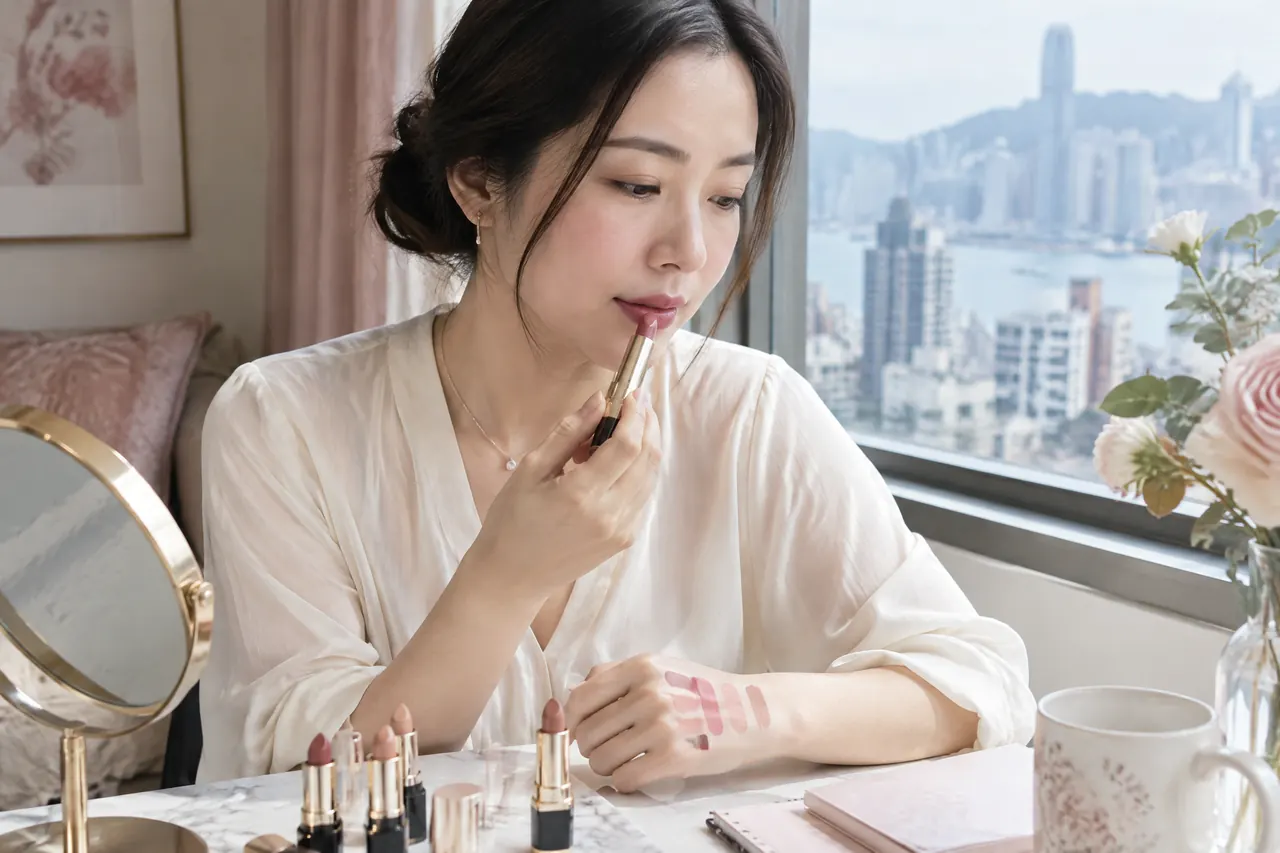
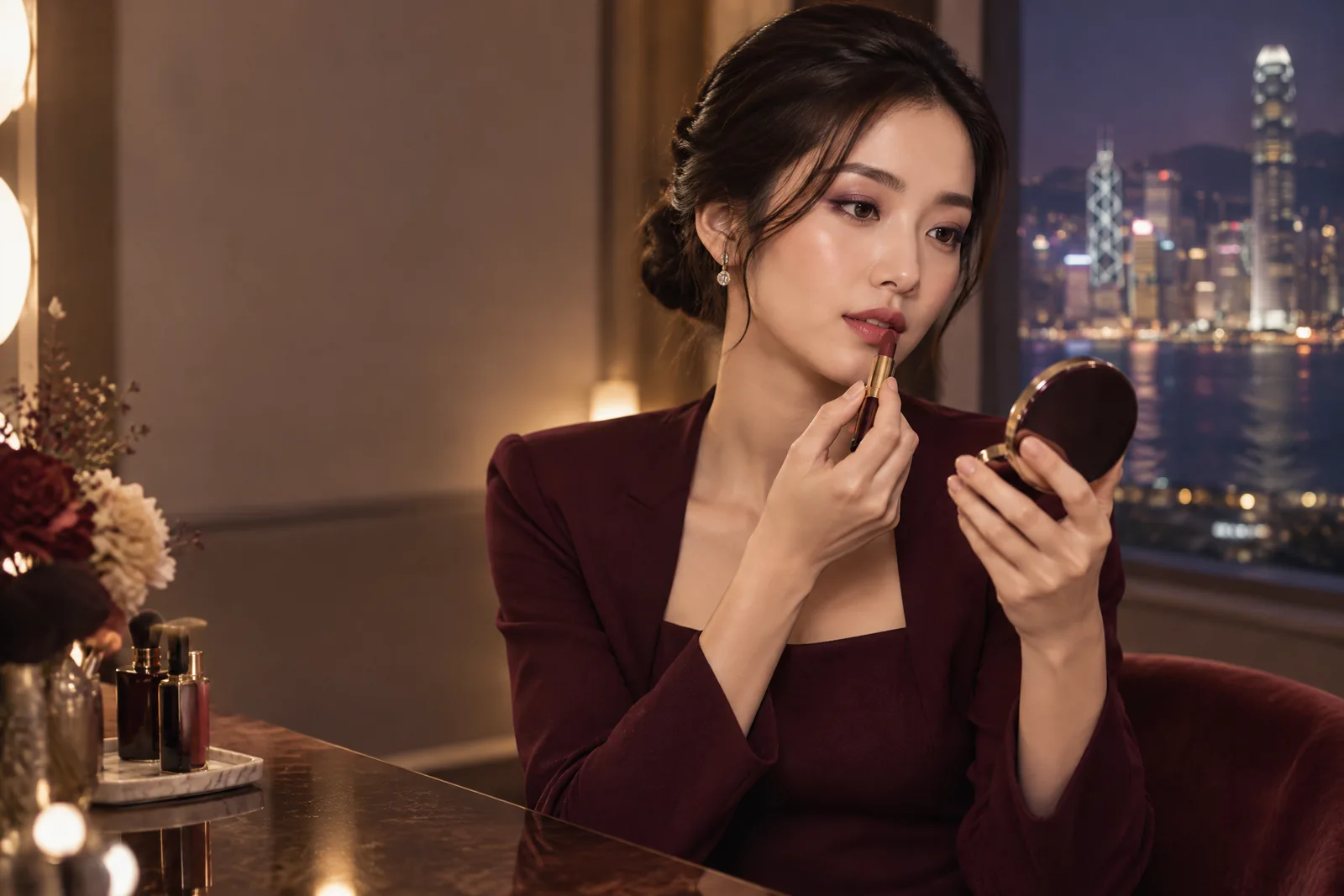
Style references
Related makeup style illustrations




Service & lesson fees
Relevant prices and inclusions
Prices and arrangements shown below apply to the listed scope. Confirm timing, location and the final arrangement directly before booking.
All group and private fees are per learner for the entire course.
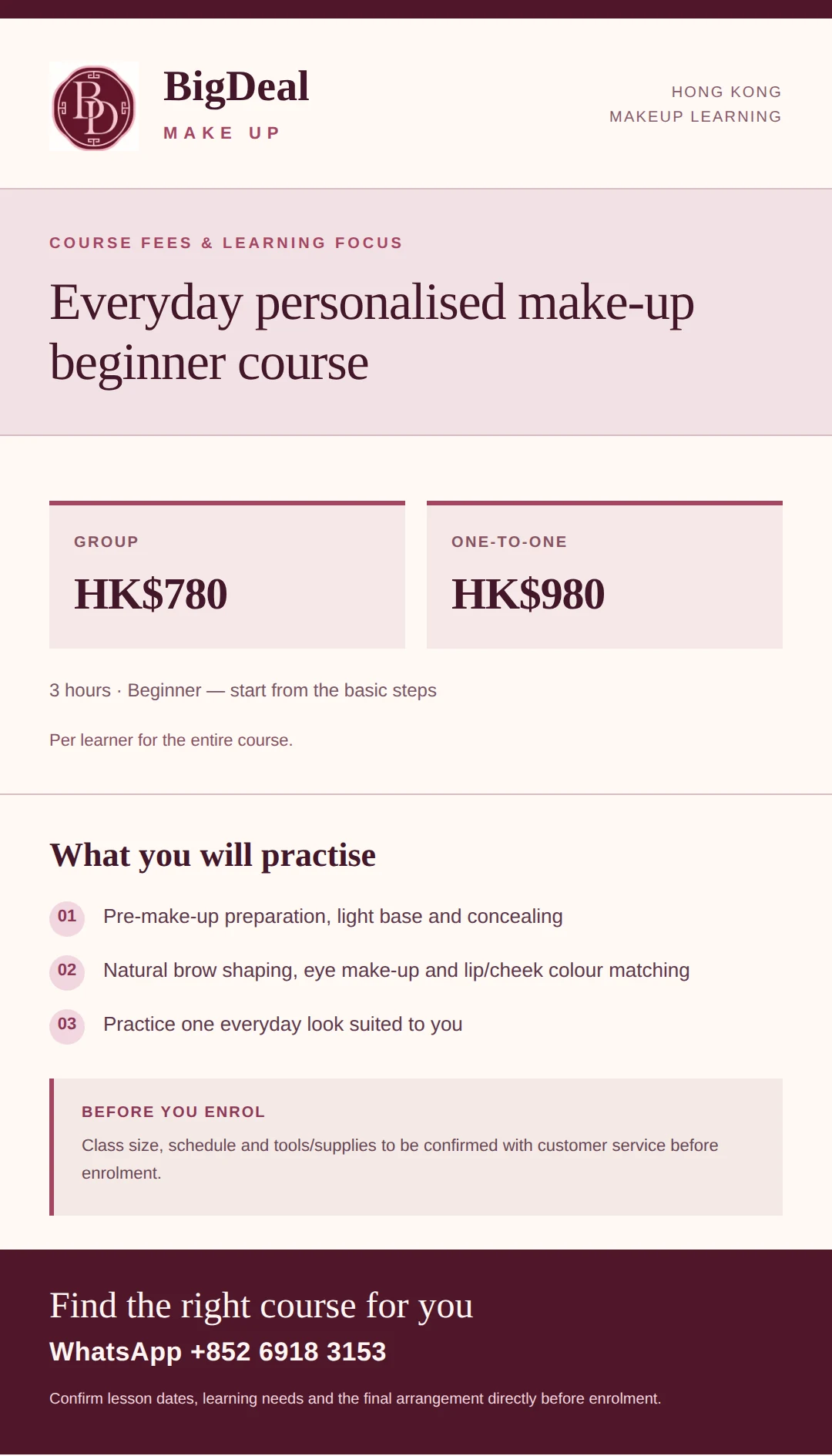
Everyday personalised make-up beginner course
- Group
- HK$780
- Private
- HK$980
3 hours · Beginner — start from the basic steps
Lesson focus
- Pre-make-up preparation, light base and concealing
- Natural brow shaping, eye make-up and lip/cheek colour matching
- Practice one everyday look suited to you
Arrangement: Class size, schedule and tools/supplies to be confirmed with customer service before enrolment.
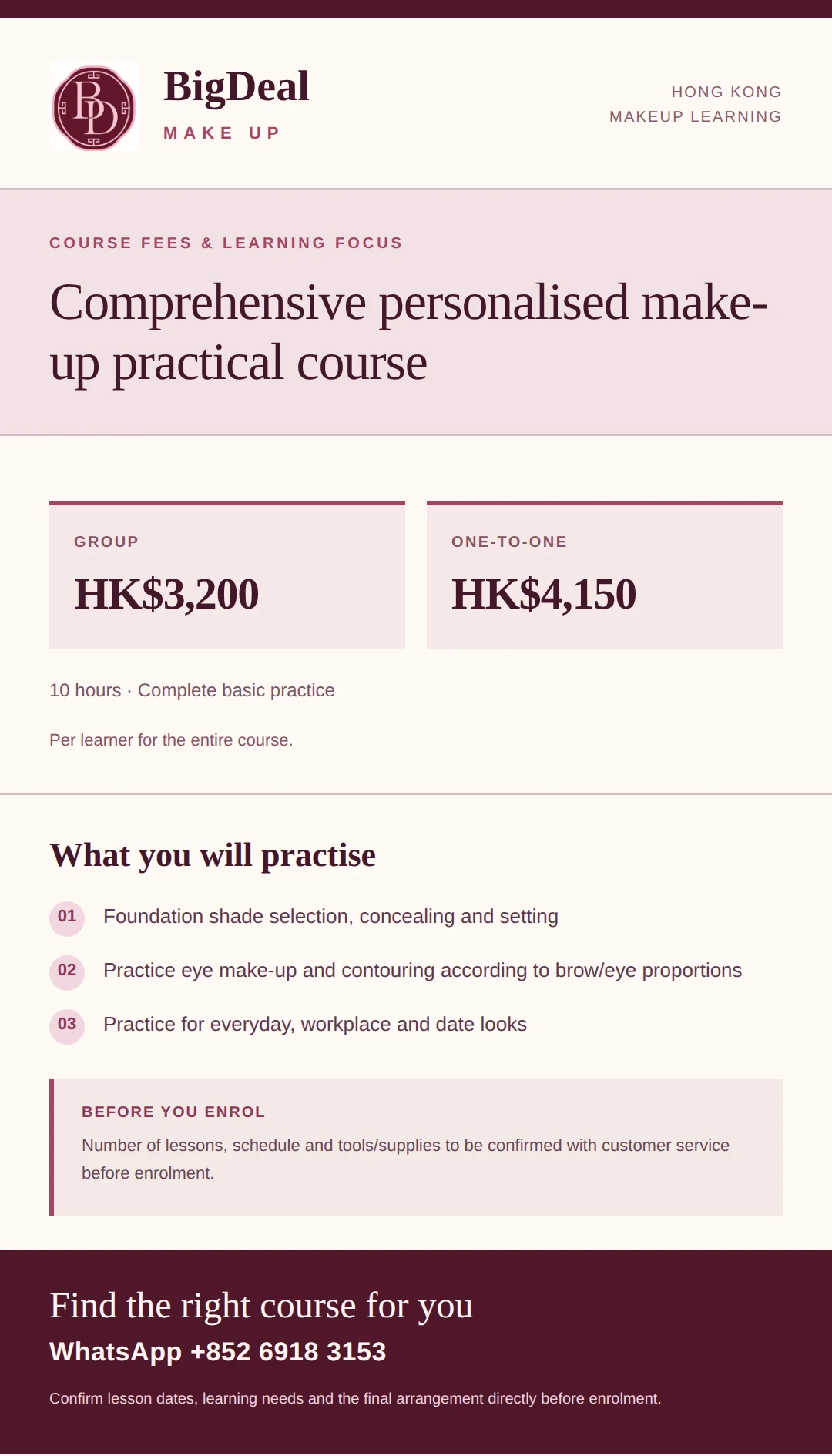
Comprehensive personalised make-up practical course
- Group
- HK$3,200
- Private
- HK$4,150
10 hours · Complete basic practice
Lesson focus
- Foundation shade selection, concealing and setting
- Practice eye make-up and contouring according to brow/eye proportions
- Practice for everyday, workplace and date looks
Arrangement: Number of lessons, schedule and tools/supplies to be confirmed with customer service before enrolment.
Self makeup lesson course options — core facts at a glance
| Course ID | Name and scope | Duration | Per-person fee (group/private) |
|---|---|---|---|
| Everyday personalised make-up beginner course | Everyday personalised make-up beginner course — pre-makeup prep, light base, natural brow, one everyday look | 3 hours | Group HKD 780 / Private HKD 980 |
| Comprehensive personalised make-up practical course | Comprehensive personalised make-up practical course — foundation, concealing, eye practice, contouring and multiple looks | 10 hours | Group HKD 3,200 / Private HKD 4,150 |
| Practice focus | Hands-on repetition, annotated face charts, immediate corrective feedback | Variable per course | Arrangements and tools confirmed on enquiry |
| Follow-up | Short refresher or staged lessons recommended for retention | Dependent on selection | Customer service confirms scheduling and materials |
Helpful answers
Frequently asked questions
How will a self makeup lesson help me learn self makeup faster than watching tutorials?
Hands-on practice on your own face provides immediate tactile feedback and repetition, which a tutorial cannot replicate. Tutors correct pressure, brush angles and sequence while you perform the movements, so you build muscle memory. The lesson also breaks your routine into small, repeatable micro-steps that you rehearse during and after class for faster retention.
If I book Everyday personalised make-up beginner course, can I practise a different look at home than the one we cover in class?
Yes. Everyday personalised make-up beginner course focuses on a single everyday look to teach repeatable steps, but the techniques you learn — base layering, concealer placement, brow mapping and a simple eye technique — are transferable. Tutors will show how to adapt the sequence for slightly different finishes so you can experiment independently using the same core movements.
Do I need to bring my own products or are items provided during the self makeup lesson?
Course descriptions list topics and what is practised; arrangements about tools and supplies are confirmed at enrolment. You are encouraged to bring your usual products so the tutor can adapt techniques to them. BigDeal may demonstrate with kit brands used by the team as appropriate, but whether materials are included depends on the specific class arrangement you confirm with customer service.
Will the tutor teach how to balance asymmetrical features when I learn to do my own makeup?
Yes, tutors teach cosmetic balancing techniques that are temporary and cosmetic in scope, such as altering liner angle or brow peak placement to create perceived symmetry. These are practical, reversible adjustments taught in a non-medical context. The tutor will show subtle changes you can practise until they become an intuitive part of your routine.
Can I request English instruction for my self makeup practice lesson?
Yes. Language of instruction is arranged during your enquiry. Please specify English when you contact customer service so the tutor assigned to your session can confirm availability and prepare any annotated face charts or written notes in English for your practice.
Where can I find simple hygiene advice for practising makeup at home?
The FDA’s guide on Using Cosmetics Safely provides useful general advice on clean hands, clean containers and not sharing eye-area products; note that this is independent general guidance and not an endorsement of any lesson content. Tutors will also review basic hygiene within your session and advise on tool cleaning frequency tailored to your routine.
Is this a hands-on makeup class where I practise on myself?
Yes. These are hands-on makeup class formats: you apply every step to your own face while the tutor observes and corrects pressure, brush angle and sequence. That live corrective feedback and repetition is the central learning method and is what helps you perform the routine independently afterwards.
Can I book a self makeup class Hong Kong session if I only want to learn simple daily steps?
Absolutely. Everyday personalised make-up beginner course is structured for that aim. It focuses on pre-makeup prep, a light base, brow shaping and one practical everyday look you will practise repeatedly during the three-hour session. Confirm whether you want the group option (HKD 780 per person) or private tuition (HKD 980 per person) when you enquire.
What’s the difference between a makeup application lesson and the longer practical course?
A makeup application lesson (short format) concentrates on one reliable routine and the exact movements to reproduce it; the longer Comprehensive personalised make-up practical course gives ten hours of hands-on repetition across multiple looks, allowing more time to refine foundation matching, concealing and contouring. The longer course is typically split into several sessions so you can practise between classes and consolidate skills; fees are HKD 3,200 (group) or HKD 4,150 (private) per person for the full course unit.
Ready to discuss it?
Book a practice-focused lesson
Tell us what you are planning, and we will help clarify the service or lesson details that matter for your enquiry.
From the makeup blog