

At a glance
Start with the skills you can perform calmly, then decide whether hair-only or combined study serves your next step. A longer format can offer more connected practice, while a focused format can protect limited time. Compare the stated learning scope, rather than assuming course labels mean the same thing. Finally, confirm the current timetable, tools, model arrangements, fees, and suitability in writing. That sequence produces a clearer and more realistic choice. It makes each comparison more grounded in daily circumstances.
Bridal hair course selection starts with a clear outcome
A bridal hair course selection question to ask first
Begin with the kind of styling task you want to handle next. You may want basic set-head control, accessory placement, or steadier preparation for wedding work. Write that goal in plain language before comparing course names. A hair-only bridal hair course Hong Kong option may suit learners who want dedicated styling repetition. A broader route may suit learners who need connected beauty planning. The choice becomes easier when the intended work is specific.
Separate a learning goal from a career assumption. For example, you may simply want confidence with neat curls, secure pins, and balanced silhouettes. Another learner may already style hair and need practice adapting a look to different face shapes. Neither position is automatically better. It only changes the level of explanation and repetition you should seek. Describe what you can already complete without prompts, including preparation and tidy finishing.
Consider whether makeup knowledge belongs in your immediate plan. If you expect to coordinate a complete bridal direction, consider an integrated bridal hair and makeup course. It can make that relationship easier to study. It still needs enough hair practice to matter. If hair construction is your weakest area, protect time for it first. Choose the format for the skill gap, not because a longer title sounds more impressive.

Match current skills to the next practical step
Foundations before more detailed bridal styling
A true beginner should prioritise controllable basics. Look for a route that lets you repeat sectioning, direction, curl preparation, pin placement, and finishing. A bridal hair course for beginners is most useful when it builds from these actions toward a complete shape. Complex inspiration photographs can wait. First ask whether you can create a secure, balanced result from simple sections. That answer reveals whether an introductory pathway is appropriate.
Learners with some experience should identify one precise limitation. It could be slower preparation, uneven balance, uncertain accessory placement, or difficulty revising a style. Occupational hairdressing standards place consultation, safe working practices, and varied looks alongside technical delivery. [1] Those ideas make a helpful study test. A bridal makeup advanced course should add a defined capability, rather than repeat familiar exercises. Bring examples of work that reveal the specific improvement you want. [1]
Do not judge your level by the number of looks you have saved online. Judge it by the actions you can explain and repeat. Can you prepare hair consistently, maintain tension, and adjust a silhouette after checking proportions? Can you cleanly remove and rebuild a small section? Those questions are more useful than labels. They also help a tutor understand your starting point when you ask about a suitable learning pace.

Compare hair-only and combined learning formats
Use the scope, not the title, to compare options
A useful bridal hairstyling course comparison begins with the work each format asks you to practise. Hair-only study can give concentrated attention to structure, shape, and finishing. Combined study can help learners connect hair choices with makeup direction and overall bridal presentation. Neither format is universally superior. Your choice depends on the next service situation you want to understand. Ask what proportion of practical time belongs to hair, not only what the course is called.
Use the table as a decision prompt, not as a promise about any particular class. The most suitable route may change with current content, prior experience, and confirmed arrangements. A learner seeking steady hair construction may value repeated styling rounds. Someone planning coordinated bridal looks may value broader sequencing. In both cases, a stated lesson list is more useful than an attractive course label. Ask for the current outline before making a commitment.
Consider how feedback will happen. A format becomes more valuable when you can try a technique, see the weak point, and make a second attempt. Watching a demonstration can clarify direction, but it cannot replace your own hand movement. Ask whether there is time to reset sections after feedback. That question helps distinguish a viewing experience from a practice-led learning opportunity.
| Learning format | Usually suits | Questions before choosing |
|---|---|---|
| Hair-only focus | Learners strengthening hair construction | How much styling repetition is planned? |
| Combined hair and makeup | Learners exploring coordinated bridal directions | How is practical time divided between skills? |
| Foundation pathway | Learners building repeatable basics | Which actions are taught before complete looks? |
| Focused advanced study | Learners with a defined technique gap | What new capability will practice address? |

Judge practice design, tools and styling readiness
Look beyond the final photographed style
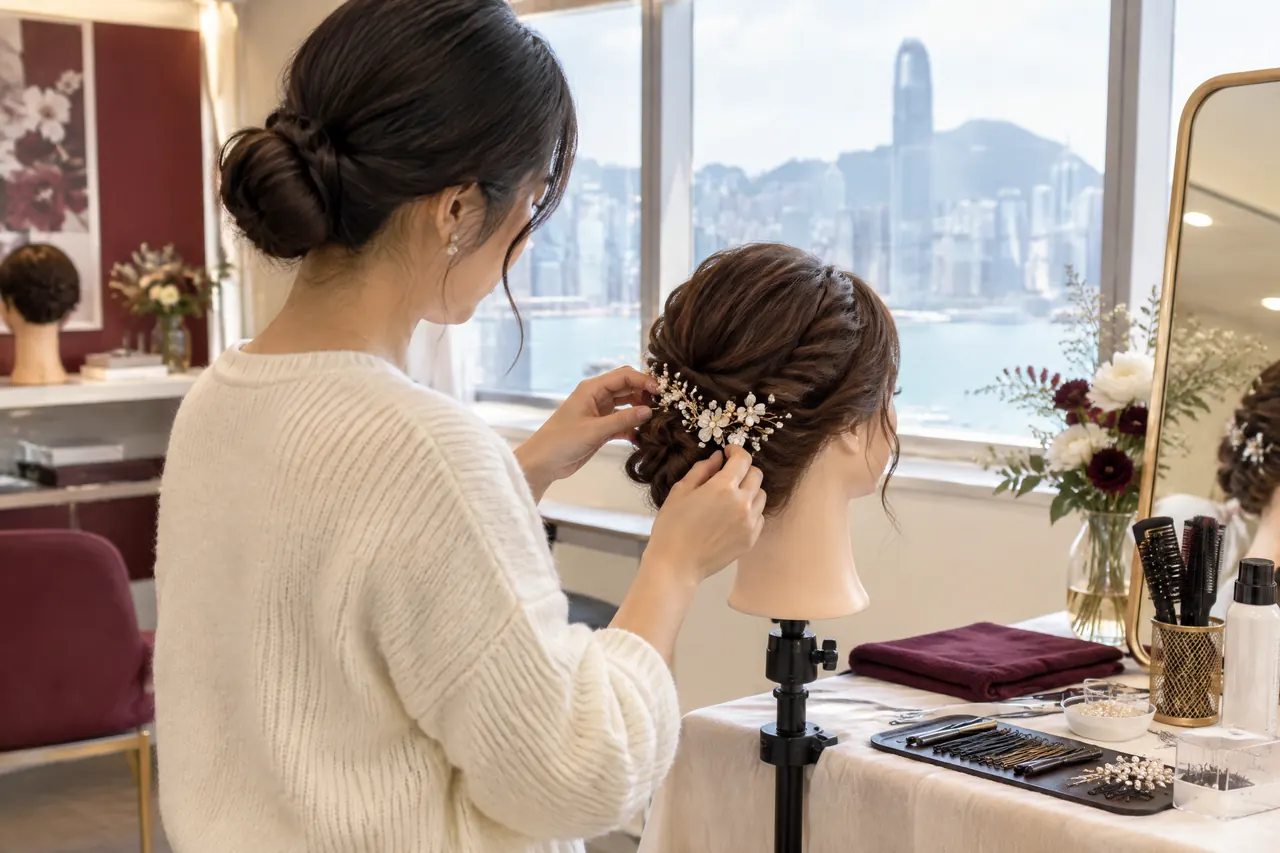
Ask how practical work is organised from the beginning. You need to know whether tools, accessories, practice heads, or models require separate preparation. Clean handling also matters during styling practice. Occupational safety guidance recommends cleaning and disinfecting tools and work surfaces between clients. [2] That guidance is not a course guarantee. It does show why a sensible learner asks about tool care, workspace routines, and safe use of heated equipment. [2]
Good practice has a visible sequence. You prepare the hair, divide manageable sections, create the base, check proportion, then secure and refine the finish. Each stage gives you something concrete to improve next time. A course does not need endless look variations to be useful. It needs opportunities to repeat essential actions under guidance. Ask how learners receive corrections when tension, balance, or stability is not yet working.
Bring a small collection of references, but sort them by construction. Identify which looks use soft texture, a compact base, visible accessories, or a stronger silhouette. Then explain what you want to understand about each one. This makes feedback more practical than asking to copy a photograph. It also keeps the learning conversation focused on transferable techniques, rather than a single trend or one event image.
Plan time and fees without assumptions
Make study time workable before you enrol
Read published teaching hours as a starting point, not a calendar promise. The phrase bridal hair course duration may describe the overall study scope, while actual dates need separate confirmation. Map the sessions against work, family commitments, travel, and home practice. A shorter route can suit a focused skill need. A longer route can suit learners who benefit from spaced repetition. Choose the pattern you can attend and practise between reliably.
Plan for practice away from lessons without pretending every learner needs the same amount. After each session, note the sequence that caused difficulty and one adjustment to try next. Practise that narrow point before chasing a completely new style. This approach makes limited time more useful. It also gives you clearer questions for the next lesson. Avoid buying a large kit before you understand which tools the current course expects you to bring or use.
Treat cost as a comparison question, rather than a single number. The bridal hair course fees Hong Kong guide is useful when read alongside scope, total hours, format, and practical inclusions. Check what the listed amount covers before you compare options. Ask separately about tools, accessories, practice arrangements, payment terms, and any other expected items. Written clarification protects you from assuming that two similarly named options include the same support.
Confirm course information before you enrol
Check what can be verified and what needs confirmation
If a provider makes claims about a registered qualification, check the official record yourself. Hong Kong’s Qualifications Register offers searches for qualifications and operators or assessment agencies. [3] That check is relevant only when such a claim is central to your decision. It does not judge whether a particular practical format suits you. For a skills-focused choice, compare the stated content, practice conditions, and your own learning needs as well. [3]
Request current details in writing before enrolment. Ask about lesson dates, total teaching hours, entry expectations, tools, practice support, and the steps for confirming a place. Keep your questions short and specific. You are more likely to receive a useful answer. If information remains unclear, pause rather than filling gaps with assumptions. A clear answer now prevents an unsuitable choice later.

Make a short, usable decision
Turn your shortlist into an enquiry
Reduce your shortlist to options that match your next practical goal and available time. Then compare only the confirmed information that affects your decision. This protects you from endless browsing and makes the enquiry more productive. Use your notes to explain your experience, the styles you want to understand, and the times you can attend. A well-framed question helps you assess whether the format can genuinely support your next step.
Keep the final decision modest and practical. You are choosing a learning starting point, not predicting a whole career. A good option should give you enough challenge to develop, yet enough repetition to understand what you are doing. If two options look similar, choose the one with clearer practical scope and more workable arrangements. You can add specialist study later when your foundations feel dependable.
- Write one hair skill you want to repeat confidently.
- List sessions you can attend without rushing.
- Ask how hands-on practice and feedback are arranged.
- Confirm tools, accessories, and practice support in writing.
- Compare scope and duration before comparing names alone.
Key takeaway
The useful trade-off is depth against breadth. Hair-only study can protect time for repeated construction practice. Combined learning can connect hair with a broader bridal direction. Neither route is automatically better. Choose the one that answers your immediate skill gap, fits your real timetable, and states its practical arrangements clearly.
Practical checklist
- Name one bridal hair skill you want to improve next.
- Describe your current practice level honestly.
- Check the current dates against your weekly commitments.
- Ask how feedback, tools, and practice support work.
- Request clarification about scope and fees in writing.
Frequently asked questions
Should I choose hair-only study before combined bridal learning?
Choose hair-only study when hair construction is your clearest gap. Choose combined learning when you need to understand how a full bridal direction fits together. Compare the actual practice allocation first. A broad title alone cannot tell you which skill receives the most attention.
How do I know whether I am ready for an advanced option?
List the actions you can complete without prompts, then name the technique that still breaks down. Advanced study should address that defined gap. If sectioning, tension, or basic finishing remains uncertain, a foundations-led route may offer a better next step.
What should I ask about practice materials?
Ask what tools, accessories, and practice support are included or expected. Also ask whether you need to prepare anything before the first session. Written confirmation is helpful because practical arrangements can vary between formats and dates.
Are published teaching hours enough to plan my calendar?
No. Published hours describe study scope, not necessarily a fixed timetable. Confirm dates, session lengths, and any practice expectations. Then compare those details with your work and family commitments before you enrol.
Should fees decide my bridal hair course selection?
Fees matter, but they should be read with scope, teaching hours, format, and practical inclusions. A lower figure may not include the same support. Ask what is covered, then compare only like with like.
Sources
| Source | What it supports |
|---|---|
| Hairdressing professional | Supports the broad hairdressing standards concerning consultation, safe working practices, and the ability to create varied looks. |
| Hairdresser | Supports the recommendation to clean and disinfect tools and work surfaces and to use heated equipment safely. |
| Qualifications Register | Supports that the Hong Kong Qualifications Register provides searches for qualifications and operators or assessment agencies. |
Discuss your own makeup plans
For a focused discussion, WhatsApp BigDeal Make Up on +852 6918 3153 with your experience, timing, and bridal hair goals.
Ask on WhatsApp +852 6918 3153