
At a glance
Start with the view that matters most in the final frame. Then note where the hair must separate, which crown area may show, and what the cap description actually confirms. Test the chosen direction under the planned lighting before the full makeup is finished. A brief should leave room for adjustment, especially when a product description does not define its parting area or wider construction.
Begin Wig Parting for Portraits With the Final Frame
Turn wig parting for portraits into a short visual instruction.
Decide whether the finished portrait is mainly straight on, three-quarter, profile, seated, or moving. Each view changes what the lens may reveal around a part and crown. Include the preferred side, how much forehead should show, and whether the hair will stay behind either ear. Add the intended neckline and any accessory. These details help the team judge the overall balance before foundation, contour, and flyaway work begin.
Ask the photographer about the planned background, key-light direction, and crop before settling the part. Canon explains that key, fill, and backlight play different roles in a portrait. Their relationship can change the image’s look and feel. A close review under the intended setup is more useful than a changing-room mirror. It is a visual check, not a claim about a fixed camera result. [1]
For a work profile, the priority may be evenness and a composed silhouette rather than a dramatic fashion shape. A business portrait makeup artist can use the brief to sequence complexion, brow, and hair checks. Bring one reference that shows the desired part and another that shows the overall mood. Avoid asking a reference to prove construction details it cannot show.
Separate the Part, Crown, Hairline, and Full Cap
Name the visible zone before comparing a construction label.
A part is the line where hair separates. The crown is the upper back area that may appear when the head tips, turns, or is photographed from above. The front hairline frames the face, while the full cap includes areas that may not be visible. Write them as separate lines in the brief. This avoids treating one construction word as an answer to every visual question on the day.
If your concern is the line of separation, compare the stated placement. Do not assume every mono label means the same thing. The guide to monofilament wigs describes monofilament as a fine mesh area with individually attached hairs. It says that area can sit at a part, crown, or broader top. Use it as a vocabulary check, then confirm the boundaries for the exact style you are considering.
A close portrait can make small choices feel more important, but it does not require a perfectly rigid result. Tell the team which angle matters first and which view is secondary. If the part must remain on one side, say so early. If a softer crown is acceptable, say that too. The brief should distinguish a non-negotiable framing detail from a preference that can change after the first test image.

Match the Parting Request to the Named Coverage
Read wig parting for portraits against the stated cap zone.
Use a simple map rather than a vague note such as natural top. Mark the preferred direction and approximate position. Note the crown area that may show and any planned root lift. Then ask whether the description identifies those locations. This is especially helpful when a shoot includes a front portrait and a three-quarter portrait. The same hairstyle can expose different areas as the chin, shoulders, and camera position change.
Part, crown, and top are related terms, not interchangeable guarantees. The monofilament part wig guide describes a defined parting zone. It calls a crown a more local upper-back area. A top can be broader. It advises readers to compare the named zone, coverage, and rest of the cap. Save a diagram or written reply with the brief if a listing leaves the boundary unclear.
Fit and sizing are separate checks from the visible part. The American Cancer Society notes that size charts can vary by brand. It advises checking the relevant chart before purchase. Its guide also separates full wigs, toppers, lace, monofilament, and hand-tied options. For a portrait brief, take a modest approach. Document supplied information for the chosen item. Do not infer unlisted coverage or adjustability. [2]
| Field to record | Why it matters on camera | Question for the cap description |
|---|---|---|
| Preferred part direction | It sets the visible separation beside the face. | Does the named parting zone include this direction? |
| Crown view | It may appear in a turn, lean, or higher camera angle. | Is the stated crown or top area defined clearly? |
| Front hairline exposure | It affects the outline around forehead and temples. | What does the style description say about the front area? |
| Remaining cap construction | It prevents one feature from standing in for the whole cap. | Which zones are described as hand tied, wefted, or another construction? |
Record Cap Construction Without Overreading the Label
Ask which areas are hand tied, wefted, or otherwise described.
Cap terminology answers different questions. One term may describe where hair is attached, while another identifies a mesh panel or a front edge. Keep the question narrow: what construction is stated at the part, around the crown, and elsewhere? A helpful brief does not rank labels as universally better. It makes room for comfort, desired coverage, styling direction, and the information available for one specific style.
A hand tied wig can be worth researching when the brief needs a clear account of attachment in named areas. OWNSTRAND’s guide says hand-tied hair is individually knotted in specified sections. The phrase alone does not establish that every area is hand tied. It recommends checking stated coverage, cap materials, and any wefted areas. Add unanswered points to the brief instead of filling gaps from a product photograph.
Keep front-hairline questions apart from top questions. A portrait with hair swept back may need a separate note about the edge nearest the face. A centre part may make the top more relevant. Neither note tells you how an unmentioned side or back area is made. If the team will use clips, accessories, or an outfit change, record these choices before the makeup sequence begins.
Build the Makeup Plan Around the Chosen Direction
Sequence skin, brows, and hair checks around the portrait decision.
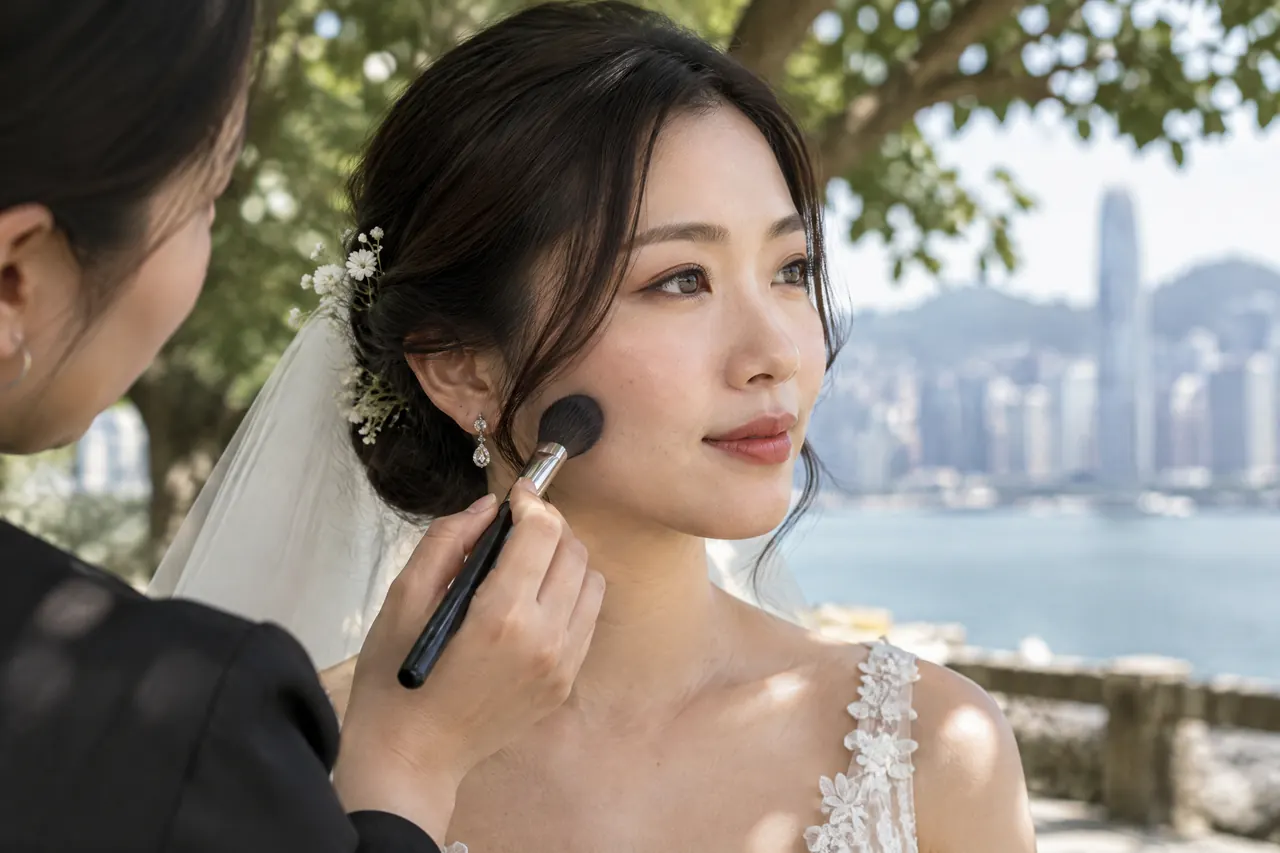
Bring the completed brief to a business headshot makeup appointment for work, media, or a personal profile. It gives the artist useful context without asking them to diagnose hair or guarantee a cap outcome. The artist can then consider where a visible part sits beside the brows, temples, cheekbones, and lip colour. That order keeps hair and makeup choices connected without making either one an afterthought.
Keep the pre-camera discussion short and concrete. Read the brief aloud with the makeup artist and hairstylist. Agree on the preferred part, the crown view, and what may change after the test frame. Keep accessories nearby, but do not add them before the basic direction is secure. These four prompts give the team a quick shared checklist during preparation. They also prevent late uncertainty from interrupting the first camera check:
The first makeup check should be made with the intended part already placed. A late change can alter how the brows, temple area, and cheek contour read beside the face. Use a clean mirror and a neutral phone image for an early comparison. Then reserve the final decision for the camera setup. This allows the team to rebalance a side part or soften excess lift before the main sequence.
- Which side is the preferred part, and may it move at all?
- Will the crown show in a standing, seated, or leaning pose?
- Which hairline area needs review when the face turns toward light?
- Are accessories, glasses, or earrings likely to disturb the chosen direction?
Do a Camera Check Before Calling the Look Finished
Review the part in the intended light, distance, and crop.
Take a test frame after the hair is placed and before the final powder or lip touch-up. Review a straight-on image and the angle named in the brief. Look for a part that has shifted, a crown line that appears unexpectedly, or hair that blocks a planned feature. Check the image at a practical viewing size. Tiny details seen only under extreme magnification may not matter to the planned use.
A fashion makeup artist Hong Kong clients choose may work with stronger poses and bolder lighting. Direction changes can be frequent. In that setting, write the non-negotiable parting view first, then list alternate views that are acceptable. This gives the creative team flexibility without losing the initial intention. Recheck after a major hair movement, garment change, or lighting reset rather than relying on the first test frame.
The table below is an editorial working tool, not a product specification. Use it to decide what needs a question before the shoot and what can wait for the visual test. It does not replace instructions for a particular wig. When construction matters, ask for wording or a diagram identifying the relevant area. Do not accept a broad category label as enough. Keep it beside the portrait brief.
| What you notice | First practical response | What to check next |
|---|---|---|
| Part looks wider under the key light | Confirm the part is placed as planned before changing makeup. | Compare the intended angle and planned crop. |
| Crown shows in a three-quarter view | Check whether the pose or head position created the reveal. | Review the crown note and the stated construction area. |
| Hair shifts after an outfit change | Restore the written direction, then take one new test frame. | Check clips, neckline, and accessories for interference. |
| A detail feels uncomfortable | Pause the adjustment rather than forcing a camera solution. | Prioritise comfort and reassess the styling plan. |

Keep a Brief That Can Adapt on the Day
Use notes to support a decision, not to freeze every strand.
A useful portrait brief is short enough to read during preparation. Keep one reference image and one sentence about the required part. Add one note about the crown and confirmed cap facts. Include the planned lighting style and any accessory that changes the hairline. This gives everyone a shared reference. It still lets styling respond to the person, garment, and camera angle.
After the test frame, ask what changed rather than whether the look is simply good or bad. Perhaps the brighter side needs less visible scalp line, or the lower camera makes the crown irrelevant. Perhaps the original part supports the face better once the brows are complete. Make one change at a time, then take another frame. This makes the check calm, specific, and easier to explain to every person involved.
Keep any comfort concern in the conversation. Stop and reassess if an adjustment feels uncomfortable or insecure. For persistent scalp, skin, or hair-loss concerns, seek advice from an appropriately qualified healthcare professional. Portrait planning is about appearance and communication, not treatment. A complete brief helps the team prepare thoughtfully. The final choice remains personal and should be based on item information and comfort. Do not force an uncomfortable adjustment for a camera result.
Key takeaway
The strongest portrait brief names the view you need, the part you prefer, the crown you may reveal, and the cap details actually confirmed. It does not make a construction label do more work than it can. Share the note before makeup starts, test the look in the intended camera setup, and adjust one practical element at a time. That process respects both the visual goal and the wearer’s comfort.
Practical checklist
- Write the preferred part direction before the makeup appointment.
- Note whether the crown is visible in the planned pose.
- Save the exact cap wording, diagram, or seller reply.
- Bring references for the part and the complete portrait mood.
- Review one test frame in the planned light and crop.
Frequently asked questions
What should a portrait brief say about a wig part?
State the preferred direction, the position of the visible separation, and whether it may move for different poses. Add a reference that shows the intended overall shape, not just a close crop. If the cap description specifies a parting area, keep that wording with the brief. If it does not, write the range as unconfirmed rather than assuming flexibility.
Is the crown the same as the parting area?
No. A part is where the hair separates, while the crown is an upper back area that can appear in a turn or higher camera view. Some cap descriptions use related construction terms for different zones. Treat them as separate items in the brief. Check the specific product wording or diagram before deciding that a crown feature also covers the chosen part.
When should the camera check happen?
Do one early test after the intended part is placed and before the final makeup touch-ups. Use the planned light, crop, and one key pose where possible. Then repeat the check after a substantial wardrobe, hair, or lighting change. This is more informative than judging solely in a mirror because portrait lighting can change the apparent balance around the face.
Does hand tied mean every part of a cap is hand tied?
Not necessarily. A hand-tied label can describe the named section rather than the entire cap. Read the style-specific description to learn which areas are included and what construction is used elsewhere. This is why the brief should record questions about the part, crown, sides, and front separately. Avoid treating a broad label as a full construction map.
What if the preferred part does not work in the first portrait?
Return to the brief and identify what is not working: the angle, light, pose, hair placement, or a competing feature near the face. Adjust one factor, then take another test frame. Keep the original priority clear, but allow an alternative part or softer crown when it suits the final composition and feels comfortable for the wearer.
Sources
| Source | What it supports |
|---|---|
| High-key & low-key portrait lighting | Canon UK | Canon explains the separate roles of key, fill, and backlight in portrait lighting and says their relationship can dramatically change an image’s look and feel. This supports the article’s limited recommendation to make a test image in the intended lighting rather than relying only on a mirror. |
| Wigs for Hair Loss | American Cancer Society | The American Cancer Society describes distinct wig and topper categories, including monofilament and hand-tied options, and says size charts may vary by brand. This supports the article’s limited advice to retain item-specific cap information and not infer unlisted coverage or fit. |
Discuss your own makeup plans
Planning a business, personal-brand, or editorial portrait? Bring your parting and reference notes to your BigDeal Make Up consultation so the camera check can begin with a clearer shared brief.
Ask on WhatsApp +852 6918 3153