
Gatherings & catering
Content updated
On this page
A venue catering tender: compare scope before menus
To compare a venue catering tender fairly, give every caterer the same event brief and ask each to confirm the same duties. A volunteer committee cannot judge three headline totals when one buys delivered food, another includes buffet setup, and a third provides staff until the room is cleared. First establish what the venue permits. Then turn each offer into a complete cost for the required event, keeping unresolved items visible. Menu appeal matters, but it should not compensate for a missing service that nobody has agreed to perform.
Use a single specification, a scope comparison sheet and an agreed evaluation method. Separate requirements that must be met from preferences that can earn extra credit. Ask suppliers to explain ambiguous wording rather than guessing what it includes. Compare their written replies under the same deadline, then record the committee's reasons and the final agreed terms. The result should let another volunteer understand both why a caterer was selected and who is responsible for each part of the event.
Define the event specification
Describe the meal and the room before inviting prices
Start with a brief that describes an actual event, not simply a request to feed a certain number of people. State the date, expected attendance and whether the food is a full meal or refreshments between sessions. Give the serving time separately from the earliest supplier access time. If guests arrive after a committee meeting, explain whether everyone will eat together. This changes the practical serving requirement even when the headcount stays unchanged.
List what the venue will provide, but check each item with the person authorised to confirm it. A room may have tables without suitable buffet space, or a pantry without permission to use its appliances. Attach a simple layout showing the proposed food station and guest route. Identify who can unlock the room, meet the delivery and answer questions. Do not appoint a volunteer to carry out food-service duties without discussing the task and their availability.
An overview such as YumYum's Hong Kong Catering Service page can help a committee describe the meal formats it wants suppliers to quote. Use it to distinguish shared dishes from individual meals or a refreshment spread, not to infer what your venue allows. Send the resulting brief to every invited caterer. If the committee later changes the meal format, circulate an amended brief so nobody is still pricing the original arrangement.
Normalize quoted service scope
Replace broad labels with duties that can be checked
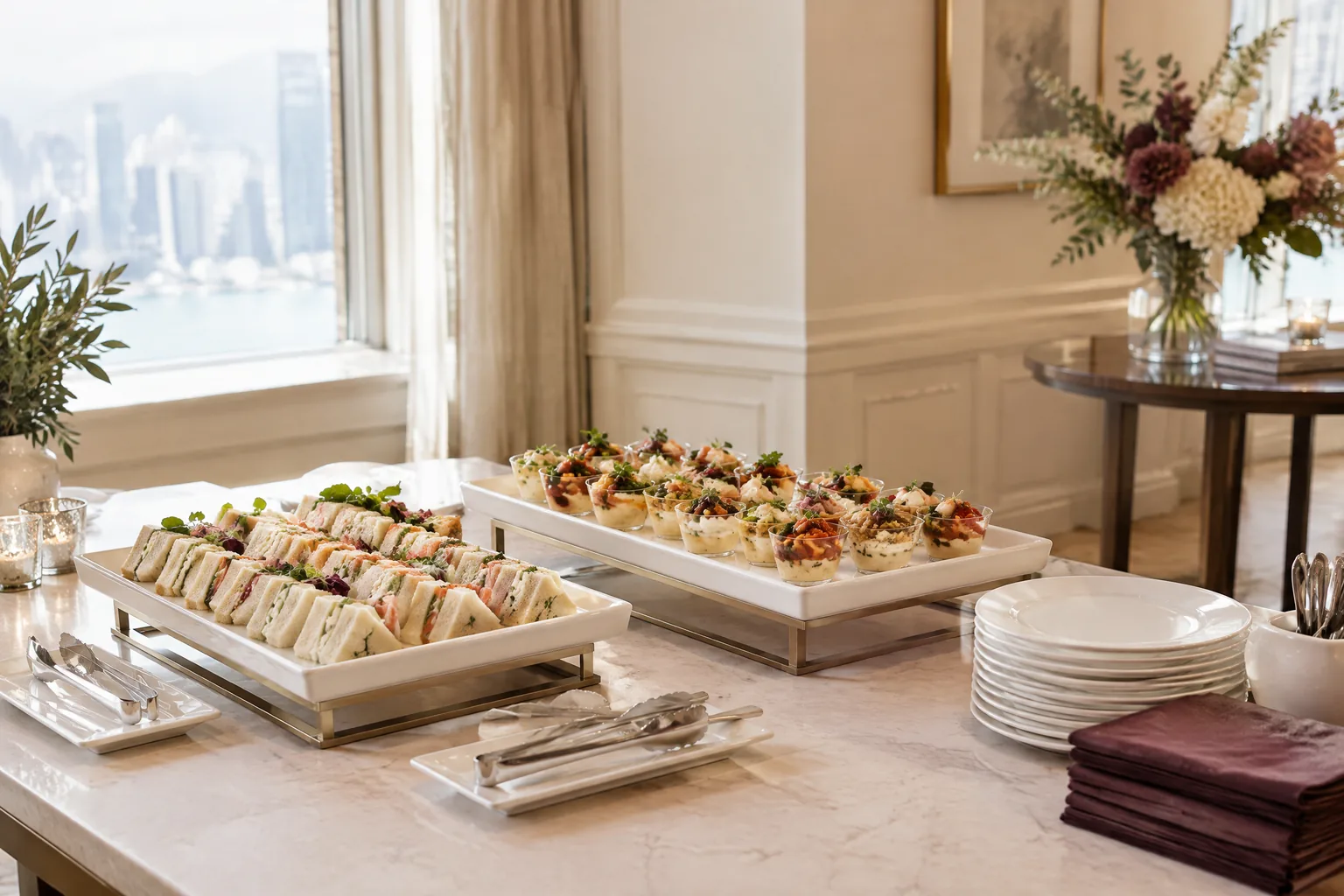
Make a comparison sheet with one row for each required duty. Ask where delivery ends: at a loading bay, reception desk or the booked room. For setup, ask who supplies and positions the equipment, places the food and removes packaging. For staffing, request the hours and actual responsibilities rather than a job title alone. Someone assigned to replenish a buffet is not automatically assigned to clear guest tables or wash borrowed tableware. A blank answer means clarification is needed, not that the task is included.
When looking through Catering Services on a supplier's website, treat descriptions as starting points for questions. Ask the bidder to mark each required duty as included, separately priced, provided by the venue or not offered. Keep the supplier's wording beside your interpretation. If two quotes use the same phrase, such as full service, do not assume they cover the same work. The comparison becomes useful only when both suppliers have accepted a common description of the required outcome.
The ICAC's Corruption Prevention Guide on Procurement for Public Bodies recommends distinguishing disqualifying requirements from desirable features. It also recommends setting clear, objective evaluation criteria before inviting bids and making the broad weightings known to bidders. This is a useful fairness principle for a volunteer committee, although its own governing rules determine the process it must follow. Venue permission can be a requirement; an attractive dessert presentation can be a preference. Giving both an interchangeable score would conceal an important difference.[1]
| Required item | Written answer needed | If unresolved |
|---|---|---|
| Delivery destination | Exact handover point and access window | Do not assume room-level delivery |
| Setup | Equipment supplied and tasks completed before service | Request a duty-by-duty clarification |
| Staffing | Hours, replenishment, table clearing and named responsibilities | Mark uncovered duties, not just staff numbers |
| Food holding | Equipment, monitoring and responsibility after handover | Ask how the proposed service will work |
| Finish and removal | Waste handling, equipment collection and room handback | Identify another confirmed provider or revise the scope |
| Required total | Confirmed event price plus separately quoted required work | Label incomplete totals provisional |
Check venue-approved suppliers
Confirm permission for this booking, not a previous event
Ask the venue whether external catering is permitted and whether it requires a nominated supplier or prior approval. Get an answer for the particular room and booking, because another organiser's experience may not apply. If an approval process exists, establish what documents are needed, who submits them and when a decision is expected. Do not shortlist a bidder as ready to proceed while an essential permission remains unresolved. Keep the correspondence with the venue booking documents.
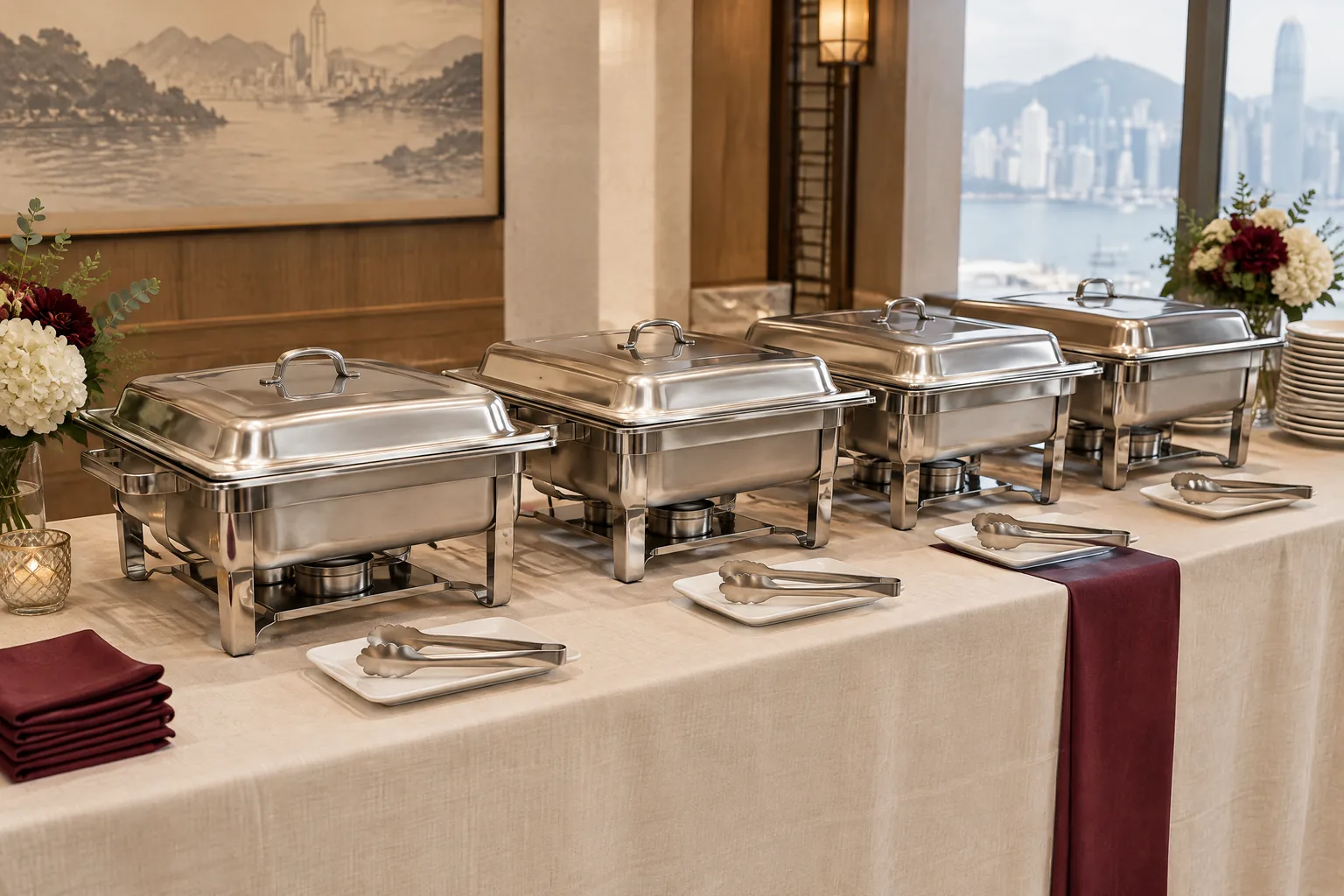
Approval to bring food does not settle every operational question. Ask about loading access, lift use, waste removal and whether food may be prepared or reheated on site. Confirm the position on warming equipment and any open flame before specifying it. A supplier should be able to assess the proposed arrangement against the venue's written restrictions. If the desired buffet cannot work within those restrictions, revise the service format rather than asking someone to improvise after arrival.
For a small committee, a joint site visit or a shared set of room photographs may resolve more than repeated emails. Give all invited bidders equivalent access to useful information. A measured doorway, a confirmed delivery route or a clear pantry inventory can explain why quotes differ. Record any venue charge separately from a caterer's charge, and identify who pays it. Do not count a supplier's general operating credentials as proof that this venue has approved that supplier.

Compare menu evidence
Judge what guests receive and how it will be served
After the essential scope is understood, compare the proposed meals. A Catering Packages Comparison overview can help narrow the combination of dishes and serving formats to discuss with YumYum, but it cannot replace an event-specific quotation. Ask each bidder for quantities in a form the committee can interpret, such as pieces, stated portions or tray sizes with an explained serving assumption. Photographs show presentation; they do not establish how much food will reach each guest.
Compare equivalent eating needs rather than identical dish counts. A refreshment menu with many small bites is not automatically equivalent to a lunch with fewer substantial dishes. Ask what substitutes may be made and whether approval is required before a change. For dietary requests, obtain an ingredient and handling response from the supplier. A vegetarian or gluten-free label is not a certification or an allergen-free guarantee. Unconfirmed requirements should remain visible in the decision, not disappear behind a menu heading.
Food-holding arrangements belong in the menu assessment because the room and timetable affect service. In its guidance on serving meals at schools, the Centre for Food Safety advises monitoring buffet temperatures, keeping hot food above 60°C and cold food at 4°C or below. Use that guidance to ask the bidder what equipment and monitoring it proposes for your event. Confirm who controls food after delivery and how service delays will be handled; do not assume an unattended tray meets the proposed plan.[2]

Separate exclusions from options
Compare a complete required event, then consider extras
Put exclusions in a separate part of the comparison rather than leaving them at the bottom of a quotation. An excluded task still needs an owner if the event requires it. If clearing is absent, find out whether the venue supplies it, whether the caterer can price it, or whether a different arrangement is needed. An optional dessert upgrade is different: the event can proceed without it. Combining these two categories makes a cheap incomplete quote look better than it is.
Request a revised total that includes all duties the bidder has agreed to undertake for the common brief. Show any separately purchased required services alongside it, with their own confirmed quotes. Do not add a guessed allowance and present the result as a firm comparison. If a cost is unresolved, label the total provisional and explain what is missing. Keep optional upgrades out of the base comparison so the committee can first decide whether the required event is affordable.
Check payment timing as well as total cost. A committee may need approval before paying a deposit, and its treasurer may require an invoice addressed to the correct organisation. Ask about the quotation's validity and what action confirms the booking. Equipment deposits, return arrangements and damage terms should be visible where relevant. A low total is not enough if the committee cannot meet the payment deadline or if no one has accepted responsibility for returning hired items.

Score changes and cancellation
Choose criteria before seeing which supplier benefits
For a new tender, agree the scorecard before invitations go out. If three offers have already arrived without a common specification, clarify the comparison rather than inventing criteria to favour one. Follow the committee's governing procedure; where a fresh invitation or revised response is needed, give each bidder the same brief and opportunity. A late material change to the event may require new prices. An informal correction should not silently turn into a different purchase.
Keep the scorecard short enough to use consistently. The illustrative table below separates basic compliance from weighted assessment. The committee can choose different weights to reflect its event, but it should explain them and use them consistently. Before the meeting, define what evidence earns a high or low rating. For example, a clear staffing schedule with confirmed duties is stronger evidence than a general statement that staff are professional. Avoid giving points for unsupported claims or the length of a brochure.
Request change terms using realistic scenarios: attendance increases, a session overruns, or the venue becomes unavailable. Ask for the deadline for a final headcount and how later additions or reductions affect the charge. Check who is authorised to approve extra hours and how that approval is recorded. A supplier's willingness to discuss changes is useful, but only the written terms tell the committee what it may actually request and what payment consequences may follow.
Cancellation and postponement need separate questions. Ask what sums are refundable, what may be retained and whether a new date creates a fresh quotation or credit arrangement. Include weather-related disruption if it is relevant to access or the booking. Do not assume a warning signal cancels a private contract automatically. Compare the venue's terms with the caterer's terms so a postponed room booking does not leave the committee unaware of a separate catering obligation.
| Assessment | Suggested treatment | Evidence to compare |
|---|---|---|
| Essential requirements | Pass/fail before scoring | Venue permission and ability to meet the required service |
| Complete required cost | 35% | Confirmed total for the common brief, excluding optional upgrades |
| Service plan | 30% | Named duties, staffing hours, access and food-holding arrangements |
| Menu suitability | 20% | Meal purpose, interpretable quantities and confirmed dietary responses |
| Change terms | 15% | Headcount deadlines, extra hours, cancellation and postponement terms |

Record the final selection
Leave a clear handover for the next volunteer
Write a short decision note naming the selected offer, the event brief version and the reasons for choosing it. Attach the final comparison and clarification replies. Explain any significant difference between the cheapest conforming offer and the recommendation. The reason might be a better-defined serving plan or more suitable change terms, but it should relate to the agreed criteria. A sentence saying the committee liked the supplier is not enough to explain the purchase later.
Ask evaluators to declare relevant relationships with bidders and follow the committee's rules for handling them. The ICAC procurement guide identifies conflicts of interest, missing documentation of evaluation discussions and changes to criteria after bids arrive as problems in tender evaluation. Keep individual assessments and record significant disagreements as well as the final decision. This protects the clarity of the process; it is not a suggestion that a familiar local supplier must be excluded simply for being familiar.[3]
Before accepting, obtain one final document that brings the menu, quantities, service duties, timings and commercial terms together. Name the committee contact for changes and the supplier contact for the event. Make the handover practical: the volunteer meeting the delivery needs access instructions and the agreed destination, while the treasurer needs payment dates. After the event, note any differences between the agreement and delivery. That record can improve the next brief without becoming an unsupported public review of the supplier.

- Confirm the venue's catering permission and access restrictions for the booked room.
- Send the same dated brief and amendments to every invited bidder.
- Convert service labels into written duties, hours and handover points.
- Resolve required exclusions before treating a total as complete.
- Assess menu quantities and dietary responses separately from presentation photographs.
- Agree evaluation criteria and obtain clear change, payment and cancellation terms.
- Save the final agreement, decision reasons and named event contacts together.
A defensible selection starts with comparable responsibilities, not an impressive menu title. The committee should be able to point to a confirmed answer for every required duty and explain how the chosen offer meets the event brief. If an exclusion, permission or cost remains unresolved, say so before accepting. Once the terms are complete, keep the decision and handover simple enough that a volunteer who missed the tender meeting can still run the agreed arrangement.
Can we compare quotes we have already received?
Yes, but first check whether they cover the same brief. Circulate a common clarification request and ask every bidder to identify inclusions, exclusions and any price changes. If the event or selection method changes materially, follow your committee's procedure for revised bids or a fresh invitation. Do not award points using criteria designed after discovering which supplier would benefit.
Must the committee choose the cheapest caterer?
Follow the organisation's own procurement rules. Where those rules permit a quality-and-price assessment, compare conforming offers using the method agreed in advance. A higher price needs an explainable benefit tied to that method, such as a confirmed required duty that another offer leaves uncovered. Personal menu preference should not become an undocumented reason to disregard the comparison.
What if the venue has not approved our preferred bidder?
Treat approval as unresolved and ask the venue what is needed for a decision. Establish whether the bidder can meet the requirements within the booking timetable. Do not describe an offer as fully ready while essential permission is missing. Before paying, clarify whether the booking can be conditional on approval and what happens to any payment if approval is refused.
Is a tasting necessary for a small venue event?
It depends on the event and the committee's rules. A tasting can help judge flavour and a proposed portion, but it does not prove delivery performance, adequate staffing or venue compatibility. If tastings form part of evaluation, tell invited suppliers what will be assessed and handle them consistently. Ask whether samples represent the quoted dishes and clarify any charge before arranging one.
How should we compare two different serving formats?
Test both against the event's needs: eating time, available space, guest access and the meal's purpose. Ask each supplier to explain how its format will deliver that outcome. Compare the complete costs and responsibilities, not just the food total. If one format changes what volunteers must do, discuss that work explicitly before treating the proposals as equivalent alternatives.
Ask the venue to confirm its catering conditions, then request written, like-for-like quotations from the suppliers you are considering. Resolve outstanding scope and approval questions before accepting an offer or paying a deposit.
Sources & supported claims
- Corruption Prevention Guide on Procurement for Public Bodies
Section 3.3.5 recommends distinguishing disqualifying requirements from desirable features, setting clear objective evaluation criteria before inviting bids, and informing bidders of broad relative weightings.
- Serving meals at schools — Centre for Food Safety
The buffet guidance advises monitoring food temperatures and holding cold foods at 4°C or below and hot foods above 60°C.
- Corruption Prevention Guide on Procurement for Public Bodies
Section 3.8 identifies evaluator conflicts of interest, absent documentation of evaluation discussions and decisions, and changing criteria after receiving bids as procurement risks or inadequacies.