
Gatherings & catering
Content updated
On this page
All-hands lunch staffing: serving two waves of guests
Good all-hands lunch staffing starts by protecting the people already running the meeting. When attendance grows from roughly fifty to one hundred, appoint a catering lead, a person who releases each dining wave and a separate owner for remote speakers. Do not assume that doubling the food also covers replenishment, queues or clearing. Give both waves access to an agreed meal, keep their serving windows within the caterer's confirmed holding arrangements, and leave presenters free to present. Reception should welcome guests, not become the emergency buffet team whenever the programme slips.
Build one running order that shows the meeting, food handover and two serving windows together, while keeping responsibility for each task separate. Ask the caterer to propose staffing against the actual layout and duties rather than a guest-count ratio alone. Reserve the later wave's agreed food under suitable conditions, explain how each group will be called, and decide before the event who can delay lunch, shorten a talk or change the serving arrangement.
Separate the speaking and eating schedule
Give the meal its own start conditions
Decide whether everyone must hear the same live presentation before lunch. If so, complete the essential talk and questions before releasing the first wave. The second wave can use a quiet break area while waiting. Do not give that group compulsory new content that the first group misses. A two-wave lunch should change the dining timetable, not create two different versions of the company update.
If departments genuinely arrive at different times, distinguish two attendance waves from two queues after one meeting. Later arrivals may need a repeat briefing or access to an agreed recording. That decision belongs to the company organiser. Make it before sending invitations, so employees know whether arriving for the second meal window also means missing a live question session.
Use the Buffet Catering page as a starting point for discussing a shared meal format, then give the supplier your room layout and programme. Explain whether trays can be set out before the meeting, whether covers can be removed quietly, and whether service has to stop during a remote address. A format description does not settle how the buffet will operate in your office.
Mark a readiness check before each release: the catering lead confirms food and utensils, the floor host checks the route, and the programme owner confirms that the microphone is no longer live. For example, a proposed first window at 12.30 and second at 12.50 needs a reset between them. Treat those times as a draft to test, not evidence that every menu can serve that quickly.
Check headcount package assumptions
Count meals separately from invitations
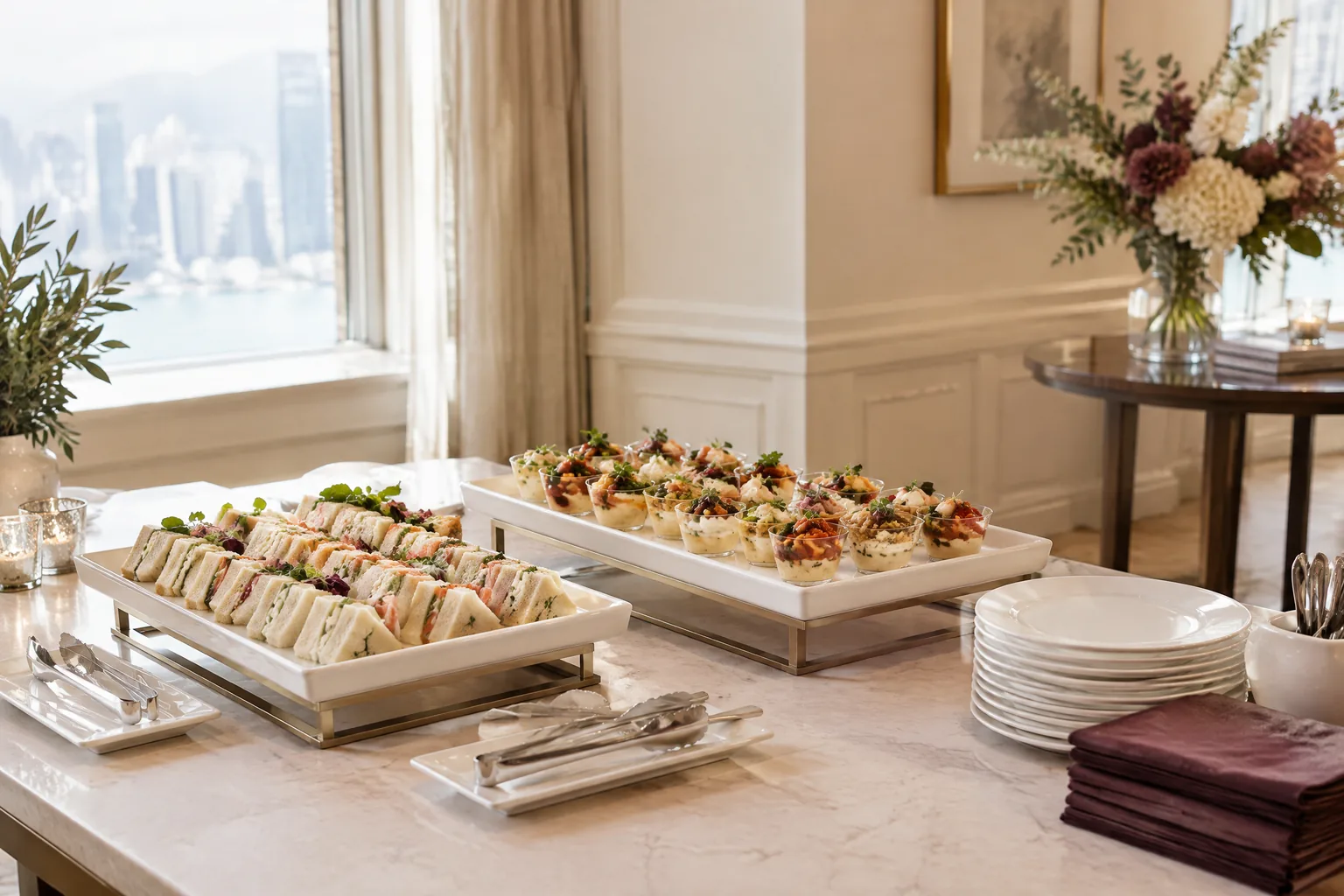
Keep a meal list alongside the invitation list. It should distinguish confirmed onsite diners, remote attendees, speakers and crew who need food, and people who will leave before lunch. Show dietary requests separately without circulating unnecessary personal details. Agree a final confirmation deadline and a route for late changes. Otherwise an organiser may order for one hundred invitees even though some will only join online.
If the original enquiry used a 50 Person Catering Package, ask what changes when the audience grows. Request the revised dish quantities, serving equipment and replenishment arrangement in writing. Two sets of food might be practical, but they do not automatically create two complete stations. A shared rice pan, one set of tongs or a single narrow table can still determine how guests are served.
The 100 Person Catering Package page is another relevant enquiry point for the larger event. Ask explicitly whether staff, setup and clearing are included in the quotation or separately arranged. Specify two guest releases rather than simply writing one hundred people. The supplier needs to know whether the later group eats twenty minutes afterwards or arrives following another meeting, because the gap changes the service requirement.
Give the second wave an agreed allocation instead of asking staff to save whatever remains. Discuss how popular dishes will be divided and how reserved pans will be identified. For individual dietary meals, confirm ingredients and handling directly with the supplier and recipient. A vegetarian or other special-diet name is not certification or an allergen-free guarantee. Nominate someone who can answer meal questions without guessing.
Plan two release waves
Use the route, not an arbitrary equal split
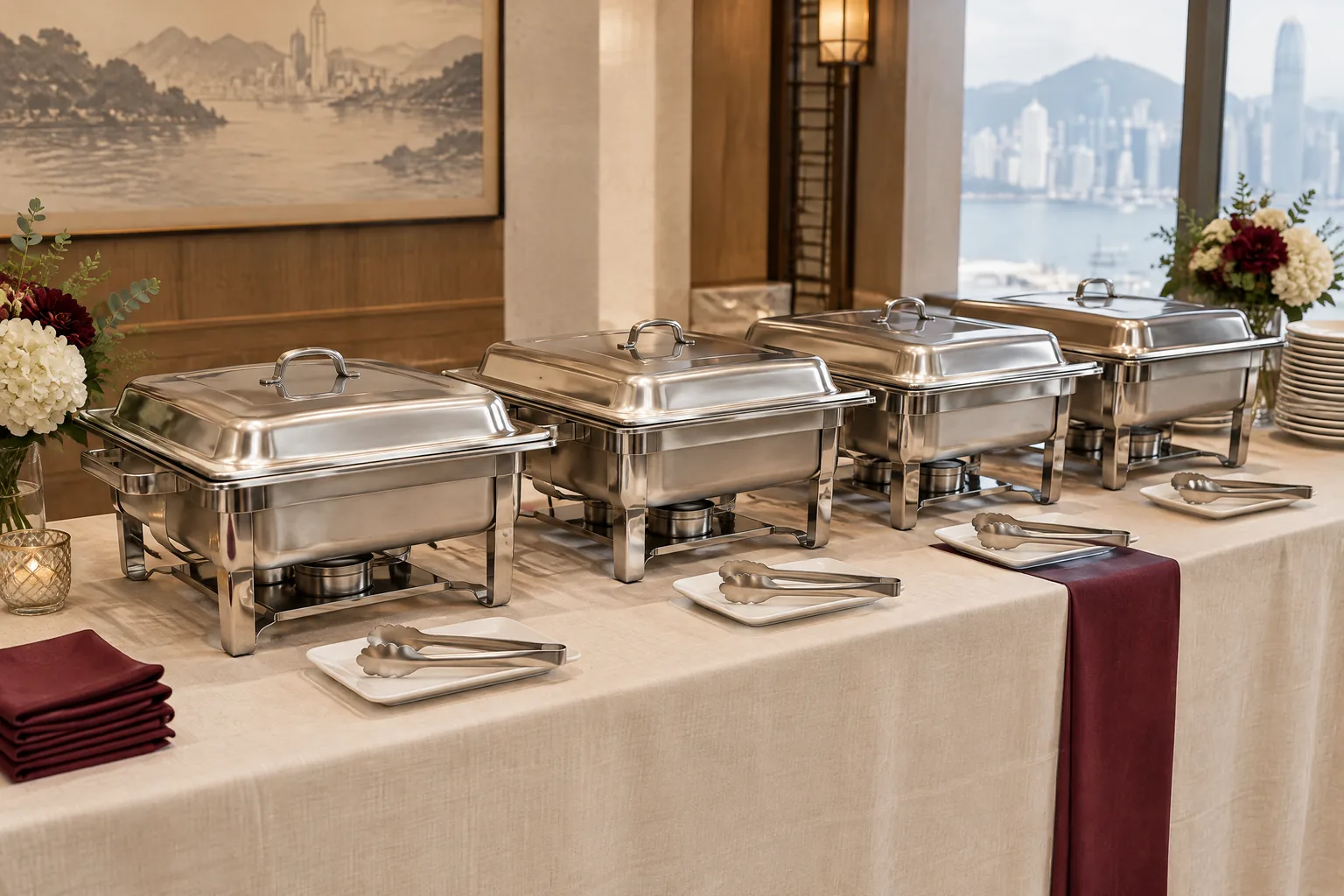
Choose groups that colleagues can recognise without reading a long list at the buffet. Seating zones may work after a shared presentation; departments may work when they return to different work areas. Keep collaborators together where practical. Explain the release method in advance and announce it briefly at lunch. Staff should not have to argue with guests about which wave they belong to while replacing food trays.
Walk the whole route with the venue contact: from the meeting seats to plates, dishes, drinks and somewhere to eat. Look for the point where people stop. A drinks table immediately after the mains may hold up everyone collecting food. Move optional extras away from the main collection route if the room permits. Leave a workable return route for colleagues carrying finished meals and for staff replenishing pans.
The UK Health and Safety Executive's crowd-control guidance says people should have a safe way out of a queue and that queues should not block emergency access routes. Apply that practical principle when checking your office layout, alongside the actual building and venue requirements. Do not use a stair landing as overflow waiting space or rely on colleagues squeezing past each other to keep a doorway usable.[1]
Call the second group when the service lead reports that the station is ready, not merely because a timer rings. If the first queue is still stationary, the floor host should explain the delay and keep the next group away from the entrance. Offer an assisted collection arrangement for anyone who cannot comfortably queue, agreed privately where possible. Accessible seating and collection should not depend on guests arriving early.
| Attendance pattern | Useful serving approach | Decision still needed |
|---|---|---|
| Everyone hears one live talk | Release two seating groups after the talk | Waiting space and reset readiness |
| Departments arrive at different times | Two defined meal windows | Later group's briefing and food holding |
| Lunch must overlap a recorded talk | Separate dining area if feasible | Sound, camera view and guest access |
| One narrow collection route | Keep the next group seated until ready | Whether the programme allows a longer break |
Define catering staff duties
Specify the work that happens simultaneously
For Catering Staff Hire enquiries, send a task brief rather than asking only how many servers to book. Describe who receives the food, prepares the station, replaces trays, monitors the agreed holding arrangement and clears used tableware. Ask the supplier to propose a team for those duties and the layout. Identify which tasks remain with your office or venue, and confirm the service start and finish times.
Test the proposal against the busiest moment. One person may be assisting a guest while another needs to carry a replacement pan from the holding area. Clearing may also be due before the second wave arrives. If the same person is assigned to all three jobs, ask which task pauses and what guests will see. The useful question is whether concurrent work is covered, not whether a familiar staffing ratio has been met.
Confirm practical access before the roster is final. Staff need to know the loading entrance, lift arrangements, storage area and where clean equipment is kept. Check whether the venue allows the proposed warming equipment and whether suitable power is available. Do not expect reception to escort repeated journeys upstairs during guest arrival. Allocate a company contact for access problems who is not also hosting the remote presentation.
Hong Kong's Centre for Food Safety advises keeping hot delivered food above 60°C and cold food at or below 4°C. Ask the caterer how the actual menu will be held and checked before and between waves, including reserved food. The presence of a warming tray or insulated carrier does not prove that the food meets those conditions. Agree who records the checks and what happens if the planned holding arrangement cannot be maintained.[2]
| Task | Proposed lead | Boundary to confirm |
|---|---|---|
| Meal totals and late changes | Company organiser | Caterer confirms revised quantities and feasibility |
| Guest welcome and building entry | Reception or venue host | Not automatically buffet replenishment |
| Food holding and replacement pans | Catering lead | Equipment, checks and reserved allocations agreed |
| Calling the two guest groups | Floor host | Release only after catering readiness signal |
| Remote speaker and live sound | Technical owner | Separate from food-service duties |
| Schedule changes | Company decision maker | Deputy and approval limit named |
| Final clearing | Named catering or venue contact | Waste, surfaces and equipment listed separately |

Keep microphones and food apart
Protect the remote audience and recording
Assign the remote-speaker connection to someone who will remain at the technical position during the talk. That person should handle the joining link, sound check, screen sharing and the handover back to the host. Give the speaker a direct contact for connection trouble. A receptionist who is checking visitors into the building cannot reliably troubleshoot a muted remote guest at the same moment.
Check the camera view after the buffet position is marked. A queue behind the presenter can distract viewers and capture colleagues who were not expecting to appear in the recording. Keep food collection away from the recording position where possible, and discuss cable routes with the technical team. Separate the lunch announcement from the live speaker handover so remote participants understand whether the meeting has ended or merely paused.
If you need an external filming enquiry, BigDeal's 活動攝錄 page contains event photo/video information in Chinese. Share the talk timings and intended recording use when asking about coverage, and confirm the actual deliverables separately. Do not assume filming includes running the online meeting, editing every discussion or managing lunch. Those are different responsibilities even when they happen in the same room.
This BigDeal guide covers 活動攝錄; the linked page is in Chinese. (Chinese page)
Tell attendees what will be recorded and arrange an alternative place to eat outside the camera view if needed. Decide who can authorise distribution of the finished material. The catering reset should happen during an agreed pause rather than underneath an important recorded announcement. If the lunch has to open before the talk ends, check whether a separate dining area is available instead of treating buffet noise as unavoidable.
Name the on-site decision maker
Make changes without borrowing the presenter
Choose one company decision maker and a deputy before the day. Give them the confirmed quotation, venue contact and current running order. The catering lead manages the agreed food-service work; the company owner decides programme priorities and approves changes within an agreed limit. A server should not have to ask a speaker mid-presentation whether to extend the lunch window or move guests into another room.
Agree a few realistic responses to delay. If a remote speaker joins late, the programme owner might move their slot until after lunch, provided the speaker agrees. If food handover is delayed, the floor host should hold the release and communicate a revised expectation. If staffing is reduced, ask the catering lead which duties can still be covered before opening. Do not compensate by assigning food handling to unbriefed reception colleagues.
Give each lead a direct way to reach the decision maker without making room-wide announcements. A short message such as station ready or hold second wave is more useful than several people issuing different instructions. Keep the latest schedule in one place and tell every affected lead when it changes. The person announcing a delay should know what has been confirmed, rather than offering a guessed five-minute promise.
If the two-wave arrangement becomes unworkable, choose a fallback that the caterer and venue can actually support. That might mean a longer meal break or a simpler collection arrangement, not an improvised extra food station. Check the effect on reserved meals, recording and staff finish times before approving it. A fallback should remove a bottleneck without creating an unowned food-holding or clearing task.
Close out clearing and leftovers
Keep ownership after the second wave
Put the final clearing time in the booking brief. Specify whether clearing means removing food trays, collecting hired equipment, wiping the buffet surface or handling the venue's waste arrangements. Confirm who supplies bags and where waste can be taken. These jobs may involve different parties. Keep a clear route for the crew while guests finish eating, and allow reception to return to its normal duties rather than inherit the entire room reset.
The Centre for Food Safety states that time in the temperature danger zone is cumulative across handling, storage and transportation. Opening the second wave does not restart that clock. Before considering leftovers, the catering lead needs the relevant handling history and product-specific instructions. Do not leave communal trays on an office table for afternoon grazing just because there was food left after the lunch. Uncertain handling history is a reason to seek guidance, not assume storage is acceptable.[3]
End with a short handover between the company owner and catering lead. Confirm that reserved meals have been collected or dealt with under the agreed instructions, hired items are accounted for and no equipment remains beside an exit. Separately, ask the technical owner to confirm the recording status. Note the actual queue issue for the next event: a slow dish, a blocked return route or an unclear release announcement is more useful than simply writing that more staff were needed.

- Confirm onsite meal totals, including speakers and crew, separately from the invitation count.
- Give both guest waves an agreed menu allocation and privately confirm individual dietary requirements.
- Confirm staff duties, hours, equipment and clearing scope in writing.
- Walk collection and return routes with the venue contact, keeping exits and emergency access unobstructed.
- Name a floor host, technical owner, company decision maker and deputy.
- Agree readiness signals, delay responses and the final food-and-equipment handover.
A larger all-hands lunch needs a new responsibility plan, not just more portions. Keep presenters, reception and the technical team in their own roles. Give the catering lead a clear service brief, release each guest wave only when the station is ready, and protect the later group's meal allocation. The plan is complete when someone owns the gap between waves and the clearing after them, as well as the moment lunch opens.
Does doubling attendance mean doubling the catering staff?
Not automatically. Ask the caterer to reassess the tasks, service windows and room layout. Two stations may create separate replenishment jobs, while one station may need more time rather than an identical second team. Check coverage when serving, tray replacement and clearing happen together. No single staff-to-guest ratio resolves those differences.
Should both waves receive exactly the same meal?
Agree equivalent access to the promised menu before service starts. Ask how the later allocation will be reserved and held, rather than relying on leftovers from the first group. Individual dietary meals may differ by agreement. Communicate any confirmed substitution before guests choose a queue, and do not describe a restricted-diet meal as automatically free from allergens.
Can reception call the waves while checking in late visitors?
Only if those duties genuinely do not overlap and there is backup. For a growing all-hands audience, a separate floor host is usually the clearer proposal to test. Reception can pass attendance changes to that person. The catering lead should send the readiness signal, so reception is not expected to judge food-service conditions from the entrance desk.
What if the remote presentation overruns into lunch?
The company decision maker should choose between delaying the meal, moving the speaker's slot by agreement or using a separate dining space if available. Consult the catering lead about holding and staff hours before changing the schedule. Do not open a noisy buffet beside a live microphone simply because the original timetable says lunch has started.
How much time should there be between the two releases?
Base the interval on the actual collection route, menu and required reset. Ask the caterer to explain the proposed timing and test the route before the event. Keep a readiness check between groups. If a later wave arrives much later, treat it as a separate service window with its own agreed food-holding and staffing arrangements, not a short queue delay.
Send the caterer your confirmed onsite meal count, two proposed serving windows, venue layout and duty list. Ask for a written staffing and equipment proposal before accepting the arrangement; confirm any recording enquiry separately with the relevant provider.
Sources & supported claims
- Put crowd controls in place — Health and Safety Executive
People should have a safe way to leave a queue, and queues should not block emergency access routes. This UK practical guidance is not presented as Hong Kong venue law.
- Control for Safe Delivered Foods — Hong Kong Centre for Food Safety
Hot delivered food should be kept above 60°C and cold food at or below 4°C; actual holding arrangements must be confirmed rather than inferred from equipment names.
- Control for Safe Delivered Foods — Hong Kong Centre for Food Safety
Time in the temperature danger zone is cumulative across handling, storage and transportation, so a later serving wave does not reset earlier exposure.