
Gatherings & catering
Content updated
On this page
- Confirm the new venue before moving the lunch
- Find out what can still change in the existing order
- Check both buildings, not just the two districts
- Ask what an urgent order can actually achieve
- Give one receiver control of the handover
- Choose a deadline and a fallback that needs no delivery
- Close the original order and record the actual outcome
- Questions & answers
- Sources & supported claims
A relocated office event meal: a realistic last-minute fallback
For a relocated office event meal, confirm that the new room can receive and serve food before asking the caterer to redirect anything. A training session moving from Central to Kwun Tong does not automatically move its lunch order. Establish where the food is, obtain written acceptance of any change, and give the host a deadline for switching to a meal break that does not depend on delivery.
Keep the existing order and the replacement meal as separate decisions. One person should control changes, while colleagues check access at both buildings. If a revised handover cannot be confirmed in time, protect the training timetable with an approved local meal break or another workable arrangement rather than leaving participants waiting for an uncertain lunch.
Confirm the new venue before moving the lunch
A room reservation is not permission to receive catering.
First establish whether the whole session is moving or only its afternoon component. If participants will still be in Central at lunchtime, keeping the original meal there may avoid an unnecessary transfer. Ask the host to settle the venue decision and the eating window together. A message saying that the workshop has moved is incomplete if nobody knows where the group will be during the break.
For a full move, obtain the new building name, street address, floor and room from the person controlling that venue. Confirm when the room becomes available and whether outside food is allowed. Ask where people may eat, where packaging goes afterwards and whether a separate pantry or breakout area must be booked. Do not send the caterer a tentative address while two rooms are still being considered.
Check whether the new room supports the original format. Shared hot dishes require serving space and suitable holding arrangements; individual meals still need a place for people to sit and dispose of waste. A room full of laptops may have no usable food table. If the venue prohibits eating, resolve that restriction through an authorised separate eating area or an off-site break, not by asking reception to overlook it.
If weather caused the change, reconsider the move itself. The Labour Department advises giving prime consideration to employee safety and feasible travel. Its rainstorm guidance says indoor staff should continue working during a Red or Black warning issued within working hours unless it is dangerous to do so; when Black remains at the end of working hours, staff should stay in a safe place until heavy rain passes. A spare room across the harbour is not automatically the better option.[1]
Find out what can still change in the existing order
Ask about preparation and dispatch before discussing a replacement menu.
Contact the merchant with the order reference and original delivery address. Ask whether preparation has started, whether the meals are packed and whether they have been dispatched. These are different positions: an unprepared order may allow different choices from food already travelling. Request a pause only if the merchant confirms it can pause. Silence or an unread message does not mean dispatch has stopped.
State exactly what has changed and what has not. Give the proposed address and receiving window, then confirm whether the guest count, menu and dietary requirements remain the same. Ask the merchant to identify any amendment charge, transport change or cancellation condition. A request to deliver elsewhere is not acceptance of an unspecified extra cost; the coordinator also needs authority to approve the revised amount.
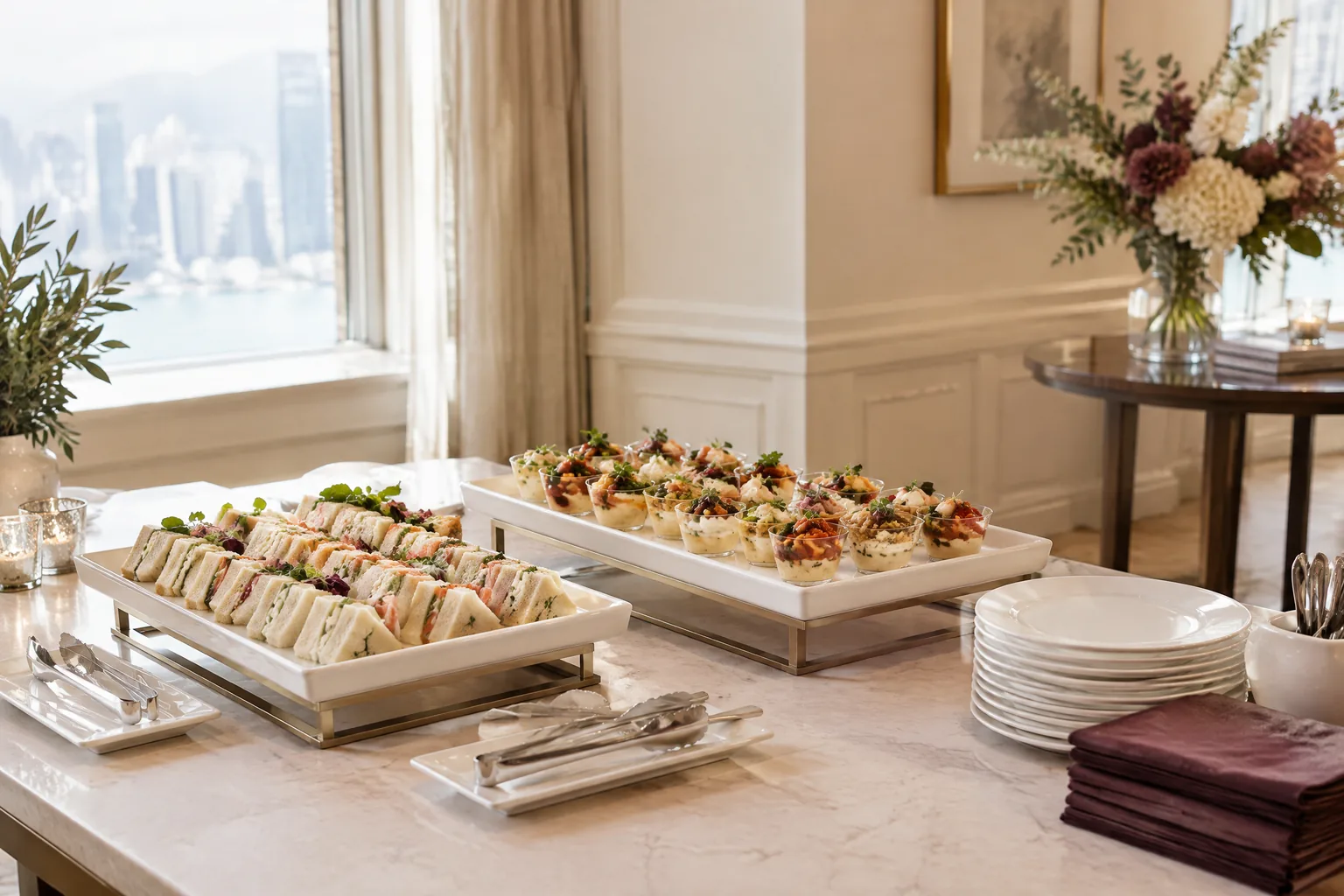
If the new venue cannot accommodate the original sharing format, YumYum's Party Food Delivery page is a starting point for enquiring about platters and finger foods. Ask whether a different format is feasible for this order, with the current deadline and room restrictions. Do not assume a menu change is available because a page displays another style of food, or treat lighter snacks as an agreed replacement for a promised lunch.
Keep one written amendment record. It should identify the order, show the replacement address, name the receiver and state the accepted handover window. Include any changed quantity and agreed charges. Ask the merchant to confirm that this replaces the original instruction. Preserve the earlier confirmation too, so accounts can distinguish an amendment from a second purchase and colleagues do not revive the obsolete address.
Check both buildings, not just the two districts
The old destination still matters until its delivery instruction is resolved.
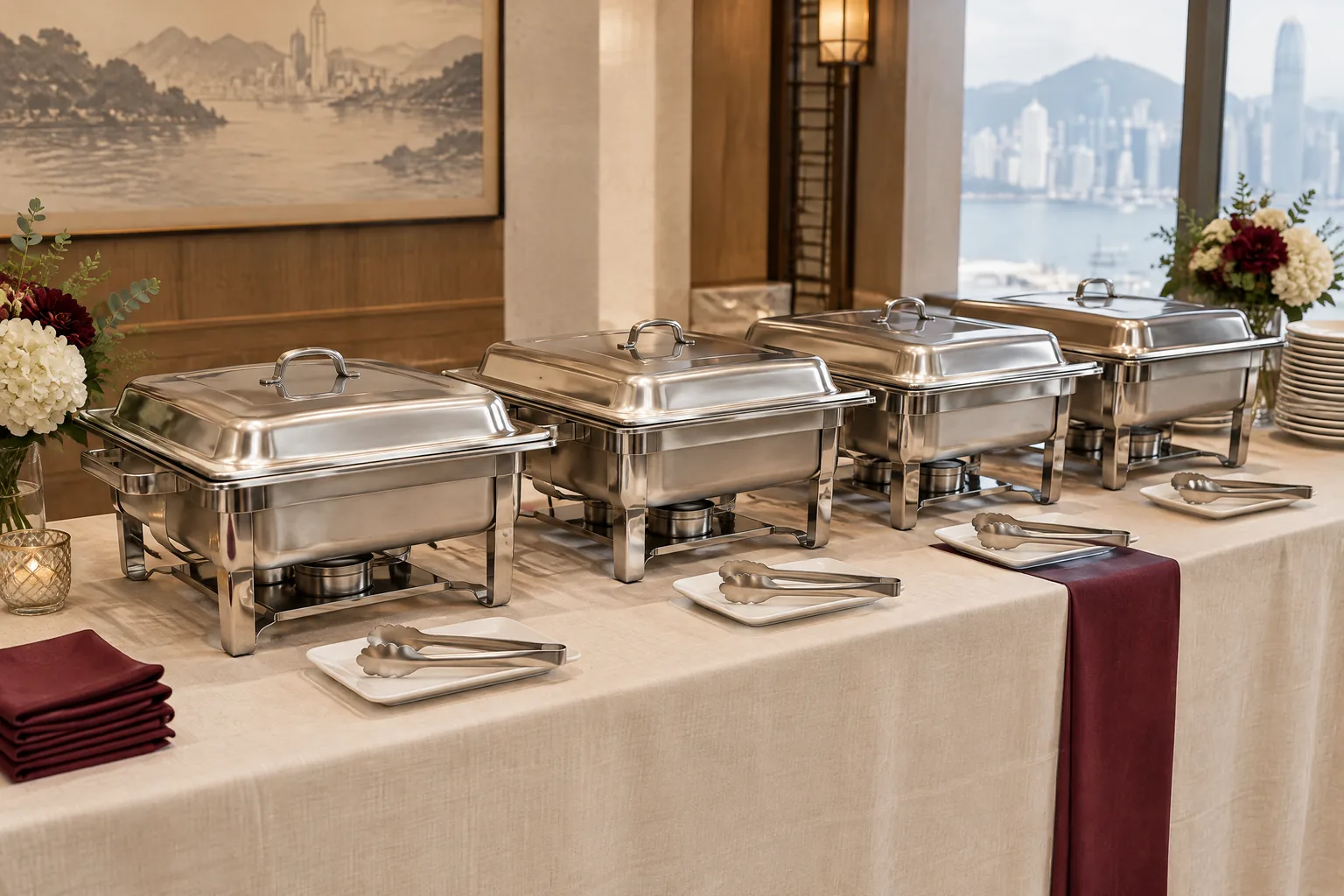
YumYum's Central Corporate Catering page concerns workplace meals in Central, but the building must confirm its own access rules. At the original venue, find out whether reception can stop an expected delivery from being taken upstairs and whether an authorised person can receive it if the destination cannot change. Tell that person not to arrange a second transfer independently. Otherwise two colleagues may issue conflicting instructions while the merchant is trying to resolve one order.
The Kwun Tong Corporate Catering page provides a separate district enquiry route; it does not establish access to the replacement room. Ask the new venue which entrance a courier must use, whether registration is required and who can authorise access. Check the goods-lift arrangements where relevant, but do not assume every Kwun Tong office is in an industrial building or that every building follows the same procedure.
Have a colleague at each site confirm the details directly with building management or reception. Record an entrance description that works for someone approaching from the street, not just a company name on a calendar invitation. Check whether a vehicle can stop at the approved handover point and whether the receiver must meet the courier downstairs. Leave any required vehicle or courier registration to the parties authorised to provide it.
Separate travel from the final handover. A vehicle reaching the street still leaves unloading, security and lift access before anyone can serve lunch. Ask the merchant what arrival window it can accept after seeing the new access instructions. Do not turn a map's journey estimate into a delivery promise. Also check who will return any hired equipment if the original room is no longer part of the event.
Ask what an urgent order can actually achieve
An enquiry is not a booking, and a booking is not the original order amendment.
YumYum's Same Day Catering page is relevant when asking about an urgent meal, but availability and an accepted delivery window must be confirmed for the actual request. Tell the merchant the earliest time the new venue can receive food and the latest time the group can eat. Ask what, if anything, can fit that window. Do not reassure the host using a headline lead time from a service page.
Distinguish a redirect from a new order. If the original food cannot change destination, an urgent replacement could leave two payable meals. Obtain approval for that exposure before accepting a second quotation. Ask what happens to the original order separately; a replacement purchase does not cancel it. One colleague should have authority to say yes, so two people trying to help do not each place a full lunch order.
Give dietary requirements the same attention as the deadline. Carry forward the exact requirements privately and ask about ingredients, handling limits and meal identification for any proposed substitute. A vegetarian or other special-diet label is not certification or an allergen-free guarantee. Do not replace an unconfirmed meal with whatever is easiest and tell the participant it is suitable. If there is no confirmed option, discuss a separate practical arrangement with that person.
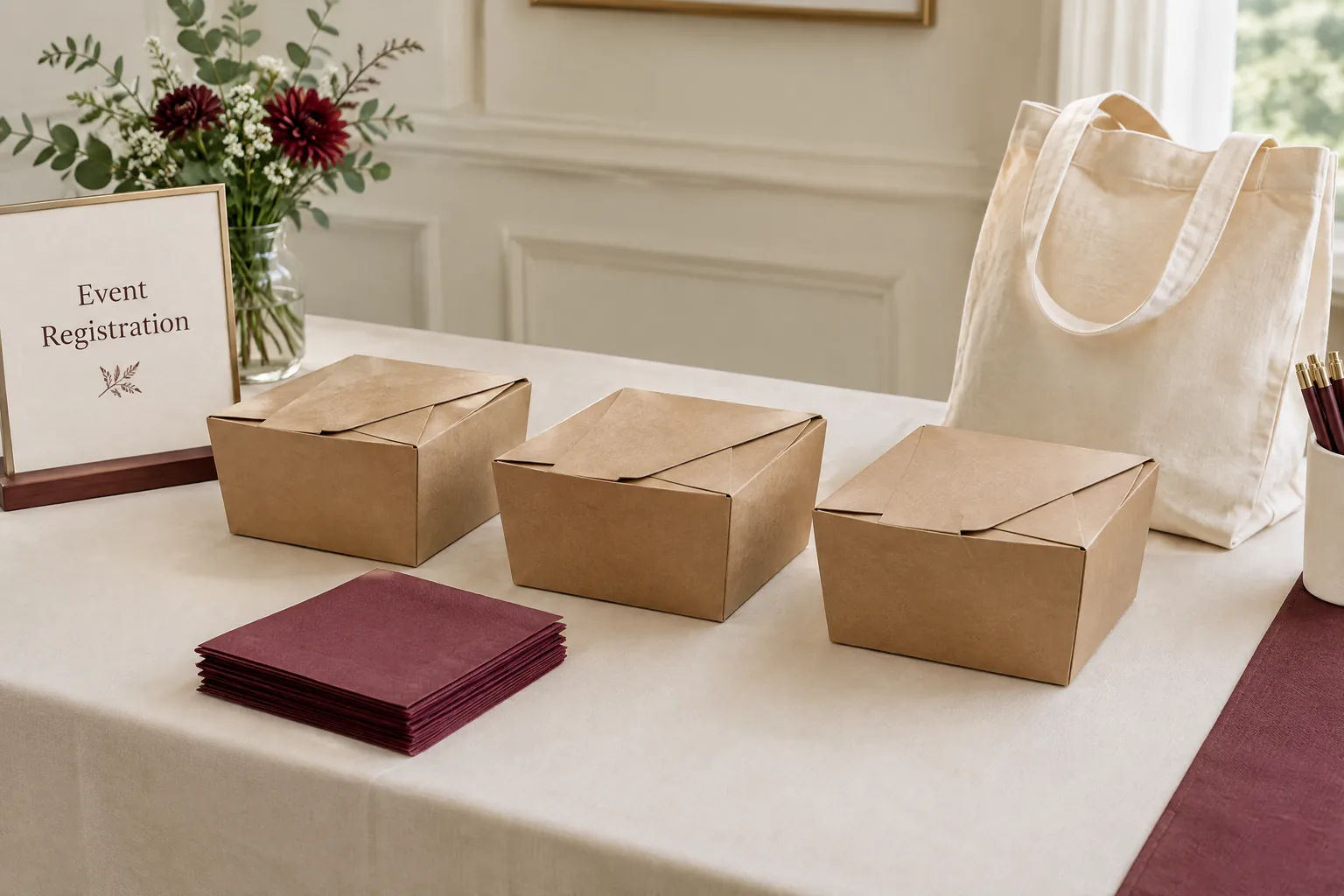
Ask what the quote includes beyond food. Check packaging, utensils and whether setup is included or must be done by your team. A replacement delivered as closed boxes may work where a buffet does not, but someone must still receive and distribute it. Explain that the venue has changed rather than asking vaguely for the fastest package; the merchant needs the constraints to assess a workable offer.

Give one receiver control of the handover
Keep lunch logistics outside the training discussion.
Name one receiver at the confirmed destination and a backup who is physically able to take over. Share only the contact information needed for the delivery. The trainer should not also be the sole receiving contact if they cannot interrupt the session. Tell the receiver which order is expected, the agreed window and where it may be placed, so a late arrival is not mistaken for an unrelated office delivery.
Keep the receiver's task distinct from accepting new commercial terms. They can record the handover time, check the number of packages and flag a missing labelled meal, while the coordinator handles amendments and charges. If a courier arrives at the wrong site, the receiver should contact the coordinator rather than promise to send the food onward. A taxi ride arranged by a colleague is not automatically a suitable continuation of the merchant's delivery.
The Centre for Food Safety advises keeping hot delivered food above 60°C and cold food at or below 4°C. It also explains that time in the temperature danger zone is cumulative across handling, storage and transport. An extra stop at reception or a transfer between offices therefore cannot be treated as starting a fresh clock. Ask about the food's handling history and holding instructions before agreeing to a delay or further journey.[2]
At receipt, check container integrity and raise concerns promptly with the merchant. Follow the confirmed holding and serving instructions; do not assume an air-conditioned room or a closed carrier provides adequate temperature control. If the handling history is unclear, do not keep food waiting indefinitely for the training to finish. Arrange the break around the viable meal window, or resolve the concern before serving rather than relying on appearance alone.
Choose a deadline and a fallback that needs no delivery
The fallback must work even if every catering enquiry is declined.
Set the decision deadline with the host while enquiries are still open. For an illustrative 12:30 lunch, the team might choose 11:30 as the point by which a revised meal must be accepted in writing. That is a coordinator's decision, not a standard merchant cutoff. Choose a deadline that leaves enough time to announce the alternative and organise it. Repeatedly postponing the decision can consume the entire break.
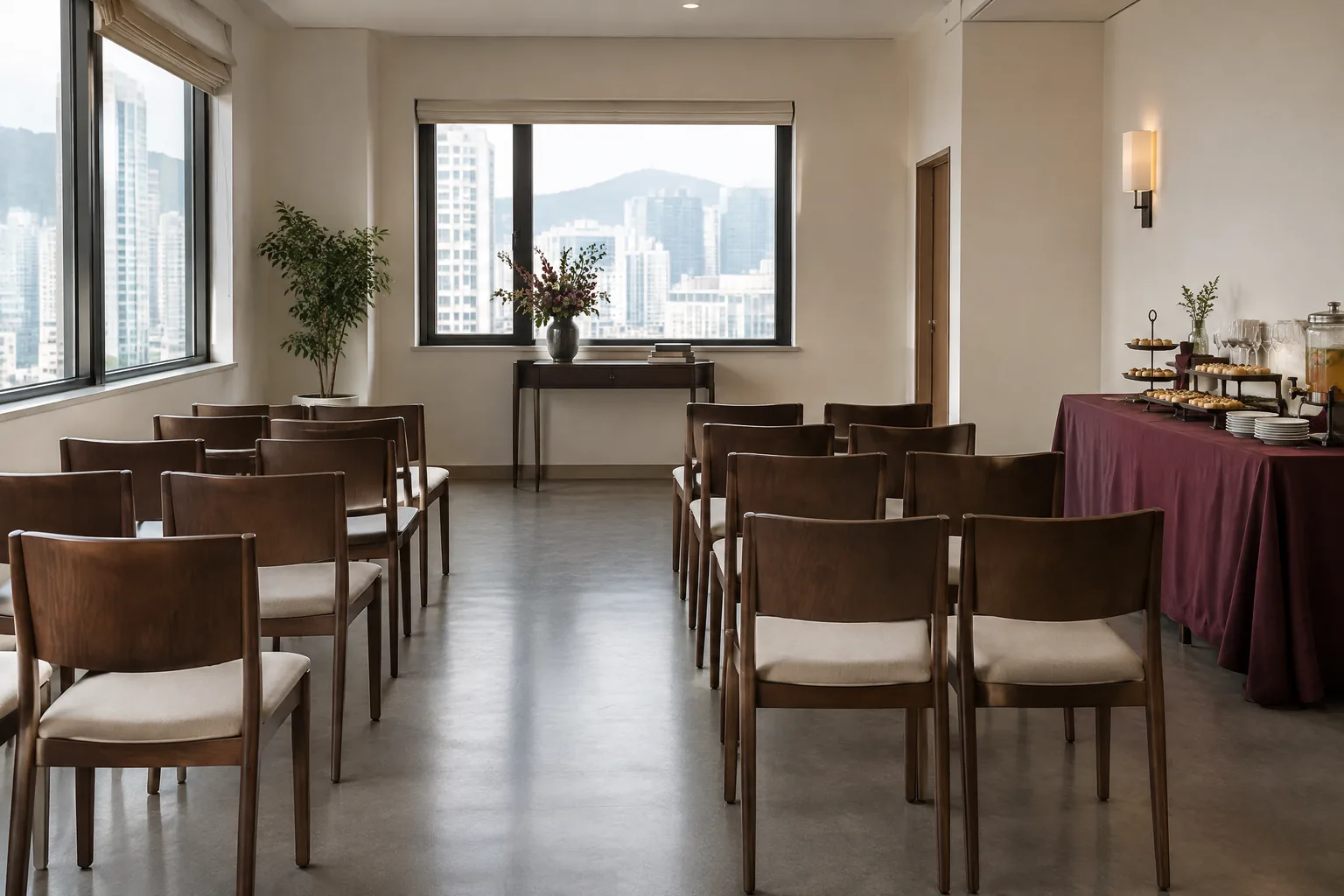
Prepare a genuine no-delivery option. With company approval, this could be an extended break for participants to buy lunch locally, using a stated reimbursement limit and receipt procedure. Check that nearby outlets are open and that participants have a realistic way to obtain suitable meals and return. Do not assume a restaurant can seat the whole group without agreement. Individual takeaway purchases may fit better than a sudden group booking.
Make the arrangement usable for people who cannot simply walk out with everyone else. Consider mobility needs, visitors unfamiliar with the area and participants who need more time to find a suitable meal. Ask privately what assistance would help. If conditions make an off-site break impractical, the host may need to pause, shorten or reschedule the session. A packet of snacks is not a substitute for lunch unless that change has been clearly discussed.
Once the deadline passes without an accepted meal plan, announce the fallback and the revised restart time. Explain the meal allowance or purchase procedure without claiming that catering is still definitely coming. Keep resolving the original order, but stop participants from waiting on it. If confirmation arrives later, assess whether it still fits the programme before accepting; do not undo a communicated break merely to preserve the appearance of the original plan.
| Route | Use only when | What must be settled |
|---|---|---|
| Keep lunch at the original venue | Participants can still eat there within the programme | Room access, receiver and onward travel after lunch |
| Redirect the existing order | Merchant accepts the change and new venue can receive it | Replacement instruction, charges, access and viable serving window |
| Place a replacement order | A separate offer is accepted and extra spending is authorised | Original order liability, dietary requirements and receiving capacity |
| Use a no-delivery meal break | No viable catering arrangement is confirmed by the decision deadline | Local options, assistance, reimbursement rules and restart time |

Close the original order and record the actual outcome
A fallback solves lunch, not the outstanding contract.
Record whether the original order was redirected, received at the first venue, cancelled or left subject to a disputed change. Ask for written confirmation of the merchant's position and any charge or refund arrangement. Do not mark it cancelled simply because the group has moved. If food remains at the original venue, any further use needs an authorised recipient and appropriate handling; leaving it for unspecified colleagues does not settle responsibility.
Separate the catering invoice from fallback expenses. Retain the approval for additional spending and the receipts required by the company. Record any credit agreed with the merchant without counting it as money already returned. This lets the budget owner see the cost of the venue change clearly, including unavoidable original charges, instead of discovering duplicate spending after several staff submit claims.
Finish with a short operational note for the next training session: which building detail caused difficulty, who approved the fallback and what deadline worked. Store reusable access instructions only with permission and check them again before another event. The useful lesson is not that Central or Kwun Tong is difficult; it is which specific assumption failed and how the team can avoid making it again.

- Confirm where participants will be during lunch, not just where training resumes.
- Obtain outside-food permission and access instructions from the replacement venue.
- Ask the merchant for the current preparation and dispatch status using the order reference.
- Get written acceptance of the revised address, window, quantities and charges.
- Name a receiver and backup; keep commercial changes with one authorised coordinator.
- Set a decision deadline and an approved no-delivery meal arrangement.
- Close the original order separately and keep invoices, approvals and fallback receipts.
The workable fallback is the one that removes uncertainty before it consumes the lunch break. Check the room, learn the order's actual status and ask for a specific accepted change. If that cannot be secured by the agreed deadline, give participants a clear alternative and a revised timetable. Continue resolving the original order afterwards, without treating the venue move as a cancellation or an automatic right to redirect food.
Should we change the address before the new room is fully confirmed?
No. Tell the merchant that a venue change is being considered and ask what can still change, but identify the new address as provisional. Obtain room access and food permission before issuing a replacement delivery instruction. If the original dispatch is approaching, ask for an explicit decision on whether it can pause; do not assume your warning message has stopped it.
Can someone collect lunch in Central and carry it to Kwun Tong?
Only consider collection after the merchant has confirmed the handover and suitable transport and holding arrangements. Check who can carry the quantity, what equipment is required and when the food must be served. Do not treat a colleague's availability as proof that the journey is appropriate. If the food's handling history or transport requirements cannot be established, choose another meal arrangement.
What if the merchant replies after our fallback deadline?
Tell the merchant whether the proposed order is still wanted before accepting anything. An offer received after participants have left for their meal break may no longer fit the event. Keep the original order discussion separate and confirm any cancellation position in writing. A late reply is not a reason to create a second meal that the group has no time to eat.
Does an unchanged guest count mean we can reuse the meal list?
Check who is actually attending the relocated session. Some participants may stay at the original office or join remotely, while replacements may have different dietary requirements. Keep the original quantities visible until the merchant confirms an amendment. Changing the attendance list does not itself change the paid order, and dietary details should not be posted in a general venue-change announcement.
What should participants hear while the food decision is unresolved?
Give them the confirmed training location and say when the lunch arrangement will be announced. Avoid sharing speculative delivery times. At the decision deadline, communicate one settled plan with a clear break and restart time, plus any purchasing or reimbursement instruction. Provide a private contact for anyone who needs assistance rather than asking people to explain dietary or mobility needs to the whole group.
Before requesting a venue change, gather the confirmed room address, access rules, receiving window and order reference. Ask the merchant what it can accept in writing, and obtain the host's approval for a no-delivery fallback before the decision deadline.
Sources & supported claims
- Labour Department: Employers and employees should make work arrangements in times of rainstorm warnings
Employee safety and feasible travel should take priority; indoor staff should continue work during Red or Black warnings issued within working hours unless dangerous, and stay in a safe place if Black remains at the end of working hours until heavy rain passes.
- Centre for Food Safety: Control for Safe Delivered Foods
Hot delivered food should be kept above 60°C and cold food at or below 4°C; time in the temperature danger zone is cumulative across handling, storage and transportation.