
Gatherings & catering
Content updated
On this page
- Set contribution boundaries before choosing the menu
- Count people who need dinner, not names in the chat
- Read the serving assumptions behind a package name
- Compare the ten- and twenty-guest options on the same brief
- Hold back money for a defined addition
- Set the RSVP decision point before the supplier's cutoff
- Agree what happens to unused food and unspent money
- Questions & answers
- Sources & supported claims
An uncertain dinner headcount: book food without overcommitting
For an uncertain dinner headcount, book a meal for the people who have actually confirmed, then arrange a separate way to feed later additions if the supplier can accommodate them. Do not buy for the entire invitation list simply because it might double. At a shared-flat farewell dinner, agree who is funding the base order before anyone pays a deposit. Keep money for extra food unspent until there is a real need, and make clear that unanswered invitations do not carry a promise of a catered meal.
The workable choice is not automatically the smaller package. It is the smallest confirmed order that provides the intended dinner, with a credible alternative for extra guests. Compare dish quantities, the complete bill and the supplier's change deadline. A larger order makes sense only when the group knowingly accepts its cost and can manage the food if fewer people attend.
Set contribution boundaries before choosing the menu
A shared invitation does not mean an equal spending commitment.
Ask each housemate what they are comfortable contributing, privately if necessary. Separate money for the common dinner from optional drinks, a farewell gift and anything one person wants to upgrade. Someone contributing less should not have to defend their finances in the group chat. Agree an affordable common meal first; a housemate who wants an extra dish can offer to fund it without increasing everybody else's share. Record whether that offer is a gift or an amount they expect others to repay.
Give one person permission to place the order, but define the spending limit they can approve. Collect agreed contributions before making a commitment rather than relying on promises to settle later. Keep a simple record showing each payment, the committed food cost and money still available. If someone pays the supplier on behalf of the flat, that payment is not permission to increase the order. Any amount above the agreed limit needs fresh approval from the people who would fund it.
Use Budget Catering as a starting point for discussing simpler menu formats, not as proof that a particular dinner will fit the flat's budget. Request the total for your actual date and address, including any separately charged items. Compare that total with money already agreed, not the theoretical amount everyone might eventually contribute. Decide now whether shared costs will be divided equally among diners or covered by fixed individual pledges. Mixing those methods after the meal can leave the organiser paying an unexpected shortfall.
Count people who need dinner, not names in the chat
Keep uncertainty visible instead of turning it into guessed portions.
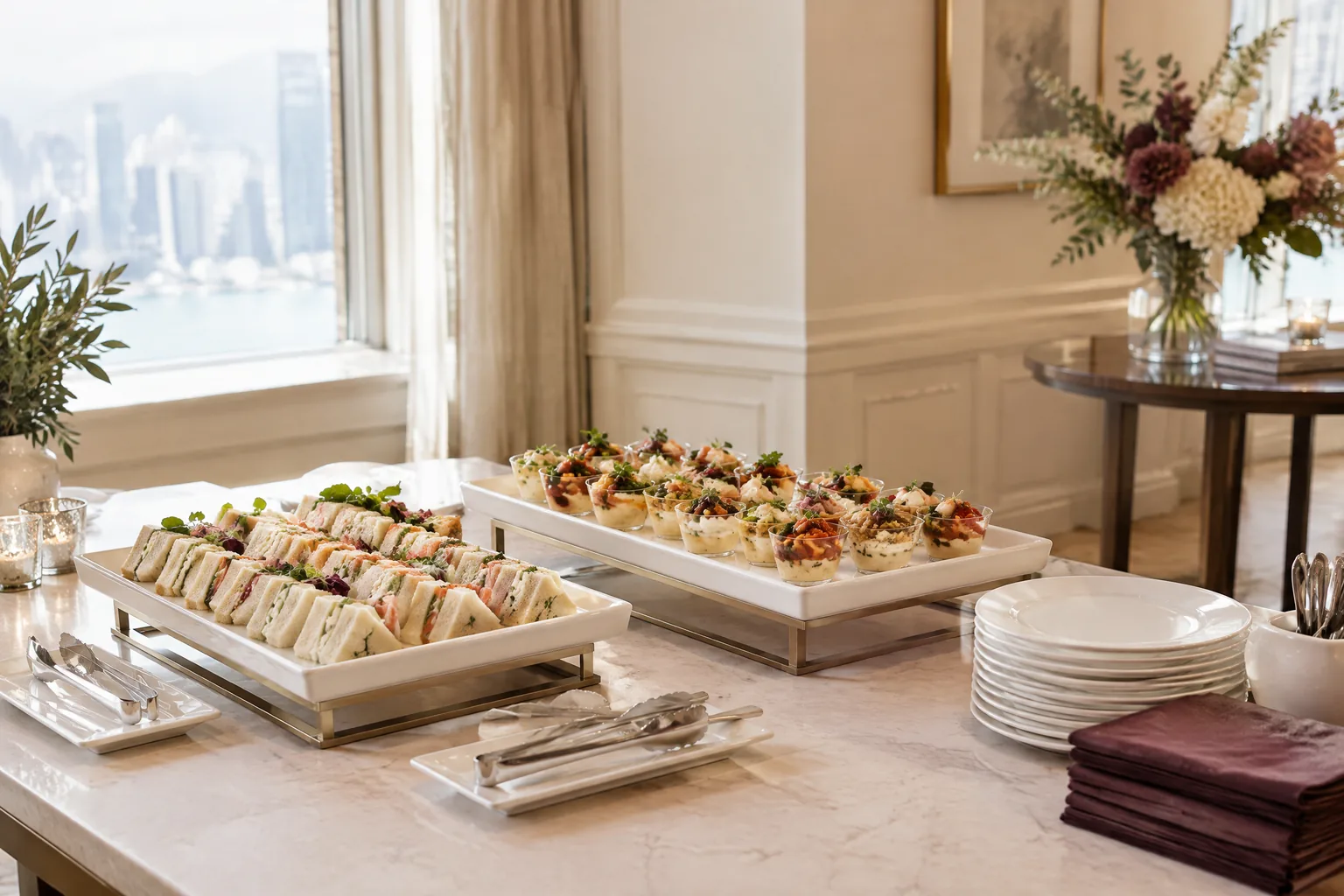
Make a guest list with three clear statuses: confirmed for dinner, visiting without dinner, and not yet confirmed. Ask when each confirmed diner expects to eat. A friend coming after a late shift may still need a whole meal, while someone dropping in after eating elsewhere may not. Do not count that late worker as half a diner or assume the visitor will make do with leftovers. State the planned meal time in the invitation so people can answer the right question.
For example, the flat might have eight confirmed diners and an invitation list that could reach sixteen. Keep those two numbers in separate places. The larger figure is useful for checking whether the room can accommodate everyone; it is not the current food order. Mark plus-ones as confirmed only when someone names them and confirms that they need dinner. Ask the departing housemate which guests matter most before widening the invitation, rather than paying for a growing list that nobody owns.
Collect dietary needs alongside meal confirmations, using a private reply where appropriate. Send the supplier the specific ingredient or preparation questions that matter to those guests. A vegetarian label does not establish that a dish meets every restriction, and a special-diet name is not certification or an allergen-free guarantee. If a suitable meal cannot be confirmed, agree another arrangement with that diner before collecting their contribution. Do not quietly replace their dinner with the communal snack tray.
Read the serving assumptions behind a package name
A group-size label is a question to investigate, not a portion guarantee.
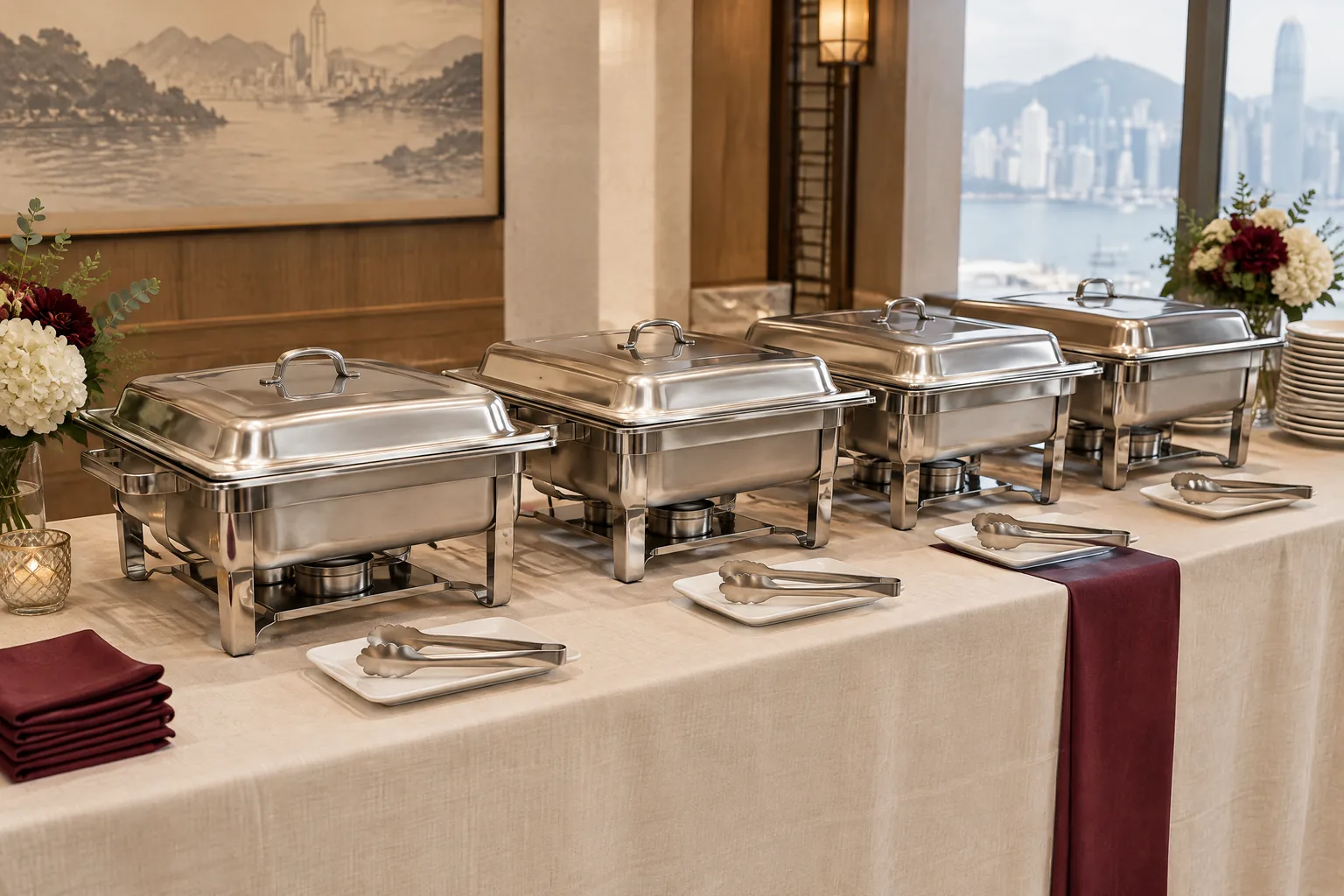
The Catering Packages overview can help narrow the menu formats you want to discuss. Once you have a shortlist, ask for an itemised proposal: the dishes, quantities and the meal occasion those quantities are intended to cover. Explain that this is the main evening meal, not refreshments before another dinner. Ask how the supplier describes the portions and whether sauces, rice or other accompaniments are included. Photographs can show presentation, but they should not be used to count servings.
Compare like with like across the proposals. An item counted in pieces and a shared tray described by weight answer different questions. Ask how many pieces of a limited item are included and how the shared dishes are expected to be divided. Check whether the menu has enough of the foods everyone can eat, not merely enough dishes overall. Several attractive appetisers do not necessarily fill a gap in the main meal. Avoid trying to translate an unclear tray description into a precise dinner count yourself.
Tell the supplier what the flat can actually support. Give the usable serving surface, refrigerator space and any reheating limitations rather than just the address. Ask about container dimensions if the table is narrow. A menu requiring equipment the flat cannot use is not practical, even if its advertised group size looks right. Before confirming, identify who will receive the order and where the food will go. These answers also reveal whether another round of food could realistically be accommodated later.
Compare the ten- and twenty-guest options on the same brief
Check what changes in the food and the bill when the group grows.
Use the 10 Person Catering Package page to begin a small-gathering enquiry, then ask whether the proposed quantities suit your confirmed dinner guests. A smaller base can be sensible when attendance is uncertain, but only if it provides the meal you intend. Ask separately about feeding additional named diners. The answer may be extra dishes, a revised package or no available change. Do not describe the booking to your housemates as expandable until the supplier has accepted a specific arrangement.
Request a second proposal through the 20 Person Catering Package page using the same dinner time, address and dietary brief. Compare the actual differences: dish quantities, menu changes, separate charges and total payment. Do not assume the larger proposal is simply twice the smaller one or that two small orders equal one larger order. Ask whether the option would change the amount of serving space or equipment needed. A more economical-looking package can still create costs and storage problems that the flat has not agreed to cover.
Choose the larger order only when the group accepts paying for it even if the unresolved guests do not come. Otherwise, use the confirmed base with accepted additions, or close the catered dinner list and welcome later visitors without promising food. The decision table below separates those choices. If no supplier change is possible and you want every invited person to have dinner, either fund that commitment openly or change the invitation. There is no ordering trick that removes both the cost of spare meals and the risk of insufficient food.
| Model | When it works | What must be agreed | Main trade-off |
|---|---|---|---|
| Confirmed-only dinner | The current diners are known and late meals cannot be arranged | Dinner cutoff and clear notice to later visitors | Limits spending, but does not promise food for every visitor |
| Confirmed base with accepted additions | Supplier has confirmed a workable change option | Extra quantities, total charges, acceptance deadline and funding | Avoids an oversized base, but expansion remains conditional |
| Fixed larger order | Contributors willingly fund the invited maximum | Complete bill, serving capacity and unused-food plan | Covers a wider invitation, but fewer arrivals may leave surplus food |

Hold back money for a defined addition
A reserve is useful only when someone knows how to use it.
Set the additions budget around a concrete scenario, such as feeding two newly confirmed diners, rather than an unexplained percentage of the bill. Obtain a quotation for that scenario if possible. Check whether an addition has its own minimum quantity, handling charge or collection requirement. Keep this money separate from the base payment and from the farewell gift fund. Holding money back does not reserve stock or a delivery slot, so tell the group what remains unconfirmed.
Name the person who can authorise the extra spend and the event that triggers it. A useful rule is that additional dinner guests must confirm before the agreed cutoff, and the organiser must obtain supplier acceptance before using the reserve. If guests are funding their own additions, say when their payment is needed. One housemate should not order more food just because the chat becomes lively, nor should the person receiving the food have to make an expensive decision at the doorstep.
Consider a fallback that does not depend on a late supplier change. The flat could plan a separately purchased meal for late confirmations, provided someone checks availability and is willing to collect it. That is a new purchase, not an assumed extension of the catering booking. Choose a fallback that suits the guests' dietary needs and your kitchen arrangements. If nobody can carry it out, it is not a backup plan. In that case, make the dinner cutoff firm rather than presenting an uncertain option as reassurance.
| Amount | Record it as | Who decides |
|---|---|---|
| Base order | Accepted supplier commitment against collected contributions | Named organiser within the agreed limit |
| Addition reserve | Unspent money, not a supplier reservation | Named approver after guest and supplier confirmation |
| Personal upgrades | Separate optional spending | The person who agrees to fund them |
| Balance to return | Actual unspent amount using the agreed allocation method | Contributors agree the method before booking |
Set the RSVP decision point before the supplier's cutoff
Allow time for one clear order update and an accepted reply.
First ask the supplier when quantities become fixed and what can still change afterwards. Then choose a guest reply deadline that leaves the organiser enough time to reconcile the list, check payments and submit one update. Use a date and time, not 'by tomorrow' in a long-running chat. Remind guests once and explain the consequence: an unanswered invitation will not be included in the catered dinner order. Do not announce that the whole gathering is cancelled merely because some meal replies are missing.
Once the decision point arrives, save the diner list and send the supplier a single final brief. Include the accepted menu, quantities, dietary questions already resolved, handover arrangement and complete price. Ask for confirmation of any revision rather than treating a sent message as an accepted change. Keep the original quotation and the revised one so the housemates can see what was added. If someone cancels after that, check the actual booking terms before promising a reduced bill.
The Hong Kong Consumer Council's banquet-booking guidance advises recording arrangements and associated fees in the contract, checking whether changes are allowed and their deadlines, and reviewing cancellation or refund policies before signing. For this flat dinner, turn that advice into direct questions about the proposed order. Ask what happens if the headcount falls, an addition is declined or the dinner is cancelled. Those answers must come from your supplier; the Council's examples do not establish YumYum's terms or an automatic right to a refund.[1]

Agree what happens to unused food and unspent money
Avoid leaving the organiser with both the bill and the clearing up.
Before dinner, agree how remaining money will be returned. If the reserve came from uneven contributions, returning it in proportion to the amounts paid is one possible housemate agreement; fixed pledges could instead remain fixed if everyone explicitly agrees. Choose the method now. Distinguish an unspent reserve from money already committed to a supplier. A departing guest does not automatically release their share of that commitment, and another guest taking food home does not automatically owe an extra payment.
Plan leftover handling before opening every container. Hong Kong's Centre for Food Safety advises cooling leftovers promptly and putting them in the refrigerator within two hours. Dividing food into smaller portions and using shallow containers helps it cool more quickly. Check that the shared fridge has space and nominate someone to manage the timing. Where food is deliberately intended for another meal, the Centre advises setting aside the required amount before dining to avoid contamination at the table. This is more practical than discovering full trays after everybody has left.[2]
Do not promise that all spare food can be saved. The Centre's room-temperature guidance allows food held for two to four hours to be eaten immediately, but not refrigerated for later; food left for more than four hours should be discarded. Keep track of handling time rather than restarting the clock when a lid is closed. If you cannot establish the food's history, seek appropriate advice rather than assuming it is suitable to take away. Finally, share the final bill and balance with the contributors, then arrange any agreed repayment promptly.[3]

- Record confirmed dinner guests separately from visitors, unanswered replies and unconfirmed plus-ones.
- Agree individual contributions, the organiser's spending limit and the rule for personal upgrades.
- Request itemised quantities and the complete bill for the actual dinner brief.
- Confirm any addition option, its charges and the supplier's acceptance deadline in writing.
- Set a guest reply cutoff that allows time to submit and confirm one final update.
- Agree cancellation contributions, leftover handling and the allocation of unspent money.
Book the dinner you can currently fund and serve, not the attendance you hope for. Keep uncertainty in the guest list until it becomes a confirmed meal request. An additions reserve, accepted supplier terms and a clear contribution agreement let the housemates celebrate a farewell without handing one organiser an open-ended food bill.
Should we book for everyone invited if only half have replied?
Only if the contributors knowingly agree to fund that larger commitment. Otherwise, order for confirmed dinner guests and explain what later replies will mean. Ask about a specific addition option before relying on it. The maximum invitation count helps with room planning, but it is not evidence that those people need meals or that extra food can be supplied later.
How can the split be fair when housemates contribute different amounts?
Agree fixed pledges or an equal diner share before booking, rather than switching between them afterwards. Keep optional upgrades separate. With fixed pledges, clarify who covers a shortfall and how any unspent reserve is allocated. Fairness depends on an agreement everyone understands, not on the organiser choosing a formula after seeing the final bill.
Can we stretch a smaller package by adding rice ourselves?
Do not assume a staple solves every portion gap. Check how much of the shared mains is included and whether all diners can eat them. A home-prepared addition also needs someone to buy, prepare and serve it within the flat's limits. Tell guests what the dinner actually includes; do not present a package label as a guarantee for extra diners.
What if a confirmed guest cancels after the order is fixed?
Ask the supplier whether a reduction is accepted and whether it changes the payment. Until that is confirmed, treat the original amount as committed. Use the housemates' pre-agreed cancellation arrangement for the guest's contribution. If another person takes their place, recheck the new diner's dietary needs rather than assuming the same meal will suit them.
Should late visitors pay if they only have drinks and a few snacks?
State the arrangement in advance. You can separate optional drinks from the shared dinner cost and let visitors know whether snacks are available. Avoid asking for a full dinner contribution from someone who was told they were attending without dinner. Equally, do not promise access to the meal ordered for confirmed diners unless the group has arranged enough food.
Ask the caterer for an itemised base-order quotation and a separately priced addition scenario. Share both with the housemates and agree the spending limit before confirming an order.
Sources & supported claims
- Consumer Council: Review wedding banquet contract terms to minimise disputes
The Council advises recording arrangements and associated fees in the contract, checking permitted modifications and deadlines, and reviewing cancellation or refund policies before signing. The article applies these as questions, not YumYum terms.
- Centre for Food Safety: Handling Leftovers
Cool leftovers promptly and refrigerate within two hours; smaller portions and shallow containers aid cooling. For food intended for another meal, set aside the required amount before dining to avoid table contamination.
- Centre for Food Safety: Handling Leftovers
The room-temperature rule allows immediate consumption but not refrigeration for later at two to four hours; food left for more than four hours should be discarded.