
Gatherings & catering
Content updated
On this page
- Measure the storage you can actually use
- Separate raw, chilled cooked and hot cooked dishes
- Make the handover more precise than a delivery time
- Give sushi and sashimi different service decisions
- Check hidden seafood and give guests a genuine alternative
- Give one person authority to stop or change service
- Choose the simpler menu while there is still time
- Questions & answers
- Sources & supported claims
Office seafood reception logistics: when to simplify the menu
Good seafood reception logistics start with permission to leave seafood off the menu. For an office with limited chilled storage, sushi or sashimi is realistic only when the supplier and venue can explain how the actual food will be transported, received, held and served. A short reception does not remove the need for those arrangements. If the fridge cannot fit the trays, nobody can oversee service, or the handling history is unclear, choose a less demanding menu rather than improvise after delivery. Guests need a workable meal, not a centrepiece that the office cannot manage.
Check usable storage before choosing dishes, then separate raw seafood from cooked options and ask for product-specific instructions. Limit display quantities to what the agreed service arrangements can support. A smaller menu may still need temperature control, but it can reduce competing equipment needs and make responsibility clearer. Decide on the fallback before committing to the order.
Measure the storage you can actually use
A pantry fridge is not an event-storage plan.
Start with a practical inspection of the pantry, not the fridge's advertised capacity. Look at the space left after staff lunches and drinks, the shelf positions and the access route from reception. Ask the supplier for the packed tray dimensions, including lids. A tray that fits only when tilted is not a suitable fit. Establish who may clear the shelves and when; a promise that colleagues will probably move their lunch boxes leaves the organiser without dependable space.
Think about reserve food as well as the first display. If guests arrive in waves, the later trays need somewhere appropriate to wait. Drinks can compete for exactly the shelf space the food needs, so plan their storage separately. Do not assume a borrowed cooler or a decorative bowl of ice replaces a refrigerator. Ask the caterer to specify whether any proposed equipment can maintain the required conditions for the food quantity and service period, and who will supply and supervise it.
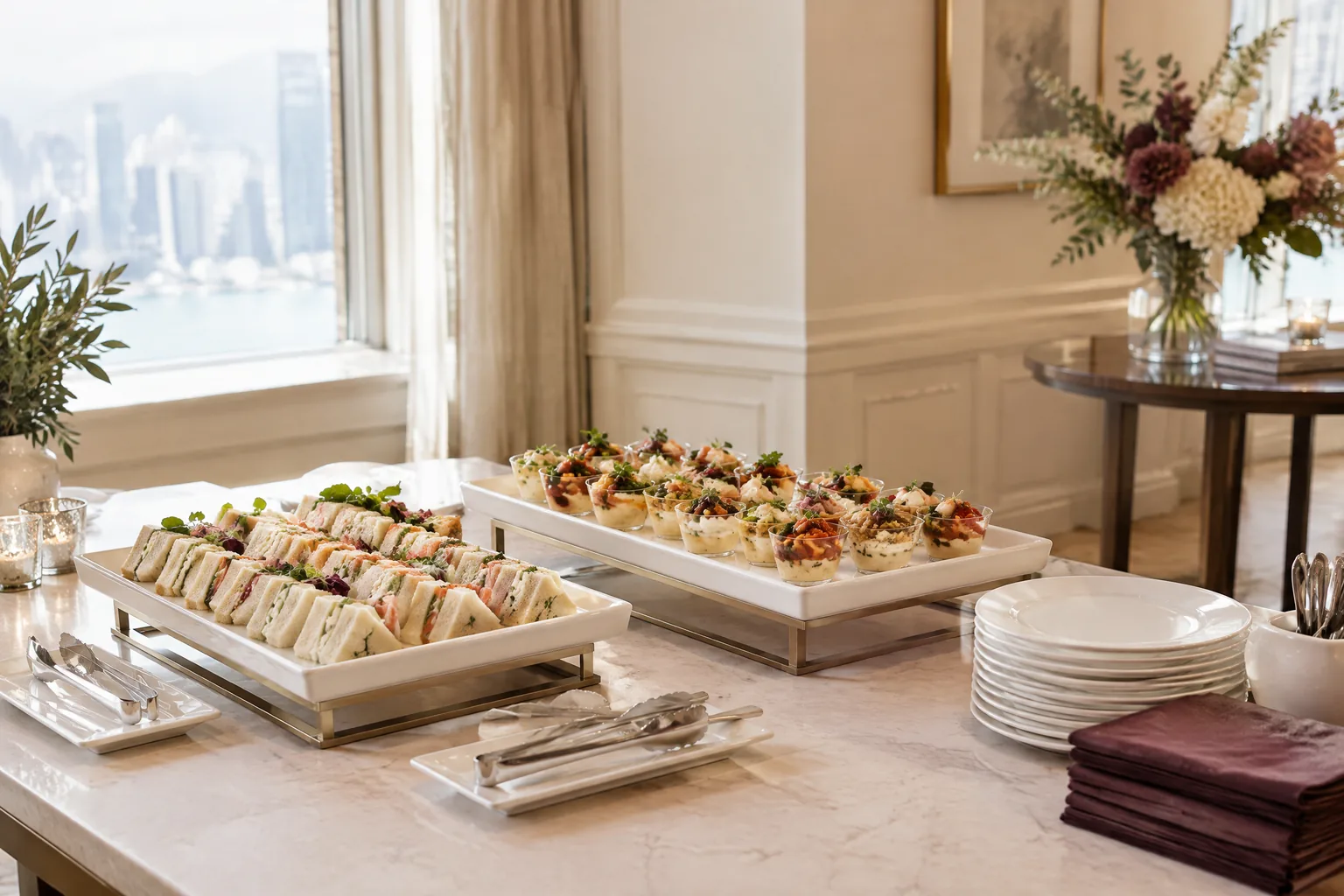
The Centre for Food Safety's sushi and sashimi guidance recommends chilled storage between 0°C and 4°C, monitoring fridge temperatures and maintaining records. It also warns against overstuffing refrigerators. These points matter when deciding whether an office appliance is usable for the event. Ask how its temperature will be checked under the planned load, rather than relying on the dial setting. If there is no workable way to fit and monitor the food, resolve that limitation before selecting a chilled seafood platter.[1]
Separate raw, chilled cooked and hot cooked dishes
Cuisine names do not describe holding requirements.
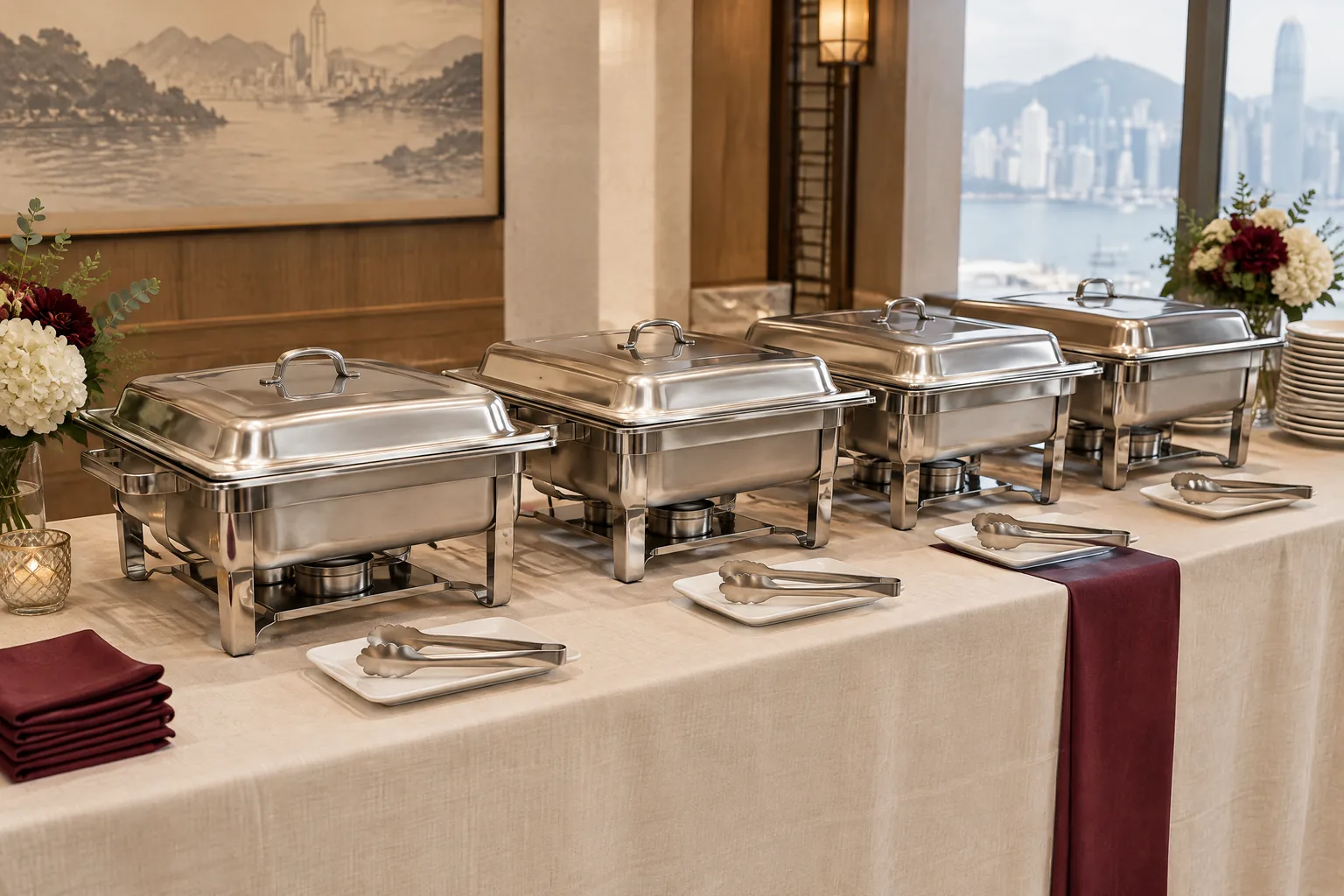
Break the proposed menu into actual dishes. Raw fish slices, chilled cooked prawns and hot baked fish are all seafood, but they should not receive one general instruction. Record whether each dish arrives ready to eat, requires any preparation, and needs cold or hot holding. An office without an approved preparation area should not accept a menu that quietly depends on staff cooking, thawing or assembling seafood. Those tasks need an explicit arrangement, not an extra favour from whoever reaches the pantry first.
Cooking does not turn a dish into food that can wait indefinitely on a conference table. The Centre for Food Safety identifies 4°C to 60°C as the temperature danger zone where bacteria can grow rapidly. Its guidance also explains that chilling inhibits bacterial growth but does not kill bacteria. A chilled cooked dish therefore still needs a holding plan. For an organiser, the useful question is which conditions each finished item requires throughout the event, not whether it was cooked earlier in the kitchen.[2]
A Japanese-style reception need not centre on raw fish. The Japanese Catering page presents cooked dishes and set-menu formats that can help you frame a different enquiry. Ask which proposed combination suits the equipment your office can actually provide, while confirming ingredients and handling separately. Replacing sashimi with cooked food is not, by itself, a complete solution. It works only when the alternative's requirements are easier for the venue to meet and the supplier agrees to that arrangement.
Make the handover more precise than a delivery time
Arrival at the building is only one point in the journey.
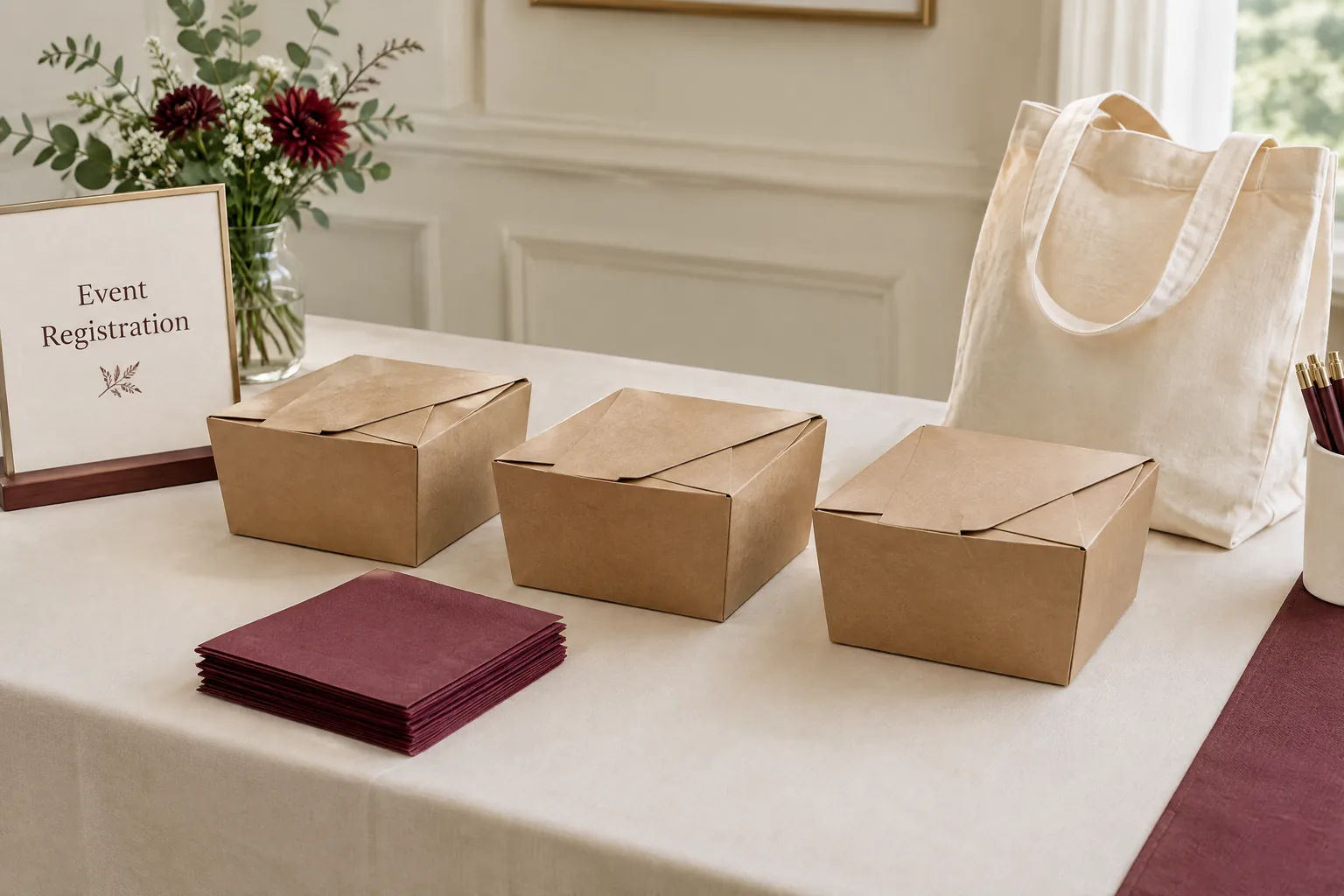
Use the Catering Delivery page as a starting point for a specific handover enquiry, not as evidence that your reception has a cold chain. Explain the building entrance, security procedure, lift access and receiving location. Ask where responsibility transfers and whether the food will reach the planned storage area with its handling instructions. A lobby receipt should not leave sealed trays waiting for a colleague who is still presenting upstairs. The office needs a named receiver available for the whole accepted arrival window.
Before ordering, request the information needed to assess the actual delivery: the packaging and holding method, relevant times, the checking method on receipt and any records the supplier can provide. Agree what to do if packaging is damaged, the expected checks are not satisfied or instructions are missing. A bag that feels cool is not a temperature record. Office staff should not invent a testing procedure at the door; the supplier should explain what a suitable handover check involves and who is equipped to perform it.
Separate delivery timing from guest-service timing in the running order. A reception might begin with a welcome speech, followed by refreshments, rather than immediate eating. Give the caterer that sequence and ask whether food can remain under suitable control until it is needed. If the speech changes, contact the supplier before dispatch where possible. An earlier arrival may create a storage problem rather than solve a punctuality problem, particularly when the pantry is still being used for an ordinary working day.
| Event point | Question to settle | Responsible contact |
|---|---|---|
| Building arrival | How will security and lift access be handled? | Office receiver |
| Food handover | What checks and handling information accompany the trays? | Supplier and receiver |
| Waiting before service | Where will each dish remain under its required conditions? | Food-service lead |
| Guest service | Who releases, supervises and withdraws each tray? | Food-service lead and agreed service staff |
| Programme delay | Which change can be authorised before dispatch or service? | Organiser and supplier |
Give sushi and sashimi different service decisions
Do not borrow a timing exception without its conditions.
When considering Sushi & Sashimi Catering, ask for the proposed pieces and raw ingredients rather than approving a platter photograph. Find out whether cooked and raw selections can be kept distinguishable during service, and whether a smaller batch format is possible for your event. These are questions for the supplier, not promises about available customisation. Decide how much food can remain in reserve and how each tray will be identified when released. A generous display is not useful if it exceeds the holding arrangement.
The Centre for Food Safety advises keeping prepared sushi at 4°C or below. Its guidance allows a documented time-control approach above that temperature for properly handled sushi with rice acidified to pH 4.6 or below. That conditional advice should not become a blanket four-hour allowance for an unverified platter. The same guidance says displayed sashimi should be kept at 4°C or below, apart from a specific exception for live bivalve molluscs intended for raw consumption. Ask the caterer which instructions apply; do not treat sushi and sashimi as interchangeable.[3]
The guidance also calls for covered food, appropriate serving utensils and trained supervision of self-service areas. Translate those needs into the reception layout with the supplier: where covers go during service, which utensils belong to which tray, and who replaces a contaminated utensil. Avoid putting the food beside registration paperwork where guests lean across it. Smaller serving quantities can make replenishment more manageable, but they do not compensate for unsuitable reserve storage or an unattended table.[4]
Check hidden seafood and give guests a genuine alternative
A dish name is not an ingredient disclosure.
A broader Seafood Catering enquiry should identify the ingredients and preparation of each proposed dish, including sauces, stocks and garnishes. A fish dish might arrive chilled rather than hot; a vegetable accompaniment might contain a seafood-based seasoning. Ask about these details before producing guest labels. For a straightforward office event, consider leaving live shellfish and dishes requiring specialist handling out of scope. Do not accept an item simply because it appears under the same seafood category as something your venue can manage.
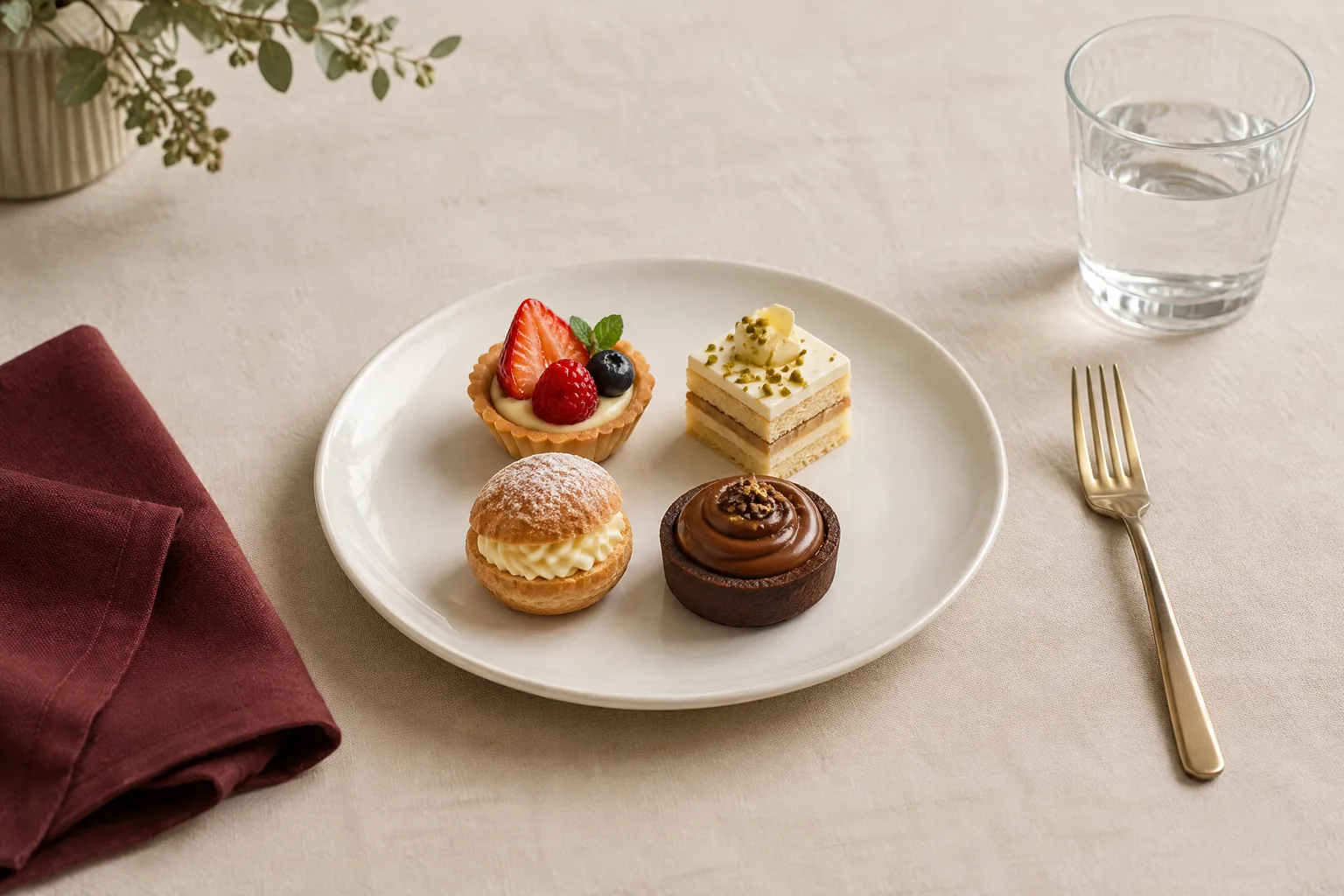
Ask guests privately for dietary requirements using a named contact and a clear response deadline. Explain what information the supplier needs without asking colleagues to publish medical details in a shared spreadsheet. Keep supplier-confirmed alternatives identifiable and discuss how they will be served. A vegetarian dish name is not an allergen-free guarantee, and a separate label does not establish separate preparation. If a requirement cannot be confirmed, tell the guest before the event so they can make their own decision rather than discover the uncertainty at the buffet.
The Centre for Food Safety's consumer advice on sushi and sashimi says raw-ingredient options are not advisable for people with impaired immunity, including pregnant women, elderly people and those with chronic illness. For a mixed office reception, provide a clearly described alternative without requiring anyone to explain why they chose it. This is not a reason to police colleagues' plates or offer personal medical advice. It is a reason not to make raw seafood the only substantial food available to guests.[5]
Give one person authority to stop or change service
Responsibility must survive a busy reception.
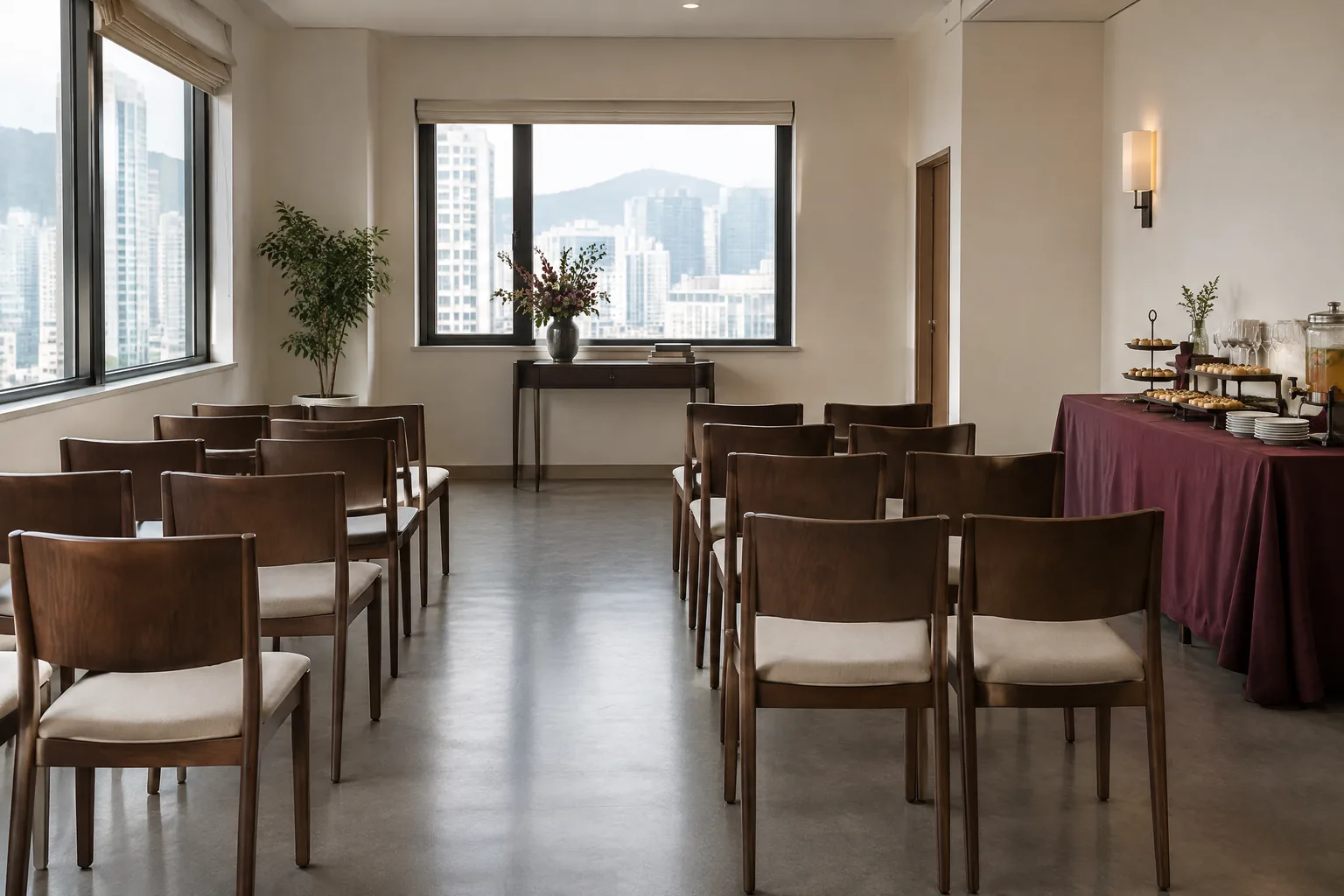
Choose a food-service lead who is not simultaneously hosting the speaker or running registration. Agree their duties with the caterer: receiving information, checking storage arrangements, following the monitoring instructions and controlling tray release. Name a backup for breaks. A reception team can share practical tasks, but everyone should know who has authority to hold an item back. Otherwise a concerned colleague may hesitate while another opens the tray to make the table look ready.
Keep a simple record that matches the agreed handling plan. It might include tray identification, receipt, storage, release and withdrawal, together with the checks required by the supplier. Distinguish known facts from assumptions: a courier's arrival time does not establish how long food was previously outside temperature control. If a relevant period is unknown, stop and seek the supplier's direction. Putting an item back in a fridge is not a way to erase an uncertain handling history.
Write the response to delays into the running order. If speeches run late, guests arrive gradually or the storage arrangement fails, the lead should know whom to contact and which fallback has already been authorised. Keep unsuitable food out of service while the issue is resolved, rather than asking guests to judge it by smell or appearance. A clear cancellation or replacement decision can be awkward, but it is better than allowing pressure to serve everything that has been paid for.

Choose the simpler menu while there is still time
Reduce the work the venue cannot reliably do.
Use the storage decision table before confirming the menu, not after the order arrives. Verified fridge space and a supervised serving arrangement may support a limited chilled selection, subject to the supplier's instructions. Uncertain space is a reason to pause approval and compare alternatives. No suitable chilled storage is a strong reason to remove raw seafood from the brief unless the caterer proposes and confirms an appropriate controlled service arrangement. The office should not be asked to fill that gap with improvised containers.
Simplifying could mean fewer dishes with compatible holding needs, a cooked menu with an agreed hot-service arrangement, or separately packed meals served in one planned sitting. None of those formats is automatically free of food-safety requirements. Compare the real work involved, including storage for sides, serving equipment and staff availability. Avoid replacing one demanding platter with several small chilled dishes that collectively need more fridge space. The best alternative removes the actual constraint rather than merely changing the cuisine.
For example, an office expecting guests across a long arrival period may find one substantial meal service easier to manage than a continuously replenished seafood table. Discuss that format with the supplier and tell guests when food will be available. Set a decision deadline before ordering: if dimensions, holding arrangements or responsibility remain unresolved, approve the fallback instead. Make the revised invitation accurate and confirm the final scope in writing. A reception can remain welcoming with a modest menu that fits the room and the team.
| Office condition | Decision before ordering | What still needs confirmation |
|---|---|---|
| Usable chilled space and monitoring confirmed | Consider a limited chilled selection | Tray fit, product instructions, reserve quantities and supervised service |
| Fridge available but space or performance uncertain | Pause chilled seafood approval; compare a fallback | Actual loaded capacity, checking method and who clears the shelves |
| No suitable chilled storage | Remove raw seafood unless a confirmed controlled-service solution is provided | Alternative menu holding, service format and supplier responsibility |
| Food handling information missing at handover | Keep the affected food out of service and seek direction | Supplier response and the authorised replacement or withdrawal decision |

- Measure usable fridge shelves against packed tray dimensions and reserve quantities.
- Confirm dish-by-dish ingredients, preparation and required holding conditions.
- Agree a receiving window, building access route and named receiver.
- Obtain the supplier's handover checks, monitoring instructions and delay response.
- Identify dietary alternatives privately without implying an allergen-free guarantee.
- Give a food-service lead and backup authority to withhold or withdraw food.
- Approve a simpler fallback and set the deadline for switching the order.
Choose seafood only when the venue can support the actual dishes from handover to withdrawal. If chilled space, handling information or supervision cannot be confirmed, simplifying is a sensible procurement decision, not a failure of hospitality. The fallback should address the missing capability and have its own agreed food-handling plan. Decide early enough that neither staff nor guests have to improvise.
Can we serve sashimi if the reception lasts only thirty minutes?
The guest-facing duration is only part of the food's journey. Transport, building access, handover and waiting before service also matter. Ask for a chilled holding and display arrangement for the actual sashimi. A short event cannot establish suitable handling by itself, particularly when nobody knows where the trays will wait before guests arrive.
Does a sushi platter without raw fish solve the fridge problem?
Not automatically. Cooked fillings and rice still have handling requirements, and the supplier must explain the instructions for that finished platter. Do not assume the conditional time-control guidance applies because the fish is cooked. Compare the full storage and service needs of the proposed alternative before treating it as easier for the office.
What if the caterer supplies ice packs with the delivery?
Ask what their role is: transport protection, reserve storage or a confirmed display arrangement. Their presence alone does not show that every tray will remain at the required temperature throughout the reception. Confirm the intended duration, equipment setup and monitoring approach with the supplier. Do not extend a delivery packaging arrangement into event storage without agreement.
Should we order extra chilled trays for late arrivals?
Only if there is suitable reserve storage and a clear later-service plan. More food can make a limited-fridge problem worse. Give the supplier the expected arrival pattern and discuss quantities that match it. If late arrivals cannot be accommodated within the agreed handling arrangement, consider a different meal format rather than leaving spare trays on the table.
Can staff take leftover sushi or sashimi home?
Do not build take-home leftovers into the plan without supplier instructions covering the food's actual handling history and the onward journey. Guests may face a long commute or have no chilled transport. Decide how unserved and displayed food will be handled before the event; where the relevant conditions cannot be established, do not offer it as a casual office giveaway.
Before confirming an office reception order, send the caterer your usable storage details and service schedule. Ask for dish-specific handling instructions and a suitable simpler alternative if those arrangements cannot be met.
Sources & supported claims
- Centre for Food Safety — The Making of Safe Sushi and Sashimi
Chilled storage should be between 0°C and 4°C, fridge temperatures should be monitored and logged, and refrigerators should not be overstuffed.
- Centre for Food Safety — Temperature Danger Zone and 2-hour / 4-hour rule
Bacteria can grow rapidly between 4°C and 60°C; chilling inhibits bacterial growth but does not kill bacteria.
- Centre for Food Safety — The Making of Safe Sushi and Sashimi
Prepared sushi ideally stays at 4°C or below. Display above 4°C requires documented time control and the stated general timing exception depends on proper handling and rice acidified to pH 4.6 or below. Displayed sashimi stays at 4°C or below except for specified live bivalves.
- Centre for Food Safety — The Making of Safe Sushi and Sashimi
Self-service food should be covered, sufficient suitable tongs provided and the counter supervised by appropriately trained staff.
- Centre for Food Safety — Sushi and Sashimi in Hong Kong
Consumer advice says raw-ingredient sushi and sashimi are not advisable for people with impaired immunity, including pregnant women, elderly people and those with chronic illness.