
Gatherings & catering
Content updated
On this page
- Make requests voluntary and private
- Separate preference from critical requirements
- Clarify vegetarian and vegan ingredients
- Ask for halal evidence where needed
- Escalate gluten-related handling questions
- Choose alternatives for unverified needs
- Delete unnecessary request data
- Questions & answers
- Sources & supported claims
Handle confidential dietary requests without false promises
Collect confidential dietary requests through a private, optional channel, ask what the meal must exclude, and obtain a specific written response from the caterer before confirming arrangements. Guests should not need to announce a religion or diagnosis to colleagues. Vegetarian, vegan, halal and gluten-free descriptions help start a conversation, but they do not establish certification or suitability for a particular person. Your event team needs enough information to arrange the meal, not a guest's personal history.
Keep the guest's identity separate from the supplier's working meal list wherever practical. Record overlapping requirements together, show unresolved questions clearly, and let the guest review the proposed option privately. If the supplier cannot substantiate a requirement, explain that limitation and agree an alternative rather than treating a menu name as reassurance.
Make requests voluntary and private
Explain who needs the information before asking for it
An international conference registration form should offer a private meal-request field, not a shared spreadsheet where delegates can read each other's answers. Name a contact for anyone who prefers a conversation. Say that submitting a request starts a review and does not guarantee accommodation. If someone leaves the field blank, record that no request was submitted; do not silently classify them as having no allergies or dietary restrictions. A guest may still contact you later.
Hong Kong's Office of the Privacy Commissioner for Personal Data explains that collection should be necessary, adequate and not excessive for its purpose. When collecting directly, explain whether supplying the data is voluntary or obligatory, its intended use, the classes of recipients, and access or correction arrangements. For your form, describe the event meal purpose and who will receive the information. Do not use a vague promise of complete confidentiality when a caterer or serving supervisor needs relevant details.[1]
Useful fields include the meal restriction, a private reply channel and permission to contact the guest about unanswered questions. Avoid requesting passport details, a religious affiliation or medical documents by default. Offer equivalent English and Chinese instructions where your audience needs them, and test that the confirmation message is private too. A discreet form is undermined if its automated reply copies a department manager or exposes the answer in a calendar invitation.
Separate preference from critical requirements
Ask about the meal rather than investigating the person
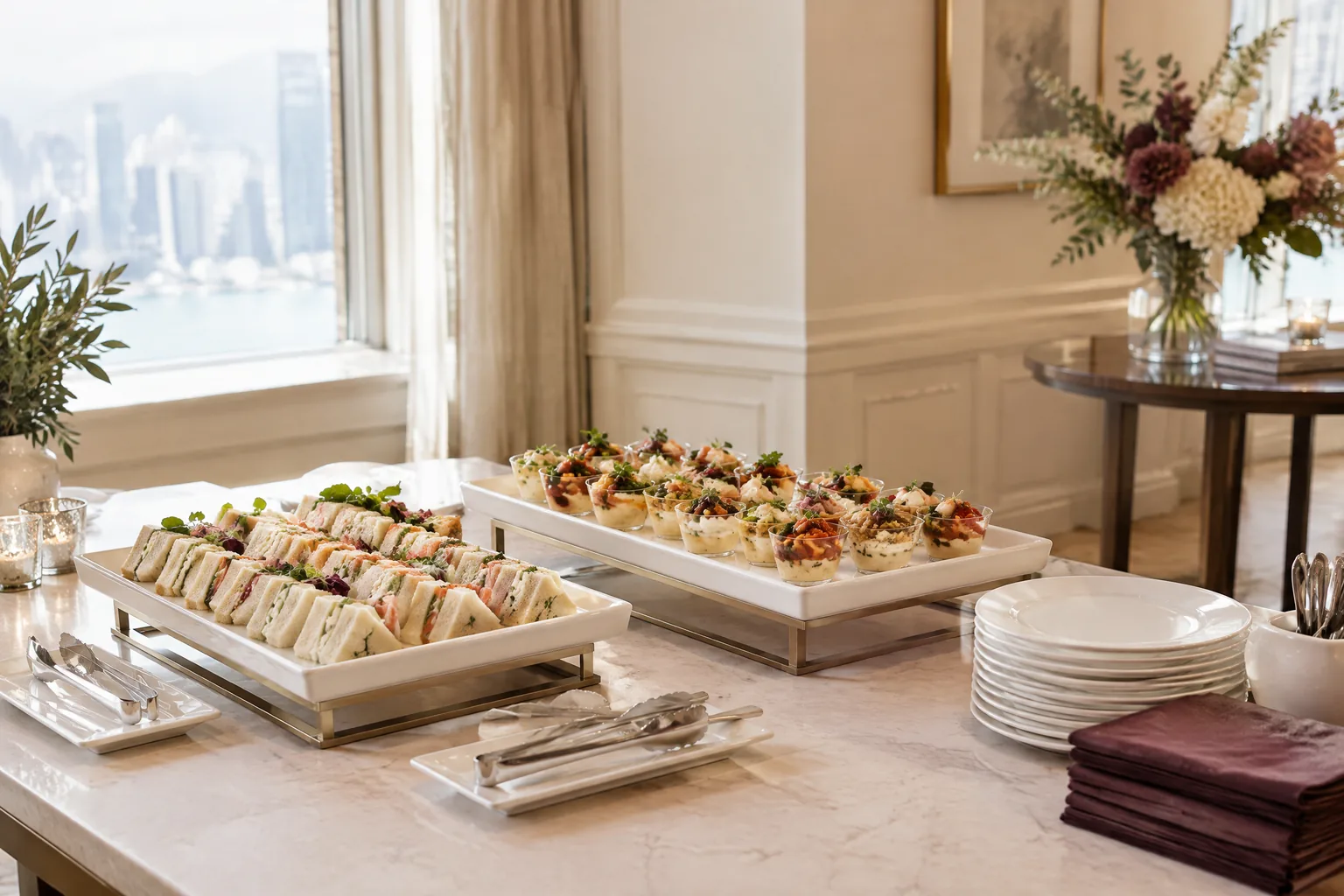
Let guests select more than one applicable requirement, then ask for the ingredients or handling conditions that must be checked. A vegan guest may also avoid nuts; someone requesting halal food may also have a wheat allergy. Keep those requirements on one meal record so they cannot become two separate orders. Use an optional prompt such as, 'Does this request require ingredient and cross-contact checks before you can accept a meal?' Include a private follow-up option if the guest is unsure.
The Centre for Food Safety advises waiting staff to ask customers about food allergies and confirm the relevant ingredients with cooks. Its guidance also calls for preventing unintended allergen contamination of food and cutlery. For an event, that means the supplier's answer should come from someone who knows the recipe and preparation arrangements, not just a salesperson reading the menu title. Cross-contact is unintended transfer between foods or surfaces; an ingredient list alone does not describe how a dish was handled.[2]
Do not ask guests to rank how serious their beliefs or symptoms are. Instead, record what is a preference, what must be excluded, and what remains unclear in the guest's own wording. Separate those descriptions from the order status: received, awaiting supplier response, proposed option sent, or arrangement confirmed. A tick beside 'request received' should never look like clearance to eat. Where the guest needs advice on their own medical restrictions, leave that advice to their healthcare professional.
Clarify vegetarian and vegan ingredients
Check the complete meal, including small additions
For a Vegetarian Catering enquiry, explain whether eggs and dairy are acceptable and whether the guest excludes any other ingredients. Ask about stocks, sauces and garnishes as well as the main dish. A vegetable noodle bowl is not fully described by its topping: the supplier still needs to explain the broth and dressing. If the guest requests an additional exclusion, such as certain seasonings, record it explicitly instead of assuming that every vegetarian menu follows the same convention.
A Vegan Catering enquiry should ask the supplier to confirm the ingredients of the actual proposed meal, including dessert and drinks if these are included. Check whether a replacement dressing, buttered side dish or finishing garnish changes the answer. The event team can request a written ingredient description without promising a particular kitchen arrangement. Ask what happens if an ingredient becomes unavailable: any substitute needs to be checked against the recorded requirements before it is accepted for that guest.
UK government consumer guidance explains that a vegan label does not establish suitability for someone with an allergy to ingredients such as milk or eggs, because cross-contamination can occur during production. This is a useful caution, not a statement about Hong Kong labelling law. Keep an allergy question separate from a vegan preference. Likewise, plant-based dishes can contain ingredients such as nuts or soy, so replacing meat with a plant-based option does not resolve an unrelated allergen requirement.[3]
Give the guest a description they can actually review: the named main dish, sides, sauce and dessert, with the supplier's stated limitations. Avoid forwarding an attractive menu image as the only answer. If the guest needs a follow-up, arrange a private exchange with the supplier or relay the precise question without unnecessary identity details. Their decision to accept an option does not turn an incomplete supplier answer into an allergen guarantee or remove the supplier's responsibility to describe it accurately.
Ask for halal evidence where needed
Check what a document covers, not just whether one exists
Use a Halal Catering page to begin an enquiry, not to announce that a particular event meal is certified. Ask the guest privately what evidence they need to review. If certification is required, request the relevant document from the supplier and check the named issuer, business or premises, validity dates and stated scope. A certificate for an ingredient is not automatically evidence for an entire kitchen, menu or event order. If the scope is unclear, seek clarification rather than filling the gap yourself.
Connect the evidence to the proposed food and how it reaches the guest. Ask which dishes the supplier can support with that evidence, whether preparation or service is subcontracted, and what handling arrangements apply alongside other event food. These are questions to resolve with the supplier; they are not claims that any linked business uses a particular process. A vegetarian option should not be presented as an automatic halal substitute. Offer its ingredients and handling information for the guest's consideration instead.
Do not require a delegate to state that they are Muslim, identify a community or justify why one document is insufficient for them. The organiser needs an operational requirement, such as 'please provide current evidence covering this meal', not a religious profile. Share the supplier's response without strengthening its wording. If the document does not cover what was requested, say so clearly and ask whether the guest wishes to consider another supplier or a different meal arrangement.

Escalate gluten-related handling questions
A familiar food name does not settle the ingredients
The Centre for Food Safety distinguishes wheat allergy, coeliac disease and non-coeliac gluten sensitivity; the body's responses differ. Its gluten guidance also notes that gluten may occur in sauces, soup and vegetarian meat substitutes. Do not turn a guest's short request into a diagnosis, or replace their wording with 'no bread'. Ask what needs to be excluded and whether cross-contact controls need confirmation. Preserve a wheat-specific restriction rather than assuming that a generic gluten-free description answers it.[4]
For a Gluten-Free Catering enquiry, ask about every component of the specific order and the relevant preparation, packing and serving arrangements. Questions might cover shared utensils, sauces added during assembly, or substitutions after the menu is agreed. Request the supplier's actual limitations as well as its proposed controls. Neither the page name nor a general marketing phrase establishes suitability for coeliac disease, wheat allergy or other allergies. If an answer remains uncertain, the meal remains unresolved.
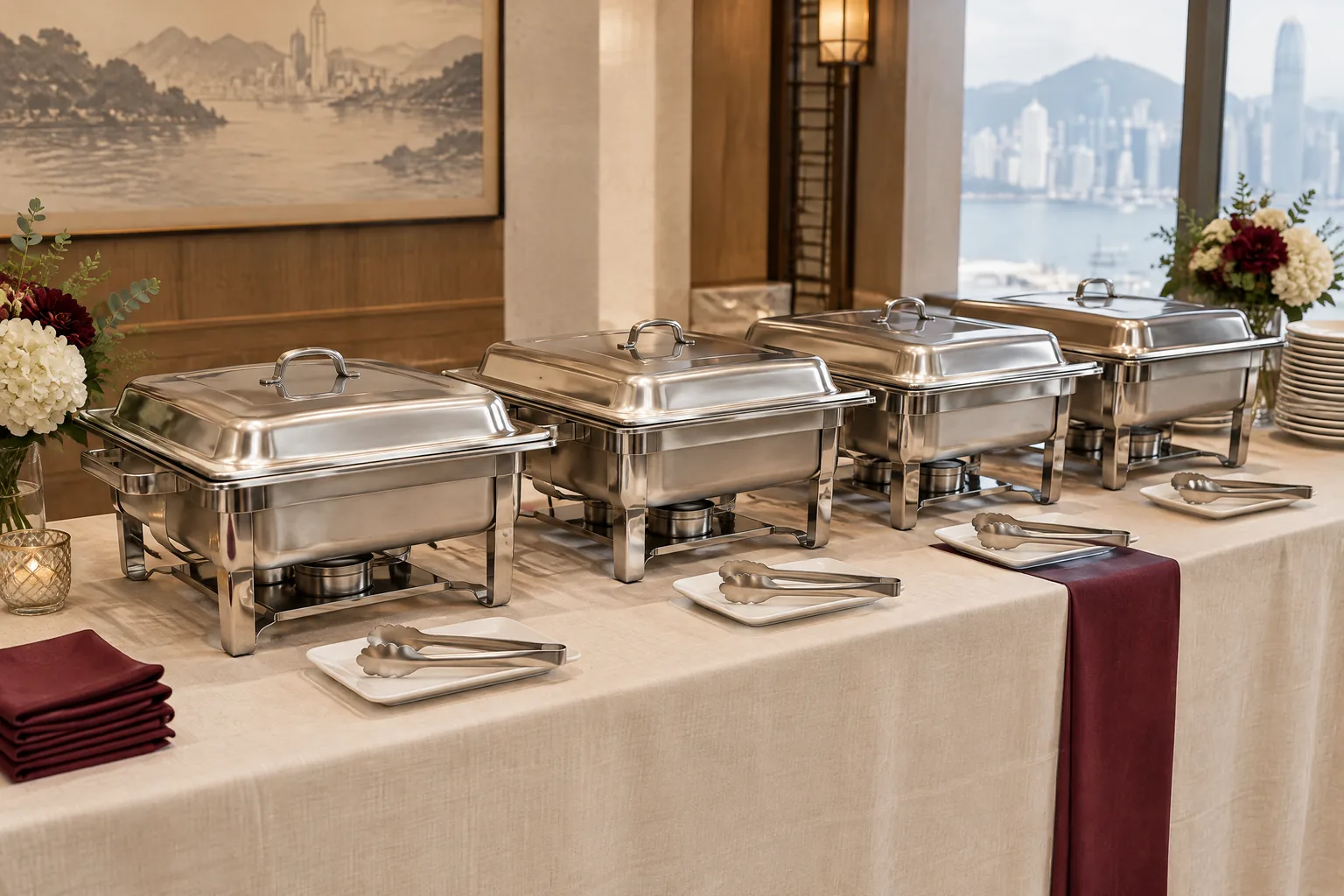
At a mixed buffet, consider what will happen after the food leaves the kitchen. Guests may move serving spoons or add a sauce from another tray. Ask whether a separately packed meal or staffed handover is available and workable at your venue, without assuming either service is offered. Separation is an arrangement to discuss, not a safety certificate. If the planned service cannot preserve the supplier's stated controls, revisit the format before telling the guest that everything is ready.

Choose alternatives for unverified needs
Make uncertainty visible before the order deadline
Give each unresolved meal a named organiser and a decision deadline earlier than the supplier's ordering cutoff. For example, if a supplier answers the vegan question but not the nut-handling question, the combined requirement is still open. Do not count that guest as accommodated in the management update. Report the number of pending meals without circulating names or explanations. This lets the team make budget and timing decisions without exposing someone else's dietary information.
Offer alternatives that are genuinely available for discussion: another supplier, a simpler menu with adequate information, or a guest-arranged meal. Check the venue's rules before proposing outside food and agree payment responsibility privately. Do not describe any alternative as safe merely because it is packaged or contains fewer ingredients. If no supported option is available, tell the guest before the event and ask what arrangement they would prefer. Declining the provided meal should not require a public explanation.
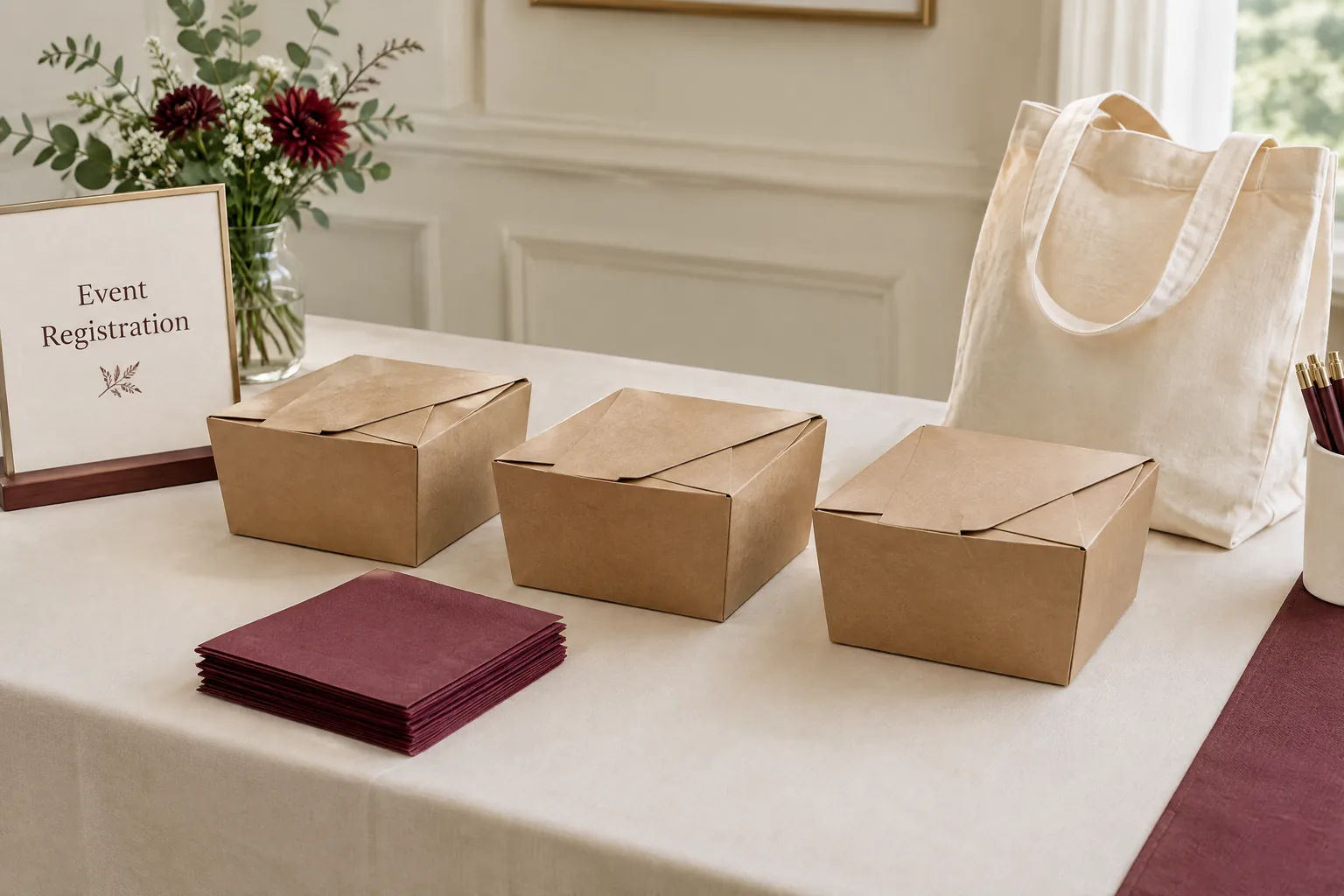
Once an arrangement is agreed, use a neutral collection code rather than a badge saying 'allergy', 'halal' or a guest's condition. Keep the code-to-name list with the designated organiser and give serving staff the minimum instructions needed for an accurate handover. Confirm the code privately with the guest. This reduces routine disclosure but is not anonymity: anyone holding the lookup, or knowing the context, may still identify the person. Avoid codes that directly reveal the dietary category.
Prepare for a mismatch at collection. Staff should hold an unidentified or substituted meal aside and contact the organiser, not guess which guest can eat it. The organiser can compare the delivered item with the written confirmation and seek the supplier's answer. A different garnish or sauce may require renewed checking. Explain any delay quietly to the affected guest and use the agreed fallback if the question cannot be resolved; the pressure to start lunch should not replace confirmation.
| Request | Evidence or answer to seek | Confirmation owner | If unresolved |
|---|---|---|---|
| Vegetarian or vegan | Ingredients for all meal components and any additional exclusions | Supplier describes the meal; guest reviews the option | Offer a revised menu with clear information |
| Halal with evidence requested | Current document and scope linked to the proposed order | Supplier supplies evidence; organiser relays it without embellishment | Discuss another supported option privately |
| Gluten-related or wheat-specific | Exact exclusions plus relevant preparation and service limitations | Supplier answers handling questions; organiser checks venue format | Do not confirm an unanswered requirement |
| Overlapping requirements | One meal checked against every recorded requirement | Designated organiser keeps one combined status | Hold the whole meal as pending |

Delete unnecessary request data
Finish the privacy work after the meal is served
The Privacy Commissioner's retention principle requires practicable steps to keep personal data accurate and not retain it longer than necessary for its purpose. Set a review point after the event and identify who will remove the dietary working list, exported copies and code lookup when they are no longer needed. There is no single event retention period established by this guidance. If a complaint or another genuine obligation requires limited records, follow your organisation's applicable policy rather than promising an arbitrary deletion date.[5]
Keep meal requests out of general attendee profiles and future marketing lists. A guest's acceptance of one dinner does not establish their requirements for next year's conference. Ask again for a new event rather than copying an old restriction without their knowledge. Where a supplier receives the working list, discuss its retention and access arrangements too. Removing your own spreadsheet is not the same as removing every copy already sent in email or stored by another team.
For next-event planning, retain non-identifying operational lessons where possible: whether private replies worked, which questions delayed approval, or whether the collection point was discreet. Be careful with small-group summaries that make the only affected person obvious. If someone reports that their request was exposed, preserve what is needed to address the issue and refer it to the responsible privacy contact. Improvement should come from fixing the process, not keeping a permanent account of guests' beliefs or health needs.

- Offer a private request channel and explain that accommodation needs confirmation.
- State the collection purpose, relevant recipients and access or correction contact.
- Keep every applicable restriction together on one meal record.
- Obtain specific ingredient, handling and requested certification answers from the supplier.
- Agree a discreet collection method and a fallback for unresolved or changed meals.
- Assign an owner to review and remove unnecessary dietary records after the event.
A respectful dietary process asks clearly, shares sparingly and confirms only what the evidence supports. Guests should know the proposed meal and its limitations before deciding whether to accept it. Keep the supplier's factual response distinct from the organiser's arrangements, and leave unanswered requirements visibly pending. Privacy is not achieved by hiding operational needs; it is achieved by giving the right people only the information they need.
Can guests reply without giving a reason for their request?
Yes. Ask for the restrictions and information needed to assess a meal, not a personal explanation. A private follow-up may clarify ingredients or handling requirements without requiring a diagnosis or religious identity. Explain what remains uncertain if the guest does not wish to provide further detail, and offer a way to discuss alternatives.
Should the caterer receive the full delegate registration list?
Not simply because it is convenient. Use meal codes and relevant requirements where these allow accurate preparation and handover. If a name or contact detail is genuinely needed, explain that sharing in the collection notice and limit access. Keep job titles, travel details and unrelated registration answers out of the meal enquiry.
What if a guest selects both vegan and halal?
Keep both requirements attached to one meal and ask what evidence or ingredient information the guest needs. Do not split them into two meals or assume one label resolves the other. The supplier should answer the combined request, and the proposed arrangement should remain pending until the outstanding questions are addressed.
Can a supplier's website certificate claim replace a document check?
No. If the guest requires certification evidence, obtain relevant current documentation and clarify its scope for the proposed order. A webpage description does not settle who issued a certificate, its validity or what it covers. Relay any limitation honestly rather than announcing certification on the supplier's behalf.
How should we handle a late dietary change?
Update the affected meal record and privately confirm the changed requirement with the guest. Ask the supplier to reassess the meal, quantities and practical constraints before issuing a new confirmation. Tell the collection supervisor which previous instruction is superseded. If the change cannot be supported in time, use a fallback agreed with the guest rather than an improvised substitution.
Before placing the affected meal order, send the caterer the specific requirements privately and request a written response. Share the proposed option and any limitations with the guest, then agree the meal or a practical alternative.
Sources & supported claims
- The Ordinance at a Glance — Office of the Privacy Commissioner for Personal Data, Hong Kong
DPP1 requires necessary, adequate, non-excessive collection and informing people about voluntary or obligatory supply, purpose, transferee classes and access or correction arrangements.
- Safe Kitchen: Food allergens — Centre for Food Safety
Staff can ask customers about food allergies and confirm ingredients with cooks; food businesses should prevent unintended allergen contamination of food and cutlery.
- Understanding food labelling: Vegan food labelling — GOV.UK
UK consumer guidance warns that vegan labelling does not establish suitability for milk or egg allergy because cross-contamination can occur; it is not cited as Hong Kong labelling law.
- Are gluten-free food products better choices for the general population? — Centre for Food Safety, March 2026
Wheat allergy, coeliac disease and non-coeliac gluten sensitivity are distinct disorders with different responses; gluten may occur in sauces, soup and vegetarian meat substitutes.
- The Ordinance at a Glance — Office of the Privacy Commissioner for Personal Data, Hong Kong
DPP2 requires practicable steps for accuracy and retention no longer than necessary for the purpose; the source does not prescribe a universal event retention period.