
Flowers & thoughtful arrangements
Content updated
On this page
- Ask how public the congratulations should be
- Check hot-desk rules before choosing a format
- A wrapped bouquet needs a destination vase
- A flower box is not automatically a travel box
- A vase needs both surface space and a willing owner
- Plan the journey home, not just the arrival
- Choose a non-floral gesture when it fits better
- Questions & answers
- Sources & supported claims
Choosing promotion flowers at work for a shared desk
For a colleague who cannot leave anything at a hot desk overnight, promotion flowers at work should be a gift they can comfortably take away, not a permanent desk display. Ask privately whether flowers are welcome, check when they are actually in the office, and choose the format around their journey home. A modest wrapped bouquet may be easier than a heavy container if they have a suitable vase at home. A box can simplify display, but it still needs space and careful handling. If neither works, a personal card is a complete congratulations, not a compromise.
Choose the handover before the flowers. The useful questions are whether the promotion is public, where the gift can sit until departure, and who will carry it afterwards. Compare the finished dimensions and packed weight rather than judging by a photograph. Do not assume a manager's new role comes with a private office, or that reception can keep a gift overnight. One willing organiser should confirm the practical details so the recipient does not inherit a problem to solve.
Ask how public the congratulations should be
A promotion announcement is not permission for a surprise presentation.
Check that the news has been announced to the people who will see the gift. A large card naming a new title can disclose something the recipient was not ready to discuss. Ask a quiet question such as, ‘Would you enjoy a small flower gift at the office, or would a card suit you better?’ This leaves room for an honest preference without requiring them to explain personal circumstances. Keep any response within the small group organising the gift.
Separate permission to receive flowers from permission to gather colleagues, take pictures or post a congratulatory message. Someone may welcome a discreet handover but dislike being called away from a meeting for applause. Agree whether the card comes from a few teammates or the whole department, and use the names of actual contributors. A short message recognising a specific contribution is warmer than jokes about salary, authority or colleagues who did not receive a promotion.
For a team collection, set a voluntary contribution and let one person place the order. Avoid sending repeated payment reminders in a group that includes the recipient. Several individual gifts can be harder to carry than one modest shared gesture, even when each seems small. If other teams are also planning something, coordinate the timing with their organisers rather than increasing the size to compete. The point is to acknowledge the person, not occupy their workstation.
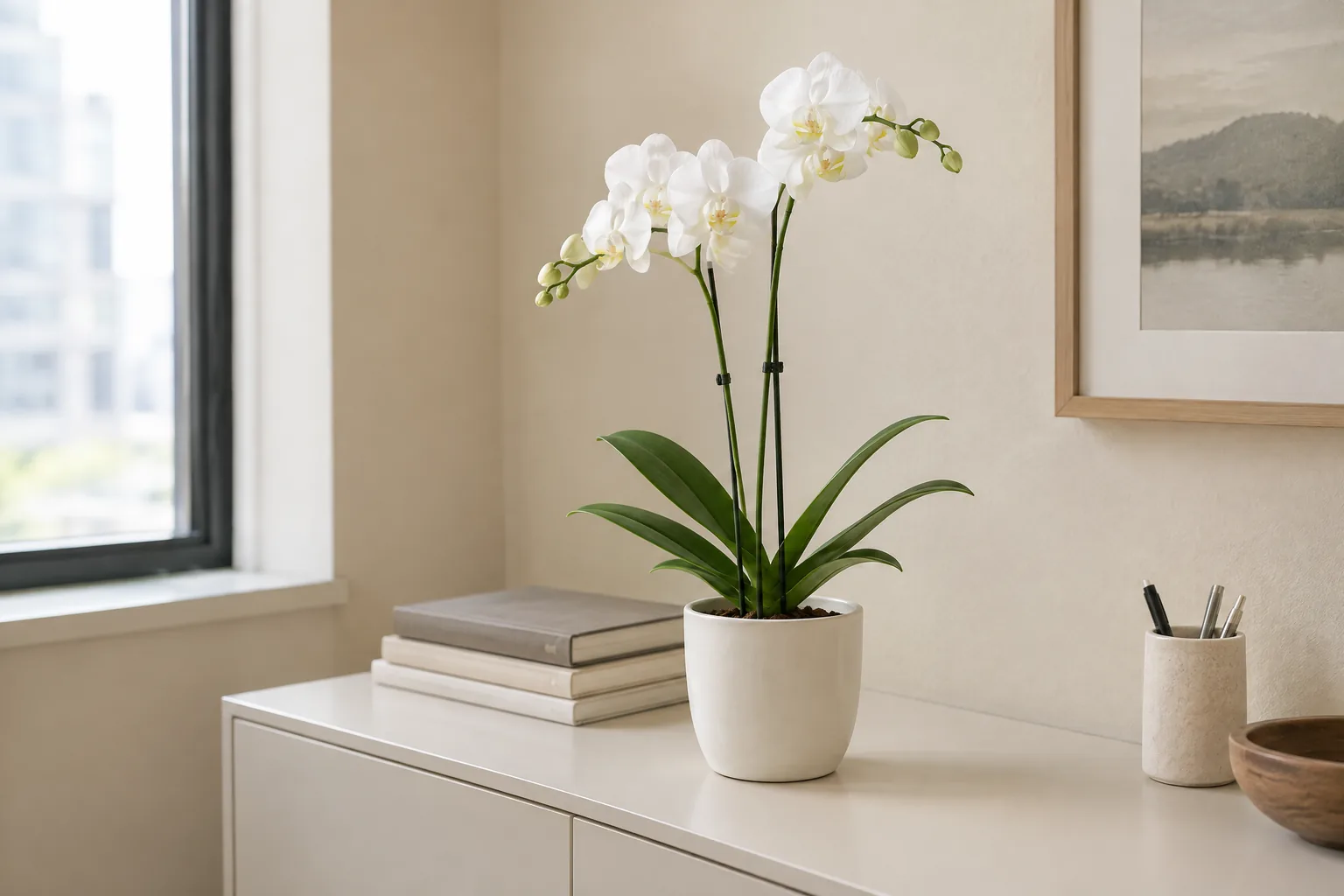
Check hot-desk rules before choosing a format
Temporary permission and overnight storage are different questions.
Ask the office contact whether personal gifts may sit on a booked desk during the day, and whether all belongings must be removed when the booking ends. Check rules for water-filled containers and any restrictions affecting the shared area. Do not interpret the presence of flowers at reception as permission for gifts beside laptops. Reception, a meeting room and a hot-desk floor may have different arrangements. The answer should come from whoever manages that space, not from another colleague's guess.
The Hong Kong Labour Department's Office Workstation Design guide asks whether enough desk space remains for normal work after essential equipment and stationery are accommodated. It also advises keeping frequently used items close and leaving room under the desk for legs. Apply that practical test to the gift: the recipient should not have to move their keyboard, reach around stems or store the package at their feet. An attractive empty corner in a photograph may not be genuinely spare working space.[1]
Think about the person using the neighbouring seat as well. Ask discreetly about known fragrance preferences or restrictions without requesting anyone's medical history. A description such as ‘lightly scented’ should not be treated as an allergy guarantee. If the office requires a fragrance-free environment or cannot accommodate the flowers, change the gesture or the destination with the recipient's agreement. Do not ask them to negotiate an exception on their first day in a new role.
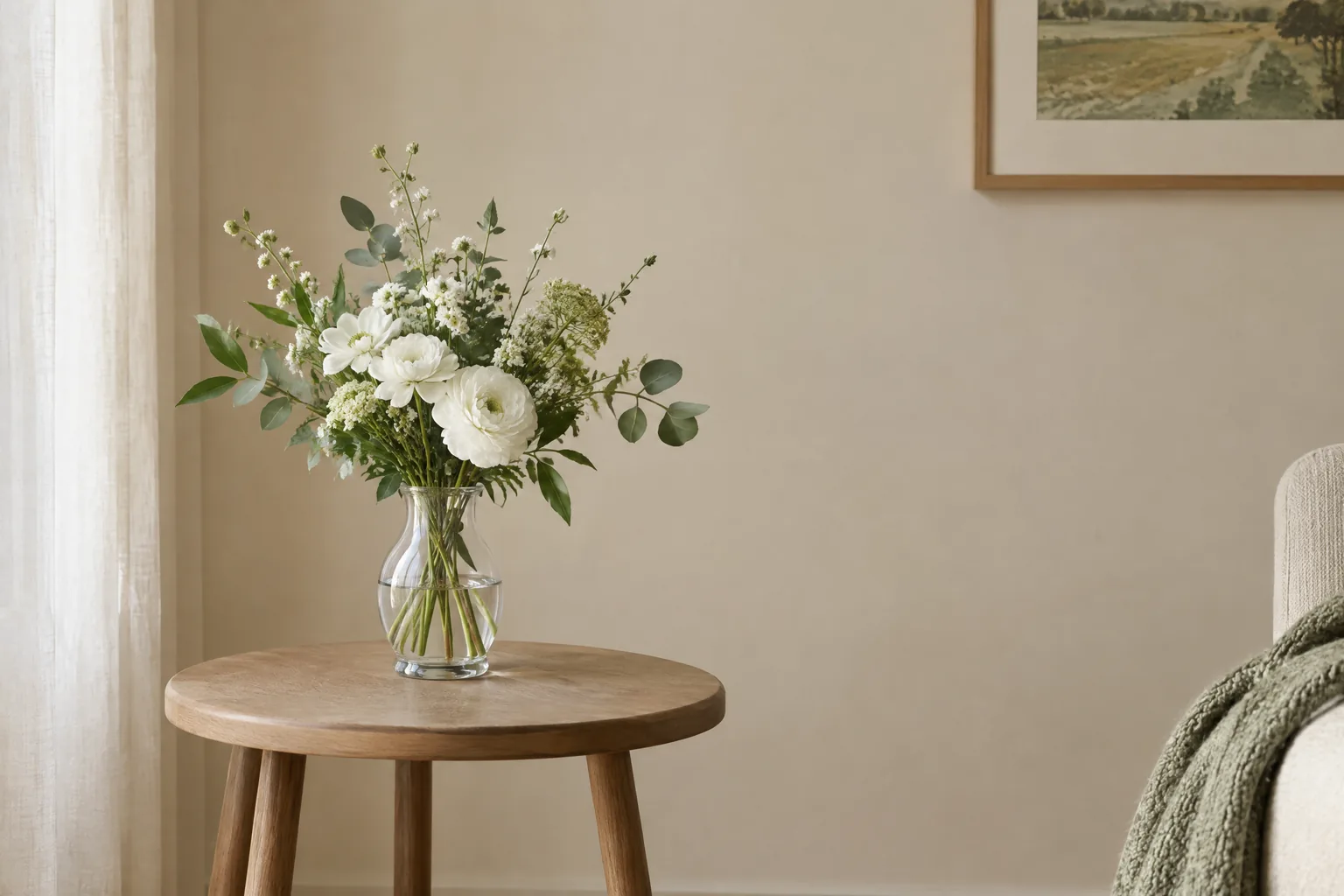
A wrapped bouquet needs a destination vase
Less container weight can mean more preparation after arrival.
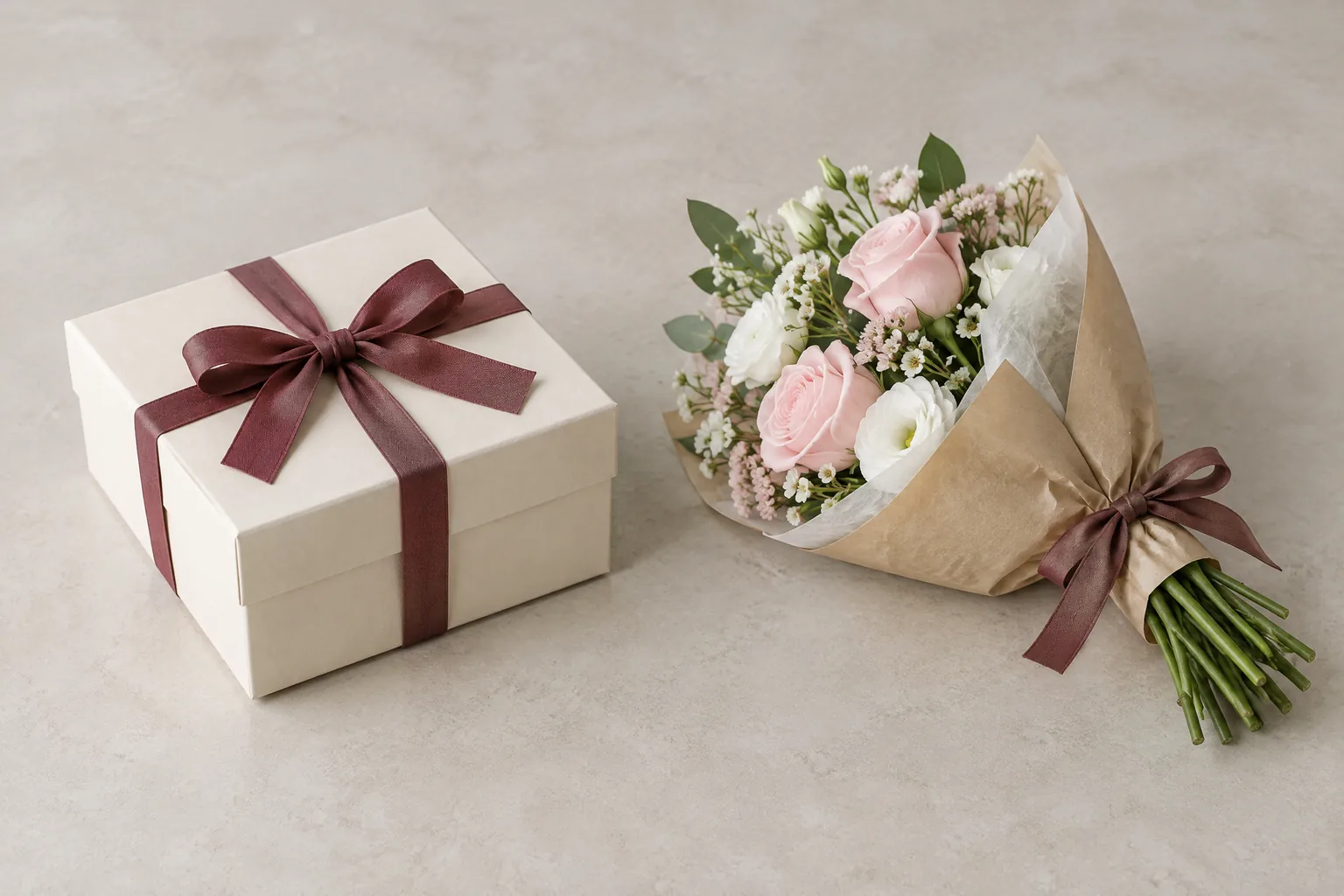
When comparing flower bouquets, ask about the finished wrapped width, stem length and transport packaging rather than choosing by stem count alone. A narrow bunch can be manageable for a colleague carrying a work bag, provided the flowers are protected and they can follow the florist's handling advice. Confirm whether the presentation includes any temporary water supply, how it should be carried, and what must happen after receipt. Wrapping by itself does not tell you how the stems are hydrated.
The Royal Horticultural Society recommends clean vases and removing foliage below the water level so it does not rot in the water. That means loose stems need a suitable vessel and some preparation at their eventual display location. Ask whether your colleague already has a vase they would like to use. Do not assume they have one because they enjoy flowers, or require them to buy one to make your gift usable. A simple yes or no is enough.[2]
Where an office vase is available, establish who owns it and whether it may leave the building. A communal jug is not automatically a gift container, and borrowing it creates a return errand. If the bouquet will only be presented at the end of the day, ask the florist how the actual design should be held until then. There is no universal out-of-water allowance that can be inferred from the word bouquet. Arrange the timing around the confirmed instructions.
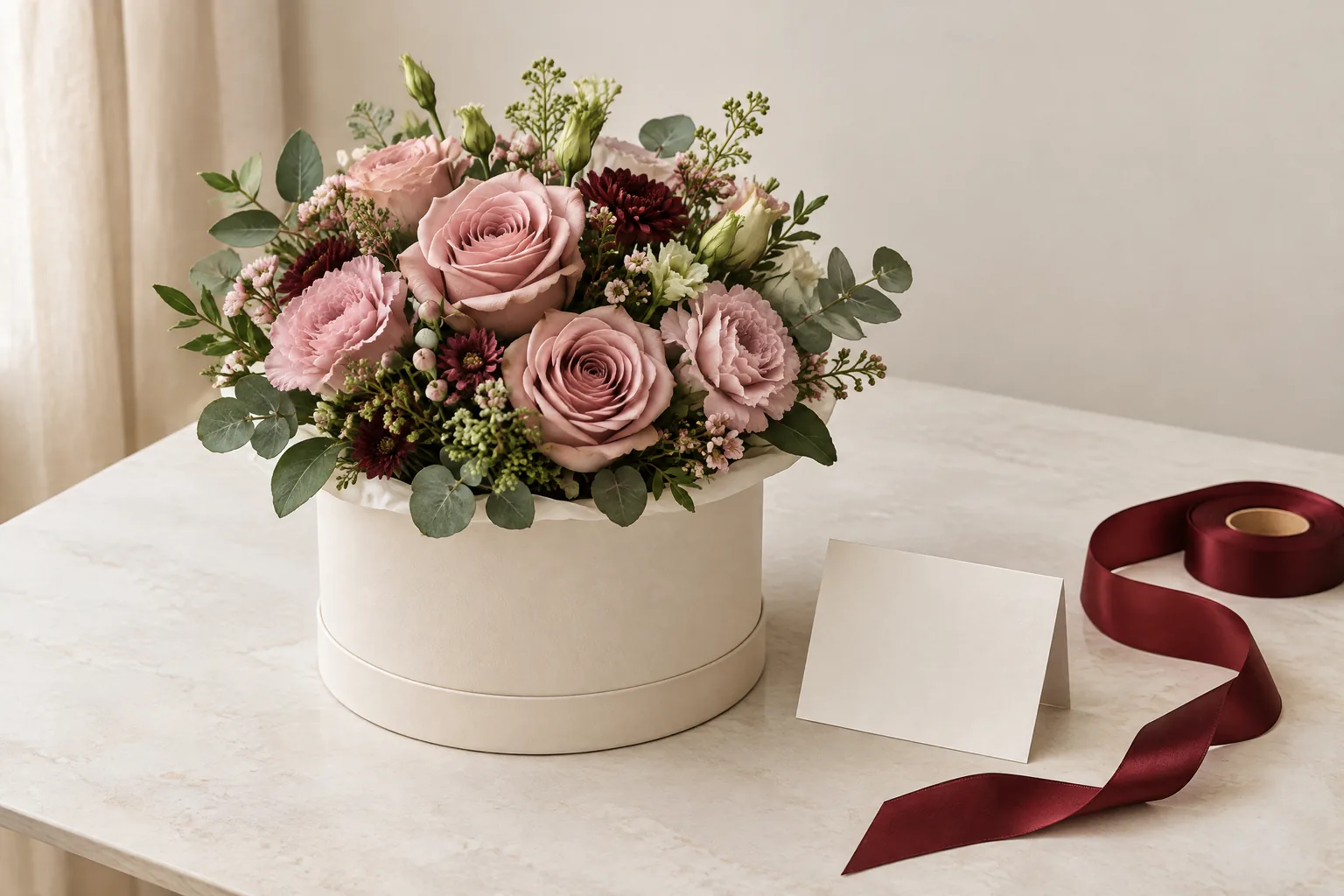
A flower box is not automatically a travel box
Check what supports the stems and how the base must be held.
The appeal of flower boxes is that the flowers arrive with a display container, which may remove the immediate need to find a vase. Y. Florist's page describes several container shapes, so discuss the actual design rather than treating the format as one standard size. Ask for its widest finished dimension, including projecting foliage, and its approximate packed weight. A low design can still take up considerable space, especially when the blooms extend beyond the visible box edge.
Ask how water is contained inside, whether the outer surface needs protection, and where to add water if required. Do not lift a design by a decorative ribbon or assume a lid closes over the flowers unless the florist confirms that use. A display container may need two hands underneath and may not fit in a shopping bag without pressure on the blooms. Request handling instructions that the recipient can read later, rather than expecting them to remember advice passed through several colleagues.
Compare the whole package against the day's movements. Someone changing desks before a meeting would need to relocate it, and a person leaving for dinner would need somewhere permitted to keep it afterwards. A compact design is useful only if those moves are manageable. If the recipient wants flowers at home but not on the commute, ask whether a separate, agreed home handover is possible. Do not obtain their address from a staff directory and use it for a surprise delivery.
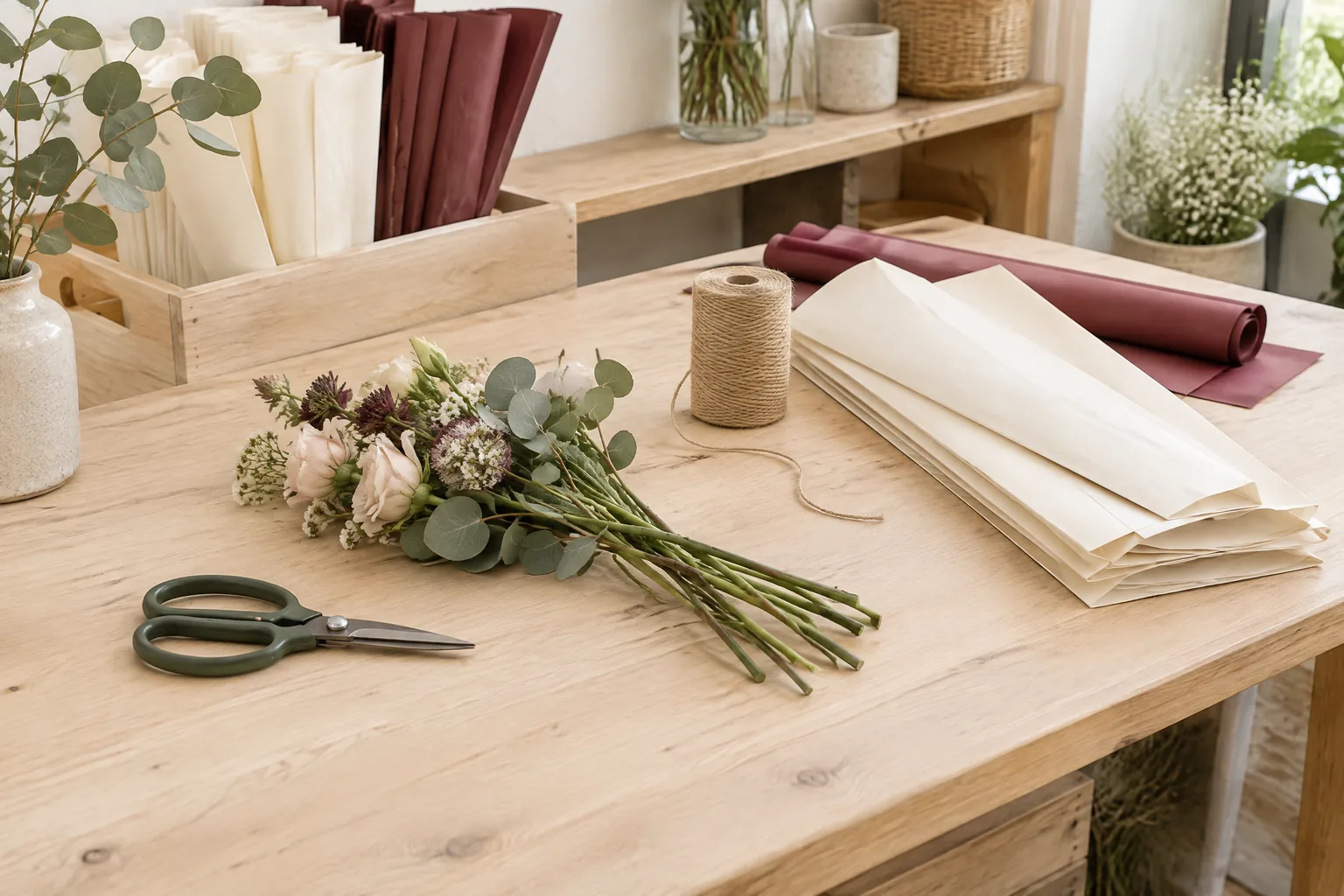
A vase needs both surface space and a willing owner
Ready to display does not mean effortless to take home.
A vase arrangement can make sense when the recipient actively wants the vessel and has an approved display place. Before choosing one, ask whether the quoted design includes the pictured container, then confirm its material, base dimensions and filled weight. Explain that the gift must leave the office that day. A container suitable for a fixed shelf may be awkward to carry alongside a laptop, and a tall design may block views across a shared bench even if its base is small.
Measure the usable patch of surface after allowing for the recipient's normal equipment. Check the flowers' spread at screen height as well as the footprint on the desk. Keep water-bearing items away from electronics and desk edges, following the workplace's own rules. A tray is not permission to place a container where it is otherwise prohibited. If the only available position obstructs a monitor or forces someone to move a necessary item, choose another location or another gift.
The RHS advises checking vase water levels every couple of days and changing water and re-cutting stems every two to four days. It also recommends a cooler position away from heat sources. These are general care tasks, not a promise about any design's lifespan. Agree who will do the care wherever the flowers end up. An opaque container may hide the water, but it does not remove the need for maintenance or turn a personal gift into the office cleaner's responsibility.[3]
| Format | Consider it when | Resolve before ordering | Choose something else when |
|---|---|---|---|
| Wrapped bouquet | The recipient wants flowers and already has a suitable home vase | Temporary hydration, wrapped dimensions and immediate aftercare | There is nowhere permitted to hold it or no manageable journey home |
| Contained box | A compact ready-to-display gift is welcome | Actual stem support, packed weight, base protection and upright handling | It needs more carrying support or desk space than the recipient can provide |
| Flowers in a vase | The vessel is wanted and an approved surface is available | Container inclusion, filled weight, water care and transport protection | The colleague does not want a lasting container or cannot take it away |
| Personal card | Flowers are unwanted, impractical or not permitted | Accurate names, appropriate message and a discreet handover | The recipient has clearly requested a different gesture |
Plan the journey home, not just the arrival
The recipient's last appointment may matter more than the presentation time.
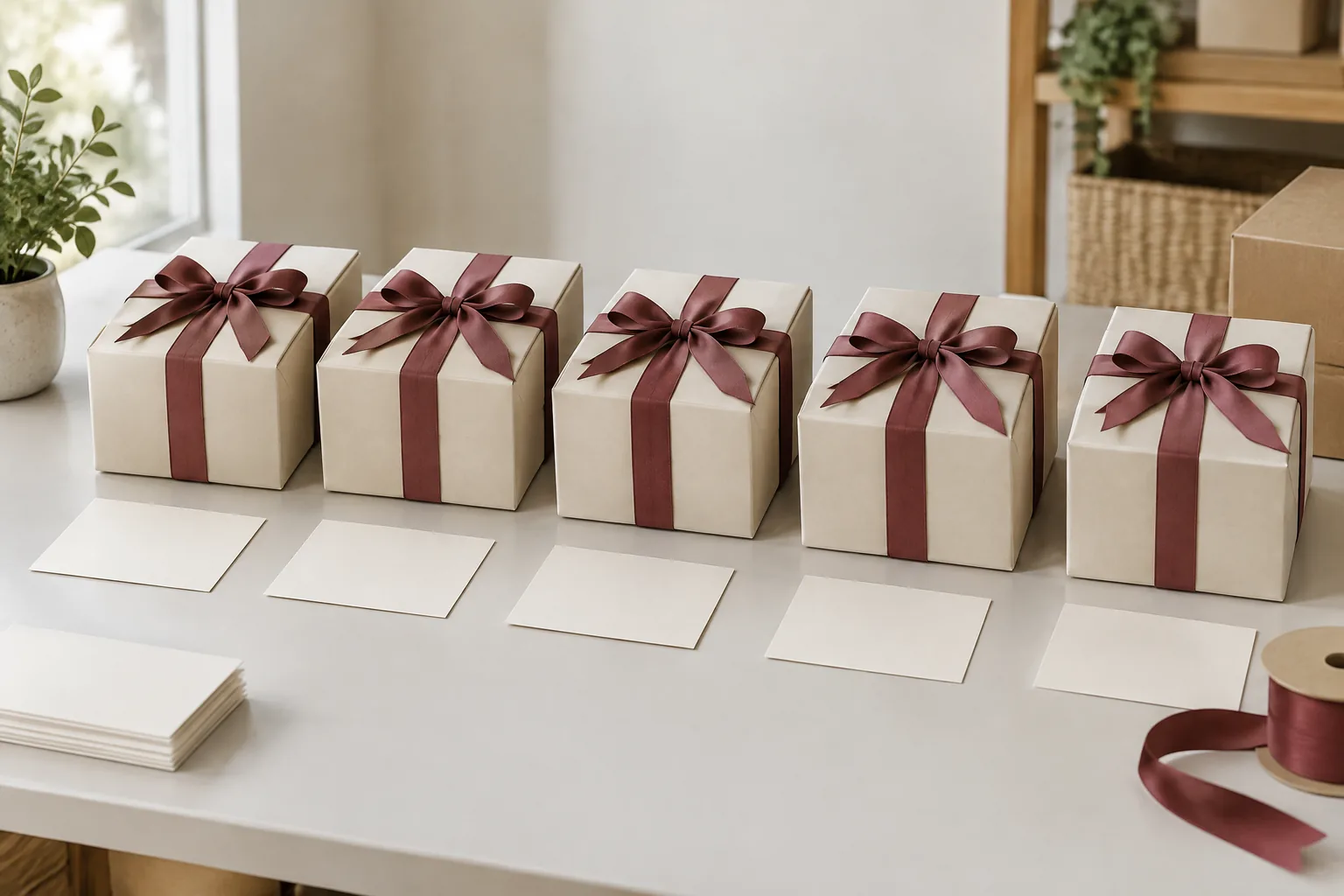
Find out whether the colleague is leaving directly for home, travelling to another office or taking leave after the announcement. Do not assume a delivery marked for the afternoon will coincide with their departure. Agree a receiving contact and an achievable handover window with the supplier, subject to confirmation. If access requires reception collection, make sure someone has accepted that task. Couriers and reception staff should not be expected to locate a colleague moving between unassigned desks.
Picture the actual carry: a work bag on one shoulder, an umbrella on a wet day, and the flower package in the remaining hand. Ask the recipient which format they would find comfortable instead of deciding that a taxi will solve it. If teammates offer transport, make it genuinely optional and settle any cost beforehand. For public transport, a smaller package that can be held as instructed may be preferable to a broad design that needs two hands throughout the journey.
Set a fallback before ordering. If the recipient leaves early or works remotely that day, one organiser should contact them and agree what happens next. Do not leave flowers on an empty desk, pass them to an unbriefed colleague or arrange a new address without consent. Ask the supplier what changes are possible and what conditions apply; do not assume redirection or storage is included. Sometimes postponing the presentation is the simplest way to preserve the pleasure of the gift.
Choose a non-floral gesture when it fits better
Recognition does not need to create storage, care or travel work.
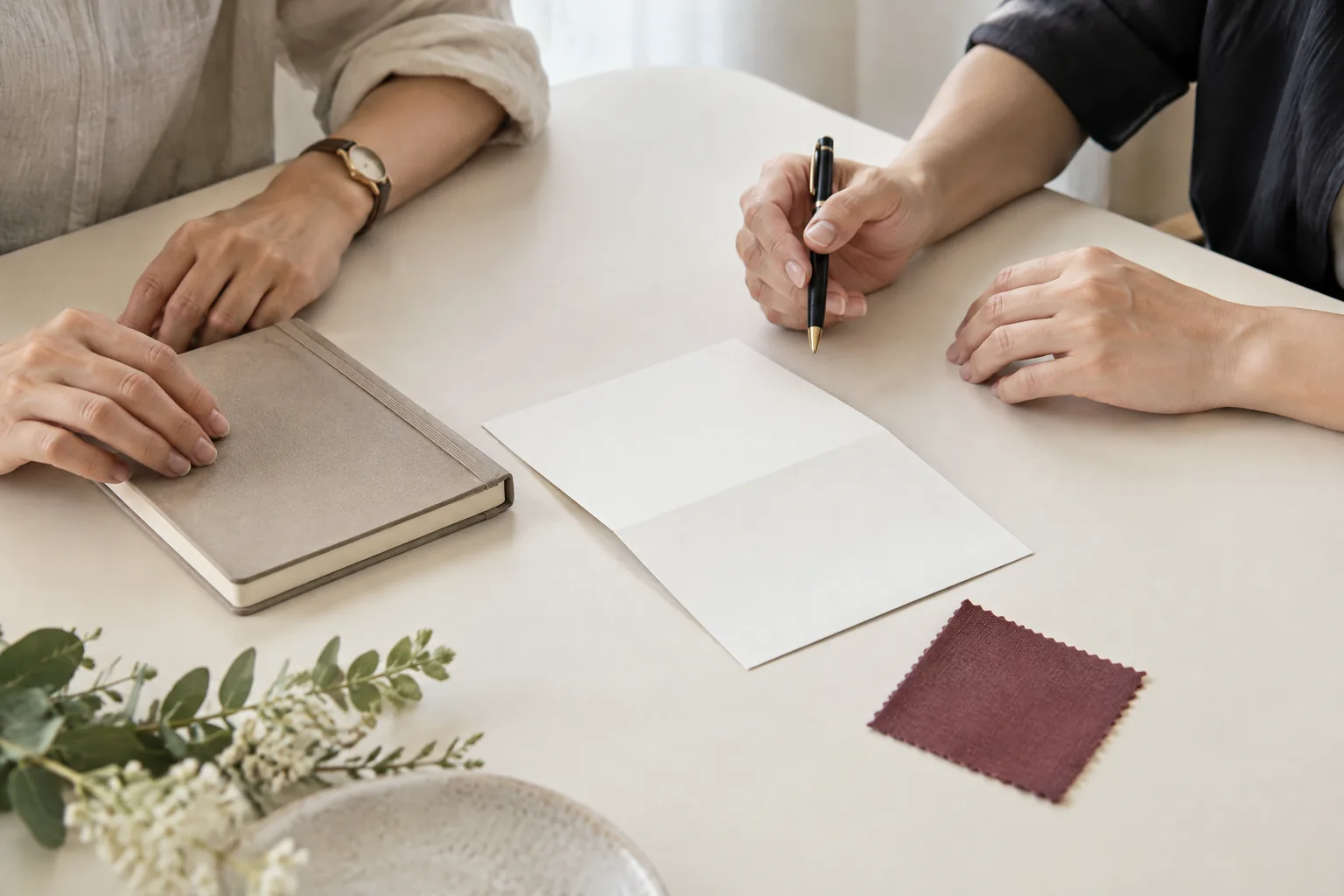
If there is no approved place to hold flowers and no convenient way to take them away, stop comparing containers. A card with messages about the colleague's work can acknowledge the promotion without occupying a shared desk. A private coffee invitation may suit someone who values a conversation, but ask rather than scheduling another commitment for them. Replacing flowers with a plant is not necessarily simpler: it can create a longer care obligation and still conflict with clear-desk rules.
For colleagues who prefer flowers outside work, let them choose a convenient occasion or collection arrangement without turning the offer into homework. You can state the team's agreed budget privately and invite a simple preference, rather than requesting a list of designs for approval. Keep any future handover separate from the office announcement. This recognises that someone can enjoy flowers and still reasonably decline carrying them through a busy evening or displaying them in front of colleagues.
Make the final enquiry concise: explain that this is a promotion gift for a hot-desk user, give the maximum practical package size, and describe the agreed handover. Ask about current flowers, substitutions, the container and care instructions before committing. Keep one organiser responsible until the recipient has the gift and knows how to handle it. The successful choice is the one they welcome and can use, whether that is a few stems, a compact contained design or simply thoughtful words.
- Confirm that the promotion is public and flowers are welcome.
- Agree separately on any group presentation, photographs or sharing.
- Check the actual desk, water-container and end-of-day clearance rules.
- Confirm the finished package dimensions, approximate weight and handling needs.
- Identify the home vase or obtain agreement to the included container.
- Match the handover to the recipient's movements and journey home.
- Give one organiser a consent-based fallback if the recipient is absent.
For a shared-desk promotion gift, start with consent and the journey home. Choose flowers only after confirming a permitted place to hold them, workable handling and a willing person to provide aftercare. No container can compensate for missing permission or an inconvenient handover. A modest gift that fits the recipient's day is more considerate than a dramatic display they must manage.
Can we leave the gift at a hot desk overnight?
Only if the workplace explicitly allows it and someone has agreed to look after it. A desk reservation does not establish overnight storage permission. Where the rule is to clear the desk daily, plan for removal that day or choose a different handover. Do not rely on the next desk user to identify the owner or move the flowers.
Should we buy a vase if we do not know whether our colleague owns one?
Ask first. Buying a container solves one immediate problem but may create an unwanted possession and a heavier commute. If you want to preserve some surprise, ask only whether a small bouquet for home would be practical. When you cannot confirm that, a card is a better default than guessing about their home storage.
Is a small box always easier to carry on the MTR?
No. Ease of carrying depends on the finished spread, weight, internal water support and required position, not just the box's label. Check the actual package and handling instructions. The recipient also needs to manage their normal bags and avoid pressure on the flowers. Let them decide what they can comfortably carry rather than promising an effortless journey.
How do we avoid spoiling the surprise while checking preferences?
Keep the colours and message as the surprise, not the recipient's ability to receive a gift. One organiser can ask privately about flowers, timing and transport without showing the design. If the person declines, accept the answer without asking them to defend it. A thoughtful surprise should not depend on withholding practical information.
What if the colleague is unexpectedly working from home?
Contact them before redirecting anything. Agree whether to postpone, nominate a willing receiver or use another permitted arrangement, then ask the supplier what can actually be changed. Do not disclose a home address without permission or assume reception offers storage. An office announcement and a flower handover do not have to happen on the same day.
Ask your colleague what would be comfortable, then send the florist the agreed size, handover and handling requirements. Confirm current options and order conditions directly before placing an order.
Sources & supported claims
- Office Workstation Design — A Simple Guide to Health Risk Assessment
The guide asks whether normal work has enough desk space after essential equipment is accommodated; it recommends keeping frequently used items close and maintaining legroom under the desk.
- Cut flowers: cutting and conditioning
The RHS recommends using clean vases and removing foliage below the water level to prevent rotting.
- Cut flowers: cutting and conditioning
The RHS recommends checking water levels every couple of days, changing water and re-cutting stems every two to four days, and displaying vases in a cooler location away from heat.