
Gatherings & catering
Content updated
On this page
- Confirm the operator's food rules first
- Measure the working space, not just the platter
- Decide whether carving belongs aboard
- Rent only the equipment you can use and return
- Give food storage and clearing their own space
- Make the pier handover and weather decision workable
- Choose the smaller meal when the setup fails
- Questions & answers
- Sources & supported claims
Choosing boat party serving equipment that fits your meal
A roast pig can be considered for a milestone birthday on a junk boat, but it should not be the default. Choose boat party serving equipment after checking the actual vessel, not after choosing the showpiece. The operator must accept the arrangement, and the meal needs room for unpacking, portioning, food holding and clearing away. A tray that fits on a table is only part of that test. If nobody can confirm a workable serving position or the handling arrangements, choose a compact meal and keep the celebration meaningful in another way.
The useful question is not whether a boat looks large enough in photographs. It is whether the meal can be received, stored, served and removed without taking over the space guests and crew need. Measure the complete setup, agree who handles the food, and make the smaller menu your confirmed alternative rather than a last-minute improvisation.
Confirm the operator's food rules first
Permission belongs to the actual vessel and crew
Send the operator a short description of the birthday meal before paying for equipment. Explain whether the roast will arrive whole or portioned, whether anyone expects to cut it aboard, and whether you want to use heating equipment. Ask where food may be placed and when serving would be acceptable during the trip. A booking described as a birthday charter does not answer these questions. Equally, a barbecue shown in a boat photograph does not establish permission to bring your own appliance or fuel.
GovHK's boating guidance says accommodation should have efficient means of escape and that fire-fighting and life-saving equipment should be easily accessible. Apply that principle when discussing your layout: no food box, folding table or rubbish bag should occupy an access point the crew needs kept clear. Ask the operator to identify those areas rather than judging them from a promotional photograph. A serving plan that depends on moving emergency equipment or narrowing an escape route should be changed, even if the meal itself looks manageable.[1]
When making a Junk Boat Party Catering enquiry, provide the vessel's food restrictions alongside the departure pier and proposed meal time. Ask which packing and serving formats could work within those restrictions; do not expect the occasion label to settle the practical details. Keep the operator's approval separate from the caterer's acceptance of the order. If either party needs more information, obtain it before confirming the centrepiece. Crew duties should also remain separate from food-service duties unless the operator expressly agrees otherwise.
Measure the working space, not just the platter
Unpacking and serving have their own footprint
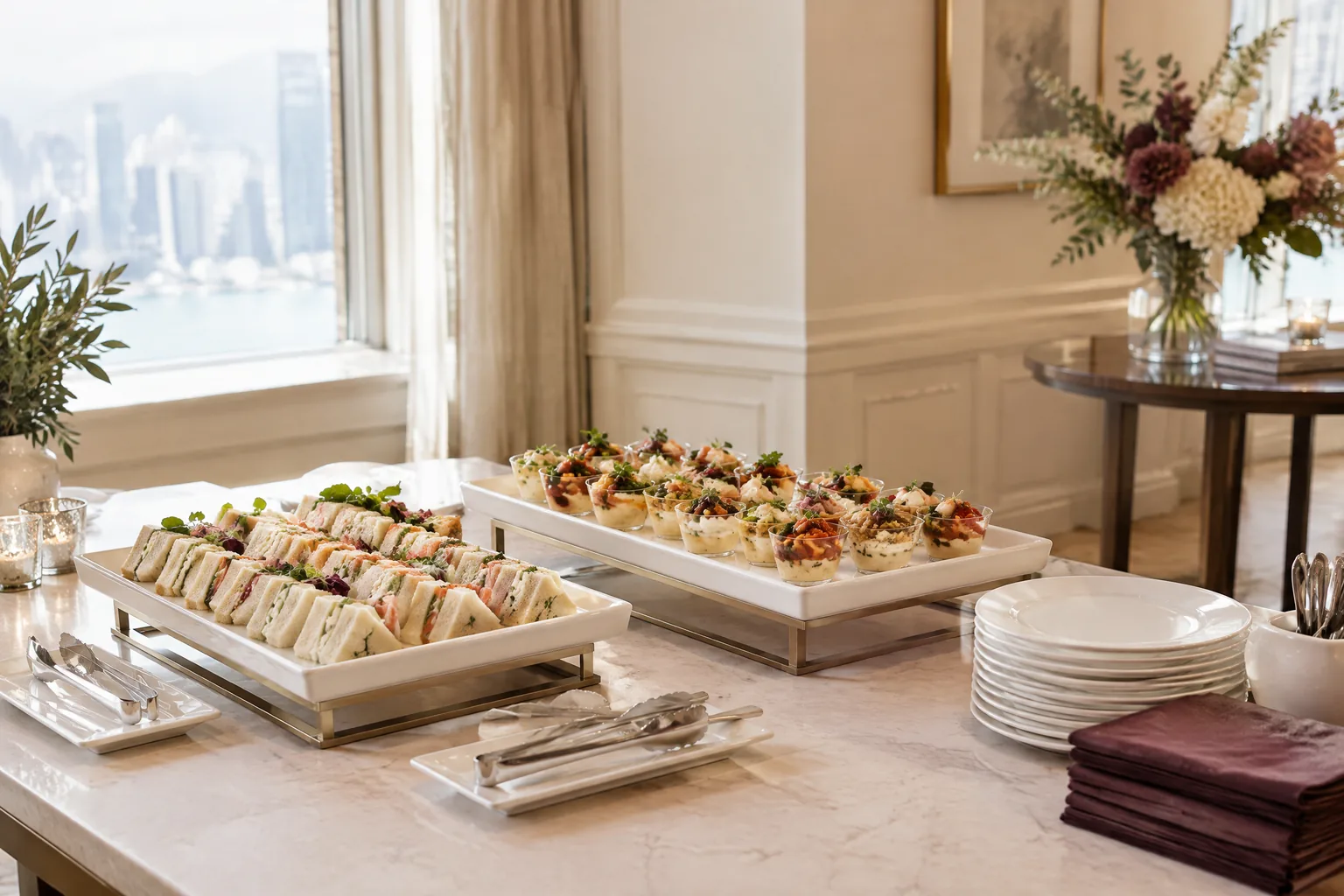
Ask for the usable length and depth of the serving surface on the boat you are booking. Find out whether it is fixed, whether its edges or fittings reduce the available area, and what is normally stored underneath. Then obtain the caterer's packed dimensions and serving dimensions. These may differ: a lid needs somewhere to go, packaging must be removed, and a platter may be wider than the food itself. Measure the birthday cake box too, even if the cake will appear later in the afternoon.
Sketch a simple layout showing the roast tray, any cutting board, serving tools and the first stack of plates. Add a clear place for the server to work and somewhere for guests to receive portions. The sketch is not a technical vessel plan; it is a way to reveal competing uses. If the only spare surface is also the drinks station, ask whether drinks can genuinely be moved. Do not count the same tabletop twice or assume somebody can hold a large platter while it is being portioned.
Consider the journey from the boarding point to that table. A bulky container may fit the final surface but still be awkward through a narrow doorway or on stairs. Ask the crew which route food boxes should take and whether someone must carry them individually. Loose trays require different handling from closed carriers. Before adding another dish, check that there is still a place for the next unopened container. A meal spread across floor space and guest seating has not passed the space test.
Decide whether carving belongs aboard
A centrepiece need not become an onboard cutting task
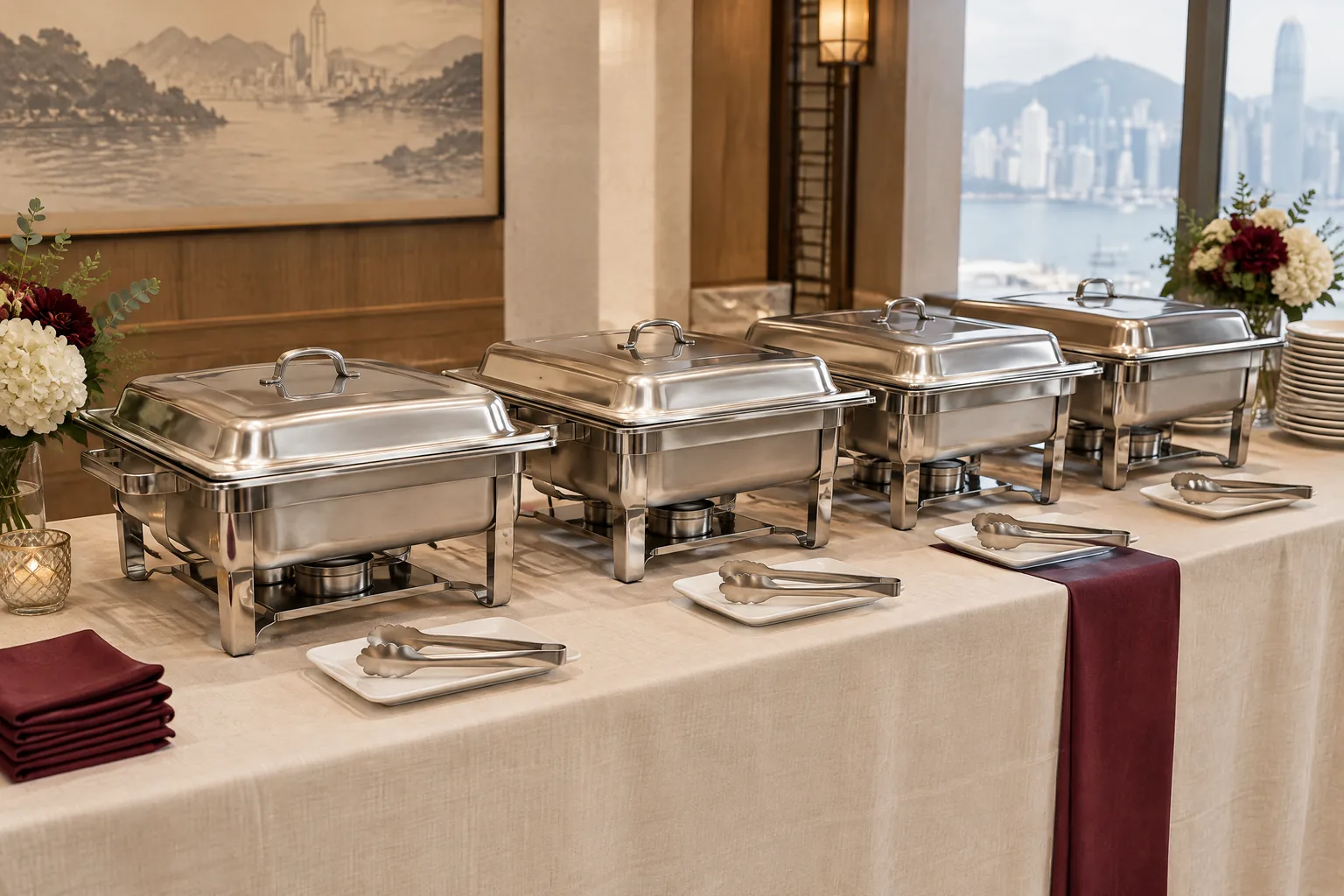
Use the Roast Pig Catering page as a starting point for discussing the presentation, then ask about the specific format you want to order. Clarify whether the roast arrives intact, pre-cut or in separate portions, and request the dimensions of its tray and outer carrier. These details matter more than a menu photograph. If a display is important to the family, explain whether you need it briefly for the birthday moment or expect it to remain on the serving table throughout the meal.
If cutting is proposed aboard, establish who would do it, what tools and board are required, and whether the operator accepts that work at the agreed location. Do not casually allocate the job to a guest because they are comfortable carving at home. A vessel moves, and the working arrangement must be acceptable to the crew. Ask the caterer what handling instructions apply and whether portioning before handover would remove the need for onboard cutting. Without a confirmed arrangement, leave carving out of the plan.
Pre-portioned food can reduce the work at the table, but it does not automatically remove the space problem. The portions still need suitable containers, controlled storage and a distribution point. Compare the full setup for both formats before choosing. For a family that values the symbolism more than a long display, consider holding the centrepiece moment at an agreed shore venue before the charter, with a separate compact boat meal afterwards. Check that venue's rules too; the pier is not automatically a place to stage a banquet.
Rent only the equipment you can use and return
A complete inventory beats a per-person assumption
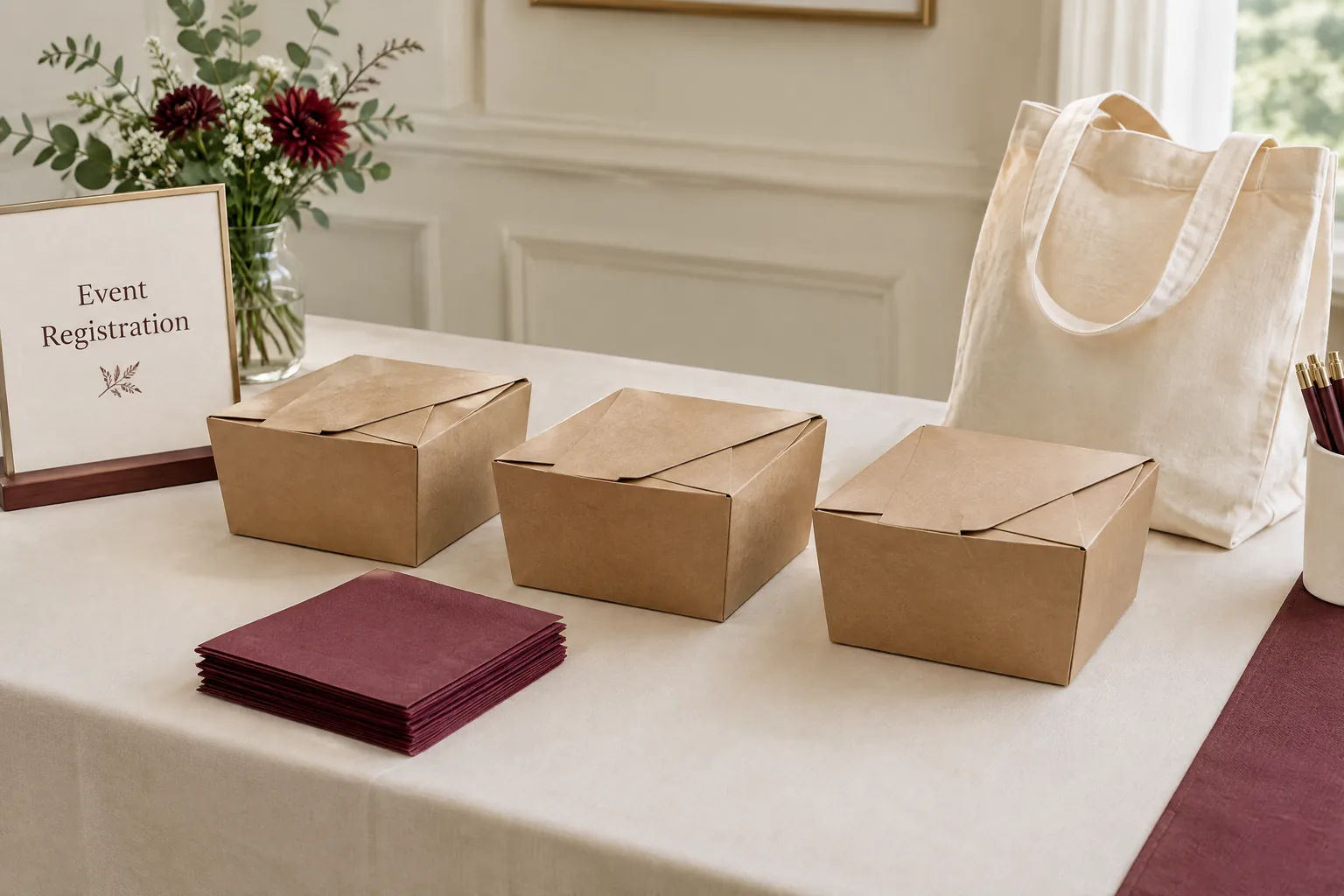
A Tableware Rental enquiry should specify items rather than simply asking for equipment for twenty people. Describe the dishes, how guests will eat and what the boat already provides. Ask about plate size and material, serving utensils, covered return containers and any carrier needed for transport. Confirm what is included in the actual quotation. The existence of a rental page does not establish that a particular non-slip tray, insulated box or unbreakable cup is available for your date.
Choose by the way the meal will be eaten. A wide plate may help with several shared dishes but can be inconvenient if guests have no table at their seats. A smaller deep container may suit a portioned meal, provided there is somewhere to support it while eating. Ask the operator about restrictions on glass or other breakable items instead of assuming a universal boat policy. Count serving tools separately from guest cutlery, and do not bring carving knives merely because a rental bundle contains them.
The return arrangement deserves as much attention as the collection. Confirm whether items must be washed, how used pieces should be packed, and who receives them after the trip. Ask about return timing, missing items and breakage charges without assuming any merchant's standard terms apply. Reserve room for dirty items in closed containers that are kept apart from remaining food. If returning bulky rented equipment would require a guest to carry it across Hong Kong after the party, consider a simpler inventory before committing.
| Item or stage | Ask for | Reason |
|---|---|---|
| Guest tableware | Actual size, material and quantity | The eating arrangement may not suit a standard bundle |
| Serving equipment | Separate tools and any agreed food-holding equipment | Guest cutlery does not replace a serving setup |
| Transport containers | Packed dimensions and handling instructions | Every item must travel from the handover to its allocated space |
| Used-item return | Packing, cleaning, receiver and deadline | The trip ends with equipment that still needs to go ashore |
Give food storage and clearing their own space
The serving table cannot do every job
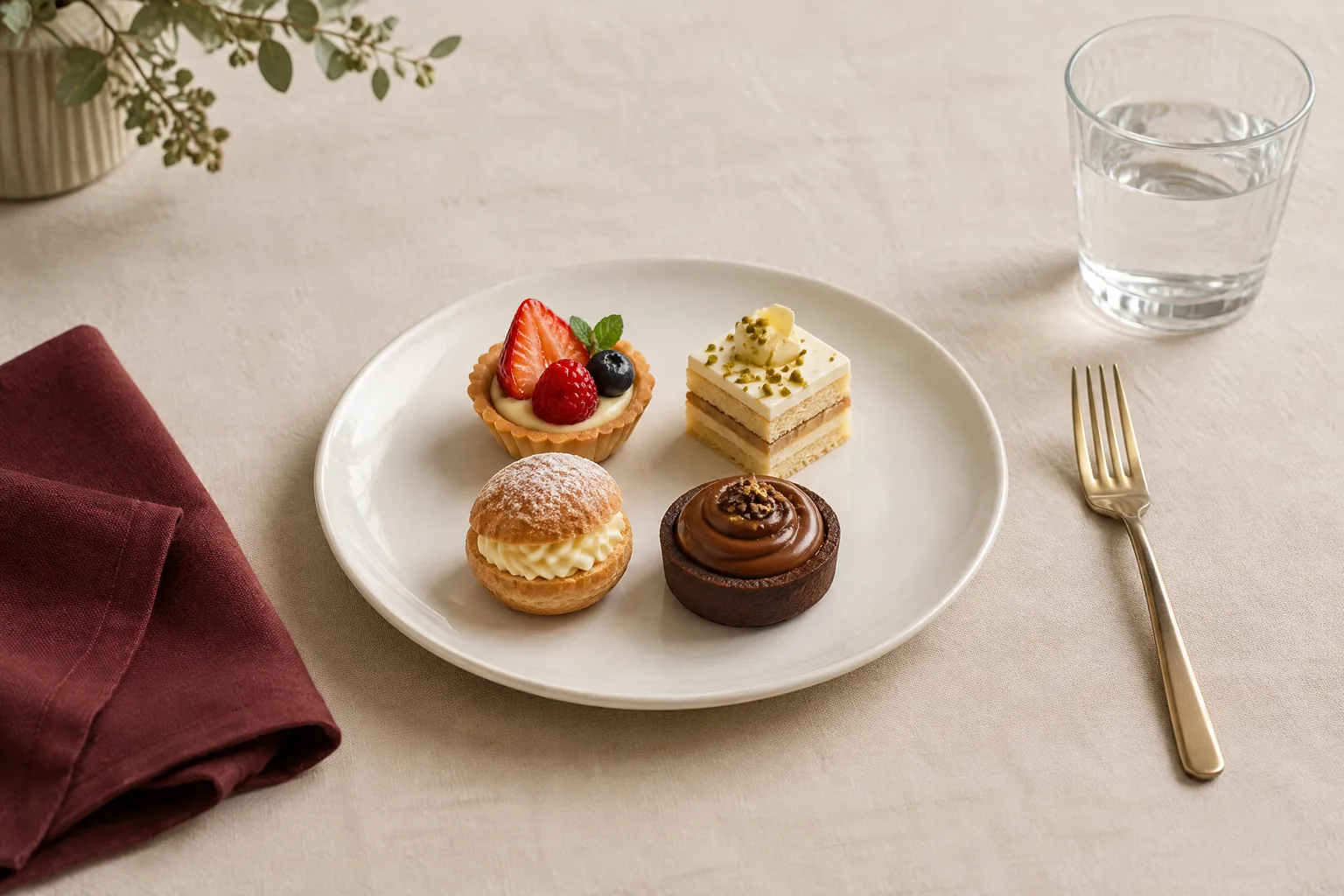
Separate the clean-food area from the place where used plates and empty packaging collect. Discuss the positions with the crew and keep both away from the boarding route. Choose a small batch to serve while other containers remain in their agreed storage location. This is not a reason to leave the rest unattended on a bench. Assign one organiser to watch the food setup and another to help clear it, so the birthday host is not expected to manage every container during the celebration.
The Centre for Food Safety advises storing ready-to-eat and cooked food not for immediate use at 4°C or below for cold food, or 60°C or above for hot food. Its summer guidance specifically includes gatherings on yachts. Before ordering, ask how the proposed dishes will be held until their serving time and what equipment that requires. A lid or a place in the shade does not establish the required temperature. If the necessary holding arrangement cannot be provided within the boat's rules, change the dish or meal schedule.[2]
Do not let the drinks cooler silently become the food-storage plan. Ask how much suitable space food needs and what happens when guests repeatedly open the drinks container. Confirm handwashing facilities and keep serving utensils with their assigned dishes. For allergy or other dietary requirements, obtain ingredient and cross-contact information directly from the caterer; a menu label is not a certification or an allergen-free guarantee. Plan where sealed rubbish goes and who takes it ashore. Empty carriers may stack differently from full ones, so check the clearing footprint as well.
Make the pier handover and weather decision workable
Food and equipment need an accepted transfer plan
Agree a precise receiving point with both parties. A pier name alone may not identify the berth, roadside meeting place or place where a delivery vehicle can stop. Give the caterer a receiving contact who will be on land, able to answer the phone and ready to check the containers. Ask whether the delivery arrangement ends at that point or includes any further transfer. Do not assume the supplier can board the vessel, wait for late guests or find a berth that changes without notice.
Plan the handover so a responsible person receives the food before the crew begins boarding guests. Confirm the order details, container count and any handling instructions without opening everything on the walkway. Arrange enough helpers for separate, controlled trips if required, while following the crew's directions. Each helper should know which boxes contain food and which contain equipment. Avoid giving one person a large food tray, a bag of plates and the cake at the same time simply to reduce the number of journeys.
Ask the operator who decides whether sailing proceeds and how changes will be communicated. Agree when you will contact the caterer if the departure time or pier changes. The boat's decision does not automatically revise a food order, rental deadline or cancellation term. Obtain each supplier's accepted alternative separately, including a possible shore meal if appropriate. GovHK also warns against overloading electrical appliances aboard, so a weather change is not a reason to improvise a plug-in warmer in the cabin. Only use equipment the operator has accepted.[3]
Choose the smaller meal when the setup fails
Keep the birthday moment without forcing the dish
Reject the centrepiece when any essential requirement remains unresolved: no approved serving position, no workable cutting arrangement, insufficient food holding or an unmanageable transfer. More rented tables do not necessarily solve those failures. They may create new obstacles and more items to return. Ask for compact alternatives that preserve the foods the guest of honour enjoys. Already portioned roast meat, if available and suitable for the agreed handling plan, is one possibility; it is not a promise of a particular menu or package.
Individual meals and smaller sharing trays solve different problems. An individual container reduces serving work but still needs space to open and support while eating. Small sharing trays reduce the size of each handling task but need a controlled distribution point. Compare these formats against the actual seating and storage arrangement. Choose dishes guests can manage with the utensils you have confirmed, and avoid adding several sauces that each need a separate bowl and spoon. A compact menu should simplify the whole meal, not merely replace one large platter with many loose items.
Protect the birthday highlight by reserving an agreed time and clear surface for the cake or another small celebration element. Clear the savoury meal before bringing it out, rather than displaying everything together for hours. Tell the family why the centrepiece was changed: the aim is a meal people can enjoy comfortably on this vessel. Keep the rejected format out of the final order and equipment list. Once the compact alternative is confirmed, stop treating it as a backup that somebody might reverse on the morning of departure.
| Format | Space and tools to confirm | Choose it only when |
|---|---|---|
| Roast requiring carving aboard | Approved work surface, board, accepted tools, server position and holding arrangement | Operator accepts cutting and a responsible handler is confirmed |
| Pre-portioned roast presentation | Tray and carrier dimensions, serving utensil and suitable storage | The complete setup fits without taking over access or guest seating |
| Small sharing trays | Stable distribution point and room for unopened batches | Someone can manage portions and clear used containers |
| Individual meals | Storage for the full order and support for open containers | Guests have a workable way to open and eat their meals |

- Obtain the actual operator's acceptance of the food format, serving position and any proposed equipment.
- Compare packed and serving dimensions with the complete usable space and boarding route.
- Confirm whether portioning happens before handover or aboard, and who is responsible.
- Agree food-holding equipment and meal timing with the caterer within the vessel's restrictions.
- Confirm the rental inventory, used-item packing, return receiver and return deadline.
- Name a land-based receiving contact and agree how pier or departure changes are communicated.
- Keep a confirmed compact menu that does not depend on unresolved carving or space arrangements.
A birthday centrepiece earns its place only when the complete serving arrangement works on the booked boat. Give the operator and caterer the same layout and timing information, then resolve food handling and returns separately. If the meal needs space or equipment that nobody can confirm, simplify it. The milestone belongs to the person celebrating, not to the size of the platter.
Is a pre-cut whole roast pig automatically practical on a junk boat?
No. It may remove an onboard cutting task, but the platter, carrier, serving tools and storage still need room. Ask for the dimensions of the actual ordered format. Confirm where it will sit and how portions will be distributed. If its footprint uses the only clear guest table or blocks crew access, smaller portions or a different meal remain more practical.
Can we bring an extra folding table to make the roast fit?
Only consider it after the operator accepts the specific table and position. Explain its dimensions and intended use. A table cannot solve a missing food-holding arrangement or an unsuitable carving task, and it adds another item to load and remove. If the operator cannot identify a workable location, reduce the menu footprint instead of buying more equipment.
Should we rent proper glasses for a milestone birthday?
Choose cups according to the operator's rules and how guests will drink, not the importance of the birthday. Ask about permitted materials and how used items will be stored. Confirm the rental inventory and return conditions directly. A formal-looking glass is not essential to the celebration, particularly when it creates a difficult packing or clearing task.
What if the food arrives before the boat is ready to board?
The receiving person should contact the crew and follow the agreed holding plan. Do not put food on an unattended pier bench or assume the driver will wait. If an early arrival or delay changes that plan, ask the caterer for instructions and confirm the revised transfer. This possibility should be discussed before dispatch, when alternatives are easier to arrange.
Can the roast be our display while guests swim, then lunch afterwards?
Do not plan a long display without a confirmed temperature and handling arrangement. Ask the caterer about the interval between receiving, displaying and serving the actual food. The surface also needs to remain available for that period. A brief celebration followed by prompt service, or a separate shore celebration, may be easier to organise than keeping the centrepiece out throughout swimming.
Before placing the order, send the boat operator your proposed setup and ask the caterer for the packed dimensions, serving format and handling requirements. Confirm the equipment and pier handover separately, then choose the meal that fits those answers.
Sources & supported claims
- GovHK: Safety Tips for Boating
Accommodation should have efficient means of escape, and fire-fighting and life-saving equipment should be easily accessible.
- Centre for Food Safety: Ensuring Food Safety During Summer - Challenges and Best Practices
Ready-to-eat and cooked foods not for immediate use should be stored at 4°C or below for cold foods or 60°C or above for hot foods; the guidance discusses summer events including yachts.
- GovHK: Safety Tips for Boating
Boating fire-prevention guidance warns against overloading electrical appliances aboard.