
Flowers & thoughtful arrangements
Content updated
On this page
- Ask whether a keepsake is actually wanted
- Find the display position before setting the size
- Find out what the flowers are made from
- Request care advice for the finished piece
- Be realistic about dust, humidity and change
- Agree the footprint and keep the message personal
- Choose a non-object gesture when that fits better
- Questions & answers
- Sources & supported claims
Your anniversary flower keepsake: display and care first
Choose an anniversary flower keepsake only if your partner wants something to keep and you can name a suitable place for it. In a humid Hong Kong flat, a lasting arrangement is not automatically the easiest gift: it still occupies a surface and needs care appropriate to its materials. Start with a quiet question about keeping flowers, then measure the proposed display space. If the only available spot is damp, crowded or unwanted, a shared anniversary experience may be the more considerate choice. The length of time an object stays in the home need not measure the affection behind it.
A useful decision has three parts: consent to a physical keepsake, a realistic display position and written care advice for the finished arrangement. Preserved and dried materials are not interchangeable, and a decorative name does not explain how a piece was made. Choose the smallest design that feels welcome, allow for its container and agree that changing or retiring it later will not cause offence.
Ask whether a keepsake is actually wanted
Leave room for an honest answer before choosing a design.
Someone who dislikes clutter may enjoy receiving flowers but not want another permanent display. Ask about that distinction rather than asking only which colour they like. A question such as, 'Would you enjoy keeping a small floral piece, or would you rather celebrate without another object?' offers a genuine alternative. Do not order first and describe the question afterwards as a surprise. Once an item has been personalised, declining it can feel much harder, even when there was never room for it.
If you share a flat, avoid volunteering your partner's desk or bedside table as the display area. Those surfaces may already have practical jobs. Equally, someone living separately should not be expected to rearrange their room to accommodate your preferred gift. Ask which surface, if any, they would choose themselves. A welcome keepsake has a place that the recipient is happy to give it, rather than one cleared reluctantly because the anniversary makes refusal uncomfortable.
Separate appreciation from an obligation to keep the object indefinitely. You can say that you would be happy for the display to change when their taste or living arrangements change. That matters for couples who move frequently or already have several sentimental items. If your partner answers vaguely, offer a smaller choice or pause the purchase. Uncertainty is not a reason to increase the size of the gesture; it is a reason to make the decision easier.
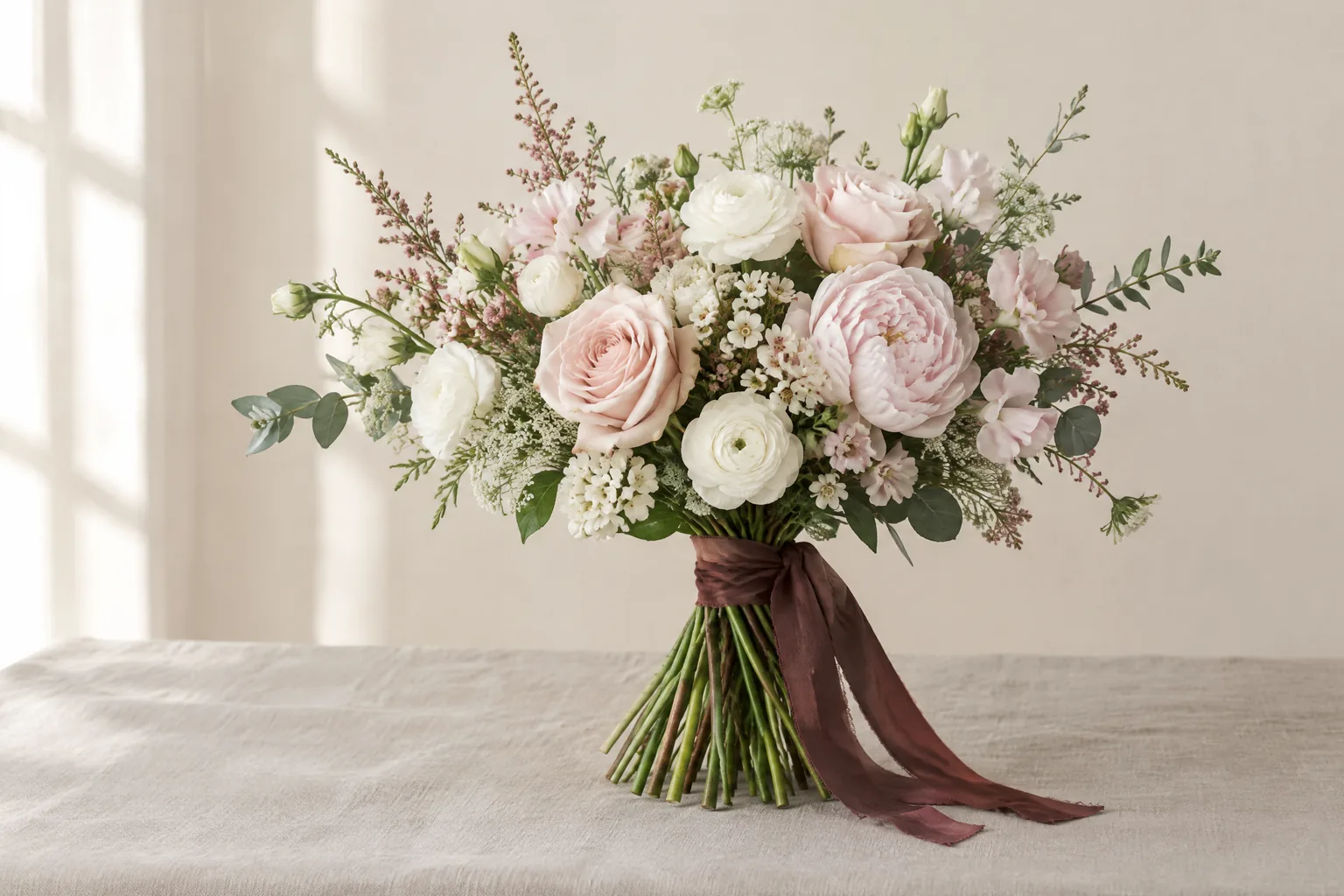
Find the display position before setting the size
Measure the whole silhouette, not just the vase base.
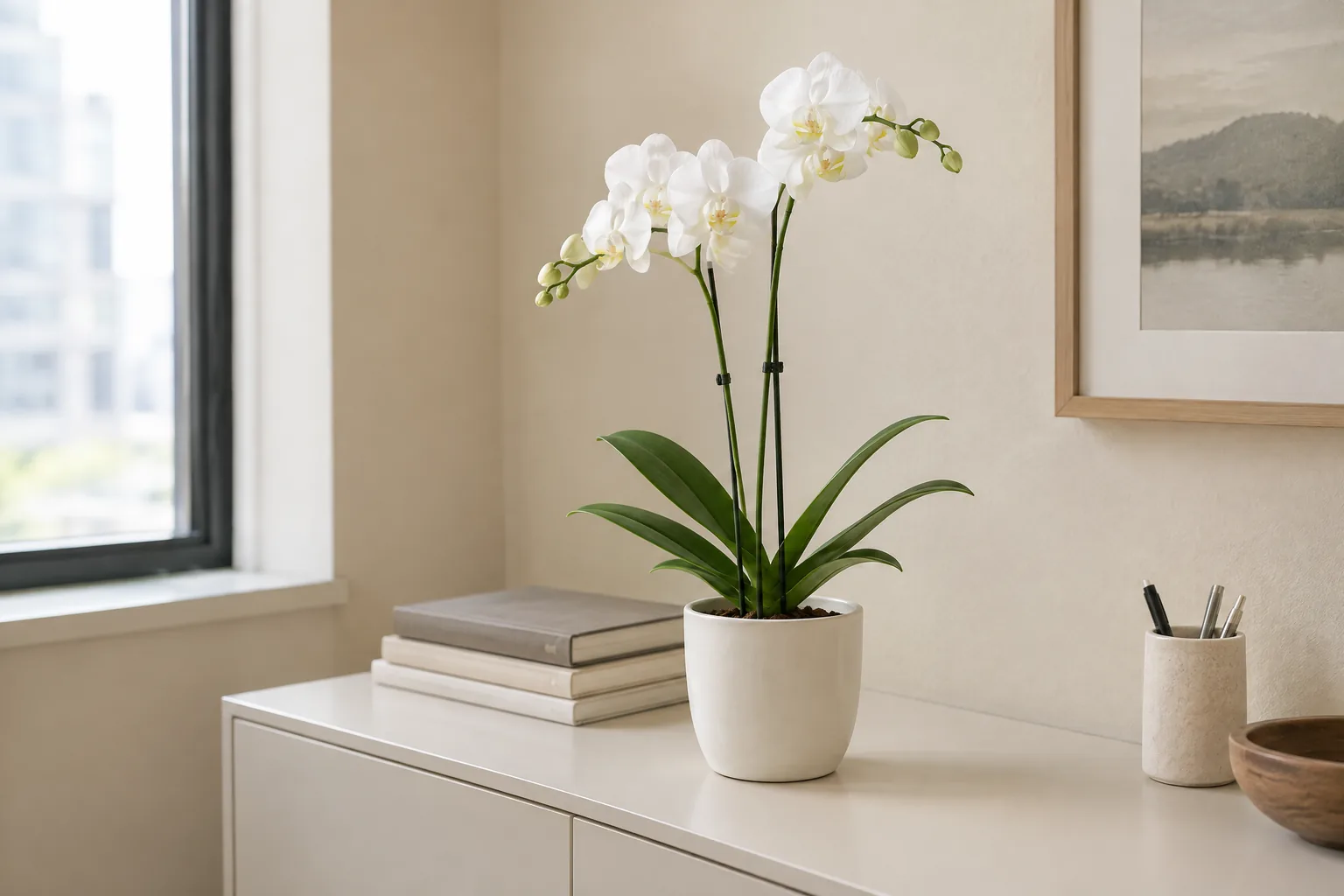
Look at the proposed spot during an ordinary day. Does direct sunshine reach it later in the afternoon? Is it next to a steaming cooking area or somewhere that regularly becomes damp? Can the cupboard door open without brushing the flower heads? These observations are more useful than a photograph taken from the most flattering angle. A shelf may appear empty yet be part of the space needed to use a window, reach a socket or put away everyday belongings.
Measure the usable width, depth and height, including the space above the container. Ask for the finished dimensions of the flowers and wrapping, not simply the vessel. For example, a narrow base can support a wide fan of grasses that reaches across neighbouring objects. A folded paper outline on the shelf can help you picture the footprint without buying anything. Treat the measurements as limits to discuss, not as an instruction to fill every available centimetre.
Think about cleaning access too. If the arrangement must be moved whenever the shelf is wiped, somebody will repeatedly handle it. A position that leaves room to clean around the base is easier to live with. Check the view from where your partner normally sits; a tall display beside a screen may be distracting even when it fits. If every candidate position creates another inconvenience, accept that the flat may not currently suit an enduring floral object.
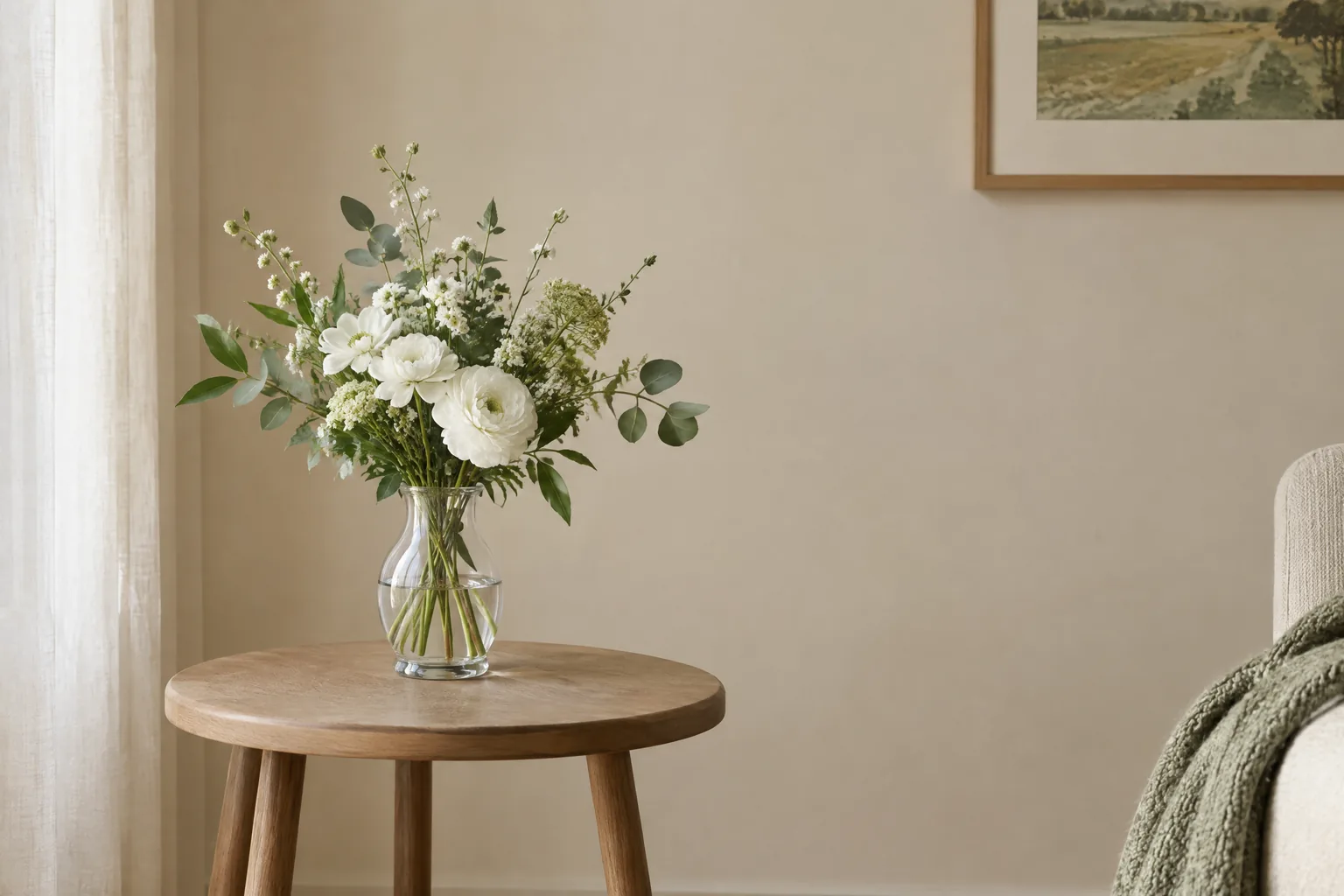
Find out what the flowers are made from
Compare treatments and mixed materials, not romantic labels.
When looking at a preserved flower bouquet, use the page as a starting point for questions about the actual stems and finished presentation. Ask which elements are treated natural flowers, which are dried, and whether any decorative parts are artificial. A product title alone cannot answer those questions. A design may combine materials with different handling needs, so ask about the whole piece rather than assuming that the main bloom describes every component. You are choosing something to live with, not just an attractive photograph.
Verdissimo's manufacturer FAQ distinguishes dried flowers, which lose water through dehydration, from preserved flowers treated with a solution replacing natural sap. That explains a broad process difference, not the composition of a particular shop's design. Drying also has several methods: University of Missouri Extension describes both air-drying and desiccant drying, and notes that dried petals can become brittle. Ask the florist to identify the process and materials used in your chosen piece rather than treating 'dried' as one uniform specification.[1] [2]
A dried flower bouquet may appeal if your partner likes a papery, textural appearance, but consider the shape as well as the palette. Ask whether the design includes fine grasses that project beyond the main flowers and whether any colour has been added. Request a close view of representative materials if texture matters to the recipient. Do not choose dried or preserved stems on the assumption that they are automatically unscented, allergy-free or suitable for every household. If a material raises a concern, clarify it before ordering.
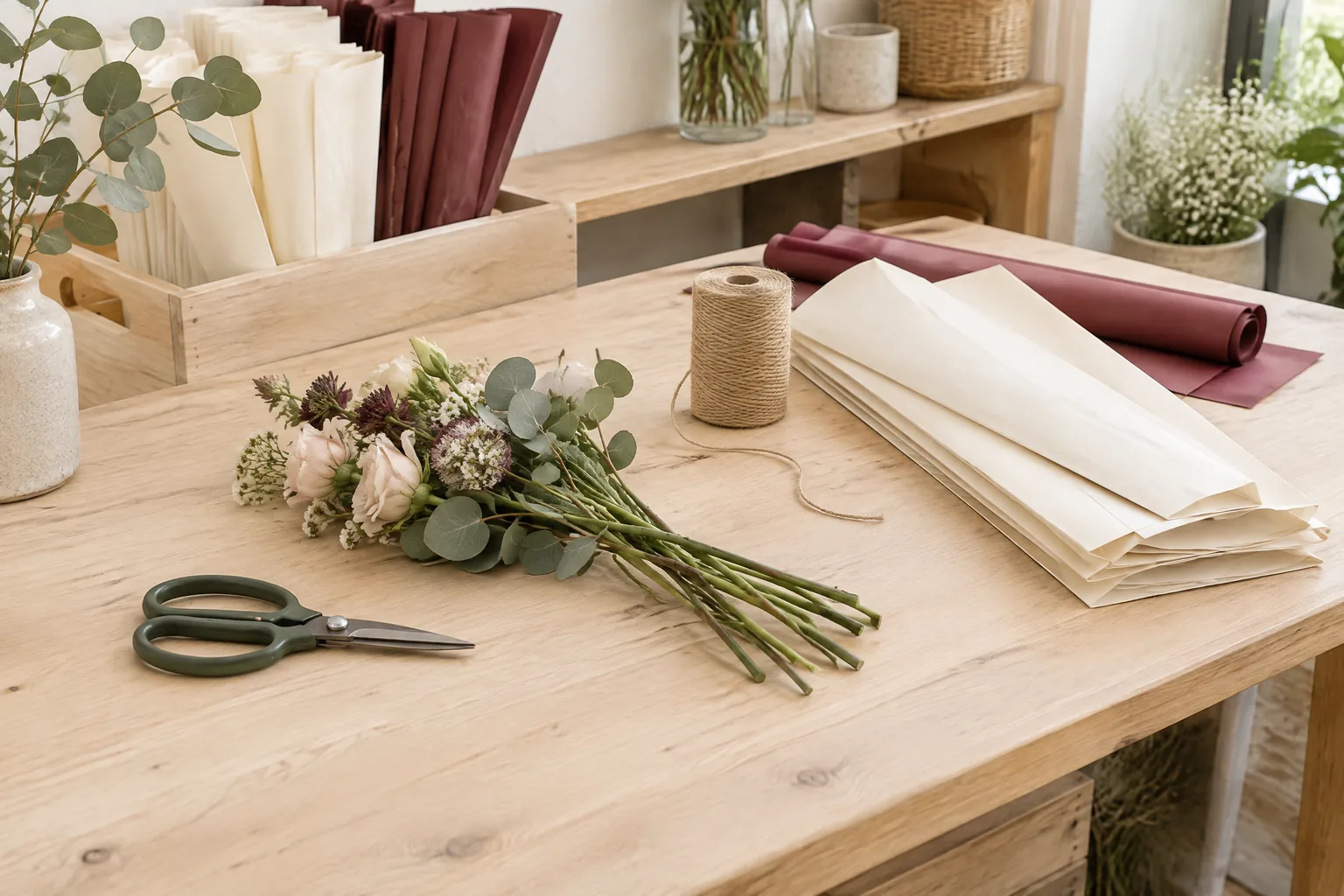
Request care advice for the finished piece
Useful instructions describe what to avoid and how to clean it.
Verdissimo advises indoor use for its preserved products, away from direct sunlight, heat and excessive humidity. Its guidance says not to water or spray them, and describes occasional dust removal with a feather duster or low-power cool air. This is useful manufacturer guidance, but it does not establish that another florist uses Verdissimo materials. Ask the seller for instructions matching the flowers, treatments and construction of your actual arrangement. Do not transfer fresh-flower watering habits to a preserved display.[3]
A useful care card should explain how to lift the arrangement, whether its wrapping should stay on, and which cleaning method is suitable. Ask separately about the base, glass or container: a method appropriate for a hard exterior may not be appropriate for petals or glued details. If cool air is recommended, clarify the intended tool and handling rather than experimenting with a powerful appliance. Being told that an item is 'low maintenance' does not tell its recipient what to do when dust appears.
Keep the instructions somewhere accessible, such as with the order confirmation, rather than relying on a small card that may be discarded with packaging. If the gift goes to a separate household, pass on the advice without assigning a cleaning schedule. Ask the florist what visible changes merit a follow-up enquiry and whether damaged elements can be assessed or replaced. Do not assume repair is offered. These questions help you compare the practical support around a design without asking for an unrealistic promise of permanence.
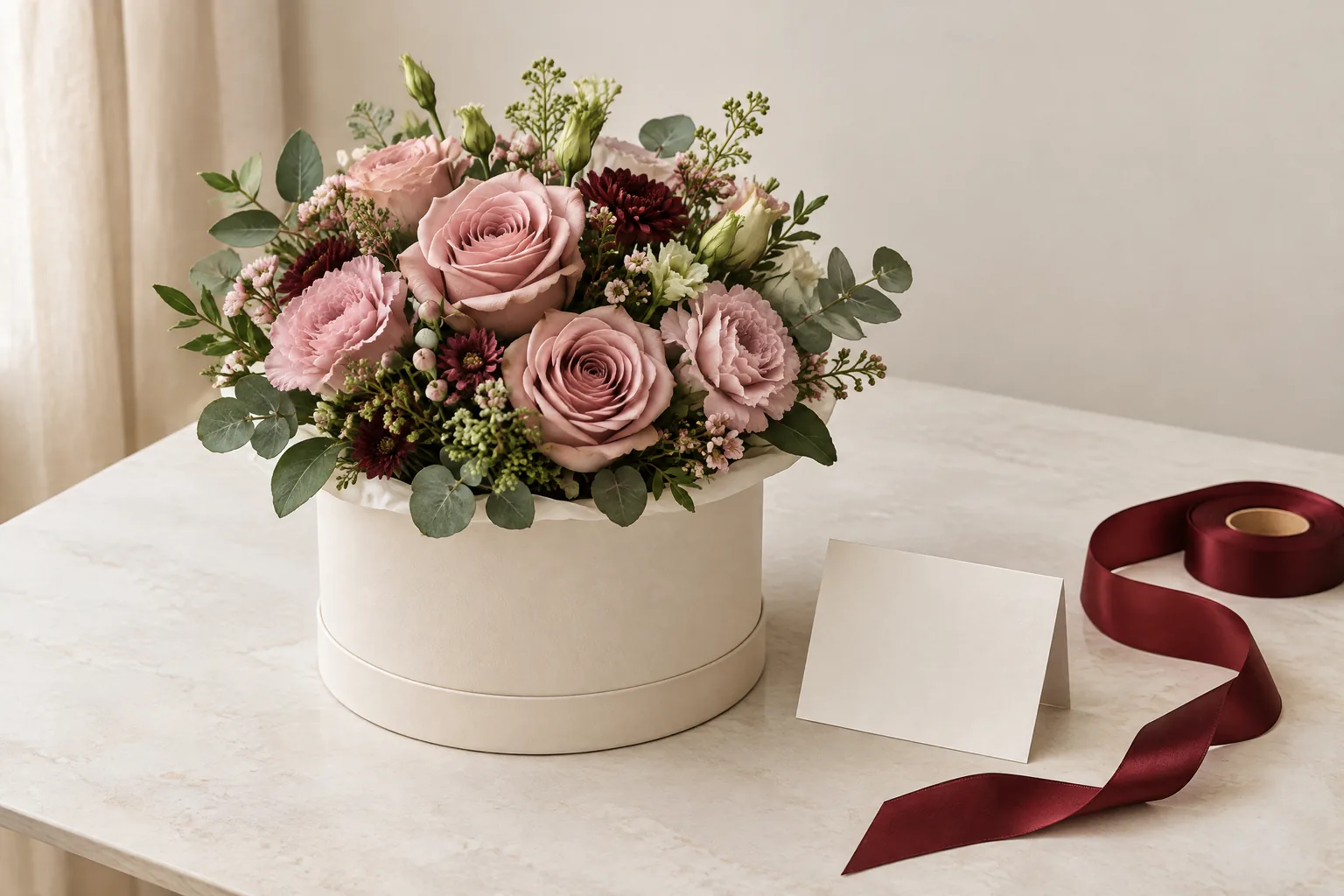
Be realistic about dust, humidity and change
A cover can be useful, but it is not a universal solution.
University of Missouri Extension explicitly cautions that dried flowers should not be considered everlasting and says even well-kept examples gradually fade. That is a better starting expectation than choosing a gift by a promised number of years. Ask what changes are normal for the selected materials and what the seller means by any lifespan claim. An arrangement can remain meaningful while its appearance changes, but the recipient should not feel responsible for preserving a photograph-perfect version of it forever.[4]
If dust is the main objection, ask whether the proposed piece can be displayed under a suitable cover and how both parts are cleaned. Check the total dimensions and how the cover lifts off. Do not assume an ordinary decorative dome is airtight or controls humidity; ask what, if anything, its construction is intended to do. A cover also adds another object to clean. For a recipient who wants clear surfaces, enclosing a larger arrangement may solve the wrong problem.
Consider the room when nobody is home, not just when it is comfortably air-conditioned. If the available display area often feels damp, ask the florist whether the proposed materials are appropriate there. You do not have to buy equipment or change household routines to justify a gift. Avoid choosing an arrangement that only works if your partner starts managing the room differently. Where conditions or care advice remain uncertain, postponing the purchase is more sensible than hoping a decorative container will compensate.
Agree the footprint and keep the message personal
Make the sentiment specific rather than increasing the object.
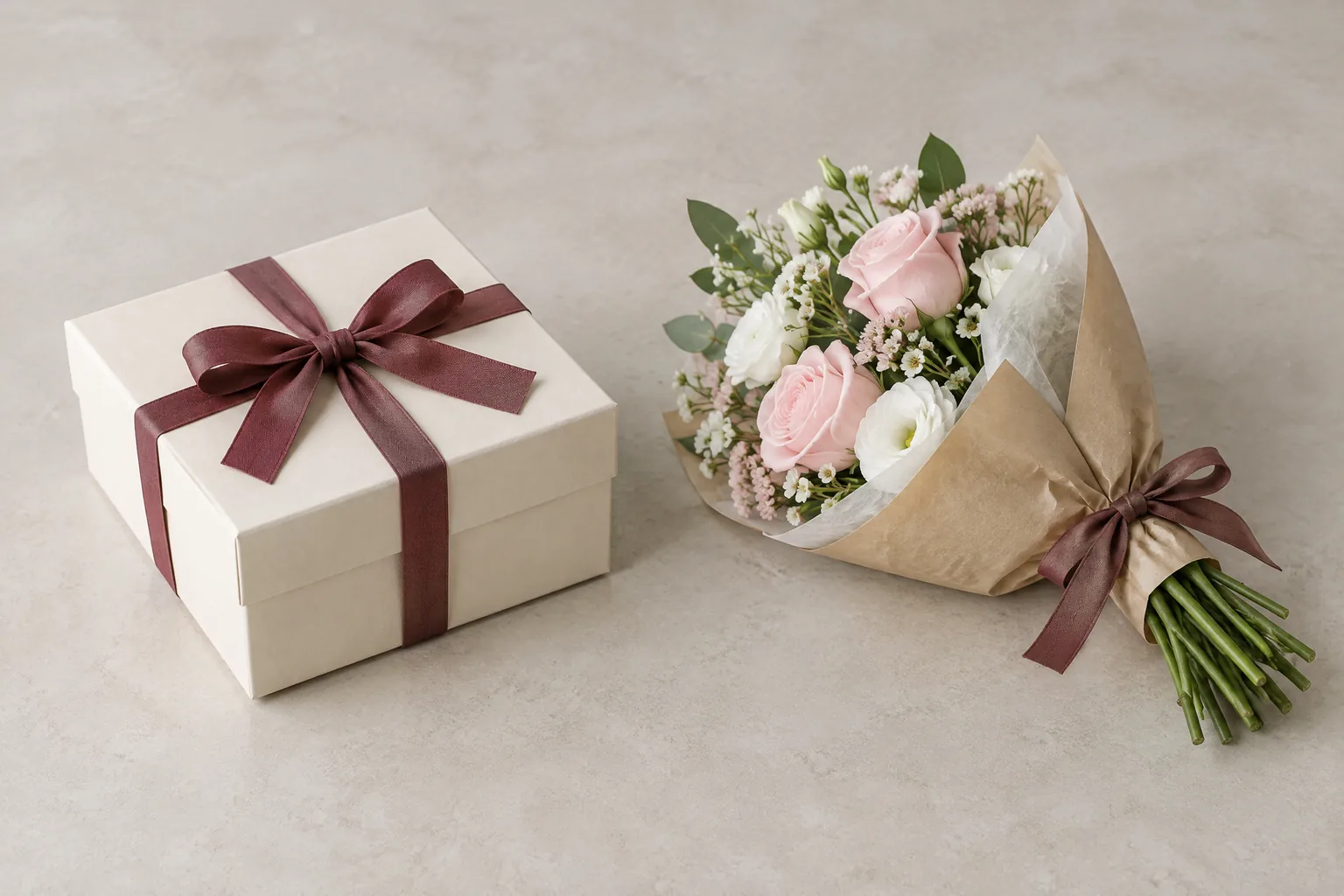
Once the location and materials make sense, agree a maximum size and a palette the recipient would willingly display. Ask whether the presentation needs its own vessel or can use one already in the home. Keeping an existing container may reduce the number of new objects, but the florist must confirm that it supports the proposed design. Discuss wrapping too: elaborate presentation can look impressive at handover yet leave the recipient unsure what should remain in the final display.
Put the anniversary meaning into the note rather than adding more decorative pieces. Mention a shared memory, something your partner did this year or an ordinary routine you value together. One specific sentence can make a modest arrangement feel personal without requiring engraved accessories or an extra display box. Confirm the exact spelling of names and dates before any personalisation. Keep private details inside the message rather than on the exterior if the gift will pass through other people's hands.
If you browse anniversary flowers for inspiration, remember that an occasion category does not establish whether a design is fresh, dried, preserved or artificial. Check the material description for the particular option and ask what can be confirmed for your date. Share the agreed footprint and care constraints before discussing substitutions. A replacement bloom or different wrapping should not quietly change a compact keepsake into something that no longer fits the room or the recipient's preferences.
Choose a non-object gesture when that fits better
The anniversary can be memorable without a permanent display.
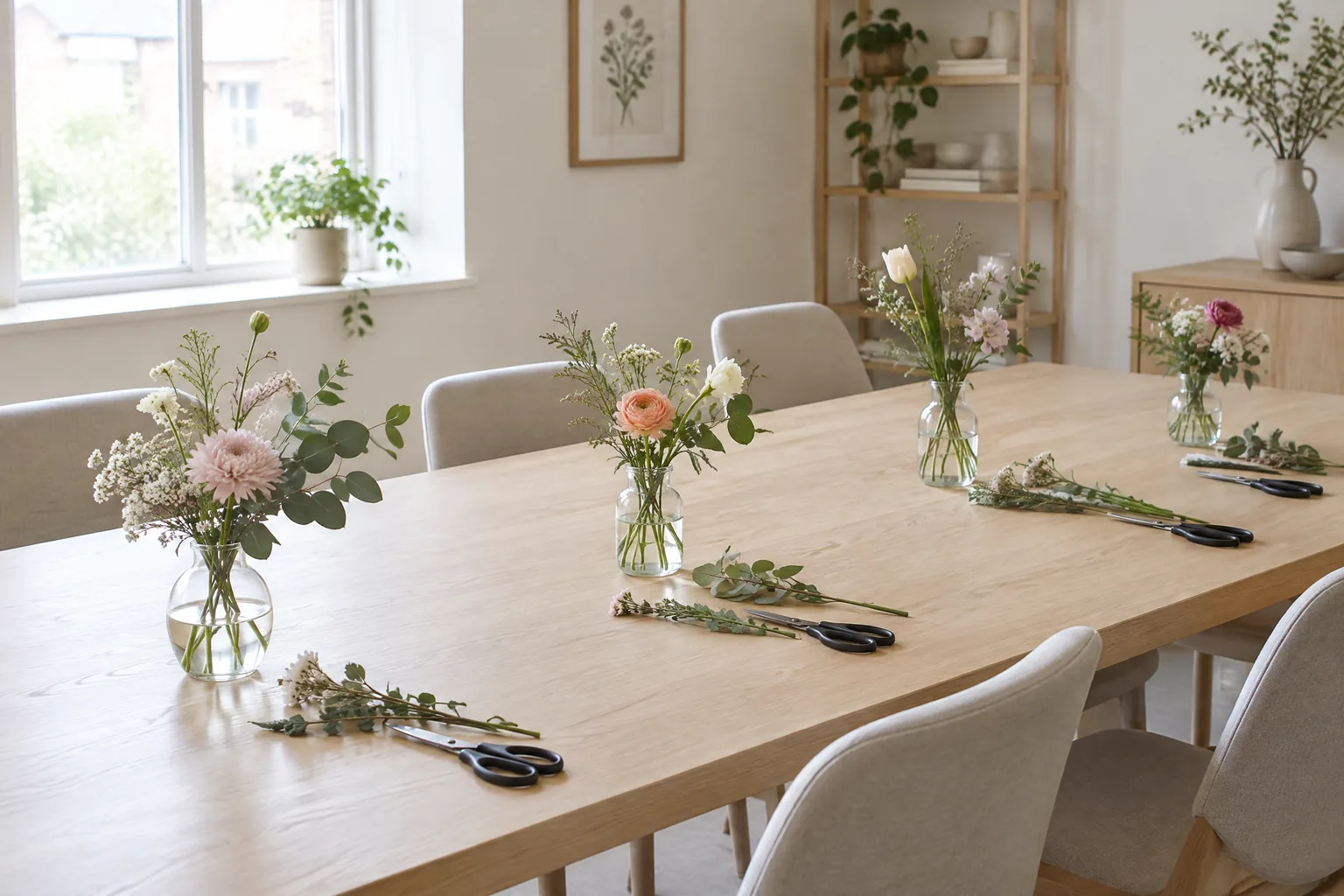
If your partner likes flowers but not keeping objects, consider enjoying a floral display together somewhere you both want to visit, rather than bringing one home. Alternatively, choose a shared meal, a walk on a familiar route or time set aside for an activity they have mentioned. Ask before making fixed arrangements if their schedule is uncertain. The point is to recognise their preferences, not to replace an unwanted object with an equally unwanted appointment or a complicated surprise.
A handwritten letter can also carry the meaning without creating a new display obligation. Let the recipient decide whether to keep it privately. If you both want a record of the anniversary, a simple photograph together may be enough; it need not become another framed item. Discuss any tradition of exchanging gifts before changing it, so choosing less is not mistaken for forgetting. Explain the thought behind the decision in terms of what your partner enjoys.
If you do choose flowers, leave the future open. Take a photograph when the arrangement arrives if you would like a record, then let your partner decide where it lives and when it stops being useful. Do not turn fading, moving house or clearing a shelf into a relationship test. A well-chosen keepsake should support a shared life rather than make that life harder to organise. Sometimes the most thoughtful anniversary decision is permission not to keep anything at all.
| Recipient's preference or constraint | Direction to consider | Question to settle first |
|---|---|---|
| Wants a floral object and has a suitable indoor position | A compact preserved design | What are the exact materials and their care instructions? |
| Likes papery textures and can avoid frequent handling | A small dried arrangement | Will projecting stems fit without being brushed? |
| Wants a keepsake but dislikes exposed surfaces collecting dust | Ask about an appropriate covered format | What does the cover protect against, and how is it cleaned? |
| Has no welcome display space or does not want maintenance | A non-object anniversary gesture | Which shared experience would they actually enjoy? |
- Ask whether a physical floral keepsake is wanted at all.
- Choose a recipient-approved position and measure its usable space.
- Confirm the complete material mix and finished dimensions.
- Request care instructions for the flowers and container separately.
- Discuss the room's usual conditions, including when it is unoccupied.
- Confirm the message, substitutions and order arrangements with the florist.
- Agree that the recipient may move, change or retire the display later.
Start with the person and the place, then choose the floral material. A small, wanted arrangement with clear care advice is more considerate than a dramatic object that creates work or guilt. If neither the available space nor the recipient's preferences supports a lasting display, choose a gesture that does. You can mark an anniversary thoughtfully without asking anyone to keep proof of it on a shelf.
Should I buy a lasting arrangement as a surprise for a minimalist partner?
Only if you already know they want this kind of object and have an agreed place for it. Otherwise, ask about the format first and leave the colour or message as the surprise. Minimalism is a personal preference, not an invitation to prove that one more sentimental item deserves an exception.
Will putting the flowers under glass solve a humid-room problem?
Not automatically. A decorative cover should not be treated as a humidity-control system. Ask how the specific container is constructed and whether the florist considers it suitable for the materials and room. If the only available position is regularly damp, a different gift may be easier than trying to engineer a display solution.
Can I ask for a guarantee that the colours will stay unchanged?
Ask what appearance changes are expected and what any written guarantee actually covers, but do not assume permanent colour is possible. Dried material gradually fades, and manufacturer guidance for preserved products also places conditions on their care. Choose a design your partner will enjoy now without making unchanged appearance part of the emotional promise.
What should I do if the care card conflicts with general advice online?
Contact the seller before cleaning or treating the arrangement. Describe the material and the conflicting instruction, and ask for clarification in writing. Mixed designs may include parts that need different handling. Avoid adding water, spray or a home treatment simply because a general guide recommends it for another type of floral material.
Is it unkind to retire the keepsake before the next anniversary?
No fixed display period is necessary. Agree from the beginning that the recipient can change the display, keep a photograph or let the object go. If either partner attaches a special meaning to it, discuss that meaning kindly rather than making shelf space a test of gratitude. The gift can have mattered without staying indefinitely.
Before ordering, ask your partner about keeping a floral object. If the answer is yes, send the florist the proposed display dimensions and room conditions, and request material-specific care advice before confirming the design.
Sources & supported claims
- Verdissimo — FAQs
The manufacturer distinguishes dried flowers made by dehydration from preserved flowers treated with a solution replacing natural sap; this does not identify the materials in another seller's arrangement.
- University of Missouri Extension — Drying Flowers and Foliage for Arrangements
Flowers can be air-dried or dried with desiccants, and petals become brittle after drying.
- Verdissimo — FAQs
For its own preserved products, Verdissimo advises indoor use away from direct sunlight, heat and excessive humidity, no watering or spraying, and periodic dust removal with a feather duster or low-power cool air.
- University of Missouri Extension — Drying Flowers and Foliage for Arrangements
Dried flowers should not be considered everlasting; even well-cared-for dried flowers gradually fade.