
Gatherings & catering
Content updated
On this page
Shop opening refreshments: let guests browse and eat comfortably
Choose shop opening refreshments that guests can finish before touching merchandise, rather than expecting them to juggle food, a drink and a product. Small, stable bites with little loose topping usually fit a browsing event better than bowls or elaborate plated dishes. Provide a proper place to eat and put down a glass, even when most visitors will stand. Then replenish in small batches so someone arriving late receives the same welcome as the first guest through the door.
Start with the shop layout and arrival pattern, not a photograph of a full buffet. Keep serving away from sensitive displays, give refreshments their own landing surfaces and reserve a clear area for launch photographs. A menu is only suitable when its actual size, packaging and handling requirements work in that space. Confirm who will serve, clear and monitor food while your retail team talks to visitors.
Map visitor dwell time
A short browse and a long launch reception need different hospitality
An opening advertised as a drop-in afternoon may bring a steady trickle of visitors, followed by a cluster when neighbouring businesses finish work. Record the public opening window separately from the invitation time for partners or media. Ask whether people are likely to browse briefly, stay for a demonstration or remain through a speech. These are useful planning assumptions, not confirmed attendance. Keep a person at the door who can tell the service lead when arrivals change.
Decide whether the food is a welcome snack or a meal before asking for quantities. A visitor stopping by between lunch and dinner may appreciate a couple of modest choices; someone invited to stay across their normal mealtime needs clearer expectations. Do not call a selection of small bites dinner simply because the total tray looks generous. If the shop cannot accommodate comfortable eating, shorten the hospitality element or direct invited guests to a separate reception space agreed with the venue.
Give the supplier a realistic arrival range and explain what creates the busy period. For example, a demonstration may hold people inside while the next group arrives. Ask how much food should remain available for later visitors, and who may authorise releasing that reserve. Count guests who decline refreshments separately from those not yet offered any. This lets you adjust service without repeatedly offering the same visitor a tray while someone newly arrived receives nothing.
Protect displays and stock
Make the eating area obvious without turning the shop into a dining room
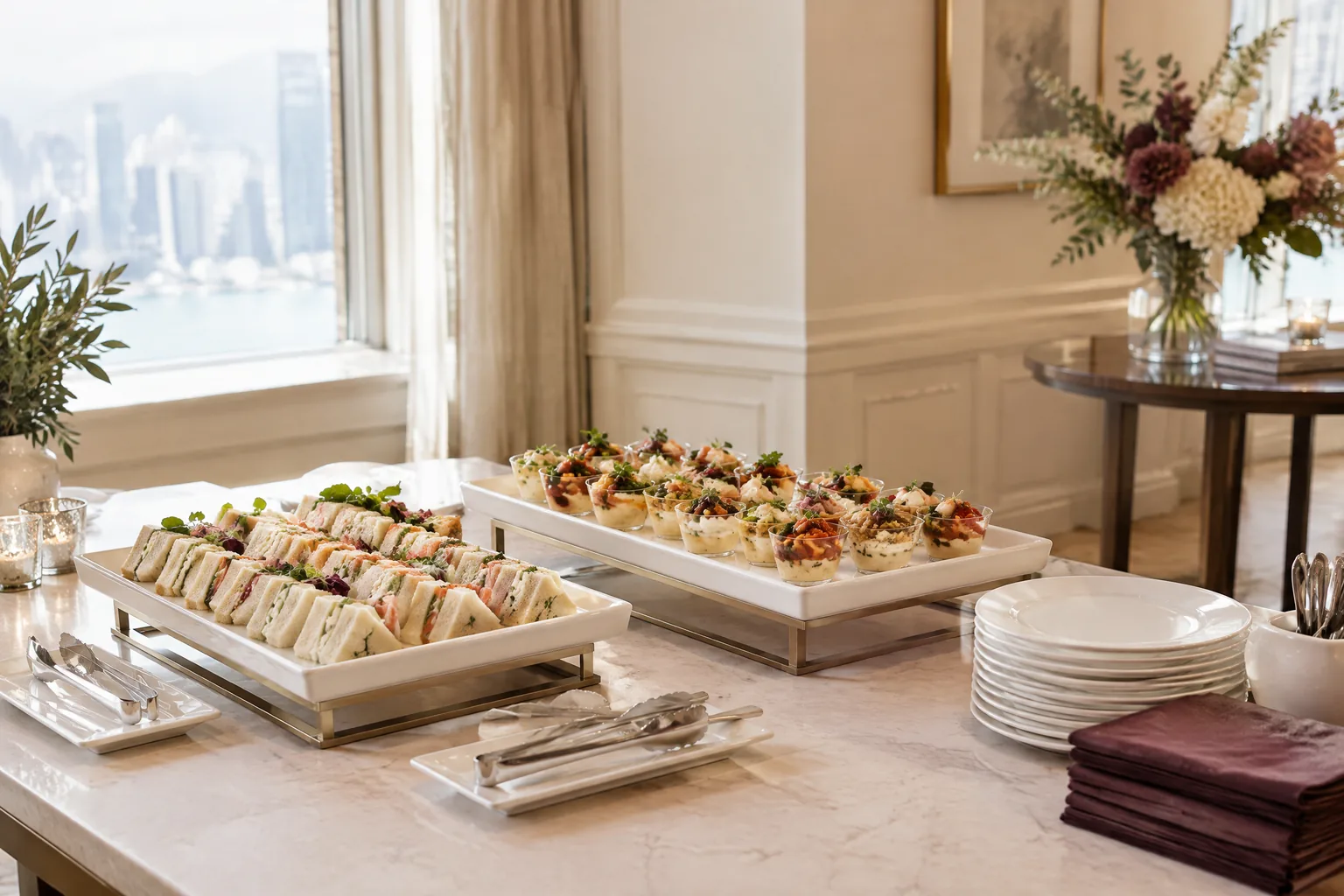
Mark the merchandise that must stay away from refreshments. Clothing rails, paper goods, upholstery and working electronics deserve particular attention because a small spill can interrupt browsing or leave a difficult clean-up. Position food on a dedicated surface rather than an empty shelf that will later hold stock. If visitors need to handle samples, create a natural sequence: finish the bite, discard the napkin, then approach the demonstration. A friendly host can explain this without treating every shopper as a potential problem.
Glass cases and smooth counters are tempting places to leave drinks. Provide an alternative landing table near the browsing route, then ask staff to guide guests towards it. Check the surface with the cups and plates you actually intend to use. A narrow pedestal may look elegant but become awkward when several people put glasses down together. Keep drinks below display overhangs and away from payment terminals. Any protective covering should suit the shop finish; do not assume adhesive tape will remove cleanly.
Consider what the menu leaves behind. Bones need a discreet discard point; skewers need somewhere to go after eating; flaky pastry can scatter crumbs beyond a napkin. Greasy fingers are especially inconvenient in a shop where touching products is part of the experience. These are reasons to change the serving location or select a different item, not simply add more napkins. Use a sample rehearsal to check what happens between taking a bite and returning to browse.
Choose serving formats
Test the whole action, not just the size of the food
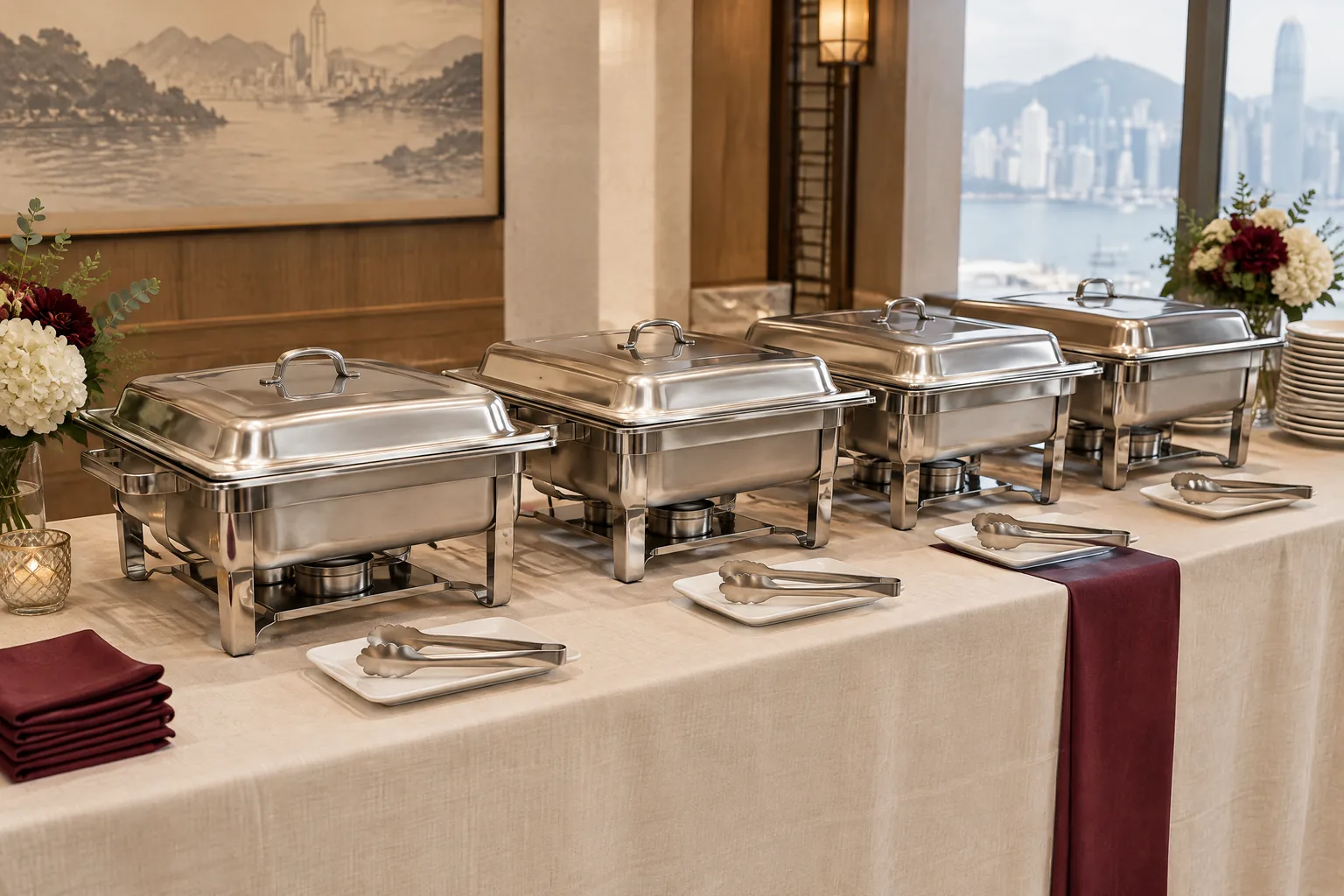
When exploring Party Finger Food Catering, ask which proposed items can be lifted, eaten and finished without a separate plate or a second utensil. The category name does not settle that question: a wing, a short skewer and a compact sandwich impose different handling needs. Request the approximate dimensions and serving arrangement for shortlisted items. If a guest must set down a drink to remove packaging or separate pieces, plan an eating surface rather than describing the item as effortless browsing food.
Canapé Catering is another format to compare when you want small reception bites, but an attractive topped base still needs a handling test. Ask whether the topping stays in place when lifted and whether the base crumbles under normal pressure. Avoid choosing a tall stack solely for its appearance in a close-up image. A tasting or sample, if separately agreed with the supplier, should assess serving temperature and structure as well as flavour. Do not assume samples or menu changes are included in an order.
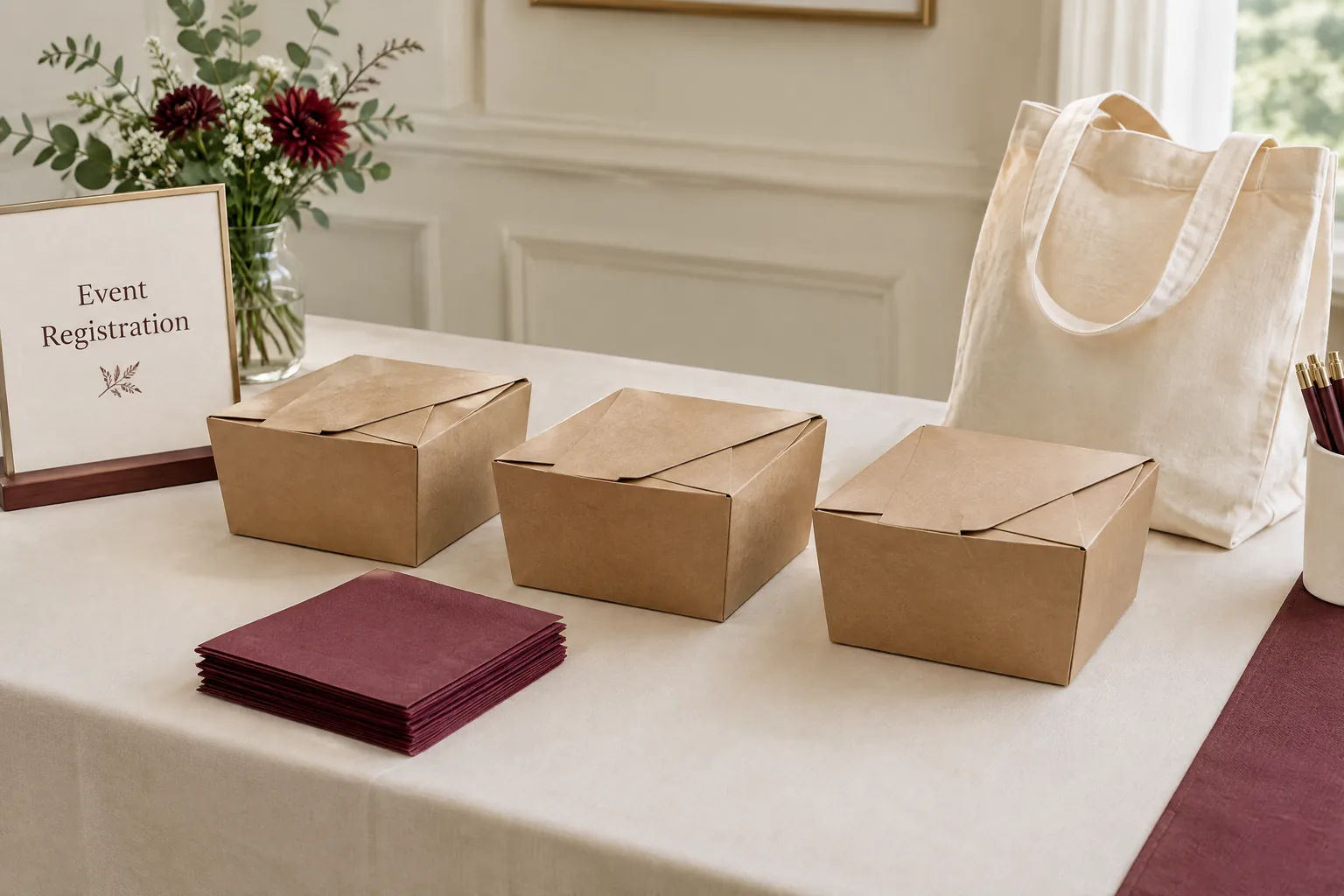
Individual cups and small boxes can contain sauce or crumbs, yet they occupy a hand until empty. Use them at a defined refreshment point where guests can pause, rather than circulate them beside products they are expected to inspect. Keep at least one simple choice for visitors who prefer not to handle a complicated bite. For dietary requests, ask about the specific ingredients and preparation arrangements. A vegetarian, gluten-free or other dietary name is not an allergen-free guarantee or proof of certification.
| Format | Handling to test | Display concern | Best placement |
|---|---|---|---|
| Compact handheld bite | Can it be finished with a napkin and no utensil? | Loose topping or greasy fingers | Circulate near a place to discard napkins |
| Topped canapé | Does the base hold together when lifted? | Falling garnish and pastry crumbs | Tray service away from sensitive stock |
| Food in a small cup | Cup and spoon usually occupy both hands | Guests leave cups on display counters | Dedicated pause-to-eat station |
| Individual snack box | Opening, balancing and disposing of the box | Packaging left among products | Refreshment area with landing surfaces |
| Shared platter | Tongs, plate space and queue length | Crowding around a merchandise surface | Separate staffed or monitored food table |
Plan tray circulation
Serving should reach guests without blocking their next move
Walk the proposed route with an empty tray while another person browses, steps back from a shelf and turns towards the door. Include the narrow point beside the till and any corner where a host will stop to talk. If passing forces the server to lean over merchandise, move the route or use a fixed refreshment station. Do not rely on guests squeezing aside whenever a tray appears. Place replenishment access where staff can collect fresh food without crossing a demonstration or interrupting a sales conversation.
The Hong Kong Labour Department's Guidance Notes on Fire Safety at Workplaces covers shops and says means of escape must remain safely reachable, with an unobstructed route beyond the exits. Keep food queues, delivery cartons and used-tray stacks out of those routes. Check the layout with building management before setup, rather than treating a temporarily empty corridor as spare event space. A service route that looks tidy on a floor plan still needs checking after furniture, opening flowers and guests are in position.[1]
Give used items a different destination from fresh food. A server collecting cups should not have to balance them beside a tray being offered to guests. Locate a clearing point that is visible enough to find but not beside an attractive product display. If only one staff member can circulate comfortably, reduce the number of simultaneous tray movements. A small fixed station with regular clearing can be more welcoming than crowded roaming service. Always leave an unobstructed way for a guest to decline and continue browsing.
Ask about staff and replenishment
Continuous arrivals need a named person managing each batch
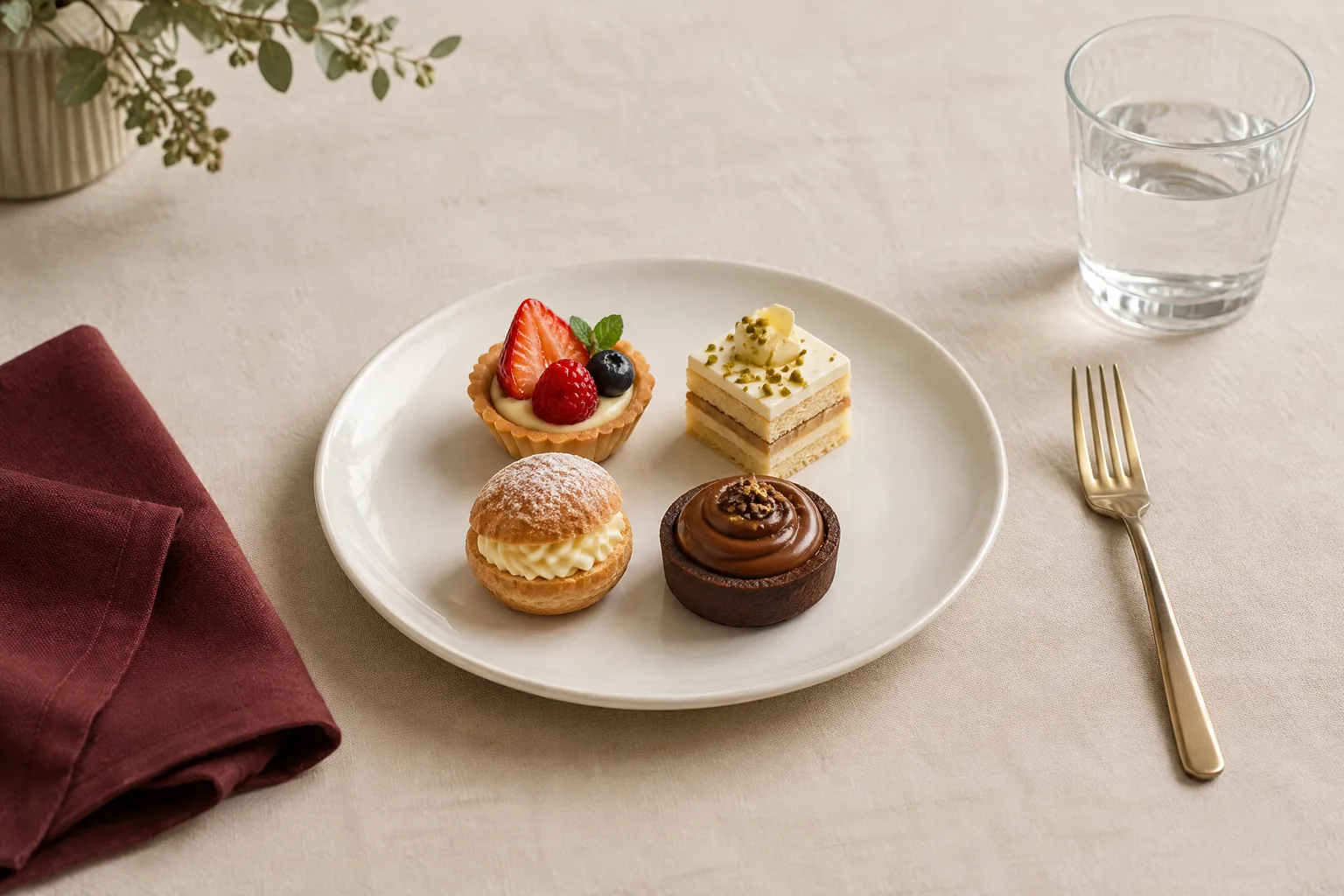
Use Grand Opening Catering as an enquiry starting point for the event format, then ask for the specific duties your shop needs. Delivery, setup, circulating service, drink pouring and final clearing are separate tasks; their inclusion should be stated in the confirmed scope. Your sales team may be busy explaining products precisely when refreshments need attention. Name a retail contact who can approve changes, and a service contact responsible for stock in reserve. Confirm when each person arrives and leaves, including any agreed extension procedure.
Small batches are useful only when the reserve is held appropriately. The Centre for Food Safety identifies 4°C to 60°C as the temperature danger zone where bacteria can grow rapidly, and notes that chilling inhibits growth but does not kill bacteria. Ask the supplier how each dish will be held before service and how its handling history will be tracked. Shop air-conditioning is not a substitute for a confirmed temperature-control arrangement. If the premises cannot support the required holding method, change the menu or service plan.[2]
Agree what triggers a fresh tray and what happens to the previous one. Ask staff to distinguish unopened reserve portions from food that has already circulated or been displayed. Do not keep topping up an old platter until nobody can tell how long its contents have been out. Record the serving instructions provided for each dish, and nominate someone to act on them when the shop becomes busy. If service pauses for a speech, confirm whether food should be removed and how the next batch will restart.
Separate launch photographs from service
Give the ceremonial moment its own space and timing
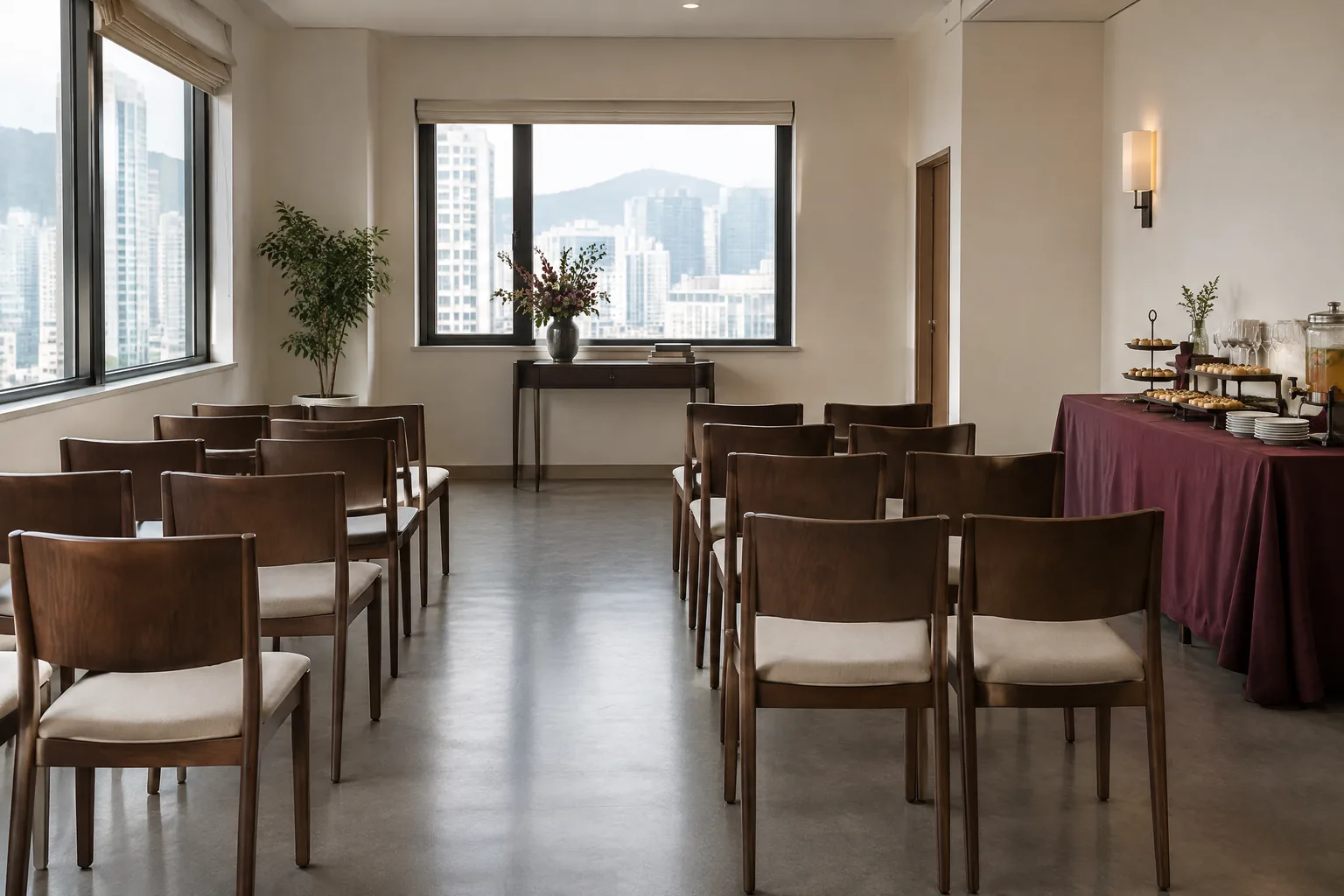
A ribbon-cutting or group photograph works better when participants are not deciding where to leave half-finished cups. Tell the service lead when the photo group will gather and identify a clearing point nearby. Pause tray circulation through that area before people assemble, while keeping any other agreed refreshment station available elsewhere. If guests arrive during the photograph, the door host can welcome them without sending them across the camera position. Keep the photo pause brief and tell staff when normal circulation can resume.
Mark the camera position and the space participants will occupy before opening. A food table placed there for early arrivals may become an obstacle just as the ceremony starts. Check that the photographer can step back without entering a queue or backing into a display. For a product demonstration, choose whether food service stops during the presentation or continues outside its immediate area. Make that decision with the presenter and service lead; leaving everyone to improvise can result in trays blocking the item being introduced.
If you need to enquire about launch coverage, BigDeal's 產品發佈會攝影 page is a Chinese-language destination for product-launch photography enquiries. Share the ceremony time and the no-service area as part of the photography brief, while confirming catering arrangements separately. Decide which images are essential: a clean shop view before guests arrive, the opening moment, or visitors interacting with the displays. Food close-ups can be scheduled before circulation, so the serving team does not hold a tray away from waiting guests for an extended shoot.
This BigDeal guide covers 產品發佈會攝影; the linked page is in Chinese. (Chinese page)
Restore the shop after guests leave
Plan the handover to normal retail trading
Set a clear final serving time even if browsing continues. Tell the door host how to welcome someone arriving near the end without promising a full selection. Remove the refreshment station in a sequence that leaves the shop usable: collect used items, remove food according to the agreed handling instructions, then take away service equipment. Do not pack trays on a sales counter while customers are waiting to pay. If the event runs into normal opening hours, keep one route free for ordinary shoppers throughout the changeover.
Confirm whose team deals with waste, packaging and borrowed equipment. Separate sharp picks or broken glass from casual cup collection using the arrangements agreed with the venue and service team. Keep food waste away from stock awaiting unpacking. Before moving a table back into its retail position, check for moisture underneath and on the floor. Use cleaning methods appropriate to the shop's materials rather than a convenient product borrowed from the catering area. Report any damage promptly instead of covering it with the returning display.
Finish with a short handover between the service contact and shop manager. Check that hired items are accounted for, stock areas are accessible and no leftover food has been quietly placed in a staff fridge without agreed instructions. Note which menu items were easy to handle and where queues formed. Those observations are useful for a later customer evening or anniversary event, but they should not become assumed attendance or consumption figures. The opening is complete when the shop is ready for its next visitor, not merely when the last photograph is taken.

- State whether the invitation offers light refreshments or a meal, and record the full arrival window.
- Test shortlisted bites using the actual cup, napkin and any required utensil.
- Identify sensitive merchandise and provide dedicated eating and drink-landing surfaces.
- Walk the serving and clearing routes; confirm exits and escape routes remain unobstructed.
- Confirm staffing duties, reserve-food holding arrangements and batch replacement instructions.
- Agree the photograph pause, final serving time and equipment and waste handover.
A successful retail opening lets visitors choose when to eat and when to browse, without making merchandise a substitute dining surface. Select refreshments through a handling test, keep service and clearing routes distinct, and protect a properly managed reserve for later arrivals. Give the ceremony its own brief pause and the shop a clear closing handover. The best format is the one your space and team can manage, not the most elaborate tray in a menu photograph.
Should we hand every visitor food and a drink at the door?
Not automatically. Guests may be holding an umbrella, phone or shopping bag, and the entrance is where they need to orient themselves. Welcome them first and point out where refreshments are available. If you offer a drink, make declining easy. Let visitors reach a clear stopping point before offering food, especially when the doorway also carries outgoing customers.
Can we skip plates if the menu says finger food?
Only after checking the actual items. A bite that needs a bone discarded, a wrapper opened or sauce caught may still require a plate or eating surface. Test shortlisted portions with the intended napkin and drink cup. Keep appropriate tableware available where needed; avoiding plates is not worthwhile if guests improvise by using your display shelves.
How do we reserve refreshments for visitors arriving late?
Tell the supplier the full arrival window and agree how reserve portions will be held and released. Give one service lead responsibility for that reserve, rather than letting several hosts help themselves from it. Ask for smaller successive trays where appropriate. Never treat food returned from circulation as equivalent to a fresh, properly held reserve batch.
What if the shop has no suitable place to hold food?
Explain that constraint before selecting the menu. Ask what equipment and space the proposed dishes require, whether that arrangement is permitted by the building, and who operates it. If it cannot be accommodated, choose a different menu, shorten service or move refreshments to an approved separate area. Do not improvise a holding arrangement on launch day.
Should refreshments stop completely for the ribbon-cutting photograph?
Usually only the circulation crossing the photo area needs to pause, provided another refreshment point can operate without obstructing guests. Agree this with the photographer and service lead beforehand. Clear participants' cups and plates before assembling them, then give a specific signal to resume. If the shop is too small for separate activity, schedule one short shared pause.
Prepare a simple shop layout and arrival window, then ask the catering supplier to confirm the menu's handling needs, service duties and holding arrangements in writing. If launch photographs are required, send the photographer a separate brief with the ceremony time and clear shooting area.
Sources & supported claims
- Hong Kong Labour Department: Guidance Notes on Fire Safety at Workplaces
The guidance covers shops and requires safely reachable means of escape with an unobstructed route beyond workplace exits; escape routes should remain clear of obstruction.
- Centre for Food Safety: Temperature Danger Zone and 2-hour / 4-hour rule
Bacteria can grow rapidly in the 4°C to 60°C temperature danger zone, and chilling inhibits bacterial growth but cannot kill bacteria.