Baking & procurement
Content updated
On this page
- Start with the venue's included dessert
- Agree what the cake-cutting moment means
- Compare formats by how guests will eat
- Give someone ownership of the display
- Allocate portions without buying the same occasion twice
- Give the photographs a clear subject
- Approve a simpler option when the extra format has no job
- Questions & answers
- Sources & supported claims
Your wedding dessert focal point: cake, macarons or both
Choose your wedding dessert focal point by giving it one clear job. If the venue already serves a complete dessert course, a small cutting cake may provide the ceremony you want without another full dessert allocation. A macaron display makes more sense when guests have a genuine opportunity to browse and eat from it. Choose both only when the cake has a separate ceremonial role and the macarons fill an identified serving occasion, rather than because two attractive reference pictures arrived in your inbox.
Begin with the confirmed venue menu, then decide whether you want a shared ritual, food for guests or a styled display. Those purposes can overlap, but they should not silently multiply the order. One dominant shape, a realistic portion plan and a named person in charge of the table usually matter more than adding another dessert format.
Start with the venue's included dessert
Find the gap before choosing something to fill it
Ask the venue to describe its dessert provision in ordinary terms. A plated sweet served to every seated guest is different from petits fours placed on each table, and different again from a buffet station shared with other courses. Check when it appears and whether guests can choose not to have it. The useful starting point is a written menu and service explanation, not a package heading that simply says dessert is included.
Then establish what bringing another dessert changes. Ask whether outside food is permitted, whether cutting and plating are charged separately, and whether removing the venue dessert changes the package at all. Do not assume a menu substitution creates a credit. The answer might make a modest ceremonial cake more sensible than supplying a second dessert for everyone. Include staff, crockery and any stand hire when comparing the complete options, rather than comparing food quotations alone.
For an intimate reception, the relationship between table space and guest movement deserves particular attention. A display beside the entrance may occupy the same area needed for greetings or family photographs. BigDeal's 香港小型婚宴 page is a Chinese-language destination for small-reception planning; use that wider layout discussion before deciding that an extra food table is essential. A cake on an existing sideboard may serve your purpose without creating another destination guests must navigate.
This BigDeal guide covers 香港小型婚宴; the linked page is in Chinese. (Chinese page)
Agree what the cake-cutting moment means
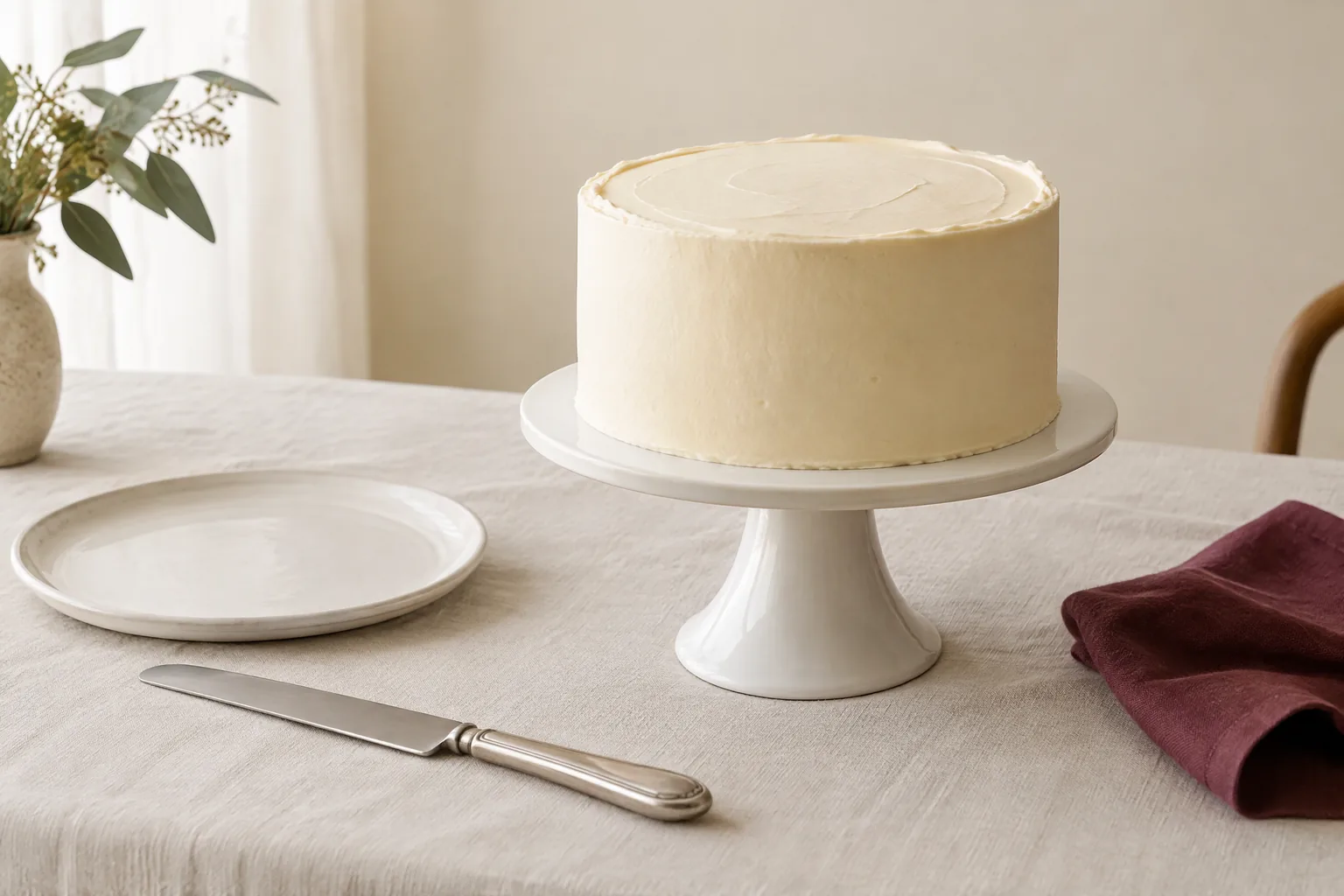
A ceremony does not automatically require a cake for every guest
Discuss the actual moment you want before settling the cake's height. Perhaps your families value watching you make the first cut, or perhaps you only want a quiet photograph together. These are different briefs. A ceremony in front of the room needs an announcement and a clear view; a private photograph needs a suitable location and time. Neither requirement, on its own, proves that every guest needs a second plated slice after the venue's dessert.
Use the Wedding Cake page as a starting point for a design enquiry, then describe the intended recipients and ceremony separately. Ask which parts of the proposed design are edible, where the first cut will be made and how the remaining cake would be portioned. If decorative dummy tiers are proposed, have their use and removal explained. A photograph of a tall cake cannot tell you its edible yield or whether that arrangement suits your venue.
If the cake will serve only a few people, decide who they are and how that will be handled without an awkward promise to the whole room. You might share it with immediate family while other guests receive the included dessert. Tell the master of ceremonies what to announce, or what not to announce. Avoid describing a ceremonial cut as the opening of dessert service when the cake is not intended to be distributed to everyone.
Compare formats by how guests will eat
Choose a service pattern, not just a silhouette
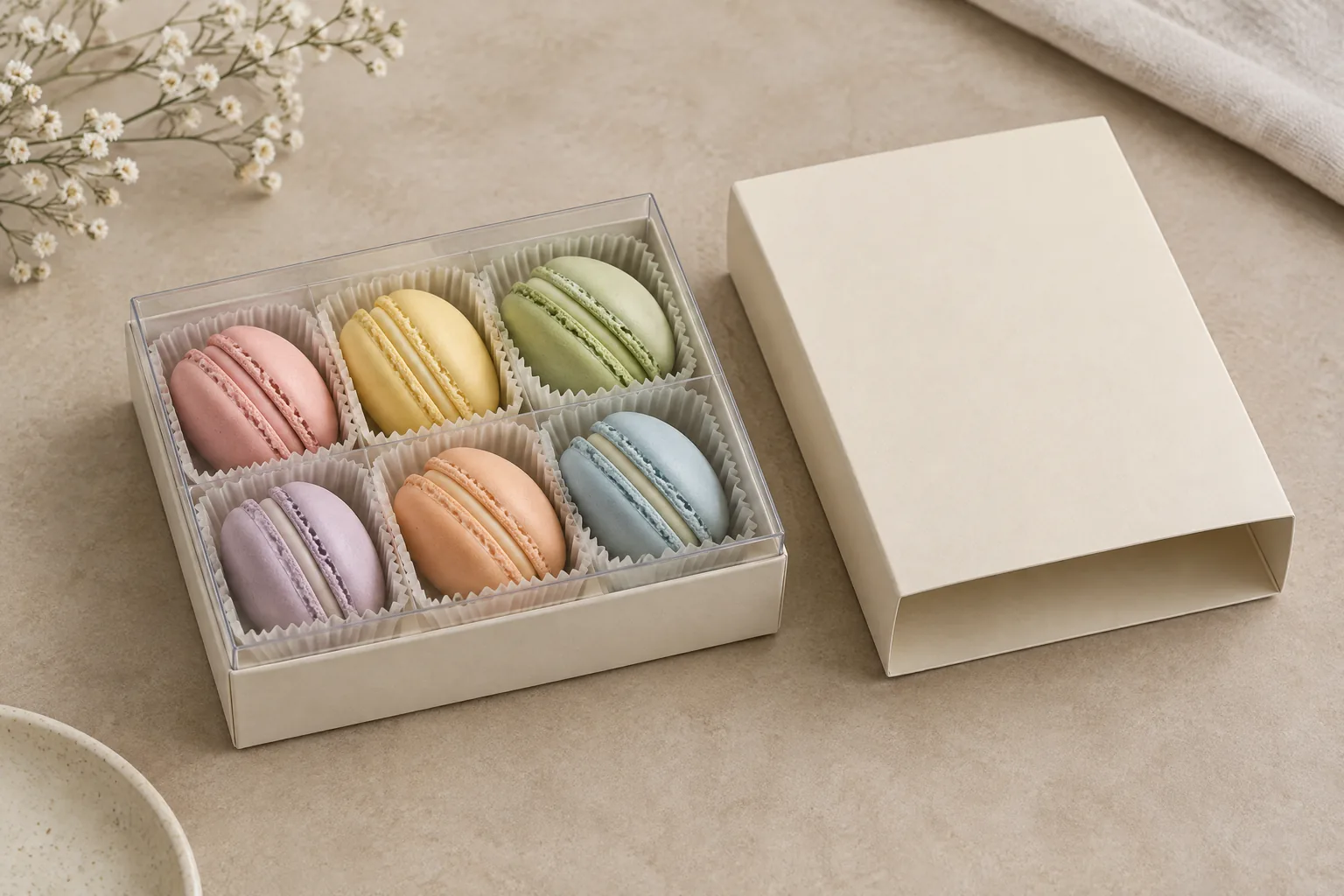
A sliced cake suits a service plan in which someone takes it away, portions it and brings plates to guests. Individual macarons can suit a shorter browsing opportunity, but only if guests know when they may help themselves and can reach the food. A tower that remains untouched throughout dinner has performed a display role, not necessarily a catering role. Decide whether that is what you want before paying for enough pieces to imply a full dessert service.
The Macaron Dessert Table destination is relevant when considering a macaron-led event display. Treat the enquiry as a discussion about the whole arrangement, not an assumption that buying sweets secures a furnished and staffed station. Ask which food, structures and decorative elements the proposed order covers. If you already have venue desserts, request an option that complements them rather than automatically adding cakes and cupcakes merely to make the table appear fuller.
Combining cake and macarons works best when one clearly leads. A small cake can hold the cutting moment, with a low arrangement of macarons served later alongside drinks. Alternatively, a macaron display can be the main visual feature while the cake stays elsewhere until the ceremony. Two equally tall structures beside each other demand more space and divide attention. Choose the dominant object first, then judge every supporting item by whether it helps guests use the table.
| Format | Strongest reason to choose it | Check before approving |
|---|---|---|
| Cutting cake only | A shared ritual and a clear photographic subject | Edible yield, intended recipients and venue cutting arrangements |
| Macaron display only | An actual opportunity for guests to browse and eat | Access time, included dessert overlap and display responsibility |
| Cake plus macarons | A ceremony and a separate, useful serving occasion | One dominant visual feature and separately counted food |
| Venue dessert only | The meal already meets your needs | Whether a cutting ritual is genuinely wanted by the couple |
Give someone ownership of the display
Food, furniture and a finished table are not the same purchase
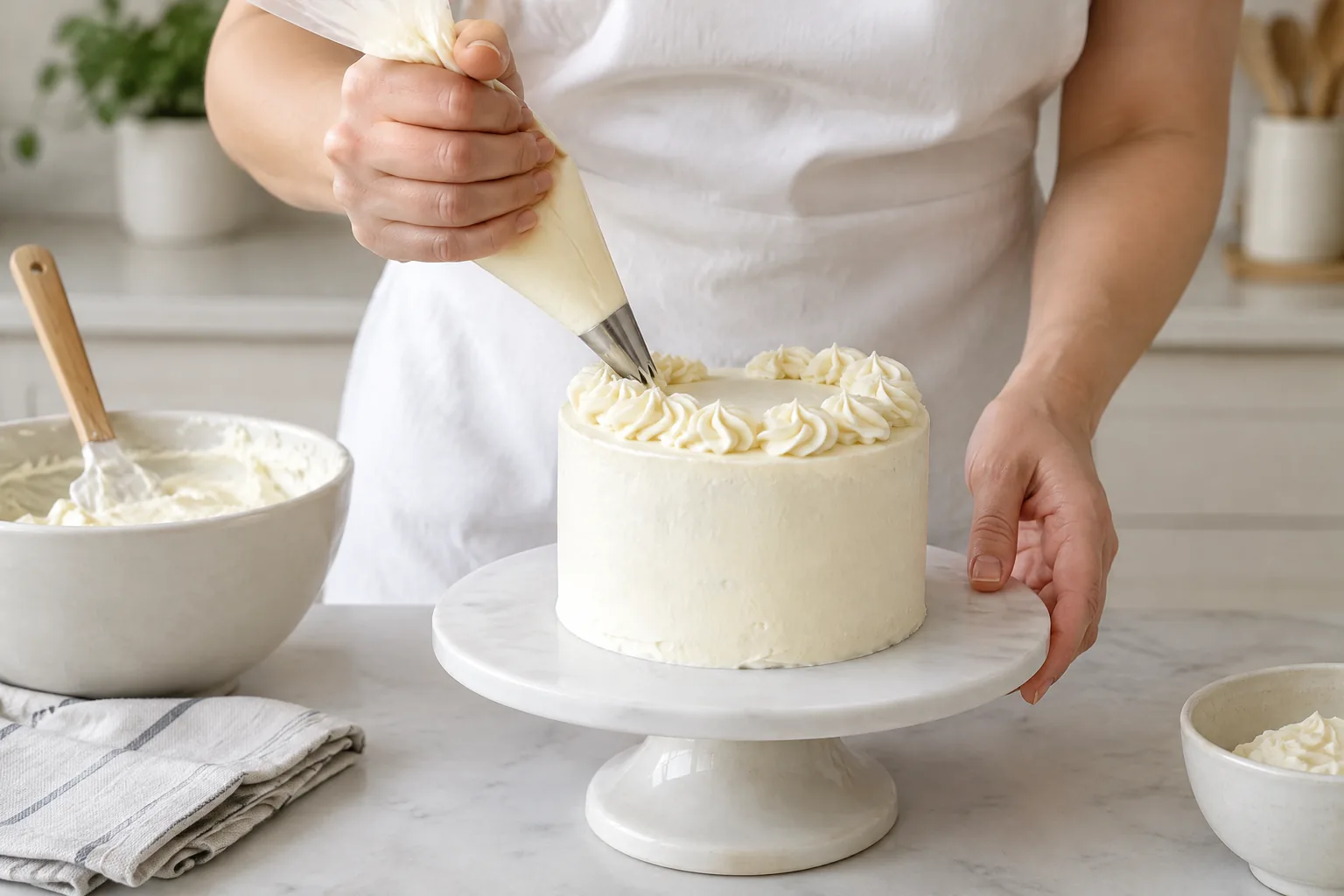
Ask who supplies the table, linen and stands, then who positions the food and removes the equipment afterwards. The venue may provide furniture without accepting responsibility for assembling another supplier's display. Equally, a food supplier may supply pieces without styling the surrounding area. Give the final arrangement one named contact who can resolve a missing stand or an occupied table. Separate responsibilities are workable; an unnamed gap between them is where the plan becomes fragile.
Request the display's footprint, not just its height. Allow room for plates and serving utensils, and leave a place for guests to put a drink while choosing something. Ask how macarons are supported and taken from the structure, especially if some pieces are decorative or attached. Confirm that the chosen location keeps access routes clear and is acceptable to the venue. A freestanding tower should not become a surface guests must lean across to reach other food.
Storage can change the design decision. Hong Kong's Centre for Food Safety states that refrigerated foods are kept at 4°C or below. An air-conditioned ballroom is not refrigerated storage. Ask the supplier for the storage and display requirements of the specific fillings and finishes, then check that the venue can meet them. If a proposed long display cannot be accommodated, shorten the display period or choose another arrangement; do not treat a beautiful reference image as a holding instruction.[1]
Allocate portions without buying the same occasion twice
Count recipients and pieces separately
Write down each eating occasion: the venue's dessert course, any cake sharing, a later gathering and any take-home gift. Put actual recipients beside each one. The same person may reasonably appear more than once, but that should be an intentional choice. Separate edible cake portions from macarons counted as individual pieces. A piece count does not describe an equivalent number of complete desserts, and a cake's number of tiers does not establish how many plated portions it yields.
When comparing French Macarons as a small addition, decide whether each person is being offered a defined allocation or whether the pieces form a limited shared selection. Neither is inherently wrong, but the presentation should match the promise. Keep favour-box contents separate from loose serving stock unless the sealed boxes themselves are the display. Do not count the same pieces as both something everyone can eat at the reception and a gift everyone can take home afterwards.
Keep dietary enquiries alongside the portion plan. The Centre for Food Safety lists eggs, milk and tree nuts, including almonds, among common allergens, and notes that very low amounts can trigger reactions in susceptible people. Ask about ingredients, preparation and cross-contact rather than judging suitability by shell colour or flavour name. A vegan or gluten-free description is not a certification or an allergen-free guarantee. Agree any alternative with the guest and relevant food provider before counting it as covered.[2]
| Allocation | Unit to record | Avoid this assumption |
|---|---|---|
| Venue dessert | Confirmed diners receiving the course | An outside cake automatically replaces it |
| Cake sharing | Agreed edible portions and their recipients | Cake height establishes portion yield |
| Loose macarons | Physical pieces for the serving occasion | One piece equals a full plated dessert |
| Take-home boxes | Boxes and pieces inside each box | The same loose display stock can also fill every favour box |
Give the photographs a clear subject
Protect the moment without keeping food waiting unnecessarily
Tell the photographer what matters: the whole display, the first cut, your hands together or a family gathering around the table. These require different framing and different amounts of clear space. A tight photograph of the cake may hide a cluttered background, while a picture of both partners standing beside it will not. Ask for the camera position to be considered with the room plan, rather than discovering that a service door sits directly behind the display.
BigDeal's 婚禮攝影 page is a Chinese-language destination for wedding photography enquiries. If you discuss this moment with a photography team, provide the proposed location and say which dessert should lead the picture. Photography planning does not establish food storage arrangements or supplier setup responsibilities. Keep those decisions with the venue and food provider, then give the photographer the agreed window in which the display will be ready and available to shoot.
This BigDeal guide covers 婚禮攝影; the linked page is in Chinese. (Chinese page)
If both formats are present, ask for one wide image that explains their relationship and a closer image of the chosen focal point. This is more useful than requiring every decoration to appear in every photograph. Agree whether the table can open to guests after those images are taken. Otherwise a casual request to keep everything pristine may leave guests uncertain about eating, while someone waits for a photographer who has moved on to speeches or family portraits.
Approve a simpler option when the extra format has no job
Keep what you value and remove what merely repeats it
Consider three possible endings to the discussion. If the included dessert is sufficient and the ritual matters, choose a suitably sized cutting cake. If nobody wants a cake-cutting moment and there is a genuine browsing period, consider a macaron-led display. If both have clear roles, keep the cake's recipients and the macarons' service occasion explicit. There is also a valid fourth answer: use the venue's dessert and put the visual emphasis elsewhere in the reception.
Compare revised proposals on the same basis. One quotation may include a stand while another lists food alone; one may require a return visit for equipment. Ask for food quantities, equipment responsibility and venue handling costs to be separated so you can see what changes when a format is removed. A smaller display is not automatically cheaper once fixed setup costs remain. Choose the option whose complete scope you understand, not the one with the most impressive headline size.
Finish with one approved description that the couple, venue and relevant suppliers can all recognise. It should state the main object, intended recipients, serving occasion and who controls access to the table. Keep a simpler alternative in the same discussion, such as reducing the display footprint if the room layout changes. You are not trying to preserve every early idea. You are choosing a dessert arrangement that fits the meal, supports the photographs and can actually be used by guests.
- Get the venue's exact dessert format and service time in writing.
- Confirm outside-food permission and any cutting, plating or handling charges.
- Choose the ceremony you want and identify the cake's actual recipients.
- Count edible cake portions, loose macarons and favour-box contents separately.
- Name the person responsible for the table, stands and equipment removal.
- Agree product-specific storage, dietary information and the display window.
- Tell the photographer which object leads and when guests may start eating.
Choose cake for a ritual you genuinely want, macarons for an eating occasion that genuinely exists, and both only when those jobs remain distinct. Start with what the venue already serves. Then approve one readable display and a portion plan that does not count the same food twice.
Is it wasteful to have a cake when the venue already includes dessert?
Not necessarily. A cake can have a ceremonial purpose without becoming another course for every diner. The important decision is its edible quantity and intended recipients. Ask what the venue will actually serve, then size the cake around the sharing you want. Do not assume guests must receive both simply because both are present.
Can a macaron display replace the cake-cutting ceremony?
It can replace the visual centrepiece, but it does not create the same cutting action. If you do not value that ritual, there is no need to stage it. You could gather for a toast or a photograph beside the display instead. Tell the master of ceremonies so the announcement describes the moment you have actually chosen.
Should a combined display use matching cake and macaron colours?
A shared palette can connect them, but an exact colour match should not be the only approval criterion. Check relative height, table footprint and which object leads the photograph. Food colours can look different under venue lighting. Agree an acceptable visual direction with the supplier, while keeping flavour and dietary decisions separate from decorative preferences.
What if the venue will not handle an outside cake?
Clarify whether the restriction concerns acceptance, storage, cutting or all outside food. These are different problems. Ask whether an approved alternative arrangement is possible before ordering. If nobody can take responsibility for the necessary handling, use the venue dessert or another permitted option rather than arriving with a cake and expecting staff to solve it.
Can we put leftover display macarons into favour boxes at the end?
Do not make that the default gift plan. Ask the food provider what handling, storage and packaging are appropriate for the specific product, and distinguish untouched reserved stock from pieces exposed on the table. If a take-home gift matters, allocate and pack it deliberately. A promised favour should not depend on how much reception food happens to remain.
Before requesting a dessert quotation, ask your venue for its confirmed dessert provision and outside-food handling rules. Share those answers with your chosen supplier, together with the ceremony, recipients and display purpose you want the order to support.
Sources & supported claims
- Centre for Food Safety: Food Safety Bulletin 101st Issue — Practical Tips for Food Storage with Refrigerators and Freezers
Refrigerated foods are kept at 4°C or below.
- Centre for Food Safety: Food Allergy
Eggs, milk and tree nuts including almonds are common allergens; very low amounts of an allergenic substance can trigger a reaction in susceptible people.