
Baking & procurement
Content updated
On this page
- Define edible gifts versus event servings
- Write cake and macaron quantity specifications
- Approve an identifiable sample
- Agree packaging and delivery records
- Inspect the received batch without inventing tests
- Separate product photography from food storage
- Record shortfalls and substitutions
- Questions & answers
- Sources & supported claims
A launch dessert batch acceptance plan for event teams
Good launch dessert batch acceptance starts before production: agree what the sample represents, approve a named version, and decide who will check the delivery. Keep those decisions separate from the photographer's choice of an attractive cake or macaron. A launch team needs enough food in the agreed format, not simply a convincing campaign image. Build one order record with quantities, packaging, handling instructions and permitted changes, then give the receiver authority to record discrepancies without delaying the move into suitable storage.
Treat sample approval as permission to make an agreed product, receipt as a check against the order, and photography as a separate creative task. None replaces the others. Count ceremony food, guest servings, take-home gifts and photographic samples separately whenever they are separate supplies. Resolve uncertain ingredients or storage arrangements before committing to a format, and agree how the supplier should contact you if the approved design cannot be supplied.
Define edible gifts versus event servings
Give every physical item one intended use
Start with the moment each dessert will be used. A cake for the launch photograph may be cut later, while a gift box leaves with its recipient unopened. Loose macarons on a reception table serve a different purpose again. Mark these uses on the order rather than placing everything under a single guest total. If the ceremony cake will supply guest portions, identify those guests; do not add its servings again as though it were a second supply.
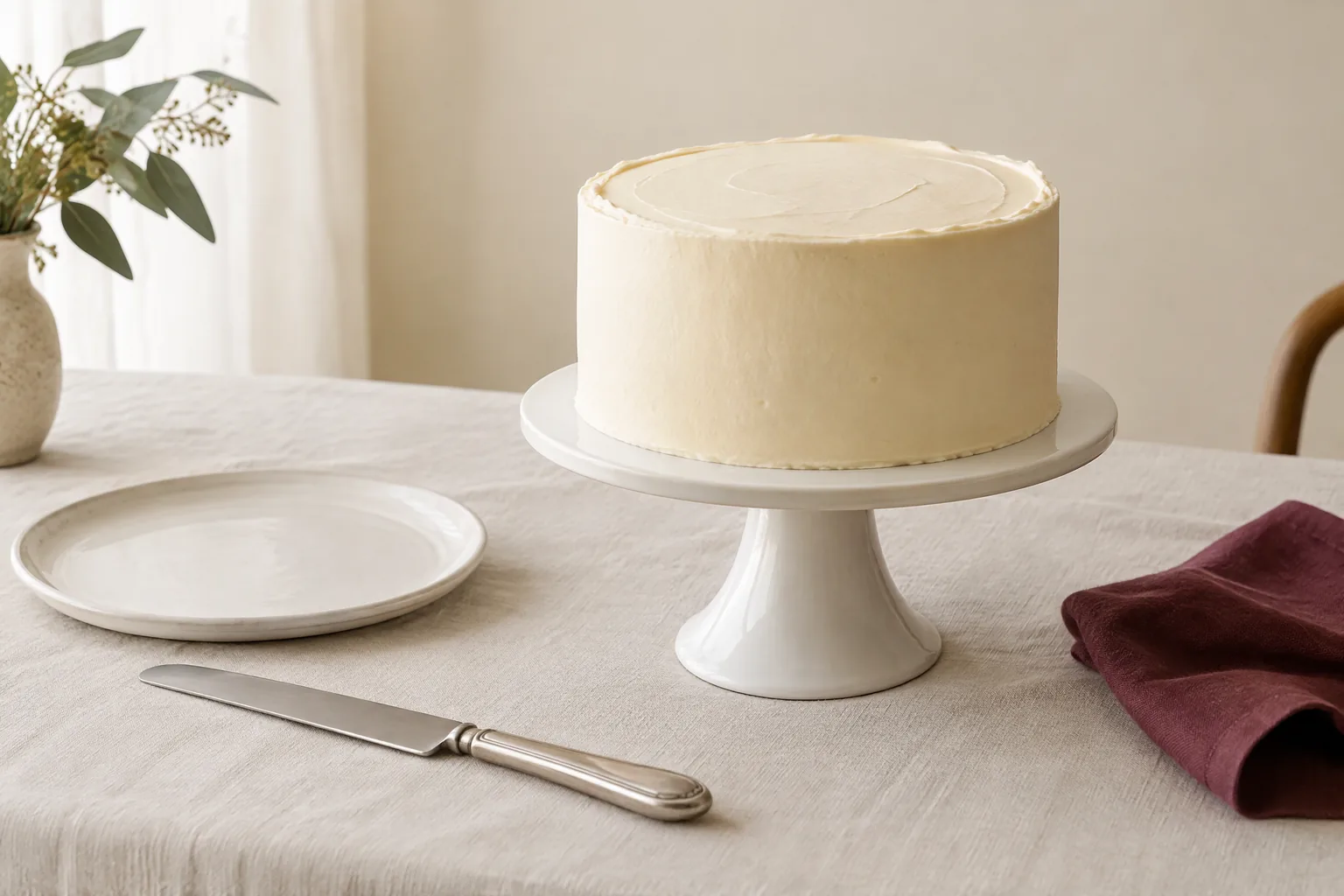
Use the Corporate Cake enquiry page to start a discussion about the launch centrepiece, then ask for a written description of the particular cake being quoted. Specify the intended cutting moment, the visible branded face and whether the cake must also provide agreed portions. A product category does not establish the dimensions, decoration method or serving yield of your order. Ask which details can be confirmed before approval and which require a physical sample or another reference.
Allocate photographic items before deciding any reserve. For example, a cut-open macaron used for a filling close-up should not remain on the gift-packing list. A boxed sample borrowed for a photograph may return to its original allocation only if the food handler confirms that its handling remains suitable. Give every reserve a purpose, such as a named late collection group. An unexplained percentage buffer makes it harder to tell whether a shortfall is real or merely hidden by surplus.
Write cake and macaron quantity specifications
Make the unit of purchase unambiguous
For a Cake Wholesale enquiry, distinguish whole cakes from pre-portioned pieces and record the number of each format. If you request portions from a whole cake, ask who will cut them and what portion guide supports the expected yield. Include the agreed shape and dimensions where relevant, rather than relying on a photograph for scale. A beautifully finished cake can still be unsuitable if it cannot be divided and served within the launch programme.
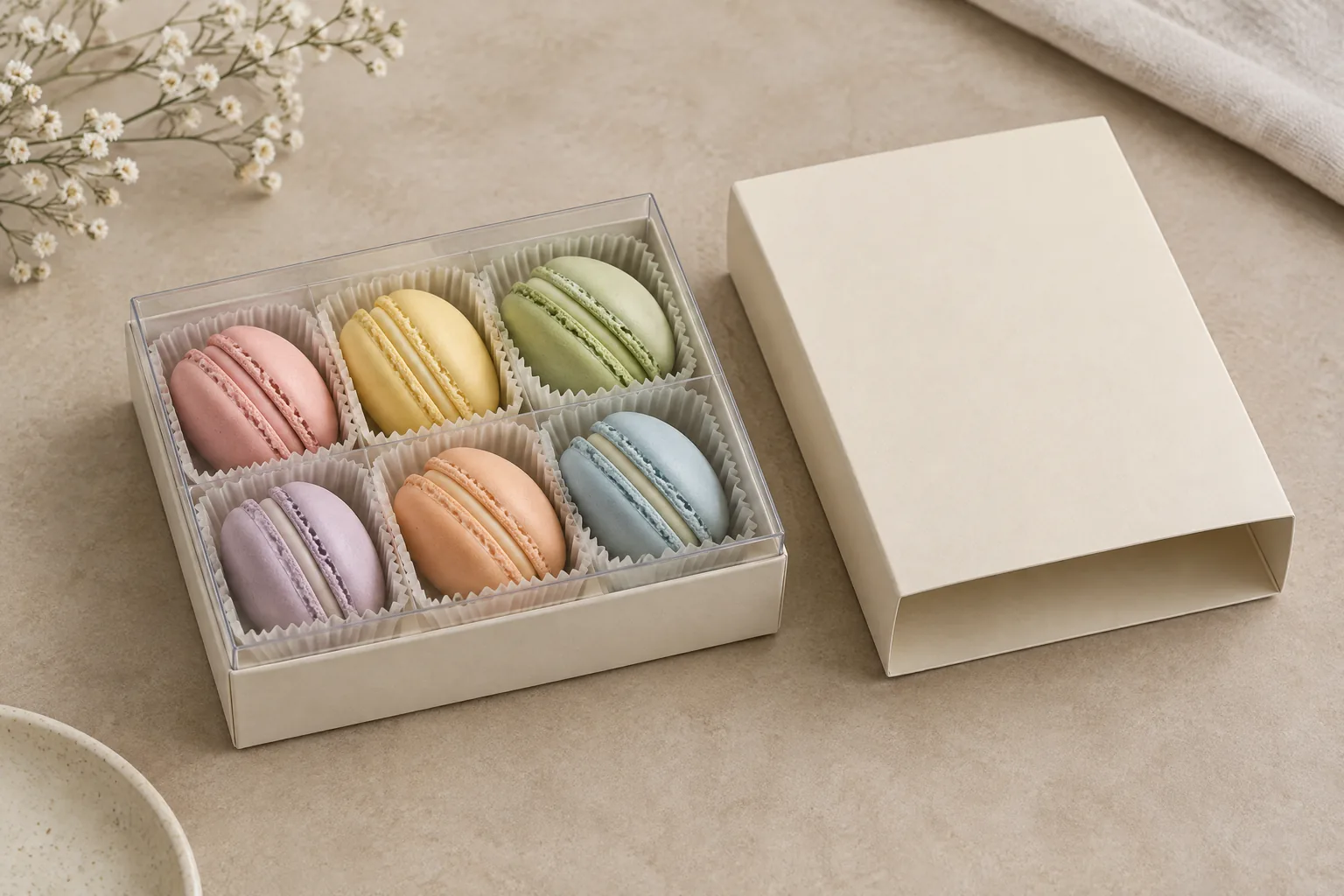
For Macaron Wholesale discussions, write the required piece count alongside the finished pack count and flavour allocation. In an illustrative order, thirty boxes containing four pieces each require 120 macarons; those are not 120 additional loose servings. Identify any separate trays for the reception table. Ask how mixed boxes will be packed and how flavours will be identified when shells share similar colours. Your count sheet should make sense without someone opening the design presentation.
Keep ingredient information attached to each product version. The Centre for Food Safety identifies eggs, milk and tree nuts among the specified allergens for prepackaged foods, and explains that allergens can also enter through unintended cross-contamination. Ask the supplier about the actual recipe and relevant cross-contact information; retain the original labels or accompanying information. A dietary product name is not certification or an allergen-free guarantee. Do not let a colour key or a generic event menu replace product-specific information.[1]
Approve an identifiable sample
Record what the approval does and does not cover
Give the sample a reference that can travel into the order confirmation: product name, sample date and version are a workable starting point. Record whether you saw the actual food, a packaging mock-up or a digital artwork proof. These answer different questions. A digital proof can settle logo spelling and placement, but not the taste of a filling or the fit of a finished dessert inside its insert. Ask what will be available rather than assuming a tasting is included.
Compare the physical sample with the intended use. Check whether the box closes without touching the decoration and whether the logo remains readable at the planned presentation size. View the food under ordinary light as well as the venue's likely lighting. If an exact brand colour matters, discuss what reference the supplier can work to and what variation is acceptable. A screen image is a useful discussion aid, but should not become an unqualified promise about every edible surface.
Write approval narrowly: for instance, accept the logo position and box layout while leaving the ingredient query unresolved. Do not send a general 'looks good' message if it could release production. Name one person who can give the final instruction and another who can act when that person is unavailable. Require a fresh confirmation when a change affects the recipe, count, decoration or packaging. Freeze the approved version in the shared order record so later chats cannot quietly replace it.
| Decision | Suggested owner | Useful evidence | Does not establish |
|---|---|---|---|
| Product and sample approval | Authorised buyer, with brand input | Named sample version and written specification | Condition of the eventual delivery |
| Delivery receipt | Named venue receiver | Arrival record, carton count and observed exceptions | Contents of unopened packs |
| Food handling and release | Responsible food handler | Product instructions and agreed handling records | Brand approval of photographs |
| Image selection | Brand approver and photographer | Shot list and image proofs | Quantity acceptance or food safety |
| Shortfall resolution | Authorised buyer and supplier | Recorded discrepancy and agreed remedy | An automatic right to an unagreed remedy |
Agree packaging and delivery records
Plan the handover into storage, not just arrival
The Macaron Delivery page is a starting point for a logistics enquiry, not a confirmed booking for your launch. Send the event date, complete address, preferred arrival window and actual handover location. Explain loading restrictions, goods-lift access and any security registration. Ask the supplier to confirm feasibility, charges and the arrangement for reaching the receiver. Separate an arrival preference from the time by which food must be checked and ready for use; an unresolved gap needs attention before ordering.
Request a packing record that connects each carton to its contents. A simple carton number, product version, box count and piece count can prevent sealed gifts being mistaken for loose service stock. Identify part-filled cartons and any separate sample pack. Ask for handling, storage and consumption instructions for the actual products, including what information accompanies gifts after they leave the venue. If packages are split between floors, allocate them on the record before staff begin carrying them away.
For products requiring chilled storage, plan usable refrigerator space rather than assuming an office pantry will suffice. The Centre for Food Safety advises keeping fresh food in a fridge at or below 4°C, avoiding overloading, and covering or sealing ready-to-eat food to separate it from raw food. Confirm the product-specific instructions with the supplier and the storage arrangements with the venue. Check that the packed cake fits; the room's air conditioning does not answer the refrigerator question.[2]
Inspect the received batch without inventing tests
Record observations and leave technical decisions to the right person
Give the receiver the confirmed order, packing record and contact details, not just the booking screenshot. At handover, record arrival time, carton identifiers and any visible damage before moving the food into its agreed storage. Count cartons first, then reconcile their stated contents with the order. If the supplier and venue have agreed a temperature check, assign a competent food handler with appropriate equipment and a defined procedure. Do not invent a pass threshold beside the loading bay.
Agree in advance how much packaging may be opened. Opening every presentation box can defeat its intended presentation and create extra handling. Where feasible, agree accessible count checks or a supplier-provided inspection pack. Be precise about the result: 'twelve cartons received, internal quantities not yet verified' is more useful than an unsupported full acceptance. A checked example demonstrates only what was observed in that example; it does not prove the condition or contents of every sealed box.
Separate cosmetic discrepancies from unresolved food concerns. A displaced ribbon may allow a simple packaging correction, while unclear product identity, damaged food protection or uncertain handling needs a decision from the supplier and responsible food handler. Keep affected items identified and out of distribution while the issue is resolved under suitable storage conditions. Do not use a staff tasting as an acceptance test. If you cannot establish whether an item is suitable to serve, leave it out rather than gamble on the programme.

Separate product photography from food storage
Release only the items the shoot actually needs
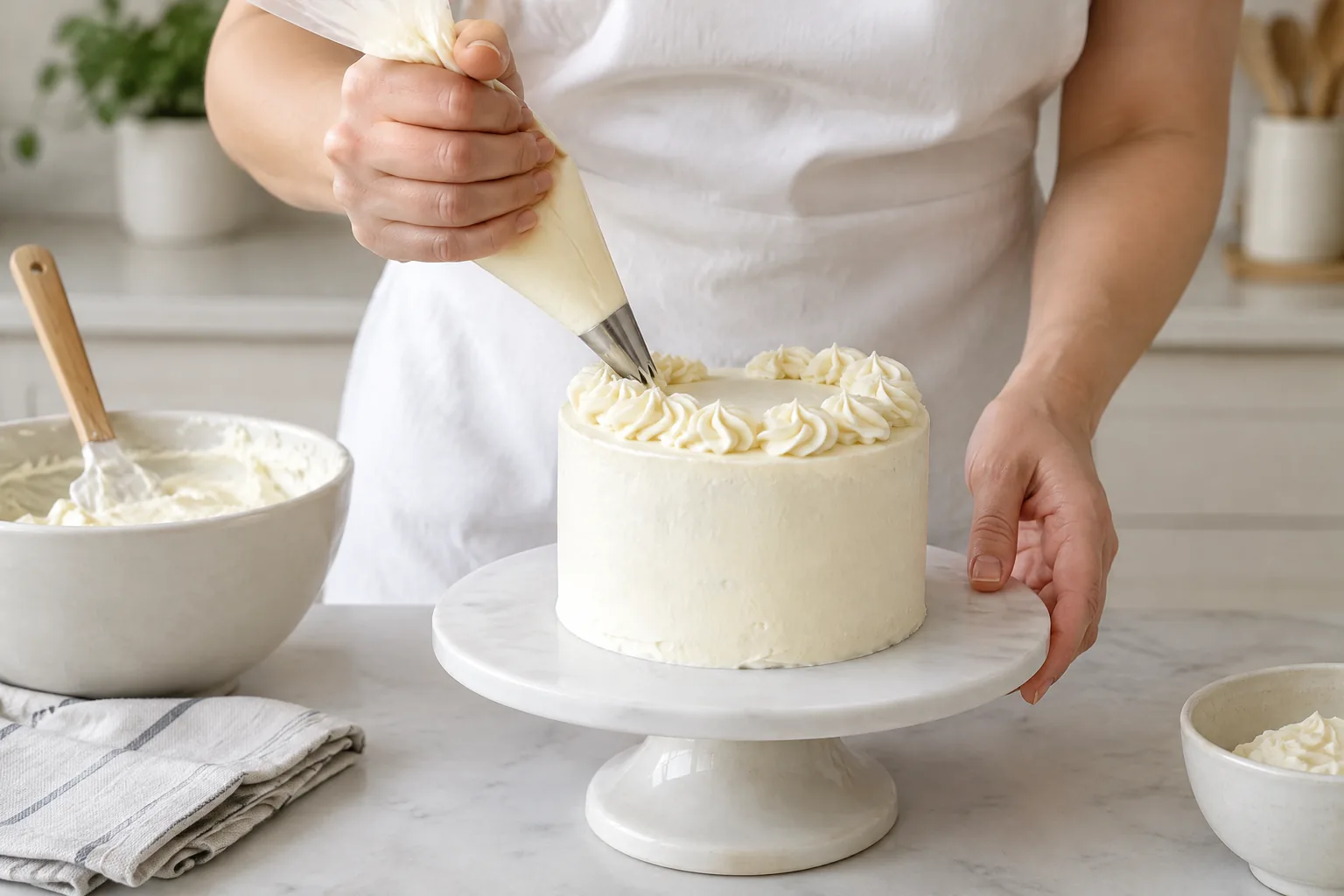
Create a small photographic allocation with its own handover time. The shot list might need one unopened gift box, one open box, a branded cake face and a close-up of a cut dessert. Ask the photographer which views can be completed with the fewest items and prepare non-food props before releasing chilled food. The food handler should control the handling plan. A shoot running late is a reason to change the shot list, not silently extend the food's display time.
For coverage of the launch ceremony, BigDeal's 產品發佈會攝影 page is a Chinese-language destination for a photography enquiry. Brief the photographer on the exact moment the cake must face the audience, who will stand beside it and whether the branding may be shown before the announcement. These are image and programme decisions. The photography team should not be assigned responsibility for counting the food delivery or approving ingredients simply because it is already working near the dessert display.
This BigDeal guide covers 產品發佈會攝影; the linked page is in Chinese. (Chinese page)
For separate pack and detail images, the 商品拍攝 page is also in Chinese and concerns a photography enquiry. Specify the surfaces, logo details and packaging views needed, then identify which images require brand approval before release. Keep edited promotional photographs out of the delivery acceptance record; use ordinary receipt photographs there instead. Label any non-edible stand-in clearly within the team and keep it away from serving stock. BigDeal photography enquiries do not constitute food manufacturing or supply orders.
This BigDeal guide covers 商品拍攝; the linked page is in Chinese. (Chinese page)
Record shortfalls and substitutions
Choose the remedy before changing the guest offer
Agree whom the supplier should contact if the approved product becomes unavailable or a batch differs from the brief. List changes that require explicit permission, especially recipe, flavour, piece count and pack contents. A similar colour is not evidence of the same ingredients. A substitute that photographs well may still undermine the guest information or the approved gift format. Ask for the revised specification and any changed handling instructions before the authorised person decides whether to accept it.
When a discrepancy appears, describe the quantity and location precisely. Record the affected carton, the expected contents, what was actually observed and a clear photograph where useful. Ask for an acknowledgement and a proposed resolution. Do not assume replacement, collection, refund or credit terms that were never agreed. If a shortfall cannot be resolved before the launch, revise the distribution plan honestly: protect confirmed commitments first and stop promising boxes that the team cannot account for.
Close the record after the event with the checked quantity, distributed quantity and any unresolved items. Track photographic samples separately so they do not appear as unexplained missing gifts. Keep the approved sample reference, written changes and correspondence together for the person reconciling the invoice. This gives a later reorder a reliable starting point, but does not automatically approve a new batch. Ask whether the recipe, packaging or other relevant conditions have changed before reusing the old specification.
| Observed issue | Immediate decision | Record to retain |
|---|---|---|
| Carton count differs | Reconcile the packing record before allocating stock | Carton identifiers and counted totals |
| Logo differs from approved version | Ask the brand approver about presentation; do not hide the change | Sample reference and receipt photograph |
| Ingredients or handling are uncertain | Keep affected items out of distribution and seek clarification | Product identity, query and responsible person's decision |
| Photographic sample has been opened | Keep it separate from sealed gift allocation | Sample handover and final disposition |

- Allocate ceremony food, loose servings, sealed gifts and photo samples without counting any item twice.
- Confirm the product version, units, flavour allocation and original ingredient information in writing.
- Record exactly what the identifiable sample approval covers and who can authorise a change.
- Confirm delivery access, receiver availability, packing records and suitable storage before ordering.
- Give the receiver an agreed inspection scope and a contact for unresolved food or quantity concerns.
- Keep the photographic allocation and discrepancy record separate from the stock released to guests.
Approve a specific product before production, check the received order on its own evidence, and release only an agreed allocation to photography. The most useful document is a shared record that connects the sample version to the pack counts, storage instructions and named decision-makers. When something changes, pause the affected distribution and obtain a clear decision instead of allowing a good-looking photograph or an approaching launch time to stand in for acceptance.
Does approving one sample mean the whole batch is accepted?
No. The sample establishes only the characteristics and version expressly approved. The delivery still needs checking against the order for quantities, identity and observable condition. State whether approval covers food, artwork or packaging, and keep unresolved questions visible. Do not describe a sample viewing as laboratory testing or proof of the whole batch.
Can we use the ceremony cake for both photographs and guest servings?
Possibly, if its handling and serving plan allow it. Confirm the expected portions, cutting responsibility and timing with the supplier and venue. Count the cake once, and allocate those portions to a defined guest group. If the photographic treatment makes it unsuitable for service, arrange a separate serving supply rather than quietly removing portions from the guest plan.
Should we open every macaron gift box on receipt?
Not automatically. Agree an inspection approach before delivery that balances count verification with presentation and handling requirements. Sealed-box checks may need a packing record or an accessible inspection pack. Record the limits of the inspection honestly. A carton tally is not a verified piece count, and opening one box does not verify every other box.
What if the replacement flavour uses the same shell colour?
Treat it as a product change, not a cosmetic swap. Obtain the revised flavour identity and ingredient information, including relevant cross-contact information, before deciding. Update box identification and guest-facing information if the change is accepted. Do not approve it solely because it matches the event palette or preserves the original photograph.
Can the photographer sign the food delivery paperwork?
Only if that person has separately agreed a clearly defined receiving role and understands its limits; presence at the venue is not enough. It is usually clearer to appoint a receiver and leave the photographer to the shoot. Distinguish acknowledgement of arrival from checked quantities, and never treat a signature for images as food acceptance.
Prepare the product specification and sample questions first, then ask the food supplier to confirm the order and logistics in writing. If photography is needed, send a separate shot list and timing brief to the photography provider.
Sources & supported claims
- Understanding Food Labels – Food Allergens
CFS identifies eggs, milk and tree nuts among specified allergens for prepackaged foods and explains unintended allergen cross-contamination.
- Five Keys to Food Safety — Store
CFS advises fresh food storage at or below 4°C, avoiding refrigerator overloading and covering or sealing ready-to-eat food to separate it from raw food.