
Flowers & thoughtful arrangements
Content updated
On this page
- Define the recipient's real preferences
- Check how the online enquiry becomes an accepted order
- Ask what tomorrow's delivery request actually covers
- Write boundaries that a florist can use
- Give one person authority to answer
- Keep the recipient's message separate from delivery instructions
- Keep the accepted version and close any discrepancy
- Questions & answers
- Sources & supported claims
Online flower substitution approval: a clear order record
For an assistant arranging flowers for tomorrow, flower substitution approval should be settled before payment or preparation: identify what must stay, what may change and who can agree to an exception. Ask the florist to accept those instructions in writing alongside the requested delivery date. If the recipient's favourite stem is essential, an attractive alternative is not automatically an acceptable gift. A short, agreed record lets someone else follow the order without guessing what the sender meant.
Separate the bouquet brief from the delivery request. Give the florist room to propose suitable alternatives, but do not treat a website image, an enquiry acknowledgement or a payment receipt as confirmation of every detail. Keep the accepted design changes, final amount and handover arrangement together. When a decision is still outstanding, label it as pending rather than passing an assumption to the recipient or your manager.
Define the recipient's real preferences
Find out whether the favourite flower is a wish or a condition.
Start with the reason for choosing the flowers. A sender may want tulips because the recipient loves them, or simply because a reference photograph looks light and informal. Those are different briefs. Ask which feature makes the gift feel right: the particular flower, a soft colour palette or a compact shape. Record one or two genuine priorities instead of describing every visible detail as essential. Otherwise, even an ordinary change of wrapping becomes an approval problem.
Distinguish a preference from an exclusion. 'Prefer pale pink' leaves room for a proposed alternative; 'no red flowers' rules something out. A recipient's known objection should not disappear when stock changes. For a desk delivery, ask whether the recipient can accommodate a vase or carry a wrapped bouquet home. Do not switch between these formats without checking: a larger arrangement may be harder to receive even if the florist considers it a more generous replacement.
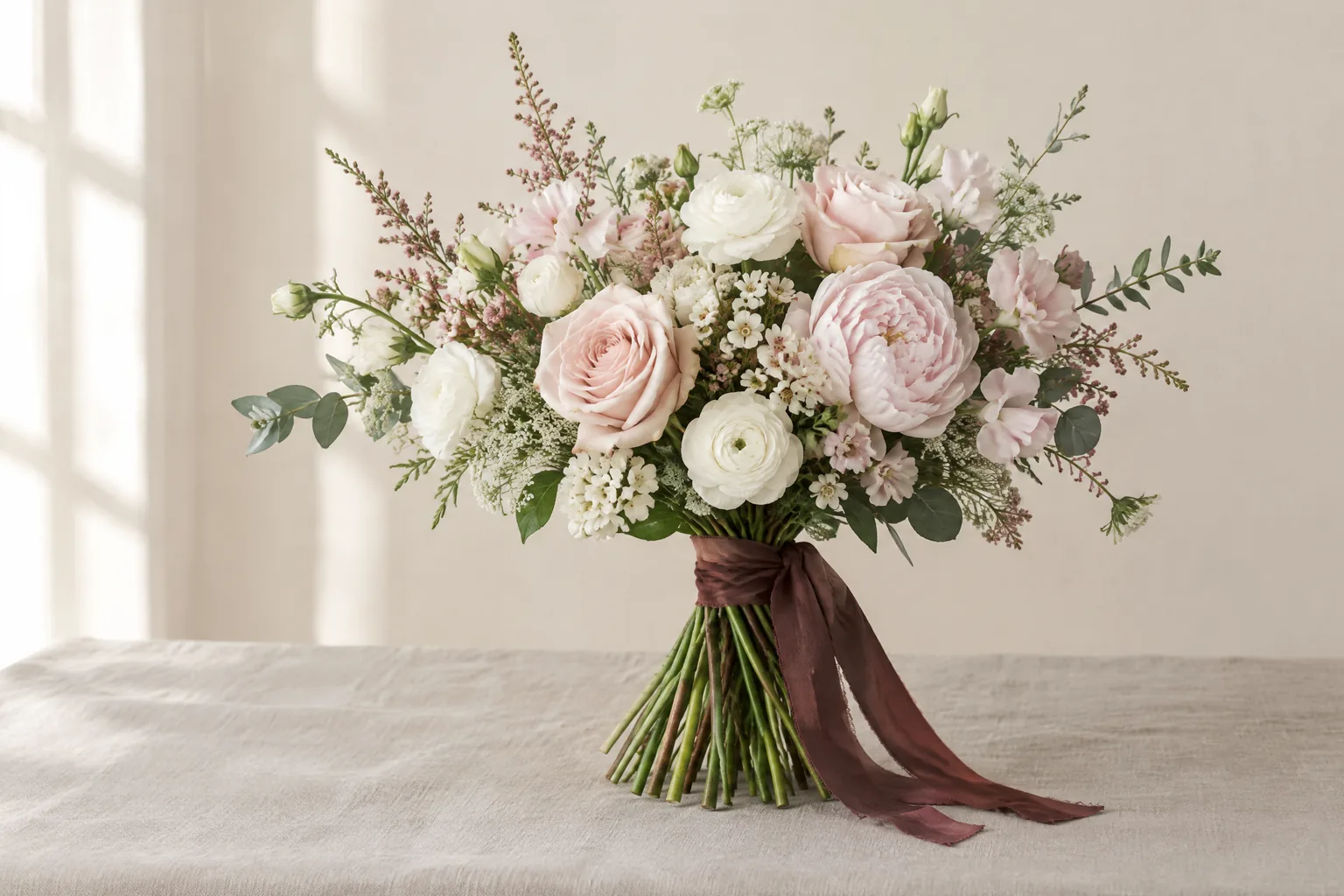
When approaching a Hong Kong florist, send a concise description of these priorities with your reference image. Explain whether the image shows an exact design request or just the intended mood. Ask what can actually be supplied for the date, rather than asking the team to reproduce a photograph without qualification. If the favourite stem cannot be confirmed, return to the sender with that specific decision before allowing the rest of the order to move forward.
Check how the online enquiry becomes an accepted order
Know what each acknowledgement confirms before relying on it.
Before you order flowers online, find out how the supplier confirms a request. Does the arrangement need a separate availability reply? Will special instructions appear on the order confirmation, or remain only in a message conversation? Y. Florist's ordering page asks customers to check current blooms and practical requirements; it is not evidence that a particular bouquet has been reserved. Ask for your chosen design and substitution instructions to be acknowledged together, so they do not become disconnected during preparation.
Read the substitution wording before paying, particularly any permission for the florist to choose alternatives without further contact. Compare that wording with your sender's requirements. If they conflict, ask whether the supplier will accept a narrower instruction and where it will be recorded. Adding 'no substitutions' to a comment box does not show that the supplier has accepted it. If the team cannot work within an essential condition, choose another arrangement or reconsider the timing instead of relying on an unanswered note.
Keep the financial approval just as clear. State the maximum total you are authorised to approve and ask whether it includes the agreed delivery and container. A higher-value substitute is not necessarily suitable, and it does not automatically authorise a higher bill. If the proposed change costs less, ask how the final amount will be handled before accepting it. These are questions for the order, not assumptions about a universal florist pricing or refund policy.
Ask what tomorrow's delivery request actually covers
A date, a receiving window and a finished arrangement are separate matters.
Treat next day flower delivery as a service enquiry until the florist confirms a workable plan for your address and date. The assigned Y. Florist page explicitly asks for details so the team can assess feasibility. Put the calendar date in your message rather than leaving 'tomorrow' in a thread that may be read later. State whether the flowers need to reach a person before they leave, or whether an authorised reception handover during its opening hours would meet the purpose.
Ask when the flower selection will be confirmed and when your reply is needed. A bouquet that is feasible only after you approve an alternative is not yet a settled design. Give your own decision deadline, but ask whether it fits the florist's preparation schedule. For example, you might need to tell your manager by late afternoon whether the gift is going ahead. That is your reporting requirement, not a published shop cutoff or a promise of delivery the following morning.
Agree a fallback if the design or delivery cannot be confirmed in time. The sender may prefer a later bouquet containing the favourite flower, a different design tomorrow or no order until they can decide. Ask about the applicable change or cancellation terms before committing. Do not place a second order elsewhere while leaving the first one unresolved. Confirm the status of the original request first, so urgency does not produce duplicate bouquets or overlapping payment commitments.
Write boundaries that a florist can use
Replace 'something similar' with a small number of concrete decisions.
Describe flexibility feature by feature. You could allow a different wrapping colour within a neutral range, while requiring approval before changing the principal flower or removing a vase. Avoid a blanket instruction such as 'substitutions up to twenty per cent are fine'. Unless you define what the percentage measures, one person may count stems while another compares cost or the visible area of the bouquet. Plain descriptions are easier to apply when preparation time is short.
For a proposed change, ask for the original feature, the replacement and any effect on the total or delivery arrangement. A photograph may help you judge appearance, but ask whether it shows the actual proposed bouquet or another reference design. Keep the question proportionate: changing a ribbon does not always need a new photograph, while replacing the main flower deserves a clear description. Approval should cover the stated proposal, not every later change that might follow.
A usable instruction might read: 'Keep the pale pink and cream palette and the agreed vase. A change of neutral ribbon is acceptable. Contact me before replacing the main flowers or changing the container. Please confirm whether you can accept these limits.' The decision table below illustrates how to divide responsibility. Adapt it to the sender's priorities and the supplier's accepted terms; it is not a statement of any florist's existing policy.
| Requested feature | Possible permission | When to ask again |
|---|---|---|
| Favourite principal flower | No replacement unless the sender agrees | Before any different main flower is used |
| Pale pink and cream palette | Alternative shades only within the agreed range | Before introducing a contrasting colour |
| Vase arrangement | Keep the agreed container format | Before switching to a wrapped bouquet |
| Neutral ribbon | Another neutral ribbon may be accepted in advance | If the finish changes beyond that permission |
| Authorised total | Only the amount approved by the buyer | Before any additional charge or changed scope |
Give one person authority to answer
Make the scope of an approval visible to everyone handling the order.
Name one primary approver and give a channel they can monitor during the decision period. If an assistant can approve presentation changes but not a different main flower, say so. Name a backup only after that person agrees to help, and explain when responsibility passes to them. The florist should not have to choose between contradictory replies from a manager, an assistant and a family member. Keep the recipient out of design decisions unless the sender wants their involvement.
Reply with the actual decision, not just 'looks good'. For example: 'Approved: the proposed cream flowers in place of the unavailable pink stems, with the same vase and the confirmed total unchanged.' Include the order reference if several gifts are being discussed. Ask the florist to acknowledge the revision. If you approve a change by telephone, send a short written recap immediately and request confirmation, especially when the conversation also covered timing or a revised payment amount.
Decide what happens if nobody answers before the agreed deadline. Silence should not become an instruction invented by the delivery team. You might ask the florist to pause and contact the sender, or use a specific fallback already accepted in writing. Check whether a pause would affect preparation or the requested date. If you hand the order to another assistant, tell the florist who now has authority, rather than merely forwarding the conversation internally.

Keep the recipient's message separate from delivery instructions
The gift card should not carry the internal discussion.
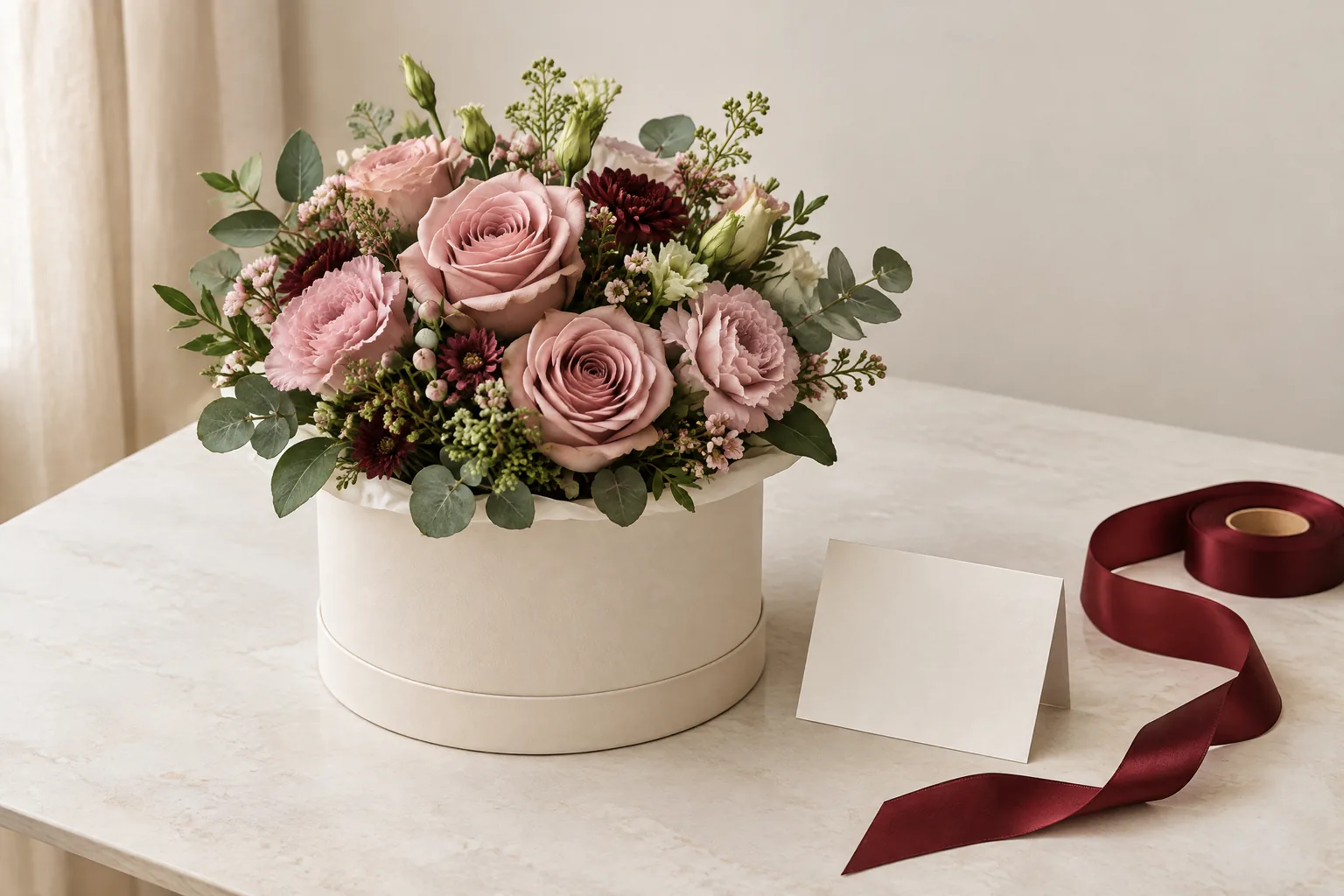
Provide the card as a final, clearly labelled block of text. Confirm the recipient's name, sender's name and language, then ask whether line breaks or length need adjusting. Keep substitution discussions, spending limits and approval contacts outside that block. For a professional thank-you, a simple message such as 'With thanks for your support, from the project team' avoids exposing internal procurement details. Do not ask the florist to explain an unavailable flower on the card unless the sender deliberately wants that explanation.
Check the handover instructions with the recipient or a suitable contact without revealing more of the surprise than necessary. Include the full building name, floor and unit, then confirm where the flowers may be accepted. Reception accepting deliveries is different from reception agreeing to hold this particular bouquet. Ask who will collect it and whether the recipient will still be there. If discretion matters, agree whether the courier may call the recipient and what they should say when arranging the handover.
Limit the information you share to what the task needs. Hong Kong's Privacy Commissioner explains that DPP1 requires personal data collected for a purpose to be necessary and adequate, but not excessive. In practice, send delivery-relevant contact details rather than forwarding an entire address-book entry or private conversation. An instruction such as 'please call the sender about access' can be more appropriate than sharing unrelated personal circumstances. Use a delivery-only extract if the internal order thread contains confidential discussion.[2]
Keep the accepted version and close any discrepancy
A useful record shows what changed and what remained agreed.
Keep the original brief, the florist's proposed revision and your accepted version with the order confirmation. The Hong Kong Consumer Council advises online shoppers to retain order confirmations, email exchanges and payment records as evidence if a consumer dispute arises. For flowers, that means preserving the message that authorised a replacement as well as the attractive starting image. Save the accepted details in a place your colleague can access, rather than leaving the only copy on your personal phone.[1]
Make the final status easy to understand. Record which design is accepted, the confirmed amount and the agreed handover arrangement. Mark unresolved points explicitly, such as 'delivery window awaiting confirmation'. If the florist can provide a finished-bouquet photograph, keep it, but do not confuse a preparation photograph with evidence of delivery. A reception handover update likewise does not establish that the intended recipient has personally received the gift. Close each question using the information actually supplied.
If the delivered bouquet appears materially different, compare it with the last accepted version, not only the original image. Contact the florist promptly with the order reference, a concise description of the difference and any available photograph shared appropriately. Ask for an explanation and the remedy you want considered. Keep the reply without promising your manager a refund or replacement before it is agreed. A clear record helps both sides discuss the same discrepancy without making the recipient manage the complaint.
- Identify the recipient's essential feature and separate it from preferences.
- Ask the florist to acknowledge the substitution boundaries before preparation.
- Record the requested calendar date and the delivery plan actually confirmed.
- Name one approver, a willing backup and the action if neither responds.
- Keep final card text separate from internal spending and access discussions.
- Save the accepted revision, final amount and order confirmation together.
A dependable flower order is not one with every possible change forbidden. It is one where the sender's priorities survive a change of stems, staff or timing. Agree the boundaries, obtain a specific answer when something falls outside them and keep the accepted version. If tomorrow cannot be confirmed, report that clearly while there is still time for the sender to choose another plan.
Can I approve substitutions before the florist knows what is available?
Yes, you can propose boundaries in advance, but ask the florist to accept them. Allowing a neutral ribbon change is different from approving any replacement flower. Keep features outside that permission subject to a further decision, and agree what happens if no acceptable design can be supplied.
What if the sender insists on one particular stem for tomorrow?
Tell the florist it is essential and request a direct availability confirmation. If it cannot be confirmed, ask the sender to choose between waiting and changing the gift. Do not silently reinterpret an essential flower as a colour preference simply to preserve the requested date.
Does a payment receipt prove that my substitution note was accepted?
Do not rely on the receipt alone. Check whether the confirmation includes the special instruction and whether the florist has acknowledged it. If acceptance is unclear, raise that point before preparation and ask what options remain under the order's applicable terms.
Should the recipient approve the replacement flowers?
Only involve them if that fits the sender's intention and the recipient is willing. For a surprise, use an authorised sender-side approver. The recipient can help confirm a convenient handover without being asked to choose a bouquet or discuss the budget.
Is a photograph enough to approve a revised bouquet?
It helps with appearance, but pair it with a written description of the change and any effect on the total, container or timing. Ask whether it is the actual proposed arrangement. A reference photograph alone leaves those practical details unsettled.
Before committing to the order, send the florist your essential flower, acceptable alternatives, approver and requested delivery details. Ask for a written reply confirming what can be accepted and supplied for your date.
Sources & supported claims
- Consumer Council: Be Vigilant at All Times to Avoid Consumer Disputes on Online Shopping
The Consumer Council advises keeping order confirmations, email exchanges and payment records as evidence if a consumer dispute arises.
- Office of the Privacy Commissioner for Personal Data: The Ordinance at a Glance
DPP1 requires personal data collected for a purpose to be necessary and adequate but not excessive.