
Gifts & occasions
Content updated
On this page
- Start with a collection time, not just a delivery date
- Ask the building about food, not merely parcels
- Check what is inside the finished basket
- Name the person who will receive and collect it
- Set the fallback before anything is dispatched
- Give directions without exposing access details
- Choose on written answers, then close the handoff
- Questions & answers
- Sources & supported claims
A concierge gift handoff when the recipient is away
Before arranging a concierge gift handoff, confirm that the recipient can collect the gift, that the building will accept its actual contents, and that the merchant agrees to the proposed receiving arrangement. A staffed lobby is not permission to leave food there. If the concierge refuses perishable items, choose a time when the recipient or an authorised person can receive the basket directly. Do not send it first and hope someone will make an exception. The crucial question is not whether the address is covered, but whether a named person can take responsibility when the courier arrives.
Treat the handoff as two separate agreements: the building decides what its staff may accept, while the merchant confirms what its delivery service can do. The recipient supplies availability and collection preferences. Record those answers before paying, including what happens if the desk refuses the gift or nobody answers. A smaller basket, a later date or a different gift may be a better choice than a complicated rescue after dispatch.
Start with a collection time, not just a delivery date
A recipient who is away all day needs a different plan from someone briefly upstairs.
Ask when the recipient will actually be able to take the basket home or into the office. Being in Hong Kong that day is not enough: they may be attending meetings, working elsewhere or returning late at night. A useful question is, ‘Could you receive a food gift on Thursday, and if it reaches reception, when could you collect it?’ This preserves most of the surprise while establishing whether the plan is workable. Let them suggest another day without making them feel obliged to rearrange their schedule.
Match that answer to a delivery window the merchant has specifically confirmed for this order. Distinguish an estimated arrival period from a booked appointment. If the recipient can only answer the door during a short lunch break, a broad afternoon window does not solve the problem. Ask whether direct receipt can be arranged, or move the gift to a day with more flexibility. For office addresses, check whether the recipient will leave early and whether the receiving desk closes before they return.
YumYum’s Gift basket delivery page provides a starting point for a hamper enquiry, but a category page cannot establish that a particular concierge will accept your order. Give the merchant the recipient’s workable hours and the building’s confirmed arrangement. Ask for an answer tied to that address and date. If the timing remains uncertain, keep the order unconfirmed while you decide on an alternative; do not treat a general delivery description as a promise of a successful handoff.
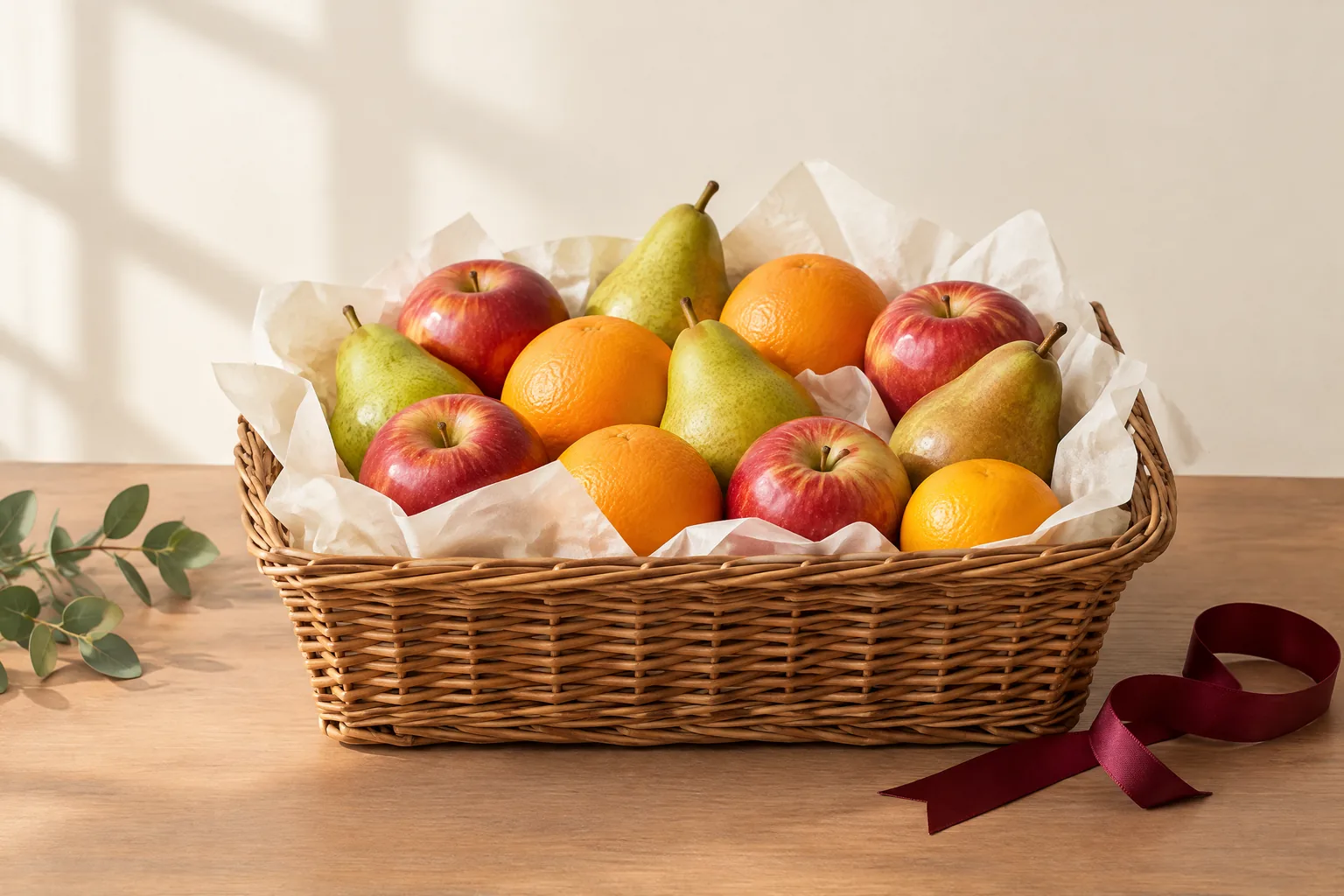
Ask the building about food, not merely parcels
Permission must fit the proposed gift and the period before collection.
Have the recipient check with the management office or receiving desk through their normal channel. ‘Do you take deliveries?’ is too broad. Describe a fruit gift, whether it contains chilled items, its approximate size and when it would be collected. Ask whether staff may sign for it, whether the recipient must register the delivery, and whether acceptance changes outside office hours. Record the answer and the date. An informal favour from one staff member should not become an instruction that another shift is expected to honour.
Find out where an accepted basket would wait. A parcel shelf, an air-conditioned reception area and suitable refrigerated storage are different arrangements. Do not assume the desk has fridge space, will unpack a hamper, or will move it when conditions change. If acceptance depends on collection before a stated closing time, make that deadline part of the recipient’s plan. For a large basket, also confirm that the approved holding area has room for the finished package, rather than only its inner container.
A refusal is useful information, not an obstacle for the courier to negotiate. If the building will not hold food, arrange a direct meeting at its approved receiving point with someone who can take the gift away. If that is impossible, postpone or select a gift that the building has agreed to accept. Do not replace ‘food gift’ with ‘parcel’ in the instructions to get around a restriction. Staff need an accurate description to decide whether they can receive it.

Check what is inside the finished basket
The contents determine the questions about storage and collection.
Use the Fruit basket page to discuss a presentation direction, then obtain the proposed contents in writing. Confirm whether fruit is whole or cut, and whether the gift includes anything with separate storage instructions. A photograph can show wrapping and colour without settling those details. Ask for the finished package’s dimensions and weight as well. This helps the recipient decide whether they can carry it upstairs, put it on a suitable surface, and manage it alongside a laptop bag or other belongings.
Read the handling instructions for the actual order rather than treating all fruit gifts alike. Ask whether any outer wrapping needs removing promptly and whether an included item must be refrigerated on receipt. If the recipient cannot follow those instructions until evening, explain that before the assortment is finalised. They may prefer fewer items or a simpler format. A large mixed hamper can create several storage tasks, even when the fruit itself looks like something that normally sits in a bowl at home.
Hong Kong’s Centre for Food Safety identifies cut fruit as perishable in its power-outage advice and warns that temperatures from 4°C to 60°C facilitate harmful microorganism growth. This is not a shelf-life rule for every piece of intact fruit. It does explain why a cut-fruit addition should not be treated as an ordinary parcel. If nobody can establish appropriate refrigeration and the time out of temperature control, arrange direct receipt or omit that item rather than guessing from how it looks.[1]
Name the person who will receive and collect it
Desk acceptance and delivery to the recipient are not the same event.
Choose a primary receiver and, if needed, one agreed alternative. That may be the recipient, a household member or a colleague who has consented to help. Check that the building allows the proposed arrangement and that the merchant will accept it. Give each person a clear task: meet the courier, receive the package, or collect it from the desk. Avoid a vague instruction such as ‘anyone at reception’, especially where several businesses or residential towers share the same entrance.
An alternative receiver should know enough about the gift to handle it, without needing the private message inside. Tell them the expected window, the recipient name shown on the label and any immediate storage requirement. If they are receiving a heavy basket, ask whether they can move it comfortably. Do not volunteer a colleague who has not agreed, or assume a domestic helper is available simply because they sometimes answer the door. The fallback works only if that person can actually perform the task.
Agree how the recipient will learn that the basket has arrived. A courier’s delivery update may go to the sender while the gift waits unnoticed downstairs. Arrange a short message from the sender or receiver with the location and collection deadline. Where the desk uses a collection reference, ask the recipient to follow its normal procedure. After collection, one confirmation is enough. A photograph of a basket on a counter can document a location, but it does not establish that the recipient has taken possession.
| Decision | Person to ask | What to record |
|---|---|---|
| Whether food may be held at the desk | Recipient checking with building management | Accepted contents, holding place and collection deadline |
| When someone can take the gift | Recipient or agreed alternative receiver | Availability and who will collect from reception |
| What the courier may do if refused | Merchant | Contact sequence, accepted fallback and possible charges |
| Whether a contents change still works | Sender, recipient and merchant | Approval requirement and revised handling instructions |

Set the fallback before anything is dispatched
A failed attempt should trigger an agreed decision, not an improvised drop-off.
Ask the merchant what happens if the recipient does not answer or the concierge refuses the order. Find out who is contacted first, whether the courier can wait, and what happens to the gift if contact fails. Ask about charges and whether another attempt, collection or cancellation is possible at each order stage. These are questions, not benefits to assume. A delivery-area listing does not tell you whether redelivery is included, and a paid order does not necessarily remain changeable once preparation has begun.
Give the fallback a clear limit. For example, you might request that the courier contact the sender if the approved receiver is unavailable and not leave the basket unattended. The merchant must accept that instruction for it to form part of the arrangement. If an alternative address is proposed, obtain the receiver’s agreement and ask the merchant to confirm whether the route can change. Do not send the courier somewhere new independently while the original delivery team still holds different instructions.
Check substitutions against the receiving plan as well as the gift’s appearance. Replacing a whole-fruit item with something requiring refrigeration could make a previously acceptable handoff unsuitable. Specify which contents must not change without approval and who can approve a replacement. Ask what happens if you cannot respond before the preparation deadline. If the merchant cannot accommodate the constraint, choose a simpler assortment or a different date. The fallback should preserve a workable receiving arrangement, not merely a similar-looking basket.
| Situation | Workable direction | Do not assume |
|---|---|---|
| Desk accepts the specified whole-fruit gift; prompt collection is possible | Confirm the holding arrangement and send an arrival message | That acceptance includes unpacking or refrigeration |
| Basket contains a chilled or cut-fruit item; storage is uncertain | Arrange direct receipt or change the contents before confirmation | That an air-conditioned lobby meets storage instructions |
| Building refuses food gifts | Use an approved direct meeting with an authorised receiver | That calling the basket a parcel overrides the rule |
| No receiver is available within the confirmed window | Change the date or choose another agreed gift arrangement | That a later delivery attempt is automatic or free |
Give directions without exposing access details
The courier needs the right entrance, not unrestricted access to the building.
Confirm the building name, tower and approved receiving entrance with the recipient. A residential entrance may differ from a loading bay or office reception in the same complex. Use a concise public landmark if it helps distinguish them. Do not share door codes, photographs of access cards or instructions to follow another resident through a locked entrance. If the courier needs an escort, arrange for the authorised receiver to meet them according to building procedure. A convenient shortcut is not a substitute for permission.
The Privacy Commissioner for Personal Data’s explanation of DPP1 says collected personal data should be necessary and adequate, but not excessive, for its purpose. Apply that information-minimisation approach when preparing delivery notes. Give the merchant the contact and address details needed for the agreed handoff, with the recipient’s knowledge, rather than forwarding an entire private conversation. Details about travel, household routines or why someone is absent are usually not needed to identify the correct receiving point. Keep the greeting separate from practical courier instructions.[2]
Send corrections through the merchant’s confirmed order channel and ask for acknowledgement. A revised tower number buried in a later chat may not reach the person carrying the gift. Put the order reference beside the corrected detail and state which earlier instruction it replaces. After delivery, avoid circulating a proof photograph that shows unrelated residents, visitor logs or other packages’ labels. Keep only what you need for receipt confirmation or a genuine query, and share that record only with the people resolving it.
Choose on written answers, then close the handoff
The most suitable basket is the one the recipient can receive and manage.
YumYum’s Best fruit basket page can help frame questions about assortment and presentation, but its title is not an independent ranking. Compare any shortlisted options against this recipient’s arrangements. A vendor’s reply should address the actual contents, delivery window, permitted receiver and refused-delivery procedure. Mark an unanswered point as unresolved rather than supplying an optimistic interpretation. An elaborate gift with an uncertain handoff may be less suitable than a modest one with a confirmed receiver and manageable collection time.
Before paying, send a compact confirmation that brings the agreed details together. Include the selected contents, date, receiving point, authorised person and the instruction for a failed attempt. Ask the merchant to confirm the final payable amount and any relevant change deadline separately. Send the recipient only the information they need to receive and collect it. Keeping the practical arrangement in one message reduces the chance that an old address or superseded fallback remains in use when the order is dispatched.
When delivery is reported, confirm collection without demanding an immediate thank-you or photograph from the recipient. If they report damaged packaging or a problem with contents, ask them to retain the order label and describe what they found. Contact the merchant promptly through its stated process; do not promise a refund or replacement on its behalf. If the desk has refused the gift, return to the agreed fallback. The aim is to resolve the receiving problem calmly, not to pressure staff into taking responsibility they never accepted.

- Confirm when the recipient can receive or collect the actual gift.
- Have the recipient verify building acceptance for the stated contents and package size.
- Obtain the contents list and any immediate storage instructions.
- Name an agreed receiver and establish how arrival will be communicated.
- Ask the merchant to accept a refused-delivery fallback and explain possible charges.
- Check the final entrance details without sharing entry codes or unnecessary personal information.
Order only when the basket, the building procedure and the recipient’s availability fit together. Desk acceptance should have a clear collection plan; direct receipt should have an agreed person and meeting point. If either arrangement remains uncertain, change the timing or contents before dispatch. A thoughtful gift should not leave the recipient managing an unexpected storage problem, the concierge negotiating an exception, or the courier deciding where to leave food without permission.
Can I keep the gift a surprise without asking the recipient about delivery?
You can keep the contents a surprise while asking whether they can receive a food gift on a particular day. If you cannot confirm availability or building acceptance, avoid sending a perishable basket to an unattended address. An agreed household member may help, but they still need permission and enough information to receive it. Protecting the surprise is less important than avoiding an unwanted collection task.
What if the concierge previously accepted another food delivery?
Check again for this basket. The earlier delivery may have had different contents, a different collection time or a recipient already waiting downstairs. Ask the recipient to confirm the applicable arrangement with management, rather than telling the courier that acceptance happened before. If permission is unclear, use direct receipt at an approved meeting point or postpone. A previous favour should not become an assumed standing service.
Does a delivery confirmation mean the recipient has collected the gift?
Not necessarily. Ask the merchant what its confirmation records, such as handover to an authorised receiver or desk acceptance. Then notify the recipient where the gift is waiting and ask for a simple collection confirmation. Do not rely solely on a photograph of the basket in a lobby. If nobody can locate it, use the order reference to check the recorded receiving point promptly.
Should I put a door code in the courier notes if nobody is home?
No. Arrange an authorised person to meet the courier through the building’s normal procedure instead. The delivery notes should identify the approved entrance and receiving contact, not give access credentials or encourage unattended entry. If there is no permitted way to complete the handoff, change the timing. Leaving food outside a locked flat is not a fallback unless the relevant parties have expressly agreed to it.
Can a refused basket simply be delivered again the next day?
Ask the merchant before ordering. Another attempt may depend on its terms, the order stage, the contents and their handling history. Confirm any charge and whether the original gift could be used; do not assume that storing it overnight solves the problem. If an attempt fails, request the actual options through the order channel and obtain agreement before selecting a new date or address.
Before confirming a gift order, ask the recipient about building acceptance and collection. Then request the merchant’s written answer on the receiving arrangement and what happens if it fails.
Sources & supported claims
- CFS urges attention to food safety during power outage
The CFS identifies cut fruit as perishable and states that temperatures from 4°C to 60°C facilitate harmful microorganism growth; the article distinguishes that advice from a blanket shelf-life rule for intact fruit.
- The Ordinance at a Glance
The PCPD explanation of DPP1 says collected personal data should be necessary and adequate but not excessive for the relevant purpose.