
Flowers & thoughtful arrangements
Content updated
On this page
- Collect preferences without asking colleagues to justify them
- Check what beginner instruction actually involves
- Agree a social format that does not reward speed
- Treat preserved materials as a separate choice
- Check the room and workstation, not only the entrance
- Make taking a finished piece home optional
- Offer an equally welcome alternative before booking
- Questions & answers
- Sources & supported claims
An inclusive floral team workshop with real participation choices
An inclusive floral team workshop gives colleagues meaningful choices before anyone picks up a stem. Choose a beginner project only after checking who wants to make it, who needs assistance and who would prefer something else. Someone may enjoy choosing colours but dislike cutting flowers; another may want no floral materials nearby. A smaller project, prepared stems or a shared arrangement can address some preferences, but an equally welcome alternative must remain available when the activity itself does not suit someone.
Start with a private preference check, then ask the provider to confirm the proposed adjustments for your actual group. Keep joining the social occasion separate from handling flowers, using tools and taking a finished piece home. Preserved materials are another option to discuss, not an automatic answer to scent or allergy concerns. Book only when the teaching format, practical support and alternative activity are clear.
Collect preferences without asking colleagues to justify them
Find out what people want to do, not why they might decline.
Before circulating a booking link, describe the activity plainly: the likely materials, whether cutting is involved, the approximate time commitment and the proposed finished piece. Ask whether colleagues would like to arrange flowers, contribute without handling them or choose a separate activity. Include a way to say that none of the suggested formats works. Do not ask managers to nominate the supposedly creative staff or assume that quiet replies mean enthusiasm.
The Australian Human Rights Commission's event guidance recommends giving invitees an opportunity to state accessibility requirements and naming a contact person. Apply that approach through a private reply channel rather than a visible team spreadsheet. Ask what would help someone participate, without requesting a diagnosis in the activity survey. Explain who will receive the reply and ask permission before sharing any personal detail with the provider; often the practical adjustment is all the provider needs.[1]
When comparing floristry classes, use the replies to narrow the enquiry to a manageable format rather than choosing the most elaborate sample image. Give the provider a count of interested makers and the requested adjustments, not an assumption that the whole office will participate. Set a decision date, but allow a colleague to change their preference later. Someone's willingness to attend a social afternoon is not agreement to handle every material on the table.
Check what beginner instruction actually involves
A simple-looking result can still demand grip, reach and repeated cutting.
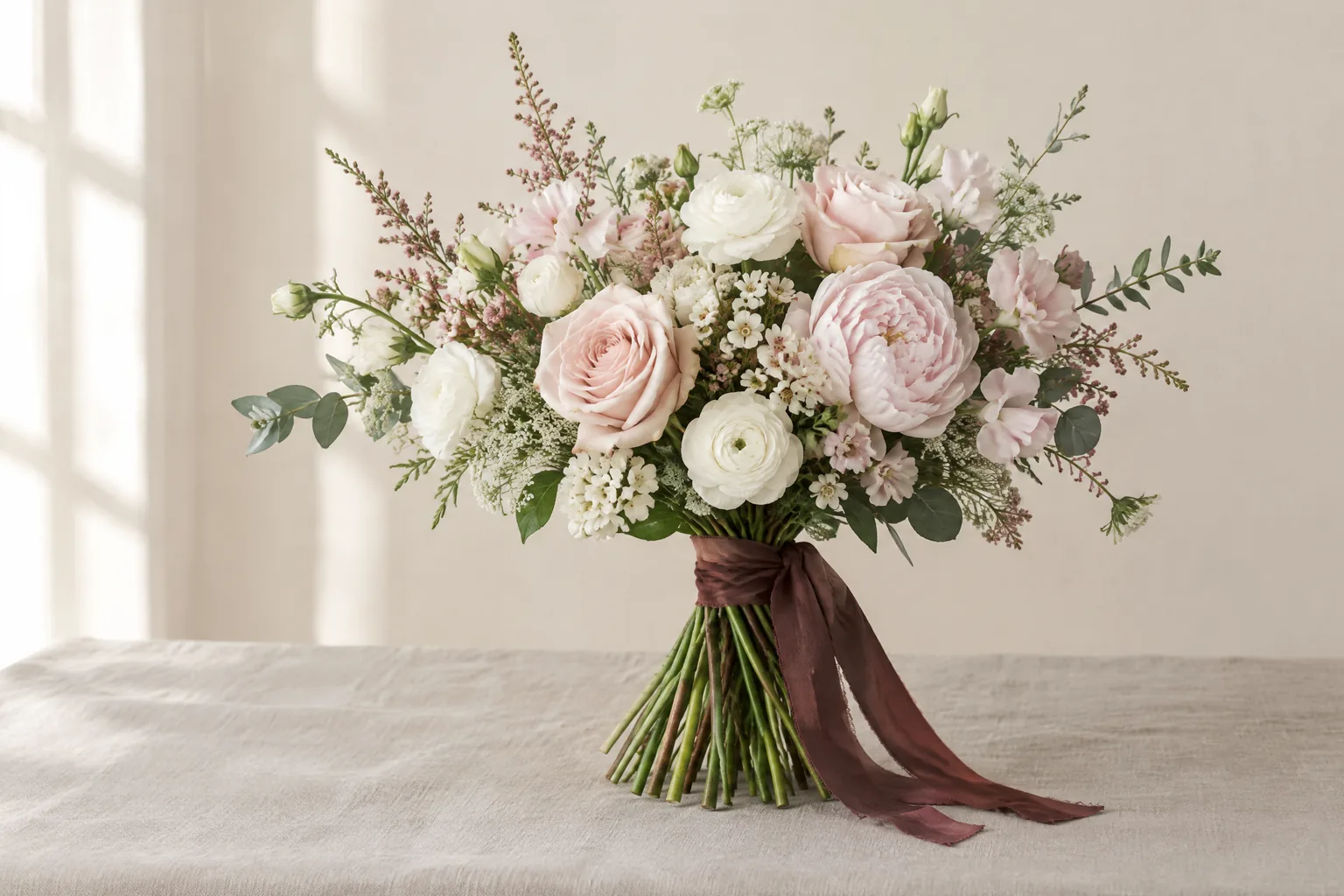
A beginner floral arrangement class is a useful starting point for an enquiry about flower selection, conditioning and simple composition. It does not, by its name alone, establish that a colleague can avoid sharp tools or receive individual assistance. Ask the provider to describe the proposed project from the participant's perspective: which actions they perform, which are demonstrated and which can be prepared in advance. Confirm the teaching language for your session rather than inferring it from an English webpage.
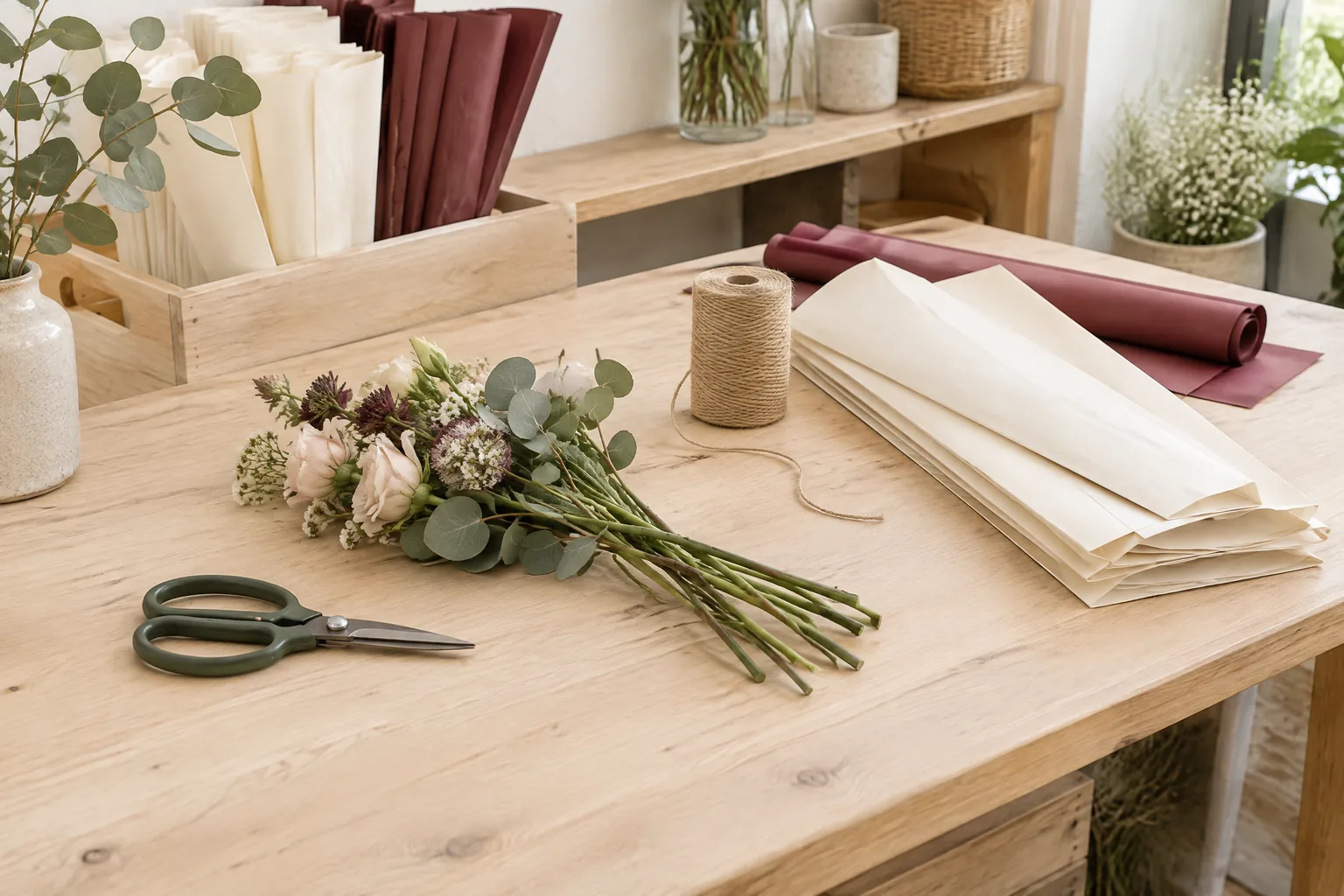
For example, a hand-tied design may require someone to hold several stems while adding more. A small container arrangement might suit a participant who prefers to work with the piece resting on the table, provided the chosen construction is appropriate. Ask whether the instructor can offer that variation without making the person wait through an unrelated project. Pre-cut stems are a possible request, but lengths and preparation must be agreed with the tutor, not improvised by the organiser.
Clarify who provides assistance and when it is available. A colleague offering encouragement is different from someone competent to carry out the cutting or construction that the provider requires. Ask how requests for help will be noticed while the instructor is demonstrating elsewhere. Written stage notes, a close view of the demonstration and pauses before the next action may be useful requests. Let participants choose whether a partner assists; do not automatically assign someone a helper.
Agree a social format that does not reward speed
Shared work should create choices, not a contest or a permanent support role.
If you enquire about a team building floral workshop, first ask whether it is currently available for your date, venue and group. Then discuss the activity design separately from availability. Specify that the aim is a relaxed shared occasion, not a timed competition for the most polished arrangement. Ask whether participants can work individually, in pairs or on a shared piece without being pushed into a format that depends on everyone doing the same task.
A shared centrepiece can reduce the number of bulky items leaving the venue, but it needs clear opportunities to contribute. One person might suggest a colour combination while another places prepared stems. Offer those roles to everyone and allow people to switch. Otherwise the experienced arranger may quietly take over while beginners spend the session passing materials. The facilitator should ask before correcting someone's work and leave room for an arrangement that differs from the sample.
Avoid using compulsory presentations or public judging as proof that the session achieved teamwork. Invite an optional comment about a design choice instead. Participants should also be able to observe without being asked to defend that choice in front of colleagues. If managers attend, brief them not to turn participation into a measure of attitude. No provider can guarantee closer working relationships from a craft session; judge the plan by whether people can join comfortably and contribute on their own terms.
Treat preserved materials as a separate choice
Changing the flowers does not automatically remove the concern.
Ask about preserved flower workshops when someone prefers an arrangement that does not involve caring for fresh cut stems, but first check whether sessions are currently offered. Request the actual proposed materials and construction method. A project may involve treated flowers alongside dried foliage, wire, tape or adhesive. The word preserved tells you too little to decide whether the combination suits a particular person, and a change in material may introduce different handling requirements.
The Royal Horticultural Society explains that irritant plant sap can affect skin and that some plants contain allergens which affect susceptible individuals. That guidance is a reason to ask specific questions about fresh plant handling, not evidence that any particular preserved product is suitable. Do not describe a workshop as allergy-free or assume that removing fresh stems answers a colleague's concern. Where a personal health requirement affects participation, ask the individual what information they need to assess the proposed activity.[2]
Separate a dislike of cutting flowers from sensitivity to fragrance, discomfort with texture or a preference not to use botanical materials at all. Those concerns call for different responses. Someone avoiding cut flowers may still dislike a project using preserved blooms. A person avoiding a scent may need to know about the whole room, not just their own kit. If the provider cannot confirm the requested materials or exclusions, offer another activity rather than inviting the participant to test their tolerance on arrival.
Check the room and workstation, not only the entrance
An accessible route needs to lead to a usable place to participate.
The Australian Human Rights Commission's guide considers entry, movement within the venue, accessible toilets and unobstructed floor space as parts of event access. For your workshop, ask the venue about the route from arrival to the actual workstation and facilities. A lift somewhere in the building does not answer whether buckets, chairs or supply tables will block that route. Share the proposed layout with anyone requesting an adjustment and invite their comments before declaring the room suitable.[3]
Discuss table position, seating and reach with the participant rather than reserving an isolated spot by default. Materials should be brought within usable reach where needed, with an agreed person responsible for replenishing them. Ask whether instruction can be heard and seen from that position. Background music is optional; clear communication matters more. If someone requests a quiet break space, confirm where it is and how they can rejoin without missing instructions essential to the next stage.
For tools, obtain the provider's handling instructions and confirm which actions can be done by the instructor instead. Do not promise that gloves, a different pair of scissors or a neighbouring colleague will solve every difficulty. Keep personal adjustments private while making general instructions available to everyone. Before invitations are final, identify one organiser who can contact the venue and tutor if a practical arrangement fails. Participants should not have to negotiate between several people during the session.
Make taking a finished piece home optional
Plan for the evening journey as carefully as the workshop table.
Ask for the approximate finished dimensions and packed weight of the proposed design, not just a photograph with no scale. Check whether the container travels upright, whether it contains water and what packaging is included. A colleague catching the MTR with a laptop bag may prefer a compact piece to a wide arrangement that needs both hands. Another may be going somewhere after work and have no suitable place to leave it. Neither person should have to explain their evening plans.
Agree before booking whether participants may contribute to a shared office piece instead of receiving an individual one. That choice only works if someone has agreed to its display location and ongoing care; leaving it in reception is not a complete plan. If colleagues can leave their work behind, confirm who takes responsibility at the end. Do not promise redistribution to a charity, hospital or another team without the recipient's prior agreement and a practical handover arrangement.
Ask for the care guidance relevant to the actual materials and pass it on with the finished piece. A participant who does not want flowers at home should not be offered a longer-lasting floral item as if longevity resolves their objection. Give people a no-take-home choice in the invitation and repeat it discreetly near the end. Keep packing time within the event schedule so those leaving promptly do not miss assistance or feel obliged to stay beyond the advertised finish.
Offer an equally welcome alternative before booking
Declining flower work should not mean losing the social occasion.
An alternative needs a real place in the plan, not a spare chair at the edge of the workshop. Depending on staff preferences, it might be a separate paper-based creative activity or an informal social session without making anything. Check that its materials and setting suit the people choosing it. Give it comparable time and organisational attention, and make the choice available to everyone. Avoid labelling one group as the main event and the other as the accommodation group.
Remaining in the same room is not always an equivalent option, especially when the concern is the surrounding materials or scent. Discuss a separate space or a different shared activity if necessary. Do not automatically turn non-makers into photographers, refreshment servers or clean-up staff; those are tasks, not substitutes for leisure. If one format cannot reasonably include the team and a separate option would leave colleagues socially excluded, reconsider whether flowers should be the central activity at all.
Before accepting the proposal, reconcile the number of makers, assisted participants and alternative-activity participants with the quoted inclusions. Ask what happens if those numbers change and record the booking and cancellation terms without assuming flexibility. Send colleagues a short confirmation of their choices and a private contact for changes. Afterward, invite optional feedback about whether the arrangements worked, rather than asking whether everyone loved flowers. Use that response to choose the next occasion, not to challenge anyone's decision.
| Colleague's preference | Ask the provider to confirm | Alternative if it cannot be arranged |
|---|---|---|
| Arrange without cutting | Prepared stems and a named person to make further cuts | Design choices or a non-cutting activity chosen by the participant |
| Avoid holding a bouquet throughout | A supported tabletop project and suitable workstation | A different creative activity with an agreed working position |
| Avoid particular floral materials | The actual material list and any agreed exclusions | A separate activity without those materials nearby |
| Join without taking flowers home | A shared piece with an agreed owner and display location | A no-take-home participation option |
| Avoid the workshop environment | Whether a genuinely separate, suitable social option is possible | Choose another team occasion if separation would be isolating |
- Describe the proposed materials, tool work and finished piece before asking for preferences.
- Provide a private reply contact and ask permission before sharing personal details.
- Confirm current workshop availability, teaching language and the agreed project.
- Name who will provide tool assistance and check the actual workstation and access route.
- Confirm material details without promising scent-free or allergy-free participation.
- Agree packing, care responsibility and a genuine no-take-home choice.
- Offer an equally welcome alternative and record the final booking terms.
Choose flowers because the proposed activity suits the people attending, not because every colleague can be fitted into one project. Confirm practical assistance, make handling and take-home choices voluntary, and give the alternative equal consideration. If those arrangements cannot be made, changing the team activity is a better decision than calling an unsuitable format inclusive.
Can someone join without touching the flowers?
Possibly, if they want to and the format allows meaningful involvement through design discussion or observation. Agree this with the participant and facilitator beforehand. Do not treat a colour-selection role as suitable for everyone avoiding contact: being near the materials may itself be the concern. A separate activity or a different team event may be the better option.
Are preserved blooms automatically better for fragrance or allergy concerns?
No automatic conclusion follows from the material name. Ask about the proposed flowers, foliage, treatments and additional craft materials, then let the participant assess the information they need. Do not turn a provider's description into a medical assurance. If the relevant details cannot be confirmed, choose another activity rather than assuming preserved materials remove the concern.
What should we ask if a colleague does not want to use sharp tools?
Ask which project stages require cutting or wire work, whether stems can be prepared beforehand and who will carry out additional tool work during the session. Confirm that assistance is available when needed, not only at the opening demonstration. Let the colleague decide whether the remaining activity appeals to them; avoiding tools does not oblige them to become an observer.
How can we avoid colleagues feeling pressured to take flowers home?
Include a no-take-home choice before collecting attendance replies. If the plan uses a shared arrangement, identify its owner, location and care arrangements in advance. Do not wait until everyone has made an individual piece to announce that it can be left behind. Confirm packaging for those who do want their work, and allow time for help before departure.
Should managers see everyone's reason for choosing an alternative?
For planning, managers usually need participation numbers and the arrangements they must support, not a public list of personal reasons. Use a private contact and ask permission before passing personal information to the provider. Explain the alternative as an ordinary choice for the whole team. Nobody should have to disclose a health concern simply to decline a craft activity.
Before booking, send the proposed provider your date window, maker numbers, project preference and agreed practical requirements. Ask for written confirmation of availability, assistance, materials and terms, while confirming the alternative activity separately with the colleagues choosing it.
Sources & supported claims
- Australian Human Rights Commission: Hosting accessible and inclusive in-person meetings and events
Event invitations should give participants an opportunity to state accessibility requirements and identify a contact person.
- Royal Horticultural Society: Potentially harmful garden plants
Irritant plant sap can affect skin, and some plants contain allergens to which susceptible individuals may react; this does not establish the suitability of any preserved product.
- Australian Human Rights Commission: Hosting accessible and inclusive in-person meetings and events
Event accessibility includes entering and moving within the venue, accessible toilets and unobstructed floor space.