
Gifts & occasions
Content updated
On this page
- Define the skill you want to try
- Compare arranging and general class descriptions
- Ask about demonstration versus practice
- Confirm materials and tools
- Discuss language and assistance needs
- Plan transport of the finished piece
- Set realistic expectations for a first session
- Questions & answers
- Sources & supported claims
First flower class expectations: find out what you will actually do
For realistic first flower class expectations, ask what you will do with your own hands, how the tutor will help and what you can take home. A beautiful finished piece does not show whether learners selected the flowers, prepared the stems or followed a partly completed design. Before booking, request a short description of the project and the time available for individual practice. Choose a session that accepts your starting level and teaches something you want to repeat, rather than one whose promotional photograph simply looks impressive.
A first session can be a pleasant guided activity without covering every arranging skill. Compare the teaching format, not just the finished design. Confirm which materials are included, whether help is available in a language you understand and how the piece will be packed. Keep the booking decision separate from hopes of reproducing a professional display immediately.
Define the skill you want to try
A specific learning goal makes the class description easier to judge.
Start with a small, practical aim. You might want to arrange supermarket flowers in a vase, hold a modest bouquet together or understand where to place a main flower. These are different tasks, even when all three advertisements show similar blooms. If you want to arrange flowers for your flat, describe the vase you already use. If you want to make a gift, ask whether the lesson includes tying and wrapping rather than assuming those finishing steps are part of the project.
Separate learning from the pleasure of making something with friends. For a relaxed afternoon, a closely guided project may be exactly right. For learning to work alone afterwards, you need explanations of choices and a chance to correct your own attempt. Neither purpose is superior. Trouble starts when you expect an independent skill lesson but receive a pre-selected kit designed mainly to produce a finished object. Ask which purpose the session is built around and decide whether that matches yours.
The YumYum Flower arranging class page is a starting point for an enquiry about arranging, not a substitute for a session outline. Ask for the actual project, its starting level and the operations you will personally practise. A useful reply might distinguish placing flowers in a container from making a hand-held bouquet. If the answer only describes how attractive the result will be, follow up about the skill itself before committing to a date.
Compare arranging and general class descriptions
Look for the project and learner tasks behind the label.
Read the description for verbs that explain your involvement. Will you select, cut, position, tie or wrap? A list of flower varieties says little about what you will learn. Likewise, a photograph of a wreath does not establish whether its base is supplied ready-made. Request an outline that identifies any prepared components. This helps you distinguish a lesson in building the structure from an activity where you decorate an existing structure, without dismissing either as less enjoyable.
The broader YumYum Flower class page can help you frame the type of floral activity that interests you, but its title alone does not establish lesson content. Ask whether the proposed session uses fresh, dried or preserved materials and whether each learner makes a separate piece. An arrangement that sits in water has different preparation and care questions from a decorative dried piece. Confirm the specific format rather than treating every activity under a general flower heading as interchangeable.
Use photographs to ask better questions, not to set a pass-or-fail standard for your work. Find out whether the image shows the tutor's sample, a previous learner's piece or an illustration of the intended style. Ask about the approximate finished size and whether the advertised colours are fixed or only a reference. If the provider cannot identify what the image represents, judge the written project description instead. You can like the visual direction while still needing clearer booking information.

Ask about demonstration versus practice
Time in the room is not necessarily time spent arranging.
Ask how the session is divided between explanation, demonstration and your own work. A tutor may make a complete sample first, demonstrate each operation as everyone follows, or give a brief introduction before visiting individual workstations. These formats demand different levels of confidence. A total beginner may appreciate seeing one operation and trying it immediately. Someone who wants to experiment may prefer a longer practice period with feedback, rather than copying every placement at the same pace as the group.
Ask what happens when you get stuck. Can the tutor repeat the grip or show the placement again? Will they explain why a stem needs moving before adjusting it? It is reasonable to accept help, particularly with an unfamiliar tool, but a tutor finishing most of the piece can leave you uncertain about how to repeat it. If learning matters more than the photograph, request a chance to make the correction yourself after the explanation, where the materials and session time allow.
When enquiring through YumYum's Beginner flower class page, explain plainly that you have never arranged flowers before. Ask whether that level is accepted and how individual assistance works. The word beginner should prompt a conversation about the pace and support; it does not prove that every session suits someone starting from zero. Also ask whether the class allows a short retry of its main technique. A second attempt can answer a different question from simply completing the first piece.
| Format to confirm | May suit you when | Question that clarifies the offer |
|---|---|---|
| Demonstration-led | You mainly want to watch and understand the process | Which operations, if any, will I try myself? |
| Guided making | You want to follow a project with help at each stage | Do you demonstrate one operation before we attempt it? |
| Practice with individual feedback | You want room to make choices and correct your attempt | How will the tutor review my work during the session? |
| Shared project | Making something together matters more than practising every task | Can both participants try the central technique? |
Confirm materials and tools
Find out what is supplied, what is prepared and what remains yours.
Ask for a clear list of inclusions before comparing costs. Check whether flowers, foliage, the container and wrapping are supplied, and whether the container goes home with you. Tools may be lent for the session rather than included as a take-home item. Ask whether any consumables or optional upgrades cost extra, without assuming they do. If you must bring a vase, obtain the required opening and height rather than buying one based only on how it looks in the promotional picture.
Stem preparation is a useful example of work that a polished photograph cannot reveal. The Royal Horticultural Society advises removing foliage below the water level and re-cutting stems with a sharp tool rather than crushing them. Ask whether learners practise those tasks or receive flowers already prepared. Neither answer makes the session automatically good or poor. It tells you whether preparation is part of the learning, so you can decide if the lesson will help you arrange fresh flowers at home.[1]
Clarify how much choice you will have. A fixed flower kit can reduce the decisions you need to make while learning a new technique. A choice of colours may be enjoyable but does not necessarily include instruction in selecting compatible materials. Ask how substitutions are handled if the planned flower is unavailable. If you have a known sensitivity or difficulty handling a particular material, describe it before paying and request a specific response. Do not treat a natural-material label as an assurance that it suits everyone.

Discuss language and assistance needs
Describe the task you need help with, not just a general preference.
In Hong Kong, an English webpage does not by itself confirm an English-taught session. Ask which language is used for the main explanation and whether questions can be answered in your preferred language. A bilingual group may still receive most of its demonstration in one language. If you need instructions in English, confirm that before booking rather than relying on another participant to translate. You should be able to understand tool instructions and the reason for a correction, not merely copy the visible movement.
If standing, reaching or gripping tools is difficult, explain the relevant operation and ask about the setup. For example, you may need a seated workstation, help cutting stems or more time to tie a bouquet. Request the provider's actual arrangement rather than assuming a small class can accommodate everything. Also ask whether the demonstration is visible from your seat. An accessible entrance alone does not answer whether you can comfortably see and use the working surface during the activity.
Discuss your pace without apologising for being new. Ask how many learners share the tutor's attention and whether an assistant is present for that particular session. A small group number is useful information, but it does not reveal how feedback is delivered. If attending with a friend, confirm whether you each receive materials and make your own piece. Sharing a project can be enjoyable, yet it gives each person less opportunity to perform every operation unless the lesson deliberately makes room for both.
Plan transport of the finished piece
Choose a project you can carry, not only one you want to display.
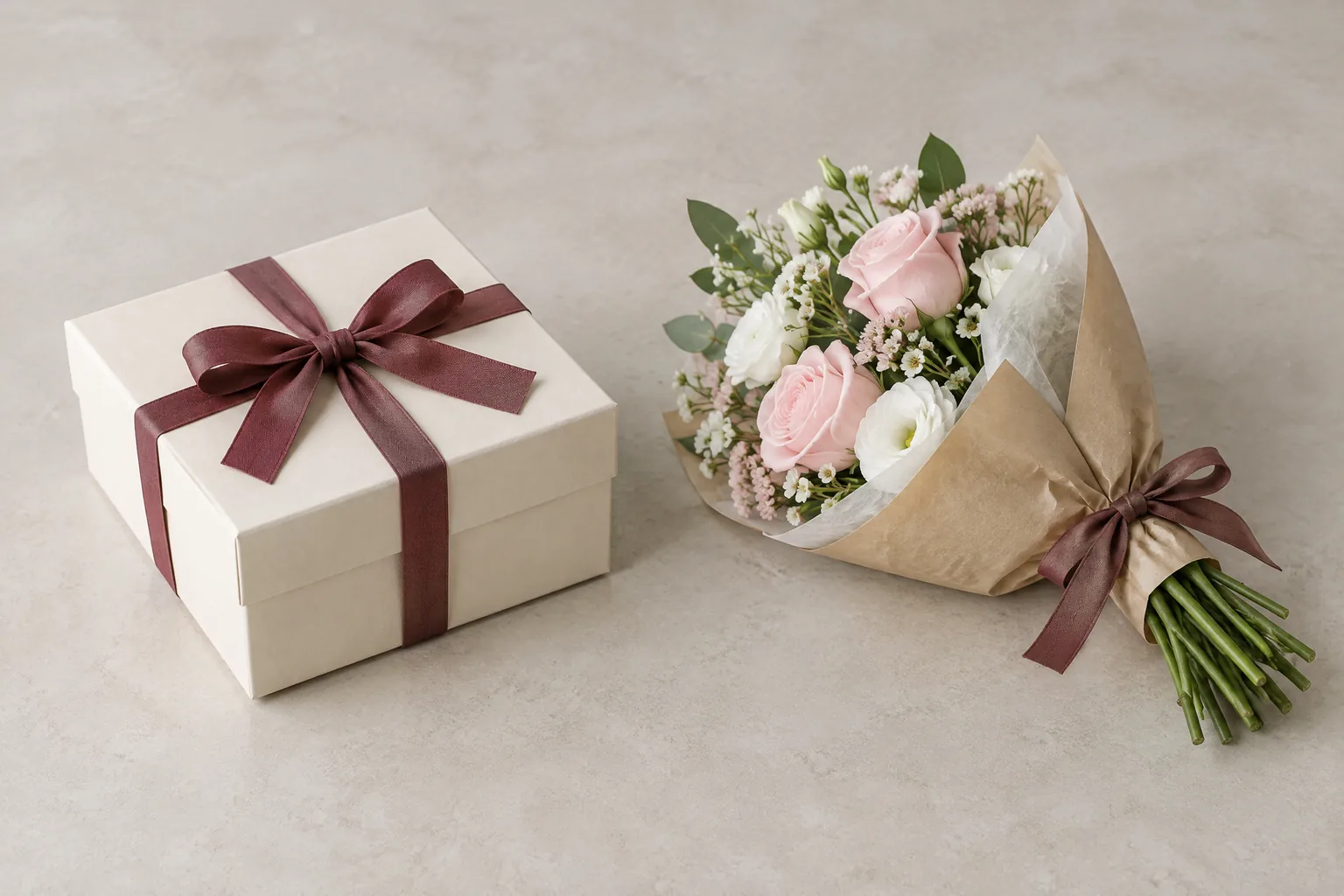
Ask about the finished dimensions, weight and packaging before deciding how to travel home. A broad arrangement in a vase presents different carrying problems from a wrapped bouquet. Will the container hold water during the journey, or will the tutor provide another way to keep the flowers hydrated? Is there a box with a stable base, or should you bring something suitable? Do not assume a shopping bag fits simply because the piece looks small in a tightly cropped photograph.
Think through your actual route, including stairs, a bus change and the walk from the station. You may need one hand free for the fare gate or an umbrella. Ask how to hold the package without pressing against the flowers, and whether the arrangement can remain upright. If the proposed piece is awkward for that journey, choose a more compact project or arrange suitable transport. This is a reason to compare formats before booking, rather than discovering the difficulty after the final photograph.
Request care instructions that match the materials and construction. For vase arrangements, the Royal Horticultural Society advises using a clean vase and checking the water level, topping up when necessary. Ask the tutor to show where water can be added without disturbing the design. A wrapped fresh bouquet may need a different next step once home, while dried materials require their own guidance. If you plan to give the piece away, pass on those instructions instead of assuming the recipient will recognise its care needs.[2]
| Proposed piece | Main detail to establish | Decision if transport is awkward |
|---|---|---|
| Vase arrangement | Container size, weight and upright packaging | Ask about a smaller container or suitable transport |
| Wrapped fresh bouquet | How stems are protected and hydrated for the journey | Confirm the home transfer instructions before leaving |
| Dried decorative piece | How protruding or fragile materials are protected | Choose a compact design or a suitable protective box |
Set realistic expectations for a first session
Judge the experience by what you understand and can try again.
A useful first outcome is being able to explain one decision you made. Perhaps you can identify why a flower was shortened or how changing its position altered the outline. Your piece may not match the sample exactly, even if you followed the same instructions. Before the session ends, ask for one specific observation about your work and one thing to practise next. That gives you a more useful starting point than a general compliment or an expectation of immediate professional-looking results.
Ask whether brief notes are supplied and whether you may photograph stages of your own work. Do not assume permission to record the tutor or other learners. A picture taken before the final wrapping can help you remember the structure; a picture of the finished piece alone may hide it. Write down the main sequence and any unfamiliar material names while they are still clear. If a technique remains confusing, ask about that operation rather than requesting the entire lesson again at the door.
Keep a recreational session separate from a formal training pathway. New York Botanical Garden explicitly distinguishes enrolling in floral design for fun from pursuing its certificate programme, which includes design practice and business learning. That overseas example shows why the intended learning outcome matters; it says nothing about the credentials of another provider. One introductory workshop can help you discover an interest. It does not establish professional competence, and you do not need a career plan to enjoy learning one manageable skill.[3]
- Name one arranging skill you want to try, not only a style you like.
- Confirm the actual project and whether zero previous experience is accepted.
- Ask which tasks you perform yourself and how individual feedback works.
- Get the materials, container and tool inclusions before paying.
- Confirm teaching language and any task-specific assistance you need.
- Check finished dimensions, packaging and a workable route home.
- Read the booking, cancellation and material-substitution terms for your session.
Choose the class whose confirmed teaching format suits your goal and starting point. The strongest booking answer describes your tasks, the help available and the piece you will carry home. You can enjoy a guided project without expecting independent mastery. Leave with one decision you understand, one technique to practise and care instructions you can actually follow; those are worthwhile results even when your arrangement differs from the photograph.
Can I book if I do not know any flower names?
Tell the provider you are starting from zero and ask whether names and basic handling are explained during the session. You need not learn a catalogue of varieties in advance. A more useful preparation is knowing what you want to make and checking that no previous arranging experience is required for that particular lesson.
What if I mainly want the same piece as the photograph?
Ask which aspects are fixed: size, colours, materials and construction. Confirm what the photograph represents and what the tutor expects a new learner to complete. If obtaining an exact finished object matters more than learning, discuss that separately with the provider. Do not assume a class booking promises a replica of a styled sample.
Is a class with prepared stems less useful?
Not necessarily. Prepared materials can leave more time for placement, proportion or bouquet handling. The trade-off is that you may not learn how to prepare bought flowers yourself. Decide whether preparation is one of your goals, then ask if it is demonstrated, practised or outside the session's scope. Judge the class against that answer.
Should I buy floral tools before my first lesson?
Wait until you receive the session's materials instructions. Ask what is lent, what you must bring and whether any tool needs a particular specification. Buying a large kit before trying the activity may not help with the project you book. If gripping or cutting is difficult, discuss the actual tools and available assistance in advance.
Can I give my first arrangement to someone straight afterwards?
You can plan to, but allow for the confirmed finishing time and the journey. Ask about packaging, hydration and care instructions, and check that the recipient can manage the container. If the gift must meet an exact appearance or collection deadline, discuss that expectation first. A beginner learning activity should not carry an unspoken promise of a time-critical gift.
Before booking, send the class provider your starting level, intended skill and transport needs. Ask for a session outline and written confirmation of the details that matter to you.
Sources & supported claims
- Royal Horticultural Society: Cut flowers: cutting and conditioning
RHS advises removing foliage below the water level and re-cutting stems with a sharp knife or secateurs to avoid crushing them.
- Royal Horticultural Society: Cut flowers: cutting and conditioning
RHS advises clean vases and checking the water level, topping up as necessary.
- New York Botanical Garden: Floral Design Classes
NYBG distinguishes enrolling for fun from its Floral Design Certificate programme, whose stated learning includes creating designs and practical business skills.