Baking & procurement
Content updated
On this page
- Count recipient households, not just names
- Set a gift budget without requiring identical contents
- Read the contents behind the presentation
- Ask how the macaron quotation is built
- Assess a seasonal cake gift as a sharing arrangement
- Separate protective packaging from decorative spending
- Make smaller gifts and non-food alternatives normal choices
- Questions & answers
- Sources & supported claims
Compare edible gift unit cost by portions, not box size
For a small association, edible gift unit cost is most useful when measured per household accepting a gift, then checked against portions that household can realistically enjoy. A large box is not automatically generous, and a low price per piece is not automatically economical. Compare a finished macaron box with a seasonal cake gift only after confirming the contents, practical sharing arrangements and total payable amount. Give recipients a discreet way to choose a smaller gift or decline food. That makes the comparison fairer than dividing the budget by every name on the membership list.
Keep two figures beside each option: the full cost per accepted household gift and the cost per clearly defined usable portion. Use the first to control the association's spending; use the second to expose oversized gifts or vague serving claims. Presentation can deserve part of the budget, but it should be a deliberate choice rather than an unexamined consequence of buying the biggest box.
Count recipient households, not just names
Decide what one gift is intended to recognise.
Start with the association's gifting purpose. If the gift thanks each member individually, two members living together may legitimately receive two gifts. If it is a seasonal greeting to each home, count that household once, subject to the recipients agreeing. Write this rule before comparing suppliers. Otherwise, one volunteer may count membership records while another counts addresses, and neither quotation will describe the same order. A household rule also needs a sensible exception for members who share an address but do not share food.
Ask only what changes the order: whether the recipient wants a food gift, their preferred size and whether they can receive it on the proposed date. Do not assume that a household with four residents has four people who want cake. Some may be away or simply uninterested. A short choice between a small sharing gift, a larger sharing gift and a non-food alternative can be more useful than collecting detailed household information. Keep individual responses with the organiser rather than circulating them around the committee.
Maintain separate totals for accepted gifts and potential eaters. The first controls boxes, cards and handovers; the second helps judge contents. For illustration, ten households might accept gifts even though more than ten people will share them. Do not multiply every box by the largest household size. Record the response deadline and decide how late replies will be handled before placing an order. Unanswered invitations are not reliable demand, and buying a large reserve can consume the budget intended for people who actually opted in.
Set a gift budget without requiring identical contents
Fair recognition does not always mean equal food weight.
Agree on a maximum total spend and a practical allowance per accepted household gift. The allowance should cover the complete handover, not only the food. Decide whether the association values identical presentation, similar spending or a similar sharing experience most highly. These aims can conflict: the same large cake may be welcome in one home and burdensome in another. Record the chosen principle in a short committee note so the purchasing volunteer does not have to invent a fairness policy while negotiating an order.
Two sizes can work if both carry the same quality of greeting and recipients choose without having to justify themselves. A smaller gift need not be presented as the inferior option. Use the same card wording and a similar visual standard, then let the food quantity vary. Avoid labelling boxes publicly by household circumstances. Where the budget cannot support several formats, a modest standard gift with an equally courteous opt-out may be better than an elaborate set that excludes some members.
Keep a small unallocated amount for costs that are not yet confirmed, but do not describe this as money already available for extra treats. Obtain the full quotation first. If the total exceeds the ceiling, decide what to remove: decorative upgrades, custom printing or unnecessary spare boxes may matter less than suitable contents. Ask for a revised total after any change. A cheaper food line does not help if a new packaging minimum or extra handover charge absorbs the saving.
Read the contents behind the presentation
Separate pieces, weight and realistic sharing portions.
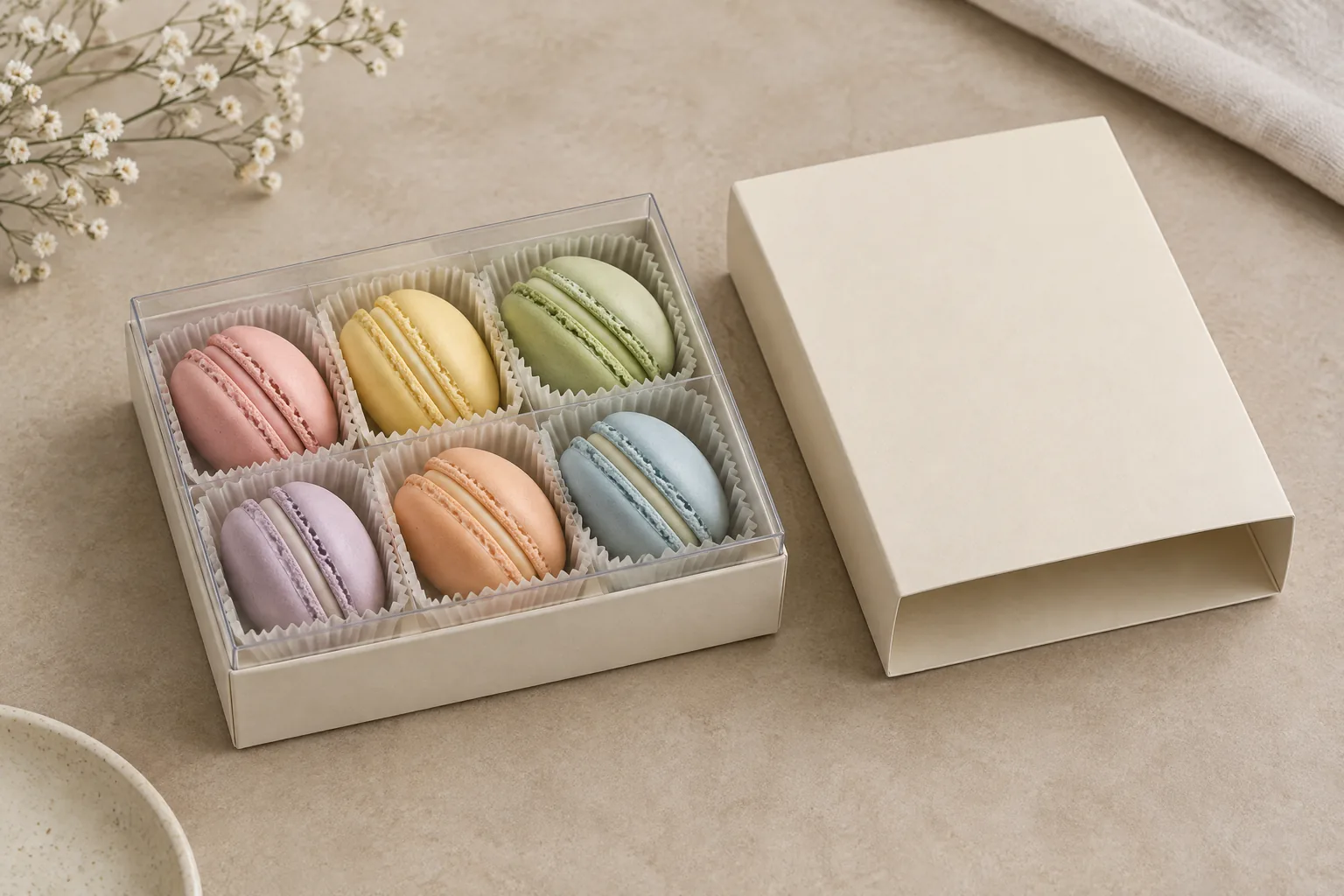
A Macaron Gift Box enquiry is a useful starting point for discussing a finished boxed format. Ask for the number of complete macarons, the proposed flavour mix and what the packaging price includes. An exterior photograph cannot tell you whether the interior contains one layer, several layers or decorative space. If individual wrapping matters for staggered sharing, ask whether it is possible and separately costed. Do not assume that a divider or a closed lid makes each piece individually sealed.
The Hong Kong Centre for Food Safety explains that, generally subject to exemptions, prepackaged food labelling includes numerical count, net weight or net volume. Those are quantity measures, not a promise of how many people will feel adequately served. For your comparison sheet, record the supplier's confirmed quantity and a separate planning assumption about sharing. Do not treat the dimensions of a gift box as edible volume. A substantial-looking box may contain a modest amount of food, while compact packaging may hold more than its photograph suggests.[1]
Define the intended eating occasion before using the word portion. One small sweet with tea is not equivalent to a slice of cake served as the main dessert. Count macarons as pieces and cake as confirmed slices or servings, then state the intended use beside each. You can compare the cost of providing an appropriate household gift without pretending these foods are identical. If the supplier offers only a broad serving range, retain that range rather than selecting its highest number to make the calculation look better.
Ask how the macaron quotation is built
A lower piece rate may describe a different purchase.
Use Macaron Prices as an enquiry route for a current, order-specific quotation, not as a substitute for one. Ask whether the quoted basis is individual pieces, loose trays or finished gift boxes. Check whether the quantity threshold applies to the whole order or to each flavour or design. An association needing several small, labelled gifts should compare ready-to-hand-over totals. A bulk supply quote may answer a different question if it leaves the committee responsible for buying boxes and packing food.
Calculate the full cost per accepted household by dividing the complete order total by the number of households receiving gifts. Then, within each format, divide its allocated cost by its defined usable portions. Shared charges need a stated allocation: dividing an order-level transport charge equally by boxes is often clearer than silently attaching it to one product. For a mixed order, show that assumption beside the figures. Avoid reporting decimal precision that the serving estimate cannot support; a range can be a more honest comparison.
Do not improve the apparent price by counting food that you have no realistic plan to use. If a recipient chooses a smaller size, the unwanted remainder of a larger box is not extra value merely because it was purchased. Equally, do not deduct a guessed wastage percentage from every quote. Use the information recipients gave you and identify uncertainty plainly. When two options remain close, convenience, clear food information and a workable handover may be better deciding factors than a tiny difference in cost per piece.
| Measure | Calculation or record | What it helps decide |
|---|---|---|
| Full cost per accepted household | Complete confirmed order total ÷ households receiving gifts | Whether the gifting policy fits the budget |
| Cost per usable portion within a format | Allocated full cost ÷ defined usable portions | Whether that size suits its intended eating occasion |
| Declared food quantity | Confirmed piece count or net weight, recorded separately | What is actually being purchased |
| Presentation spending | Confirmed packaging and decoration charges, where itemised | Whether an upgrade adds enough recipient value |
| Unresolved quotation items | Mark pending; do not enter zero | Whether the comparison is ready for approval |
Assess a seasonal cake gift as a sharing arrangement
A mixed box needs an item-by-item description.
An Easter Cake Gift Box enquiry can cover a bakery-led combination rather than one fixed set. The destination explains that actual contents and piece counts are confirmed for the individual order. Ask for a written breakdown of the proposed cake and smaller treats before comparing it with an all-macaron option. A seasonal image is useful for discussing style, but it does not settle how much edible food will arrive or whether the mix will suit your recipients.
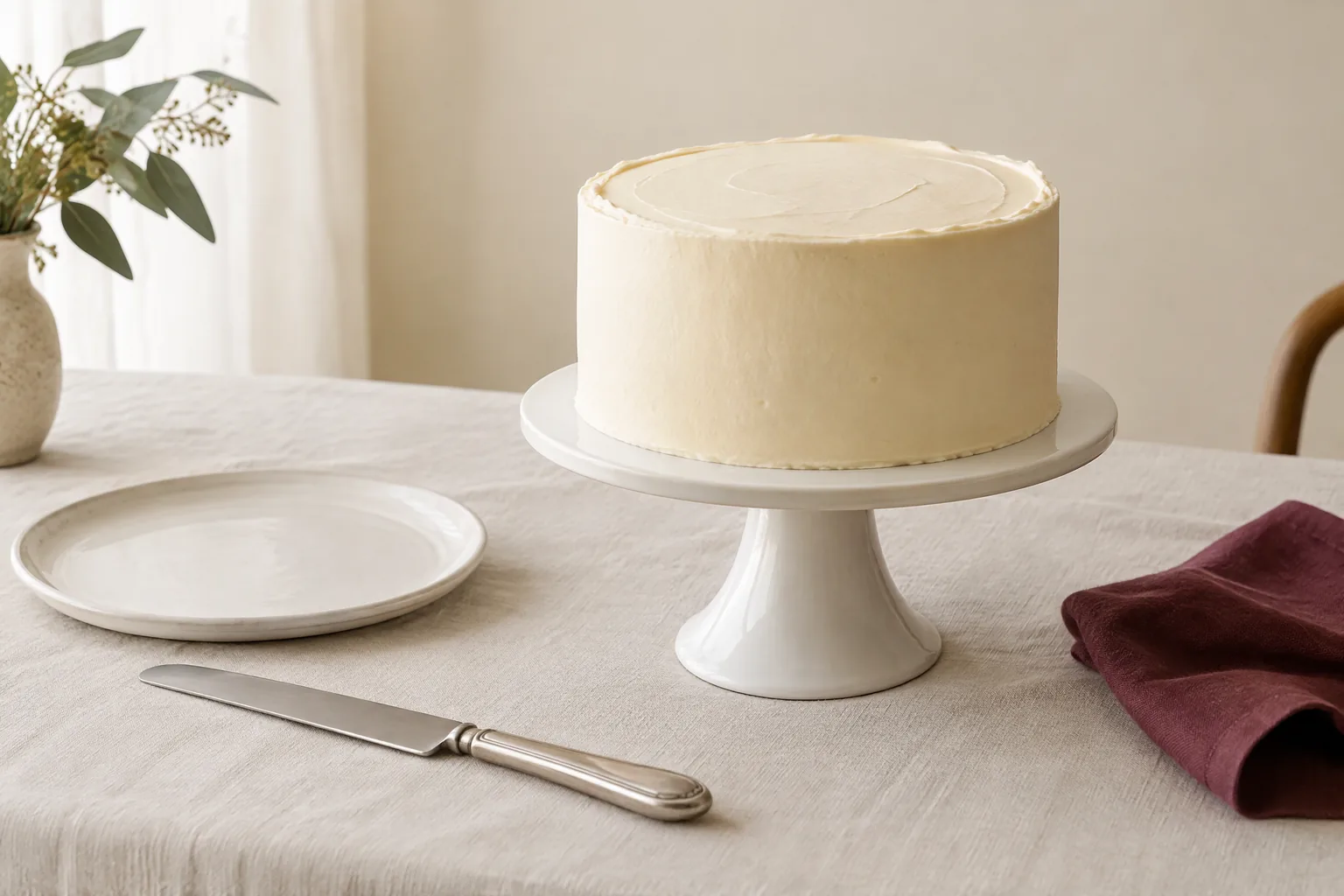
For cake, ask what the quoted serving estimate assumes: slice dimensions, cake height and whether decorative elements reduce the area available for cutting. A diameter alone does not settle these questions. For a mixed box, list the cake servings separately from cookies or cupcakes rather than adding every item into one impressive but meaningless portion total. Also consider equipment. A household that can pass around individual sweets may not want to find a suitable knife, plates and a clear space to divide a decorated cake.
Check the eating window against the handover date. CFS labelling guidance includes date marking and special storage instructions where required for prepackaged food. For the actual selection, request the applicable storage advice and dates rather than assuming every item in a mixed gift keeps equally well. Ask how those instructions will reach recipients. A gift requiring a prompt handover may be unsuitable if the association collects everything before a long closure, even when its nominal cost per serving looks attractive.[2]

Separate protective packaging from decorative spending
Price the complete journey to the recipient.
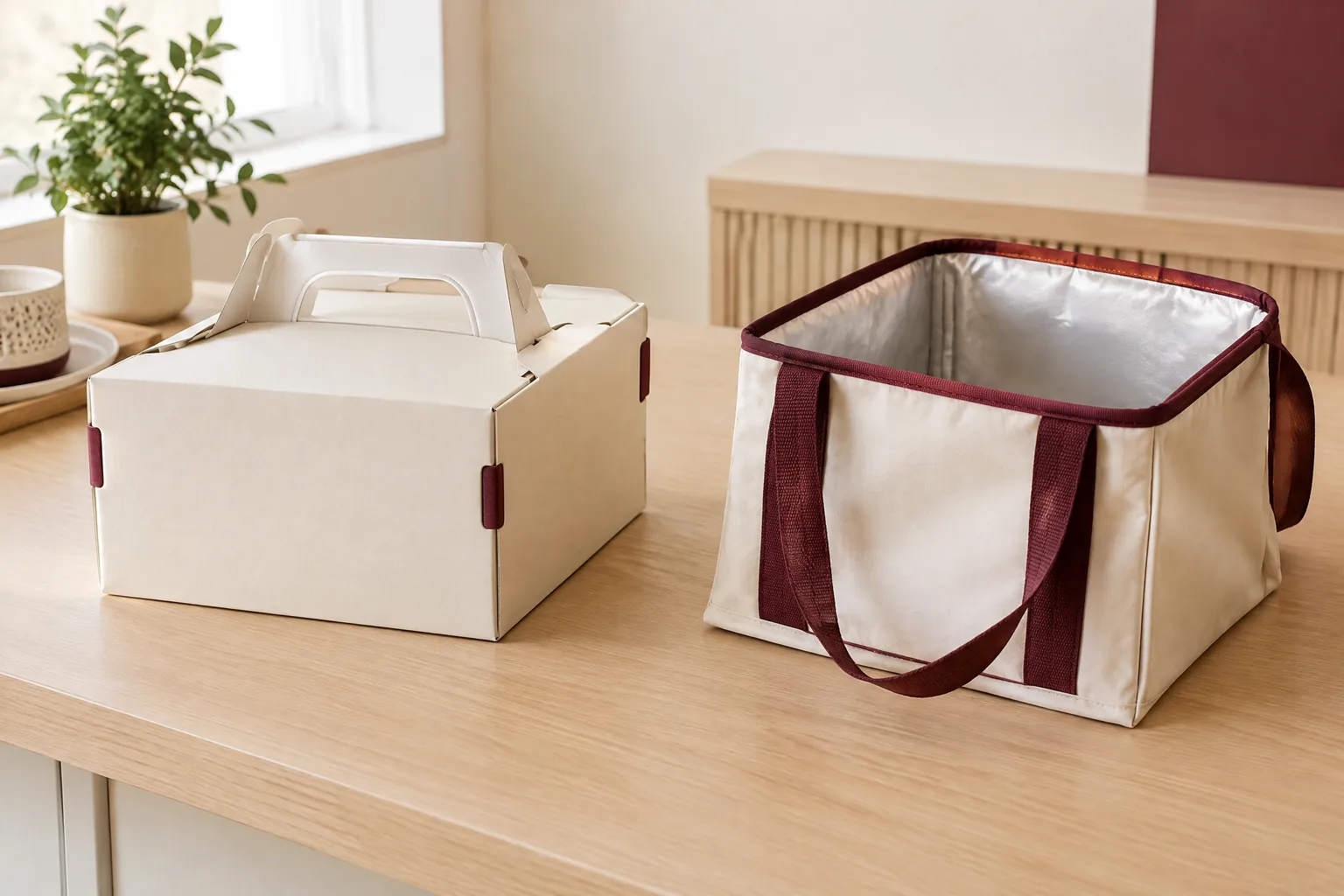
Request a breakdown that distinguishes food, gift packaging, cards and any fulfilment charges. Confirm whether bags, protective outer cartons or special labelling are included where needed. State whether gifts go to one collection point or several recipients, since those are different briefs. Do not assume a collection option is available or that delivery is included. If a volunteer will collect, consider their practical carrying capacity and the product's handling requirements before treating that arrangement as the effortless, zero-cost alternative.
EPD's food-manufacturing packaging guide recommends avoiding non-essential materials and unnecessary layers, while making clear that reduction need not sacrifice product protection. Apply that distinction when asking about upgrades. A support insert may have a real protective purpose; a second decorative sleeve may mainly change appearance. Ask which elements can be simplified without compromising the proposed product's handling. This is not a reason to remove packaging yourself or to substitute household materials around food; any revised packing arrangement should be agreed with the supplier.[3]
Judge presentation at the moment the gift is opened, not only in the order photograph. A legible personal card and a tidy, appropriate box may achieve the association's aim without custom printing. Ask for the packaging dimensions if recipients must carry gifts home after a meeting. Also confirm the process for correcting a misspelt name or changing a message before production. Those details are part of usable gift value, although they do not increase the edible portion count.
Make smaller gifts and non-food alternatives normal choices
Only compare gifts recipients can actually use.
Offer the alternative before committing the food order. A person may not want a seasonal food gift for reasons unrelated to cost or household size, and should not have to explain publicly. Where feasible, provide a simple non-food acknowledgement within the same gifting policy, or allow someone to receive only the greeting. Do not automatically send declined gifts to colleagues or family members. That can undermine the recipient's choice and merely move the surplus somewhere the association has not checked.
CFS identifies eggs, milk and tree nuts among food allergens and advises food businesses to prevent unintended allergen cross-contamination and communicate allergen information. Obtain information for the actual proposed desserts, then let recipients decide whether the option meets their needs. A flavour name, vegan description or other special-diet label is not an allergen-free guarantee or proof of certification. If the available information does not resolve a recipient's concern, use the non-food alternative rather than trying to make a reassuring claim on the supplier's behalf.[4]
Before approval, compare the final order against the accepted choices, not the original membership total. Keep the quotation version, contents and handover arrangement together so a later substitution does not quietly change the calculation. For future gifting, ask a small, optional question about size and convenience rather than requesting praise or publishing recipients' dietary details. The useful lesson is whether the gift fitted the household. A successful purchase can be a smaller, simpler order that members genuinely wanted, not the order with the most food.
| Recipient circumstance | Useful format to discuss | Detail to settle before choosing |
|---|---|---|
| One person or a small appetite for sweets | Smaller finished gift or non-food acknowledgement | Whether the offered quantity will be welcome |
| Several people sharing at different times | Countable smaller treats | Individual packaging and storage instructions |
| Household planning one shared dessert | Cake-led seasonal gift | Realistic slices, cutting and serving needs |
| Uncertain food suitability | Non-food alternative | Recipient preference without public explanation |
| Recipient away around the proposed handover | Different timing if feasible, or an alternative | Confirmed availability and eating window |

- Agree whether recognition is per member or per household before counting gifts.
- Collect private food-gift acceptance, preferred size and handover availability.
- Record confirmed contents separately from your portion assumptions.
- Request complete quotations on the same packaging and fulfilment basis.
- Keep pending charges visible and document how shared costs are allocated.
- Check actual ingredient information, storage guidance and recipient alternatives.
- Approve one final contents list, quotation version and receiving arrangement.
Choose the gift that fits the recipient's likely use within the association's complete budget. Household cost keeps spending transparent; defined portions reveal whether the food quantity makes sense. Neither measure replaces an informed recipient choice. Once the contents, packaging and handover are confirmed, a modest box can be the stronger decision, while a larger cake-led gift can be justified for a home that genuinely wants to share it.
Should two members at one address receive one gift or two?
Follow the purpose agreed before ordering. Individual recognition may justify two gifts; a household seasonal greeting may call for one, if the recipients agree. Do not deduplicate solely by address, since people at the same address may not share food. Apply the rule consistently and offer a private way to clarify exceptions.
Can I compare a macaron piece with a cake slice?
Not as equivalent amounts of food. Record each format's quantity and the intended eating occasion, then compare whether each provides an appropriate gift for the household. A piece-based cost can compare similar macaron offers; a cake serving estimate can compare cakes with the same cutting assumptions. Neither alone ranks the overall generosity of unlike gifts.
Does a bulk macaron quotation make gift boxes better value?
Only if the full arrangement works for your order. Check the applicable quantity basis and whether boxes, packing and other required items are included. Loose food that volunteers must repack is not directly equivalent to finished gifts. Compare the complete payable totals and responsibilities before deciding whether a lower piece rate is useful.
How should we handle a cake serving range?
Keep the range visible and ask what cutting pattern it assumes. If the committee needs one planning figure, choose it for a stated reason rather than automatically using the highest serving count. Check whether the intended households can use the proposed amount within the confirmed eating window. Do not present your planning assumption as a supplier guarantee.
Is it unfair to offer a smaller food gift or no food?
A voluntary choice can make gifting more considerate when the recognition remains equally courteous. Give the options similar care in their greeting and avoid public labels explaining why someone selected them. The association should decide its spending policy in advance, but it need not force every member to accept identical food quantities to demonstrate equal regard.
Prepare your accepted household count and preferred size options, then ask the relevant supplier for a written contents list and complete quotation before seeking committee approval.
Sources & supported claims
- Centre for Food Safety: Food Labelling
Generally subject to exemptions, prepackaged-food labels include numerical count, net weight or net volume; these are declared quantities rather than household serving estimates.
- Centre for Food Safety: Food Labelling
CFS guidance includes date marking and special storage instructions where required for prepackaged food.
- Environmental Protection Department: Practical Guides on Packaging Reduction and Management — Food Manufacturing Sector
The guide recommends avoiding non-essential packaging and unnecessary layers; pages 21–22 explain that packaging reduction need not sacrifice product protection.
- Centre for Food Safety: Safe Kitchen — Food allergens
Eggs, milk and tree nuts are among food allergens; food businesses should prevent unintended allergen cross-contamination and communicate allergen information.