Gifts & occasions
Content updated
On this page
A client gift claims review that removes wellness promises
A client gift claims review should turn a wellness-themed hamper into a clearly described thank-you, not a promise of better health. Start with the confirmed contents and the recipient organisation’s gift policy. Remove claims about immunity, recovery, detoxification or disease suitability from the brief unless your legal reviewer has approved the exact wording and its evidence. Check the card and photographs too: they can imply benefits that the item list never states.
A useful brief says who the gift is for, what will be packed, which wording may appear and what changes require approval. Keep factual product information separate from the sender’s message. A restrained card can still feel warm and generous; it does not need to tell the recipient what their body needs. If the evidence is missing, choose neutral wording or a different item rather than asking the designer to make the claim less noticeable.
Check client gift acceptance limits
Permission comes before the creative concept
Before commissioning a hamper design, ask the client’s designated contact whether this particular gift can be accepted. Describe the business purpose, proposed contents, intended recipient and total value on the basis their policy requests. A shared office basket is not automatically an exception to a no-gift rule. If the answer is unclear, keep purchasing on hold. A personal assurance from the intended recipient may not be the approval their organisation requires.
The ICAC explains that the Prevention of Bribery Ordinance does not set a value threshold below which a corrupt advantage is permitted. A private organisation’s gift-value limit is its internal policy, not a legal safe harbour. Treat policy permission and anti-bribery review as separate questions. Where the recipient is involved in an active tender, procurement decision or public service, refer the proposal to your compliance contact instead of relying on the gift being inexpensive.[1]
Record the approval with the campaign file and note any conditions, such as delivery to the office rather than a home address. Avoid a card that links the gift to favourable treatment: thanking a team for a completed project is different from asking them to remember you during a pending award. If gifts are not permitted, a sincere message without a parcel may be the appropriate outcome. The brief should allow that decision without treating it as a failed campaign.

Define the audience and budget
Describe the receiving situation, not a presumed diagnosis
Write one clear purpose, such as thanking a project team after handover. Then describe practical receiving conditions. Is the gift for one person or a department? Will it be opened during a meeting or left at reception? Does sharing require plates or preparation? These details help you choose a workable format without making assumptions about age, fitness or medical needs. Avoid recipient categories such as ‘clients who need an immunity boost’; that label creates a health promise before any copy is written.
Set a budget that separates the contents from packaging, artwork and any logistics still awaiting quotation. Keep a modest presentation alternative available if the branded concept consumes too much of the allowance. More products do not necessarily make a gift more useful. For a small team, a clear selection with identifiable portions may be easier to manage than a large basket filled with items that need preparation or have unclear labels.
YumYum’s Corporate gifts guide can help you think about business-gift presentation and recipient expectations. Use it to develop questions, not to establish legal permission or a health benefit. Your own brief should still name the actual proposed items and the person who will approve them. Avoid borrowing broad statements about what every client appreciates: a recipient’s stated preference is more useful than an assumed cultural or demographic rule.

Separate contents from health language
A category name is not evidence of an outcome
The label Health hampers appears in YumYum’s general hamper guide as a themed gift direction. It does not establish that a basket treats a condition, meets a particular person’s diet or carries a certification. In the purchasing brief, replace the theme with a contents description once the selection is confirmed. ‘Tea and fruit thank-you basket’ is more informative than ‘wellness support package’ if tea and fruit are what the recipient will actually receive.
The Centre for Food Safety explains that a nutrition claim can state, suggest or imply particular nutritional properties, and that the overall presentation must be considered case by case. Its trade FAQ also says wording such as ‘less sweet’, ‘unsweetened’ and ‘no added’ must be factually correct and not misleading. For your review, this means checking the full design rather than searching only for obvious claims. A headline, badge and product picture may together suggest more than any one sentence says.[2]
Sort proposed wording into observable descriptions, nutrition statements and promises of effects. ‘Six individually wrapped packs’ can be checked against the agreed contents. ‘Low sugar’ needs product-specific support and review of the applicable conditions. ‘Keeps your team healthy’ asserts an outcome that a contents list cannot demonstrate. Delete the last type from ordinary thank-you copy. Simply changing ‘will’ to ‘may’ does not supply the missing evidence or remove the implied promise.
Do not enlarge a claim from one product to the whole basket. If a particular pack carries approved nutrition wording, another jar or snack beside it may have a different composition. Similarly, a dietary category name is not an allergen-free assurance. Ask for the actual ingredient and allergen information relevant to the recipient’s stated requirement. If an important point cannot be confirmed, leave the item out or choose an alternative rather than printing a reassurance on the card.
| Proposed wording | What the reviewer needs | Decision for the brief |
|---|---|---|
| Six individually wrapped tea packs | Confirmed item schedule and sample | Use only if the quantity and format match |
| Sugar-free snack selection | Evidence for every item covered and applicable claim conditions | Hold; avoid a basket-wide claim based on one pack |
| No added sugar | Exact product wording and supporting information | Do not rewrite as sugar-free or disease suitability |
| Boosts immunity during busy weeks | Medical-effect evidence and specialist legal review | Remove from ordinary corporate thank-you copy |
| Thank you for your work on the project | Correct project and recipient details | Use as a relationship message, subject to gift permission |
Review corporate fruit and hamper formats
Request an item list before approving descriptive copy
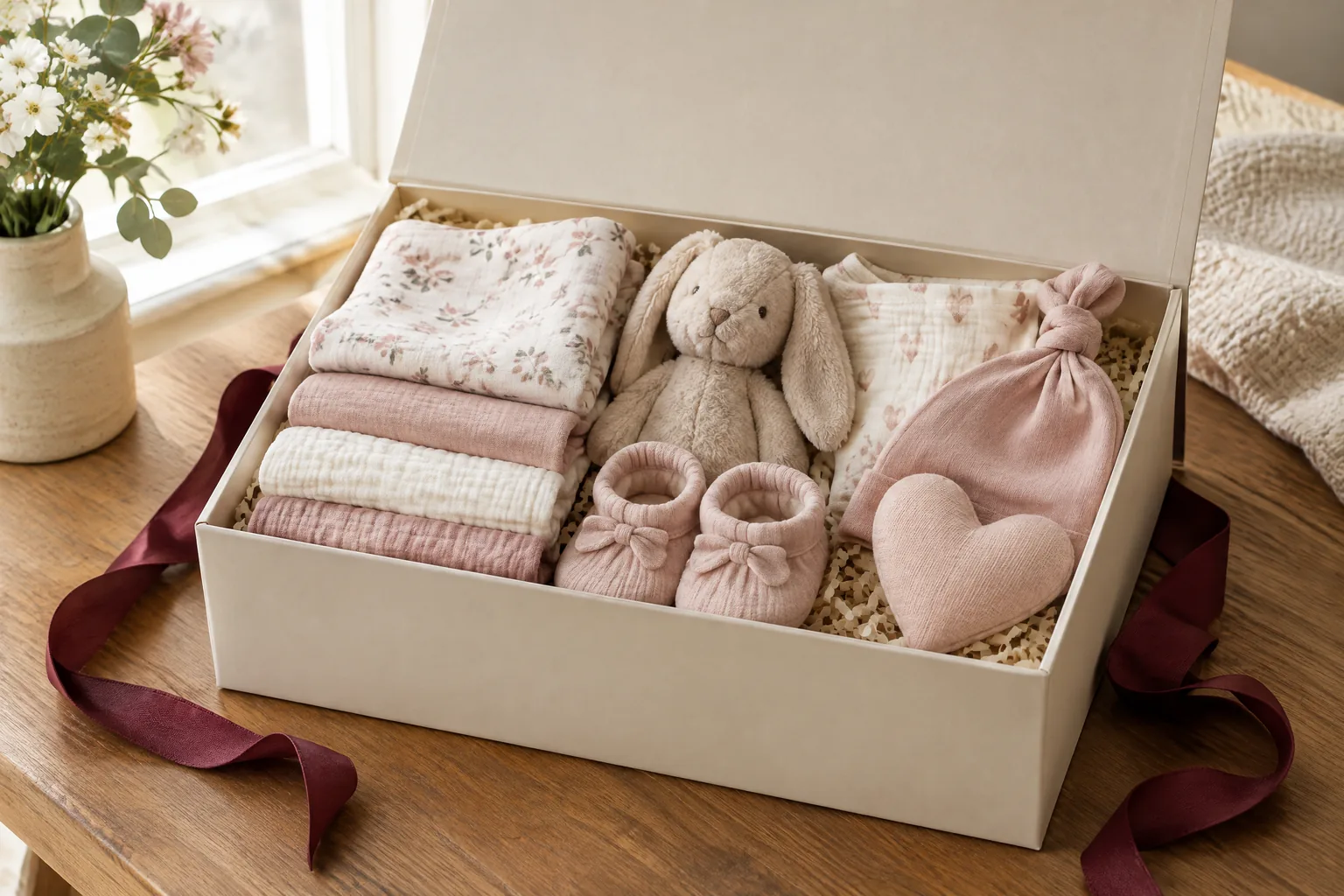
The Corporate fruit baskets page offers a fruit-led business-gift reference. It also makes clear that seasonal selection and final arrangements need confirmation. Use that distinction in your brief: specify the proposed varieties and quantities for approval, but do not promise that a reference photograph fixes every item. If the campaign needs identical contents across several offices, ask whether that requirement can be met before preparing a public-facing description or a printed contents insert.
For mixed Corporate gift hampers, the assigned guide gives a broader presentation direction, not evidence for the composition of a particular order. Request an item schedule with product names, pack sizes and relevant packaging information. A basket containing tea, biscuits and jars should not inherit a blanket ‘healthy’ description because fruit also appears in it. The schedule gives reviewers something concrete to approve and gives the supplier a clear basis for proposing any substitutions.
If the team wants to retain a nutrition statement, check both its meaning and its reference amount. GovHK’s nutrition-label guidance says ‘sugars free’ means no more than 0.5 g of sugars per 100 g or 100 mL of food. Labels may otherwise express information per serving or per package. A small serving can make a figure look lower without changing the product’s composition. Do not rewrite ‘no added sugar’ as ‘sugar-free’, or turn either phrase into a claim of suitability for diabetes.[3]
Choose a substitution rule before the order is accepted. A replacement with a similar retail value may have different ingredients, storage instructions or label wording. Ask that changes affecting an approved description return to the named reviewer. If a substitute is necessary close to packing, the sensible response may be to remove a descriptive claim from the insert rather than preserve the original design. Packaging equivalence is not evidence equivalence.

Approve cards and imagery
The photograph should document the gift, not manufacture benefits
Keep the card centred on the relationship. ‘Thank you for your work on the project; we hope you enjoy this selection’ gives a clear reason for the gift. ‘A boost for your health during busy weeks’ introduces an implied benefit and an assumption about the recipient. Remove medical-looking seals, body diagrams and outcome slogans from the visual brief as well. Calm colours or a simple arrangement can communicate care without presenting the basket as a treatment.
If professional documentation of the approved sample is needed, BigDeal’s 商品拍攝 page is a Chinese-language product-photography destination. A useful enquiry would describe the sample, required views and intended image use. This is a photography task, separate from food supply or claims approval. Give the photographer the signed-off contents list so the image does not accidentally show a rejected item or an earlier version of the basket.
This BigDeal guide covers 商品拍攝; the linked page is in Chinese. (Chinese page)
Photograph the actual approved sample where the image will represent the proposed order. Show enough of the contents for the viewer to understand what is included, and keep decorative props distinct. A fruit bowl beside the basket can look like part of the gift if the crop hides the boundary. Do not retouch a label to add a nutrition badge or increase the apparent pack count. If a concept illustration is used instead, label it clearly as a visual reference rather than an order photograph.
Review the final crop, caption, card artwork and email preview together. Small-screen layouts can detach a qualifying note from the product it describes. A sample-only note should not disappear when the image is reused in a presentation. For a bilingual card, review both language versions for meaning, not merely spelling. A neutral English thank-you can become a promise of recovery through an enthusiastic translation; both versions need the same restraint.

Protect recipient data
Do not turn gift preferences into a health profile
The Privacy Commissioner’s guidance says personal data collected for a lawful, directly related purpose should be necessary and adequate but not excessive. When collecting it directly, explain its purpose and the classes of recipients to whom it may be transferred. For a gift campaign, collect the contact and receiving information actually needed. Do not add diagnosis, medication or medical-history fields simply because the creative theme mentions wellbeing. A marketing spreadsheet is not a clinical assessment.[4]
Ask about preferences without demanding reasons: ‘Would you prefer a non-food option?’ may solve the problem without revealing personal health information. Where a recipient volunteers a dietary restriction, keep the operational requirement separate from wider campaign notes. Share only what the supplier needs to assess the proposed items, and let the recipient decide what information they are comfortable providing. Do not describe the recipient’s condition on a card, exterior label or shared office distribution list.
Keep the address sheet separate from the artwork approval file. Designers usually need correct card names, not every recipient’s phone number. Photographers do not need the delivery list to show a sample. Limit access to the people arranging the handover and agree how any supplier receives the relevant details. Follow your organisation’s retention policy and remove unnecessary working copies once their purpose ends. Do not reuse delivery contacts for a promotional mailing without a separate privacy review.
Keep evidence with the final brief
Make approval specific enough to survive a last-minute change
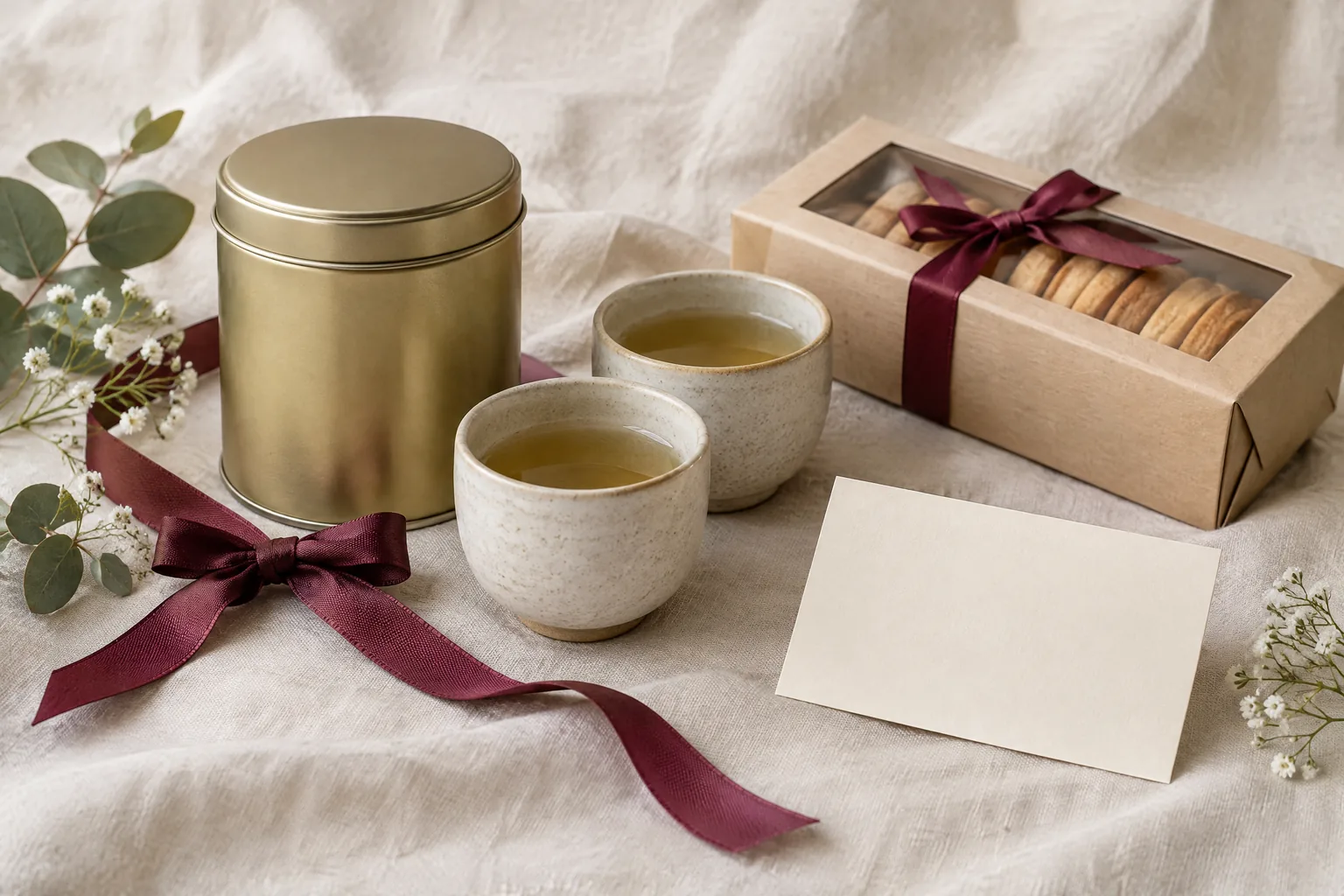
Keep one final package containing the approved item schedule, relevant label images, copy, artwork and sample photographs. Name the reviewer for product wording separately from the person approving the brand design. ‘Approved hamper’ is too vague if there are several versions. Use a version date and identify unresolved questions as pending. The purchasing contact should know which changes can proceed and which require the order to pause.
A CFS enforcement notice explains that applicable prepackaged foods must list ingredients, energy and seven core nutrients under Hong Kong’s composition and labelling regulations, which also regulate associated nutrition claims. Request readable packaging evidence where it is relevant; a cropped promotional image is not a substitute. Do not remove or conceal useful food information to make the presentation cleaner. Ask your legal reviewer about the exact treatment of any added gift insert rather than assuming it replaces the original label.[5]
Before release, compare the packed sample with the final files. If an item changes, reopen only the affected claims, images and recipient requirements, but do not ignore their connections. A new snack can require a new contents line, a revised photograph and another dietary check. Give one person authority to stop outdated artwork reaching print. Keep the final gift message simple enough that it remains accurate even when neutral presentation details change.
| Change | Affected approval | Next action |
|---|---|---|
| A packaged item is replaced | Ingredients, wording and contents image | Check the replacement before retaining any related claim |
| A sample image becomes a campaign banner | Crop, caption and inclusion of props | Review the full new presentation |
| A shared gift becomes named individual parcels | Recipient policy, card matching and data access | Confirm the new arrangement before dispatch |
| The card is translated | Meaning of the sender’s message | Approve both language versions without added health promises |

- Record permission for the specific recipient, business context and proposed gift.
- Confirm the item schedule before approving descriptive or nutrition wording.
- Remove unsupported health outcomes from headlines, cards and visual symbols.
- Keep any retained product claim limited to the exact item and approved wording.
- Match the photograph, caption and printed insert to the approved sample.
- Share only necessary recipient information with each person handling the gift.
- Assign a reviewer and stop outdated files being used after a substitution.
The strongest client gift brief is precise about the parcel and modest about its purpose. Thank the recipient, describe the agreed contents and let the gift remain a gesture of appreciation. If a phrase needs medical evidence to make sense, it probably does not belong in an ordinary corporate thank-you. Approve the words and the image together, then keep that decision tied to the final packed selection.
Can we call the campaign a wellness thank-you?
A theme does not prove a benefit. Consider what the complete message implies, including icons and imagery. If recipients could reasonably read it as promising healthier bodies, immunity or recovery, choose a neutral campaign name. You can communicate appreciation through the card, presentation and careful selection without attaching a health outcome to the gift.
Is a product’s own label enough to repeat its claim on our card?
Treat the label as evidence to examine, not automatic permission for new copy. Check the exact product, claim wording and scope with your reviewer. A statement about one pack cannot describe the whole basket. If repeating the claim adds no useful information to the thank-you, leave it on the original packaging instead.
Can a disclaimer rescue an immunity claim?
Do not use a small ‘not medical advice’ note to preserve a prominent promise. It does not provide evidence for that promise or change the benefit suggested by the main design. Remove the unsupported wording and review any remaining implication. Keep disclaimers for genuine limitations, not as a substitute for truthful copy.
What if the supplier changes an item after the photoshoot?
Compare the replacement with the approved contents and evidence. Update any affected description and image before using them to represent the order. Ask whether a new sample photograph is needed or whether neutral wording can accurately describe the final selection. Do not retain an attractive photograph that shows products the recipient will not receive.
Should we ask clients to disclose medical conditions to choose a hamper?
Not as a routine campaign question. Offer a non-food alternative or ask about an operational preference without requesting a diagnosis. A recipient may choose to give a dietary restriction, but that still does not let the marketing team certify medical suitability. Let the recipient review relevant product information and seek their own professional advice where needed.
Before ordering, ask the recipient organisation about gift permission and ask YumYum to confirm the proposed contents, substitutions and order terms. If you need an approved-sample photograph, discuss that separate photography requirement with BigDeal.
Sources & supported claims
- ICAC: Integrity and Corruption Prevention Guide on Managing Relationship with Public Servants
The POBO has no allowable-value threshold for corrupt advantages; private organisations’ gift limits are internal policy, not the statutory threshold.
- CFS: Nutrition Labelling Information for Trade — Frequently Asked Questions
FAQ 3.3 includes statements, suggestions and implications in nutrition claims and considers the overall presentation; FAQ 3.13 requires wording such as less sweet, unsweetened and no added to be factually correct and not misleading.
- GovHK: Using Nutrition Labels
Sugars free requires no more than 0.5 g sugars per 100 g/mL; nutrition information may use per 100 g/mL, per serving or per package reference amounts.
- PCPD: The Ordinance at a Glance
DPP1 requires a lawful directly related purpose, necessary and adequate but not excessive collection, and purpose and transfer-class information when collecting directly from individuals.
- CFS announces test results of targeted surveillance on nutrition labelling of breakfast cereal
Cap. 132W requires applicable prepackaged foods to list ingredients, energy and seven core nutrients and regulates associated nutrition claims.