
Flowers & thoughtful arrangements
Content updated
On this page
- Follow the family's actual words
- Ask one appropriate contact when the notice is unclear
- Agree the format before choosing flowers
- Keep personal design optional
- Check names and keep the message private
- Confirm receiving arrangements and removal
- Choose support that does not require flowers
- Questions & answers
- Sources & supported claims
Condolence flower consent: honour a no-flowers request
If the family has asked for no flowers, do not send a floral tribute, however personal your idea feels. If their announcement is unclear, pause the order and ask one appropriate contact rather than treating silence as agreement. For a colleague organising a team gesture in Hong Kong, condolence flower consent means checking whether flowers are welcome before discussing their appearance. A thoughtful card or an agreed practical favour can express care without leaving the family to receive, display or remove an unwanted arrangement.
The announcement is your starting point, not a design brief. Read its exact wording, distinguish a donation invitation from a clear floral restriction, and avoid negotiating exceptions. Where flowers are accepted, the family and venue still need to agree to the proposed format. Keep workplace contributions voluntary, protect private information and make someone other than the bereaved person responsible for any agreed delivery and collection arrangements.
Follow the family's actual words
A personal connection does not create an exception
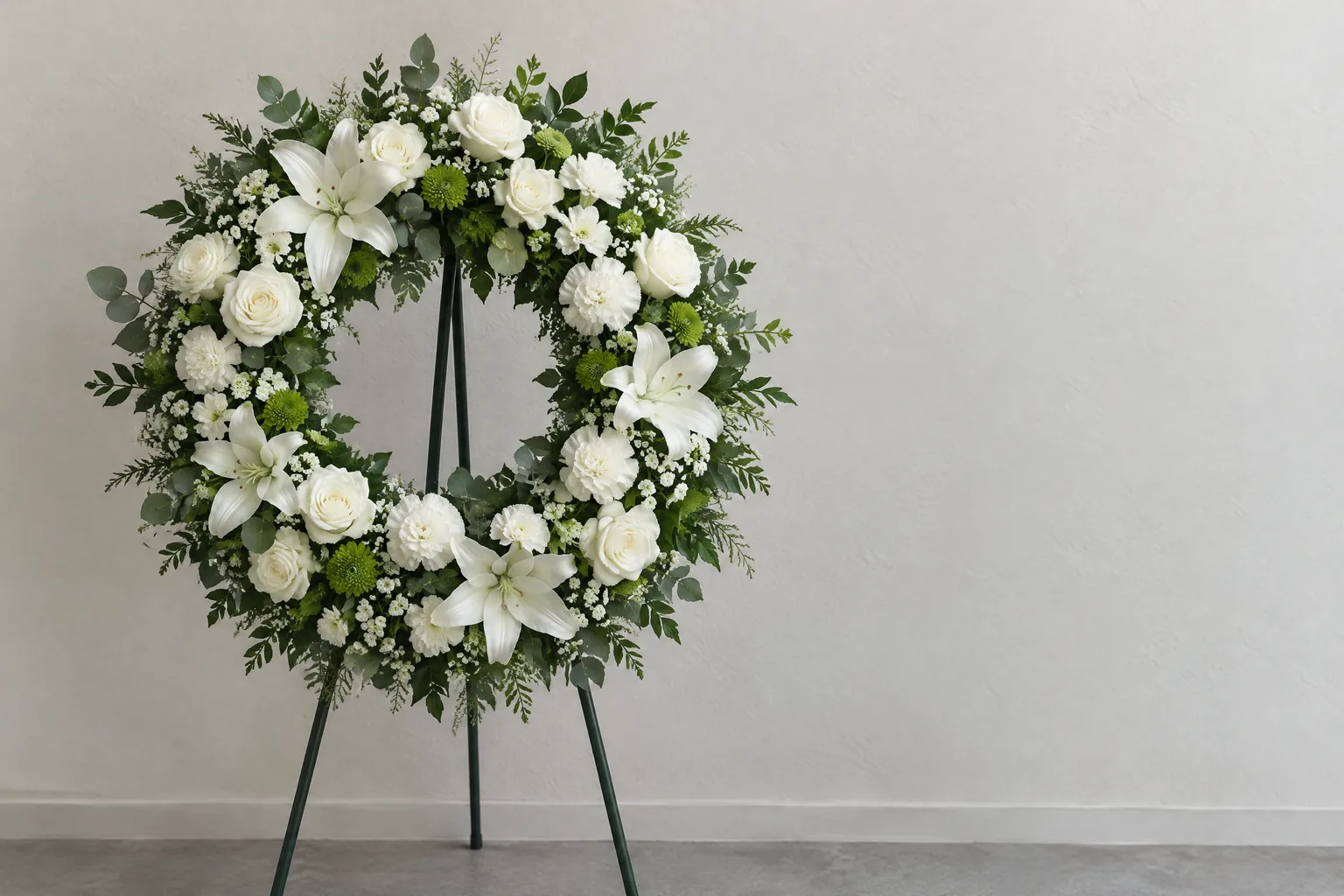
Read the complete announcement before opening a shopping page. 'No flowers, please' is a clear instruction. 'Family flowers only' is not an invitation for an office team to describe itself as a work family. Do not assume that a smaller arrangement, artificial stems or a plant avoids the spirit of the request. If you are not among the invited senders, choose a non-floral response rather than seeking a technical exception.
A request for donations needs closer reading. The Emily Post Institute advises taking the cue from an obituary inviting contributions and choosing the contribution if making only one gesture. Its general advice also allows flowers alongside a donation; that does not mean a particular family's explicit prohibition can be ignored. Read 'donations welcome' differently from 'no flowers; donations welcome'. If the words leave genuine doubt, clarify them without asking the family to defend their preference.[1]
For a workplace collection, share the relevant instruction with the organiser before money is committed. Explain that respecting it is the team's gesture of care, not a failure to do enough. If someone knew the person who died and wants a separate tribute, acknowledge that relationship without promising an exception. The sender's wish to make something distinctive must not become an extra decision for the bereaved household.
Ask one appropriate contact when the notice is unclear
Make declining easy and stop if there is no answer
Choose a contact already identified in the announcement, such as a family representative or appointed funeral organiser. If your colleague has asked a manager to coordinate messages, use that route rather than approaching several relatives. A useful question is: 'Would a floral tribute from our team be welcome, or would you prefer a card only?' This offers a clear choice without presenting a finished design that they may feel obliged to accept.
Keep clarification separate from condolence. Express sympathy first, then explain that you are checking so the team does not add work. Do not ask about the cause of death, private family discussions or the reason for a restriction. Where a representative answers, make sure the answer concerns this team's proposed gesture, not merely whether the venue can physically receive flowers. A receiving desk cannot give consent on the family's behalf.
No reply means that permission remains unconfirmed. It is not a reason to call another relative or send something before the delivery deadline. Record the decision with the colleague coordinating the team and choose a quiet written message instead. If two contacts give conflicting answers, pause the floral plan until the person responsible for the arrangements clarifies it. Do not ask colleagues to vote on which answer they prefer.
| Announcement or reply | Appropriate next decision | Avoid |
|---|---|---|
| No flowers, please | Send a condolence message through an accepted channel | A smaller bouquet, plant or private-home workaround |
| Family flowers only | Do not arrange an office floral tribute unless expressly invited | Calling the team a work family to claim an exception |
| Donations welcome; floral wishes unclear | Read the full notice and clarify once if needed | Assuming either a total ban or blanket permission |
| Flowers expressly accepted | Agree format, venue receiving and removal before ordering | Treating acceptance as permission for any size or design |
| No reply or conflicting instructions | Pause the floral plan and choose a written message | Contacting several relatives until someone agrees |
Agree the format before choosing flowers
A service tribute and a home delivery are different proposals
Only after acceptance should you explore condolence flowers as a possible format. The assigned Y. Florist information page discusses arrangements for wakes and funerals, with venue details and availability needing confirmation. Treat that as a place to frame an enquiry, not evidence that a delivery is welcome. Ask whether the family has agreed to something for the service, something for the home, or neither. Permission for one location does not carry across to another.
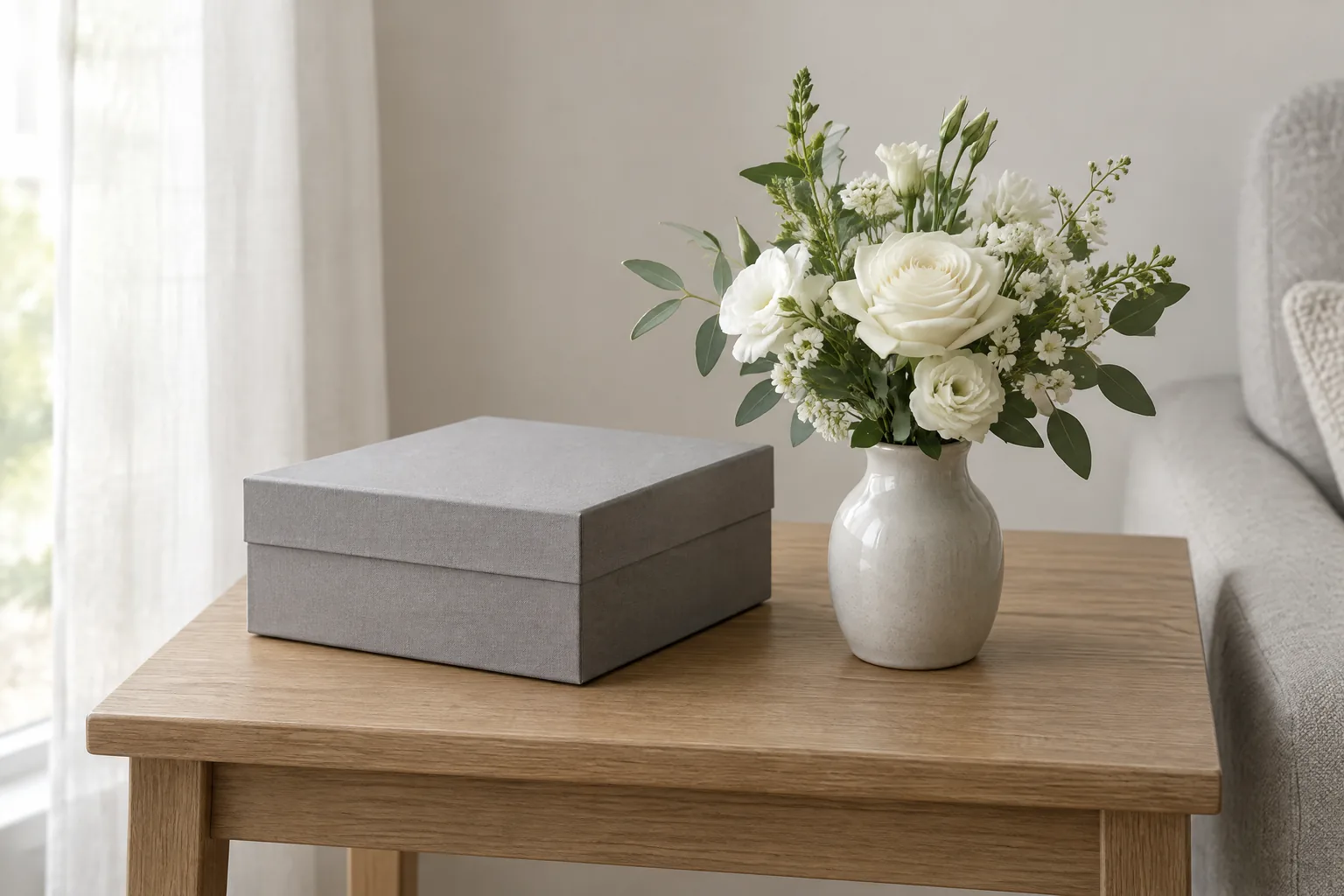
A funeral wreath is a particular proposal, not a more respectful version of every other gesture. Its finished footprint can include projecting foliage, the supporting stand and the message ribbon. Ask the organiser what display space is actually available before requesting a design. The linked category page is not confirmation of a place at a particular service, a suitable size or an accepted delivery window. These details must be settled for the specific arrangement.
Describe the proposed item in ordinary terms so the contact can make an informed decision. 'One freestanding circular tribute for the hall, with a short team message' is clearer than 'something modest'. If the family accepts a small tabletop piece, do not upgrade to a large stand because several colleagues contribute. A larger collection can remain a larger unspent balance or support an invited alternative; it does not require a more prominent display.

Keep personal design optional
A meaningful idea still needs an agreed limit
An enquiry about bespoke floral design comes after permission, not instead of it. Y. Florist's linked page describes a general custom-design service and asks readers to confirm current availability and conditions. It does not establish that a particular memorial brief will be accepted. Explain the occasion honestly, ask whether it is within scope, and keep the proposed design within the format already agreed with the family and venue.
Personalisation can be simple: a colour the family has approved or a brief reference to a shared interest. Do not assume a favourite colour, religious symbol or hobby-shaped design is suitable merely because it mattered to the person who died. Offer the idea once, through the agreed contact, and accept a plain alternative. If explaining the concept would reveal a private story, leave it out unless the family has expressly agreed to its use.
Give the florist a practical limit rather than a request to make the tribute impressive. Specify the accepted format, maximum overall dimensions and approved wording. Ask what happens if a proposed material cannot be sourced, and who must approve a change. A substitution should not introduce a symbol or shape that the family has declined. If there is no time for a clear agreement, a simpler accepted gesture is preferable to a rushed custom commission.

Check names and keep the message private
Approve the exact text, not just its general sentiment
Prepare one final version of the card or ribbon text before production. Copy the person's name from the authorised announcement rather than an old contact list. For Traditional Chinese and English wording, check both versions independently; do not guess an unfamiliar character or invent an English name. Ask the relevant contact to confirm names and any religious wording, while keeping routine spelling checks within the sending team wherever possible.
Choose a short message that does not interpret the death or tell the family how to feel. 'Thinking of you and your family, from your colleagues in the accounts team' is sufficient. A personal memory may fit better in a private letter than on a ribbon visible to everyone attending. Avoid job titles, company logos or wording that turns a team tribute into a statement about the organisation's generosity.
Marie Curie's bereavement guidance advises keeping what someone shares private unless they have agreed that it can be passed on. Apply that principle to the office response: do not forward a private family message into a large chat simply to explain the collection. Limit the delivery address and receiving number to people who need them. Ask before photographing a tribute or posting a condolence message that identifies the family or service location.[2]
Confirm receiving arrangements and removal
Do not leave the final handover to the family
Family acceptance and venue acceptance are separate checks. Ask the appointed organiser or venue contact for the correct building, hall and service date, together with the receiving window. Confirm whether staff will accept the item and where it should go. A street address alone is not enough to establish the intended room. Do not send a courier to locate a mourner or interrupt the ceremony to obtain delivery instructions.
Before committing, ask the supplier to confirm the agreed finished size and whether the delivery includes positioning the item. Establish who will answer routine delivery questions. If an arrival is delayed or the hall changes, that person should coordinate with the organiser rather than directing repeated calls to the bereaved colleague. Do not present same-day service, a precise arrival time or any other delivery condition as guaranteed unless the supplier has expressly confirmed it.
Agree the end of the arrangement's stay as carefully as its arrival. Ask who removes flowers and packaging, whether a stand or vessel must be returned, and when collection can take place. Do not assume the family wants to take anything home or that venue staff will dispose of it. If the family later withdraws permission, contact the supplier promptly about stopping or redirecting the order; do not pressure the family because money has already been spent.
| Decision | Who should confirm it | Useful record |
|---|---|---|
| Whether the gesture is welcome | Family or appointed representative | Accepted sender, format and destination |
| Where and when it can arrive | Venue or appointed organiser | Hall, receiving contact and time window |
| What will be supplied | Florist and sender | Finished size, wording and agreed changes |
| Who takes it away | Sender with supplier and venue | Collection responsibility and returnable items |

Choose support that does not require flowers
A useful response can continue after the service
A no-flowers instruction does not require a replacement purchase. A card, sent through the accepted channel, can acknowledge the loss without creating storage or receiving work. If the family has invited memorial donations, use the charity or fund they name and verify its details through an appropriate official channel. Do not select a cause on their behalf, open a public fundraiser in their name or disclose colleagues' contributions without permission.
Marie Curie recommends specific offers of practical help rather than only general offers, and encourages keeping in touch after the funeral. At work, an appropriate offer might be covering an agreed meeting or consolidating routine questions through one colleague, subject to the person's wishes and workplace approval. Ask before arranging anything. An offer with a defined task is easier to consider than an open-ended promise that requires the bereaved person to organise everyone else.[3]
Keep team contributions voluntary and avoid circulating a list of who has paid. Where money was collected for flowers before the restriction was noticed, ask contributors whether they want a refund or an explicitly invited alternative; do not silently redirect it. Later, a brief private check-in can be more considerate than another object. Say that no reply is needed, keep any promised support realistic, and let your colleague choose how much they want to share.
- Read the full announcement and preserve its exact floral instruction.
- Use one agreed contact only if genuine clarification is needed.
- Do not order while permission is absent, conflicting or unanswered.
- If accepted, agree the format and confirm both the family and venue are comfortable with it.
- Check names, approved wording and the privacy of shared contact details.
- Assign receiving and removal responsibilities without relying on the bereaved person.
- Keep collections voluntary and use donations only where explicitly invited.
The most personal tribute is not always a floral one. Respect a clear refusal, leave an unanswered request unconfirmed, and separate family permission from venue logistics. If flowers are welcome, keep the design within the agreed limits and take responsibility for the practical work. If they are not, offer sympathy and support without making the family manage an unwanted gift.
Can our team send flowers privately when the notice says no flowers?
Do not move the same gesture to a home address to bypass the instruction. The household may have chosen not to receive flowers anywhere. Send a short condolence message instead. If the family independently invites a different gesture later, respond to that invitation without treating the original restriction as something to negotiate.
Should we ask the bereaved colleague to approve several design options?
Usually, do not begin with a catalogue. First establish whether the gesture is wanted through the agreed contact. If it is accepted, ask for essential preferences once and let the sending organiser handle routine supplier decisions within those limits. A colleague may appreciate not having to choose between designs while managing a loss.
Is a donation compulsory if the announcement names a charity?
Treat it as an invited way to express sympathy, not a workplace payment requirement. Nobody should have to explain why they are not contributing. A respectful message is still possible. If the team donates together, confirm the intended recipient and memorial wording without publishing individual amounts or suggesting that a larger gift conveys greater care.
What if flowers have already been ordered before we notice the restriction?
Contact the supplier promptly and explain the changed instruction. Ask what cancellation or redirection options are available under the actual order terms; do not assume a refund. Keep the problem with the sending organiser. The family should not have to accept the arrangement, reimburse anyone or find another home for it to protect the sender from embarrassment.
How can I make a card personal if I never met the person who died?
Write honestly about your care for your colleague rather than inventing a connection with their relative. You can acknowledge the loss and offer one realistic form of support. Avoid asking for details to make the message more elaborate. A few sincere sentences, with no request for a reply, can be more appropriate than a borrowed tribute.
Before arranging anything, reread the family's announcement. If its wishes remain unclear, ask the agreed contact once; otherwise choose a respectful message and leave room for the family to respond in their own time.
Sources & supported claims
- Emily Post Institute: Funeral Etiquette: Donations In Lieu of Flowers
Take the cue from an obituary inviting contributions; choose the contribution if making only one expression of sympathy. The source's general allowance for additional flowers is not a licence to override an explicit family prohibition.
- Marie Curie: Supporting someone who is grieving
Keep what a grieving person shares private unless they have agreed that it may be shared with others.
- Marie Curie: Supporting someone who is grieving
Specific offers of practical help are often more useful than general offers, and continued contact after the funeral can support the bereaved person.